REVIEW · ATHENS
Ancient Corinth, Epidaurus, Nafplio full day private tour from Athens
Book on Viator →Operated by My Athens Transfers · Bookable on Viator
One day can feel like three different vacations. You’ll trace St. Paul’s route through Ancient Corinth, then shift to Epidaurus with its famous theatre, and finish in Nafplio’s old-town fortresses. The driving is long, but the stops are timed so you see the big ideas without spending your whole holiday behind a steering wheel.
I love the door-to-door private pickup (and the calm, “we’ll go at your pace” feel). I also love ending in Nafplio, where you can trade ruins for harbor breezes, Venetian-style streets, and castle views.
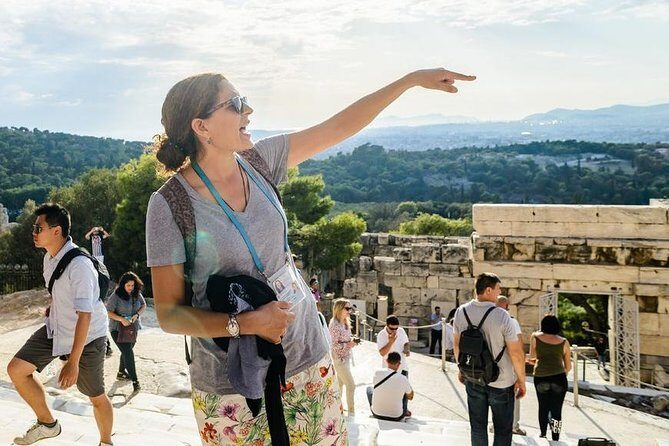
One possible drawback: at the sites, your driver usually stays with the car, so you’ll do a lot of walking and self-guided wandering. If you want commentary inside every monument, plan for the optional licensed guide.
In This Review
- Key highlights I’d circle on your map
- Price and what you’re really paying for
- Athens-to-Peloponnese comfort: pickup, Wi‑Fi, and a relaxed schedule
- Corinth Canal: a quick stop with big geography
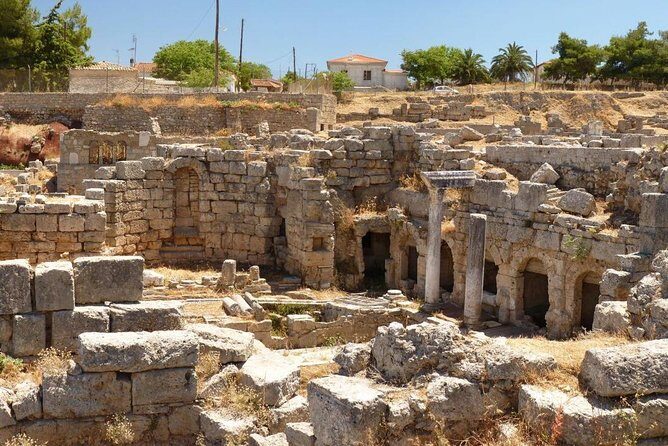
- Ancient Corinth: Paul’s footsteps plus the places you can still picture
- Museum stop: slow your pace (and learn faster)
- Temple of Apollo and the quick win
- Acrocorinth fortress: one of the day’s hardest walks for the best payoff
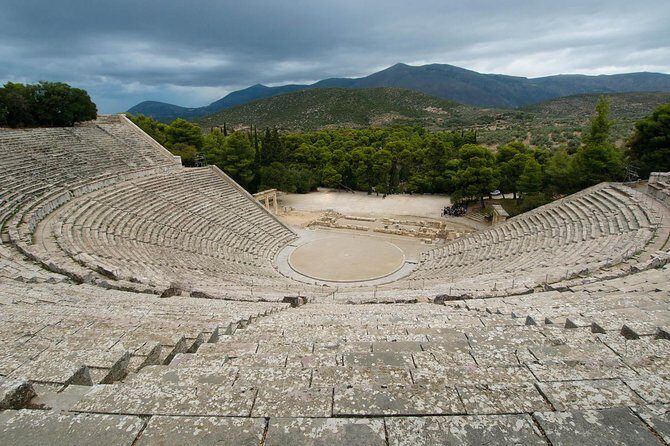
- Epidaurus: the theatre you can actually hear, even if you’re not in rehearsal
- Sanctuary of Asklepios: the sacred place behind the science
- Nafplio: lunch break, Bourtzi photos, and the fortress finish
- The included meal: use it to reset
- Harbor castle: Bourtzi
- Acronauplia and Palamidi: the stairs that earn their keep
- What this tour feels like on the ground
- Should you book this private Corinth, Epidaurus, and Nafplio day trip?
- FAQ
- How long is the Ancient Corinth, Epidaurus, Nafplio private tour from Athens?
- Does the tour include hotel pickup and drop-off?
- Are entrance fees included for Ancient Corinth and Epidaurus?
- Is a licensed guide included during site visits?
- What’s included in the price besides transportation?
- Is this tour private or shared?
- What language is the tour offered in?
Key highlights I’d circle on your map
- Private pickup anywhere in Athens with Wi‑Fi, air-conditioning, and bottled water onboard
- Corinth Canal viewpoints that turn geography into a photo-worthy moment in minutes
- Ancient Corinth with Paul’s backdrop plus museum time to slow down and actually see what you’re looking at
- Epidaurus theatre and Asclepius sanctuary in one smooth run, without sprinting between sites
- Nafplio’s fortresses including Palamidi, where steps equal the best views
- Flexible timing at lunch and stops, with drivers like George, Alex, and Takis mentioned often
Price and what you’re really paying for
At $229.14 per person for an 8–9 hour private day, this isn’t cheap. The value comes from three things: you avoid renting a car, you get direct transport out of Athens, and you keep the day personal instead of slotting into a larger group rhythm.
The tradeoff is that this is a driver-led experience, not a licensed guide walking with you inside the archaeological sites. The price includes transportation, comfort, and plenty of time at each stop, but entrance fees still apply: Ancient Corinth + its museum are €15, and Epidaurus + its museum are €20 (paid on-site).
If you’re the type who wants to read the signs and enjoy the setting, it works well. If you want a guide narrating every detail while you’re standing in the shade, you’ll want to add the licensed tour guide option (on request) if available.
You can also read our reviews of more private tours in Athens



Athens-to-Peloponnese comfort: pickup, Wi‑Fi, and a relaxed schedule
This is designed to start with minimal friction. You get pickup and drop-off at your address in Athens (or an airport/port meet point if that’s how you’re traveling), and your driver will adjust the pickup time with you.
Inside the car: air-conditioning, Wi‑Fi, and bottled water. On a hot day, that matters more than you think, especially when the day includes real outdoor walking like Acrocorinth and Palamidi.
The private format also tends to reduce stress. Several review notes focus on drivers handling the day smoothly—George, Alex, and Panos come up for being friendly and flexible. That usually translates to you getting through a long route without the constant “hurry up” energy.
Corinth Canal: a quick stop with big geography
The day kicks off at the Corinth Canal, a narrow cut connecting the Ionian and Aegean seas through the Isthmus of Corinth. Even if you don’t know the engineering details, you’ll recognize what you’re seeing: steep limestone walls and ships threading through a channel that’s only about 6.4 km long.
You’ll have roughly 15 minutes and a viewpoint that makes the canal feel real, not just a dot on a map. This is one of those stops that’s short on purpose. You want the canal view in your brain early—because it helps the later “where people moved” story make sense.
Entrance here is listed as free, and that’s a nice bonus early on.
Ancient Corinth: Paul’s footsteps plus the places you can still picture
Ancient Corinth is where religion, empire, and everyday city life overlap. The ruins sit near the modern city, and Corinth’s story connects to the New Testament through Saint Paul’s letters to the Corinthians and the Acts of the Apostles references to his missionary journeys.
In the time you’re given—about 1 hour—you’re not trying to absorb every column and walkway like you’re writing a thesis. Instead, you’re building a mental map: where the city sat, what kind of place it was, and why it mattered enough for Paul to spend time here.
Museum stop: slow your pace (and learn faster)
You also get time at the Archaeological Museum of Ancient Corinth (about 30 minutes). This is where your “I see ruins” becomes “I recognize the pieces.” The museum is closely tied to the excavated site, and it helps you place elements like:
- the Fountain of Peirene
- the Agora and Stoa
- the Lechaion Road
- the Odien and temple remains
The museum time isn’t long, but it’s long enough to make the outdoor ruins easier to understand.
You can also read our reviews of more tours and experiences in Athens
- All Day Cruise -3 Islands to Agistri,Moni, Aegina with lunch and drinks included
★ 5.0 · 4,958 reviews



Temple of Apollo and the quick win
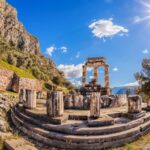
Next is a brief stop at the Temple of Apollo (about 15 minutes), tied to a date of 550 BC. This slot is short by design. It gives you another anchor point in the ancient layout without eating up hours.
If you’re hoping for a long, guided deep dive, you may feel the limits here. But if you like a mix of big highlights and breathing room, it’s a good pacing choice.
Acrocorinth fortress: one of the day’s hardest walks for the best payoff
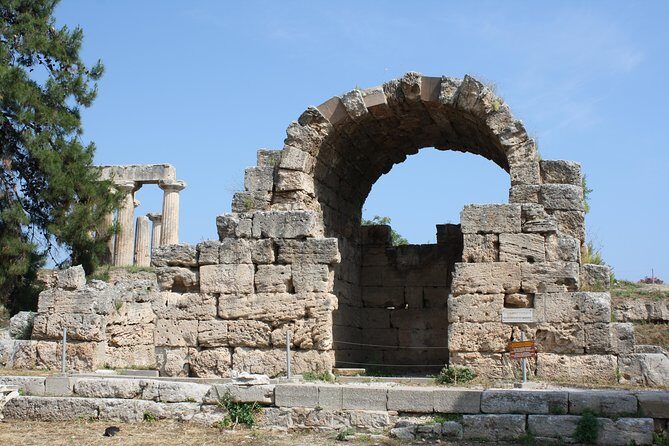
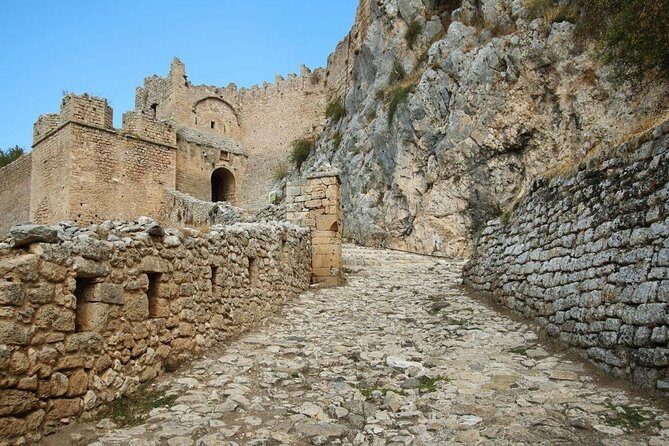
Then comes Akrokorinthos (Acrocorinth), often described as the “Upper Corinth,” with a fortress on a rock overlooking the old city. It’s repeatedly mentioned as a defensive stronghold thanks to its strategic position across the Isthmus and the secure water supply.
You’ll have about 30 minutes, and it’s a stop where you should plan for effort. The terrain up there is steep, and you’ll want good shoes. If your day shoes are more fashion than traction, swap them before you go.
The payoff is the view. You’ll understand why people fought over this spot. The canal and isthmus are back in your mind, and now you can see the geography from above.
One practical tip: don’t treat Acrocorinth as a photo-only stop. Give yourself a couple minutes to look outward, then take pictures. You’ll get more meaning out of the photos later.
Epidaurus: the theatre you can actually hear, even if you’re not in rehearsal
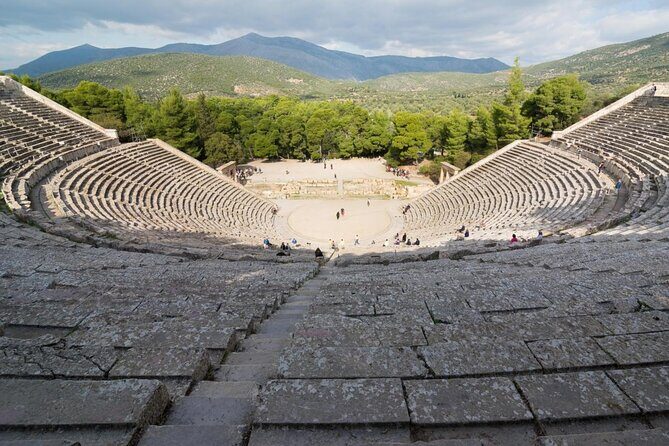
After the Corinth area, the day shifts to Epidaurus, home of the sanctuary dedicated to Asclepius, god of healing. First you visit the Epidaurus Archaeological Museum (about 30 minutes), which is known for reconstructions, columns, and inscriptions.
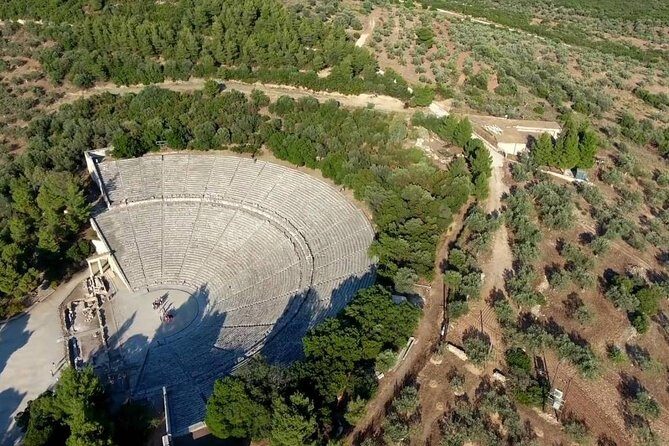
This matters because the Ancient Theatre of Epidaurus (about 30 minutes) is best understood as more than “a pretty old structure.” It’s famous for acoustics and aesthetics, with a layout that includes a theatron, orchestra, and skene. And during Roman times, unlike many Greek theatres, it didn’t get major modifications.
Even if you’re not standing in the exact best acoustic spot, the design is still obvious. You’ll feel how carefully it was built for an audience experience, not just spectators.
Sanctuary of Asklepios: the sacred place behind the science
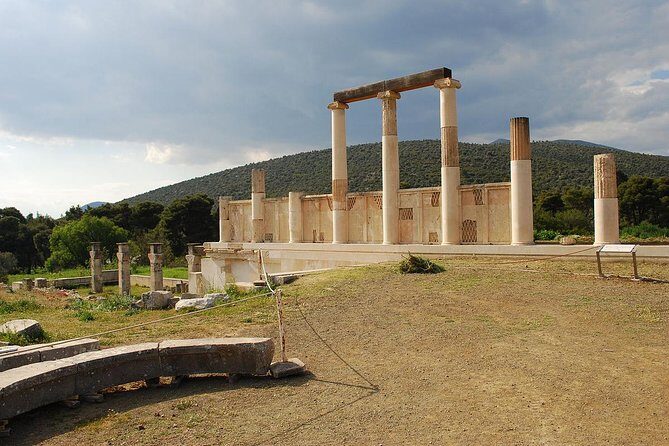
You also get time at the Sanctuary of Asklepios (about 15 minutes). The temple there is associated with the early 4th century BC, and it’s described as a major rival cult site to places like Delphi and Olympia.
This stop is shorter, so focus on one thing: the sense of purpose. The theatre is performance; the sanctuary is healing and ritual. Seeing both in the same day makes the whole culture feel more complete.
Nafplio: lunch break, Bourtzi photos, and the fortress finish
By the time you reach Nafplion, you’re done with ancient stone for a bit and ready for human-scale life. The time allotted here is about 1 hour 30 minutes, with room for lunch, coffee, or shopping in a town often called the Naples of the East.
Nafplio’s charm is practical: you can wander without needing a ticket, and the town keeps giving you viewpoint angles. It’s full of cobbled squares and Venetian-influenced architecture, and the castles watch over the water.
The included meal: use it to reset
Lunch is included, with a traditional Greek food option. Drivers often help timing so you don’t end up sprinting from a site to a meal. If you have specific dietary needs, it’s smart to tell the driver early in the day so they can suggest where to sit and how to keep you comfortable.
Harbor castle: Bourtzi
You’ll get a short stop at Bourtzi, the Venetian castle sitting in the middle of the harbor. It’s timed for about 10 minutes, and it’s mostly a viewpoint and photo moment—worth it because it adds a different kind of history than the ruins.
Acronauplia and Palamidi: the stairs that earn their keep
The oldest part of Nafplio is Acronauplia, originally its own town before it became part of the fortifications after later rulers transformed the area. It was used as a prison at one point, and today the area is connected to a hotel complex that still exists on the hill.
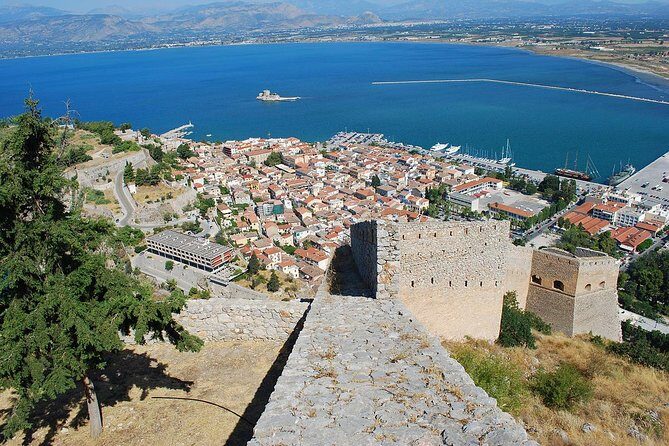
Then you finish with Palamidi Castle. It’s a fortress built by the Venetians during 1686–1715, on a hill around 216 meters high. The climb is famous for being a lot of steps—commonly stated as 913, and locals jokingly say 999. Either way, it’s enough to make you slow down and notice the views.
If you want the best return on your effort, take two passes: one on the ascent to catch glimpses over the gulf, and one at the top to really look around before you start taking photos.
This is where Nafplio turns from a pleasant town into a lasting memory.
What this tour feels like on the ground
This day works best when you’re realistic about pace. You’ll see a lot, yes. But the flow is built around short, high-impact time blocks: canal view, Corinth highlights, Epidaurus main attractions, then Nafplio reset.
Because drivers don’t enter archaeological sites with you, you’re responsible for reading, exploring, and asking your questions at the drop-off points or in the car while moving. The upside is you won’t feel crowded. The downside is you may want more in-person narration at the exact moment you’re standing in front of a key feature.
That’s why the optional licensed tour guide option can be a smart add-on for certain travelers. If you’re a museum-and-sign-reader type, you might be fine as-is. If you want story-driven interpretation with fewer pauses, ask in advance how to add the guide when you book.
Should you book this private Corinth, Epidaurus, and Nafplio day trip?
I’d book it if you:
- want a car-free way to cover major Peloponnese highlights in one day
- like pairing big-ticket sites (Ancient Corinth and Epidaurus theatre) with a rewarding end stop in Nafplio
- prefer a relaxed, private format where the driver keeps things running smoothly
I’d think twice if you:
- expected a licensed guide walking beside you inside every site
- get grumpy about long days and real walking like Acrocorinth and Palamidi
- want a slower pace with fewer stops and more time inside museums or quieter corners
If you’re on the fence, ask yourself one question: do you mainly want to see the places, or do you want someone to interpret every stone while you’re standing there? If it’s the second one, consider adding the licensed guide option and you’ll feel much more satisfied.
FAQ
How long is the Ancient Corinth, Epidaurus, Nafplio private tour from Athens?
It runs about 8 to 9 hours.
Does the tour include hotel pickup and drop-off?
Yes. Pickup and drop-off are included from your preferred address in Athens (or an airport/port meet point). Your driver returns you to the same place or to a point you prefer.
Are entrance fees included for Ancient Corinth and Epidaurus?
No. Entrance fees are not included. Ancient Corinth & the Corinth museum are €15 per person, and Epidaurus & the Epidaurus museum are €20 per person, paid on-site.
Is a licensed guide included during site visits?
Not automatically. The included commentary comes from the driver, who is not an official tour guide and does not enter the archaeological sites with you. A licensed tour guide is available on request, depending on availability.
What’s included in the price besides transportation?
The tour includes lunch (with a traditional Greek food option), a Wi‑Fi-equipped air-conditioned vehicle, bottled water, and pickup/drop-off.
Is this tour private or shared?
It’s private. Only your group participates.
What language is the tour offered in?
The experience is offered in English, and you receive a mobile ticket.


More Private Tours in Athens


More Tours in Athens




More Tour Reviews in Athens
- All Day Cruise -3 Islands to Agistri,Moni, Aegina with lunch and drinks included
★ 5.0 · 4,958 reviews