REVIEW · ATHENS
Ancient Olympia Full-Day Private Tour from Athens
Book on Viator →Operated by LS Tours · Bookable on Viator
You can do Ancient Olympia without losing your whole day. This private 12-hour outing strings together Corinth Canal and the big sites of Olympia, with air-conditioned round-trip transport and WiFi so you’re not stuck in a dusty slog. It’s a smart fit if you only have one day to give Greece’s ancient Olympic story your full attention.
Two things I like a lot: you get personal attention from your own local driver, not a cattle-car group. And the schedule is built to keep moving—so you’re not waiting around while other people decide what they feel like seeing. The one drawback to plan for is that site and museum entry isn’t included (it’s listed separately), and the driver is not an official guide inside the archaeological grounds.
In This Review
- Key highlights worth your time
- A one-day plan that actually works: Athens to Corinth Canal
- Corinth Canal: a narrow cut with big consequences
- Ancient Olympia: what you’re really seeing in a single visit
- Temple of Zeus and the stadium: where the legend became a venue
- Heraion, Nymphaeum, and the training grounds: the everyday machinery of Olympia
- Philippeion and the human memorial inside the sanctuary
- Museums in one block: Olympia artifacts without the extra planning
- Archaeological Museum of Olympia
- Museum of the Olympic Games
- Archimedes Museum
- Market time in Olympia: lunch and souvenirs on your terms
- The return to Athens: plan for fatigue, not just distance
- Value and who this private tour makes sense for
- Should you book Ancient Olympia by private day trip?
- FAQ
- How long is the Ancient Olympia full-day private tour from Athens?
- Is pickup included in the tour?
- What does the tour include for transportation?
- Do I need to pay for tickets to the archaeological site and museums?
- Is a licensed tour guide included?
- How many hours do I spend at Ancient Olympia?
- Are meals included?
- What is the cancellation policy?
Key highlights worth your time
- Corinth Canal stop with real viewpoints: short, scenic, and story-packed—without eating up your whole day
- Ancient Olympia pacing: you’ll hit multiple major stops at the Altis without needing to plan transit
- Olympic flame context at the Heraion: the ruins are where the tradition begins today
- Zeus temple + stadium focus: you get myth-level scale plus the sport arena in one sweep
- Museum circuit in one block: Olympia’s artifacts + the Olympic Games themes + Archimedes
A one-day plan that actually works: Athens to Corinth Canal
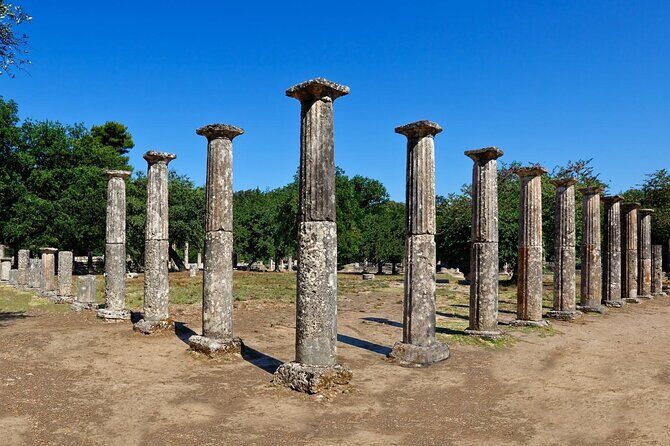
This day trip is built for visitors who want the highlights, not a slow-andsteady archaeology walk. The day starts with pickup from your hotel lobby or the entrance of your apartment, then the drive to the Corinth Canal begins right away. It’s about an hour to the first viewpoint stop, which helps you avoid the common mistake of spending your best morning “on the way” doing nothing.
I like that the transportation is air-conditioned and includes WiFi and bottled water. That matters because you’re starting early, spending a lot of time outdoors at Olympia, and still ending with a return drive to Athens. Greece can be brutally hot in summer, and this kind of comfort makes the long day feel less punishing.
Practical note: this is a full-day itinerary with multiple short walks and a lot to see. Wear comfortable shoes and bring hat and sunglasses if you’re traveling in warm months.
You can also read our reviews of more private tours in Athens


Corinth Canal: a narrow cut with big consequences
The Corinth Canal connects the Ionian Sea with the Saronic Gulf. In plain terms, it slices through the Isthmus of Corinth and separates the Peloponnese from the Greek mainland—like making a peninsula behave like an island.
Here’s why your brief stop is worth it. The canal was dug at sea level and has no locks, so vessels pass through under the constraints of the channel. It’s only 6.4 km long and about 21.4 m wide at the base, which limits modern ship traffic. From the viewpoint, you get the best of both worlds: the scale of the deep limestone walls and the visual rhythm of ships moving through below.
You’ll have about 30 minutes at the canal. That’s enough time to find a solid angle, snap photos, and read the basic story without turning this into a detour that steals Olympia time.
Ancient Olympia: what you’re really seeing in a single visit
Once you leave the canal, the drive to Ancient Olympia takes roughly 2.5 hours. Then the itinerary gives you about three hours in the archaeological area, with additional shorter stops later on.
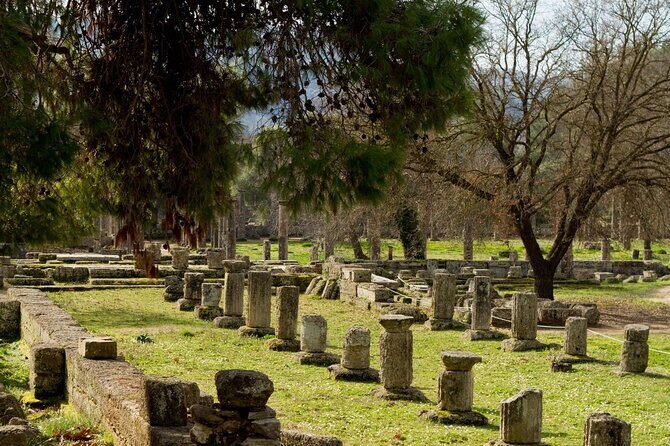
This is the part of the day where you’ll feel what Olympia is: it isn’t one building. It’s a whole sanctuary called the Altis, spread across an area where myth, sport, religion, and politics all rubbed shoulders.
A detail I love here is how the Pelopion ties Olympia to the story-world Greeks used to explain their origins. The Pelopion is described as the tomb of Pelops, the quasi-mythical king associated with the Atreids and the war myths around Troy. Even if you don’t care about genealogy, the idea is clear: Olympia wasn’t just a sports venue. It was a place where stories became tradition.
Also, keep expectations realistic. Three hours outdoors across several key landmarks means you’ll be moving. You won’t be doing the slow, line-by-line reading of every ruin. The value is that your driver keeps the flow tight and you see the main actors of the site.
Temple of Zeus and the stadium: where the legend became a venue
After your entry into the Olympia area, the day focuses on two big names: the Temple of Zeus and the stadium.
The Temple of Zeus is described as a classical Doric model built in the second quarter of the fifth century BC. It’s connected to one of the Seven Wonders of the Ancient World: the Zeus statue. That famous statue was chryselephantine (gold and ivory), about 13 meters tall, and attributed to the sculptor Phidias. The completion took roughly 13 years (470–457 BC). That’s the kind of detail that makes the ruin feel like more than stone—your brain starts picturing scale.
Right after, you’ll move to the stadium, located to the east of the sanctuary of Zeus. This is where many Ancient Olympic Games events happened. Stadium time is short, but it’s a crucial stop because it shifts the mood from gods and monuments to the reality of competition. Even from a distance, you can sense the purpose: people came here to perform, not just to worship.
If heat has been rough for you, pace yourself on the stadium. The stops are relatively timed, so it’s better to take one slow breath than to later feel rushed or faint and lose the chance to see Heraion.
Heraion, Nymphaeum, and the training grounds: the everyday machinery of Olympia
This portion of the day is where Olympia gets more human.
First up is the Temple of Hera (Heraion). It’s described as the oldest temple at Olympia, and originally it served a joint purpose for Hera and Zeus until a separate temple was built for Zeus. What I think you’ll appreciate is the continuity of tradition: it’s at the altar area of this temple—east-west oriented—that the Olympic flame is lit and carried to all parts of the world. The torch lighting in the ruins is described as happening to this day. So you’re not just seeing an old site. You’re seeing a place linked to the modern ritual that people watch on TV.
Next you’ll visit the Nymphaeum, a mid-2nd century water-distribution structure designed to provide water during the July and August Olympic crowds. The description makes it clear it wasn’t just decorative. It received water from an aqueduct into a cistern and released it in stages through open and closed channels around the site, with troughs throughout so people could draw water.
Then comes the palaestra, the wrestling school area where training happened. The info here is detailed: wrestling, boxing (pygme/pugnus), and pancration—a hand-to-hand, no-holds-barred style that could be deadly or disfiguring. You also learn that contests had rules, umpires, and judges. Even if you’re not into combat sports, it adds context: Olympia trained bodies and enforced conduct, because the games were tied to civic identity and eligibility.
These stops are shorter—often around 15 minutes each—but they fill in the parts many day trips skip. You finish with Olympia that feels like a functioning place, not just a photo set.
You can also read our reviews of more tours and experiences in Athens
- All Day Cruise -3 Islands to Agistri,Moni, Aegina with lunch and drinks included
★ 5.0 · 4,958 reviews

Philippeion and the human memorial inside the sanctuary
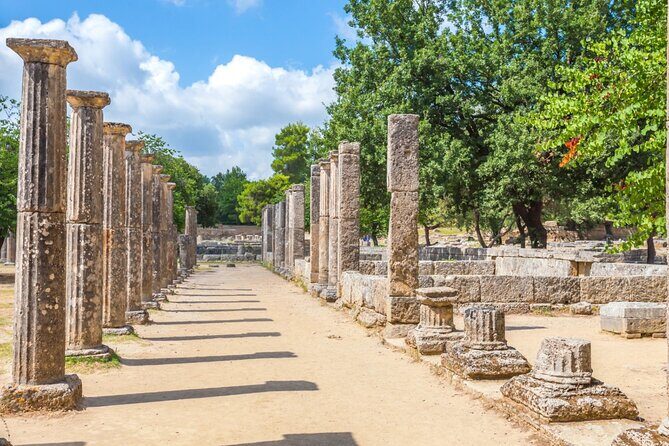
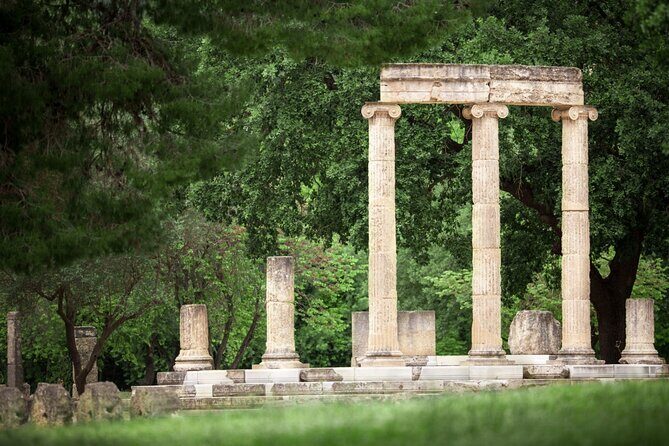
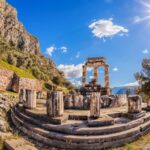
The Philippeion is a strong contrast to the temples. It’s described as a circular memorial (a tholos) dedicated to Philip’s family, including Philip himself, Alexander the Great, Olympias, Amyntas III, and Eurydice I. The memorial was made by the Athenian sculptor Leochares to celebrate Philip’s victory at the battle of Chaeronea (338 BC).
Architecturally, it’s described as Ionic on the outside with 18 columns, and lavish internal design with engaged columns in a Corinthian order. The diameter is noted as about 15 meters, and the description includes details about windows and the carved roof.
Why it matters for your day: this is one of the few structures inside Olympia dedicated to human figures. It helps you understand how the sanctuary kept changing and absorbing real political history, not just religious myth.
The time at the Philippeion is short, but the stop is worth it because it gives you a new angle: Olympia wasn’t frozen. It evolved.
Museums in one block: Olympia artifacts without the extra planning
After the outdoor area, the itinerary shifts indoors with three museum stops plus a dedicated Olympic-themed museum.
Archaeological Museum of Olympia
This is described as one of Greece’s principal museums, and it became the first museum in Greece outside of Athens when it opened in 1882. The collection focuses on discoveries from the Olympia region, spanning prehistory through Roman rule. Featured works mentioned include Hermes and the Infant Dionysus (attributed to Praxiteles), objects from the Temple of Zeus, Nike of Paionios, and even an oenochoe associated with Phidias. Bronze collection strength is specifically noted.
Even if you only have about 30 minutes, your payoff is focus. The museum helps you make sense of what you just walked past outdoors.
Museum of the Olympic Games
This is the themed follow-up that explains the games as a series of athletic competitions among city-states, held every four years (an Olympiad). The explanation includes mythological origins, continuity under Roman rule, and the last recorded celebration in AD 393 under Emperor Theodosius I. There’s also mention that evidence suggests some games may have continued after that, with an ending possibly tied to Theodosius II and a fire connected to the temple of Olympian Zeus.
I like this kind of museum stop because it gives you a timeline brain. When you know the games lasted centuries, the ruins stop feeling like a single moment in time.
Archimedes Museum
This is a different turn: it’s dedicated to Archimedes, described as mathematician, physicist, engineer, astronomer, and inventor. It’s a quick 30-minute add-on, but it broadens your sense of what ancient Greece contributed besides temples and stadiums.
One caution: if you’re the type who likes to read every label, the museum time may feel fast. The value here is that you see the museum trio at all, without having to schedule separate trips.
Market time in Olympia: lunch and souvenirs on your terms
After the museums, you get about one hour of free time in the Market of Ancient Olympia. This is where you can stroll village shops, buy handmade souvenirs, and have lunch at a traditional Greek tavern.
Since lunch isn’t included, this hour is your practical buffer. You can choose something simple, hydrate, and recharge without feeling guilty about losing time. If you want lunch with local pacing, this is the moment to do it rather than waiting until the drive back.
Tip: if you’re sensitive to heat, treat this as your planned slowdown. Eat first, shop second.
The return to Athens: plan for fatigue, not just distance
Your drive back to Athens takes about 3.5 hours. You’ll likely feel it after a long day of walking in the open—especially if the weather is hot.
The good news is that your transport includes WiFi and bottled water, and the vehicle is air-conditioned. That makes the return feel like a “cool down” rather than another endurance test.
This is also the time to mentally sort what you saw: canal views, Zeus at monumental scale, the stadium as a performance space, then the functional Olympia details like water systems and training grounds, topped off with museum context. It’s a full story arc for one day.
Value and who this private tour makes sense for
At $330.44 per person, this isn’t a budget impulse buy. But it can be good value if what you want is a fast, organized day that reduces decision-making.
What you’re paying for:
- Round-trip private transportation from Athens in an air-conditioned vehicle
- A dedicated driver who provides English commentary and handles the driving and routing
- WiFi and bottled water, plus pickup that’s simpler than arranging your own transit
What you’re not paying for:
- Archaeological site and museum entry (listed as 12€ per adult)
- Lunch
- An official licensed tour guide inside the archaeological site (the driver is knowledgeable, but not an official guide; a licensed guide is offered only on request and depending on availability)
This means I’d steer you toward this tour if:
- You have limited time in Athens and want Olympia without wrestling logistics
- You prefer a calmer pace where you’re not squeezed into a big group
- You’d rather spend money on transport and convenience than on spending the day figuring things out
I’d think twice if:
- You want a deep, label-by-label guided walkthrough inside the site (you may want the licensed guide option)
- You hate long days and would rather split Olympia into a slower multi-part plan
- You’re traveling with someone who gets uncomfortable outdoors quickly—many Olympia stops happen in the open
One more small but real point: the tour has a high rating (4.7 from 7 reviews), and one recurring standout is a driver named George, praised for stories and history, plus practical help like having a cooler of water on a very hot day. Your driver may not be George, but the feedback hints at the right mindset from the driver role: interpretive commentary plus real-world care.
Should you book Ancient Olympia by private day trip?
Book it if your priority is seeing Corinth Canal and the key Olympia stops in one clean, organized day with private transport from Athens. The value comes from convenience and momentum: you get the highlights plus enough museum time to connect the ruins to the bigger story.
Skip it (or consider upgrading your approach) if you’re looking for deep indoor-guided explanations every step of the way. With the driver not entering the sites as an official guide, you’ll get commentary, but the entry experience still depends on what you bring as a curiosity level—or whether you can request a licensed guide.
If you’ve got one day and you want it to count, this tour is built for that.
FAQ
How long is the Ancient Olympia full-day private tour from Athens?
It runs about 12 hours (approx.), with time allocated for Corinth Canal, Ancient Olympia, several museum stops, and the return drive to Athens.
Is pickup included in the tour?
Yes. Your driver can pick you up from your hotel lobby or from the entrance of your apartment, and you’ll return to the same place or to a point you prefer.
What does the tour include for transportation?
You get round-trip, air-conditioned private transportation with WiFi on board and bottled water.
Do I need to pay for tickets to the archaeological site and museums?
Yes. Entry/admission to the archaeological site and museums is not included and is listed as 12€ per adult. Lunch is also not included.
Is a licensed tour guide included?
A licensed tour guide is not included, but it may be available upon request and depending on availability. The driver can provide fluent English commentary but they are not official tour guides inside the archaeological sites.
How many hours do I spend at Ancient Olympia?
The schedule includes travel time to Olympia and then about 3 hours at the archaeological site, plus additional shorter stops within the wider Olympia area.
Are meals included?
No. Lunch is not included, though there is free time in the market where you can choose where to eat.
What is the cancellation policy?
You can cancel for a full refund if you cancel at least 24 hours in advance of the experience start time.
More Private Tours in Athens


More Tours in Athens


More Tour Reviews in Athens
- All Day Cruise -3 Islands to Agistri,Moni, Aegina with lunch and drinks included
★ 5.0 · 4,958 reviews