REVIEW · ATHENS
Athens: Acropolis and Mythology Highlights Small Group Tour
Book on GetYourGuide →Operated by Alternative Athens · Bookable on GetYourGuide
Athens feels human on this walk. You start under the Arch of Hadrian and get a real myth-meets-architecture tour of the Acropolis and the Ancient Agora. I love how the guide connects stories from Greek mythology to what you’re actually seeing, and I love the focus on practical standouts like the Parthenon, Temple of Athena Nike, and Temple of Hephaestus. One thing to plan for: you’re walking on uneven stone and climbing uphill, so bring comfortable shoes and expect a steady pace.
The best practical win is the time you save. With Acropolis entry arranged for you (and the option that can include Ancient Agora entry), you spend less time sorting tickets and more time listening, looking, and asking questions. In small groups, you’re not stuck at the back, and some guides even use devices so you can hear clearly—just be ready that hearing can still vary with wind and crowds.
If you choose the option that includes both Acropolis and Ancient Agora, you’re set for the key parts of the day. Also note that no backpacks and no strollers are allowed on the Acropolis, so pack light.
In This Review
- Key highlights you’ll remember
- Where myths turn ruins into a story you can follow
- Meeting under the Arch of Hadrian: start location and first easy win
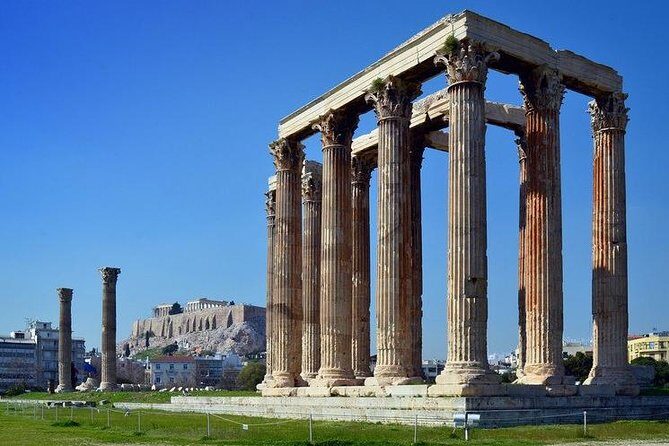
- Temple of Olympian Zeus: seeing the outside before the climb
- Ascending the Acropolis: the walking route and the guided core
- Temple of Athena Nike and the side of the Acropolis people miss
- Erechtheion: where architecture gets personal
- Parthenon time: best use of your limited attention span
- A note on photos and pacing
- Ancient Agora and Temple of Hephaestus: Athens beyond temples
- Small-group reality: how it feels in 2–4 hours
- Tickets, entry fees, and free youth access you should know
- The $53 value question: what you get for the money
- Who this mythology highlights tour suits best
- Should you book this Acropolis and mythology tour?
- FAQ
- Where do I meet the tour guide?
- Which metro station is closest?
- How long is the tour?
- What sites will we visit during the tour?
- Are tickets included?
- Can the operator pre-purchase entry tickets for me?
- Is there free entry for young visitors?
- What can’t I bring?
Key highlights you’ll remember
- Mythology tied to real buildings: you’ll learn why gods and legends show up in place-names and monuments
- Licensed guide walk across multiple sites: from the Arch of Hadrian to the Agora and Temple of Hephaestus
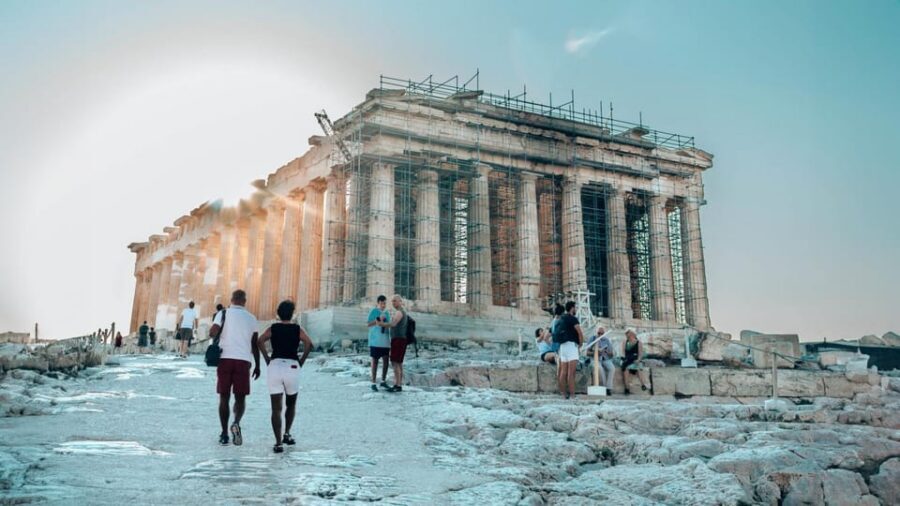
- Acropolis route with major stops: Temple of Athena Nike, Erechtheion, and the Parthenon
- Ancient Agora city-life perspective: the tour doesn’t stop at temples and views
- Small group feel: easier questions, more attention, less running for position
- Great for first-timers to mythology: it’s built for people who know little and people who know a lot
Where myths turn ruins into a story you can follow
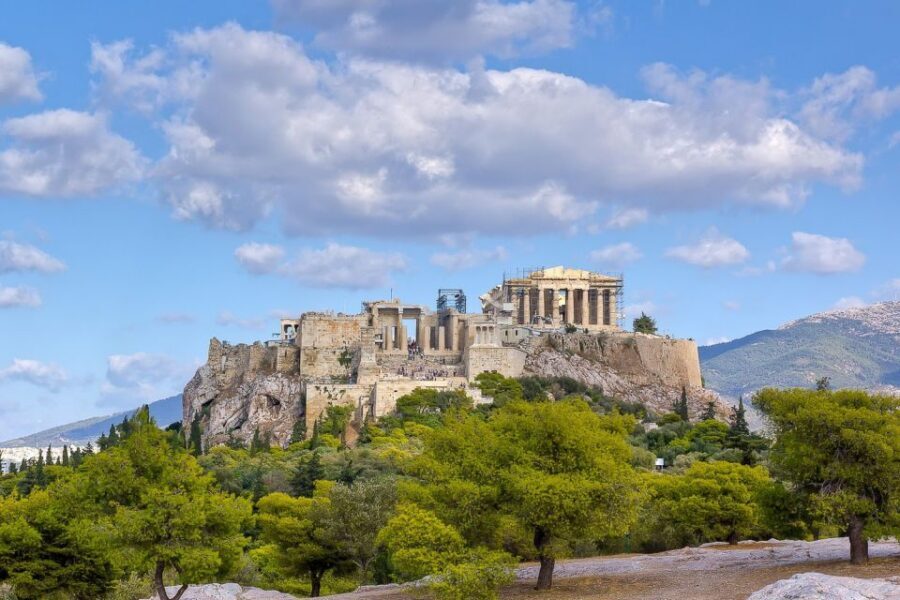
The Acropolis is famous for a reason: it’s dramatic even if you know nothing. What this tour adds is the why behind the drama. Instead of seeing a site as a pile of stone, you get stories that explain how Athenians thought, what they valued, and how their gods became part of everyday life.
Greek mythology can sound like pure fiction until you hear it connected to specific features. On this tour, that connection is the whole point. You’ll hear about the birth of Athens as a glorious city, its Golden Age, and the later downturn—then watch those themes echo in the monuments around you. Guides such as Angelica, Irene, Stellios, Athina, and Antonia are repeatedly praised for storytelling that feels organized, not random. That matters, because the Acropolis is big. Without a guide, you can end up collecting photos without understanding what you just saw.
You’ll also notice something else: names matter. The tour highlights temples dedicated to specific deities and includes viewpoints and ruins that help you understand the city’s layers—religion, politics, and public life all stitched together. That’s why mythology doesn’t feel like a side quest here. It’s your navigation tool.
You can also read our reviews of more tours and experiences in Athens.



Meeting under the Arch of Hadrian: start location and first easy win

Your meeting point is under the Arch of Hadrian (Hadrian’s Gate) near the Acropolis, at Leof. Vasilisis Amalias 50. Look for your guide holding a sign for alternative athens.
Practical tip: the closest metro station is ACROPOLIS. Plan a roughly five-minute walk from there to the Arch. It’s a smart way to start because you’re already at the edge of the ancient city story—Hadrian’s Gate helps bridge “modern Athens” and the ancient landscape you’re about to climb into.
When a tour starts in the right place, the whole day feels easier. You’ll spend less time guessing routes and more time building context. And because it’s a walking tour, that early context helps even during the first quick stop at Temple of Olympian Zeus.
Temple of Olympian Zeus: seeing the outside before the climb
One of the first stops is Temple of Olympian Zeus. You won’t go into it in this tour format—you’ll spend about 15 minutes on a guided look from outside.
This is a good setup. The temple may be in ruins, but it’s still a key piece of Athens’ scale. Standing near it gives you a sense of how ambitious Greek building projects were—especially in a city that wanted to project power through stone. Then, you’re ready for the Acropolis walk, which feels less like a sudden uphill surprise and more like the next chapter.
If you’re the type who hates starting a day with confusion, this early “orientation” stop is a win. It gives your brain something to hold onto before the crowd and the climb begin.
Ascending the Acropolis: the walking route and the guided core
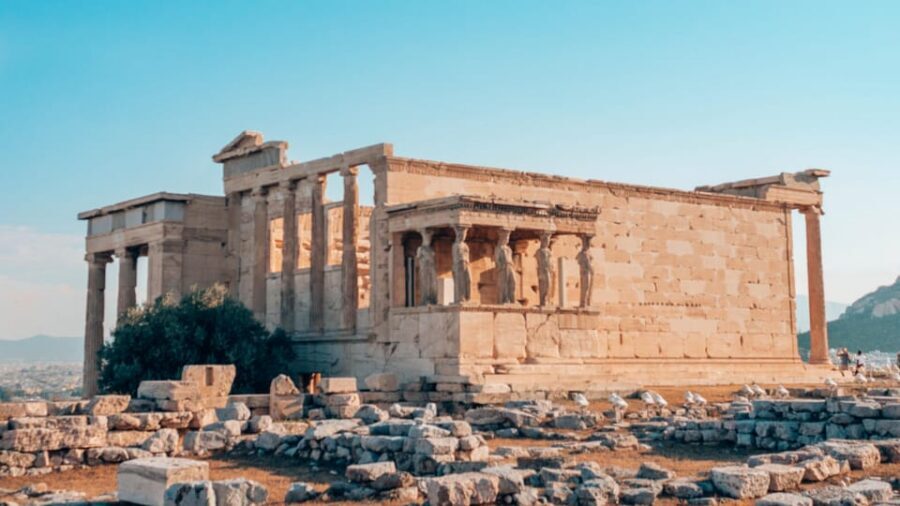
The Acropolis part begins with a short walk (about 15 minutes), then a guided segment of roughly 1.5 hours. This is where the tour earns its keep.
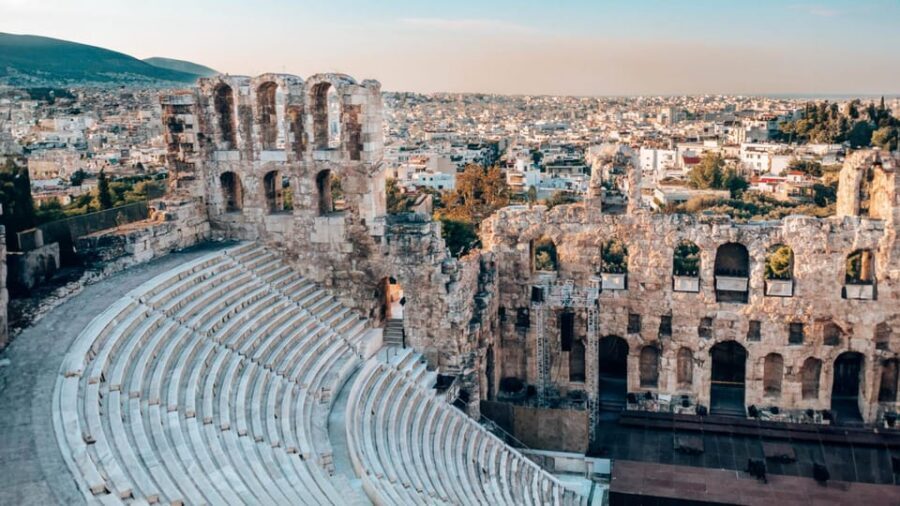
You’re not just shown the top view. You’re guided through major points so you understand what each structure was for, and why it matters. The tour also includes a practical mix of major icons and supporting sites, including areas tied to drama and healing mythology—like the Theatre of Dionysus Eleuthereus and references around the Sanctuary of Asclepius.
Temple of Athena Nike and the side of the Acropolis people miss
The Temple of Athena Nike is on the route with a guided visit of about 15 minutes. This stop works well because the temple’s location helps you understand how Athena’s presence was imagined as protection and victory. If you’ve ever wondered why people put so much effort into small shrines and not only massive temples, this is the kind of stop that explains the logic.
- All Day Cruise -3 Islands to Agistri,Moni, Aegina with lunch and drinks included
★ 5.0 · 4,958 reviews





Erechtheion: where architecture gets personal
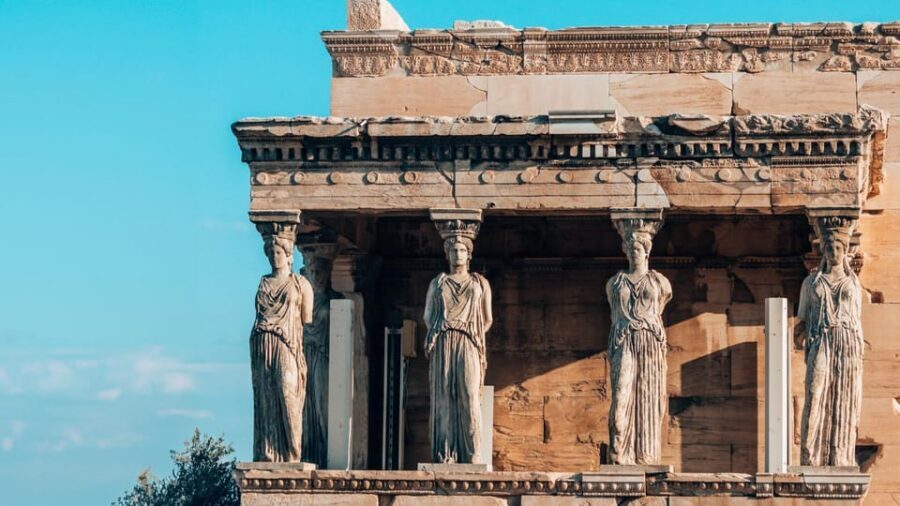
Next is Erechtheion (guided for about 15 minutes). This area tends to click for people because it feels more intimate than the biggest monument views. The tour also mentions ruins associated with Athena Polias along the way, which helps you see how Athena’s identity shows up in multiple forms across the Acropolis area.
In plain terms: you’ll stop long enough to notice details, not just pass by them.
Parthenon time: best use of your limited attention span
The Parthenon is the center of gravity here, with a guided visit of about 30 minutes. That time allocation is realistic. At the Acropolis, it’s easy to burn your whole attention on one building and then rush the rest. Here, you get enough time to understand what you’re looking at and how it connects to the broader myth-and-politics story.
If you care about architecture, you’ll appreciate guides who explain how Athenians seemed to project their worldview into monuments. Some guides in this program are archaeologists, and that background often shows up in how they talk about stone, design, and symbolism. Either way, the effect is similar: you leave with a clearer mental map of what the Parthenon represents beyond being famous.
A note on photos and pacing
You’ll likely get time to look around and take pictures, not only “walk-stops-only.” One common theme from guides is balancing movement with shade and pauses. Still, this is a walking tour with a schedule. If you tend to slow down, factor that in.
Ancient Agora and Temple of Hephaestus: Athens beyond temples

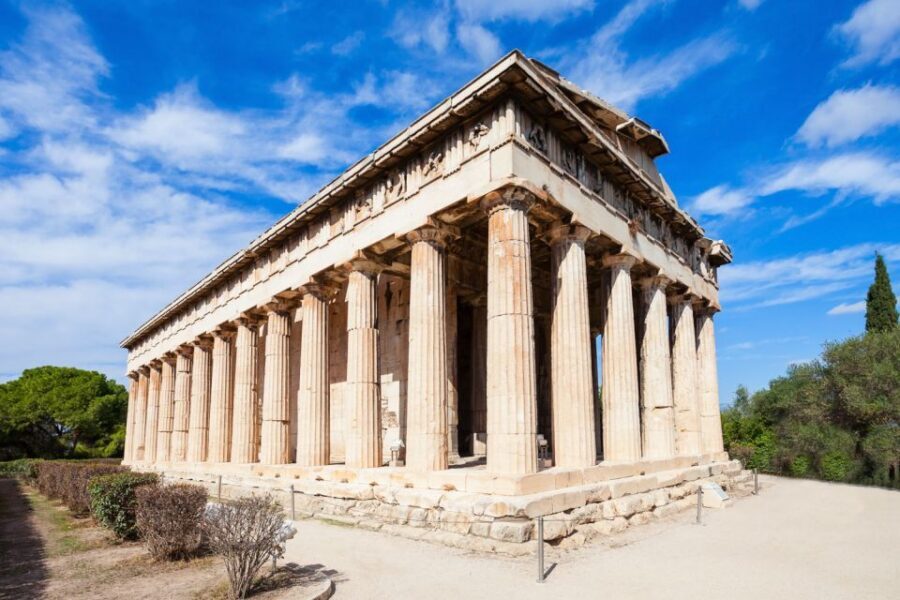
After the Acropolis, you move to the Ancient Agora area. You’ll have a walk segment of about 30 minutes here, then a guided visit to the Temple of Hephaestus for about 30 minutes.
This part is important because it changes the story from religion to civic life. On the Agora side, you’ll start seeing why Athens became the center it did: people gathered, debated, worshiped, and shaped society in public spaces. That context is what makes the Acropolis feel less like a museum and more like the political and social heart of a real city.
Temple of Hephaestus is a standout because it’s one of those monuments that still looks like it belongs to a living city. It’s not just an outline. It gives you a sense of what preservation can reveal: scale, form, and the kind of craftsmanship that made these sites enduring.
If you’re thinking about Ancient Athens as a set of “cool ruins,” don’t let the Agora phase drop off. It’s where the tour helps you understand the everyday engine behind the myths.
Small-group reality: how it feels in 2–4 hours
This experience is built around a small-group format, marketed as an optimal way to see more without the chaos. In practice, that tends to mean you move at a human pace, with enough spacing that you can hear explanations without sprinting to stay in front.
Guides like Alex, Vicky, Danae Kousouri, Dimitri, Demi, Voula, and Michael are specifically praised for pacing and for answering questions. That’s a big deal at the Acropolis. Crowds can make it hard to focus, and a good guide uses micro-pauses—standing where views are best, then changing position so you’re not fighting the press of people.
A practical tip: bring water and plan for shade breaks. The tour may be short, but it’s still outdoors walking with sun exposure. Some guides are attentive to finding shaded areas and keeping the pace comfortable, which is especially helpful on hotter days.
Also, if you’re easily distracted by crowds, the small group helps. You’re less likely to feel like you’re watching history through other people’s shoulders.
Tickets, entry fees, and free youth access you should know

This tour includes Acropolis tickets or Acropolis & Ancient Agora entry tickets depending on which option you choose. It’s also described as skipping the ticket line, which is useful at peak times.
Here’s the practical way to handle this so you don’t pay twice:
- If your booking includes only Acropolis entry, you may need to think about the Agora entry separately.
- If your booking includes Acropolis & Ancient Agora tickets, you should be covered for both parts.
- Entrance fees are not listed as automatically included for every situation, but the operator can pre-purchase entry tickets for you if you request it.
Free access is also a real factor. Acropolis & Ancient Agora entry is free for:
- EU citizens under 25
- Non-EU citizens under 18
You’ll need a valid ID or passport to use that.
One more thing: entry fees are stated as non-refundable and non-exchangeable. So when you’re choosing times, pick what you can realistically keep.
The $53 value question: what you get for the money

At $53 per person, you’re paying for three things: guided interpretation, efficient entry, and time saved.
The ticket-skipping angle matters because the Acropolis is one of those places where waiting can eat your best energy. If you can enter smoothly, you’ll get more “active experience” time and less “stand in line” time.
You’re also getting a certified guide and a map, plus a guided route that hits multiple major sites rather than just one highlight. A two to four hour tour may not sound long, but it’s a useful window at the Acropolis because it forces focus. You’ll see the big monuments (Parthenon, Athena Nike, Erechtheion), plus the Agora (including Temple of Hephaestus). That mix is where your money feels justified.
Is it perfect value for everyone? Not if you already know Greek mythology deeply and you hate structured tours. But if you’re aiming to understand what you’re looking at, it’s strong value.
Who this mythology highlights tour suits best
This tour is a great fit if you want the Acropolis explained with stories that make the place easier to remember. It’s especially good for:
- First-time visitors who feel lost among ruins
- People who love Greek mythology, including those who’ve met it through modern pop culture
- Families and mixed-age groups, as guides often manage to keep the content engaging without turning it into a lecture
- Anyone who prefers small-group movement and more conversation time
If you like learning at a steady pace, and you don’t mind walking uphill, you’ll likely enjoy this format a lot.
If you’re extremely photo-focused and want slow wandering with no schedule, consider pairing this with extra self-guided time afterward.
Should you book this Acropolis and mythology tour?
If your goal is to see the Acropolis and Ancient Agora with explanations that connect myths to monuments, I’d book it. This is exactly the kind of “short but meaningful” Athens experience that helps you understand a city quickly without getting overwhelmed.
I’d especially lean yes if:
- You want to understand the Parthenon beyond the postcard view
- You want the Agora part, not only the hilltop landmarks
- You prefer small-group attention and a licensed guide
I’d think twice if:
- You have mobility limits that make uphill stone walking hard
- You strongly dislike guided pacing and would rather roam completely on your own
Bottom line: for most visitors, the $53 price is a fair trade for guide-led clarity, efficient entry, and a route that connects the big myth themes to what’s still standing.
FAQ
Where do I meet the tour guide?
You meet under the Arch of Hadrian (Hadrian’s Gate) on Leof. Vasilisis Amalias 50. Your guide will be holding a sign for alternative athens.
Which metro station is closest?
The closest metro station is ACROPOLIS. From there, you walk about 5 minutes to the Arch of Hadrian.
How long is the tour?
The tour duration is listed as 2 to 4 hours, depending on the starting time and the flow of the walk.
What sites will we visit during the tour?
You’ll cover major Acropolis landmarks like the Parthenon, Temple of Athena Nike, and Erechtheion, plus Ancient Agora stops like the Ancient Agora of Athens and the Temple of Hephaestus. Other sites mentioned include Temple of Olympian Zeus (from the outside) and points connected with the Theatre of Dionysus Eleuthereus and the Sanctuary of Asclepius.
Are tickets included?
The tour includes Acropolis tickets or Acropolis & Ancient Agora entry tickets, depending on the option you select. Skip-the-ticket-line access is included as well.
Can the operator pre-purchase entry tickets for me?
Yes. The operator states they can pre-purchase entry tickets if you let them know.
Is there free entry for young visitors?
Yes. Acropolis & Ancient Agora entry is free for EU citizens under 25 and non-EU citizens under 18, with presentation of a valid ID or passport.
What can’t I bring?
Strollers, pets, and backpacks are not allowed at the Acropolis. Pets are not allowed except assistance dogs, and big bags are also not permitted.


More Tours in Athens

More Tour Reviews in Athens
- All Day Cruise -3 Islands to Agistri,Moni, Aegina with lunch and drinks included
★ 5.0 · 4,958 reviews