
REVIEW · ATHENS
Athens: Acropolis Entry Ticket & VR Audio Guided Tour
Book on GetYourGuide →Operated by SIGHTS OF ATHENS-GRAY LINE · Bookable on GetYourGuide
You can feel the Acropolis working like a time machine. This ticket gets you onto the hill with a set entry slot, then pairs it with a VR-style audio app and guided sound in many languages. I like that it’s self-paced, so you can pause when something catches your eye instead of marching in a crowd.
Two things I especially like: first, the separate entrance with skip-the-line access, which helps you start sooner and waste less time. Second, the route is designed to make sense—begin at the Theater of Dionysus, then move through the Parthenon area and key monuments in order. The one drawback to plan around is tech reliance: the audio is on your phone, and you’ll want a charged device and a way to handle bright sun.
In This Review
- Key Takeaways Before You Go
- Timed Entry and Separate Entrance: Getting Started Fast
- Your VR Audio App: How the Story Works Without a Live Guide
- Start at the Theater of Dionysus: Why This Opening Stop Matters
- Parthenon and the Sacred Route to Athena
- Propylaea, Temple of Athena Nike, Erechtheion: The Details That Pay Off
- Odeon of Herodes Atticus and the Athens Views
- Price and Value: Is $53 Worth It?
- Practical Tips for a Smooth 2-Hour Visit
- Should You Book This Acropolis Ticket Plus VR Audio Tour?
- FAQ
- What is included with this Acropolis experience?
- Do I need headphones?
- How do I get my ticket?
- Which entrance should I use?
- How strict is the timed entry window?
- What languages are available in the audio guide?
- Is there a live guide during the tour?
- Can I cancel and get a refund?
- Are there restrictions on strollers or pets?
Key Takeaways Before You Go

- Timed entry + separate entrance can save you real time on a crowded site
- VR-style audio helps you picture how the hill looked in ancient times
- Multilingual self-guided audio keeps the story moving without a live guide
- Start at the Theater of Dionysus for a strong opening context before the Parthenon
- Sun + phone battery can be the limiting factor, not the monuments
Timed Entry and Separate Entrance: Getting Started Fast

The biggest practical win here is that you’re buying access with a specific date and time slot. On the Acropolis, that matters. Lines, security checks, and slow-moving bottlenecks can turn a great day into a time-tax.
With this ticket, you go to either the main or south entrance of the Acropolis and use your PDF ticket (printed or on your phone). You’re also directed to use a separate entrance for skip-the-line style entry, which usually means fewer minutes spent standing still and more minutes walking the hill.
A small but important detail: you’re allowed in only at the selected time slot, or within a 15-minute window before or after. That’s not the time to wander around Syntagma Square taking selfies. Treat your entry time like a museum appointment.
You can also read our reviews of more tours and experiences in Athens



Your VR Audio App: How the Story Works Without a Live Guide

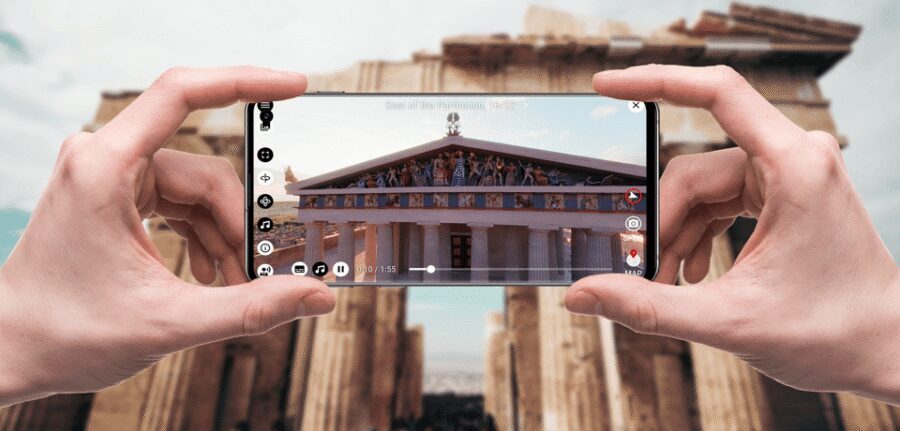
This experience is built for people who want control. There’s no live instructor with you. Instead, you download a VR audio guide app and follow self-guided narration through the monuments.
Here’s the key idea: the audio doesn’t just label what you’re seeing. It tries to help you imagine earlier versions of the site, using the app’s virtual reality component to show how the Acropolis Hill and surroundings may have appeared in ancient times. That can be a helpful mental bridge when the ruins look bare from today’s angle.
The audio guide is available in many languages, including English, Spanish, German, Italian, Polish, Russian, Chinese, French, Portuguese, Arabic, and Japanese. The content is there; the main question is whether your phone experience works well for you.
And that leads to the biggest real-world consideration: you’re using your smartphone to run audio (and likely to operate the app prompts). Bright Athens sun can make screens harder to read, and audio playback can affect battery life. If you’re the type who charges late at night, adjust your routine.
Start at the Theater of Dionysus: Why This Opening Stop Matters
You don’t begin at the Parthenon and work backward. You start at the Theater of Dionysus. That’s smart, because this site was never only about temples. It was also about performance, politics, and public life.
When you start here, the Acropolis feels like part of a larger cultural machine. You get a context-setting jump before you hit the most famous buildings. Even if you know the names already, starting with a theater angle makes the day more coherent.
It also changes your pacing. The theater area gives you space to get oriented. Then you move forward along the monumental sequence without feeling like you’re constantly catching up.
If you tend to rush when you arrive somewhere famous, you’ll probably like this order. It gives your brain a warm-up.
Parthenon and the Sacred Route to Athena
Next comes the Parthenon zone, including the UNESCO World Heritage focus dedicated to Athena, the goddess of wisdom and warfare. The Parthenon is the star, of course, but what makes it work during a self-guided experience is how the audio can keep you from only doing the photo circuit.
As you proceed, you’ll follow the route through the major structures in sequence. You’ll come across the Propylaea (the impressive gateway approach), then the Temple of Athena Nike, and later the Erechtheion area and its surrounding buildings.
This is where the app’s narration can help most. Ruins don’t come with labels on the stones. Hearing the story while you’re standing in front of the building makes it easier to connect shape and purpose. It’s also easier to decide where to stop for extra time, since you’re not waiting for a guide to finish a speech.
One more practical note: because the experience is timed and self-paced, you control how long you linger at the Parthenon. If you want the iconic viewpoints without stress, I’d plan to spend your longer time window here—especially if you want to watch the light shift.
Propylaea, Temple of Athena Nike, Erechtheion: The Details That Pay Off
The middle of the walk is where you either enjoy the smaller architectural moments or you skip them. This ticket nudges you to notice.
The Propylaea is a natural checkpoint. It helps you understand how you enter and move through ceremonial space, not just how you pass through it. The Temple of Athena Nike is another stop that rewards slow attention. Even when you’re looking at fragments, the story helps you see why people cared about it.
Then you reach the Erechtheion, one of the key structures you see from different angles as you shift your position on the hill. The area is famous for its distinctive features, and the audio prompts can help you focus on what to look for instead of standing there thinking you’re missing something.
If you’re worried about the phone distraction, here’s a strategy that works: keep the phone in your hand when you first start a new segment, then raise your head and let the audio guide you while you visually scan the building. You don’t need to stare at the screen every second.
You can also read our reviews of more guided tours in Athens




Odeon of Herodes Atticus and the Athens Views
To close your loop, you’ll get to the Odeon of Herodes Atticus area. Even though it’s another dramatic structure, it also functions like a reality check. It’s hard to stay in ancient-mode when you look out and see Athens surrounding the hill.
That’s part of why this route feels good. The app and audio help you picture the past, but the views remind you you’re in modern Athens. You’ll also see the city spread out with mountains and the Aegean in the distance when the weather cooperates.
A self-guided tour has one advantage at the view points: you can stand where the angle is best for your photos. If you’re traveling with people who want different photo styles, you can split attention for a few minutes and regroup naturally instead of waiting for everyone to finish the same shot.
This is also a good place to take a breath and slow down. The Acropolis can be tiring just from the walking and the sun.
Price and Value: Is $53 Worth It?
At $53 per person for a 2-hour experience, you’re paying for three things at once: admission to the Acropolis complex, a VR/audio app, and multilingual self-guided narration.
That value equation works best if you want independence. A live-guide tour can be great, but it’s also timed like a group product. Here, the “guide” is the app, and the benefit is you decide when you linger.
It’s also a better deal than paying for admission alone if you’re genuinely going to use the audio and VR component during your walk. If you tend to skip phone-based content once you’re on-site, the ticket price may feel less justified.
One more angle: the separate entrance and timed entry can reduce stress. Even if you’re comfortable handling lines, the time saved helps you enjoy the hill instead of spending your energy in queues.
So I’d call it a strong value for tech-friendly travelers who like structure but not crowds.
Practical Tips for a Smooth 2-Hour Visit
Plan for the experience to feel like a gentle loop, not a slow stroll. The duration is listed as 2 hours, so you’ll want to keep moving between stops, even if you pause at your favorite angles.
Bring what you’ll need to make the audio work:
- Headphones (earphones aren’t included)
- a charged smartphone (sun and screen time can drain battery)
Also, follow the site rules that are listed for this activity: pets and baby strollers aren’t allowed. If you’re coming with mobility needs, good news: it’s listed as wheelchair accessible.
For timing, don’t treat your entry window like a suggestion. With the 15-minute allowance around your selected slot, late arrival can mean you lose your chance to use the timed access you purchased.
Finally, brightness is the sneaky enemy. If your screen is hard to read in direct sun, you might feel tempted to keep checking the phone. Instead, treat the audio prompts like direction while you look at the ruins, not at the device.
Should You Book This Acropolis Ticket Plus VR Audio Tour?
If you like planning that still leaves room for flexibility, I think this booking makes sense. It’s a smart choice if you want pre-reserved entry, less waiting, and a guided story that doesn’t demand you stick to a group pace.
It’s also a good fit if you’ll actually use the multilingual audio and VR-style app while you walk. The monuments are easier to understand when the narrative is playing as you move from the Theater of Dionysus toward the Parthenon and the other signature stops.
I’d hesitate if you know you hate phone-based tours, or if your device battery tends to run low. The main friction points are screen visibility in sun and the risk that audio playback drains power. If you can handle those two issues, you’ll likely feel the most value from this ticket.
FAQ
What is included with this Acropolis experience?
Your ticket includes entry to the Acropolis and Parthenon, a VR application, and a multilingual self-guided audio tour.
Do I need headphones?
Yes. The tour notes that earphones are not included, and you should bring headphones so you can listen to the audio guide.
How do I get my ticket?
Your ticket is sent to your email or WhatsApp. You’ll receive instructions to download the VR audio guide as well.
Which entrance should I use?
You can enter through the main or south entrance of the Acropolis. You can also use the north entrance option depending on how entry is set up for your visit.
How strict is the timed entry window?
Entrance is allowed only at your selected time slot or within a 15-minute window before or after.
What languages are available in the audio guide?
The audio guide is listed in English, Spanish, German, Italian, Polish, Russian, Chinese, French, Portuguese, Arabic, and Japanese.
Is there a live guide during the tour?
No. This includes a self-guided audio experience, not a live guide or live instructor.
Can I cancel and get a refund?
Yes. Free cancellation is available up to 24 hours in advance for a full refund.
Are there restrictions on strollers or pets?
Pets are not allowed, and baby strollers are not allowed.
If you want, tell me your travel month and roughly what time of day you plan to arrive (morning vs. afternoon). I’ll help you pick an entry approach that reduces heat and crowd pressure.




More Tickets in Athens



More Tours in Athens



More Tour Reviews in Athens
- All Day Cruise -3 Islands to Agistri,Moni, Aegina with lunch and drinks included
★ 5.0 · 4,958 reviews