REVIEW · ATHENS
Athens: Acropolis FULLY PRIVATE Tour with Licensed Guide
Book on GetYourGuide →Operated by WARMPENGUIN · Bookable on GetYourGuide
A place this big deserves a human guide. This fully private Acropolis experience pairs a licensed archaeologist with smart pacing, so you see the Parthenon, Propylaea, Erechtheion, and Theater of Dionysus without feeling like you’re speed-walking a checklist. I love the myth-and-architecture storytelling that makes the stones easier to recognize. I also like the option to arrange skip-the-line entry on request, which saves real time at a crowded site.
The one thing to plan around is physical terrain. The Acropolis has steps and uneven surfaces, and it’s not suitable for wheelchair users.
In This Review
- Key highlights worth your time
- Entering the Acropolis with a fully private plan
- Timing and meeting points: start where it’s easiest
- Theater of Dionysus: where stories started before the stones
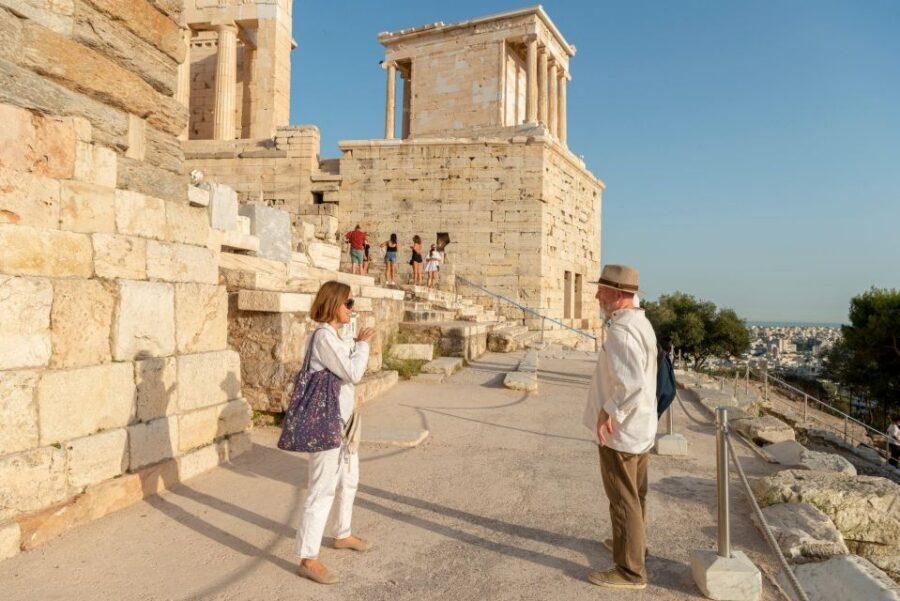
- Propylaea and the imagined Athena view
- Temple of Athena Nike: small temple, big meaning
- Parthenon time: the moment most people came for
- Erechtheion and the myth of Poseidon vs Athena
- Odeon of Herodes Atticus: ancient stage still in use
- Panoramic views and photo spots that don’t waste your time
- What $163 buys: private expertise and fewer headaches
- Fit and expectations: who this tour suits best
- Should you book the Acropolis private tour with a licensed guide?
- FAQ
- How long is the Acropolis FULLY PRIVATE tour?
- Is this tour truly private?
- Are tickets included in the price?
- Can you arrange skip-the-line tickets?
- Where is the meeting point?
- Where do you get dropped off?
- What languages are available for the live guide?
- Is the tour wheelchair-friendly?
- Can I add on another site or a Plaka food plan?
- What’s the cancellation policy?
Key highlights worth your time
- Licensed archaeologist guide focused on history + mythology, not just dates and photos
- Skip-the-line tickets on request to reduce waiting and stress
- Covers the full circuit from Dionysus to the Parthenon to the Odeon of Herodes Atticus
- Golden-hour friendly pacing, with guidance on where to stand for better light
- Multiple departure and drop-off options, including Plaka
- Add-on flexibility for another site or a short Plaka food stop plan
Entering the Acropolis with a fully private plan
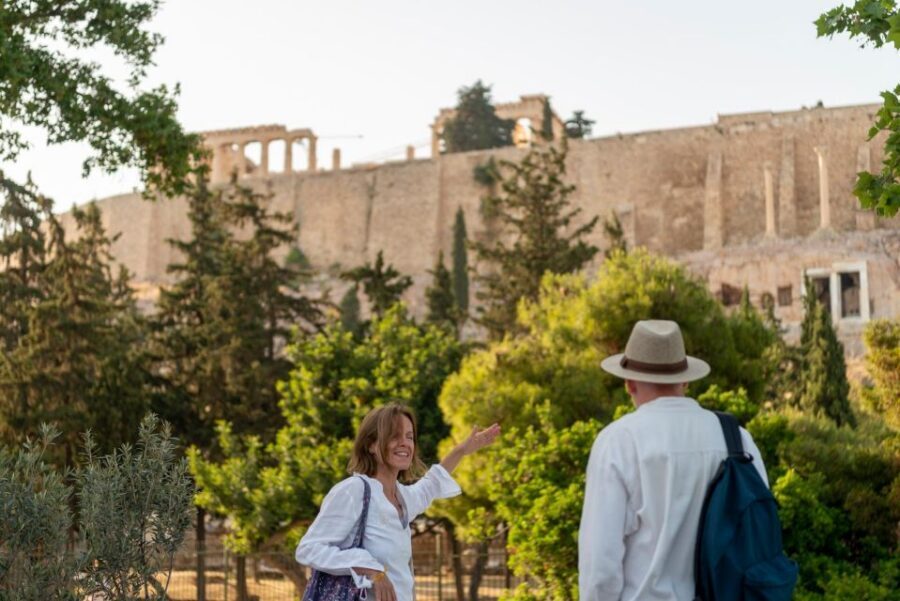
The Acropolis is famous for a reason. From the first steps up, it feels like you’re moving through layers of Athens at once. The key advantage here is that it’s private, so your guide can set the pace and keep you oriented instead of herding a larger group.
What you get is more than a guided walk. The tour is built around turning the site into a story you can follow: how the monuments connect, what the myths were trying to explain, and why certain spots mattered to ancient Greeks. Names and symbols come alive when someone explains them in plain language and then points out what to look for.
I also like how the guide adjusts the tempo for different kinds of interest. One minute you’ll get a big-picture explanation. The next minute you might catch a detail that clicks for people who want the technical angle. That balance shows up in how guides like Efie, Betty, Ava, and Ria were described—each brought their own personality, but the through-line was clarity and care with time.
The tour runs long enough to be satisfying, but short enough that you’re not exhausted halfway through. If you time it well, you can leave with photos you actually like, not just proof you were there.
You can also read our reviews of more guided tours in Athens


Timing and meeting points: start where it’s easiest
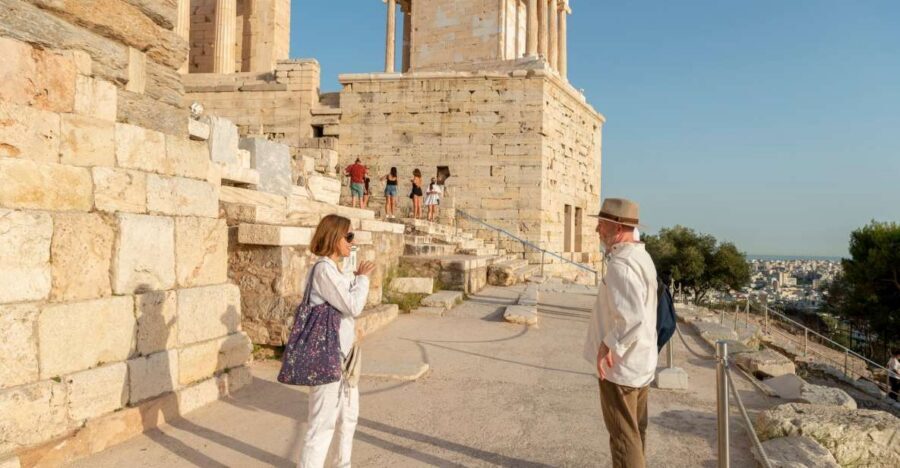
You’ll start from one of several meeting points around Makrigianni (Makrigianni 7 or Makrigianni 11 are listed). Because the meeting point can vary by option, you’ll want to confirm where to meet so you don’t burn energy hunting the group.
The duration is listed as 1.5 to 3 hours, depending on the starting time and how the flow works on the day. The main Acropolis guided portion is 1.5 hours, then you continue with shorter stops at key areas. That structure matters because it prevents the common problem: spending your energy on the busiest stretch and then running out of time for the other monuments.
If you like arriving early, this kind of pacing is ideal. You’ll be able to spend more time looking and less time reacting to crowds. And if you prefer a later start, you can still aim for that soft, golden light people remember—at least the guides in this experience have been praised for managing the timing well.
At the end, you’re free to stay and enjoy the views, or the guide will return you to the meeting point and help with onward directions. There’s also an option to extend privately to another site or focus on Plaka with food and drink stops.
Theater of Dionysus: where stories started before the stones
One of the most practical choices on this tour is the early stop at the Theater of Dionysus. Even if you don’t know Greek drama, the place helps you understand the culture behind the architecture. Theater here isn’t a modern idea. It’s an ancient civic tool—where Athens staged big questions through performance.
You’ll get a short guided segment, but it’s enough to anchor what you see later. When your guide explains why the theater mattered and how plays connect to Dionysus, the Acropolis stops feeling like separate monuments. Instead, they become part of one cultural system.
Is it crowded? It can be. But because this theater area is part of the route, you’re not stuck spending all your time in the Parthenon zone. That balance is a big reason this tour format feels more satisfying than a generic “just see the big stuff” approach.
One practical tip: if you care about photos, listen for where your guide wants you to stand. In the experience, guides have specifically helped people with photo placement and how to manage hills without wasting energy.
Propylaea and the imagined Athena view
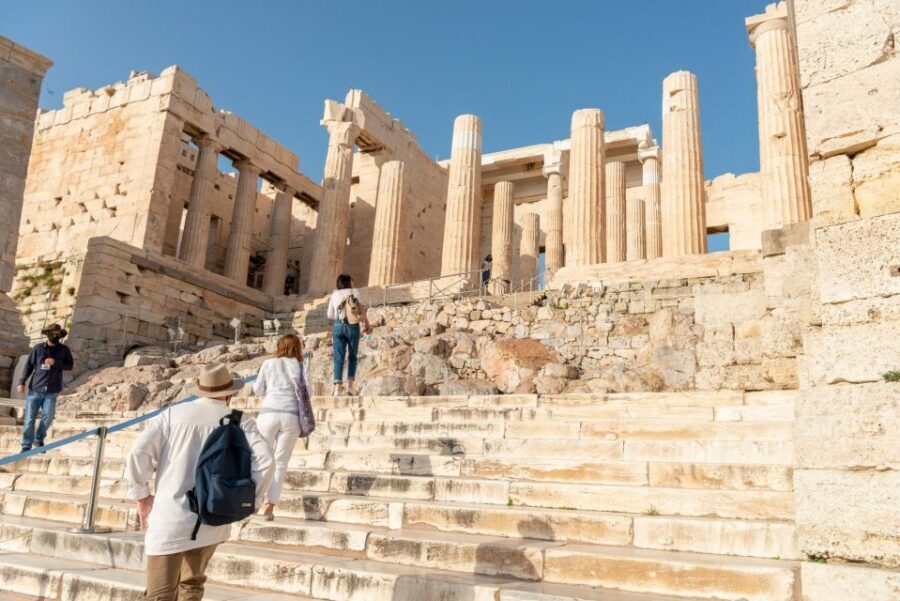
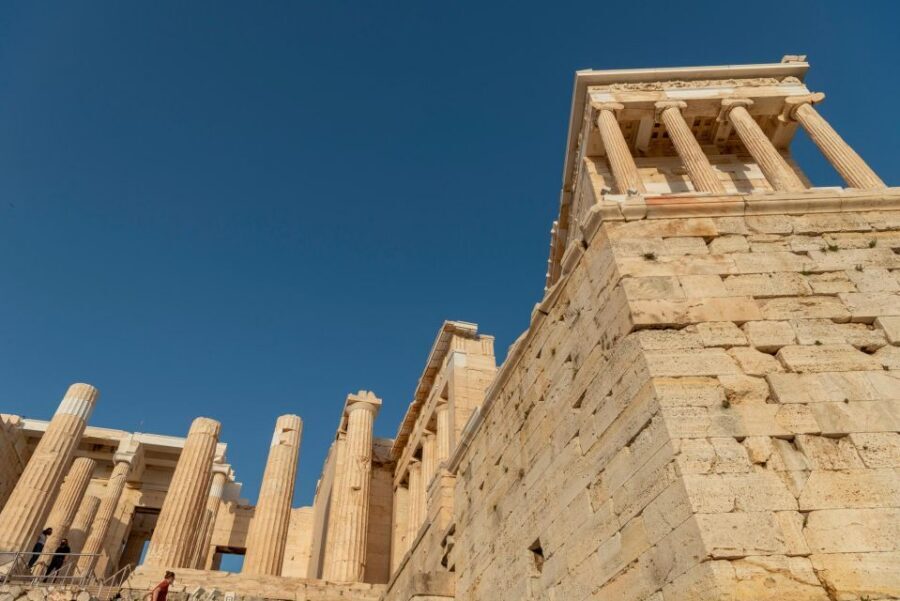
Next you climb toward the Propylaea, the monumental gateway into the Acropolis complex. This is a stop that really rewards a guide. Without context, it can look like another entrance. With context, it becomes a statement about power, protection, and the way Athenians staged their arrival to sacred space.
Your guide will connect the Propylaea to mythology and symbolic design. You’ll hear about the goddess Athena and details meant to be seen in specific light. One standout piece of storytelling is about how sunlight could glint from the bronze spear tip of Athena’s statue—an image that helps you picture the site as something experienced, not just photographed.
This is also where the tour starts to feel physical. The Acropolis isn’t flat. Even when pacing is thoughtful, you’ll want sturdy shoes. It’s not a hike marathon, but it’s enough that you’ll feel it by the time you reach the higher viewpoints.
Temple of Athena Nike: small temple, big meaning
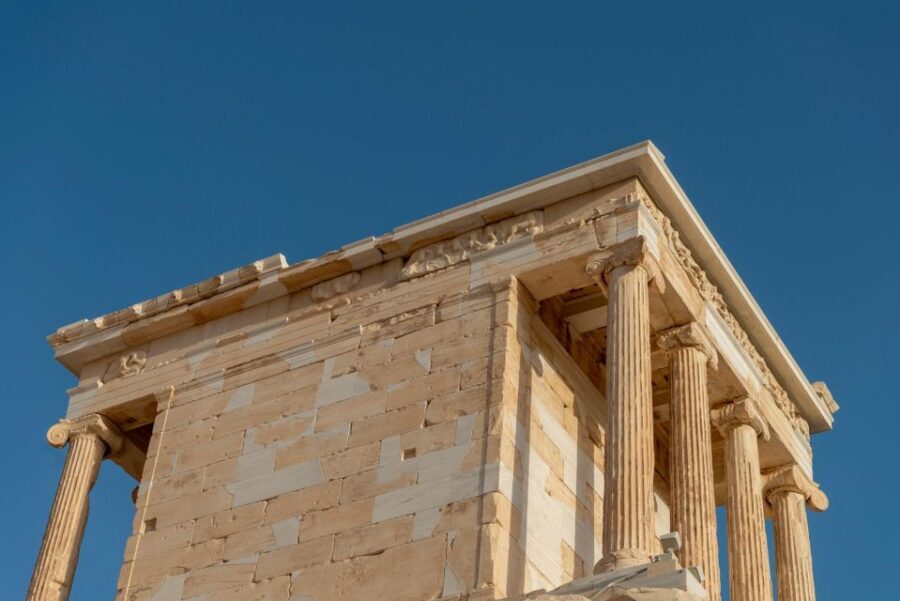
Then comes the Temple of Athena Nike, and don’t let the word small fool you. This is the kind of stop where the size makes the symbolism more noticeable. A guide’s job here is to point out what mattered to the Athenians and why they would place a goddess-related temple in this exact location.
You’ll get a short guided visit focused on meaning and how it fits into the larger story of defense and identity on the hill. When you connect this temple to the way Athena appears across the Acropolis, it stops being a standalone sight.
This is also a helpful moment to catch your breath. The tour keeps moving, but your guide gives you enough of a break to reset your legs and eyes for the Parthenon segment ahead.
You can also read our reviews of more private tours in Athens




Parthenon time: the moment most people came for
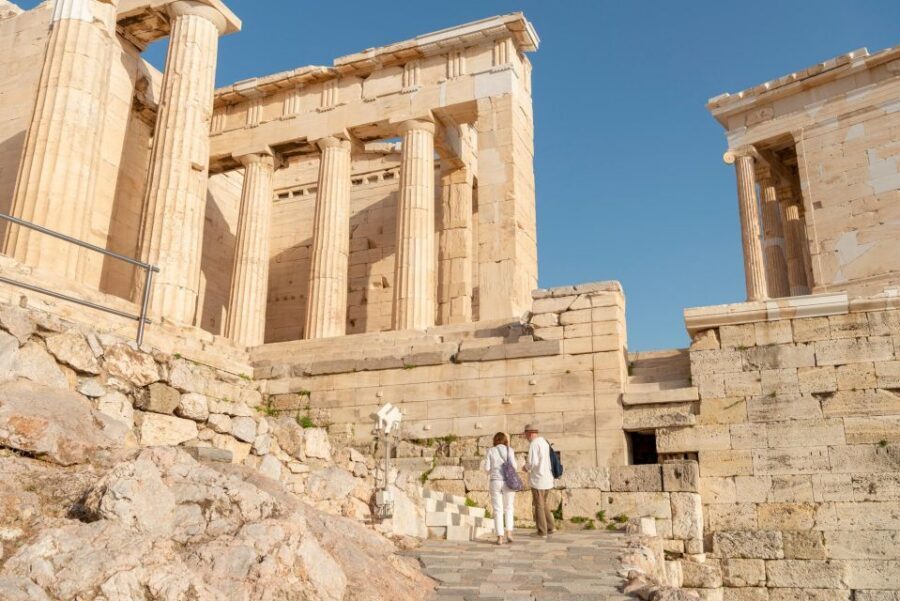
If the Acropolis is Athens’ visual headline, the Parthenon is the main article. You’ll spend a focused guided segment here, and the value is in learning what to look for as you stand in front of it.
Your guide brings in classical architecture details along with the myths tied to Athena and the city’s self-image. That combination is what makes the Parthenon easier to understand quickly. Instead of treating it like a single perfect photo, you start noticing how the whole complex communicates.
One of the best parts of a private tour is that you don’t just stop and shuffle. Your guide can guide you to positions that make the structure easier to read. In this experience, guides have been praised for helping people avoid the worst crowds and choosing good angles for pictures.
And if you’re the type who likes timing, this is where golden hour can shine. People have specifically highlighted catching that light during their tour, which suggests the guides are aware of when the site looks best and how to make that timing work.
Erechtheion and the myth of Poseidon vs Athena
The Erechtheion is the next crucial stop because it changes the mood. The Parthenon can feel like pure clarity—beautiful and orderly. The Erechtheion brings in complexity and myth.
Your guide explains the mythology tied to the site, including the struggle between Poseidon and Athena. That story is not just entertainment. It connects the physical space to a moral and political message about who Athens would claim as its divine protector.
This is another stop that can be confusing without context. When someone walks you through the logic behind the myth and points out relevant features, your understanding jumps in a few minutes instead of slowly, later, through random reading.
It’s also a relief for your brain. After big architecture and bright viewpoints, the Erechtheion’s myth-centered storytelling can feel more human and immediate.
Odeon of Herodes Atticus: ancient stage still in use
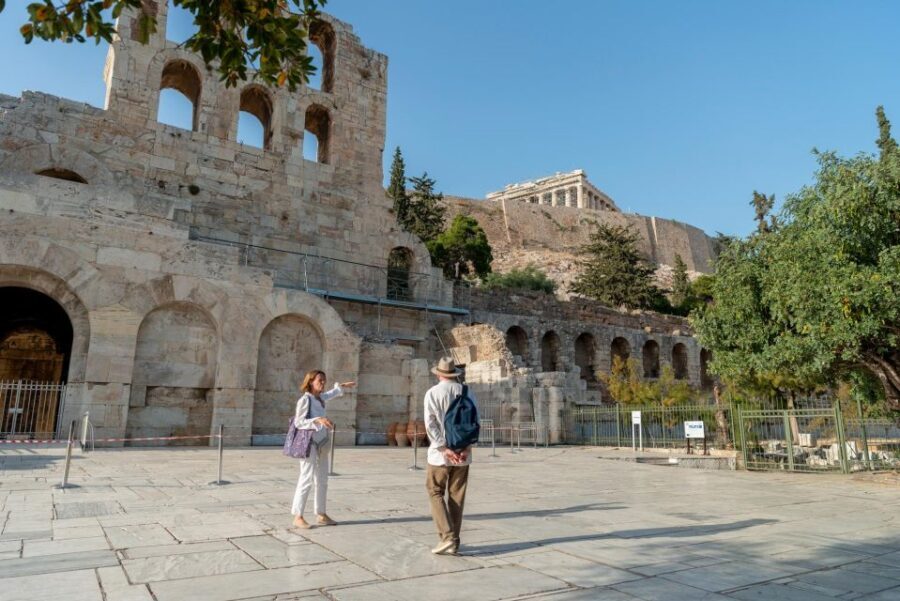
You finish with the Odeon of Herodes Atticus Theater, still used each summer. That detail matters. It means the Acropolis experience isn’t only about ruins. It’s about continuity—Athens has kept the idea of public performance alive for a very long time.
Your guided visit here is shorter, but it’s timed so you get the meaning without losing the day. This stop is a strong payoff if you care about how ancient culture functioned, not just what it looked like.
One practical benefit: this ending gives you options. After your tour, you can stay for the views or head back with the guide’s help with next steps. If you want an easy follow-on plan, Plaka add-ons are available and can be an excellent way to end the day with food and a calmer pace.
Panoramic views and photo spots that don’t waste your time
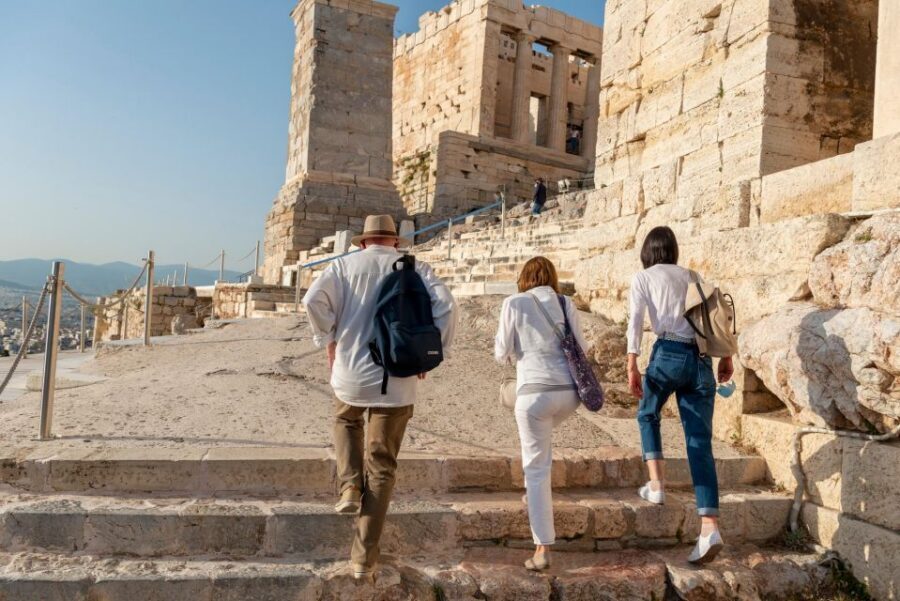
The Acropolis is built for views. You’ll look out over Athens from the top, and your guide helps you make sense of what you’re seeing. Instead of just pointing, guides explain the depth of time—how layers of culture stack up across the city.
In at least some tours, guides also focus on practical photo strategy: where to stand, how to reduce the need to fight for the perfect shot, and how to manage hills efficiently. If you’ve ever spent half a tour turning around for photos while everyone behind you gets annoyed, you’ll appreciate this approach.
A smart way to use this time: pause more than you think you need. Look first, then photograph. The guide’s job is to help you know what you’re looking at, so the photos stop being random angles and become meaningful views.
Also, bring water if you’ll be up in the sun. The tour is short enough that you won’t be out all day, but the hilltop can still feel hot, especially in peak season.
What $163 buys: private expertise and fewer headaches
Let’s talk value, because $163 can sound like a lot until you see what’s included. The ticket costs aren’t included, but the tour includes a licensed expert archaeological guide and a private tour exclusive to your group.
For many people, the biggest value is the guide quality. A licensed archaeologist brings interpretation you can’t get from a generic audio guide. The myth explanations, the architectural context, and the ability to focus on what you care about all add up.
The second value is time-saving. The tour offers skip-the-line tickets on request, and that matters because the Acropolis ticket process can eat hours if you’re not prepared. When your entry is smoother, you spend more time seeing and less time waiting.
Finally, the itinerary is tight and purposeful. You cover several headline monuments and a meaningful ending at Odeon of Herodes Atticus. You’re not trapped in only one section of the site.
If you’re traveling as a group of friends or family, private guiding often becomes easier to justify, because you’re paying for expertise plus flexibility, not just access. If you’re solo, it can still be worth it if your goal is a guided, readable experience rather than a self-guided scramble.
Fit and expectations: who this tour suits best
This is a great match if you want the Acropolis to make sense fast. If you like mythology, Greek drama connections, and architecture explained in everyday language, you’ll get a lot from the guided storytelling.
It’s also a strong option if you dislike rushing. Multiple guide reviews emphasize moving through key positions without feeling like you’re being dragged. That private structure helps a lot.
On the flip side, it’s not suitable for wheelchair users, and the steps and uneven surfaces are a real consideration. If mobility is limited, you’ll need to plan for that reality or choose a different format that matches your needs.
Finally, the tour is offered in English, German, and Italian. If you want a language you don’t have to think through, this is a practical advantage.
Should you book the Acropolis private tour with a licensed guide?
I’d book it if your priority is understanding what you’re seeing. You’re paying for a guide who can connect mythology, architecture, and the cultural purpose of each spot, and you’re doing it in a private format that keeps the day calm.
Choose it if you want to reduce friction. Skip-the-line tickets on request can remove a major headache, and the pacing across multiple monuments prevents the common problem of only seeing half the story.
Skip it if you need wheelchair accessibility, or if you’re happy with a self-paced visit and don’t care about interpretation. In that case, you might save money with an audio guide and your own walking plan.
If you do book, do one simple thing: wear good shoes and plan to take a slow breath during the Parthenon and Erechtheion stops. The site is dramatic enough that even a few minutes of stillness will make the whole tour feel more rewarding.
FAQ
How long is the Acropolis FULLY PRIVATE tour?
The duration is listed as 1.5 to 3 hours, with a 1.5-hour guided portion at the Acropolis and shorter guided visits at additional sites.
Is this tour truly private?
Yes. It’s a private tour exclusive to your group.
Are tickets included in the price?
Ticket costs and admission fees are not included. Admission fees can be purchased on request after booking, and you’re also asked to ensure you have admission tickets with you before the tour.
Can you arrange skip-the-line tickets?
Yes. Skip-the-line tickets can be purchased on request, after booking.
Where is the meeting point?
The meeting point may vary depending on the option booked. Listed options include Makrigianni 7 and Makrigianni 11.
Where do you get dropped off?
Drop-off locations include Makrigianni 7, Makrigianni 11, and Plaka, depending on the option booked.
What languages are available for the live guide?
The tour offers live guiding in English, German, and Italian.
Is the tour wheelchair-friendly?
No. It is not suitable for wheelchair users, and the Acropolis has steps and uneven surfaces.
Can I add on another site or a Plaka food plan?
Yes. There are flexible booking options to add another site for private guiding or to explore the Plaka neighborhood with stops that can include Greek coffee or mountain tea, souvlaki or savory pies, and sweet or cake delicacies.
What’s the cancellation policy?
Free cancellation is offered up to 24 hours in advance for a full refund.




More Guided Tours in Athens
More Tours in Athens


More Tour Reviews in Athens
- All Day Cruise -3 Islands to Agistri,Moni, Aegina with lunch and drinks included
★ 5.0 · 4,958 reviews