
REVIEW · ATHENS
Athens: Combo Ticket for Acropolis & 6 ancient sites
Book on Viator →Operated by KeyTickets · Bookable on Viator
Seven sites, one pass, big payoff. This Athens combo ticket pre-books your Acropolis visit time, then lets you keep exploring other major archaeological stops over the next several days. I like how it turns a famous-but-messy itinerary into something you can actually manage: 7 entries with a self-paced plan.
My two favorite parts: you get an Acropolis timeslot so you’re not guessing, and the rest is flexible enough to fit real life—heat, crowds, and how long you want to stare at columns. The one drawback to plan around is that success depends on smooth ticket scanning and functioning audio (if you choose it). So bring a charged phone, and be ready to handle issues on-site fast.
In This Review
- Key Highlights Worth Planning Around
- What You’re Really Buying: 7 Sites With One Strategy
- Acropolis With a Chosen Timeslot (and How to Use It)
- Ancient Agora: Temple of Hephaistos and the Church of the Holy Apostles
- Roman Agora and a Quick Reality Check Near Syntagma
- Aristotle’s Lyceum and the One Hundred Column Library
- Lyceum of Aristotle (about 1 hour)
- Hadrian’s Library (about 1 hour)
- Kerameikos: Potters, Vase Painters, and Attic Craft
- Audio Tours: Useful When They Work
- Price and Value: Where the Savings Come From
- Getting Around and Planning Your 5-Day Window
- The One Thing That Can Go Wrong: Ticket Scanning
- Should You Book This Athens Combo Ticket?
- FAQ
- What does the chosen time slot apply to?
- Can I visit the other six sites on different days?
- Do I get a guide with this ticket?
- Are audio tours included?
- Does the pass include the Acropolis Museum?
- Is this ticket refundable?
- Is this ticket only for adults?
Key Highlights Worth Planning Around

- Pre-booked Acropolis entry time only applies to the Acropolis
- 5-day window to visit the other sites after you activate the pass at the Acropolis
- Self-guided visits at all included monuments (no guide/escort included)
- Audio tours available for options selected, with earphones not included
- Dramatic variety: classical Greece, Roman Athens, and potters’ neighborhoods in Kerameikos
- Good transport access near public transportation for easy “hop-on” sightseeing
What You’re Really Buying: 7 Sites With One Strategy
This isn’t a bus tour. It’s a combo admission pass built for people who want independence in Athens. The core idea is simple: you lock in one timed entry at the Acropolis, then you use the same ticket to enter the other six monuments any time during opening hours—up to 5 days after you activate it at the Acropolis.
That matters because Athens isn’t short on must-sees. The problem is time. A timed Acropolis entry helps you start strong. Then you can spread out the rest so you’re not doing everything in one exhausting blur.
You’ll also appreciate the mix of “headline” and “quiet impressive” stops:
- Acropolis hill and the Parthenon viewpoint
- Ancient Agora classics (Temple of Hephaistos and the Church of the Holy Apostles)
- Roman Agora public-life remains
- Temple of Zeus Olympios (Olympieion)
- Aristotle’s Lyceum area
- Hadrian’s Library
- Kerameikos, tied to Attic vase production
You can also read our reviews of more tours and experiences in Athens



Acropolis With a Chosen Timeslot (and How to Use It)

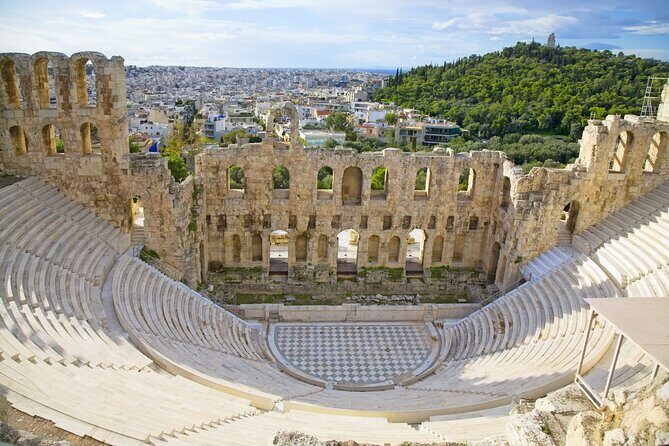
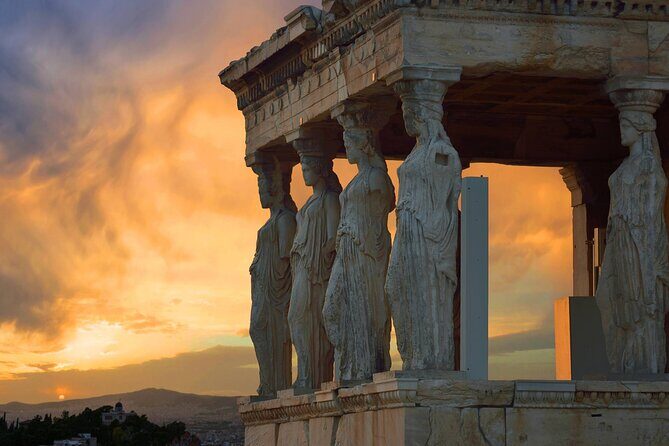
The Acropolis visit is the anchor. Your selected time slot is for your Acropolis entry, and the ticket includes admission there, with a suggested visit time of about 3 hours. From the moment you start climbing—yes, it’s a climb—you’re rewarded with the kind of “where am I?” feeling that only comes from being on a rocky outcrop that overlooks a modern city.
A few details that help you set expectations:
- The Acropolis sits about 150 meters above the surrounding area.
- The Parthenon area represents roughly 2,500 years of story.
- It’s a UNESCO World Heritage site, so you’ll see people photographing, sketching, and just pausing to take it in.
Practical tip: treat your Acropolis time as the moment to do the big-picture work. Plan to arrive early enough to get oriented, then commit to the main walk before you start drifting toward the edges for views. With crowds, that order keeps you from losing the day to backtracking.
Also note the pass is self-guided. If you choose the audio option, you’ll have audio designed for the Acropolis. Even if you don’t, the layout still makes sense once you’re on the hill—wide paths, clear sightlines, and the Parthenon complex as your visual anchor.
Ancient Agora: Temple of Hephaistos and the Church of the Holy Apostles

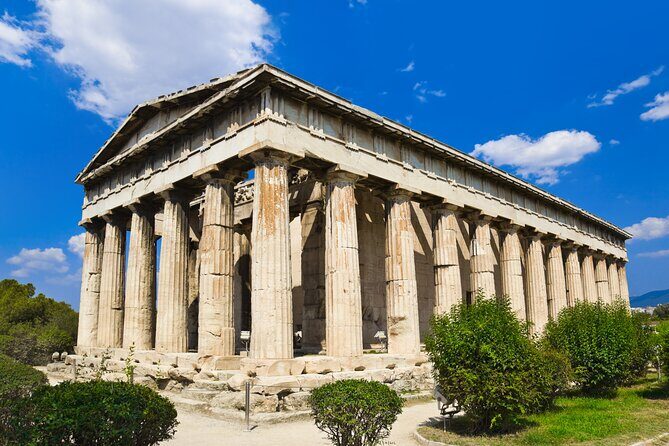
Next up is the Ancient Agora, with around 2 hours suggested. This is a great stop for two reasons. First, it keeps the Athens story human-scale—markets, civic life, and daily movement. Second, it’s one of the best places in the city to experience ancient architecture still standing tall.
Key sights here include:
- Temple of Hephaistos: described as the world’s best-preserved ancient Greek Doric temple. That’s the kind of phrase you should take seriously—this isn’t a “ruins only” moment.
- Church of the Holy Apostles: a later religious site connected to St. Paul, one of Jesus’s twelve apostles, who is said to have visited and preached there.
What you’ll feel in this area is continuity. You’re walking through layers: Greek civic space, then later Christian use of the landscape. If you like stopping to read stone inscriptions or just watching how people move through a place, the Agora is where you’ll naturally slow down.
Small drawback: it can be busy, and the mix of ancient and later religious buildings can feel a bit “scattershot” if you rush. Give yourself room to pause and re-orient—especially if you’re using audio.
Roman Agora and a Quick Reality Check Near Syntagma
The Roman Agora is the short, logical bridge from the Ancient Agora area. It takes about 1 hour and focuses on a different chapter of Athens: the Roman period’s public life. If you like seeing how cities reorganize under new rulers, this stop is satisfying without requiring a whole day.
Then there’s Tempio di Zeus Olimpio (Temple of Zeus Olympios), with an extremely short suggested time (about 2 minutes). That’s not because it’s small—it’s because the site is more about grabbing key views and appreciating the scale cues than wandering for hours.
Here’s what makes it worth your attention:
- It’s near the city center, about a quarter mile southeast of the Acropolis.
- It’s also about a quarter mile south of Syntagma Square and the Parliament Building.
- Until 2 AD, it was described as the largest temple in Greece—bigger than the Parthenon.
- It was once made of 104 pillars.
How to do Olympios well: don’t force a long visit if you don’t feel it. Think of it as a short “scale check” on your route—then reward yourself with nearby city energy outside the archaeological zone.
Aristotle’s Lyceum and the One Hundred Column Library
Two included sites here make a thoughtful pair: Archaeological Site of the Lyceum of Aristotle and Hadrian’s Library.
- All Day Cruise -3 Islands to Agistri,Moni, Aegina with lunch and drinks included
★ 5.0 · 4,958 reviews






Lyceum of Aristotle (about 1 hour)
This is an archaeological site tied to Aristotle’s educational setting. The pass includes entry, and you’ll likely spend about 1 hour here if you’re actually reading the space rather than sprinting through.
Plan for this stop if you:
- like philosophy and ideas as much as monuments
- want a break from the biggest skyline views
- prefer quieter corners where you can think for a minute
Hadrian’s Library (about 1 hour)
Hadrian’s Library sits to the north of the Acropolis. It’s also known as the One Hundred Column Library. The reason it sticks in your mind is the layout concept: it was spacious, surrounded by a gallery decorated with one hundred columns.
This is a good place to slow down. Even if the remaining structures aren’t intact to the level of the Acropolis, the idea of “place designed for learning” comes through in how the space is framed.
Kerameikos: Potters, Vase Painters, and Attic Craft
Kerameikos is the last included stop, about 1 hour. It sits on the northwest edge of the city. This is where Athens gets more “workshop Athens” and less “temple Athens.”
The Kerameikos story you get from the ticket description:
- It was a settlement of potters and vase painters.
- It functioned as the main production center of famous Attic vases.
If you’re the type who loves artifacts and wants context for what you might see in museums later, this stop gives you a grounded feeling for how art and daily life were connected. It’s also often the kind of place where you feel like you’re walking through an old district rather than a single monument.
Audio Tours: Useful When They Work
If you select the audio option, you can use self-guided audio for the Acropolis, the Ancient Agora, and the Monastiraki–Kerameikos area (as part of that wider stop). Earphones are not included, so you may want to bring your own if you’re picky about sound.
One practical reality: audio can be temperamental. On the positive side, it can work well enough to guide you through the Acropolis area. On the annoying side, it may not behave consistently, and you might need patience to get it going.
My advice:
- Start audio at the first stop you’re most excited about (the Acropolis). That way, if it acts up, you haven’t lost the centerpiece.
- Don’t treat the audio as the only plan. Even self-guided sites make sense once you pick a few targets to notice.
And yes—bring a charged phone. You’ll also want the QR code ready (see next section).
Price and Value: Where the Savings Come From
The big selling point is that you get entry to seven archaeological sites under one pass, instead of paying separately for each admission. The value is not just money—it’s time and planning stress.
Why the savings are real:
- The Acropolis is usually the most “timed and crowded” entry in Athens.
- When you combine that with multiple additional sites that are spread across different neighborhoods, you’re reducing the cost of “I should go back and see that too” moments.
That said, value has a risk side. In the real world, any ticket system can run into scanning problems. If the QR code doesn’t scan smoothly, you may be asked to purchase new tickets on the spot. That can wipe out the savings fast, so it’s smart to prepare your phone and be ready to get help immediately if something doesn’t work.
Getting Around and Planning Your 5-Day Window
Your ticket is flexible by design. After you activate the pass at the Acropolis, you can visit the remaining sites within opening hours and within 5 days.
That means you can build a plan that feels good, not just efficient:
- Do Acropolis first day (timed entry anchor).
- Pair nearby sites in the same geographic band when possible (Acropolis and Agora areas are naturally connected).
- Leave Kerameikos and the more “district-like” stops for another day when you’re not racing the clock.
Also remember this is self-guided and includes no hotel pickup/drop-off. You’ll rely on your own walking routes and public transportation, which is fine—because the sites are in areas that are accessible once you’re in the central Athens loop.
The One Thing That Can Go Wrong: Ticket Scanning
The most serious negative stories aren’t about the sights—they’re about ticket acceptance. In a few cases, printed or digital passes weren’t accepted at attractions, forcing people to buy additional tickets. There’s also the audio reliability issue.
Here’s how you protect yourself:
- Have your QR code ready on your phone before you reach the entrance.
- If you’re given access through a download option, do it ahead of time rather than trying at the ticket gate.
- If something doesn’t scan, ask for help right away at the site so the problem is handled while you’re still there.
- Keep your booking confirmation accessible in case you need it.
This is the difference between a smooth day and a frustrating one: preparation beats luck.
Should You Book This Athens Combo Ticket?
I’d book it if you want independence and you’re committed to hitting several major sites without paying for each one separately. It’s especially good if:
- you want a pre-booked Acropolis timeslot
- you like self-guided pacing
- you’re staying long enough to use the full 5-day flexibility
- you’re interested in more than just the Parthenon complex—Agora, Roman remains, Olympios, and Kerameikos all matter to your trip
I’d think twice if you rely on audio every step of the way, or if you’re the kind of person who panics when tech fails at a ticket gate. In that case, you can still do the itinerary, but build extra time and keep your ticket details ready.
Overall, this pass is best viewed as a practical “Athens site checklist, but with room to breathe.” Do the Acropolis first, then connect the rest by neighborhood, and you’ll get a lot of ancient Athens for the effort you spend.
FAQ
What does the chosen time slot apply to?
The time slot you request applies only to your Acropolis visit. You can visit the other included sites within opening hours and within 5 days from when you activate the pass at the Acropolis.
Can I visit the other six sites on different days?
Yes. Once you activate the pass at the Acropolis, you can visit the other included archaeological sites anytime within opening hours and within 5 days.
Do I get a guide with this ticket?
No. This is a self-guided combo ticket. Guide/escort service isn’t included.
Are audio tours included?
Audio tours are included only if you select the audio option. Acropolis audio is available with the option, Ancient Agora audio is available with the option, and Monastiraki–Kerameikos audio is available with the option. Earphones are not included.
Does the pass include the Acropolis Museum?
No. The pass does not include the Acropolis Museum ticket.
Is this ticket refundable?
No. This experience is non-refundable and cannot be changed for any reason.
Is this ticket only for adults?
Yes. The ticket is for travelers over 25 years. Reduced-price tickets are not available online.



More Tickets in Athens



More Tour Reviews in Athens
- All Day Cruise -3 Islands to Agistri,Moni, Aegina with lunch and drinks included
★ 5.0 · 4,958 reviews