
REVIEW · ATHENS
Athens: Guided Tour of Acropolis and Parthenon Tickets Included
Book on Viator →Operated by Walks In Europe · Bookable on Viator
Two hours can change how you see Athens. This guided walk focuses on the big-name monuments, but it also explains how they were made, used, and remembered—so the ruins don’t feel like random stones.
I especially like the skip-the-line tickets, which help you start smoothly instead of burning time in queues. I also love the small-group approach (max 20) paired with an expert local guide, so the pace stays human and the stories land.
One thing to plan for: entry is time-ticket strict. Your reserved tickets are valid for a short window (about 5–10 minutes), and you have to be at the meeting point early, because you can’t join after the tour begins.
In This Review
- Key highlights at a glance
- Why the Acropolis feels different with a small-group guide
- Skip-the-line tickets and the 5–10 minute entry window
- Starting at Makrigianni 7: easy to find, but don’t stroll in late
- Propylaea gateway: your orientation before the Parthenon
- Parthenon in about 30 minutes: what to look for
- Erechtheion and the Athena–Poseidon myth stop
- North-side temples: the quieter Acropolis perspective
- After the tour: stay up top or exit via the south route
- Price and value: what $119.47 buys you in real time
- Who this tour suits best (and who should think twice)
- Should you book this Acropolis and Parthenon tour?
- FAQ
- How long is the Acropolis and Parthenon guided tour?
- Are admission tickets included?
- Where do we meet, and when should we arrive?
- Is this tour stroller-friendly or okay for young children?
- What happens if I arrive late?
- Is there elevator access on the route?
Key highlights at a glance

- Skip-the-line entry at the Acropolis to save you queue time and stress
- Small group (up to 20) for easier listening and a more controlled pace
- A guide-led walking route that covers the Propylaea, Parthenon, Erechtheion, and more
- Choice of departure times so you can plan around heat and your day
- A calmer north-side route option for temples many people overlook
- Clear ticket timing rules (tickets expire quickly, tour leaves on schedule)
Why the Acropolis feels different with a small-group guide
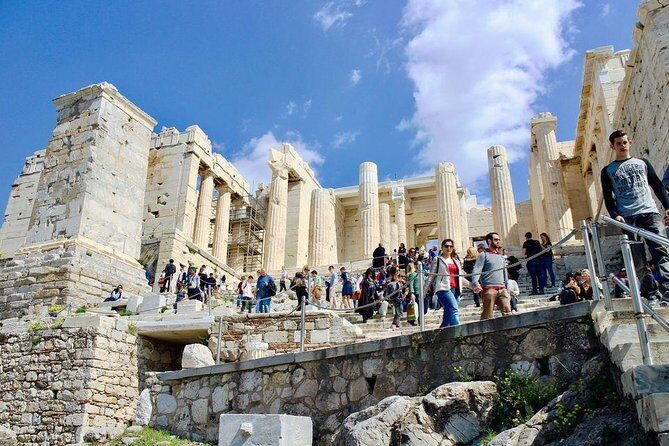
The Acropolis is one of those places that can either feel overwhelming or make instant sense. This tour leans hard toward making it make sense.
You get a guided walk that connects the monuments to the people who built them: what was happening politically, why certain spaces mattered for worship, and how the architecture was meant to communicate power and belief. That’s the difference between standing in front of the Parthenon and actually understanding why it became the symbol it is today.
I also like that you’re not stuck doing everything at a sprint. The group stays small (up to 20), and the tour is timed to keep you moving through the key areas without turning the experience into a human traffic jam. In past groups I’ve heard about, guides such as Frossa, Dora, and Victoria were praised for keeping people together in crowded spots and for making explanations easy to follow.
Downside? It’s still a walk up and around a steep ancient hill. If you have knee issues or trouble with uphill walking, this one can be tougher than it sounds on paper. There’s also no elevator access at the site, so plan accordingly.
You can also read our reviews of more tours and experiences in Athens



Skip-the-line tickets and the 5–10 minute entry window
The “skip-the-line” part matters—but the timing rules matter more.
You’re using pre-reserved admission for the Acropolis, which means you should bypass the main line and enter in a smoother way. In high season, though, popular slots can still create some waiting, including time spent in a queue for skip-the-line ticket holders. So yes, you often save time, but you’re not necessarily stepping into the site instantly the way you might imagine.
Here’s the practical point: the tickets have a tight validity window—about 5 to 10 minutes—and the tour departs punctually. If you’re late, you can miss your entry window. The tour also can’t be joined once it’s started, and noshows aren’t refunded.
So your best move is simple: build in extra buffer. You should arrive at Makrigianni 7, Athina 117 42 at least 10 minutes early, because the guide can’t hold the timed entry. It’s not meant to be unfriendly. It’s just how timed admissions work at the Acropolis.
Starting at Makrigianni 7: easy to find, but don’t stroll in late

Meeting points are where good tours are won or lost, and this one is straightforward.
You meet at Makrigianni 7 and the tour ends back at the same spot. The schedule is firm: tours depart punctually, and you’re told clearly to arrive early so you can match the reserved entry time.
Also note the pacing reality. This is a moderate physical activity level, and it involves walking on uneven ground and climbing. One person did report knee trouble and noted that there wasn’t elevator help available. So if you’re debating between options, think honestly about your mobility on a hot day.
What’s helpful is that guides often plan short pauses and shade breaks when possible, which can make a huge difference in Athens summer temperatures. Some groups specifically mention the guide choosing cooler standing spots to keep everyone comfortable while explaining key details.
Propylaea gateway: your orientation before the Parthenon
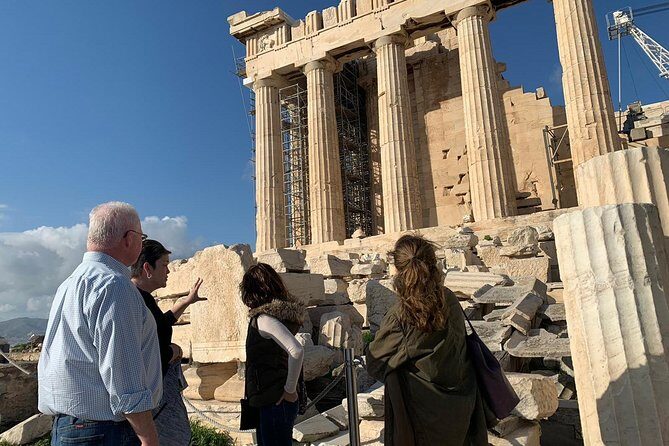
The tour doesn’t start by throwing you straight into the loudest selfie spot. It begins with the Acropolis complex and includes the ceremonial gateway known as the Propylaea.
This is one of those “you might miss it if you rush” features. The Propylaea isn’t just decorative—it’s the grand entry that sets the tone for what comes next. The guide walks you through how the gate prepared visitors for sacred spaces and how the design reflected the city’s order and ambition.
Why this matters for your experience: once you understand that the Acropolis was meant to be approached and experienced like a processional space, everything you see afterward feels more intentional. The Parthenon stops being a single building and starts feeling like the centerpiece of a whole plan.
Also, the gateway area gives you your bearings. That helps later when you’re trying to locate where you are in the story and where the views are best.
Parthenon in about 30 minutes: what to look for
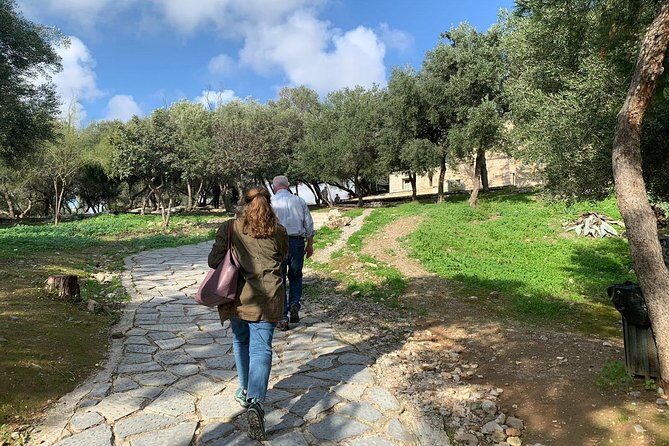
You spend roughly 30 minutes at the Parthenon, and for a monument of this scale, that’s just enough time to get the essentials—if you know what to watch for.
The Parthenon tour focus is on:
- how it was designed and built
- who it honored—Athena, the city’s patron goddess
- why it became more than a temple, symbolizing classical ideals in later storytelling
This is where you’ll learn to read the building instead of just staring at it. You’ll hear about architectural details and the logic behind the structure, and you’ll get context for why it represents concepts like power and cultural achievement.
Now, a practical note: crowds can make it harder to hear at times. One group mentioned that the earpieces/headsets (used to help hearing) made the tour easier in noisy areas. That’s a real value add here. If you’ve ever strained your ears while tourists shuffle around you, you’ll appreciate the built-in audio support.
If you’re expecting a long, stop-every-200-steps kind of museum-style session, this part is shorter by design. The payoff is that you also get other temples and viewpoints without the day turning into one endless line.
You can also read our reviews of more guided tours in Athens




Erechtheion and the Athena–Poseidon myth stop
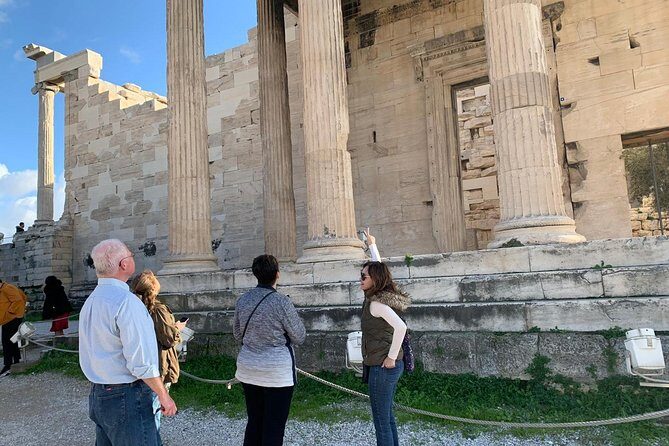
After the Parthenon, you’ll encounter the Erechtheion, known for its refined marble craftsmanship and for being tied to both Athena and Poseidon.
This stop isn’t only about aesthetics. It’s about mythology and religious identity—how Athens anchored its beliefs in specific places. The guide explains the legendary contest between Athena and Poseidon, and why this temple mattered within the city’s sacred map.
I like this stop because it gives the tour a human dimension. The Acropolis can feel like power and politics at first glance, but the Erechtheion brings it back to ritual and story—what people thought, argued about, and revered.
Drawback: marble and stone don’t give you shade. Depending on your departure time, you may have limited cover, so comfortable clothing and water matter.
North-side temples: the quieter Acropolis perspective
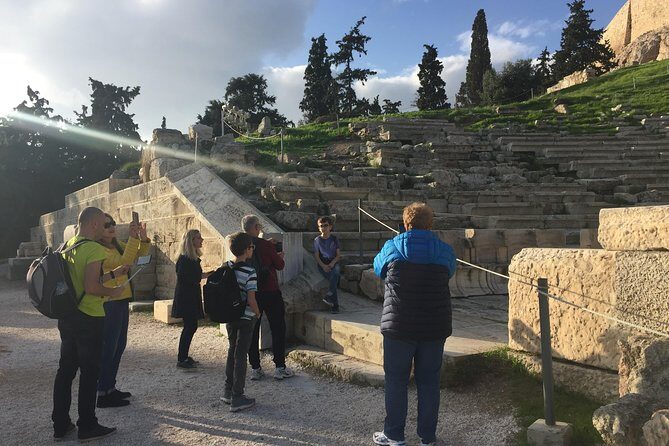
One of the smartest parts of the route is what happens on the north side of the Acropolis.
Many people rush the main sights and never fully explore the lesser-visited areas. This tour includes time to admire temples there that visitors often overlook, with explanations tied to early Athenian cults and worship of Olympian gods.
This matters because it changes your mental picture of the Acropolis. Instead of thinking of it as one monument, you start seeing it as a working sacred landscape—layered with religious roles and multiple focus points.
You also get something rare at the Acropolis: a moment to pause and reflect from a slightly quieter perspective away from the main crush. Even a small change like that can make the rest of the visit feel more readable.
After the tour: stay up top or exit via the south route
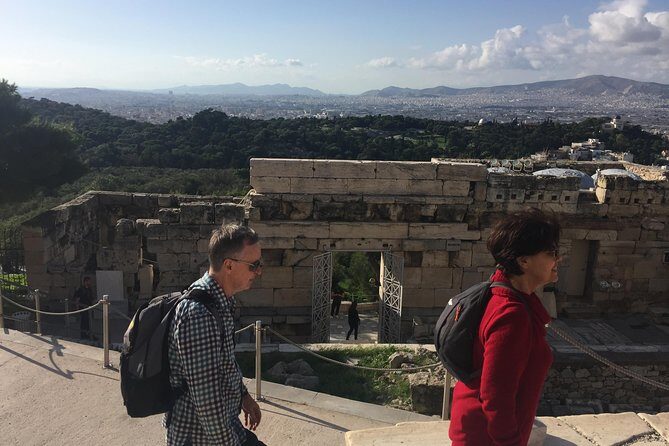
When the guided portion finishes, you have choices.
Option one: you can remain on the Acropolis and keep exploring on your own. If the weather is clear, the views over Athens—and even toward the Aegean Sea—can be a great way to end your trip.
Option two: you can follow the guide along a route toward the south exit. That route may include the Sanctuary of Asclepius and the Theater of Dionysus, which is widely considered the birthplace of theatrical drama.
This flexibility is practical. If you’re the type who likes extra time for photos and slow wandering, staying on your own helps. If you want the structure of another set of explanations, the south-exit route keeps the learning going.
Price and value: what $119.47 buys you in real time
At $119.47 per person for about 2 hours, this is not a budget activity. So the question is: what are you paying for?
You’re paying for:
- pre-reserved Acropolis entry tickets (with timed validity)
- a licensed local guide who explains what you’re seeing
- a small group format (max 20)
- a guided walking plan that moves you through the key parts without guesswork
- an audio setup (headsets/earpieces are used in at least some groups, which helps in crowds)
If you were to do this on your own, you could save money, but you’d pay in time and frustration: figuring out what matters, where to stand for the best angles, and how to understand the story behind the ruins.
This tour is also booked fairly far in advance, around 55 days on average, which is a clue that the popular time slots can sell out. In high season, that’s when paying for reserved access turns into real value.
Who this tour suits best (and who should think twice)
This tour fits first-time Athens visitors who want a smart overview without losing half the day to lines. It’s also good if you like walking with structure—stops that are explained, not just landmarks you Google later.
It’s a good fit when:
- you want key monuments with context in a short window
- you want a small-group experience
- you’re planning around your day and like the choice of departure times
Be careful if:
- you’re sensitive to uphill walking or have knee issues (no elevator access)
- you need stroller access (none allowed anywhere on the Acropolis site)
- you’re traveling with kids under 6 (not permitted on this tour)
And one more practical safety note. Pickpocketing is a known risk in major European cities. A guide can warn you, but you still have to keep your belongings secure, especially in tight crowded zones.
Should you book this Acropolis and Parthenon tour?
Book it if you want the easiest path to understanding the Acropolis in about two hours, with reserved entry and a guide who helps you see more than the obvious angles.
Skip it or choose a slower alternative if you know you’ll struggle with steep ground, heat, or long periods outdoors. Also consider a different format if you dislike strict timing, because the ticket window and punctual departure rules are real.
For most first-timers—especially those who want a guided route that hits the Parthenon, Erechtheion, and additional north-side temples—this is a strong value play. You leave with a much clearer picture of what you just saw and why it mattered.
FAQ
How long is the Acropolis and Parthenon guided tour?
The tour runs about 2 hours, and you’ll spend roughly 1 hour 30 minutes at the Acropolis plus about 30 minutes at the Parthenon.
Are admission tickets included?
Yes. Pre-reserved admission tickets for the Acropolis are included for the guided visit.
Where do we meet, and when should we arrive?
You meet at Makrigianni 7, Athina 117 42, Greece. Arrive at the designated meeting point 10 minutes before the start time, since the tour departs punctually.
Is this tour stroller-friendly or okay for young children?
No. Baby strollers of any kind aren’t permitted within the Acropolis site, and kids under 6 aren’t permitted on this tour.
What happens if I arrive late?
The tour uses timed tickets that expire within about 5 to 10 minutes. You also can’t join after the tour has started, and late arrivals risk missing the reserved entry window.
Is there elevator access on the route?
No elevator access is available for getting up to the Acropolis area, so it involves uphill walking and moderate fitness.



More Tickets in Athens



More Tours in Athens



More Tour Reviews in Athens
- All Day Cruise -3 Islands to Agistri,Moni, Aegina with lunch and drinks included
★ 5.0 · 4,958 reviews