REVIEW · ATHENS
Athens: Meteora Tour with Local Guide and Greek Lunch
Book on GetYourGuide →Operated by Meteora Trip · Bookable on GetYourGuide
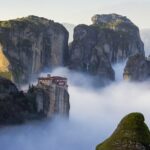
Meteora feels unreal in the best way. You’ll ride out of Athens to the UNESCO Meteora monasteries perched on rock pillars, then get guided stories about life in the hermit caves. It’s the kind of place where the views do most of the talking, and your guide makes sure you understand what you’re seeing.
I love the way the itinerary hits big-photo viewpoints plus real context, and I love the chance to step inside three monasteries rather than just look from below. One possible consideration: it’s a long day with lots of walking, and the tour isn’t a fit if you need mobility support.
Even the details feel planned. You start with a comfortable, air-conditioned bus from Stathmos Larisis, then you’ll get breaks, panoramic stops, and an easy block of time in Kalambaka before the main monastery route. If you’re lucky enough to travel with a guide like Maria or Nicholas, the explanations tend to land with humor and clarity.
In This Review
- Key Things You’ll Enjoy Most
- Meteora From Athens: A Different Kind of Day Trip
- The 7:45 Departure From Stathmos Larisis (Larissa Station) and the Long Ride
- Kalambaka and Kastraki: Why the Midday Town Stop Matters
- Your Meteora Route: Seeing All Monasteries Plus Three Interiors
- Hermit Caves and the St. George Mandilas Connection
- Photo Stops: Big Views With Time to Breathe
- Inside the Monasteries: Dress Code and What to Expect
- Lunch in Kalambaka: Included Greek Meal or Your Own Plans
- Price and Value: What You Pay for, and What Costs Extra
- Comfort, Accessibility, and Physical Realities
- Who This Tour Suits Best (and Who Might Want a Different Plan)
- Should You Book This Meteora Tour?
- FAQ
- What time does the Meteora bus leave Athens, and when do we return?
- Is lunch included, and what does it include?
- How much are monastery entrance fees, and how do I pay?
- What dress code do I need for Meteora monasteries?
- Is the tour suitable for mobility impairments?
- Do I get an audio guide, and what do I need to use it?
Key Things You’ll Enjoy Most
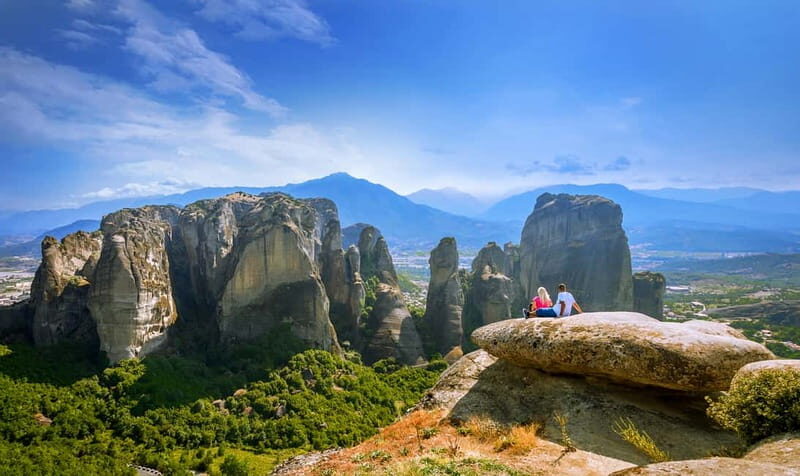
- A full monastery circuit: you’ll see all Meteora monasteries from the viewpoints, and enter three for interior time
- Hermit cave storytelling: you’ll hear why hermits settled in these cliff caves, including mention of the St. George Mandilas cave
- Photo stops built into the day: multiple panoramic stops so you’re not rushing every time you spot a good angle
- Kalambaka time in the foothills: a real break for strolling the town or sitting down for included lunch
- On-board comfort: air-conditioning, Wi‑Fi, and USB chargers on the bus, plus bottled water
Meteora From Athens: A Different Kind of Day Trip
This is one of those rare day trips that can feel like two trips at once: a long road day out of Athens, and then a “how is this even real?” day up on the cliffs. Meteora is UNESCO-listed, but the experience is more than a stamp. You’re looking at a rock formation that basically shaped how people lived, prayed, and survived.
What makes this tour work well is that the route isn’t just a checklist. You’ll have a guide in front of you explaining why hermits chose these remote caves, and you’ll also get the chance to see the monastery interiors, not only the exteriors. That combination helps the place click in your head instead of staying a blur of dramatic scenery.
There’s also good practical structure. You get timed stops, photo opportunities, and enough time at key locations that you’re not stuck doing the “one minute per viewpoint” thing.
You can also read our reviews of more guided tours in Athens

The 7:45 Departure From Stathmos Larisis (Larissa Station) and the Long Ride
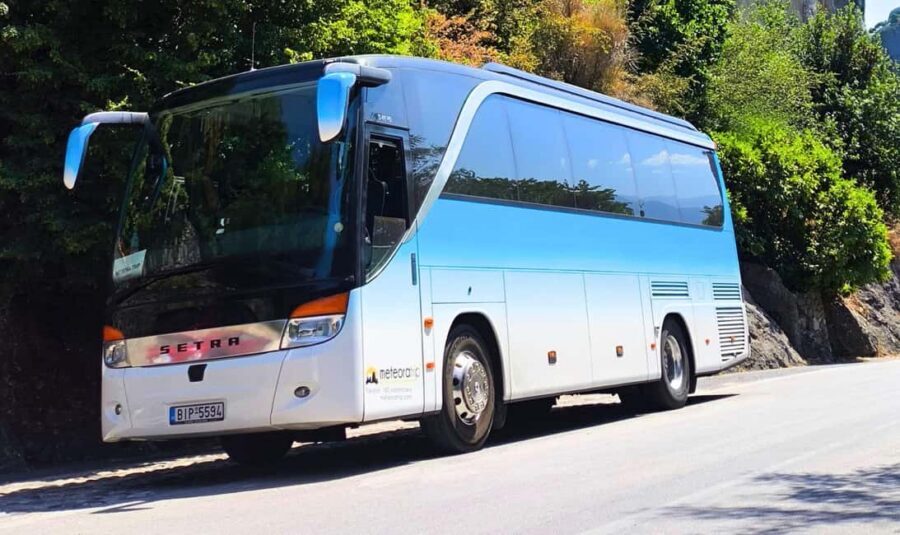
The day starts early: the bus leaves at 07:45 AM from the street across Athens’s Central Railway Station, Stathmos Larisis. The bus should be easy to spot with a Meteora Trip sign in the front window. You don’t need a printed ticket for the bus; just share your name or show your booking voucher on your phone.
The bus ride is about two hours before your first short stop, then there’s another about two hours toward Kalambaka and Meteora. It’s a long day, but the planning matters here. You’ll have rest breaks, and the bus is air-conditioned with on-board Wi‑Fi and USB chargers.
Here’s my practical advice: plan your expectations for the ride. You’re not going to “rush” your way to Meteora, so bring something that keeps you comfortable—water is included, but snacks and a good playlist can make the bus portion feel shorter.
One more reality check: the tour notes Wi‑Fi on board, but Wi‑Fi can be spotty on the road. If your connection doesn’t cooperate, don’t stress. Download anything you want offline before you leave Athens.
Kalambaka and Kastraki: Why the Midday Town Stop Matters

Kalambaka sits right at the foothills of Meteora, which makes it a smart place to regroup. Your itinerary includes Kalambaka time, and you’ll also pass by or see Kastraki village as part of the area experience.
If you take the lunch option, you’ll have a full hour in the Kalambaka area tied to the meal. If you skip lunch, you get free time in Kalambaka to look around. Either way, this town break helps with pacing. Without it, the day can feel like nonstop riding and climbing.
In real terms, Kalambaka is where you can reset your legs and check out local life at street level—cafés, shops, and places to sit out the day. Even if you’re mainly here for the monasteries, this stop is your chance to breathe and handle small needs like grabbing water or using restrooms before the main rock-cliff circuit.
Your Meteora Route: Seeing All Monasteries Plus Three Interiors

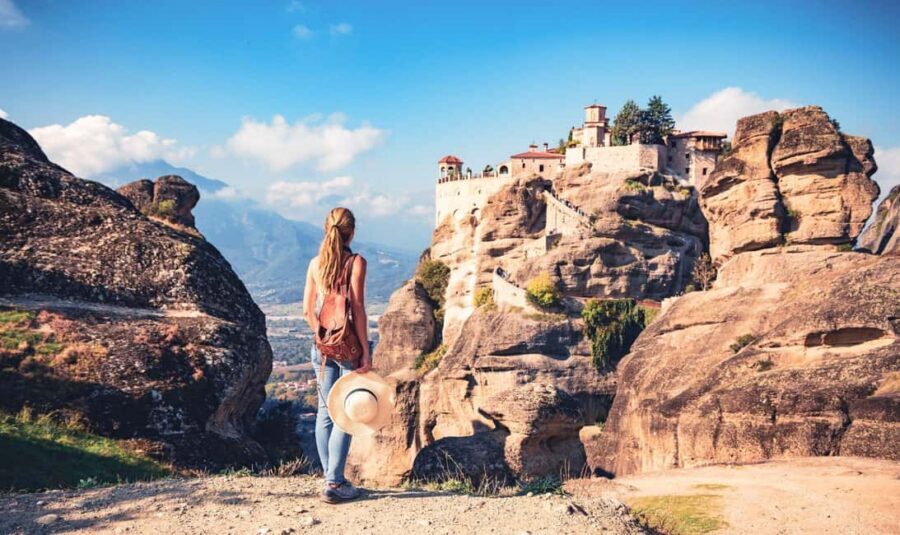
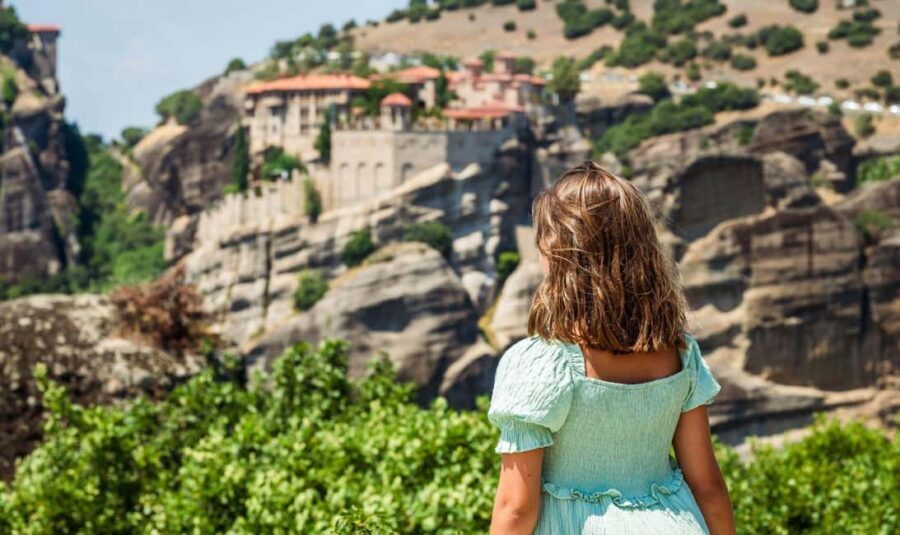
Once you arrive at Meteora, your local English-speaking guide takes over for the guided portion. The goal here is clear: you get viewpoints covering all Meteora monasteries, plus interior time in three.
The monastery route is built around cliff-top viewing angles and a mix of different buildings, so you can compare how they sit on the rocks and how the layout of each monastery changes the feel of the visit. You’ll see a series of monasteries during the sightseeing portion, including:
- Monastery of St. Nicholas Anapavsa
- Monastery of Rousanou
- Great Meteor Monastery
- Monastery of Varlaam
- Holy Trinity Monastery at Meteora
- Monastery of St. Stephen
Two things make this structure valuable for your day:
- You get a “whole complex” view, instead of just visiting one famous site and calling it done.
- Interior access gives you texture—wood, stone, and the atmosphere—so the place doesn’t stay purely scenic.
A small practical note: entrance fees apply for monastery visits, and they’re cash only. So if you want a smooth experience, have your cash ready before you start stepping between sites.
Also keep in mind that the monasteries have dress expectations. You’ll want clothes that make it possible to get in without last-minute fuss.
Hermit Caves and the St. George Mandilas Connection
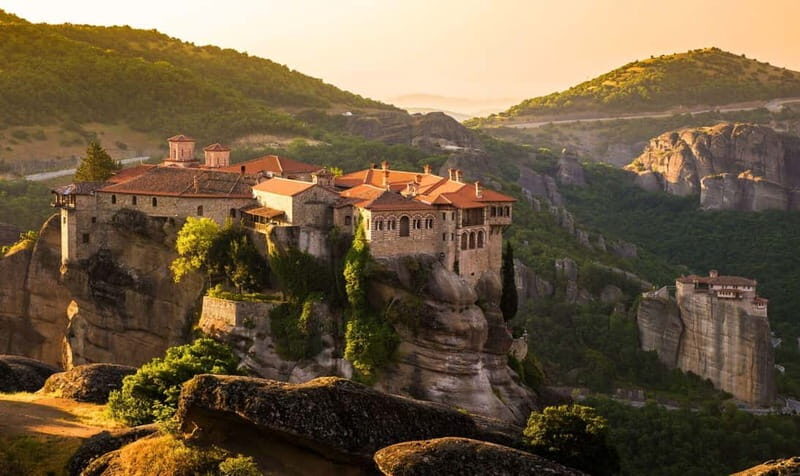
One of the best parts of this tour is that it doesn’t treat Meteora like a museum stop. Your guide explains why hermits chose to settle in these dramatic caves about a thousand years ago, and you’ll learn about the monks’ achievements in that setting.
This is where the experience starts to feel less like “pretty cliffs” and more like human story. These aren’t random caves. The whole point is that the landscape’s isolation shaped religious life, and the monasteries grew around that.
You’ll specifically have time to discover Meteora’s hidden features, including the ancient hermit caves and the St. George Mandilas cave. This is one of those parts that rewards a little attention. If you listen for the why behind the buildings, you’ll end up seeing the whole area with clearer eyes.
You can also read our reviews of more tours and experiences in Athens
- All Day Cruise -3 Islands to Agistri,Moni, Aegina with lunch and drinks included
★ 5.0 · 4,958 reviews



Photo Stops: Big Views With Time to Breathe

The tour includes multiple panoramic photo stops on the way, plus photo opportunities during the Meteora portion. That matters because Meteora can overwhelm you fast. When you’re staring up at monasteries perched high on pillars, it’s easy to feel like you’re always half a second too late for the shot.
Here’s what I like about this approach: the schedule builds in stopping points where you can take photos without feeling like you’re constantly holding up the group. You’re not just rushing between entrances; you’re given chances to step out, frame the view, and actually look.
For best results, bring comfortable walking shoes and a camera strap that won’t snag on your clothes. You’ll be moving around, and the best way to keep photos stress-free is to keep your feet steady and your gear simple.
Inside the Monasteries: Dress Code and What to Expect

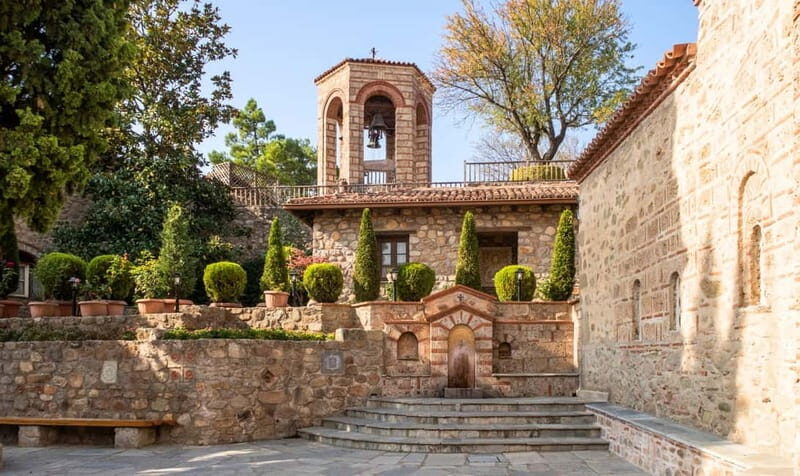
Monasteries in Meteora enforce a visitor dress code, and it’s not optional. Men are required to wear long trousers and shirts with sleeves. Women must wear skirts that fall below the knee and cover their shoulders. Trousers aren’t permitted for women. As an alternative, women can use a long scarf wrapped around the waist to meet the rules.
This is one of the easiest ways to ruin a good day—if you show up with the wrong clothes and then have to scramble. So if you’re planning this from Athens, pack accordingly. A day trip means you won’t have a lot of time to run to a shop for a fix.
Also note: entrance fees are required and are €5 per person/monastery, paid in cash only. That’s separate from what you paid for the tour itself. If you want to avoid awkward moments, bring enough cash for the number of monasteries where you’ll enter.
The tour includes time for the interiors of three monasteries, which is a sweet spot. You get enough interior experience to understand the feel, but you’re still moving through the complex instead of spending the whole day stuck indoors.
Lunch in Kalambaka: Included Greek Meal or Your Own Plans
If you choose the lunch option, the tour includes a traditional Greek lunch at a local restaurant. The meal includes fresh salad, a choice of main dish (multiple options), freshly baked bread, and refreshing water. Vegetarian and vegan options are also available.
If you skip lunch, you get free time in Kalambaka to explore restaurants, cafés, and local shops on your own. This option is helpful if you have dietary needs that go beyond what’s offered in the included menu, or if you just want to wander at your own pace.
Either way, the point of the meal stop is to keep you functional for the main Meteora portion. Meteora is visual and spiritual, but it still involves walking and time outdoors.
My practical tip: if you’re prone to hunger during long bus days, don’t skip the lunch add-on unless you know you’ll eat soon after the Kalambaka stop. The itinerary is structured, but you’ll feel it if you under-eat.
Price and Value: What You Pay for, and What Costs Extra
The tour price is $63 per person with a 14-hour day structure. For that money, you’re paying for round-trip transportation from Athens, a guide-led experience at Meteora, and the “day template” that keeps everything moving. You also get on-board comfort (air-conditioning, Wi‑Fi, USB chargers), bottled water, panoramic photo stops, and access to interior time in three monasteries.
What’s extra is the monastery entrance fee. The tour states €5 per person per monastery, cash only, and it also notes that entrance is needed for each monastery. Since your itinerary includes interior visits for three monasteries, your actual entrance total depends on the monasteries where you can enter that day.
So the value question becomes: does this include the parts that are hardest to DIY? In practice, yes. A guided route saves time and helps you make sense of what you’re seeing, especially with the hermit cave context. And the round-trip bus removes the headache of arranging transportation in a single day.
If you want a smooth day with minimal logistics stress, this setup usually makes sense.
Comfort, Accessibility, and Physical Realities
This tour isn’t for everyone. It’s not suitable for people with mobility impairments. Meteora monasteries are set on cliffs, and even when you don’t go inside every building, you’ll still be doing stairs and uneven terrain.
Even if you’re fully able, be ready for the day’s physical rhythm. You’ll be walking between monastery viewpoints, and you should wear shoes that grip well. If you’re traveling with someone who gets tired easily, this may feel like a big day.
On the positive side, rest breaks are built in. There’s a short break early in the day and additional stops later, including time tied to lunch and Kalambaka. That pacing is one reason people feel less rushed even though it’s long.
Who This Tour Suits Best (and Who Might Want a Different Plan)
This tour is a strong fit if you:
- Want to see Meteora monasteries from Athens in one day without having to plan transportation
- Care about context, not just photos (the guide covers the reasons behind hermit cave living)
- Appreciate a structured day with photo stops and town time in Kalambaka
- Want optional Greek lunch that includes salad, bread, and main choice, with vegetarian/vegan options
You might want to choose a different plan if:
- You can’t handle long days or stairs and uneven footing
- You’re the type who prefers totally self-paced visits with no schedule at all
- You don’t want to deal with cash-only entrance fees and dress code requirements
This is best approached as a guided experience with enough flexibility to enjoy the scenery, not as a casual stroll.
Should You Book This Meteora Tour?
If you’re visiting Athens and you want Meteora to feel like a real day out—not a confusing mess—this is a good bet. I’d book it if you like guided context, want to see a full range of monasteries, and plan to dress appropriately for monastery interiors.
I’d hesitate if you’re sensitive to long travel days, need mobility support, or hate the idea of extra cash fees once you arrive. Also be honest about your stamina: the day is long, and you’ll be on your feet.
If you do book, come prepared. Bring comfortable shoes, have cash for monastery entrances, and set up your smartphone and earphones so the audio guide is ready when you want it. Then you’ll get the best part: monasteries, caves, and views that make the effort feel justified.
FAQ
What time does the Meteora bus leave Athens, and when do we return?
The bus departs at 07:45 AM from the street across Stathmos Larisis. You can expect to arrive back in Athens at approximately 10:15 PM.
Is lunch included, and what does it include?
Lunch is included if you choose the option with lunch. It features fresh salad, a choice of main dish, freshly baked bread, water, and vegetarian and vegan options are available.
How much are monastery entrance fees, and how do I pay?
Entrance fees are €5 per person for each monastery, and you must pay in cash only.
What dress code do I need for Meteora monasteries?
Men need long trousers and shirts with sleeves. Women need skirts that fall below the knee and to cover their shoulders (trousers aren’t permitted); a long scarf wrapped around the waist can also be used.
Is the tour suitable for mobility impairments?
No. The tour is listed as not suitable for people with mobility impairments.
Do I get an audio guide, and what do I need to use it?
Yes. Free audio guides are available, and you’ll need your smartphone and earphones to listen.
More Guided Tours in Athens
More Tours in Athens



More Tour Reviews in Athens
- All Day Cruise -3 Islands to Agistri,Moni, Aegina with lunch and drinks included
★ 5.0 · 4,958 reviews