REVIEW · ATHENS
Athens: Museum of Cycladic Art Entry Ticket
Book on GetYourGuide →Operated by Museum of Cycladic Art · Bookable on GetYourGuide
Marble figures bring prehistoric Athens to life. The Cycladic marble figurines and tools—dating to around 2300 BC—make this museum feel like you opened a time capsule. I also love how the labels and floor-by-floor layout help you connect myths and daily life to what you’re seeing, not just admire objects. The main catch: if your visit lands during renovation, expect occasional building noise and plan for a shorter, more flexible stay.
This is also a great “first Athens museum” option because it’s focused. You’ll spend your time on Aegean and Cypriot cultures, plus the long story of ancient Greek art as it develops—without the distractions of too many unrelated themes.
Finally, I like that the ticket is simple: you get permanent collections access and a QR-code tour resource, but there’s no guided tour included. If you’re hoping for a full-on lecture, you’ll need to use the self-guided materials and your own curiosity.
In This Review
- Key takeaways
- Museum of Cycladic Art in Athens: where to enter and how to plan your day
- Ticket value that actually helps: what you get (and what you don’t)
- Floor-by-floor logic: the easiest way to tackle four floors in one day
- Cycladic art at its most iconic: marble figurines and objects from around 2300 BC
- Ancient Greek art across time: vases, bronzes, coins, jewelry, and Classical Athens life
- Ancient Cypriot art outside Cyprus: how cultures blended across the Mediterranean
- Your practical one-day itinerary: a simple order that works
- How to read the labels without turning it into homework
- Pacing and comfort: crowds, noise, and who this is best for
- Should you book the Museum of Cycladic Art entry ticket?
- FAQ
- How long does the museum visit last with this ticket?
- What does the entry ticket include?
- Is a guided tour included?
- Where should I enter the museum?
- Are food and drinks allowed inside the museum?
- Is the museum wheelchair accessible?
- Can I cancel for a refund?
- Is there a pay later option?
Key takeaways
- Iconic Cycladic marble figurines from the Early Bronze Age—including the famous carved forms people travel for
- A floor-by-floor structure that connects the Aegean story to broader Greek history and Classical Athens life
- Ancient Cypriot art outside Cyprus—one of the museum’s big strengths, with ceramics, gold work, inscriptions, and more
- QR-code Clio Muse Tours included—a practical way to add context without booking a guide
- Good pacing for many adults—often doable in about 1.5 to 2 hours, if you focus on the highlights
- Possible renovation noise—check your timing if you’re sensitive to loud construction sounds
Museum of Cycladic Art in Athens: where to enter and how to plan your day
The Museum of Cycladic Art sits in central Athens, easy to reach if you’re based around Syntagma. Enter at the main entrance, about a five-minute walk from Syntagma Square and the Syntagma Metro station. That location matters because you can pair it with a walk through downtown streets, then come back later for dinner when your brain needs a break from ancient objects.
Your ticket is valid for one day, and you’re walking through permanent collections. That sounds obvious, but it’s actually good value: you’re not being rushed through a pre-set route. You can linger where something catches your eye—like a particular carved face, a storage vessel, or a set of coins—then move on when you’re ready.
Navigation is mostly straightforward, but there are real-world quirks. The museum spans four floors, and not every exhibit space uses the exact same level of interpretation support. One useful tip from people who’ve visited during busy or awkward moments: if you find your preferred path confusing, it can help to start higher and work down the stairs rather than forcing yourself to hunt for the “natural” flow.
Also note that the museum can be calm. Some visitors find it not too crowded and capable of being done at a comfortable pace. Still, there’s a big variable you can’t ignore: construction. One visit during November 2025 came with loud building noise, which reduced how long they could comfortably stay. If quiet matters to you, aim for earlier or later time slots, and be willing to shorten your visit if the sound level rises.
You can also read our reviews of more tours and experiences in Athens



Ticket value that actually helps: what you get (and what you don’t)
At about $14 per person, this entry ticket is priced like a museum visit—not like a complicated tour. What makes it feel worthwhile is what’s included.
You get:
- Entry to the museum’s permanent collections
- Free Wi‑Fi
- Clio Muse Tours with QR code
You also don’t get:
- A guided tour
That means you’re in charge of the pacing, which is great if you like to read at your own speed. It also means the museum’s self-guided tools matter. The Clio Muse QR-code tours are there to give you structure and context without needing a human guide. If you’re the type who skim-reads labels, use the QR stops as your anchors: read what the object is, then look again with that new meaning in mind.
Two other practical notes:
- The museum has a Cycladic Café and a shop.
- Food and drinks aren’t allowed inside.
So plan on using the café if you want a break. It’s also smart to bring water outside (then drink it after you step out), unless you’re sure the rule is enforced differently. The key is simple: don’t bring snacks into the galleries.
Wheelchair access is available, so the museum is set up for more than just able-bodied visitors. If stairs are a problem for you, it’s worth confirming the most comfortable route at the entrance, then commit to it.
Floor-by-floor logic: the easiest way to tackle four floors in one day
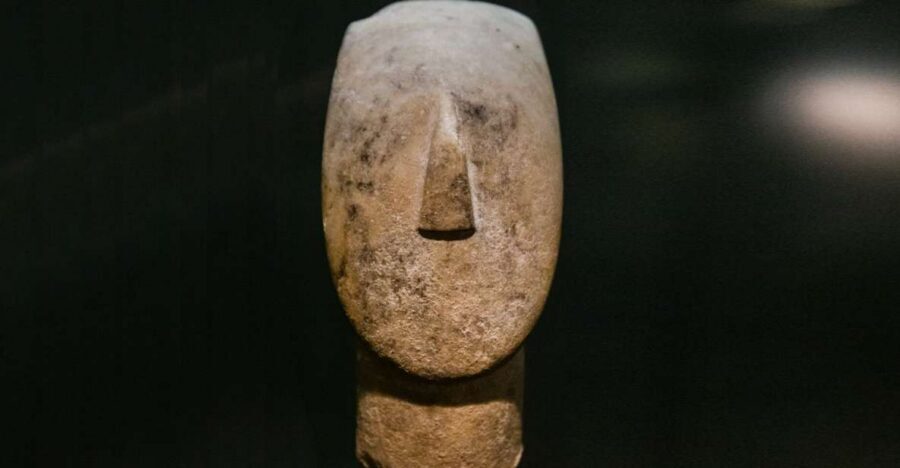
The museum layout is where this visit becomes easy or frustrating, depending on your expectations. You’re not just wandering randomly—you’re passing through curated historical storytelling.
A practical approach:
- Give yourself 1.5 to 2 hours if you want the highlights with calm attention.
- Add more time if you want to read most of the interpretive panels and linger on the art-making details.
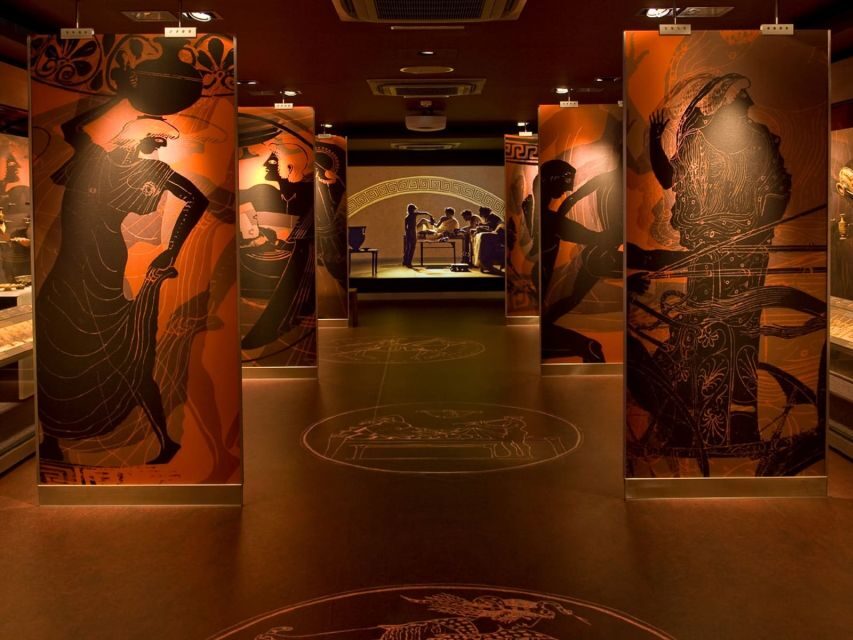
The museum’s structure helps you decide what to prioritize. The 2nd floor provides a comprehensive overview that ties together historical, artistic, and technological developments across ancient Greek history. That’s the place to go when you want context before you start admiring pieces like a collector.
The 4th floor shifts gears to everyday life in Classical Athens. If you’re coming in thinking you just want pretty artifacts, this floor is a reality check in the best way. It can help you connect the art to people—what they used, how society worked, and what daily life looked like beyond marble statues.
The other floors hold the museum’s heavy hitters from Cycladic and Cypriot collections. If you’re trying to minimize backtracking, think in terms of a top-to-bottom scan. People have found that starting from the last floor can reduce effort when they’re dealing with temporary access issues or confusion at the entrance.
One more note: audio support may not be evenly distributed across all rooms. If you prefer audio, don’t assume every corner has it. Plan on reading at least some labels, because the museum’s info panels are part of what makes the experience work.
Cycladic art at its most iconic: marble figurines and objects from around 2300 BC
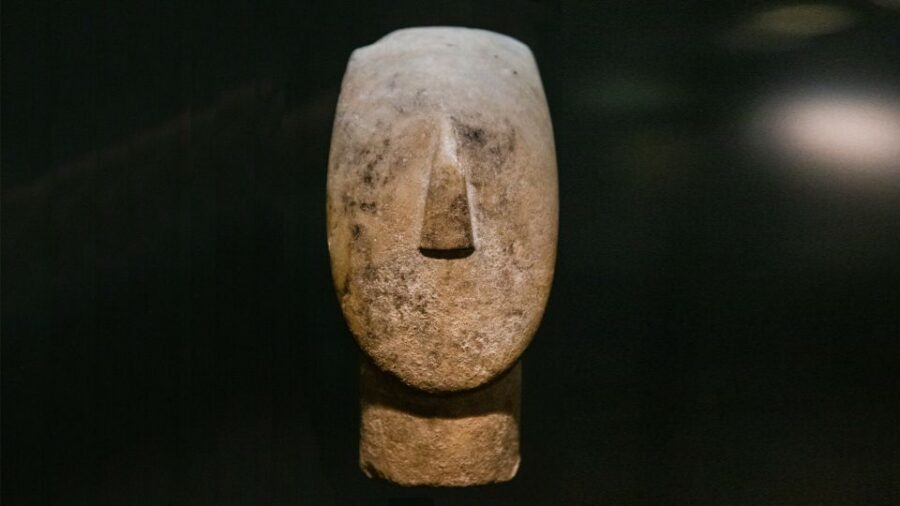
This is the reason many people book the ticket in the first place. The museum is known for a strong collection of Cycladic art from the Early Bronze Age, with standout pieces dating to around 2300 BC.
What you’re looking at isn’t just decoration. These objects represent a distinctive island culture from the central Aegean, and they’re often startlingly “modern” in their forms. The museum’s strengths show up in the variety:
- Marble carvings and figurines
- Tools, weapons, and pottery
- A clear sense of how the style developed across the early phases of the culture
When you’re standing in front of a marble figurine, try to look beyond the silhouette. Ask yourself: how is it made, and what does the object imply about the people who kept it? The magic here is that you can feel the craftsmanship, even when you don’t have a legend attached.
This section also helps you understand what Cycladic art is doing in the wider Aegean world. It’s not trying to compete with later Greek sculpture styles. Instead, it has its own logic—simplified forms, bold proportions, and a level of mastery that’s obvious the moment you see a carved surface up close.
If you love “how did they make this?” questions, this museum rewards you. Even without a full guided explanation, the collection includes artifacts connected to historical and technological developments. That means you can connect art to function—how people lived, what they carried, and what they valued.
Ancient Greek art across time: vases, bronzes, coins, jewelry, and Classical Athens life
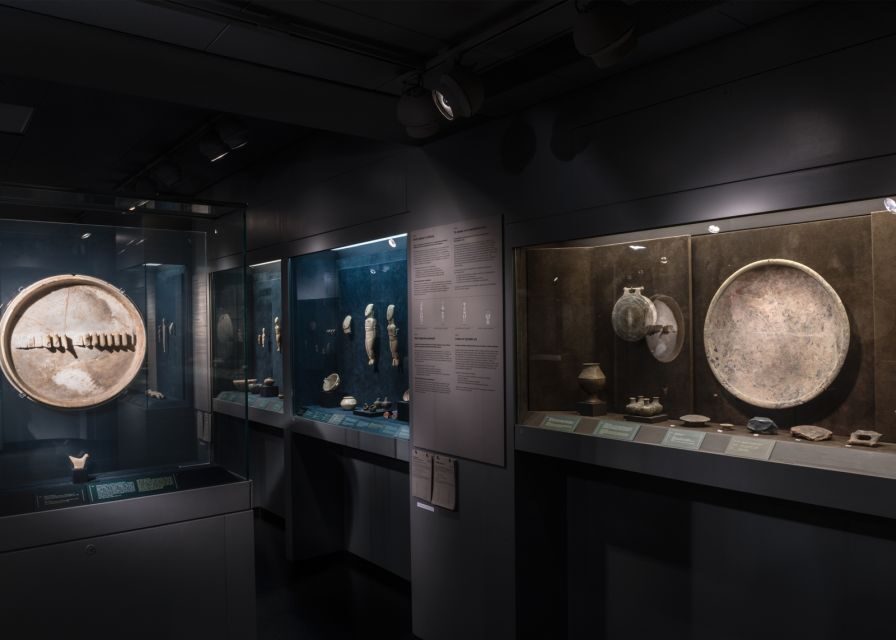
The museum’s Greek collection runs from the 2nd millennium BC to the 4th century AD, which gives you a broad timeline rather than a single snapshot. You’ll see how Greek city-states and society change as the centuries turn.
On this side of the museum, you’re likely to notice three categories of objects that make the story feel human:
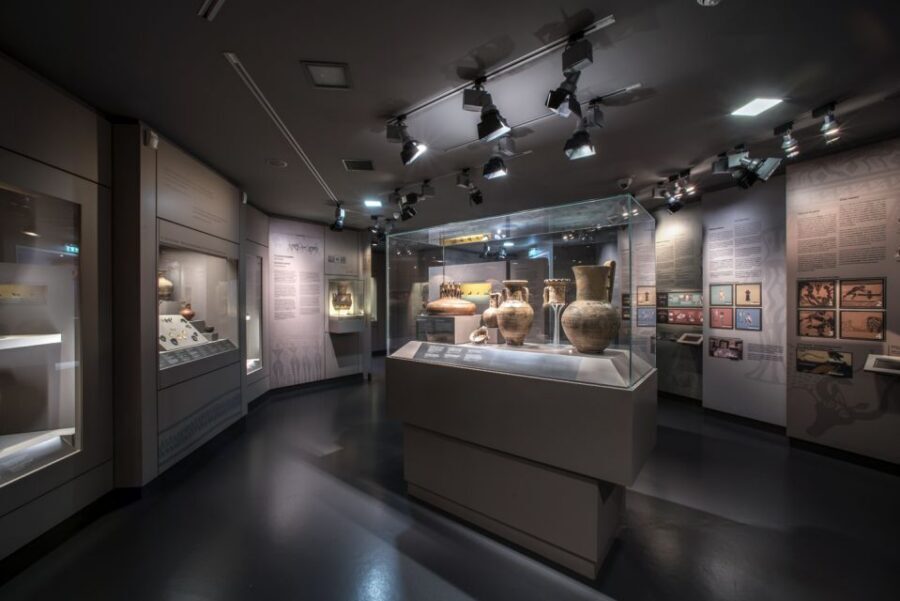
- Painted vases (where imagery does the talking)
- Terracotta figurines and stone sculptures (where form becomes meaning)
- Bronze vessels, coins, gold jewelry, and even glass items (where daily use and status intersect)
One of the smartest parts of the museum’s design is that it doesn’t just toss items onto shelves. The 2nd-floor exhibition is meant to give you the backbone: historical shifts, artistic trends, and the technology behind objects. If you’re the type who usually gets lost in big museums, this helps you keep the story straight.
Then the 4th floor adds the lived-in angle. The museum offers a vivid glimpse at everyday life in Classical Athens. This can be a relief if you’ve been staring at prehistoric art for a while. You get a sense of what daily routines might have looked like—because the museum isn’t only about grand myth and monument. It’s also about ordinary objects and social behavior.
This floor can also make the visit more memorable. Instead of thinking of ancient Greece as one long statue-filled postcard, you start connecting society to the objects people actually used.
You can also read our reviews of more museum experiences in Athens





Ancient Cypriot art outside Cyprus: how cultures blended across the Mediterranean
One of the museum’s strongest selling points—especially if you’ve already visited other Athens museums—is the breadth of Ancient Cypriot Art. Cyprus is close enough to Athens to feel connected, but different enough that it doesn’t just blend into the background.
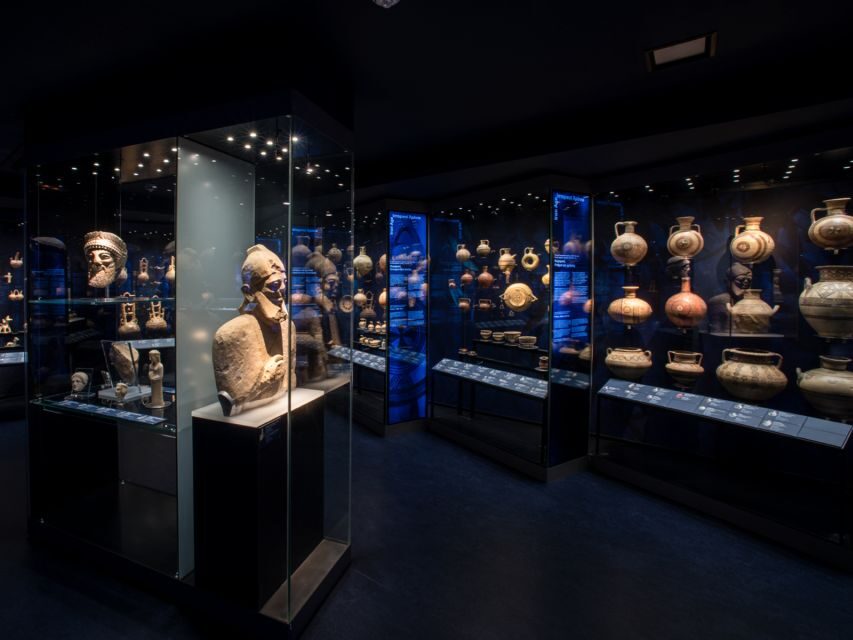
This collection is among the largest outside Cyprus, and it spans a huge range: from the 4th millennium BC to Medieval times. You’ll find:
- Unique prehistoric figurines
- Archaic and Classical sculptures
- Inscriptions
- Bronzes and coins
- Exquisite gold jewelry
- Glasswork
- Many ceramics across dates
What makes this portion click is the idea of cultural mixing. The museum highlights how Cypriot art combined elements from local traditions and influences from Greek, Egyptian, and Near Eastern worlds. That’s a big deal because it explains why Cypriot objects can feel both familiar and surprising at the same time.
If you like archaeology that reads like real-world contact—traders, travelers, political shifts, and shared techniques—this is the part of the visit that delivers. You’re not just seeing objects; you’re seeing interaction written into craftsmanship.
Your practical one-day itinerary: a simple order that works
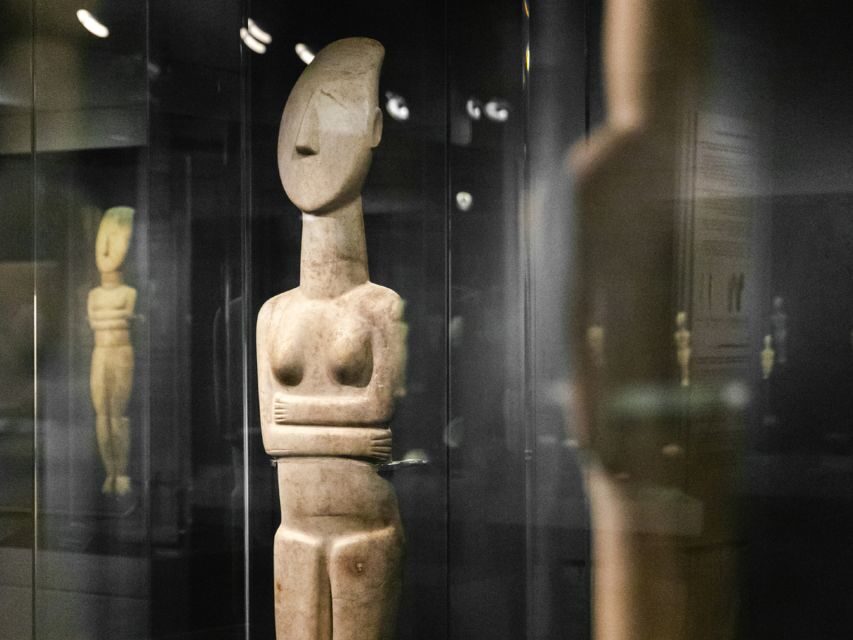
You can absolutely build your own route, but here’s a plan that keeps things logical and reduces stairs stress.
Start with context (2nd floor first)
Go to the 2nd-floor exhibition to get the big picture: historical, artistic, and technological developments. It sets the framework for what you’ll see later, so the objects stop feeling like separate islands.
Then follow the story to Classical Athens (4th floor)
Head to the 4th floor for the everyday-life view of Classical Athens. After that, the museum becomes easier to enjoy. You’re no longer only admiring form—you understand why these objects mattered.
Finish with the core Cycladic and Cypriot collections
Work through the floors that focus on Cycladic and Cypriot art. For Cycladic, look for the figurines and how styles shift over time. For Cypriot, slow down on categories like jewelry, glasswork, and inscriptions, because those often carry clearer evidence of cultural contact.
If you run into temporary access issues near the entrance during renovations, you might find it easier to start at the top and go down. People have also reported difficulty using an app-style approach to locate specific objects by number. So if you rely heavily on searching by exhibit numbers, double-check that your method is working early in the visit—then switch to visual browsing if it gets frustrating.
How to read the labels without turning it into homework
This museum’s information panels are a big part of why visits feel satisfying instead of exhausting. You don’t need to read everything, but you do want a method.
Try this approach:
- Pick one object per room to read closely.
- Then use the QR-code Clio Muse Tours to connect the object to its broader story.
- Finish by scanning the surrounding pieces with your new context in mind.
This keeps you from getting stuck in label overload. It also helps you understand myths and prehistoric civilization references without feeling like you’re studying for a test.
If you’re interested in “what changed and why,” focus on the museum’s emphasis on development—artistic and technological. The value isn’t only in the objects themselves. The real win is understanding how societies changed and how that change shows up in what people made.
Also, don’t ignore the small details. Tools and weapons help you understand practical life. Pottery tells you about storage and daily routines. Coins and gold jewelry point to wealth, status, and identity. Even glass items can connect you to technology and trade.
Pacing and comfort: crowds, noise, and who this is best for
Most of the time, this museum can feel calm. Some visitors report the permanent exhibitions are manageable in 1.5 to 2 hours, and the spaces are easy to navigate.
But you have to take one risk seriously: noise during renovation. If your visit overlaps with construction, it can make the galleries feel louder than you want—especially if you like to read or sit with a display for a while. If you’re sensitive to sound, plan flexibility. You might shorten the visit, focus on fewer floors, or choose quieter hours.
Kids under about 10 might struggle, not because the art is bad, but because the museum’s pace is slower and the objects require attention. If you bring younger kids, pair the visit with a playful goal: find three Cycladic figurines, then finish with a quick stop at the Classical Athens section. That turns a long museum into a set of mini-missions.
One more fairness note: some of the themes—vases, weapons, statues—are common across multiple major museums in Athens. You’ll still see the Cycladic and Cypriot material in a very specific, concentrated way here, but don’t assume you’ll find nothing familiar.
Should you book the Museum of Cycladic Art entry ticket?
Book it if:
- You want Cycladic art in a serious setting, with standout marble figurines and Early Bronze Age objects.
- You’re curious about Cyprus as its own story, not just as an add-on.
- You like self-guided visits where QR-code context helps you connect the dots.
Consider skipping or adjusting if:
- You’re very noise-sensitive and your dates line up with renovation.
- You expect a guided lecture-style tour. There’s no guided tour included—only the QR-code support.
If you want a smart, one-day museum plan in Athens that focuses tightly on the Aegean and Cyprus, this ticket is a strong choice. You’ll leave with more than pretty artifacts—you’ll have a clearer sense of how art moved, changed, and traveled across the ancient Mediterranean world.
FAQ
How long does the museum visit last with this ticket?
The ticket is valid for one day. Many people can see the permanent exhibitions in about 1.5 to 2 hours if they focus on the main galleries.
What does the entry ticket include?
It includes entry to the museum’s permanent collections, free Wi‑Fi, and access to Clio Muse Tours with a QR code.
Is a guided tour included?
No. A guided tour is not included with this ticket.
Where should I enter the museum?
Enter at the main entrance. It’s about a five-minute walk from Syntagma Square and the Syntagma Metro station.
Are food and drinks allowed inside the museum?
No. Food and drinks are not allowed.
Is the museum wheelchair accessible?
Yes, the museum is wheelchair accessible.
Can I cancel for a refund?
You can cancel up to 24 hours in advance for a full refund.
Is there a pay later option?
Yes. The option says Reserve now and pay later, so you can book without paying immediately.



More Museum Experiences in Athens
More Tickets in Athens



More Tour Reviews in Athens
- All Day Cruise -3 Islands to Agistri,Moni, Aegina with lunch and drinks included
★ 5.0 · 4,958 reviews