REVIEW · ATHENS
Athens Private Guided Tour: Acropolis, Parthenon and Museum
Book on Viator →Operated by Walks In Europe · Bookable on Viator
The Acropolis is better with a human map. This 3-hour private tour helps you move through the Acropolis and the Acropolis Museum with real context, not just facts on a signboard. I love how the priority tickets help you start faster, and I also love the way the museum visit makes the ruins feel clear and personal.
The one catch is timing: your entry tickets are timed and they can expire quickly, and in high season you may still face a short wait in the special skip-the-line holder queue. Also note that the Acropolis site doesn’t allow strollers, so plan on carrying a baby pouch or leaving the stroller behind.
In This Review
- Key things to know before you go
- Starting at the Acropolis Metro: the fast way to start seeing
- Acropolis walk: Parthenon, Erechtheion, Propylaia, and the stories behind them
- A note on crowd timing and the skip-the-line reality
- Temple of Athena Nike: the north-side stop most people miss
- Acropolis Museum: how the building changes what the ruins mean
- Guide quality: why names like Maria, Eva, Anna, and Marina show up again and again
- Price and value: what $477.10 per person is buying you
- Practical tips that make the day smoother
- Who this tour is best for
- Should you book this Acropolis and Museum private tour?
- FAQ
- How long is the Athens Private Guided Tour: Acropolis, Parthenon and Museum?
- Is admission included for the Acropolis and the Acropolis Museum?
- Where do we meet for the tour?
- Is this tour truly private?
- Are the entry tickets timed?
- Can I bring a stroller?
- What if I need to cancel?
Key things to know before you go

- Priority access tickets that help cut the worst of the line stress
- A guided route that covers the Parthenon plus lesser-seen points on the hill
- Temple of Athena Nike on the north side, often missed by standard tours
- Acropolis Museum visit timed based on season and crowds
- Guides who watch the pace and adjust to questions, shade, and comfort
Starting at the Acropolis Metro: the fast way to start seeing
The tour starts at Makrigianni 7, near public transportation, and then you meet up at the Acropolis metro area to begin exploring. The biggest practical win here is that you do not “wander and hope.” Instead, you go straight into the thinking behind the monuments—why they were built, how they relate, and what you’re looking at when you’re standing right in front of it.
You’ll want to arrive early—5 to 10 minutes before the scheduled start—because the tour departs punctually. On the Acropolis, the entry rules are strict: tickets are timed and are stated to expire within 5 to 10 minutes, so being late can actually mean you’re stuck waiting for the next entry window.
This tour is also built for a moderate level of walking. It’s a hill, uneven stone, and stairs show up in places. If you’re managing mobility issues, do ask the operator ahead of time—some guides have arranged elevator options in past situations, which can matter a lot for parents or guests with knee trouble.
You can also read our reviews of more guided tours in Athens



Acropolis walk: Parthenon, Erechtheion, Propylaia, and the stories behind them
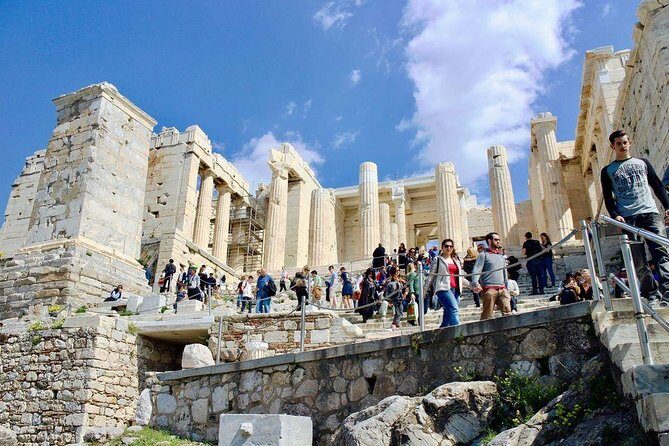
The main walking block is about 1 hour 30 minutes on the Acropolis itself, with admission included. This is where the tour’s “private” promise really pays off: you get to slow down at the spots that matter to you and speed past the spots that don’t.
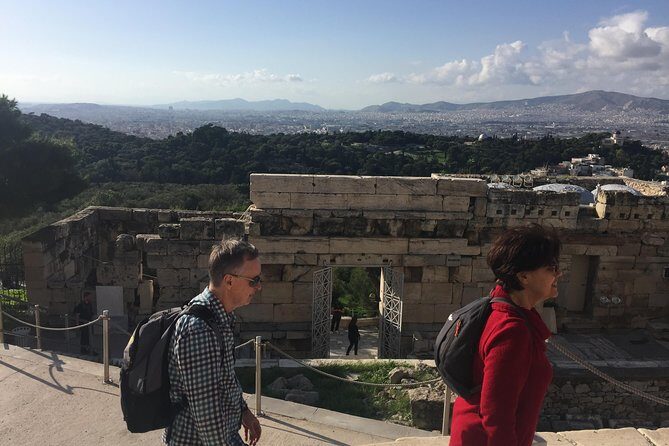
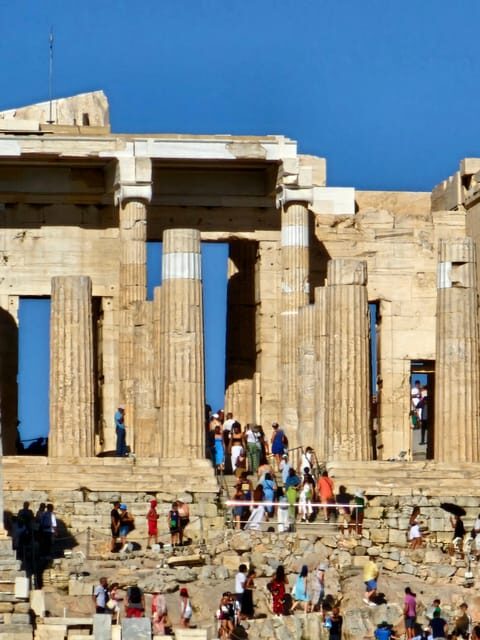
You’ll be guided through the complex layout of the Acropolis, including key landmarks such as the Propylaia, the Erechtheion, the Temple of Athena Nike, and of course the Parthenon. The guide doesn’t just point; they explain what you’re seeing. That matters because many visitors stare at columns and carvings and miss the way the site was designed to stage movement, power, and religion.
One useful detail: the tour focuses on the sacred precinct connections—Greek myths, religious festivals, and early cults that link back to specific parts of the hill. So when you stand in one area, you’re not thinking, Wait, what am I looking at? You’re thinking, This was part of a ritual world.
There’s also a route change element built in: the guide will send you on a different path toward the south exit so you get city views and can see additional points like the Altar of Asclepius and the Theater of Dionysus. That’s a smart move because it adds variety beyond the most photographed angles of the Parthenon.
A note on crowd timing and the skip-the-line reality
Priority tickets help, but they don’t turn the Acropolis into a quiet museum. During high season, skip-the-line access can get busy, and you may still end up waiting in a queue made for skip-the-line holders. My advice: aim for a time slot that reduces crowd friction when you can—early morning or later in the day tends to make a difference, and several guides emphasize shade and comfort as part of their pacing.
Temple of Athena Nike: the north-side stop most people miss
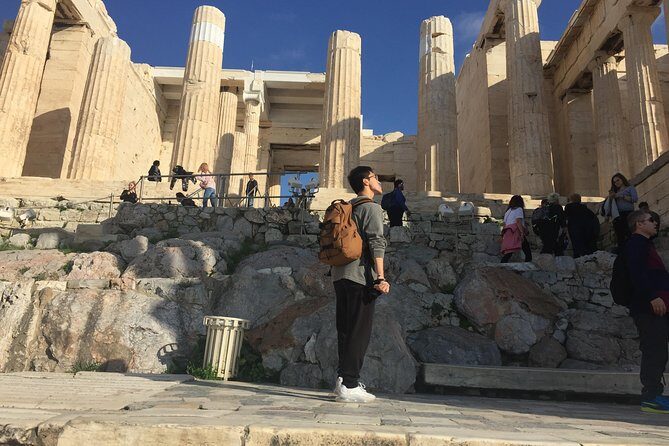
After the main Acropolis section, you’ll spend about 30 minutes at the Temple of Athena Nike. This is on the north side of the Acropolis, and that’s why it often gets overlooked. The area isn’t just another viewpoint—it ties into earlier Athenian cult practice and the shift toward Olympian worship.
A temple on the north side can feel like a “side quest” if you’re doing the site solo, but with a guide it becomes a payoff. You’ll get a clearer sense of how different orders and styles show up on the hill and how the monuments relate to their natural surroundings. It’s one of those places where the story makes the stones feel less random.
This stop also gives you a chance to reset your legs and refocus for the museum portion. Even if you’ve been looking at marble all morning, the guide’s framing will help you notice details you’d otherwise walk right past.
Acropolis Museum: how the building changes what the ruins mean
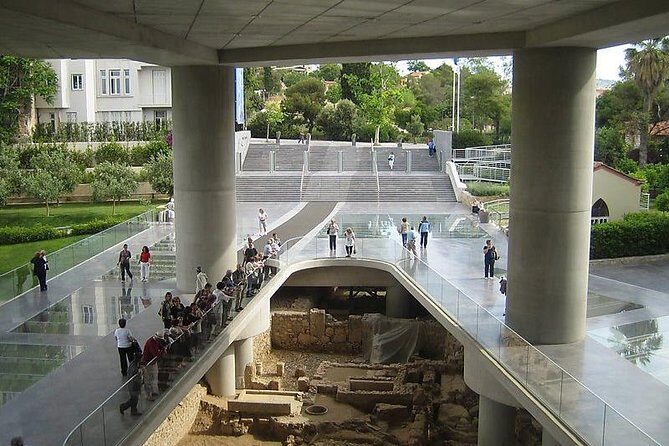
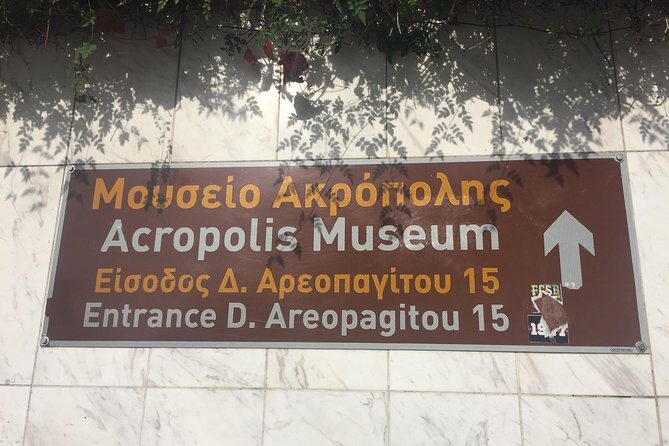
Then comes the pivot: the tour heads to the Acropolis Museum for about an hour. The guide handles the timing based on season and crowds, which is important because the museum experience works best when you’re not exhausted or trapped in long lines.
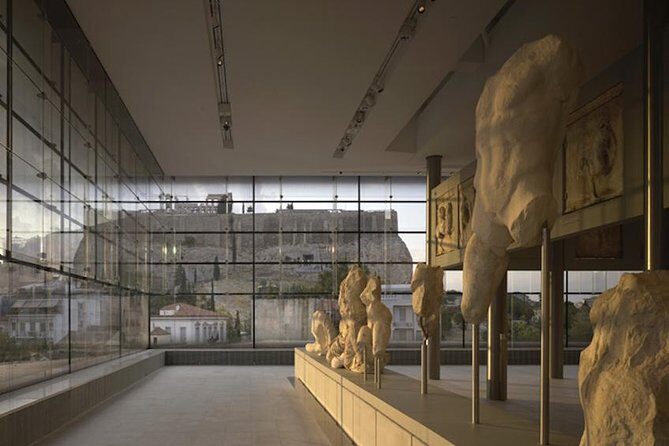
What I really like about pairing the Acropolis with the museum is that it turns “what is this?” into “oh, that’s why it looked that way.” The museum building itself is part of the experience, including a design that incorporates excavations you can see through the glass floor areas. So you’re not only reading about the past—you’re standing inside a space that literally shows traces of what came from the ground.
Inside, expect to see treasures from ancient Greek civilization. The point isn’t just to admire objects. It’s to connect them back to what you saw on the hill. After the guided walk, you can recognize styles, building logic, and religious symbolism more easily—especially if the guide took a minute earlier to explain what you’re about to view.
If you’re someone who likes to understand how a civilization organized its world, this museum stop is the moment when the pieces start clicking.
You can also read our reviews of more private tours in Athens






Guide quality: why names like Maria, Eva, Anna, and Marina show up again and again

You’ll be with an experienced local guide, and the guide can make or break an Acropolis visit. The strongest praise in the guide stories is consistent: guides handle questions well, keep the group moving without rushing the meaning, and stay patient with all kinds of interests—kids, teens, and adults.
You’ll see guide names come up often in the positive feedback, including Eva, Maria, Anna, Marina, Alex, Andy, Vicky, Liza, Pipi, Frosso, Elena, and Alexandra. The common thread is not just “good explanations.” It’s practical teaching: pointing out where to look, finding shade when possible, helping people get photos without turning the whole tour into a traffic jam, and adjusting the route for comfort.
One practical example: at least one set of guests described mobility accommodations that included arranging an elevator option to reach higher points. That doesn’t mean every guest will have the same exact plan, but it’s a strong signal that the guide is willing to work with real constraints when you communicate them.
Also, several guides are described as patient and engaging, which matters if you’re traveling with family. Greek mythology can sound intimidating on paper, but with the right guide it becomes a story you can follow without a textbook.
Price and value: what $477.10 per person is buying you
At $477.10 per person for about 3 hours, this isn’t a budget add-on. So I think about value in three buckets: time, stress, and understanding.
Time: the Acropolis is famous for lines and timed access. Priority tickets help you avoid the longest queues, and since your entry windows are strict, reducing wasted time is real value, not marketing talk.
Stress: timed tickets that expire quickly, strict departure times, and a site that’s physically demanding mean you’ll feel better if you’re guided. You’re not guessing where to start, what order to see things, or how to manage the flow.
Understanding: the tour isn’t only about seeing the Parthenon. You’re also getting framed explanations of myths, festivals, and why the monuments connect. Then you continue at the museum, where that context becomes easier to absorb.
If you’re already planning to do the Acropolis and the museum in one day, this tour often makes sense because it bundles the hard-to-manage parts—timing, routing, and interpretation—into one guided plan. If you’re the type who enjoys wandering independently and reading signs slowly, you might skip this and do it solo. But if you want the site to make sense quickly, you’ll likely feel the money was well spent.
Practical tips that make the day smoother
Here are the details that matter most on the ground:
- Bring water and plan for heat. Even if the route is guided, you’ll still be on stone surfaces and in open air.
- Arrive early at the meeting point, because tour entry times are reserved and punctuality matters.
- Skip-the-line queues can still happen in high season. Priority access reduces time, but it doesn’t delete waiting entirely.
- No strollers at the Acropolis. If you’re traveling with a baby, plan on a baby pouch instead of a stroller.
- Wear shoes you trust. The site includes stairs and uneven ground, and you’ll cover more than just the front of one monument.
Also, if you’re sensitive to walking distance, tell your guide early. A route adjustment can make the difference between an “I survived it” day and a comfortable, enjoyable one.
Who this tour is best for
This tour is a great fit if you:
- want a structured path through the Acropolis and the museum without spending your day figuring out logistics
- like mythology and want the stories connected to what you’re seeing in stone
- care about architecture details and how parts of the hill relate to one another
It may be less ideal if you:
- want total freedom to linger for long periods at one spot with no schedule at all
- need a fully stroller-friendly route, since strollers aren’t allowed on the Acropolis site
- prefer a slow, unguided museum pace only
If you’re traveling as a family, the guide’s ability to keep kids and adults engaged is a standout theme in the positive feedback—especially with guides who explain without getting dry.
Should you book this Acropolis and Museum private tour?
I’d book this if you want the Acropolis to feel coherent, not random. The priority access helps you start smart, the guide framing makes the myths and architecture stick, and the museum pairing turns the ruins into something you can actually understand.
But if you’re going in the mindset of casual wandering and don’t mind lines and sign reading, you might be happier building your own route with flexible timing. For most people doing their first major Athens monument day, the guided structure and the museum follow-up are the difference between a checklist visit and a memorable one.
If you do book, choose your time slot thoughtfully and arrive early. Then let the guide do the heavy lifting—your job is just to look up, ask questions, and enjoy the view.
FAQ
How long is the Athens Private Guided Tour: Acropolis, Parthenon and Museum?
It’s approximately 3 hours total, including time at the Acropolis, the Temple of Athena Nike, and the Acropolis Museum.
Is admission included for the Acropolis and the Acropolis Museum?
Yes. Entrance fees for both the Acropolis and the Museum are included.
Where do we meet for the tour?
The tour starts at Makrigianni 7, Athina 117 42, Greece, and ends back at the meeting point.
Is this tour truly private?
The activity is described as a private tour, with only your group participating.
Are the entry tickets timed?
Yes. Tickets are timed and expire within 5 to 10 minutes, so you should arrive 5 to 10 minutes early.
Can I bring a stroller?
No. Any baby strollers are not permitted within the Acropolis site. A baby pouch is suggested instead.
What if I need to cancel?
You can cancel for free up to 24 hours in advance for a full refund. Changes within 24 hours of the start time aren’t accepted.



More Guided Tours in Athens


More Tours in Athens


More Tour Reviews in Athens
- All Day Cruise -3 Islands to Agistri,Moni, Aegina with lunch and drinks included
★ 5.0 · 4,958 reviews