REVIEW · ATHENS
Cooking Class in Athens: Learn the Art of Phyllo with Christina
Book on Viator →Operated by Traveling Spoon · Bookable on Viator
You’ll leave with flour under your nails.
This Athens class is all about phyllo—the paper-thin dough behind Greece’s most loved savory pies—taught step by step in Christina’s home kitchen. You start with a traditional Greek coffee, learn to make dough from flour and water, then roll it out thin enough to feel like a skill, not a miracle. It’s hands-on, paced for your group, and focused on getting the technique right.
What I like most is the private, own-pace instruction. You’re not rushing through a show-and-tell demo. You’re actually rolling dough, building a filling, and working with the delicate layers so you can repeat it later. I also love the food payoff: after the cooking (about two hours), you sit down to a shared meal with spanakopita you made, plus seasonal sides, tsipouro and wine, and a sweet finish.
One drawback to plan for: Christina’s neighborhood is hilly. If you choose the optional market walk, bring comfortable shoes and be ready for some uphill strolling.
In This Review
- Key moments that make this worth your time
- Why this Athens phyllo class is more than a cooking show
- Inside Christina’s kitchen: the real rhythm of the 3.5 hours
- The spanakopita lesson: skills you can actually reuse at home
- Market walk option: how to shop like you cook
- The meal afterward: what you eat after baking your own pie
- Price and value: what $185 buys you in Athens
- Who should book this class, and how to choose lunch vs dinner
- Practical notes for a smooth day at Christina’s
- Should you book Christina’s phyllo cooking class in Athens?
- FAQ
- How long is the cooking class in Athens?
- Is the cooking class private?
- Do I get to choose lunch or dinner?
- What do you learn to cook?
- Is a market tour included?
- Is the class taught in English?
- Is there a vegetarian option?
- What happens after the cooking?
- Where does the experience start and end?
Key moments that make this worth your time
- From scratch phyllo technique: learn the dough base and how to roll thin sheets without tearing
- Hands-on spanakopita building: filling, layering, and oven-ready crust work together here
- Optional 1-hour market walk: ingredients meet the cooking plan, so everything feels connected
- Full meal included: spanakopita plus other Greek dishes, with tsipouro, wine, and dessert
- Printed recipes to take home: you get something practical for your next cooking night
- Small-group feel: it’s private, so questions don’t get swallowed by a big crowd
Why this Athens phyllo class is more than a cooking show
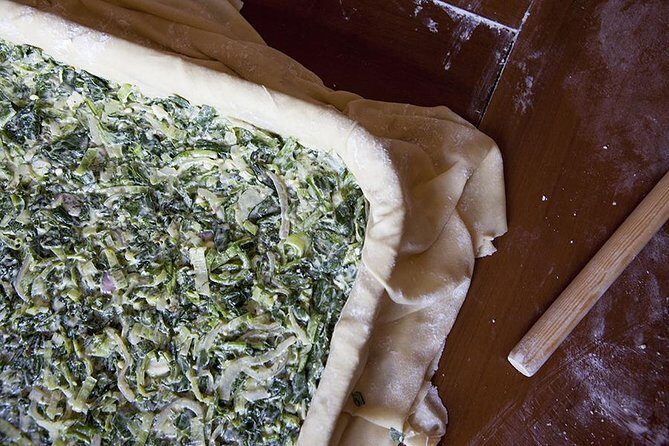
Most cooking classes in big cities end with you eating something tasty and leaving with a vague memory of how it all happened. This one aims higher. It’s built around phyllo technique, not just a finished dish.
Phyllo is delicate. If you’ve ever handled store-bought sheets, you know the real challenge is what happens before the oven: the dough’s behavior, how thin it rolls, and how you manage layers so the crust turns light and flaky instead of heavy or dry. Christina’s approach focuses on those steps, so the skill transfers to your home kitchen.
You also get the Athens food context that makes Greek cooking feel logical. You’re using seasonal greens like wild spinach and local greens, plus Greek cheeses. That matters because it changes how the filling cooks down, how salty it tastes, and how the pie holds together. When the ingredients are in season, the flavor is sharper and the class feels more real.
Finally, you get that home-kitchen hospitality vibe. The experience is in Christina’s welcoming space, and the tone is warm and friendly, with time to get comfortable. It’s not just instructional. It’s also social in a calm way—shared tasks, shared meal, and lots of chances to ask why things work.
You can also read our reviews of more cooking classes in Athens

Inside Christina’s kitchen: the real rhythm of the 3.5 hours
The whole outing runs about 3 hours 30 minutes. If you add the optional market walk, the timing still stays within that total window. You’ll pick either lunch or dinner time depending on what fits your schedule.
When you arrive, you’ll meet at Vrioulon, Vironas 162 32, Greece. The experience ends back at the same starting point.
Here’s the flow you can expect:
1) Welcome and coffee start
You begin with a traditional Greek coffee. It’s a gentle setup moment—enough time to settle in, meet Christina, and get oriented before you start handling dough.
2) Dough from flour and water
This is the heart of the class. You’ll learn how to make phyllo dough starting from basic ingredients. You’ll work through the steps that turn a simple mix into something rollable and manageable. The biggest lesson here is technique and patience: phyllo doesn’t rush well.
3) Making the spanakopita filling
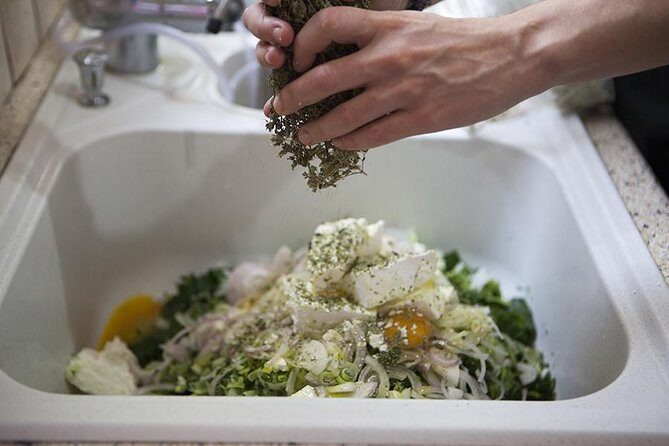
While dough work is happening, you’ll handle the filling basics: seasonal greens, Greek cheeses, and other ingredients that go into a classic spanakopita style. You’ll see how the filling changes as it mixes and cooks, so you understand how moisture and seasoning affect the final pie.
4) Rolling paper-thin sheets at the dining table
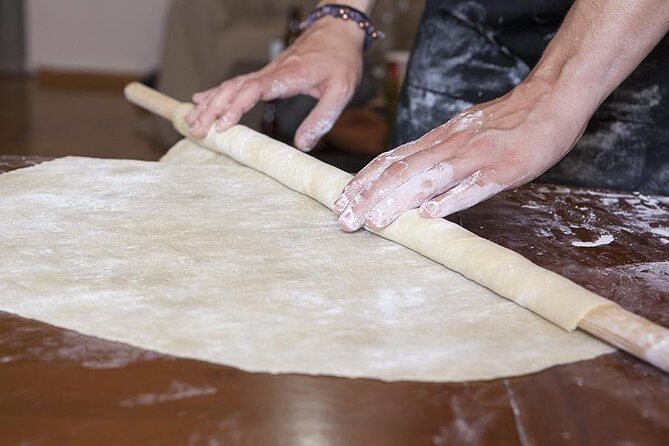
This is where the class becomes memorably hands-on. You’ll roll the dough into thin sheets and learn how to handle phyllo without turning it into a sticky mess. Rolling is part skill, part feel, and part timing.
A useful technique you’ll likely practice here is controlling moisture so the crust bakes well. Christina shows how to slice the pie for moisture to escape and how to sprinkle water on top for better crust behavior. Those two small actions make a surprising difference.
5) Layering into a pan and baking-ready assembly
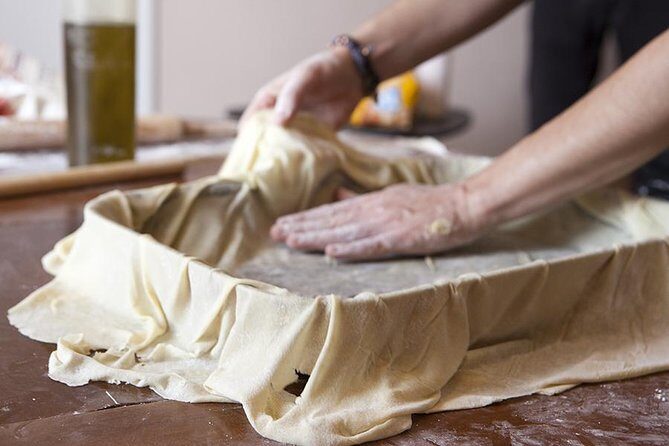
Phyllo is all about layering. You’ll learn how to build the pie so it stays light and crispy rather than dense.
6) About two hours of cooking, then the meal
Cooking time is roughly two hours. After that, you eat what you made.
What’s smart for you: you’re not just copying steps. You’re learning why the steps matter, which is what allows you to cook again later without needing a class notebook in your kitchen.
The spanakopita lesson: skills you can actually reuse at home
If your goal is to bring back a new ability—not just a souvenir dish—this class is built for that.
You’ll focus on three reusable skills:
Phyllo dough handling
You learn how to start with flour and water and develop dough that rolls properly. That’s the foundation. With this skill, you stop feeling trapped by pre-packaged sheets.
Thin-sheet rolling and layer management
Rolling phyllo thin is not a single move. It’s a sequence of adjustments. Christina’s teaching style emphasizes pacing, so you can practice without feeling pressured. The result is a crust structure you can trust: crisp, flaky layers.
Filling balance and seasoning
Spanakopita isn’t just greens and cheese. It’s how the filling is mixed and how it holds moisture. You’ll work with seasonal ingredients and Greek cheeses, and you’ll get printed recipes to help you match flavors later.
One practical note: phyllo dough work can get messy. That’s normal. Wear something you can move in, and expect to touch flour. You’re learning a technique that rewards calm focus, not perfection.
Also, the class is private. That means the pace can stay aligned with your group. If someone needs more repetition, you can usually get it without feeling like you’re slowing down a crowd.
Market walk option: how to shop like you cook
If you choose the optional market experience, it adds about 1 hour of walking through places Christina recommends.
The goal is simple: you learn what to look for, then you cook with ingredients that make sense. You’ll visit shops such as a cheesemonger, deli, and bakery (plus other stops along the way), and you’ll hear ingredient guidance before you start cooking.
A hilly neighborhood matters here. Christina’s area is known to be uphill. If you take the walk, bring comfortable shoes and plan for a slow-but-steady pace.
Who this helps most:
- Food lovers who like understanding ingredients, not just recipes
- Anyone who’s returning home and wants a realistic shopping strategy
- You if you hate the feeling of buying the wrong cheese or the wrong greens and then wondering why the dish tastes different
Even if you skip the market walk, you’ll still cook with seasonal ingredients in Christina’s kitchen. But adding the walk makes the lesson feel connected, like the cooking has a supply chain and not just a menu.
The meal afterward: what you eat after baking your own pie
This is not a quick snack. After about two hours of cooking, you sit down to a shared meal featuring the spanakopita you helped make.
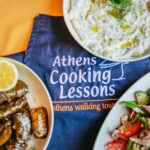
Alongside it, you’ll get a spread of Greek dishes Christina has prepared. The menu can include items like:
- Graviera with dried figs (a Greek cheese starter pairing)
- Bouyiourdi (baked feta with tomato and spicy peppers)
- Fakosalata (lentil salad with marinated anchovies, cherry tomatoes, and mint)
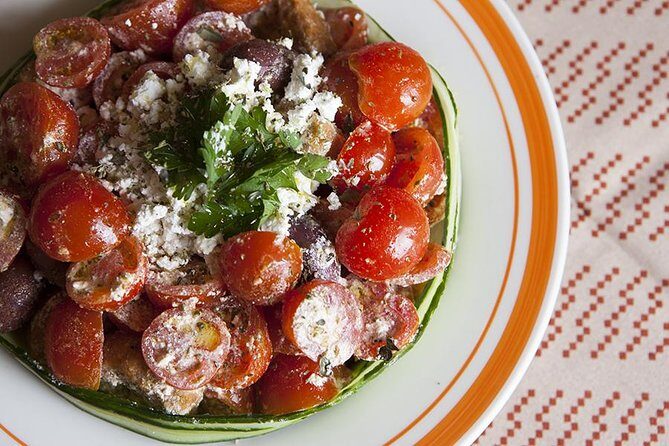
- Dakos (salad with rusks, tomatoes, olives, and katiki soft cheese)
- Dolmades (stuffed vine leaves with rice and herbs)
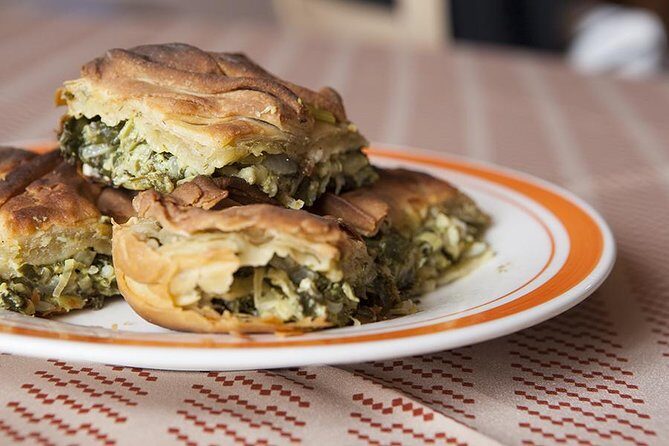
- Spanakopita (your phyllo pie with wild greens and Greek cheese)
- Yuvetsi (orzo with sausage and veggies)
- Greek yogurt with homemade bergamot spoon sweet
You’ll also enjoy drinks with the meal, including tsipouro and wine.
This part is valuable because it shows what the pie should taste like in a real lineup. Spanakopita tends to be salty and rich. The rest of the table keeps it balanced with acidity, herbs, and lighter salads. That helps you understand how you should serve it at home—not just what it should taste like alone.
You can also read our reviews of more tours and experiences in Athens
Price and value: what $185 buys you in Athens
At $185 per person, you’re paying for a few things at once:
- A private class (only your group participates)
- Hands-on training on phyllo and spanakopita assembly
- Seasonal ingredients and cooking instruction
- The full shared meal afterward, with drinks (tsipouro and wine)
- Printed recipes you can use later
- Optional add-on time for the 1-hour market walk
Many group classes cost less but don’t give you the time you need to practice delicate technique. Here, you’re not competing with strangers for attention. You’re learning a skill that’s difficult to learn from a phone video, and you’re also eating like a local household rather than a restaurant tasting menu.
If you’re the type who wants results you can repeat, this price starts to make sense fast. If you mostly want a casual foodie experience with zero kitchen time, you might find it’s more than you need. But for someone who loves hands-on cooking, it feels like good value.
Who should book this class, and how to choose lunch vs dinner
This is a great fit if you:
- Want a real technique lesson in Athens, not just a meal
- Love Greek food and want the key dough skill behind popular pies
- Travel with food-minded friends or family and want a shared activity
- Prefer learning in a smaller, private setting with time to ask questions
It’s also a smart plan if you’re doing other Athens highlights first. This class works well as a second-day or later activity after you’ve seen the city, because you finish with something satisfying and practical you’ll actually use at home.
Choosing lunch vs dinner is mostly about your energy. Dinner time can feel more relaxed if your day already has museums and walking. Lunch can be easier if you want cooking done before the evening crowds.
Dietary note: there’s a vegetarian option if you advise any needs at booking. If you have specific allergies, you should share them when you reserve.
Practical notes for a smooth day at Christina’s
A few details will help your day go smoother:
- You’ll use a mobile ticket.
- Confirmation is typically sent within 48 hours, based on availability.
- Service animals are allowed.
- Public transport is nearby, but the key thing is comfort: Christina’s neighborhood is hilly, especially if you do the market walk.
- You’ll start and finish back at the meeting point at Vrioulon, Vironas 162 32, Greece.
Packing mindset: dress for kitchen work. Bring close-toed shoes or supportive sandals if you’re walking to the market. If you choose the market option, plan for some uphill walking. And yes, bring the kind of sweater or layer you’re okay smelling faintly like baked phyllo by the end.
Should you book Christina’s phyllo cooking class in Athens?
Book it if you want to leave with a skill, not just a nice dinner. The focus on phyllo—made from flour and water, rolled thin, layered carefully, and baked with technique—sets this apart from classes that only teach a rough outline. The private format makes the learning feel personal, and the meal afterward gives you a full Greek table to match against what you cooked.
Skip it only if your goal is low-effort sightseeing-plus-snacks. This is work. Fun work. But it’s still a real cooking class with hands-on steps.
Quick decision checklist:
- You love Greek pies and want the key dough skill
- You’re okay with a hilly neighborhood walk if you add the market option
- You want printed recipes and a meal included
- You value private pacing over a crowded group class
If those match you, Christina’s class is a strong choice for an Athens food day that you’ll remember when you’re back home.
FAQ
How long is the cooking class in Athens?
The total experience lasts about 3 hours 30 minutes, with cooking taking about 2 hours.
Is the cooking class private?
Yes. It’s a private tour/activity, so only your group participates.
Do I get to choose lunch or dinner?
Yes. You can pick between lunch and dinner times to fit your schedule.
What do you learn to cook?
You’ll make spanakopita, including making phyllo dough from scratch and rolling it into thin sheets for a flaky crust.
Is a market tour included?
A 1-hour walking market tour is optional. It may include stops like a cheesemonger, deli, and bakery.
Is the class taught in English?
Yes. The experience is offered in English.
Is there a vegetarian option?
Yes, a vegetarian option is available. You should advise any dietary requirements at the time of booking.
What happens after the cooking?
After cooking, you share a meal that includes the spanakopita you made, plus seasonal dishes. You can also enjoy tsipouro, wine, and dessert.
Where does the experience start and end?
It starts at Vrioulon, Vironas 162 32, Greece and ends back at the same meeting point.



More Workshops & Classes in Athens
More Cooking Classes in Athens
More Tour Reviews in Athens
- All Day Cruise -3 Islands to Agistri,Moni, Aegina with lunch and drinks included
★ 5.0 · 4,958 reviews