REVIEW · ATHENS
Athens: The Acropolis Guided Walking Tour in Dutch
Book on GetYourGuide →Operated by LITTLE OWL TOURS · Bookable on GetYourGuide
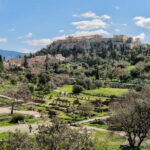
The Acropolis hits different in Dutch. This guided walk strings together ruins and myths so you don’t just see stone—you understand what you’re looking at. You start on the hill, sit in the Theatre of Dionysus, and finish with a 360° view over Athens.
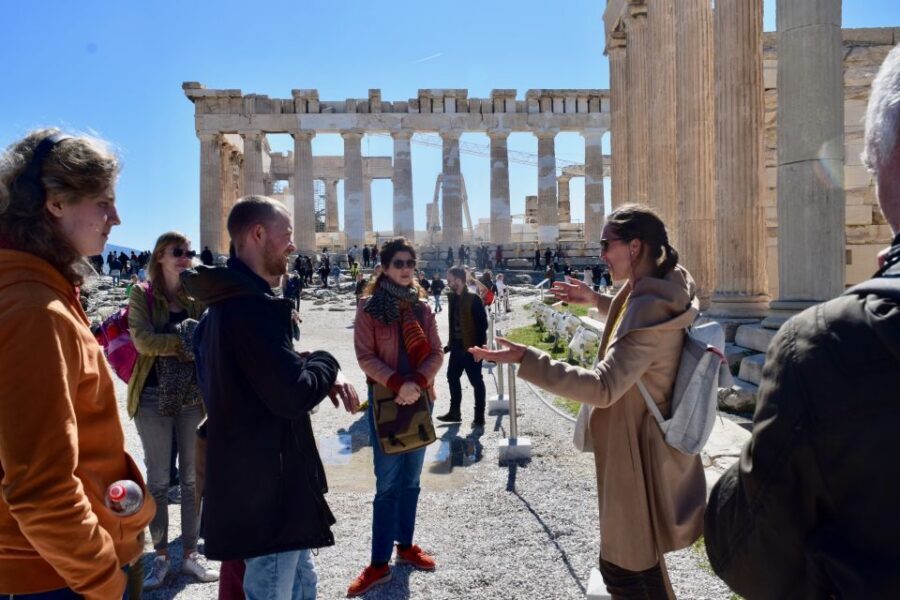
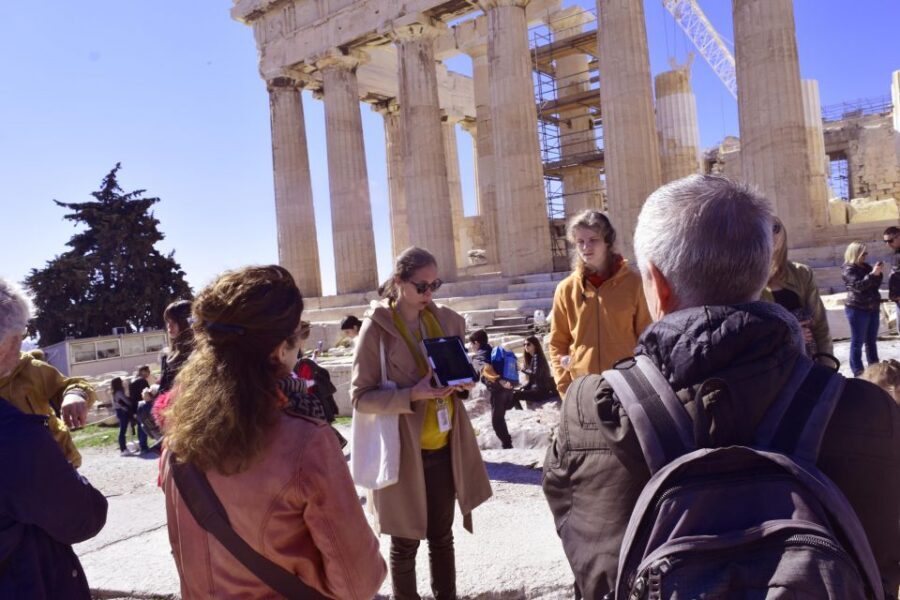
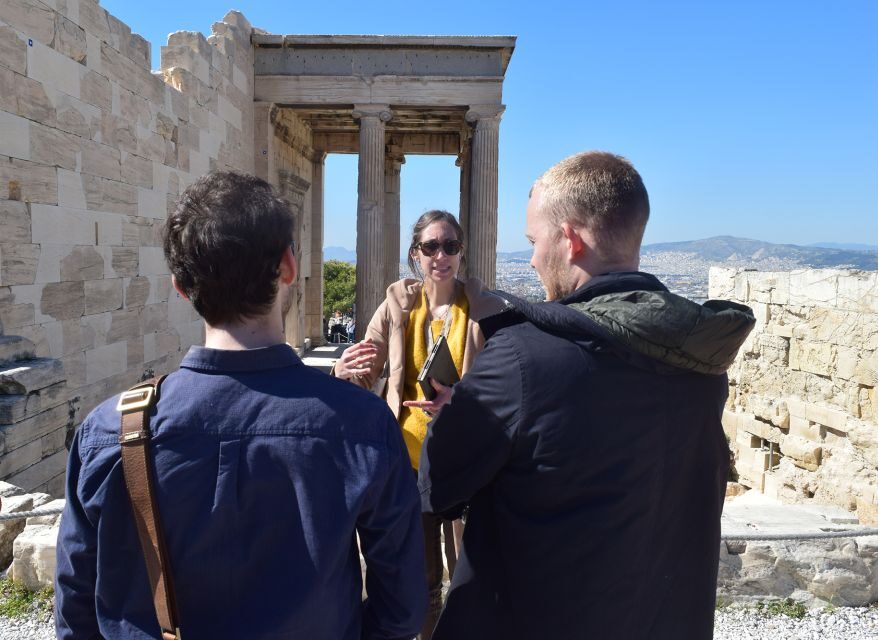
What I love most is the way the guide brings the site to life. Expect clear explanations for big landmarks like the Parthenon and the Erechtheion, plus handy visual support that makes details easier to place in your head. Guides from Little Owl Tours, including a Dutch guide named Jessica who’s noted for passionate storytelling and added image material, set a lively tone.
One drawback to plan for: this is a walk uphill on uneven ground, with no elevator. It’s not recommended if you have mobility limits, and on occasion the terrain can be slippery—comfortable shoes and a steady pace matter.
In This Review
- Key highlights you should care about
- Meeting at Acropoli Metro and getting your footing right
- Theatre of Dionysus: where the story starts
- Odeon of Herodes Atticus and what big venues can teach
- The Asklepieion hospital ruins: the Acropolis beyond temples
- Propylaea: the monumental gate before the temple skyline
- Parthenon, Erechtheion, and the Nike Temple: learning to see the details
- The 360° Athens viewpoint: a finish that feels earned
- Price and value: what $95 buys you in the real world
- Who this Dutch Acropolis walk is best for
- Should you book this Acropolis guided walking tour or skip it?
- FAQ
- How long is the Acropolis guided walking tour in Dutch?
- Where do I meet the guide for this tour?
- Is the entry ticket to the Acropolis included?
- Do I skip the ticket line?
- What sights will I see during the walk?
- Is the tour offered in Dutch?
- What should I bring to the tour?
- What is not included in the price?
- Is this tour suitable for limited mobility?
- Are strollers, pets, or large bags allowed?
- Can I cancel for a full refund?
Key highlights you should care about
- Theatre of Dionysus first: sit where ancient performances began and connect the myths to real architecture
- Asklepieion hospital ruins: see one of the first hospital sites in ancient Greece
- Propylaea gateway moment: walk through the monumental entrance before the temple views open up
- Parthenon, Erechtheion, Athena Nike grouped as a viewpoint: you’ll learn how to read the skyline from the top
- 360° Athens view at the end: a satisfying finish, not just a rushed stamp-and-go stop
Meeting at Acropoli Metro and getting your footing right
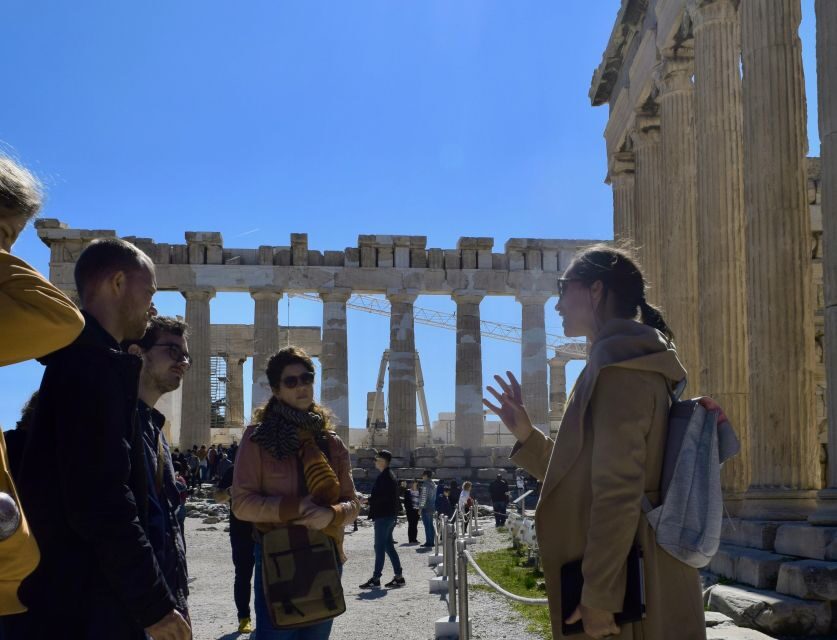
This tour starts outside Metro station Acropoli. Exit via Makriyianni / Dionysiou Areopagitou, then look for your group near the entrance area. You’ll be walking from the side entrance of the hill, which means you’ll warm up fast—before you even reach the main temple area.
Bring what you’d bring for a proper uphill day in Greece: comfortable shoes, water, sunglasses, and a sun hat. Even if the walking time is short at 1.5 hours, the ground is uneven and you’re outside on exposed terrain. This is one of those tours where your shoes affect how much you enjoy the day.
The practical rule: don’t show up expecting baby strollers, luggage, or pets. Baby strollers are not allowed, large bags and luggage are not allowed, and pets are not allowed (assistance dogs are allowed). Plan to travel light so you can move without hassle.
Also, keep expectations realistic about mobility. This is not a tour designed for wheelchairs or people who need an elevator. The pace is uphill on uneven ground, and the tour notes slipping can happen at times. If that’s you, it’s worth choosing a different format.
You can also read our reviews of more walking tours in Athens


Theatre of Dionysus: where the story starts
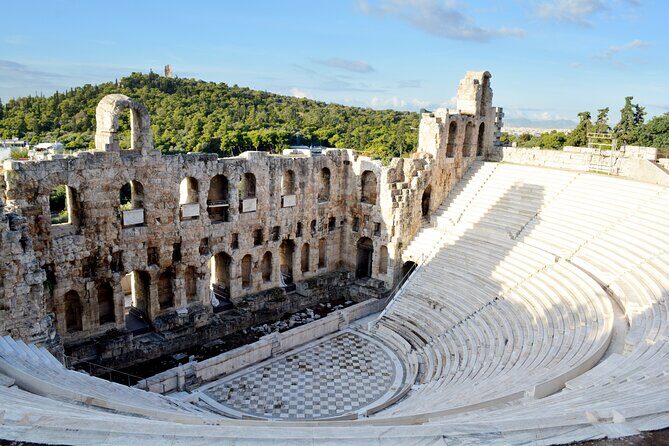
The tour begins at the hill side and quickly drops you into the theatre of Dionysus. This is a smart start because it frames the whole Acropolis as more than sightseeing. You’re not just looking at buildings; you’re stepping into the origins of Greek theatre.
You’ll get time to grab a seat on the ancient rows. That small act helps your brain understand scale and shape. From there, your guide connects the site to the legends around ancient Greek performance culture, then you’re moving upward again.
One reason I like this order: it gives context before the big-name temples. If you start with marble perfection, the theatre can feel like an extra. Starting here makes it feel like the point.
Odeon of Herodes Atticus and what big venues can teach
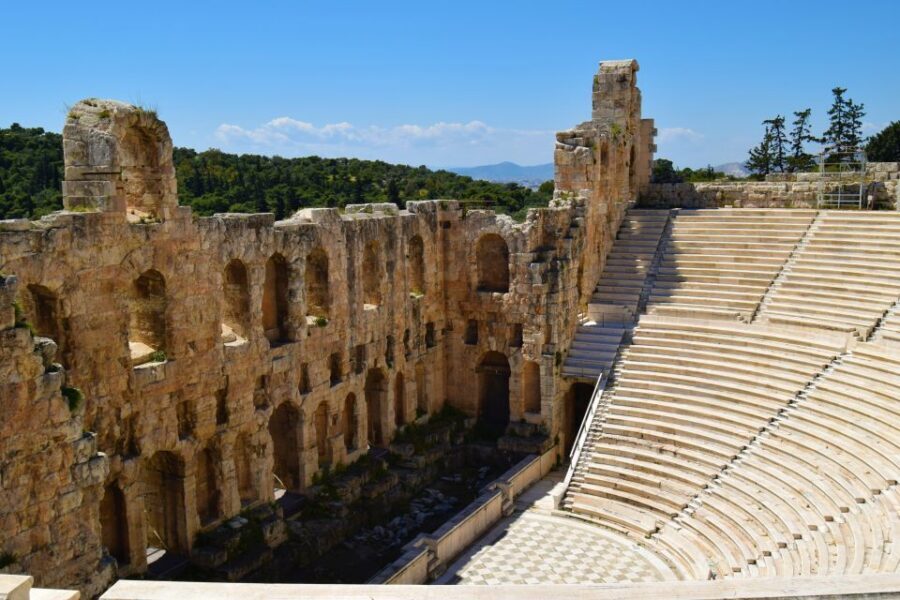
After the theatre, the route continues along the hillside toward the Odeon of Herodus Atticus. This stop adds a second layer to what you’re learning about performance spaces on the Acropolis. You get a sense of how these venues were designed not just for art, but for public life.
You’ll also hear explanations that connect architecture to function. That matters because the Acropolis can be hard to read on your own. From the ground, details blend together. With a guide, you start noticing how sightlines, entrances, and monument placement all work together.
The Asklepieion hospital ruins: the Acropolis beyond temples
Here’s a stop that many people overlook. You’ll pass the Asklepieion, described as one of the first hospitals in ancient Greece. It’s a reminder that the Acropolis wasn’t only a religious showpiece. It also had space tied to healing and everyday human needs.
This is exactly the kind of contrast that makes a guided tour worth the price. When you see the Asklepieion ruins near the more famous religious structures, you get a fuller picture of what this hill meant. It wasn’t only about gods and ceremonies. It was also about people.
It also changes your pace. The hospital area is less about big photo poses and more about noticing fragments and structure. If you like learning how cities worked, this stop delivers.
Propylaea: the monumental gate before the temple skyline
Now you reach one of the key “walk-through” moments: the Propylaea. This is the monumental gateway entrance to the upper sacred area. Even if you’ve seen pictures, walking through it changes the feeling. The size becomes real, and the route starts to make sense.
From here, you’re heading toward the top viewpoints where multiple temples frame the skyline. Your guide helps you take in views of the three temples commonly associated with the Acropolis—the Parthenon, the Erechtheion, and the Nike Temple—so you know what you’re seeing instead of just collecting names.
This is where the tour shifts from “look at this” to “read this.” You’ll hear about architectural choices, and the myths linked to the buildings. If you enjoy puzzle-like details—how columns, proportions, and design quirks create meaning—this section is a good fit.
You can also read our reviews of more guided tours in Athens


Parthenon, Erechtheion, and the Nike Temple: learning to see the details
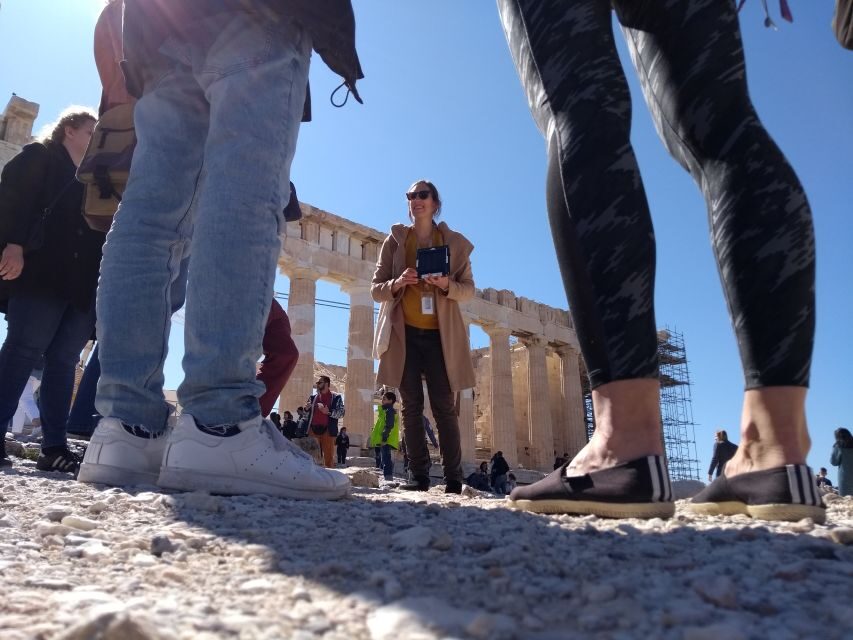
Let’s talk about the big three you’ll focus on at the top.
The Parthenon is the headline. You’ll get guided time that helps you understand why this temple became the symbol it is today. It’s not just about the grandeur. It’s about what the structure communicates and how it was designed to be seen from key angles.
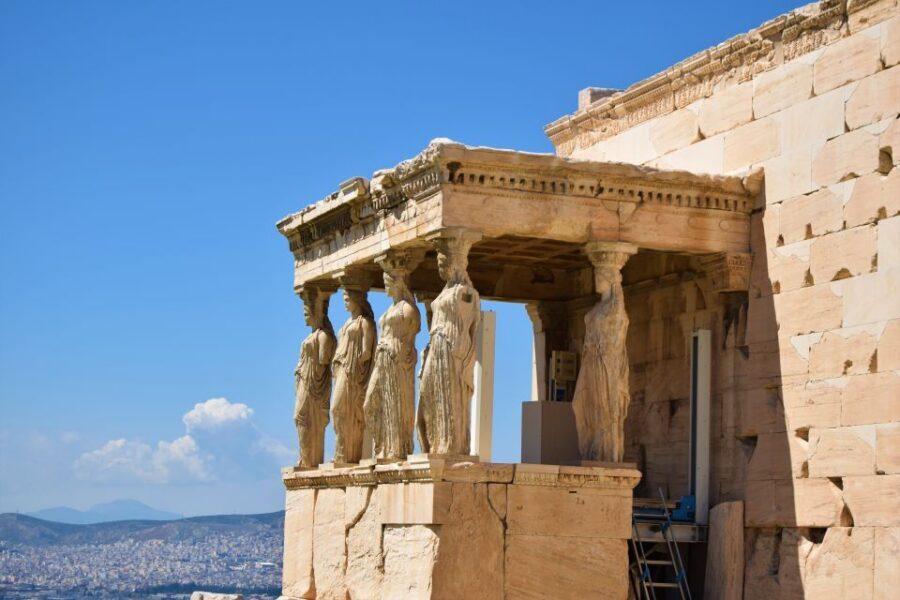
Then comes the Erechtheion, a temple with distinctive features that are easy to miss if you’re rushing. With a guide, you learn what makes it notable and how different parts of the building connect to the wider Acropolis story. The value here is attention. The guide helps you look slowly enough to notice what makes it different.
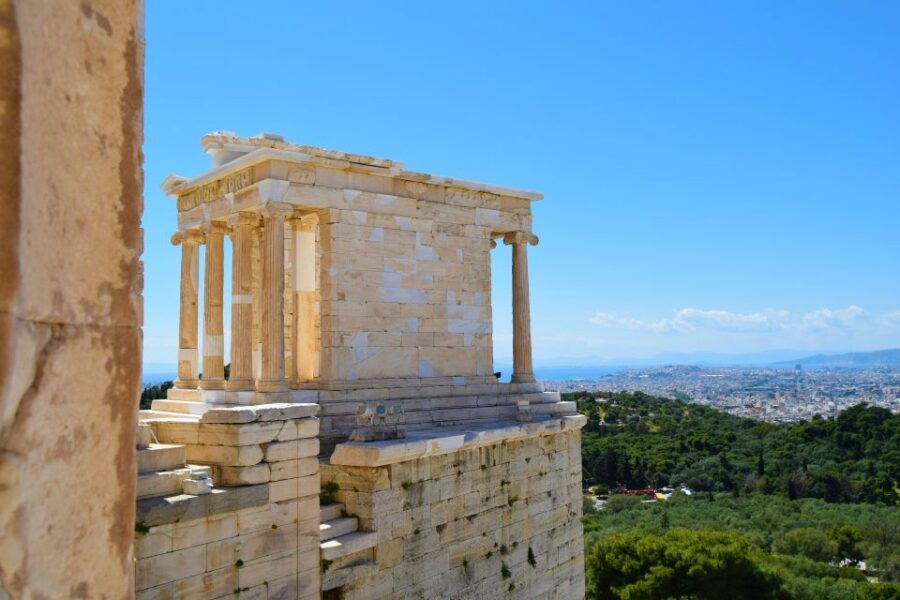
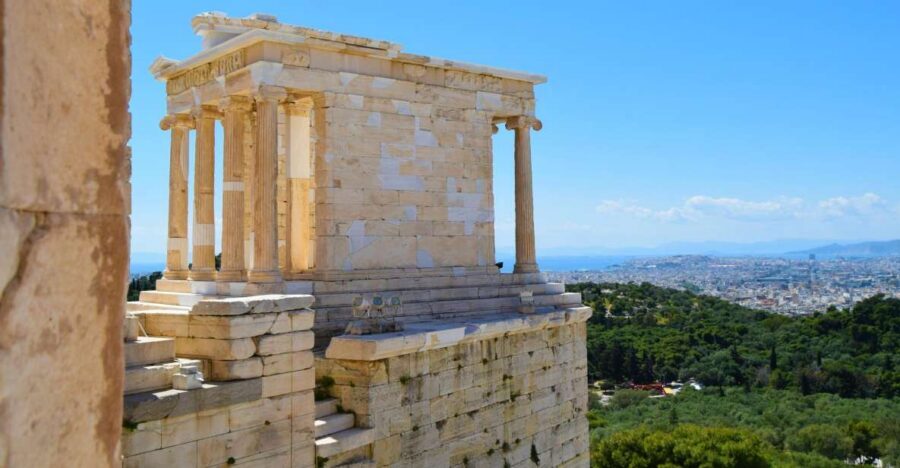
Finally, you’ll reach the Temple of Athena Nike. This stop tends to work well even for people who think they’re not “architecture people.” The guide’s job is to point out the cues that make the smaller temple feel important—how it fits the sacred route and what the myth-and-monument explanations add.
If you’re with kids, this stretch is often where the tour earns its keep. One Dutch-speaking guide experience highlighted that children (including ages 6, 9, and 14) and adults all found the storytelling strong. Even if your group isn’t a private one, the format supports keeping attention on the why, not only the what.
The 360° Athens viewpoint: a finish that feels earned
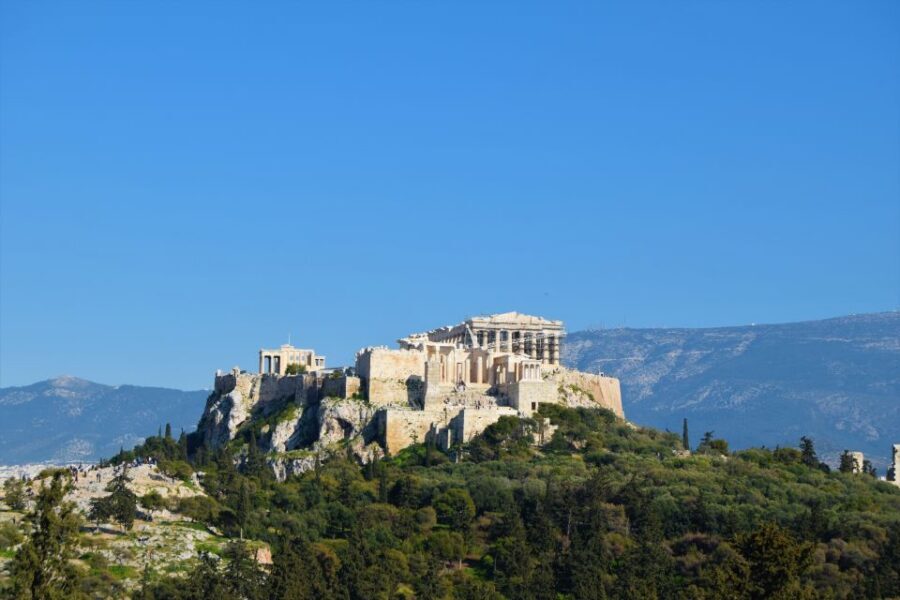
The tour ends on the top of the Acropolis hill with a 360° view of Athens. This matters because many tours end abruptly right after the last landmark. Here, the view gives you a mental reset.
You’ll have that moment to look outward—toward the city spread below—and then you’ll receive free time to explore on your own after the guided portion. That free time is useful for photo stops or lingering at a spot you want to revisit with fresh context.
My practical advice: use the last minutes to stand still. Don’t spend the whole free time walking. If you take 2–3 minutes just to observe the temple positions relative to the city view, everything you learned earlier starts clicking.
Price and value: what $95 buys you in the real world
At $95 per person for a 1.5-hour guided walk, you’re paying for three things that add real value:
- Entry ticket included to the Acropolis
- A licensed live guide in Dutch
- Administration fees for ticket pre-booking, plus skip-the-ticket-line access
So you’re not just buying a voice telling you where to stand. You’re buying time and hassle reduction, and you’re buying guided interpretation during the most important part of your Acropolis visit.
Is it pricey? If you’re traveling as a family, it can feel like a splurge. But if Dutch is your comfort language, the guidance can be the difference between a quick museum-style glance and an actually memorable experience. When a guide is praised for connecting past and present and using extra visual material, that’s not fluff. It helps you keep interest during a site that can otherwise feel repetitive.
Also, the timing is tight enough that you won’t lose half your day to transport planning. You’ll still want to treat the Acropolis with respect—wear good shoes, bring water, and expect some uphill work—but 90 minutes is a manageable window.
Who this Dutch Acropolis walk is best for
This tour is a great match if you want a structured route with explanations in Dutch, and you’re interested in both the famous monuments and the less obvious layers like the Asklepieion.
It’s especially good for:
- People who like learning as they walk, not after the fact
- Anyone who wants help reading the Acropolis layout from the top
- Families looking for guided storytelling that holds attention across ages
It’s a weaker match if:
- You have mobility impairments or rely on elevators/access routes (there aren’t any here)
- You struggle with uphill movement on uneven, sometimes slippery terrain
Should you book this Acropolis guided walking tour or skip it?
I’d book it if you’ll feel happier with guided context in Dutch rather than wandering with a map. The combination of licensed guiding, ticket handling with a skip-the-line approach, and the way the route links theatre, hospital ruins, and temple architecture makes it more than a checklist tour.
Skip it if you want a completely self-paced visit, or if the uphill, uneven footing is a deal-breaker. Also consider that the price can sting for families, so if Dutch isn’t essential for you, you might compare with other language options.
If you do book: show up with good shoes and a hat, then let the guide do the heavy lifting of interpretation. You’ll leave with the Acropolis feeling less like random ruins and more like a coherent city on a hill—one with theatre seats, healing spaces, and temple myths all in the same walk.
FAQ
How long is the Acropolis guided walking tour in Dutch?
It lasts 1.5 hours.
Where do I meet the guide for this tour?
Meet outside Metro station Acropoli. Exit via Makriyianni / Dionysiou Areopagitou.
Is the entry ticket to the Acropolis included?
Yes. The entry ticket is included in the tour price.
Do I skip the ticket line?
Yes. This tour includes a skip-the-ticket-line approach.
What sights will I see during the walk?
You’ll cover the Theatre of Dionysus, the Odeon of Herodes Atticus, the Temple of Athena Nike, the Propylaea, the Erechtheion, the Parthenon, plus you’ll see the Asklepieion hospital ruins, and you’ll finish with a 360° view.
Is the tour offered in Dutch?
Yes, the live guide speaks Dutch.
What should I bring to the tour?
Bring your passport or ID card, comfortable shoes, sunglasses, a sun hat, and water.
What is not included in the price?
Food and drinks are not included, and there is no hotel pickup or drop-off.
Is this tour suitable for limited mobility?
No. It is not recommended for people with limited mobility, and there is no elevator.
Are strollers, pets, or large bags allowed?
Baby strollers are not allowed. Large bags or luggage are not allowed. Pets are not allowed, though assistance dogs are allowed.
Can I cancel for a full refund?
Yes. Free cancellation is available up to 24 hours in advance for a full refund.

More Walking Tours in Athens

More Tours in Athens


More Tour Reviews in Athens
- All Day Cruise -3 Islands to Agistri,Moni, Aegina with lunch and drinks included
★ 5.0 · 4,958 reviews