REVIEW · ATHENS
Democracy Experiential Workshop Activity on Pnyx hill, Athens
Book on Viator →Operated by Hellas Revival · Bookable on Viator
Athenian democracy feels real here.
You start on Pnyx Hill, the classic spot where citizens gathered, then learn the story through an interactive role-play with replica objects. The views of the Acropolis and Parthenon make the lessons land in a way that facts alone can’t. I also like that the workshop keeps the tone simple and beginner-friendly, so you can focus on the ideas instead of translating history in your head.
One thing to plan for: it includes a 300m uphill walk, and there are no toilets or canteens up on the hill. If you’re even slightly worried about heat or stamina, wear good shoes and go in with a calm pace.
In This Review
- Key highlights you’ll feel fast
- Entering Athens’ voting grounds at Pnyx Hill
- The 300m uphill walk: manageable, but don’t ignore it
- The Socratic intro: learning democracy by talking
- Role-play at the vema: debate, vote, and a timekeeper
- Ostracism practice: writing names and making exile real
- The short hill tour and the Exploration Game for teams
- What the workshop includes (and what it doesn’t)
- Cost and value: why $66 feels fair for what you do
- Logistics you should know before you go
- Who should book this (and who might not love it)
- Should you book the Democracy Experiential Workshop on Pnyx Hill?
- FAQ
- How long is the Democracy Experiential Workshop on Pnyx Hill?
- Where does the workshop start?
- Is there a lot of walking?
- What activities do I do during the workshop?
- What do I keep at the end?
- What happens if the weather is bad?
Key highlights you’ll feel fast
- Pnyx speaker’s platform role-play: you debate a case, speak up, and cast a vote like an Athenian citizen
- Hands-on replicas: you use a water-timer (ceramic replica) to experience how speaking time worked
- Ostracism practice: write on an ostrakon and perform the symbolic exile ritual
- Small group size (max 10): more chances to participate in the discussion and activities
- Acropolis-and-Parthenon viewpoint: the setting supports the lesson every step of the way
- Team Exploration Game for groups of 4+: a fun wrap-up if you’re traveling with friends
Entering Athens’ voting grounds at Pnyx Hill
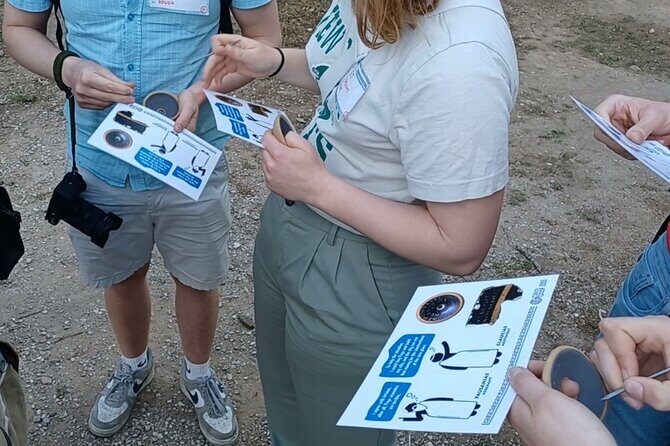
This workshop is built around one main idea: democracy in classical Athens wasn’t a concept you read about. It was a daily practice that happened in public, in front of real people, with real rules—and sometimes with real anger.
You’ll meet at Rovetou Galli 39, Athina 117 41, Greece, then head toward Pnyx Hill. The big draw is the location itself. Pnyx is the original meeting area for the Athenian Public Assembly, with a direct link to the stone vema (the speaker’s platform) where debate and decisions played out.
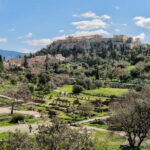
And yes, the view helps. From up there, you can actually see the Acropolis and the Parthenon area, which makes the whole day’s theme feel less like a museum lesson and more like stepping into a working political system.
You can also read our reviews of more tours and experiences in Athens



The 300m uphill walk: manageable, but don’t ignore it
The itinerary includes a 300-meter uphill walk to reach the ancient speaker’s area. It’s not described as a strenuous hike, but it is a climb. If you’re sensitive to steep paths, go slowly, drink water if you have it, and don’t treat this as something you can power through while half-distracted.
Bring comfortable shoes and clothes that can handle outdoor weather. The workshop is outdoors, so sun and heat can matter. Also remember there are no toilets or canteens on the hill, so you’ll want to handle that before you start (or find something near the meeting point).
If you arrive expecting a flat strolling tour, you’ll be surprised—in the practical way. This experience is active.
The Socratic intro: learning democracy by talking
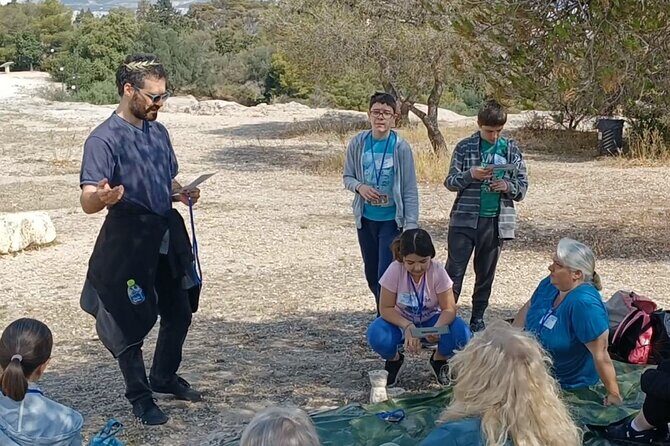
Before the action, your interpreter kicks off with a brief introduction using the Socratic method—a shared dialogue between teacher and students. That sounds fancy, but the workshop is designed to keep language plain English with no difficult terminology.
In practice, this means you’re not passively listening for a long time. You’re guided into thinking about questions like: What counts as a citizen? Who speaks? What does fairness look like when you’re voting? How do you argue without turning the whole thing into chaos?
I like this structure because it lowers the barrier. You can come with zero background in Athenian politics and still follow what matters: the mechanics of decision-making and the tension between debate and agreement.
Role-play at the vema: debate, vote, and a timekeeper
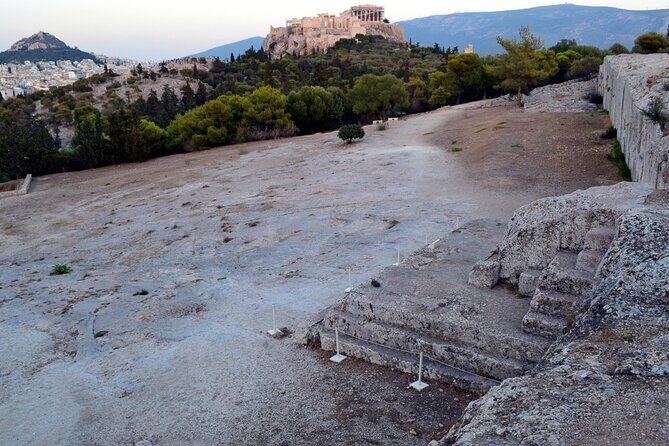
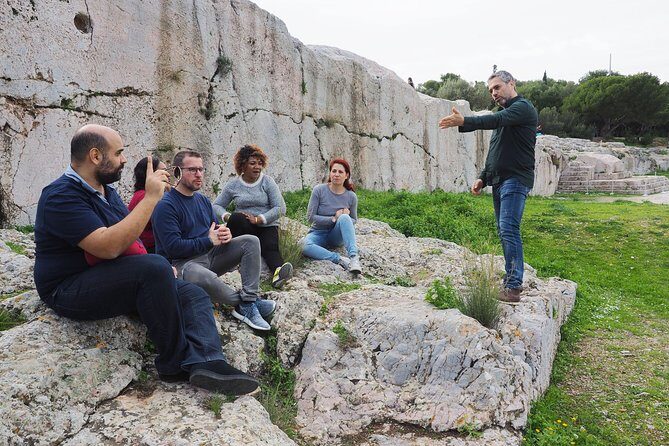
Once you reach Pnyx, you’ll settle in the nearest shaded area. Then comes the main event: a recreation of an ancient Assembly meeting.
Here’s what you do in the role-play:
- You’ll get a case scenario and discuss it in the group
- You’ll have a chance to speak your mind
- You’ll cast your vote using the provided tools
- You’ll experience how speaking was paced using a replica water-timer (a ceramic object called the Waterthief)
That water-timer detail matters more than it sounds. In an assembly where many people want the floor, timing is part of fairness. The workshop doesn’t just say timekeeping existed—it gives you a feel for it, even through a replica. When you’re the one trying to make your point while the time moves, democracy shifts from theory to choreography.
Also, because this is aimed at beginners, you’re not graded on whether you can name ancient offices. You’re participating in the logic: argue, decide, vote, and live with the result.
Ostracism practice: writing names and making exile real
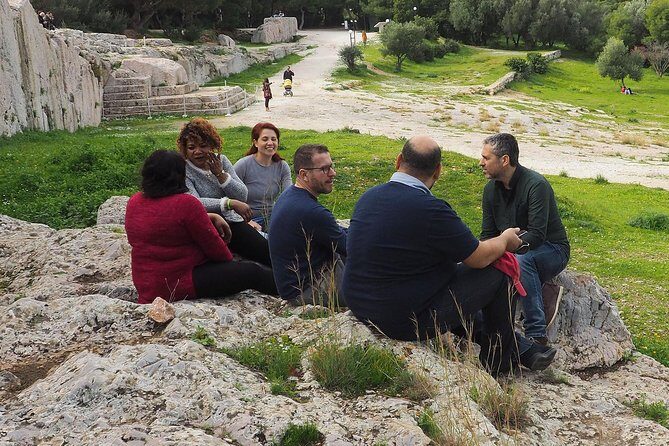
After the Assembly role-play, you’ll experience the dramatic tradition of ostracism. This was a procedure where citizens could identify someone considered dangerous to the city.
In the workshop version, you:
- Identify the “dangerous citizen” in the scenario
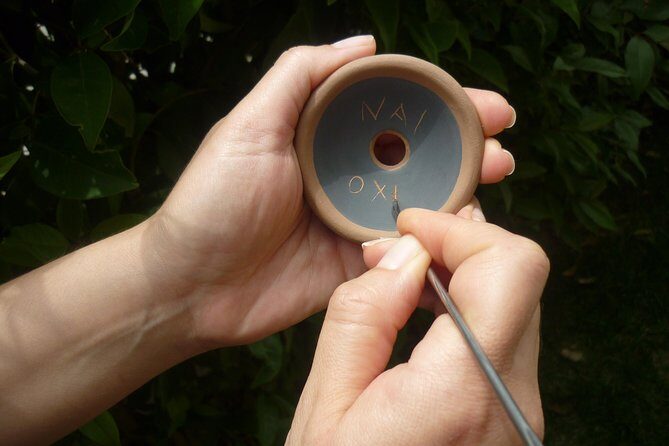
- Inscribe their name on an ostrakon
- Symbolically exile them from the city
Each participant will carve and keep their ostrakon as a unique commemorative piece. That’s a satisfying touch because it turns participation into something physical you can take home—like a souvenir, but also like a reminder that political decisions used to be deeply personal.
One more practical note: ostracism is one of those topics that can feel uncomfortable, because it deals with exclusion and power. The workshop frames it as history and procedure, so you can learn how it worked without needing to justify it. Still, I’d go into it with the mindset of learning the human mechanics, not judging from a distance.
- All Day Cruise -3 Islands to Agistri,Moni, Aegina with lunch and drinks included
★ 5.0 · 4,958 reviews



The short hill tour and the Exploration Game for teams
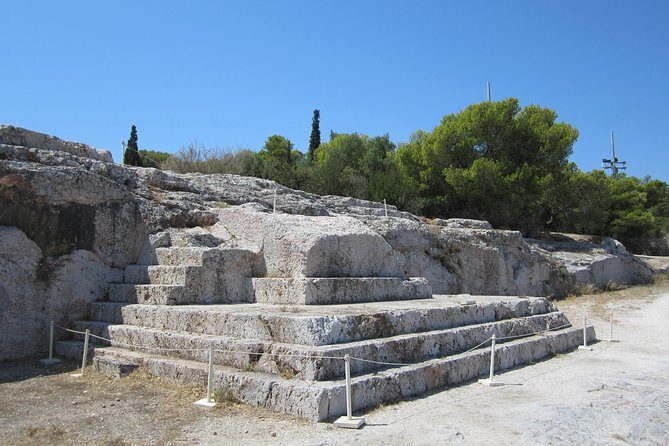
At the end, there’s a brief tour of the hill. That’s your chance to connect what you just acted out with the real physical layout around Pnyx.
Then, if your group fits the size, there’s an Exploration Game. It’s available for groups of 4 or more, and it’s described as a fun team challenge. If you’re traveling with friends or family who like games, it’s a nice finish because it keeps the energy up without turning the entire workshop into a performance.
If you’re coming solo or in a smaller pair, you may still enjoy the earlier parts fully—the game is just an added option for larger groups.
What the workshop includes (and what it doesn’t)

This is not a traditional guided tour with a long narration. It’s an interactive history workshop for beginners focusing on democracy. That difference is important.
Included:
- Expert facilitator
- Use of the Waterthief (ceramic water-timer replica)
- Ostrakon (ceramic voting disk/ostrakon replica): you use it and keep it
- Liability insurance
- Local VAT 24%
- Mobile ticket
- English language instruction
Not included:
- It doesn’t market itself as a broad archaeological guided walk. You’ll learn democracy through the workshop activities, not by covering every stone detail at a museum pace.
If you want a stop-by-stop explanation of every site feature, you might pair this with a separate guided walking tour later. If you want the people-and-process side of ancient Athens, this format is a strong match.
Cost and value: why $66 feels fair for what you do
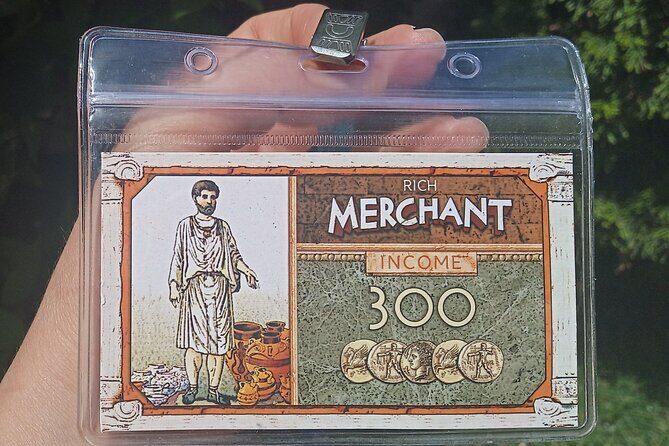
The price is $66.01 per person, for about 2 hours.
For Athens, that’s not “cheap,” but it also isn’t inflated for a hands-on program. You’re getting:
- a small group limit (max 10)
- real participation: debate, voting, and ostracism activity
- use of replica objects (water-timer and ostrakon)
- an insured activity with an expert facilitator
You also get the practical value of learning something that’s easy to remember. When you practice voting and timing, your brain keeps the story. You’re not just learning what democracy is—you’re experiencing why it’s hard, noisy, and rule-based.
One scheduling note: this type of workshop is usually booked ahead. On average, it’s booked about 52 days in advance, so if you’re going in peak season, don’t wait until the last week.
Logistics you should know before you go
A few practical items can make or break your experience:
- Weather matters: it’s outdoors. If it’s canceled due to poor weather, you’ll get notice at least 3 hours ahead, with options for a different date, a similar workshop, or a full refund.
- Near public transportation: you should be able to reach the starting area without a car.
- Confirmation at booking: you should receive confirmation when you book.
- Service animals allowed: permitted under the workshop rules.
- Photo/video consent: since it’s a public setting, you’re consenting to photo/video capture that could be published by the operator or others; you can withdraw consent in writing if you want to.
Also keep in mind the site etiquette rules: respectful conduct, appropriate behavior, sobriety/cleanliness, and care around photo/video. If you act disrespectfully, the facilitator can end participation without a refund.
If you take medication: the facilitators are first aid trained, but they’re not allowed to provide medication, so bring what you need.
Who should book this (and who might not love it)
This workshop is a great fit if you want democracy explained through experience, not lectures. It works well for adults and teenagers over 10, and it’s especially good for groups that like interactive activities rather than quiet museum time.
You’ll probably enjoy it most if:
- you’re curious about how politics actually works in real life
- you like hands-on activities and role-play
- you want a memorable way to connect modern democracy to ancient practice
- you’re happy with a short uphill walk and time outdoors
You might skip it if:
- you need a fully accessible, flat, sit-down format (the climb is built in)
- you’re expecting a broad archaeological guide to Pnyx with detailed site explanations
Should you book the Democracy Experiential Workshop on Pnyx Hill?
If your goal is to understand democracy as a system people practiced—not just a term—you should book this. The best part is how quickly the workshop turns history into something you can feel: debate, voting, timekeeping, and ostracism all turn into lived moments.
I’d book it with confidence if you can handle a 300m uphill walk and you’re traveling on a day with decent weather. If either of those is a concern, consider saving it for a better day or pairing your Pnyx time with a different kind of visit.
Given the 5/5 rating and the fact it’s recommended by 100%, it’s clearly hitting the sweet spot for people who want Athens that’s more than photos and plaques.
FAQ
How long is the Democracy Experiential Workshop on Pnyx Hill?
It lasts about 2 hours (approx.) and ends back at the meeting point.
Where does the workshop start?
The meeting point is Rovetou Galli 39, Athina 117 41, Greece. The activity ends back at the same place.
Is there a lot of walking?
Yes, you’ll do a 300-meter uphill walk to reach the ancient speaker’s platform area. Wear comfortable shoes and clothes that let you fully participate.
What activities do I do during the workshop?
You’ll join a guided Socratic-style introduction, then take part in an Assembly role-play where you debate a scenario, speak, vote, and use a ceramic water-timer replica. You’ll also do ostracism, inscribing a name on an ostrakon and keeping it.
What do I keep at the end?
You keep your ostrakon (a ceramic ostrakon/voting disk replica) after using it during the ostracism activity.
What happens if the weather is bad?
If the workshop is canceled due to poor weather, you’ll be notified at least 3 hours ahead, and you’ll be offered the option to choose a different date, a similar workshop, or a full refund.
More Workshops & Classes in Athens


More Tour Reviews in Athens
- All Day Cruise -3 Islands to Agistri,Moni, Aegina with lunch and drinks included
★ 5.0 · 4,958 reviews