REVIEW · ATHENS
From Athens: Mycenae and Epidaurus Private Tour
Book on GetYourGuide →Operated by SIGHTS OF ATHENS-GRAY LINE · Bookable on GetYourGuide
Mycenae and Epidaurus make a strong one-day case. You get the power-and-myth combo of Ancient Mycenae plus the science-of-sound wonder of Epidaurus, all within an 8-hour outing. I like the tight, practical flow from pickups in Athens, Glyfada, or Piraeus to the main sites, and I also like the private VIP van setup, which keeps the day calm instead of chaotic. One thing to watch: entrance fees at the monuments are not included, so your final total can creep up if you’re planning to enter everything.
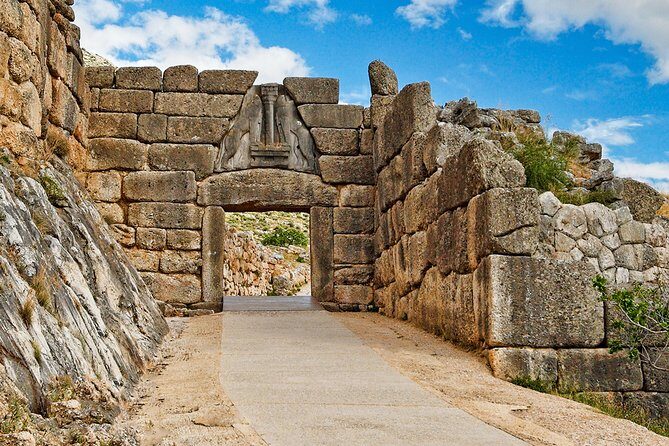
For me, the best parts are the big visual hits: Cyclopean walls and the Lion Gate at Mycenae, and then Epidaurus’ limestone theater with that famous coin-acoustics claim. Another plus is the option to hear the story through a multi-language audio guide, even if you mainly follow along with the live English guide. The main drawback is simple: it’s a full day with a fair amount of driving, so you’ll want good shoes and a little stamina for walking around ruins.
In This Review
- Key Highlights You’ll Care About
- A Fast Trip From Athens to Mycenae and Epidaurus
- Corinth Canal: The 15-Minute Break That Feels Like More
- Ancient Mycenae: Cyclopean Walls, Lion Gate, and Royal Tombs
- Mycenae Archaeological Museum: Why Indoor Time Helps
- Epidaurus: The Theater Where Acoustics Do the Talking
- The Private Van Experience: Comfort, Pace, and Group Size
- Entrance Fees, Food, and What to Budget
- What to Bring for a Smooth Ruins-and-Theater Day
- Who Should Book This Tour (and Who Might Want Another Day)
- Should You Book This Athens to Mycenae and Epidaurus Private Tour?
- FAQ
- How long is the Mycenae and Epidaurus private tour from Athens?
- Where can I get picked up, and where will I be dropped off?
- Do I need to pay entrance fees for the monuments?
- Is food or drinks included?
- What’s included in the price?
- Is there a live guide, or is it only audio?
- What languages are available for the audio guide?
- What should I bring?
Key Highlights You’ll Care About
- Corinth Canal photo stop (15 minutes): quick views of the Aegean-to-Ionian engineering link.
- Mycenae Acropolis + tombs: see the protected hilltop and the tomb of Agamemnon and Clytemnestra area.
- Cyclopean walls and Lion Gate: the kind of stonework you can’t fully grasp from photos.
- Archaeological Museum of Mycenae: a helpful indoor stop to anchor what you’ll see outdoors.
- Epidaurus Theater: limestone seating designed for extraordinary acoustics.
- Private group up to 4: more room for questions and a less rushed rhythm.
A Fast Trip From Athens to Mycenae and Epidaurus
This tour is built for people who want the “wow” landmarks without the hassle of renting a car or stitching together buses. You’ll start with pickup from Athens, Glyfada, or Piraeus, then head into the Peloponnese for a structured day of ruins and one of Greece’s most famous theaters.
You’ll love how the itinerary balances mythology with readable facts. Mycenae isn’t just pretty stone; it connects to a whole era when this region was a major power, roughly 1600–1200 BC. Then Epidaurus shifts gears from politics and legend to architecture and acoustics—one of those places where Greek engineering feels almost modern.
The best part for me is that it’s private. When you’re moving between sites, having a driver and a guide who can adjust pacing to your questions makes the difference. You’re not fighting crowds to hear an explanation, or sprinting to “keep up.”
You can also read our reviews of more private tours in Athens


Corinth Canal: The 15-Minute Break That Feels Like More
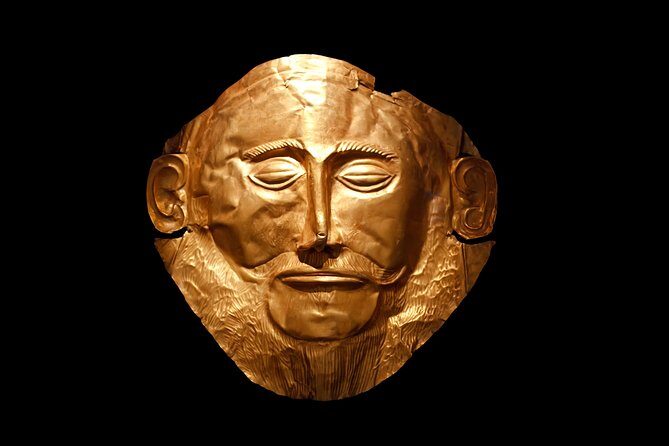
Between Athens and Mycenae, you’ll make a brief stop at the Corinth Canal for photos. It’s a short break—about 15 minutes—but it’s also a useful mental reset during a long day of ruins.
Here’s what makes the canal stop worth it: it visually connects two seas. The canal links the Aegean with the Ionian Sea, and you can see how a man-made cut dramatically changes travel and geography. Even if you don’t study engineering, it’s one of those “how did they do that?” moments that adds variety to the day.
If you hate rushed stops, keep expectations realistic. Fifteen minutes is for photos and a quick look, not for lingering. Still, it breaks up the drive and gives you something different before you hit Mycenae’s ancient stone.
Ancient Mycenae: Cyclopean Walls, Lion Gate, and Royal Tombs
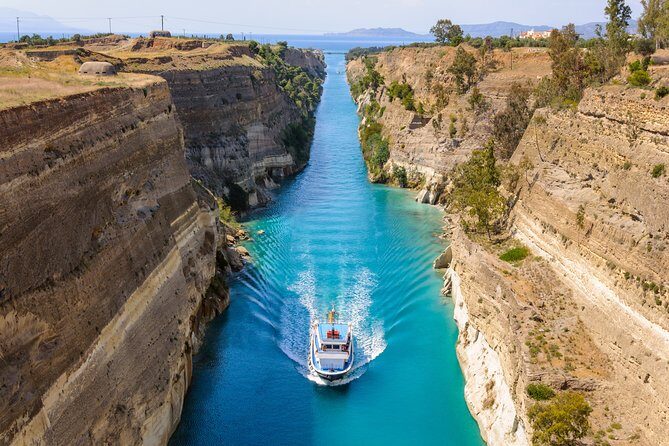
Mycenae is the centerpiece, and it earns it. You’ll spend about 2.5 hours at the archaeological site, with time to walk the Acropolis area, explore the fortified remains, and visit the tombs connected to the Agamemnon legend.
The big visual moment is the Cyclopean walls—massive stonework built for defense. The name comes from the myth that only “Cyclopes” could move such stones, and standing near the walls, you’ll understand why that idea stuck. You’ll also see the Lion Gate, one of Mycenae’s signature entrances and a strong anchor point for the whole site.
What I like here is how the tombs give you a human scale. You’ll see the tomb associated with Agamemnon and the tomb of Clytemnestra. Even if you know the story only in broad strokes, the physical setting makes the myth feel less abstract. You’re not just hearing about power—you’re looking at where rulers were meant to be remembered.
A practical note: ruins are uneven and a bit slippery at times depending on the ground. Plan on slow, steady walking. Good shoes matter more than you think, because you’ll want your footing for the longer stretches between viewpoints.
Mycenae Archaeological Museum: Why Indoor Time Helps
During your Mycenae visit, you have the option to include the Archaeological Museum of Mycenae. Think of it as the “bridge” between what you see on the hill and what it means.
Outdoor ruins tell you where people stood and what walls protected. The museum helps you connect those stones to objects, building ideas, and daily life traces from the Mycenaean world. Without this kind of stop, it’s easy to leave with photos but not much sense of scale or purpose.
If your brain likes context, this is a smart use of time. Even on a tight schedule, a museum stop can make the whole site feel more organized. You’ll likely find it easier to follow the guide’s explanation once you’ve seen artifacts in a calmer setting.
Don’t worry if you’re not a museum person. Even a partial visit can help you focus. The best approach is simple: use the museum to “name” what you’ll see outside, then walk the grounds with your eyes tuned.
Epidaurus: The Theater Where Acoustics Do the Talking
After Mycenae, you’ll head to Epidaurus for about 2.5 hours. This is where the day shifts from royal fortifications to performance and sound.
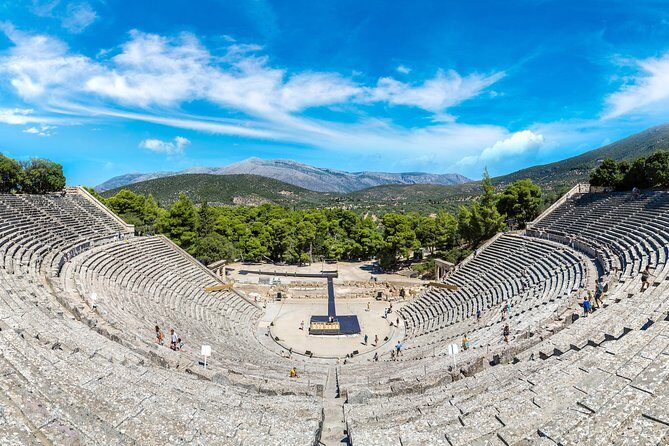
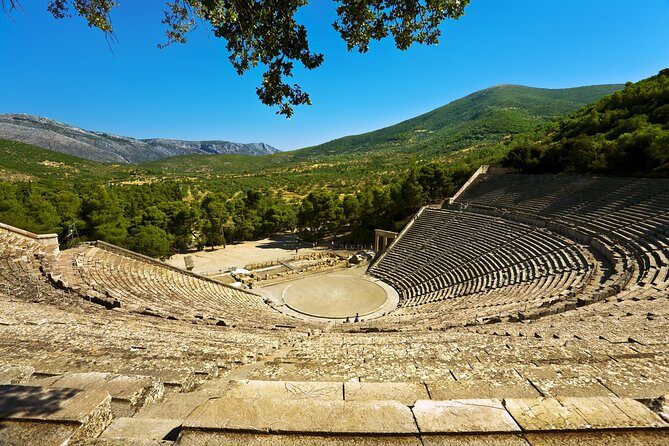
The Ancient Theater of Epidaurus is famous for its preservation and for acoustics. Built of limestone and dating to the 4th century BC, it’s known for the idea that a coin dropped at the center can be heard from the highest seats. Even if you don’t test that claim yourself, you’ll feel the design logic: the shape is made for clarity.
The theater seats up to 14,000 people, so it’s worth understanding the structure before you start walking around. The entrance area is flanked by restored Corinthian pilasters, and the foundations of the ancient stage sit beyond the circular pattern. Those details help you picture how the space worked for drama—not just for tourism.
You might also notice how the site is still used. The theater now hosts performances of Ancient Greek drama during the annual Hellenic Festival. That matters, because it keeps Epidaurus from becoming a dead monument. It’s a place built for voices, and today it still serves that original purpose.
Timing tip: if you can, spend a bit of time sitting where you can face the stage area. It helps you understand why Epidaurus gets mentioned when people talk about Greek architecture and theater design.
- All Day Cruise -3 Islands to Agistri,Moni, Aegina with lunch and drinks included
★ 5.0 · 4,958 reviews





The Private Van Experience: Comfort, Pace, and Group Size
You’re traveling by private VIP van or car with air-conditioning, and you’ll have an English-speaking driver. There’s also a live tour guide in English, plus an audio guide included with multiple languages like German, French, Spanish, Russian, Polish, Chinese, Japanese, Italian, Portuguese.
This matters more than it sounds. On a day with multiple sites, having a dedicated vehicle means you’re not waiting on transfers. You also get flexibility to ask questions as you go—especially helpful when you’re trying to understand how Mycenae and Epidaurus fit into broader ancient Greek life.
Pickup and drop-off are also straightforward. You can be picked up from any hotel or central point in Athens or Piraeus, and drop-off happens in Athens, Glyfada, or Piraeus. That reduces the “where do we meet?” stress, which is half the battle in day trips.
The pace is full-day, with roughly one hour of driving at the start, then shorter transfers between stops. You’ll also have about two hours of driving after Epidaurus to return. If you’re easily tired by long days, you’ll want to treat this as a planned outing, not a casual stroll-and-photos loop.
Entrance Fees, Food, and What to Budget
Here’s the part that can surprise people: entrance fees in the monuments are not included, and drinks and food aren’t included either. That means you should plan for additional costs on top of the tour price.
Now the value question. The price is $414 per group up to 4 for an 8-hour private tour. If you split with three other people, the effective per-person cost can be quite reasonable for a private vehicle plus guided time at major sites. If you’re traveling solo or as a couple, it’s a higher per-person spend, but you’re paying for the comfort and the direct route.
My rule of thumb: if you’re the type who hates waiting and prefers a guide to translate the “what am I looking at?” moments, this kind of private day trip is often worth it. If you’re comfortable using public transport and you’re okay with self-guided walking, then you’d compare costs more strictly.
Either way, pack your day so you’re not buying emergency snacks at the wrong moments. Water helps, and having a plan for breaks makes the day feel smoother.
What to Bring for a Smooth Ruins-and-Theater Day
You’ll be outside for key portions of the trip, so bring the practical stuff. This tour specifically recommends passport or ID card, comfortable shoes, sunglasses, a sun hat, and a camera.
I’d add one mindset: treat this like a walking day, even if the driving does most of the work. Ruins are uneven, and theaters involve stairs and seating angles. If your shoes are more “nice” than “walkable,” you’ll feel it by the second stop.
Also, bring what keeps your attention on the guide’s explanations rather than on discomfort. Shade and sun matter in open sites. Sunglasses and a hat are small items that can save your energy for the parts you came for.
Who Should Book This Tour (and Who Might Want Another Day)
This tour fits best if you want two heavy-hitter ancient destinations without planning a route. You’ll like it if you’re interested in how Mycenae’s fortified world connects to later Greek culture, and if you’re curious about why Epidaurus became a benchmark for theater and acoustics.
It’s also a strong choice for families or friend groups up to four. Private transport keeps the group together and makes it easier to pace yourselves between Mycenae’s ruins and Epidaurus’ seating areas.
If you’re the type who wants long, unhurried time at museums or wants to add extra stops, this may feel tight. The Corinth Canal stop is brief, and the day moves from site to site fairly quickly. It’s a day-trip format, not an open-ended exploration.
If you want a quick “myths and monuments” fix, this does it well. If you want a slow, deep study of one site, you might prefer a longer stay in the region.
Should You Book This Athens to Mycenae and Epidaurus Private Tour?
Yes—if you’re looking for high-impact ancient sites in one day with private comfort and an English-speaking team. The combo works: Mycenae gives you fortifications, tombs, and the “power center” feel of an ancient kingdom, and Epidaurus delivers the standout theater experience where design and sound take center stage.
I’d especially lean toward booking if you value a guide’s explanations and you don’t want to manage transportation yourself. A driver like Akis (when you’re assigned someone attentive and informative) can make the day feel less like logistics and more like a guided story.
Skip it only if entrance fees and a full day of movement don’t match your style. Also, if you’re expecting lots of time at the canal, reset expectations. It’s a photo stop, not a long detour.
FAQ
How long is the Mycenae and Epidaurus private tour from Athens?
The tour duration is 8 hours.
Where can I get picked up, and where will I be dropped off?
Pickup is available from Athens, Glyfada, or Piraeus (including any hotel or central point in those areas). Drop-off is also available in Athens, Glyfada, or Piraeus.
Do I need to pay entrance fees for the monuments?
Entrance fees in the monuments are not included, so you’ll need to budget for them.
Is food or drinks included?
No. Drinks and food are not included.
What’s included in the price?
The tour includes a private VIP van or car with air-conditioning, an English-speaking driver, and taxes, tolls, and fuel.
Is there a live guide, or is it only audio?
There is a live tour guide in English. An audio guide is also included with multiple language options.
What languages are available for the audio guide?
The audio guide languages listed are German, English, French, Spanish, Russian, Polish, Chinese, Japanese, Italian, and Portuguese.
What should I bring?
Bring a passport or ID card, comfortable shoes, sunglasses, a sun hat, and a camera.

More Private Tours in Athens


More Tours in Athens

More Tour Reviews in Athens
- All Day Cruise -3 Islands to Agistri,Moni, Aegina with lunch and drinks included
★ 5.0 · 4,958 reviews