REVIEW · ATHENS
Full day Christian tour following Paul In Athens and Corinth
Book on Viator →Operated by Splendid Greece Tours · Bookable on Viator
Eight hours, two cities, one biblical thread.
This private tour links Paul’s message in Athens to the church-and-community world he worked in around Corinth—using major ancient landmarks that connect to his famous preaching. I love the way the day is built around an English-speaking driver who can explain what you’re seeing, stop by stop, with solid history and culture context. I also like that it’s set up as a small-group experience with pickup and drop-off so you’re not bouncing from stop to stop on your own.
Here’s the main thing to consider: the driver can guide you up to the site entrances, but entrance fees are not included, and you’ll still need your own tickets and time to walk through. If you’re hoping for a fully escorted inside-the-museum experience, plan ahead—state-licensed guide access inside can be arranged for an extra cost, depending on availability.
In This Review
- Key things that make this tour worth your time
- Paul’s Athens to Corinth: a Christian lens on the ruins
- Morning pickup at Piraeus and the Saronic Gulf drive
- The Acropolis cluster: Athena, Pericles, and the Unknown God context
- Stop at the Acropolis sanctuary
- Areopagus: where the Paul sermon tradition lives
- Propylaea and Temple of Athena Nike: gateways and victory stories
- Parthenon and Erechtheion: the architecture people still argue about
- Ancient Agora: the daily-life layer you’ll miss if you skip it
- Driving into Peloponnese: coastal views and the Corinth Canal moment
- Corinth Canal quick stop
- Lunch in Ancient Corinth: eat first, then absorb the site
- Ancient Corinth: trade routes, colonies, and why it mattered to Paul
- Price and value for a small group (up to 3)
- Comfort and expectations: what the driver does (and doesn’t) do
- What to wear, what to pack, and how to avoid wasting time
- Who this tour suits best
- Should you book this Paul’s footsteps day trip?
- FAQ
- What time does the tour start?
- How long is the tour?
- How many people are in a group?
- Is hotel pickup included?
- Where do cruise ship passengers meet the driver?
- Are entrance fees included for the archaeological sites?
- Is lunch included?
- Does the driver go inside the sites and museums with you?
- Can a licensed state tour guide be arranged?
- Is cancellation free?
Key things that make this tour worth your time
- Paul-focused route through the Acropolis area, including Areopagus and the Unknown God plaque spot
- Short, well-timed stops at major monuments, without feeling like you’re stuck in one long line
- Private format for up to 3 people, with room to adjust within the day’s schedule
- Comfort-first transit: air-conditioned vehicle, bottled water, and coastal driving views
- Corinth Canal + Ancient Corinth for the big “why this place mattered” payoff
- Lunch with free time near Ancient Corinth so you can eat at a real local restaurant
Paul’s Athens to Corinth: a Christian lens on the ruins
This is a “big picture” kind of day. Instead of treating ancient Greece as a stand-alone museum theme, the tour frames Athens and Corinth as connected places in Paul’s story—then uses the actual geography to make the message feel grounded.
You’ll start with the Acropolis precinct, then move to the Areopagus area where Paul’s sermon about an Unknown God is traditionally placed. After that, the route shifts from Athens’ sacred heart to the lived-in city around the Ancient Agora, and finally to the Peloponnese for Corinth Canal and Ancient Corinth itself.
What makes it satisfying is the pacing. You get a cluster of classic Acropolis sights in a single block, then a practical shift to Corinth’s maritime and trade setting. It’s the kind of structure that helps you connect names, locations, and ideas without needing to memorize a textbook.
You can also read our reviews of more tours and experiences in Athens.


Morning pickup at Piraeus and the Saronic Gulf drive
You’ll meet your driver at your hotel main entrance in Athens or at Piraeus cruise port outside the terminal exit. They’ll be holding a sign with your name, which saves you the early-day scramble.
The morning includes a drive along the coastal road of the Saronic Gulf. Even though this isn’t the main attraction, it matters. It reduces the stress of transit and gives your brain a chance to settle into “day mode” before you face the big sights.
There’s also a quiet benefit to the private setup: if your hotel is tricky to reach or your ship disembark timing shifts, you’re not stuck waiting for a mass group. The tour is designed around pick-up and drop-off for your schedule.
The Acropolis cluster: Athena, Pericles, and the Unknown God context
The heart of the day is the Acropolis area—where ancient Athens displayed its power, wealth, and religious identity. The tour hits several key points around the main precinct, and each one adds a layer to what Paul would have seen in the city.
Stop at the Acropolis sanctuary
You’ll get time at the central sanctuary of ancient Athens, dedicated primarily to Athena. This is the iconic rocky crag that dominates modern Athens, and it’s also the reason the area feels like a “stage”—temples and monuments on dramatic elevation.
Even if you’re not a marble-detail person, it helps to understand the big idea: this was a place tied to Athenian religious life, civic identity, and major festivals. In a Christian-history context, it sets up why Paul’s message would land in a city full of competing beliefs and visible devotion.
Areopagus: where the Paul sermon tradition lives
Next is the Areopagus, also called the Hill of Ares. In classical times, it was associated with a council and judicial functions. The tour’s framing brings in the key Christian-history connection: this is where Paul’s famous sermon about the Unknown God is traditionally linked.
You’ll also find a bronze plaque at the foot of the rock marking this tradition. This is a small stop on paper (about 20 minutes), but it often becomes one of the most memorable moments because the setting forces you to picture conversation, debate, and proclamation happening in real space—not just in a chapter heading.
- All Day Cruise -3 Islands to Agistri,Moni, Aegina with lunch and drinks included
★ 5.0 · 4,958 reviews



Propylaea and Temple of Athena Nike: gateways and victory stories
The tour then works through the edges of the precinct, including the Propylaea and the Temple of Athena Nike area.
- The Propylaea is the monumental gate complex. It’s tied to different construction phases, including periods when work was destroyed and then repaired. The effect is a reminder that ancient Athens wasn’t static—it rebuilt, adapted, and reasserted itself.
- The Temple of Athena Nike is smaller but important for its symbolism and carved themes. It includes relief-carved narratives connected to wars and victories, with one side specifically linked to Marathon (490 BC).
These are quick stops, some around 5 minutes. That can feel like a “hit-and-run” if you love lingering. But the benefit is that you still cover a lot of ground without sacrificing the rest of the day.
Parthenon and Erechtheion: the architecture people still argue about
The Parthenon is the main event in practical terms. Expect about 45 minutes here. This temple is dedicated to Athena Parthenos and represents the culmination of Doric architectural development. It also ties to the Periclean rebuilding program, which helps explain why it’s such a strong symbol of Athens at its peak.
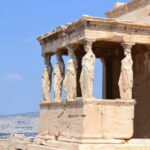
From there, you’ll move to the Erechtheion, known for the porch with six maidens (caryatids). Pollution and weathering have changed what you see today, and the tour also notes that some originals ended up in the Acropolis Museum, with replicas in place. It also references the British Museum connection through the story of Lord Elgin removing sculptures in the early 1800s.
You don’t need to be an art-history expert to appreciate why this matters. These monuments have had long afterlives—displaced, repaired, protected, and displayed. For many visitors, the setting makes the story feel more honest than a photo in a book.
Ancient Agora: the daily-life layer you’ll miss if you skip it
After the Acropolis area, you’ll shift to the Ancient Agora of Athens. This is where the tour moves from “religion and monuments” to “people and daily motion.”
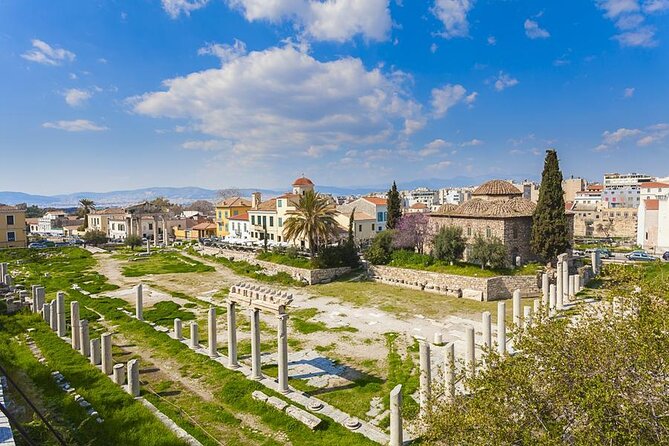
The Agora was an assembly and marketplace area, and it stayed in use for thousands of years, with many building and destruction cycles layered over time. That makes it a powerful counterpoint to the Acropolis. The Acropolis is a statement. The Agora is activity.
You’ll have about 1 hour 20 minutes here, and it’s the one part of the day where I’d encourage slower walking. You’ll be in the area where civic life, commerce, and community intersected—the kind of context where ideas travel fast.
Driving into Peloponnese: coastal views and the Corinth Canal moment
Once Athens is done, the day turns into a road-trip chapter. You’ll drive along the coastal road of the Saronic Gulf until you reach the Corinth Canal in the Peloponnese.
The Peloponnese is a peninsula connected by the land bridge of the Isthmus of Corinth, separating the Gulf of Corinth from the Saronic Gulf. Even if you’re thinking about Paul, this is where geography explains history. The canal isn’t just scenic—it highlights why ships, routes, and trade mattered in the ancient world.
Corinth Canal quick stop
You’ll stop near the Corinth Canal, a waterway linking two seas through a narrow strip of land. The tour frames why this matters: it cuts out the long detour around the Peloponnese that earlier ships had to take.
This stop is about 15 minutes, but it works as a visual punctuation mark. After a day of temples and stones, it lets you see the wider world Paul moved through—sea-lanes, shipping routes, and the practical reasons cities grew.
Lunch in Ancient Corinth: eat first, then absorb the site
You’ll have lunch with free time at a traditional restaurant in Ancient Corinth. Food and drinks aren’t included, so plan to budget for lunch separately.
This is the right time for a reset. Your brain will have collected a lot of heavy imagery by the time you reach Corinth Canal, and eating gives you energy for the walking and interpretation that comes next.
Also, don’t underestimate the value of lunch here being connected to the area. Even without a guided “food talk,” the simple act of eating in the zone keeps the day anchored.
Ancient Corinth: trade routes, colonies, and why it mattered to Paul
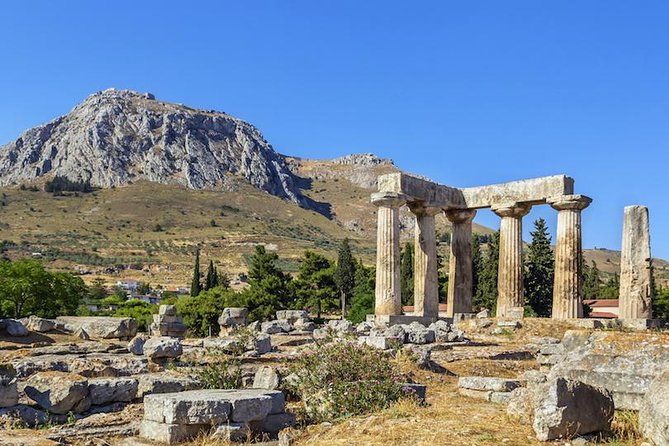
The final major stop is Ancient Corinth (Archaia Korinthos), with about 1 hour 20 minutes on site.
The tour’s take on Corinth starts with why people stayed and built there:
- It was inhabited very early, including Neolithic settlement.
- The soil and the strategic location created a natural crossroads between routes from the Balkan region, the Peloponnese, and Mediterranean waterways toward western and eastern destinations.
In practical terms, Corinth was a “connector” city. That means faith wasn’t just preached in isolation—it spread through a network of travelers, merchants, sailors, and settlers.
You’ll finish this segment with time to orient and look around before the return drive. If you have the chance to add one extra photo moment when time allows, ask your driver about a viewpoint such as Acrocorinth. Some prior groups have been taken up for a photo with sweeping views over the Aegean and the surrounding area, and that kind of perspective can make the ancient city feel real.
Price and value for a small group (up to 3)
The price is $508.66 per group (up to 3) for about 8 hours. For a small group, private tours can be the best kind of value—because you’re paying for time and comfort, not per person in a way that can punish families or couples.
Still, be clear on what you’re paying for:
- Included: air-conditioned transport, bottled water, fuel surcharge, and an English-speaking driver who guides until you enter sites.
- Not included: entrance fees, food, and a licensed state guide inside sites.
So the real cost depends on your entry tickets and meals. If you’re two people splitting the group price, it’s often easier to justify than it looks at first glance. If you’re traveling solo, you’ll feel the private surcharge more.
Comfort and expectations: what the driver does (and doesn’t) do
This tour includes a professional English-speaking driver with good knowledge of Greece’s history and culture, guiding you until you enter archaeological sites and museums. They’re not licensed to accompany you inside.
That difference matters for your planning:
- You should budget time for walking, ticket checks, and self-guided site movement.
- If you want a state-licensed guide inside key sites, ask about arranging it with an additional cost. Availability is subject to what’s possible on the booking day.
The good news is that the driver’s role is still substantial. With an attentive history-focused guide, you can get the main story as you stand in front of the structures, not just after you reach the exit.
What to wear, what to pack, and how to avoid wasting time
This is a full-day plan with moderate walking. Dress code is noted as formal, so I’d treat that as a “dress nicely” cue rather than a suit-and-tie requirement, but still aim for something respectful and comfortable.
For planning:
- Bring water (you’ll get bottled water, but carrying a small backup is never a bad idea).
- Wear shoes that work on uneven stone.
- Pre-purchase admission tickets if possible. There’s a note that availability can be limited, and the operator can buy tickets in advance for a small service fee.
Also, with a mobile ticket involved, make sure your phone battery is strong. The day starts early at 8:00 am, and you’ll want everything ready on arrival.
Who this tour suits best
This tour fits best if you want a Christian-history framework without sacrificing the ancient-site experience.
It’s a great match for:
- Small groups of up to 3 who want a private schedule
- People who like explanations tied directly to places (Acropolis, Areopagus, Agora, Corinth)
- Anyone who values comfort—pickup, drop-off, and air-conditioned transit—on a long day
It may feel less ideal if:
- You’re mainly after deep museum-style time and would rather have a state-licensed guide inside every major stop
- You hate entrance-line logistics or don’t want to handle tickets yourself
Should you book this Paul’s footsteps day trip?
I’d book it if you want one coherent day that connects Paul’s Athens preaching setting to Corinth’s crossroads reality, with an English driver who can make the landmarks click in your head. The Acropolis-to-Areopagus-to-Agora progression is strong, and Corinth Canal plus Ancient Corinth gives you the “why geography and trade mattered” ending.
I’d think twice if you’re hoping everything is fully guided inside sites with no ticket planning on your end, since entrance fees and inside guidance aren’t included. If you’re okay with that—and you like seeing the story through real locations—this is a solid, efficient way to spend your time.
FAQ
What time does the tour start?
The start time is 8:00 am.
How long is the tour?
It runs about 8 hours (approx.).
How many people are in a group?
This is a private tour for up to 3 people.
Is hotel pickup included?
Yes. There is pickup and drop-off in Athens, or pickup at the cruise ship pier at Piraeus.
Where do cruise ship passengers meet the driver?
Walk outside the terminal exit door, where the driver/guide will wait holding a sign with your name.
Are entrance fees included for the archaeological sites?
No. Entrance fees to the archaeological sites and museum are not included.
Is lunch included?
No. Lunch time includes free time at a traditional restaurant, and food and drinks are not included.
Does the driver go inside the sites and museums with you?
The driver guides you until you enter the sites, but they are not licensed to accompany you inside archaeological sites and museums.
Can a licensed state tour guide be arranged?
Yes, it can be arranged for an additional cost, subject to availability on the booking day.
Is cancellation free?
Free cancellation is offered up to 24 hours in advance for a full refund.



More Tour Reviews in Athens
- All Day Cruise -3 Islands to Agistri,Moni, Aegina with lunch and drinks included
★ 5.0 · 4,958 reviews