REVIEW · ATHENS
Open Water Course in Nea Makri, Athens
Book on Viator →Operated by Kanelakis Diving Experiences · Bookable on Viator
First underwater skills are easier than you think. This PADI Open Water course takes place off the coast near Athens, with support built in so you can move from equipment basics to confident underwater skills at your own pace. I like the small-group attention (coaching stays tight, not rushed), and I like that you can handle the theory via a book or laptop before or during the course. One thing to consider: the course length can shift based on the certification depth option you choose and how quickly you complete the required parts.
This setup works well for planning your trip, since the start time is clear and the center is close to Athens. The main catch is that you’ll do five theory sections using self-study, not just show up and go straight into the water. If you’re the type who hates homework, you’ll want to choose the schedule that leaves you enough time to get the theory done.
In This Review
- Key highlights you’ll actually care about
- Nea Makri: the Athens base that keeps everything practical
- Choosing the standard vs extended course (and what that means for your timeline)
- Theory that you can handle: five sections, book or laptop, instructor support
- Confined-water skills: learning gear and safety without pressure
- Open-water training in the South Evoikos Gulf: applying skills in real conditions
- Instructor attention in a small group of four (with an overall cap of eight)
- What “stress-free” means here: real structure, clear limits, and constant support
- Price and value: is $488.70 reasonable for what you get?
- Timing, flying, and medical checks you should take seriously
- Getting there and living the short-course rhythm
- Who this course suits best (and who might want a different plan)
- Should you book the Open Water course near Athens?
- FAQ
- How long is the Open Water course near Athens?
- What happens in the theory part of the course?
- Where do I meet, and what time does the course start?
- How big is the group?
- Are there medical requirements before participating?
- Is it a problem to fly right before the course?
Key highlights you’ll actually care about
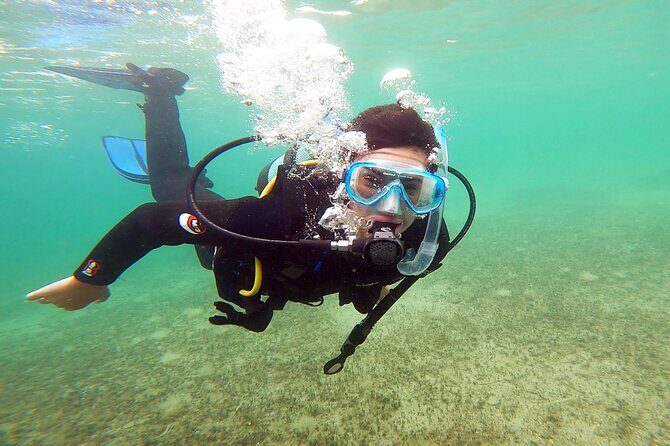
- Small group coaching: limited to four people in the training experience, with a cap of eight overall.
- Theory on your schedule: five theory sections from a book or laptop, with your instructor there to answer questions.
- Confined-water skills first: shallow practice focused on equipment use and safe technique.
- Open-water training in the South Evoikos Gulf: revision plus new skills in interesting local sites.
- Two course options: a standard 2–3 day path (with a 12-meter/39-foot training limit) or a longer option that allows deeper training.
Nea Makri: the Athens base that keeps everything practical
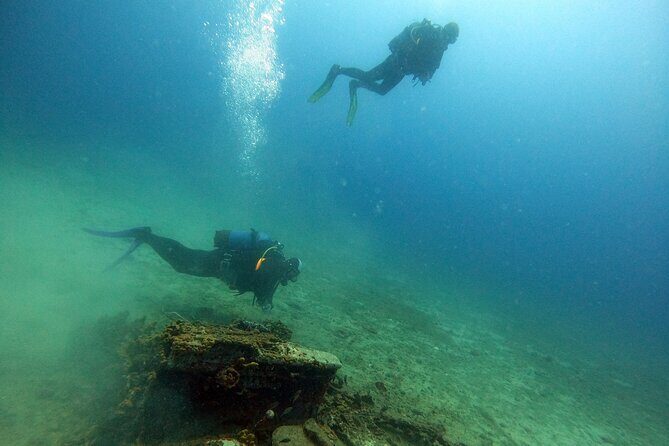
Nea Makri is one of those smart choices when you want a “start early, finish on time” travel day. You meet at the scuba center in Nea Makri (Frinis 20), with the start set for 10:00 am, so your day has structure from the first moment. It also helps that it’s close enough to Athens to feel like a real option for a short break.
I also like that this is set up like a proper training operation, not a vague day tour. You know there will be theory sessions, confined-water practice, and open-water training, and you’re not guessing what the “real plan” is supposed to be.
The best part for value is that the course runs on a tight, repeatable rhythm: learn skills, practice them safely in shallow water, then move into open water to apply them. That’s the difference between “trying scuba once” and getting genuinely prepared.
You can also read our reviews of more tours and experiences in Athens.



Choosing the standard vs extended course (and what that means for your timeline)
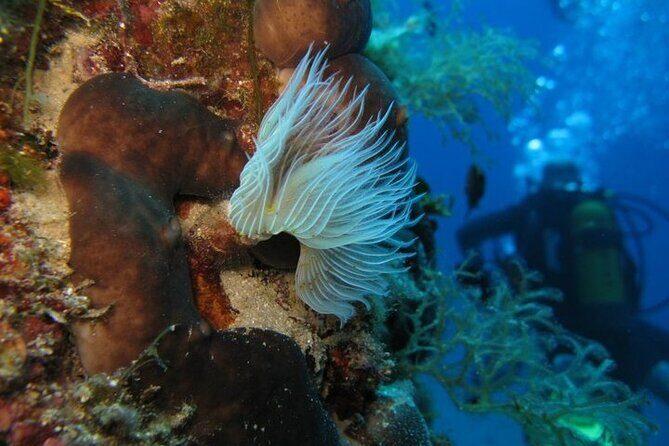
This experience comes with two paths. The regular option takes about 2–3 days and leads to a certification that limits training to 12 meters (39 feet). The more intense option stretches to 4–7 days and allows deeper training than the shorter path.
So how do you choose? If you’re fitting this around a busy Athens itinerary, the standard option usually makes the most sense. If you want more time in the water, more practice, and training that supports deeper limits, the longer option is the safer bet for learning more slowly.
Either way, your course is designed around real skill-building. You’re not just checking boxes. You’re working through equipment use, technique, and safety steps until they become automatic enough for you to handle open-water conditions.
Theory that you can handle: five sections, book or laptop, instructor support
One of the most stress-reducing parts is that the course theory is broken into five sections that you can complete on your own. You can use a book or do it on your laptop, which is a big deal if you prefer control. You can knock out sections early, or you can spread them across the course days.
What I like here is the support system. Your instructor is with you to talk through questions, and the theory can be done either at the beginning or during the course. That flexibility matters, because it lets you match the theory work to how you’re feeling after the first day of water practice.
If you’re the type who learns best by doing, the idea is still workable. You don’t have to wait until everything is “perfect” in theory before you get moving. You do the required parts, ask questions as they come up, and connect the concepts to what you’re practicing in the water.
Confined-water skills: learning gear and safety without pressure
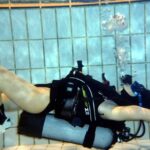
Your in-water training starts in confined water, in shallow settings. This is where you practice the core fundamentals: using the equipment, building comfort, and practicing the safety and skill steps you’ll need later.
I like confined-water training because it’s where you can mess up safely and correct it quickly. Instead of hoping you’ll figure it out later, the course structure gives you repeated practice. The goal is simple: you should be able to manage the basics while staying focused, calm, and safe.
The reviews you’ll find for this kind of course (and this one in particular) tend to highlight repetition as a real benefit. You’re not expected to magically “get it” on the first attempt. You practice techniques multiple times, and the instructor stays engaged the whole time.
Open-water training in the South Evoikos Gulf: applying skills in real conditions
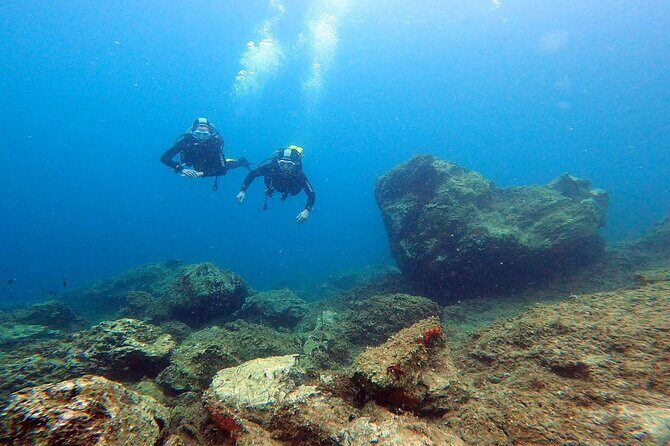
After the confined-water portion, you move into open-water training in the south Evoikos Gulf. The purpose is not just to see more water—it’s to revise what you learned and add new skills in a setting that feels more like what scuba is actually about.
This is where the course becomes a certification. You’re using the procedures you practiced earlier, under the instructor’s supervision, in real open-water conditions. And because this happens after the shallow-water work, you’re less likely to feel overwhelmed when things feel bigger and less controlled.
A safety note: the course is designed so your skills and decision-making are taught in the right order. If you take the early practice seriously (even if you’re nervous), the open-water portion usually feels more manageable.
- All Day Cruise -3 Islands to Agistri,Moni, Aegina with lunch and drinks included
★ 5.0 · 4,958 reviews




Instructor attention in a small group of four (with an overall cap of eight)
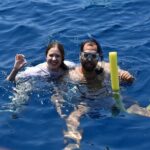
This course is built for people who want coaching that doesn’t disappear the second the water starts. The experience is described as personalized, with a group limited to four people. At the same time, the activity caps at eight travelers, which helps keep the day from turning into a factory line.
In practice, that means you get more direct feedback and more chances to repeat skills while the instructor watches closely. You’re not competing with a huge group for attention, and it’s easier to ask questions when the instructor can stay focused on you.
One name that stands out in the feedback for this center is Dimitris, praised for being responsible, patient, and experienced. If you’re the kind of learner who needs calm guidance (not just instructions), you’ll likely appreciate that teaching style.
What “stress-free” means here: real structure, clear limits, and constant support
“Stress-free” can mean a lot of things in tourism marketing. Here, it mostly comes down to structure.
You’ll have:
- self-study theory broken into five sections
- practical confined-water training for equipment and safety skills
- open-water training that revisits and expands what you already practiced
- an instructor who stays with you so you can ask questions
It also helps that the course has clear boundaries. For the regular path, the training limit is stated at 12 meters / 39 feet, which removes a lot of ambiguity. For the longer path, you get the chance to train deeper than the shorter option, but your schedule expands accordingly.
Price and value: is $488.70 reasonable for what you get?
At $488.70 per person for about 3 days (approx.), this isn’t a “cheap try-it” activity. But it also isn’t overpriced for what you’re buying.
You’re paying for:
- guided instruction from start to finish
- theory support (including an instructor available to answer questions)
- practical training time in both confined and open-water settings
- course structure aimed at real certification skills, not a one-off experience
- small-group attention (limited to four)
So the value depends on your goal. If you want the practical steps and guidance that lead to certification, the price can make sense, especially given the short time frame and the coach-to-student setup. If you’re simply curious about what scuba feels like, you may find this more intense than you need.
Timing, flying, and medical checks you should take seriously
This course asks you to take health and travel timing seriously. You’ll complete a health questionnaire prior to training, and some conditions (like asthma or heart conditions) may prevent you from participating. If you have any medical concerns, it’s worth checking with your doctor before you book.
Another practical rule: diving within 12 hours of flying is not recommended. Even if you’re eager to start, treat this as a safety issue, not a suggestion.
If you’re planning a multi-city trip, build a buffer day. That small bit of planning can help your body handle the schedule better and can make the course feel less like you’re running on fumes.
Getting there and living the short-course rhythm
The meeting point is easy to find in Nea Makri (Frinis 20), and you start at 10:00 am. The location is noted as near public transportation, which matters if you’d rather not rely on taxis for every move.
Because the course is spread across multiple days (even the regular option), you’ll want to plan your Athens time around it. Think of Nea Makri as your “course base,” then Athens as your “day-trip” option.
Also note the minimum age: 10, with children needing an adult. If you’re traveling with a kid, make sure you’re ready for a learning-focused schedule rather than a flexible sightseeing day.
Who this course suits best (and who might want a different plan)
This is a strong fit if you:
- want a fast, structured route to PADI Open Water certification
- value small-group attention
- like learning through a mix of self-study theory and guided practice
- want to train near Athens without losing a lot of vacation time
It may be less ideal if you:
- hate doing theory work outside the water
- don’t want to plan around the required practice sequence
- have medical conditions that could affect participation and haven’t checked with a clinician
In short: if you can follow a plan and show up ready to practice skills, you’ll likely enjoy how methodical the learning feels.
Should you book the Open Water course near Athens?
If your goal is real certification—skills you can actually use—this course is worth considering. The small-group structure (limited to four) and the fact that the instructor stays available for questions makes the learning feel controlled, not chaotic. You also get the advantage of training in the south Evoikos Gulf, with open-water practice after real foundational skills in shallow water.
Book it if you can handle five theory sections and you’re able to plan around the training schedule. If you’re very sensitive about medical constraints or you’re flying in close to the start, sort that out early so you don’t end up disappointed.
FAQ
How long is the Open Water course near Athens?
The regular certification track takes about 2–3 days and allows training up to 12 meters (39 feet). A longer, more intense option takes about 4–7 days and allows deeper training.
What happens in the theory part of the course?
There are five theory sections. You can complete them using a book or on your laptop, and your instructor is with you to answer questions. You can do the theory at the start or during the course.
Where do I meet, and what time does the course start?
You meet at Kanelakis Diving Experiences on Frinis 20, Nea Makri 190 05, Greece. The start time is 10:00 am.
How big is the group?
The experience is described as a small group limited to four people, and the overall activity has a maximum of eight travelers.
Are there medical requirements before participating?
Yes. You must complete a health questionnaire before diving. Some conditions, such as asthma and heart conditions, may prevent you from participating, so you should consult your doctor if you have concerns.
Is it a problem to fly right before the course?
Yes. The guidance is that diving within 12 hours of flying is not recommended.

More Tour Reviews in Athens
- All Day Cruise -3 Islands to Agistri,Moni, Aegina with lunch and drinks included
★ 5.0 · 4,958 reviews