REVIEW · ATHENS
Private Athens Street Art & Culture Tour
Book on GetYourGuide →Operated by Greeking.me · Bookable on GetYourGuide
Graffiti tells Athens secrets. I love how Eugenia turns murals into a lesson on style and politics, and I love the offbeat blocks in Psyrri where you can really study the art close up. One thing to know: it’s a mostly outdoor walk on side streets, so expect uneven pavement and do wear proper shoes.
This is a private 3-hour tour (English-speaking guide) for up to 4 people, starting at Monastiraki Metro Station and finishing at Omonoia Square. You’ll walk through neighborhoods such as Monastiraki, Psyrri, Metaxourgheio, and Gazi, focusing on the art as a living city document.
Think of it as an outdoor gallery that changes quickly. You’ll learn how street art uses political and social messages, and you’ll pick up the street vocabulary so you can read what you’re seeing instead of just snapping photos.
In This Review
- Key highlights worth caring about
- Athens street art: why it feels like a living museum
- Monastiraki Metro Station start: easy to find, smart place to begin
- Seeing the streets the way a street artist sees them
- Psyrri and Monastiraki: where the art feels close and current
- Metaxourgheio: the neighborhood where context becomes clear
- Gazi and the energy of modern Athens
- The artists you’ll hear about: INO, Sonke, Vasmoulakis and more
- Street art vocabulary that makes Athens easier to read
- Politics and social statements: why the tour’s framing feels practical
- The 3-hour flow: enough time to see, short enough to stay flexible
- Price and value: $259 per group, and when it makes sense
- What to do before and after the walk
- Who should book this street art tour?
- Should you book? My call
- FAQ
- How long is the Private Athens Street Art & Culture Tour?
- How much does the tour cost?
- Where does the tour start and finish?
- What languages are available?
- Is this tour private?
- What is included in the price?
- What is not included?
Key highlights worth caring about
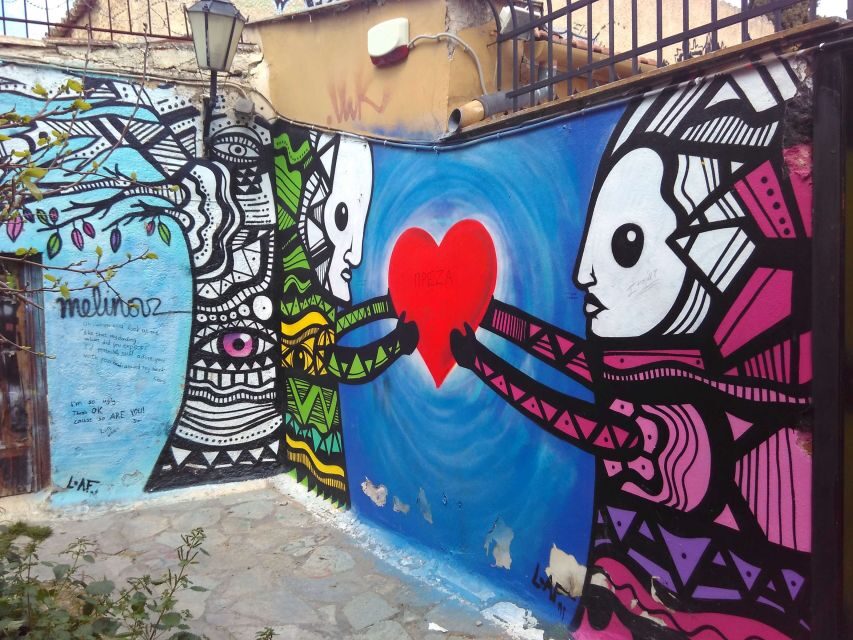
- A street-artist guide (Eugenia) who explains techniques, not just the obvious scenes
- Neighborhoods beyond the usual photo stops, including Psyrri and Metaxourgheio
- Real street art terminology in plain English, from tags to wild-style graffiti
- Murals and styles by artists like INO, Sonke, and Vasmoulakis
- Politics made human, with artwork tied to real social debates you can recognize
Athens street art: why it feels like a living museum
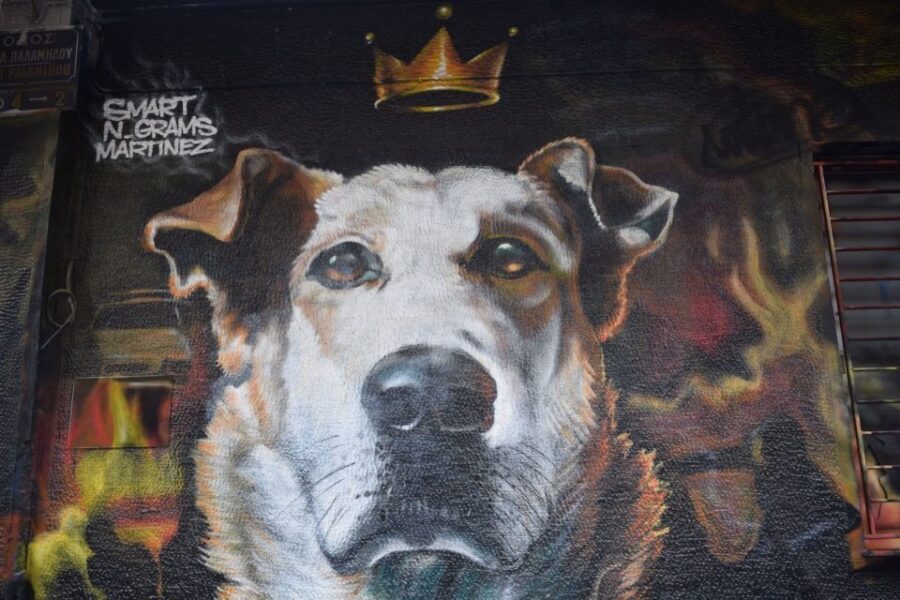
Athens can look ancient on the surface, but the city also talks in paint. Street art there isn’t just decoration. It’s a public bulletin board, a protest megaphone, and a way for artists to claim space when traditional channels feel slow, expensive, or controlled.
What makes this tour different from a generic “look at this mural” walk is how it teaches you to notice. You start seeing the difference between a quick mark and a carefully staged piece. You notice how placement, scale, and style can carry a message just as much as the artwork itself. That shift matters because it changes how you view Athens long after the tour ends.
I also like the mindset: the guide treats street art as culture, not vandalism to be ignored. You’ll leave with a better sense of why the city’s walls became such a strong canvas—especially in the everyday neighborhoods most visitors don’t linger in.
You can also read our reviews of more private tours in Athens


Monastiraki Metro Station start: easy to find, smart place to begin
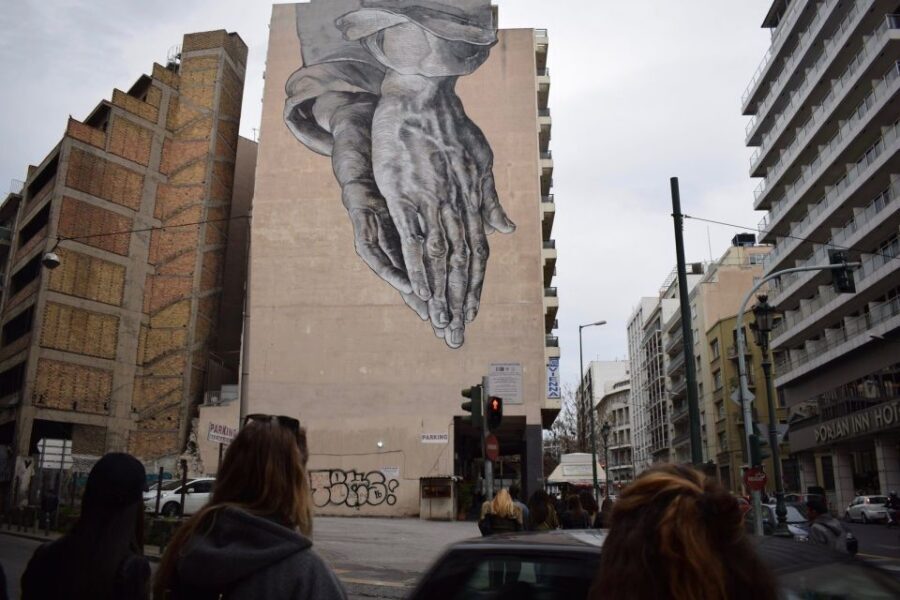
The tour kicks off outside Monastiraki Metro Station. That’s practical. Monastiraki is easy to reach, even if you’re still figuring out your bearings. Starting there also makes sense because it gives you a baseline view of the area before you start moving into more alternative streets.
From the beginning, you’re not just walking for exercise. You’re walking to train your eyes. Expect a short mix of photo opportunities and guided commentary as you get into the rhythm of street-art viewing—spotting styles, reading symbols, and understanding how quickly things change on these walls.
If you’re the kind of person who likes to take photos, you’ll appreciate the early guidance. Without some direction, street art can look like random color. With direction, you start to see composition, technique, and intent.
Seeing the streets the way a street artist sees them

A big part of the value here is the guide’s focus on how street art is made. You’ll hear and learn terminology and process details as you walk. This is the difference between looking at art and understanding how it’s coded.
You can expect explanations and examples of terms like:
- stencils, paste-ups, throw-ups, and bombings
- tags and pieces
- murals, installations, and wild-style graffiti
- terms connected to post-graffiti and guerrilla art
Why this matters: once you understand these categories, you can stop guessing. You’ll start to predict what you’re likely to see next. More importantly, you’ll understand why an artist might choose a fast, repeatable style (like a tag or throw-up) versus something slower and bigger (like a mural).
And because the guide is a street artist herself, the pacing feels grounded. The talk doesn’t float above your head. It ties directly to what’s in front of you—how the mark was likely applied, what the style signals, and how the same neighborhood can host very different approaches side by side.
Psyrri and Monastiraki: where the art feels close and current
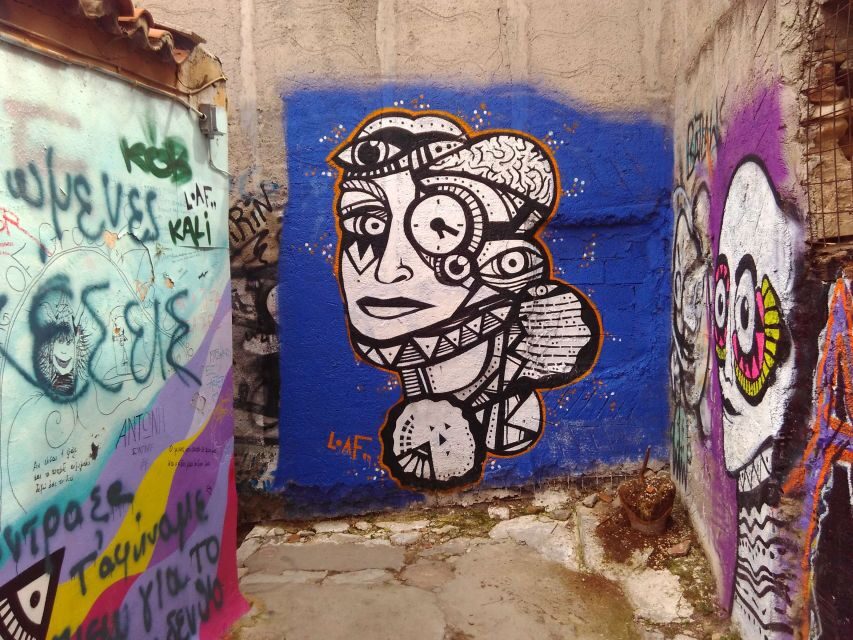
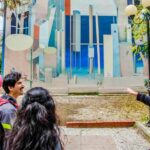
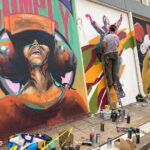
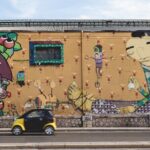
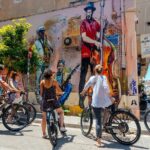
You’ll spend time in Monastiraki and Psyrri, two areas that often act like street-art magnets. The walls here can feel like they belong to the moment—new pieces appear, older ones fade, and sometimes layers sit on top of each other like a visual timeline.
In these neighborhoods, the tour experience is about proximity. You’re not just looking from a distance at a mural on a big building. You’re walking small streets where the artwork can be intimate, experimental, and sometimes a little confrontational. That’s exactly what you want if your goal is to understand street art as a real part of daily life.
One practical tip: expect the artwork to be spread out. Some pieces are easy to spot. Others reward patience—standing back, then stepping closer, then changing your angle. If you take a breath and slow down, you’ll see more. If you rush, you’ll miss the “why” and focus only on the “wow.”
Metaxourgheio: the neighborhood where context becomes clear
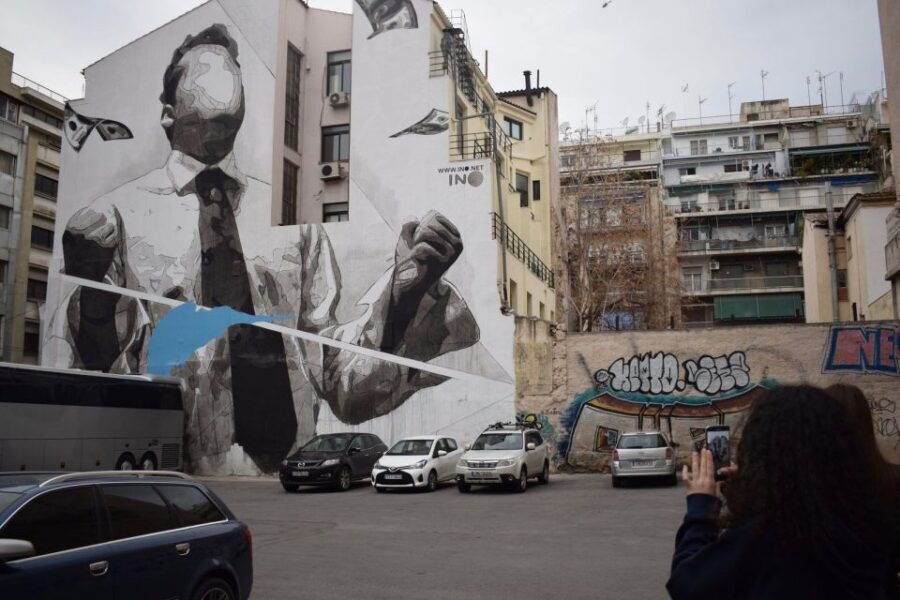
Metaxourgheio is the kind of place where street art starts to feel less like isolated murals and more like conversation. Here, the artwork can read as commentary on the city itself—its pressures, its politics, and its everyday tensions.
This is where the tour’s political and social framing really helps. Instead of treating a piece as just a style choice, you’ll hear how street art communicates messages—sometimes bluntly, sometimes indirectly. Even if you don’t know much about Greek politics, the guide’s explanations make the art feel legible.
What I appreciate is how the route encourages you to look at walls as statements with context:
- who might be targeted or represented
- what emotions the artist is aiming for
- how the same neighborhood can host different viewpoints
That’s the moment street art clicks as a cultural skill: people learn to read the walls the way locals read the news.
You can also read our reviews of more tours and experiences in Athens
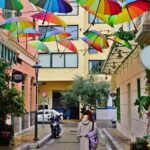
Gazi and the energy of modern Athens
You’ll also move through Gazi, an area that helps you see modern Athens through a different prism. Here, street art can feel more connected to the city’s present-day identity—less about the past and more about what’s happening now.
This doesn’t mean every piece is “happy” or “party vibe.” Street art in Athens can be confrontational, too. The strength of this tour is that it doesn’t flatten the meaning. It makes room for humor, anger, critique, and creative rebellion all in the same walk.
If you’re the type who likes to understand how art and life overlap, you’ll like this part. You start to recognize that street art is also about who gets heard. Walls become a public space where artists argue back—using color and style as their language.
The artists you’ll hear about: INO, Sonke, Vasmoulakis and more
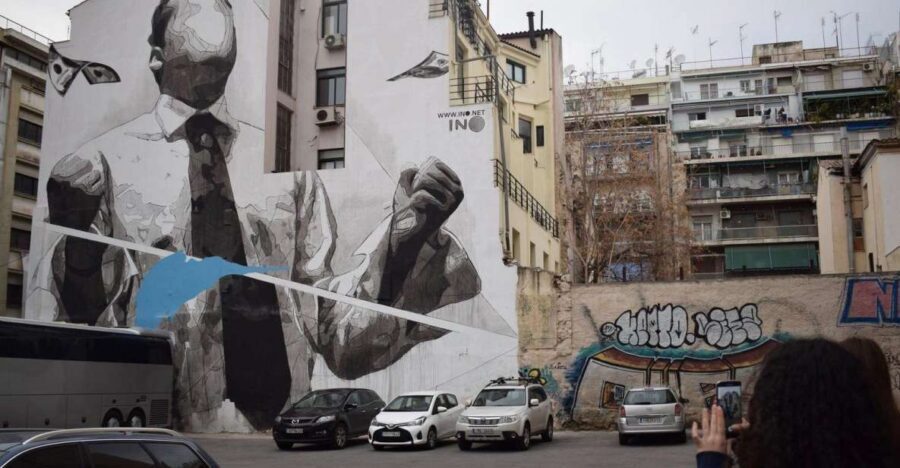
The tour references a mix of well-known street artists, including INO, Sonke, and Vasmoulakis. Seeing their names attached to real locations matters because it bridges the gap between street art online and street art in real life.
You’ll also encounter different approaches grouped under terms like bold graffiti styles, post-graffiti tendencies, and guerrilla art. The guide helps you recognize not only what the work looks like, but what kind of artistic thinking it reflects.
A good sign of quality here is how the tour doesn’t treat artists like celebrity brands. The focus stays on technique, intention, and the social environment that shaped the work. That’s what makes the experience educational without turning it into a museum lecture.
Street art vocabulary that makes Athens easier to read
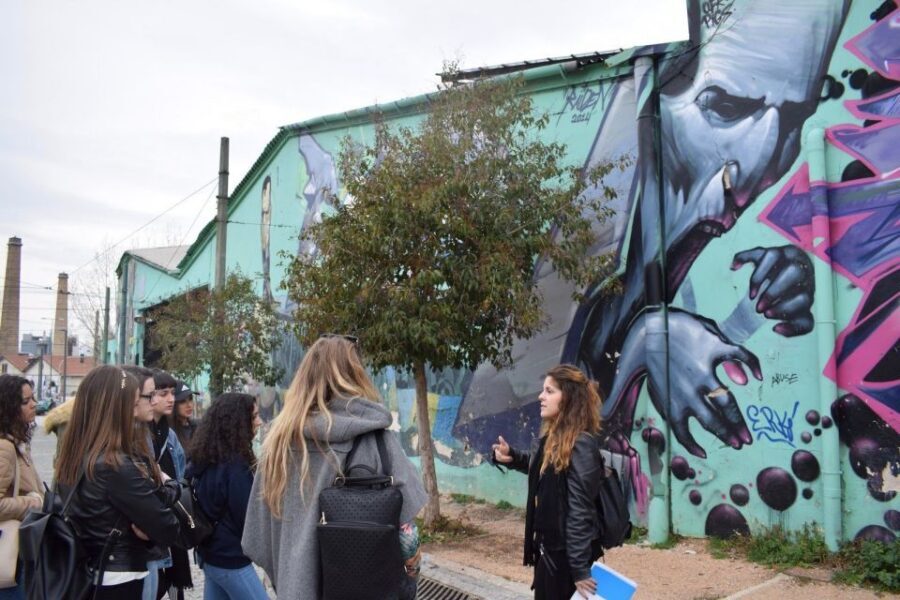
By the time you’ve walked long enough to feel your brain warming up, you’ll likely notice something: street art is full of shortcuts. Artists use shared visual language—shapes, lettering, layout habits, and recurring composition tricks.
Learning the basic vocabulary helps you track those shortcuts and understand what you’re seeing:
- Tags help identify style and presence
- Pieces tend to show more time and craft
- Murals often aim for big impact and clear visual storytelling
- Wild-style graffiti usually signals technical complexity and aesthetic intensity
- Stencils/paste-ups/throw-ups/bombings reflect speed, method, and message strategy
This is especially useful if you’re planning to explore on your own later. You won’t just see color. You’ll see categories, and you’ll feel more confident deciding what’s worth stopping for.
Politics and social statements: why the tour’s framing feels practical
Street art can be political in a heavy-handed way, or it can be political through symbols and style choices. The guide’s job is to connect those points without making you feel like you’re being tested.
You’ll talk about how street art is used for political and social statements, and you’ll learn that Athens street art flourished for reasons tied to the city’s social climate. The result is that a mural becomes less mysterious. It becomes a snapshot of thought—sometimes direct, sometimes coded.
And here’s the practical payoff for your future travel: you’ll likely start noticing the same themes in other cities you visit. The technique for reading street art transfers. It’s not just Athens; it’s a method.
The 3-hour flow: enough time to see, short enough to stay flexible
This tour is 3 hours, private, and designed as a walking experience through several neighborhoods. That timing is a sweet spot. You get enough time to learn the vocabulary, see multiple styles, and still have energy left to enjoy the rest of Athens after.
Could it be short? Sure—if you love street art so much that you want to map the entire city’s murals. But for most people, three hours is the right amount of guidance. You leave with context and momentum, and you can continue exploring afterward with better instincts.
Also, since it’s private for up to 4 people, you can match your interests. If you want more photo stops, or if you’re more into the political meaning than the technique, the guide can shape the pace to fit.
Price and value: $259 per group, and when it makes sense
The price is $259 per group up to 4. That’s not “cheap,” but it can be good value depending on who’s booking.
Here’s the practical math:
- If you bring 3 friends and fill the group, your per-person cost drops a lot.
- If it’s just you, you’ll be paying for the guide and private pacing, so it’s more of a splurge.
What you’re paying for is not just walking time. You’re paying for a street-artist guide, a structured explanation of styles and terminology, and a route that focuses on neighborhoods like Psyrri, Metaxourgheio, and Gazi rather than generic highlights. In street art tours, that “interpretation” component is often the difference between a nice walk and a meaningful one.
What to do before and after the walk
Because Athens street art changes fast, you get the best results when you arrive mentally ready to look up and slow down. You’ll see a lot of different work in a short span of time, so keep an eye on:
- the lettering and how it’s constructed
- whether it’s a quick mark or a long-form piece
- how the piece is placed on the wall
After the tour, you’ll likely want to return to a few neighborhoods on your own. With the guide’s terminology in your head, you’ll be able to spot pieces faster and judge which ones you actually want to study.
If you’re bringing teens or kids, this tour is listed as suitable for all ages. One practical benefit of that is it keeps the tone moving. You’re less likely to get stuck in a lecture-and-standstill situation.
Who should book this street art tour?
This one is a great match if you:
- want Athens street art in context, not just as photos
- enjoy offbeat neighborhoods and small streets
- like learning a bit of “how it works” while you walk
- want a private guide who can talk in a conversational way
It’s also ideal if you’re traveling with a small group. Private tours feel especially worth it here because you can linger where the art is strongest and skip where it’s not.
Two caution flags from the activity details: it’s not suitable for pregnant women or for people with mobility impairments. The walking and street conditions matter.
Should you book? My call
Book it if you want Athens to feel current and human. This tour is built around interpretation—technique, terms, and why the art exists—so you’re not just consuming pretty walls. You’re learning how to read them.
Skip it only if you mostly want major-ticket sights or you prefer indoor, fully structured experiences. This is an outdoor, neighborhood walk where the value comes from noticing, listening, and moving at a guided pace.
If you’re curious about street art as culture and politics, this is a strong choice—especially for a small group that can fill up to 4 people and share the cost.
FAQ
How long is the Private Athens Street Art & Culture Tour?
It lasts 3 hours.
How much does the tour cost?
The price is $259 per group, for up to 4 people.
Where does the tour start and finish?
It starts outside the Monastiraki Metro Station on the square and finishes at Omonoia Square, Athina 104 31, Greece.
What languages are available?
The live tour guide speaks English.
Is this tour private?
Yes. It’s a private group experience.
What is included in the price?
It includes a street art tour with the local guide.
What is not included?
Food and drinks, plus personal expenses, are not included.
More Private Tours in Athens


More Tours in Athens



More Tour Reviews in Athens
- All Day Cruise -3 Islands to Agistri,Moni, Aegina with lunch and drinks included
★ 5.0 · 4,958 reviews