REVIEW · ATHENS
Athens: Guided Street Art Walking Tour
Book on GetYourGuide →Operated by Alternative Athens · Bookable on GetYourGuide
Athens street art reads like a side street news desk. This guided walk takes you into three central neighborhoods and has you decode the stories hidden in the walls, from big-name murals to sharp political tags. I like that you’re guided by a street artist guide who can explain style, symbols, and context. And I also like that the route is built around the city’s neighborhoods, not postcard stops.
What makes this tour work especially well is the human filter your guide brings. Guides named Nikos (also seen as Nico, Nikos Rude, and Rude in bookings) and Pavlina show up again and again in customer feedback, and they’re described as bringing personal insight rather than just pointing. You’ll also hear about artists such as WD, iNO, Moralez, and others, with a focus on what their work is saying about modern Greece.
One thing to consider: this is a walking tour, and it’s not suitable for people with mobility impairments or wheelchair users. If you can handle uneven sidewalk time for about three hours, you’re set.
In This Review
- Key takeaways before you go
- Why Athens Street Art Feels Like a City Course
- Getting There: Meet in Front of the Association of Greek Archaeologists
- The Neighborhood Route: Psyri, Gazi, Monastiraki, and Back Again
- Psyri: Where Contemporary Athens Shows Up Fast
- Gazi: Street Art With a Slightly Edgier Tone
- Monastiraki: Old Market Energy, New Messages
- Finish in Psyri: Let the Art Land
- How the Guide Helps You Read Athens Graffiti
- What $57 Buys You: Value for a 3-Hour City Read
- Logistics That Matter on This Walk
- Who This Tour Is For (And Who Might Skip It)
- A Simple Game Plan for Your 3 Hours in Athens
- Should You Book This Athens Guided Street Art Walking Tour?
- FAQ
- How long is the Athens street art walking tour?
- How much does the tour cost?
- Where do we meet, and how do we get there by metro?
- What’s included in the price?
- Is transportation included?
- What languages are the tours in?
- Is this tour suitable for wheelchair users?
- Can I cancel for a full refund?
Key takeaways before you go

- Street artist guides explain meaning, not just murals
- Three Athens neighborhoods: Psyri, Gazi, and Monastiraki, with a start around Thiseio/Thissio and a finish back in Psyri
- You’ll learn to read graffiti using artists’ styles and recurring symbols
- Political and social context comes through, including how the economic and social crisis appears in street art
- It’s practical for real life: comfortable shoes matter, and the pacing is built for a solid 3-hour walk
Why Athens Street Art Feels Like a City Course

If you only tour Athens the classic way, you miss a major channel of local communication. Graffiti and street art are how many people in the city talk back—about jobs, identity, anger, humor, and hope. On this tour, you’re not just seeing walls. You’re learning a method to read them.
I like that the focus stays on messages. The tour is designed to help you interpret hidden meanings behind urban art, including how Greece’s economic and social crisis gets portrayed through murals and tags. That gives the street art a clear purpose, even if you’re not an artist yourself.
Another win: you’re not locked into one famous spot. You move across central neighborhoods—Psyri, Gazi, and Monastiraki—so you can feel how the city changes block by block. Street art is often tied to place: the street, the crowd, the mood, the history of the building. Walking lets you catch that rhythm.
You can also read our reviews of more walking tours in Athens


Getting There: Meet in Front of the Association of Greek Archaeologists
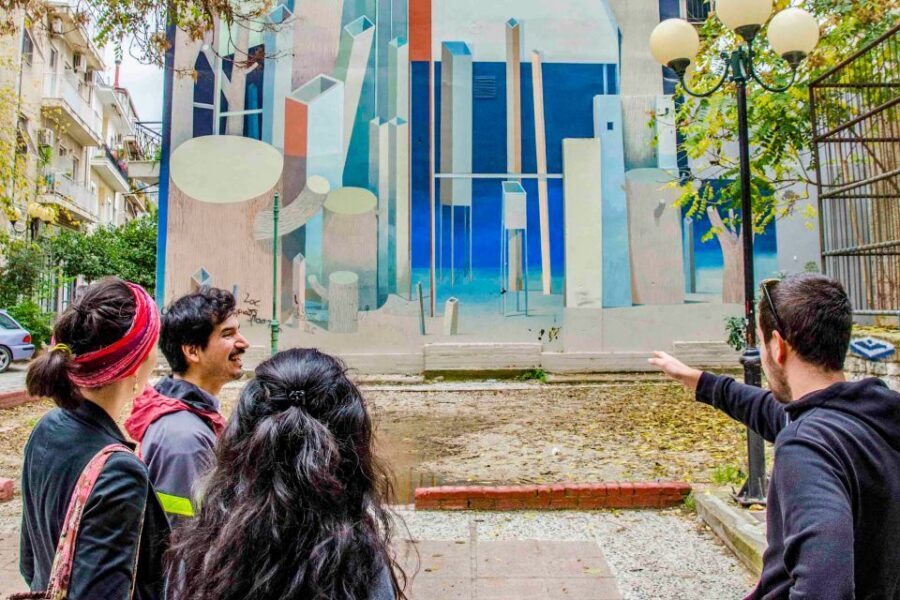
Your meeting point is in front of the Association of Greek Archaeologists. The easiest way in is by metro: take the green line to Thissio, or take the blue line to Monastiraki Metro Station and then walk along Adrianou Street.
This is one of those practical details that actually improves your tour. When you start where public transport drops you off, you spend less time hunting streets and more time looking up at walls. You’ll also arrive ready to walk, since you’ll already be in the central grid of the city.
And since there are multiple start options (the tour lists three starting location options that include Thiseio/Thissio), plan your metro route based on where you’re already staying. You don’t want your first hour in Athens to be a navigation test.
The Neighborhood Route: Psyri, Gazi, Monastiraki, and Back Again

This tour is built around three “work” neighborhoods for street art. You visit each one with the same guiding goal: learn to read the art and understand what’s being said in that specific part of Athens.
Psyri: Where Contemporary Athens Shows Up Fast
Psyri is where the tour begins or connects early, and it also serves as the finish point. That matters because it creates a loop. You get into the vibe early, then you return later with fresh context, so the walls seem to make more sense the second time you see them.
You can expect Psyri to feel more like a lived-in neighborhood than a museum area. Street art here acts like an overlay on daily life—shopfronts, side streets, and building facades that keep going even when the crowds move on.
Gazi: Street Art With a Slightly Edgier Tone
Gazi shows up as the second guided stop. In Athens, Gazi is known for a more contemporary feel, and that comes through in the kind of street art people choose to place there. You’re likely to see works that feel bolder and more direct, including pieces tied to the social and economic pressures the country has lived through in recent decades.
This is a neighborhood where street art can read like commentary. Instead of just decorative color, you’ll be encouraged to look for what the artist is responding to—culture, conflict, politics, and everyday reality.
You can also read our reviews of more guided tours in Athens



Monastiraki: Old Market Energy, New Messages
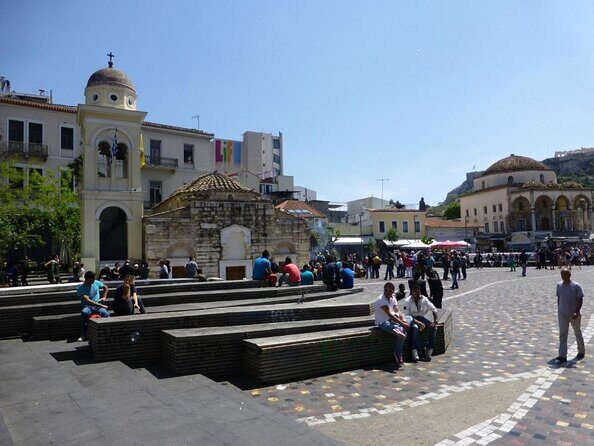
Monastiraki rounds out the trio. It’s a place where the city’s historic layer is visible, but street art turns that older setting into something current. You’ll spend time in this area with guidance that connects the dots between what you’re seeing on the wall and what’s happening around it.
One helpful thing: the tour’s focus is on teaching you how to interpret. So even if you’re not sure why a mural includes certain shapes, letters, or references, your guide’s explanations help you build a framework. Over the course of the walk, that framework sticks.
Finish in Psyri: Let the Art Land
Ending in Psyri gives you a chance to decompress in the same neighborhood you started feeling. It’s also a good setup for food and drinks right after the tour. Many guides on this type of street art experience are known for sharing local tips, and in this case you’ll find that trend in customer feedback too—like suggestions for nearby places to eat or places to linger after the walk.
How the Guide Helps You Read Athens Graffiti

A big reason this tour earns a 4.9 average from 182 reviews is the “translation layer” your guide brings. You’re not getting only art facts. You’re getting interpretations.
Your guide is a street artist, described in feedback as having done street art themselves at some point. That kind of background changes the tone of the walk. It’s easier to understand why certain tags exist, why certain styles get chosen, and what it means when an artist builds messages into letters, symbols, or composition.
The tour also explicitly trains your eye on the origins of street art in Athens. You’re shown examples with distinct styles and then encouraged to decipher messages—especially those connected to Greece’s economic and social crisis. That context turns graffiti from random markings into a living archive.
And names matter here. You’ll learn about artists such as WD, iNO, Moralez, and others. When you hear an artist’s name in the context of a specific wall, it stops being trivia and becomes part of a story. You also get a sense of how different creators use different visual languages—some more text-based, some more mural-based, some leaning into shock, others into irony or protest.
One more detail that comes through strongly in reviews: guides encourage questions and conversation. One booking notes that the guide set you up with a useful definition of street art right at the start. That sounds simple, but it works. If you know what you’re looking at, you can ask better questions and see more.
What $57 Buys You: Value for a 3-Hour City Read

At $57 per person for a 3-hour walking tour, the price is basically paying for three things:
- Time-saving local access to places you may not find on your own
- Interpretation, meaning explanations that help you decode messages and style
- A guided route across multiple neighborhoods, so you aren’t just wandering randomly
If you love street art, this tour feels like a shortcut to understanding. You still do the walking, but the guide does the heavy lifting in connecting wall-to-wall meaning. That’s the real value: not just seeing the art, but knowing how to read it.
Transportation isn’t included, so you’ll want to budget for metro or other local transit to get to the start point. The flip side is that the meeting point is very doable by metro, with routes via Thissio or Monastiraki.
Also, the reviews repeatedly mention a good pace. A 3-hour tour is long enough to get serious context, but short enough that the day still feels flexible.
Logistics That Matter on This Walk
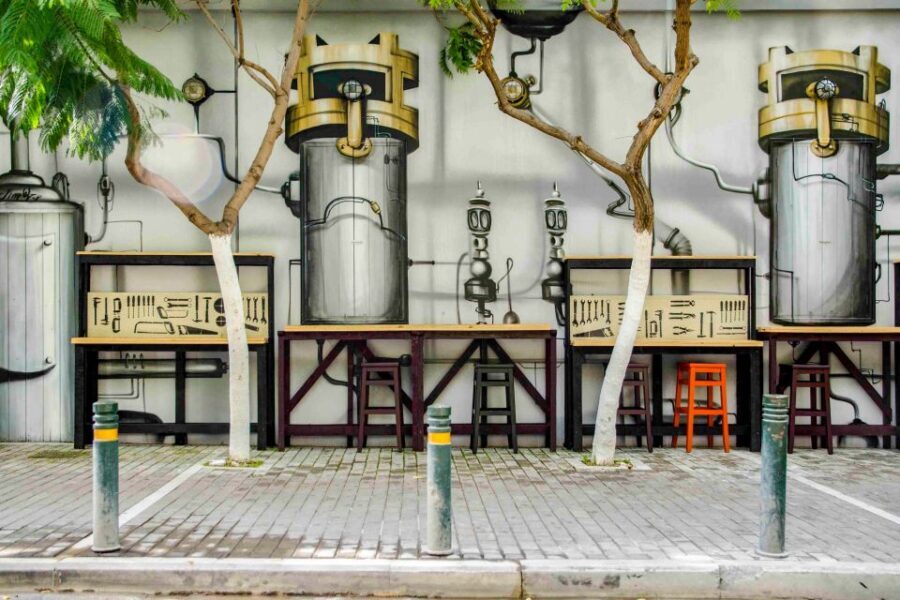
A few practical notes will help you enjoy the experience without friction.
- Bring comfortable shoes. You’re on foot for about three hours.
- The tour is not suitable for wheelchair users or people with mobility impairments, based on the activity’s requirements.
- The tour offers a live guide in English and French.
- It’s a walking route without included transportation, so plan your metro timing.
- A private group option is available if you want a smaller, more tailored experience.
On group size, one review mentions a group of four, which is a reminder that your exact group can vary. Smaller groups tend to make conversation easier, which matters when the tour depends on questions and discussion.
Who This Tour Is For (And Who Might Skip It)
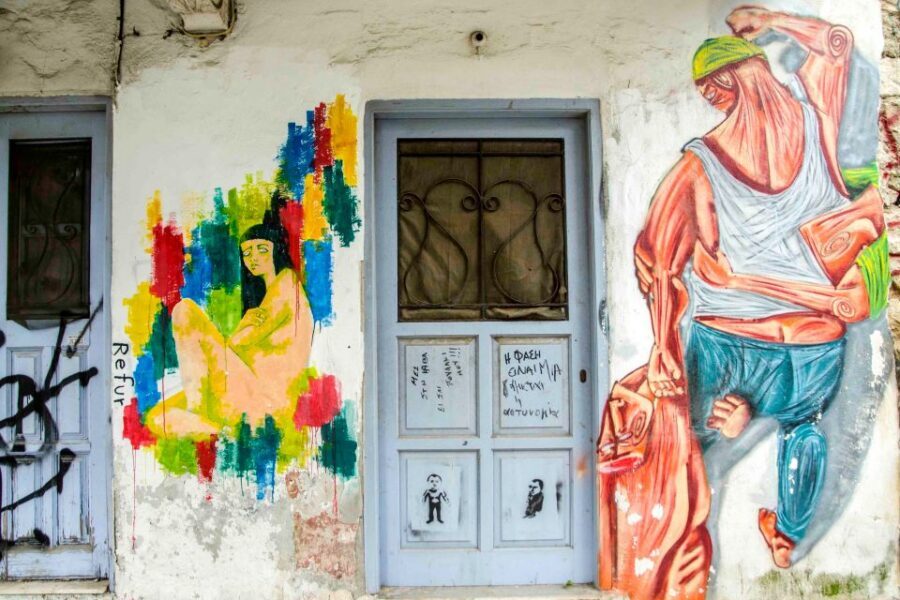
This Athens street art walking tour is a great fit if you like at least one of these:
- contemporary art with political or social meaning
- learning how to read graffiti symbols and writing
- city neighborhoods beyond the main sights
- a guide who can explain both the art and the surrounding place
It’s also a strong choice if you’re traveling with teens. Multiple reviews mention kids and teenagers enjoying the tour, especially because it connects art to real life and real issues.
If you want a quiet history lesson only about ancient monuments, you’ll likely feel under-satisfied. This isn’t that. The focus is modern Athens, where walls carry messages and neighborhoods feel current.
A Simple Game Plan for Your 3 Hours in Athens
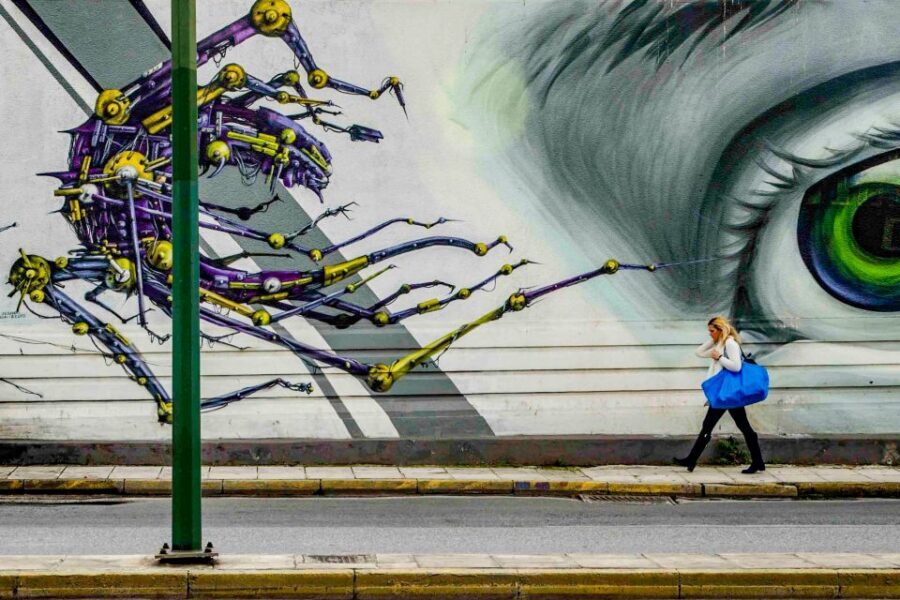
To get the most out of the walk, don’t treat the art like a photo scavenger hunt. Instead, try this mindset shift:
- Look first for letters, symbols, and recurring motifs.
- Ask one or two questions about why the piece looks the way it does.
- Pay attention to how the meaning changes as you move from Psyri to Gazi to Monastiraki.
Your guide is there to help you interpret, but your curiosity is what makes the explanations click. If you stay open to politics, humor, and social commentary, the city starts to feel more personal.
Also, since street art changes over time, don’t assume the wall you photo today will look the same next week. That’s part of the point. The tour teaches you how to understand the message even if the paint refreshes later.
Should You Book This Athens Guided Street Art Walking Tour?

I’d book it if you want Athens to feel like more than ruins and museums. This is a practical way to get underneath the city’s surface and understand why people use walls as a voice. The combination of a street artist guide, neighborhood routing across Psyri, Gazi, and Monastiraki, and a focus on decoding messages tied to modern Greece makes it unusually targeted for the price.
Skip it if walking for three hours isn’t your thing, or if you’re only interested in ancient Athens. This tour is about the contemporary pulse—where graffiti becomes language and the city starts talking back.
FAQ
How long is the Athens street art walking tour?
The tour lasts 3 hours.
How much does the tour cost?
The price is $57 per person.
Where do we meet, and how do we get there by metro?
You meet in front of the Association of Greek Archaeologists. You can reach it by taking the green line train to Thissio, or by taking the blue line to Monastiraki Metro Station and walking along Adrianou Street.
What’s included in the price?
The tour includes a street artist guide and the walking tour.
Is transportation included?
No. Transportation is not included.
What languages are the tours in?
The live tour guide speaks French and English.
Is this tour suitable for wheelchair users?
No. It is not suitable for people with mobility impairments or wheelchair users.
Can I cancel for a full refund?
Yes. There is free cancellation up to 24 hours in advance for a full refund.


More Walking Tours in Athens


More Tours in Athens


More Tour Reviews in Athens
- All Day Cruise -3 Islands to Agistri,Moni, Aegina with lunch and drinks included
★ 5.0 · 4,958 reviews