REVIEW · ATHENS
Private Luxury Tour: Unveiling the Sacred Mysteries of Eleusis
Book on Viator →Operated by Pericles Century · Bookable on Viator
Eleusis feels different when you go in order. This private tour ties Athens to the ancient pilgrimage route for the Eleusinian Mysteries, so the story makes sense as you move from site to site. I like how the English-speaking driver-guide turns each stop into a step along the Sacred Way, not just a photo stop.
Two things I really like: the pacing stays calm, and you get real context before you reach the big ritual spaces at Eleusis. Also, the vehicle setup is practical—air-conditioned comfort, bottled water, and Wi‑Fi on board so the trip feels smooth even if traffic slows you down.
One thing to keep in mind: not all parts include tickets or access. The major archaeology areas (Eleusis site and museum) have an additional entrance cost, and you won’t have a licensed guide inside every archaeological stop.
In This Review
- Key things I’d pack into your day
- A private way to follow the Sacred Way, not just see ruins
- The “easy mode” Athens to Eleusis setup: pickup, comfort, Wi‑Fi
- Stop 1 & 2: Iera Odos remnants and the idea of a pilgrimage route
- Stop 3: Monastery of Daphni’s UNESCO pause on the Sacred Way
- Stop 3 (weekend access note): Aphrodite sanctuary in Skaramagkas
- Stop 4: The Roman bridge near Eleusis—Hadrian’s engineering
- Stop 5: Eleusis Archaeological Site basics—Demeter, Persephone, and the big setting
- Stop 6: The Telesterion—where initiations happened
- Stop 7: Great Propylaea—the ceremonial entrance to the sacred precinct
- Stop 8: Kallichoron Well—Demeter’s myth resting place
- Stop 9: The Ploutonion Cave—an Underworld entrance story
- Stop 10: Museum of Eleusis—art and offerings you can actually read
- What makes the guide style matter on this tour
- Value check: is $192.23 per person a fair deal?
- Who this tour suits best
- Should you book this Eleusis luxury tour?
- FAQ
- How long is the Eleusis private luxury tour?
- What’s included in the price?
- What is not included?
- Do I get pickup and drop-off?
- Are there tickets and admissions at every stop?
- Is there access to the Sanctuary of Aphrodite at Skaramagkas on weekdays?
- What group size does the vehicle support?
- What language is the tour delivered in?
- What happens if weather is bad?
Key things I’d pack into your day
- Private, small-group comfort: sedan for 1–4 people, mini van for 5–7, plus bottled water
- English driver-guide narration: you learn the meaning of the route as you travel it
- Sacred Way context in real locations: starting with Iera Odos remnants near the city
- Daphni Monastery break: a UNESCO site with famous Byzantine mosaics
- Eleusis ritual landmarks: Telesterion, Propylaea, and myth sites like the Ploutonion
- Practical ride features: air-conditioning and complimentary Wi‑Fi keep you comfortable on the move
A private way to follow the Sacred Way, not just see ruins
If you care about Greek myth and ancient religion, Eleusis is one of the best places to spend time near Athens. The magic trick here is that you’re not dropped randomly among sites. You’re guided along the same kind of path pilgrims followed between Athens and Eleusis, with explanations timed to what you’re standing near.
This is a private luxury format. That matters because you can go at a human pace. You also get fewer logistics headaches than a bus day. Your driver-guide keeps you moving, but not rushed, and the day stays focused: Sacred Way pieces first, then the Byzantine interlude at Daphni, and finally the core Eleusis complex where the Mysteries happened.
You can also read our reviews of more private tours in Athens


The “easy mode” Athens to Eleusis setup: pickup, comfort, Wi‑Fi
The day starts with convenient pickup from designated locations. If you’re at a hotel or apartment, the driver waits outside. If you’re arriving by port, you meet them at the arrival area with a sign that has your name.
On the road, you travel in an air-conditioned vehicle sized to your group—luxurious sedan for groups of 1–4 and a comfortable mini van for groups of 5–7. You also get bottled water, plus complimentary Wi‑Fi. That might sound like a small bonus, but it helps on a 4–5 hour outing—especially if you want to look up details while you ride or keep your planning notes handy.
One small practical note: this tour depends on good weather. If conditions are poor, the experience can be changed or refunded.
Stop 1 & 2: Iera Odos remnants and the idea of a pilgrimage route
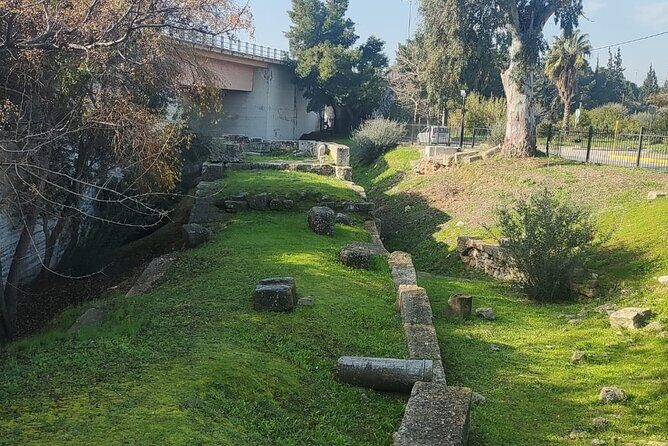
You begin with Iera Odos, the ancient Sacred Way linking Athens to Eleusis. The cool part is that you’re not learning about it from a book—you’re seeing surviving fragments connected to how people actually traveled and gathered.
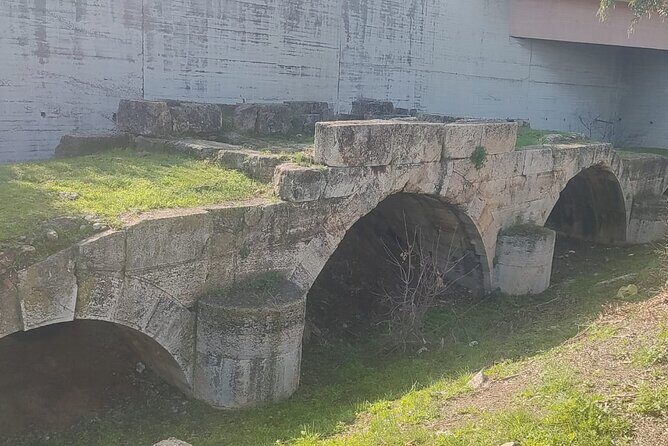
At the first stop, you’ll look at a part of the Sacred Way associated with a river crossing near the modern city area. A stone bridge once marked the crossing over the Kifisos River, and construction work for the Eleonas Metro Station uncovered remnants. Three piers survive, suggesting a larger bridge that likely had multiple arches. This is the kind of detail that makes ancient routes feel real: engineering meets religion, and the same physical choke points guided thousands of pilgrims.
The second stop is another view of the Sacred Way remnants in the Aigaleo area. Here, the focus shifts to what that path meant. You’re walking (briefly) along the route that connected the city to Demeter’s sanctuary, the setting for processions, hymns, and offerings tied to the goddess Demeter and her daughter Persephone. It’s brief, but it helps you “read” the day—each later Eleusis landmark lands in your mind with more meaning.
Stop 3: Monastery of Daphni’s UNESCO pause on the Sacred Way
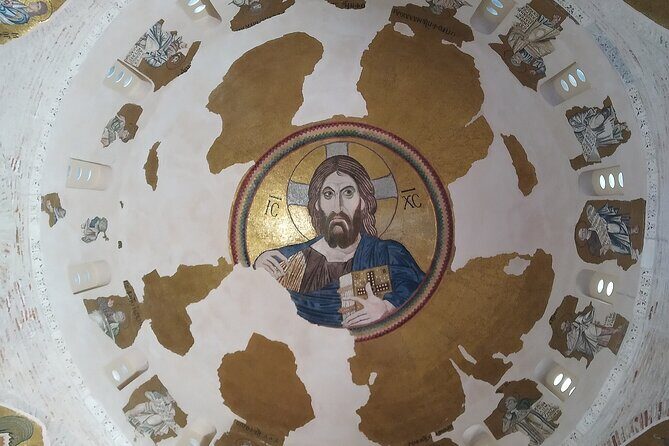
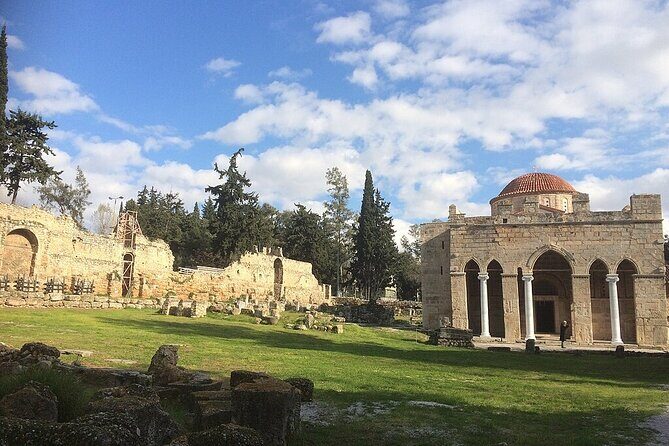
Next comes the Monastery of Daphni, a UNESCO World Heritage site along the Sacred Way corridor. This is a change of tone—and that’s a good thing. After thinking about ancient ritual paths, you step into an 11th-century Byzantine church known for its mosaics.
The big draw is the mosaic work, including the famous depiction of Christ Pantocrator in the dome. The monastery sits among cypress trees, so the setting helps you reset. Even if you’re primarily there for Eleusis, this stop adds variety and gives you a sense of how the same broader route kept carrying religious meaning through centuries.
Plan for about 30 minutes here. It’s enough time to look around without turning the day into a sprint.
Stop 3 (weekend access note): Aphrodite sanctuary in Skaramagkas
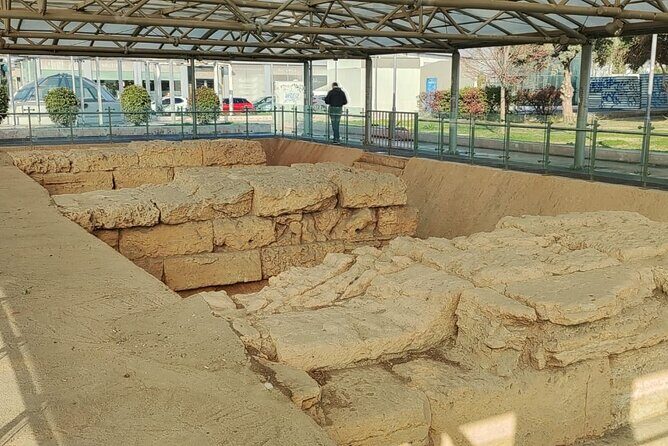
Then you make a quick stop at the Sanctuary of Aphrodite in Skaramagkas. This is tied to the love and beauty cult tradition, and it also connected to pilgrims traveling toward Eleusis during the broader Mysteries era.
Here’s the access detail that matters for expectations: the sanctuary is open to the public on weekends, but on weekdays you don’t get inside. Instead, you’ll admire the remains from the outside, which still works well for photos and understanding the setting—even if you can’t explore interior areas.
This stop is short, but it’s a smart reminder that pilgrimages aren’t only about one deity. The route and its surrounding sanctuaries show how ancient Greeks mixed myth, worship, and everyday travel.
You can also read our reviews of more tours and experiences in Athens





Stop 4: The Roman bridge near Eleusis—Hadrian’s engineering
As you approach Eleusis, you stop at a well-preserved ancient Roman bridge about one kilometer east of the Sanctuary of Demeter. Built from Piraeus limestone, it’s a sturdy structure that measures 50 meters long and 5.30 meters wide.
The bridge has a central section with four arches—two wider in the middle and two narrower at the ends—with inclined approaches on both sides. It dates to Emperor Hadrian’s reign around 125 AD and helped connect the Sacred Way with the Eleusinian Kephisos River.
This is one of those stops where the facts don’t just decorate the day—they explain the infrastructure behind the pilgrimage. When you understand the crossings and approaches, you can picture how processions and foot traffic moved through the landscape without turning it into a vague “ancient area” blur.
Stop 5: Eleusis Archaeological Site basics—Demeter, Persephone, and the big setting
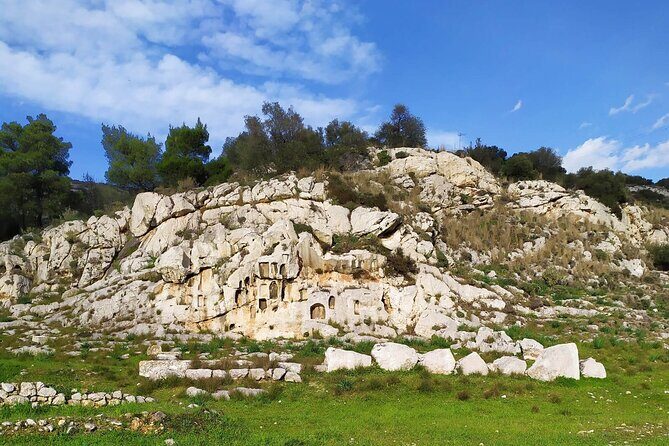
Now the focus becomes the Eleusis Archaeological Site itself. This is where the Mysteries center: rituals honoring Demeter and Persephone, set in a sanctuary complex that helped define ancient religious life.
You’ll have around 30 minutes for the site. That time is best used with the guide’s context in your head. Look for the major layout features—gateways, temple remnants, and altars—then connect them to what the driver-guide explains about the Mysteries.
A nice part of Eleusis is the atmosphere. The ruins sit with views toward the Saronic Gulf and rolling hills, so the space feels open rather than cramped. It helps you slow down and take in how monumental sites can still feel calm.
One practical detail: entry tickets for the archaeological site are not included in the tour price. There’s an additional entrance fee for archaeological sites and museums (listed as €10.00 per person). So if you budget ahead, you won’t get surprised at the end.
Stop 6: The Telesterion—where initiations happened
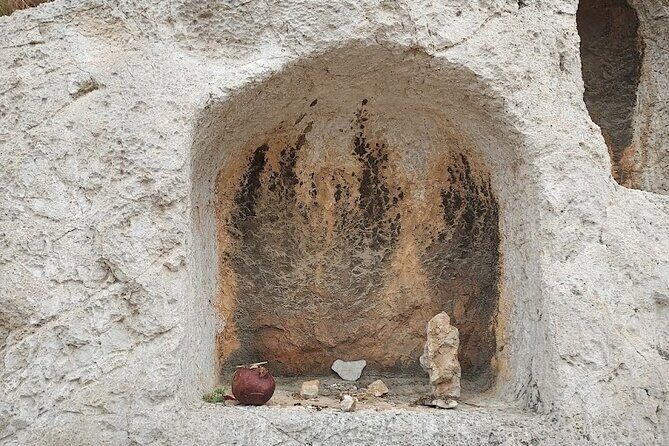
The Telesterion is the heart of the Eleusinian Mysteries: the grand hall used for initiation ceremonies honoring Demeter and Persephone. In a short on-the-ground stop, the guide’s job is to help you picture the scale and the purpose of the space.
You’ll have about 10 minutes here. That’s not long in absolute terms, but it’s timed well. The point isn’t to “finish” the site—it’s to stand at the most important ritual structure and understand why it mattered.
If you’re coming with even mild curiosity about ancient religious practice, this is the anchor moment of the day. The earlier Sacred Way context helps you see it as part of a journey, not an isolated ruin.
Stop 7: Great Propylaea—the ceremonial entrance to the sacred precinct
After Telesterion, the day shifts to the entrance monument: the Great Propylaea. This monumental gateway served as the big transition point into the sanctuary of Demeter and Persephone.
Built in the 2nd century CE under Emperor Marcus Aurelius, the architecture echoes the Acropolis Propylaea in its style. It’s a Doric-columned structure and a powerful way to understand the psychological setup of the Mysteries: you move from the everyday world into a sacred area with rules and meaning you don’t fully experience unless you’re inside the ritual space.
You’ll have about 10 minutes for this stop. It’s short, but that’s exactly how you should use it. Look up at what remains, then let the scale do the work.
Stop 8: Kallichoron Well—Demeter’s myth resting place
The Kallichoron Well is a myth-linked stop tied to Demeter’s search for Persephone. Tradition places Demeter resting here while looking for her daughter after Persephone’s abduction by Hades.
The well’s name refers to “well of the beautiful dances,” connected to stories about local women dancing to comfort the grieving goddess. You’ll see it as a symbolic location rather than a dramatic structure, so treat it like a storytelling stop.
This one also runs about 10 minutes. It’s ideal for stretching the day from “ruins and walls” into “myth and meaning,” which is what makes Eleusis more interesting than a standard archaeology loop.
Stop 9: The Ploutonion Cave—an Underworld entrance story
Next is the Ploutonion Cave, a sacred site dedicated to Hades (Plouton). In the Eleusinian imagination, this cave was believed to represent an entrance to the Underworld.
If you like how ancient Greeks used physical places to explain big concepts like death and rebirth, this stop delivers. Again, you’re not chasing big scenery—it’s more about the idea of a ritual geography, where a cave and a sanctuary work together in the story.
Time here is about 10 minutes. Keep your expectations realistic: this is a small stop that works best when your guide ties it to the descent and return themes.
Stop 10: Museum of Eleusis—art and offerings you can actually read
To finish the core story, you get the Archaeological Museum of Eleusis, located within the ancient site complex. This is where the day clicks from “what did it look like” to “what did people leave behind.”
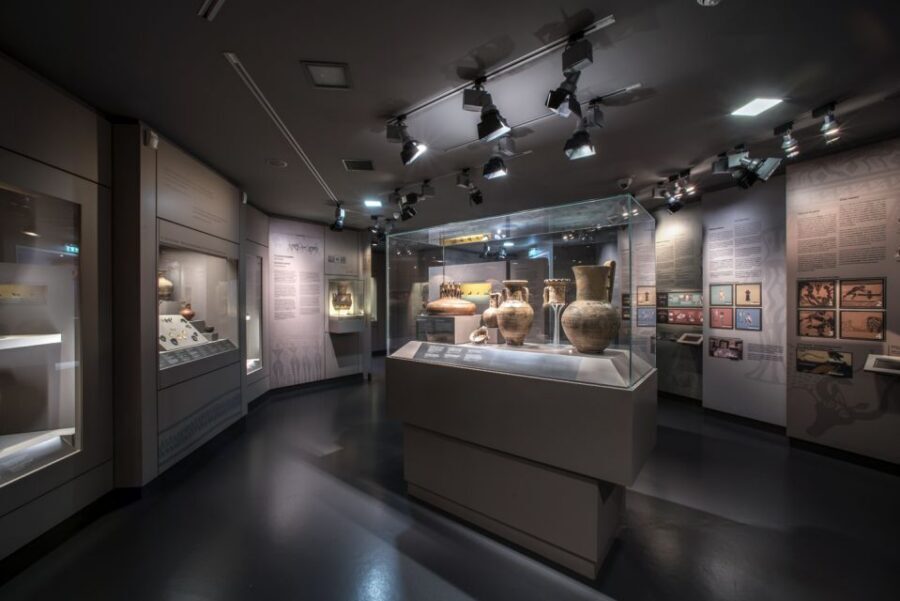
Expect artifacts linked to Demeter and Persephone, including statues and reliefs depicting scenes associated with the Mysteries. You’ll also see offerings and other objects that help you understand how ritual connected to art and daily life.
Plan on about 30 minutes here. It’s also where the entrance ticket matters again; the museum admission isn’t included, and the €10 per person entrance fee applies to archaeological sites and museums.
What makes the guide style matter on this tour
This tour gets high marks for a specific kind of tour leadership: a driver-guide who explains clearly in English and keeps the pace relaxed. One past experience highlighted Demetrios for being kind and for adding multiple stops so the full pilgrimage journey feels coherent. Another experience praised Pericles for the same combination—smart explanations plus a friendly manner that avoided the rushed feeling.
Even if you’re not an expert in ancient religion, that style helps. Eleusis is easier to enjoy when you know what you’re looking at and why it connects to Demeter, Persephone, and the Mysteries. Your guide’s job here is basically translation: turning stone layout and myth references into an actual story you can follow.
Value check: is $192.23 per person a fair deal?
At $192.23 per person, this is not a budget group tour. But you are paying for a private experience with several built-in comforts: pickup and drop-off, air-conditioned transport sized for your group, complimentary Wi‑Fi, bottled water, and an English-speaking driver-guide.
The biggest “extra cost” item is also predictable. Entrance fees for archaeological sites and museums are listed as €10 per person, and the tour notes that tickets for those specific areas are not included. Once you add that, your total cost is still often reasonable for what you get—especially when you compare it to paying for separate transport and separate guided explanations across multiple sites.
If your goal is a smooth, story-driven day where you don’t fight transit or crowd management, this price starts making sense. If you’re strictly cost-driven, you might consider self-guided options. But if you want clarity and comfort, the private format is the point.
Who this tour suits best
This one fits best if you:
- Want a private Athens-area day that follows the Sacred Way story in order
- Like mythology with real place context: Demeter, Persephone, Hades, Aphrodite
- Prefer a calm pace with an English guide doing the thinking for you
- Care about both ancient and Byzantine religious art (Daphni)
It may be less ideal if you want lots of independent free time, because the day is structured around a sequence of stops with set durations.
Should you book this Eleusis luxury tour?
I’d book it if you want Eleusis to feel like a journey. The Sacred Way route pieces at the start make the later ritual spaces at Eleusis land with more meaning, and the private guide style is built for a relaxed, readable day.
I’d think twice if you’re trying to keep costs ultra-low or if you only want the largest sites with long stays. This tour gives short, well-chosen looks across many key landmarks, so it’s best for people who enjoy guided pacing more than wandering for hours.
If you want a comfortable, English-guided run through Athens to Eleusis with practical pickup and the right context at the Telesterion and museum, this is a strong choice.
FAQ
How long is the Eleusis private luxury tour?
It runs about 4 to 5 hours, including travel time between stops.
What’s included in the price?
You get an air-conditioned vehicle, private transportation, bottled water, complimentary Wi‑Fi on board, and pickup/drop-off service. The tour also includes an expert English-speaking driver-guide. Mobile tickets are offered.
What is not included?
Entrance fees for archaeological sites and museums are not included (€10.00 per person is listed). A licensed guide to accompany you inside archaeological sites is also not included.
Do I get pickup and drop-off?
Yes. Pickup is available at designated locations, and the driver waits outside for hotel/apartment pickups. The tour ends at the original meeting point. Port pickup options are available during checkout.
Are there tickets and admissions at every stop?
Some stops are listed as free for admission, while the Eleusis archaeological site and museum have admission fees not included. Your guide-driver will handle what’s possible during the day.
Is there access to the Sanctuary of Aphrodite at Skaramagkas on weekdays?
The sanctuary is open to the public on weekends. On weekdays, access to the interior is not permitted, but the tour includes a brief outside stop for photos and viewing the remains.
What group size does the vehicle support?
Groups of 1–4 use luxurious sedan vehicles, and groups of 5–7 use comfortable mini vans.
What language is the tour delivered in?
The driver-guide provides the tour in English.
What happens if weather is bad?
The experience requires good weather. If it’s canceled due to poor weather, you’ll be offered a different date or a full refund. Free cancellation is available up to 24 hours in advance for a full refund.

More Private Tours in Athens


More Tours in Athens



More Tour Reviews in Athens
- All Day Cruise -3 Islands to Agistri,Moni, Aegina with lunch and drinks included
★ 5.0 · 4,958 reviews