REVIEW · ATHENS
Private Tour of Apostle Paul’s Footsteps in Ancient Corinth
Book on Viator →Operated by Colours of Greece · Bookable on Viator
Paul’s trail still feels close. This private Athens-area day trip follows Paul’s footsteps through key Corinth sites, starting at the Isthmus and ending at St Paul’s modern church. You get the big ideas—how Corinth worked as a Roman city and why Paul’s message landed where it did—without turning the day into a lecture hall.
I especially love the private feel: your guide can slow down for questions and pacing, and you’re not stuck following a fast-moving group. I also like the practical side—hotel or port pickup, an air-conditioned ride, and bottled water—so you can focus on the places rather than logistics. The one drawback to plan for is that archaeological site and museum entrance fees are not included, so your total cost will be a bit higher once you arrive.
In This Review
- Key highlights to know before you go
- Private Paul-to-Corinth Tour: what you’re paying for
- Isthmus of Corinth and the Diolkos: start with engineering, not just ruins
- Kenchreai (Kechrees): Paul’s seaport and the name Phoebe
- Ancient Corinth’s Agora and the Bema: where the message met everyday life
- Museum of Ancient Corinth: artifacts that make the ruins feel real
- Acrocorinth fortress: the climb that explains the city’s power
- St Paul’s Church in Corinth: the modern ending with a strong visual
- Guide names, pacing, and why private feels different
- What to expect from timing, walking, and entrances
- Lunch, local food, and how to use your guide’s recommendations
- Who this tour is best for (and who should consider another option)
- Book it or skip it: my quick decision guide
- FAQ
- How long is the Private Tour of Apostle Paul’s Footsteps in Ancient Corinth?
- What’s included in the tour price?
- Are entrance fees included for the archaeological sites and museum?
- Do you offer pickup from my hotel or the port?
- Is this tour private?
- What language is the tour in?
- Is airport pickup included?
Key highlights to know before you go
- Private, 1–4 person vehicle style: sedan for small groups, air-conditioned comfort, and flexible pacing
- Corinth Canal + Diolkos: start with geography and ancient engineering before you hit the ruins
- Bema and the Agora areas: Paul’s message ties to the city’s everyday spaces, not just big monuments
- Acrocorinth fortress views: climb above the ancient city for a sweeping sense of why the site mattered
- Museum stop built in 1932: artifacts help translate what you see outside into daily life and worship
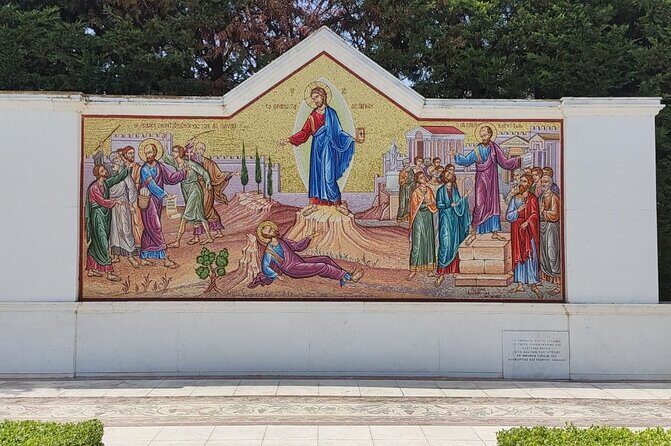
- End at St Paul’s Church: a modern mosaic (by Pastorutti and Tsotsonis) gives the final emotional “button”
Private Paul-to-Corinth Tour: what you’re paying for
This isn’t just a transfer to Ancient Corinth. You’re paying for a private guide experience built around a clear theme: where Paul likely walked, preached, and connected with people in Corinth.
At $169.03 per person for a 5 to 6 hour day (travel time included), the value depends on two things you’ll feel immediately: (1) you’re not rushing, and (2) you’re getting interpretation at each stop. In practice, that usually means your guide is ready to answer the questions you actually care about—Bible context, Roman Corinth life, or why certain ruins matter.
The tour also comes with very real comfort extras. You get hotel and port pickup/drop-off, WiFi on board, and bottled water. For groups of 1–4, you’ll travel in a sedan (not a crowded bus), which makes tight timing easier and helps you get in and out without drama.
You can also read our reviews of more private tours in Athens

Isthmus of Corinth and the Diolkos: start with engineering, not just ruins
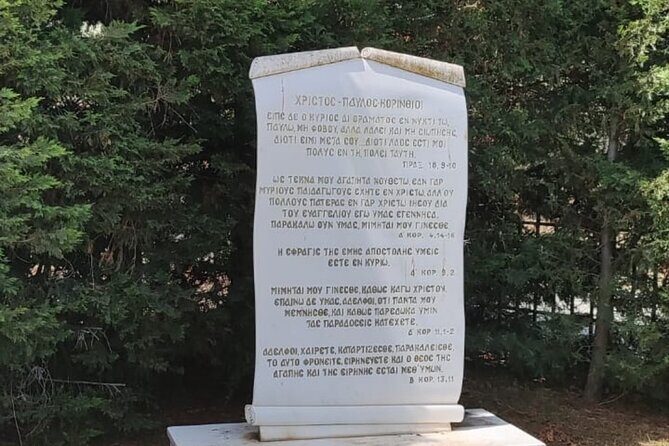
Your day opens at the Isthmus of Corinth, the narrow strip that links mainland Greece to the Peloponnese. Even if you’re not a “history of waterways” person, this stop works because it explains the geography that shaped Corinth’s power and its connections.
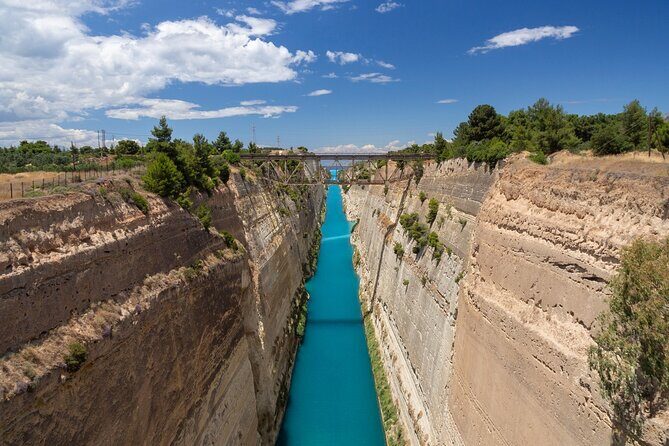
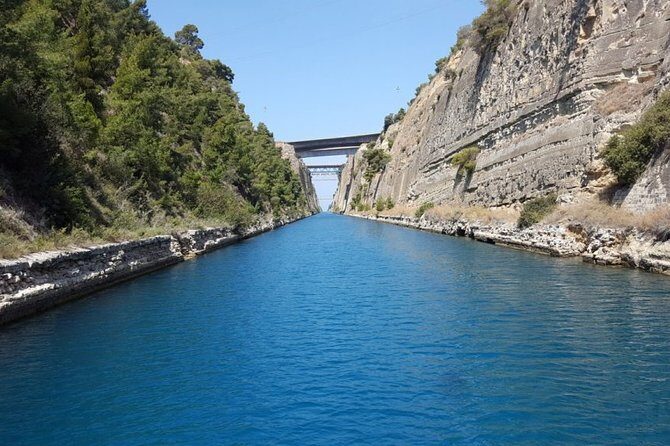
Then comes the Corinth Canal, cut through the isthmus since 1893. You’ll see steep limestone walls and clear blue water. It’s a strong visual reminder that this region has always been about routes—who could move goods and people faster, and who got stuck with longer travel.
Right after, you’ll visit the Diolkos, an ancient ship-hauling trackway that predates the canal by more than two thousand years. What I like about this stop is how it frames Corinth as a practical hub, not only a spiritual destination. You’re walking on the remains of a shortcut that saved time and danger for ships that otherwise would have had to go around the Peloponnese.
Practical note: this part is usually an easy warm-up before the heavier walking later. Also, since admission for these first stops is listed as free, you’re not hit with entrance costs at the start.
Kenchreai (Kechrees): Paul’s seaport and the name Phoebe
From the canal area, you’ll head to Kenchreai (Kenchreai), the eastern port of Corinth. This is where the story becomes more personal because it’s tied to Paul’s movements—where ships left, where letters traveled, and how early Christian networks extended beyond the city walls.
The important detail here is that Paul disembarked around 51 A.D. during his first visit. Later, from this same port area, he set sail for Ephesus. You’ll also hear about the letter to the Romans being entrusted to a prominent local Christian woman named Phoebe, identified as a deaconess.
Even though only modest traces remain, this stop helps you think differently about Corinth. It’s not just stone and columns. It’s movement: arrival points, departure points, and the people who carried messages.
Ancient Corinth’s Agora and the Bema: where the message met everyday life
Next you’ll step into the heart of Ancient Corinth at Archaia Korinthos. This is the centerpiece for Paul’s story, and it’s also where a good guide makes the difference between seeing ruins and understanding a place.
At the Bema, a raised platform in the central area, Paul is believed to have addressed the community and stood trial before the Roman proconsul. That detail matters because it connects faith to public life. Paul wasn’t speaking in a secluded chapel. He was in the civic space of a Roman city.
You’ll also spend time around the Agora, the marketplace area. This is where Paul’s letters connect to daily Corinth. Think trade, local chatter, power structures, and the cultural collision between pagan beliefs and Christianity—the contrast that early Christians faced in a very normal, very human way.
Two things I think you’ll appreciate here:
- You get the feeling of scale. Corinth was prosperous and busy, not a small backwater.
- You’re positioned to understand why Paul’s message would have sounded both challenging and urgent.
One more useful angle comes from guides who point out connections around this area, such as references tied to Aquila and Priscilla (people associated with tentmaking) and the civil servant Erastus. Your guide may highlight these types of names as you move through the Agora area, which helps you map real people onto the stones.
Entrance note: Ancient Corinth admission isn’t included, so plan on the entrance fee listed for archaeological sites.
Museum of Ancient Corinth: artifacts that make the ruins feel real
After the outdoor site, you’ll continue to the Archaeological Museum of Corinth. This stop is a lifesaver for anyone who feels like ruins can blur together after a few hours.
The museum was built in 1932, and it preserves finds from Corinth excavations. I like museums like this because they help you fill in what outdoor ruins can’t show. The collections cover long timelines, including prehistoric finds and items linked to the Sanctuary of Asklepios.
In plain terms: the outdoor site answers where things were. The museum helps you understand what those things meant day to day—religious objects, daily-life material culture, and the city’s artistic side across centuries.
Museum admission isn’t included, so you’ll pay on top of the tour price. If you’re budgeting, it helps to remember that the listed entrance fee covers archaeological sites and the museum.
- All Day Cruise -3 Islands to Agistri,Moni, Aegina with lunch and drinks included
★ 5.0 · 4,958 reviews



Acrocorinth fortress: the climb that explains the city’s power
Then it’s time for Acrocorinth, the fortified acropolis above the city. This is often the moment where the trip clicks into place.
Acrocorinth isn’t one “time period” ruin. It’s layered. The fortress was used and rebuilt through Greek, Byzantine, Frankish, Venetian, and Ottoman eras, so you see the long arc of control over the same commanding height.
You’ll also hear about the Temple of Aphrodite on the site, known for a community of up to 1,000 priestesses. Even if you’re not taking notes on ancient religious systems, that number lands, because it shows how faith and politics were intertwined in Corinth’s long-standing culture.
The views are part of the point too. Standing above the ancient city helps you understand why anyone would fight for this ground. It’s also where many guides bring the day’s story together: Paul’s Corinth wasn’t just a place on a map; it was a city shaped by power, religion, and routes.
Be ready for uneven terrain and stair-like walking here. Comfort shoes are not optional.
St Paul’s Church in Corinth: the modern ending with a strong visual
Your day ends at Apostolos Pavlos Church (Church of Saint Paul), a modern church located in the heart of ancient Corinth. This stop is a thoughtful contrast to all the older stones you’ve been seeing.
Inside, you’ll find a striking mosaic by artists Pastorutti and Tsotsonis, depicting Paul’s journey and mission in the city. It’s one of those moments where the story becomes visual and personal, especially if you’ve spent the afternoon connecting names to places.
If you like closure in your visits, this final church stop does a nice job of giving you something to look at and sit with for a few minutes before heading back.
Guide names, pacing, and why private feels different
This tour’s success lives in the guide. The guides you might get are a big mix of personalities, but the consistent thread from real experience is clear: the best guides make the day feel both safe and meaningful.
I’ve heard from people who had Nick, Ruslan, George, Dennis, Giannis, Johnny, Fortis, and Fotis as their guides. Common wins show up again and again:
- On-time pickup and good communication (especially helpful if you’re coming from a port or tight schedule)
- Patient, helpful driving, including extra care when someone needed assistance getting in and out of the vehicle
- Safe driving in narrow streets and tight corners
- Answers that connect Scripture with historical context at each stop
Some guides also manage the rhythm of the day in a practical way. One person noted regular restroom breaks and time to refill water bottles. Another shared that the guide helped them keep going at their own pace while still covering the key sites.
One practical tip: when you meet your driver/guide, ask what their plan is for photo time and museum timing. In a private tour, that question often leads to smarter pacing for your group.
What to expect from timing, walking, and entrances
This is a full half-day to near-day trip. The official duration is about 5 to 6 hours, and travel time from Athens is included. That matters because it helps you plan meals and don’t accidentally schedule something right after pickup.
Walking is spread across multiple areas:
- Isthmus and Diolkos areas tend to be lighter
- Ancient Corinth and the museum add steady walking
- Acrocorinth is the bigger physical push due to stairs and uneven ground
Entrance fees are the main add-on. Archaeological sites and the museum have a fee of €15.00 per person. The good news: you’ll know about it upfront, so it’s easier to budget.
The tour includes bottled water, and there’s WiFi on board. Still, bring a hat and sunscreen. Greece can be hot and sunny even when the morning starts pleasantly.
Lunch, local food, and how to use your guide’s recommendations
Food isn’t part of the included tour stops, but your guide can be a shortcut to a good meal. In one experience, George recommended a locally prepared Mediterranean lunch featuring lamb chops and Greek salad, plus dessert.
That’s the pattern I’d follow: if you want lunch, ask your guide for a nearby option with quick service that fits the rest of your schedule. Since this is private, you’re not locked into one set meal time.
Who this tour is best for (and who should consider another option)
You’ll get the most from this tour if you like:
- seeing how Bible events connect to real places
- learning how Roman and pagan culture shaped the environment Paul worked in
- walking through ruins with names, not just stones
It’s also worth it if you’re not Christian. One person described themselves as not Christian, but still found the sites and history compelling. That makes sense here, because the day is built from real civic spaces (Agora, Bema area) and real geographical factors (canal and ports), not only religious themes.
Where it might disappoint you: if you expect a strictly religious script-based session with lots of Bible reading only. The tour is built as a historical footsteps experience. You’ll likely connect faith to location, but you won’t feel like you’re attending a church service.
Book it or skip it: my quick decision guide
I think this is a strong booking if you want a high-touch private Corinth day with enough structure to keep you focused. You get pickup, comfort, and a themed route that hits the places tied to Paul’s presence—port area, Agora/Bema, museum, Acrocorinth, and the modern church.
Book it if:
- you want flexibility and pacing from a private guide
- you care about mapping Paul’s story to real geography
- you’re okay paying the entrance fee on top of the tour price
Skip it or consider pairing it with something else if:
- you only want a short stop at a few sites (this day is built as a full route)
- you’re trying to keep costs extremely tight, because museum and site entrances add up
If your goal is a meaningful, practical day around Ancient Corinth, this one is a very solid use of your time.
FAQ
How long is the Private Tour of Apostle Paul’s Footsteps in Ancient Corinth?
It runs about 5 to 6 hours, and travel time is included.
What’s included in the tour price?
The price includes an air-conditioned vehicle, WiFi on board, professional English-speaking tour drivers, bottled water, and hotel/port pickup and drop-off.
Are entrance fees included for the archaeological sites and museum?
No. Entrance fees are not included and are listed as €15.00 per person for archaeological sites and the museum.
Do you offer pickup from my hotel or the port?
Yes. Pickup is offered from hotels/apartments and from the port. The driver waits at the entrance with a sign with your name at the port.
Is this tour private?
Yes. It’s a private tour, and only your group participates.
What language is the tour in?
It’s offered in English.
Is airport pickup included?
Airport pick-up is optional and costs an additional €50.00 per booking.

More Private Tours in Athens


More Tours in Athens

More Tour Reviews in Athens
- All Day Cruise -3 Islands to Agistri,Moni, Aegina with lunch and drinks included
★ 5.0 · 4,958 reviews