REVIEW · ATHENS
Visit of the Acropolis with an official guide in Spanish
Book on Viator →Operated by Toptoursgreece · Bookable on Viator
If your Athens visit feels rushed, this helps.
You get a structured look at the Acropolis’ UNESCO story with an official guide speaking Spanish, plus a wireless audio system so you don’t have to strain your ears at the back. I like that the tour is built around meaning, not just monuments, and you’ll understand how the site shifted through Greek, Byzantine, and Ottoman eras. One catch to plan for: entry to the Acropolis isn’t included, and you’ll need to buy your own ticket for the 8:00–9:00 time window.
You’ll cover the big hitters by foot, with a smart route that keeps the walking reasonable for a 2-hour visit (about 2 hours total). The group stays small, up to 27 people, and it ends near the top so you can linger for photos after the guided part.
In This Review
- Quick Take: Key things you’ll care about
- Why the Acropolis reads better with a Spanish, official guide
- Timing, meeting point, and how the route plays in real life
- Stop-by-stop: what each monument is really teaching you
- 1) Acropolis core: the myth, the setting, and the big picture
- 2) Parthenon: perfection, political change, and what survived
- 3) Propylaea: the marble gateway and the “war funnel” idea
- 4) Temple of Athena Nike: victories, memory, and the right moment
- 5) Erechtheion: Caryatids, sacred olive tree, and divine neighbors
- 6) Herod Atticus Odeon: Rome’s theater with real use today
- 7) Temple of Asclepios: how the ancients treated illness
- 8) Theatre of Dionysus Eleuthereus: acoustics, marble, and first performances
- How much the guide style matters (and how to spot a good one)
- Price and value: what $44 gets you, and what it doesn’t
- Who this tour suits best (and who should consider another option)
- Should you book this Acropolis Spanish guide walk?
- FAQ
- What language is the guide?
- How long is the Acropolis visit?
- Is the Acropolis entrance ticket included?
- Where do I meet the tour?
- What time does the tour start?
- Does this tour include transfers?
- Is the ticket mobile?
- How big is the group?
- Is the tour suitable for everyone in terms of walking?
- Can I bring a service animal?
Quick Take: Key things you’ll care about
- Spanish-only official guide: explanations are clear, not improvised.
- Wireless audio: easier listening, especially in open areas.
- Built-in stops for maximum learning: Parthenon, Propylaea, Erechtheion, and more.
- A “context first” approach: myths, architecture details, and historical changes.
- Ends at the Acropolis top: you get time for photos on your own.
Why the Acropolis reads better with a Spanish, official guide
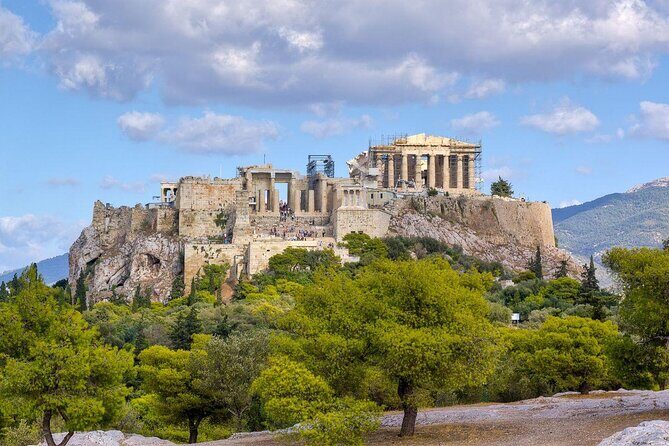
The Acropolis is one of those places where it’s easy to stare at stone and miss the point. With an official Spanish guide, the site stops being a checklist. You’ll get the historical and mythological context that explains why each building exists where it does, and why certain details matter.
I especially like the “how to look” part. The Parthenon isn’t just a famous photo spot. You’ll hear how the Greeks used optical refinements—tiny adjustments you only understand once someone points them out. When you learn what to watch for, the sculptures and lines make more sense than they do on your own, where it’s too tempting to only snap pictures.
The Spanish-only format is also a practical benefit. If you’re working with Spanish, it’s a relief: no switching languages, no waiting for summaries, no awkward half-translation.
You can also read our reviews of more guided tours in Athens


Timing, meeting point, and how the route plays in real life
This tour starts at 8:30 am at the Greek National Tourism Organisation Information Point on Dionysiou Areopagitou 18. It ends at Theorias 21 on the route near the top of the Acropolis, so you can take advantage of free time right where the views are best.
Two hours sounds short, but it’s a good match for the Acropolis. You’re not trying to “win” the site. You’re getting a guided framework, then using the remaining time to wander a bit and photograph what you actually understand.
Here’s what you should plan for:
- You’ll walk the whole thing (no transfers).
- You should have moderate physical fitness—the Acropolis is steep and you’ll be outside.
- You’ll be issued a mobile ticket, so keep your phone charged and your ticket handy.
With a maximum group size of 27 travelers, the guide can keep momentum without turning it into a rush-job. It’s also the kind of group size where questions can happen, not just at the very end.
Stop-by-stop: what each monument is really teaching you

The tour is built like a guided walk through the Acropolis’ main layers: architecture, religious purpose, political change, and what those changes did to the buildings.
1) Acropolis core: the myth, the setting, and the big picture
The visit starts with the historical, mythological, and cultural context of the space. That opening matters. The Acropolis isn’t random hilltop scenery—it’s a curated civic and sacred landscape. Once the guide frames it, the rest of the walk feels less like sprinting between monuments and more like following a story line.
This is where you learn how ancient Athenians imagined the world around them—and why later empires cared enough to alter these structures.
2) Parthenon: perfection, political change, and what survived
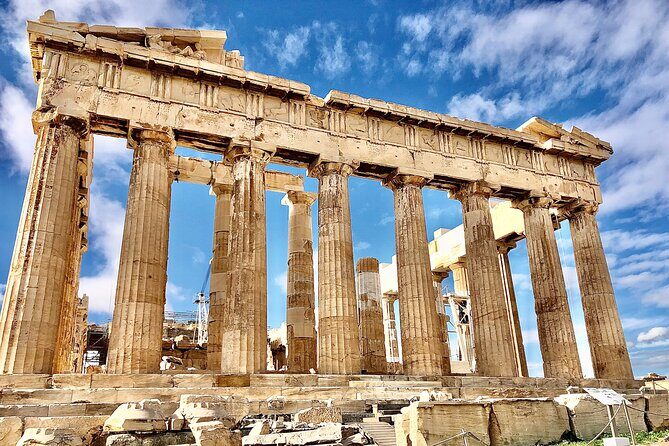
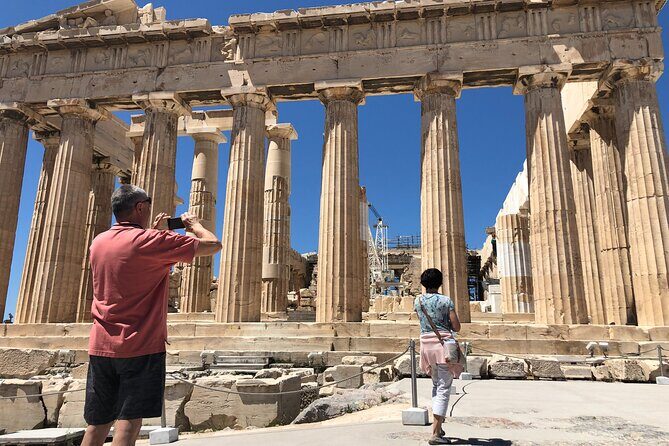
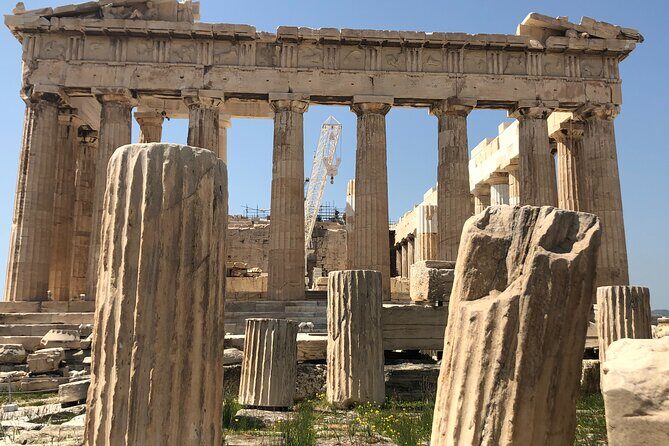
You’ll spend time on the Parthenon, described as one of antiquity’s most important buildings for its harmony and perfection. You’ll also cover what’s easy to miss: the phases of its life after construction.
The guide explains:
- how it was built and how construction phases shaped what you see,
- how it became a church during the Byzantine period,
- how it turned into a mosque during the Ottoman occupation,
- the decoration story, including looting, and the restoration work underway or in place.
You’ll also hear about the structure’s “optical refinements.” In plain terms: the building is designed so its lines and proportions look right to human eyes, not just to geometry.
A practical note: the Parthenon area can feel busy and sun-heavy. Wireless audio helps, but I’d still keep water and sun protection in mind.
- All Day Cruise -3 Islands to Agistri,Moni, Aegina with lunch and drinks included
★ 5.0 · 4,958 reviews




3) Propylaea: the marble gateway and the “war funnel” idea
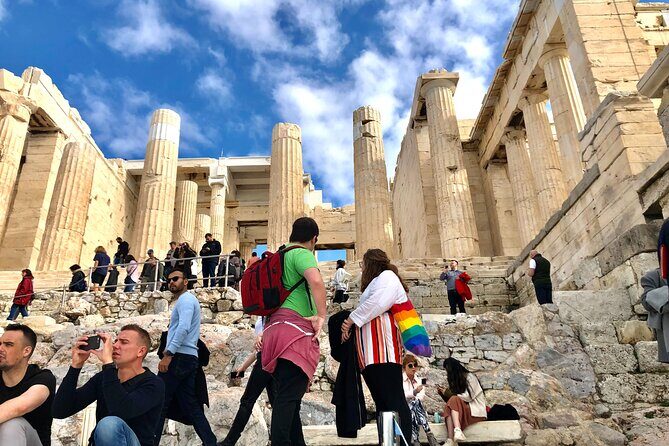
Next up is Propylaea, the monumental entrance built with marble to impress both pilgrims in the past and visitors today.
What I think makes this stop worthwhile is the explanation of strategy. Because of its position and topography, Propylaea could work like a funnel in times of war. That turns an “entrance building” into a piece of defense and planning, not just decoration.
You’ll also learn why it uses different types of columns. Those choices weren’t accidental—they’re part of the architectural message of power and control.
4) Temple of Athena Nike: victories, memory, and the right moment
Between Propylaea and the main sacred core, you’ll reach the Temple of Athena Nike (the goddess Athena Victorious).
The tour frames it as an Athenian work created after victories against the Persians. The purpose is simple and powerful: to remember the culminating moment of Greece’s golden age and pass that memory along to the next generation.
If you’re the type who likes architecture with a reason behind it, this stop lands well. It’s not just pretty—it’s a historical statement in stone.
5) Erechtheion: Caryatids, sacred olive tree, and divine neighbors
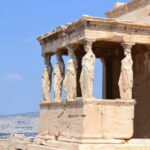
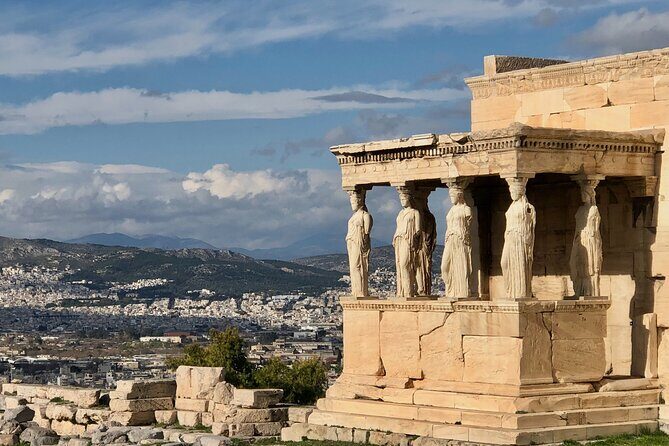
Then comes Erechtheion, often the most photogenic stop because of the Caryatids—the female-shaped columns.
This building is also a “who worshipped here” lesson. You’ll hear it was consecrated to multiple divinities, including:
- Athena,
- Poseidon,
- and Erectios (listed here as the first mythological king of Athens).
One detail that helps you remember the place: the guide talks about why the olive tree is sacred. You can see the stones, but hearing the religious meaning gives you a reason to care about what’s nearby and what’s referenced symbolically.
This is one of those stops where the guide’s style matters. In the past on similar tours, I’ve seen guides keep the group engaged by asking questions and nudging you to imagine how people moved through this sacred space. If your guide is the kind who does that, Erechtheion becomes more than a photo moment.
6) Herod Atticus Odeon: Rome’s theater with real use today
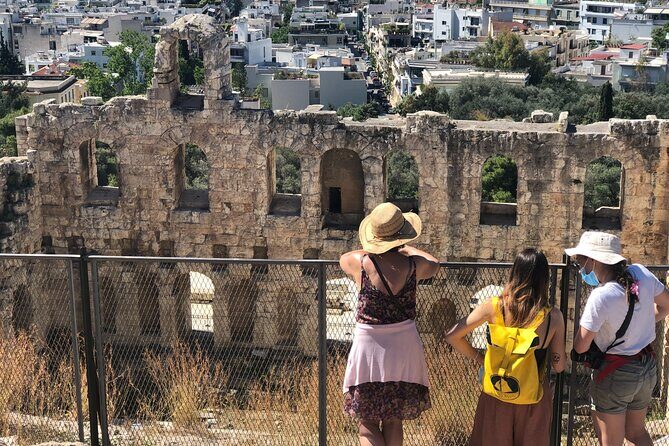
You’ll also visit the Herod Atticus Odeon, with a capacity of about 5,000 spectators. It was built by a Roman governor and dedicated to his wife Regina.
What makes this stop special is the continuity. The guide notes it is the only fully restored ancient building in use today, and it hosts outstanding performances during the annual festival in Athens.
Even if you don’t catch a show, the odeon gives you a sense of how the Greeks and Romans kept using performance spaces—turning public life into spectacle.
7) Temple of Asclepios: how the ancients treated illness
Next is the Temple of Asclepios, dedicated to the god of medicine. You’ll learn about ancient ideas of care and recovery—specifically how people in Athens cured patients and what votive offerings they gave in thanks.
This is a refreshing shift from war, politics, and architecture into everyday human needs: sickness, hope, gratitude. It’s also a reminder that the Acropolis wasn’t only for ceremonies and ceremonies of power.
8) Theatre of Dionysus Eleuthereus: acoustics, marble, and first performances
Finally, you’ll reach the Theatre of Dionysus Eleuthereus, described as one of the oldest theaters in the world and built entirely of marble. It has a capacity of about 17,000.
The tour connects design to experience by explaining how the theater’s choice of location on the slope helped guarantee desired acoustics. In other words: the building didn’t just look impressive—it helped people hear and share stories at scale.
You’ll also hear which authors debuted important works here for the first time, including Euripides, Aeschylos, Sophocles, and Aristophanes. That list makes the place feel less like ruins and more like the beginning of major art traditions.
How much the guide style matters (and how to spot a good one)
On these tours, the guide can make or break your experience. I like this setup because it’s structured around key stops and gives the guide room to connect dots: myth to architecture, construction to politics, art to worship.
From the Spanish-guide names you may see referenced for this style of tour—Efi is one, and others like Ari, Simon, and Maria show up too—there’s a consistent theme: passionate delivery, clear explanations, and interactive pacing. Some guides also help with practical issues like getting tickets handled correctly, so you don’t lose time when entry is required in a narrow window.
If you want the best day, look for these signs when the tour starts:
- the guide asks questions and invites the group to picture what happened,
- explanations move beyond dates into meaning,
- you’re given time to look and take photos without feeling herded.
Wireless audio helps, but it can’t fix a tour that moves too fast. Good guides don’t just talk—they pace.
Price and value: what $44 gets you, and what it doesn’t
The price is $44.03 per person, and the visit runs about 2 hours. That’s not a “cheap add-on,” but it’s also not pricing that feels inflated for what you get.
What you’re paying for:
- an official Spanish guide,
- a wireless audio system,
- state taxes,
- and a guided walk covering all the main monuments listed (not just a quick stop at Parthenon).
What you still must budget for:
- Acropolis entrance is not included.
- You need an entry ticket for a specific 8:00–9:00 time window.
If you already plan to visit the Acropolis anyway, the tour value is stronger because the guide compresses the learning. You pay to remove the guesswork and save time in figuring out what you should notice.
If you’re the type who enjoys reading on your own and doesn’t care about historical context, you might not feel the same value. But if you want the site to “click” while you’re standing there, this format usually wins.
Who this tour suits best (and who should consider another option)
This tour is a good fit if you:
- want an official guide and clear explanations in Spanish,
- like architecture and want help understanding what you’re seeing,
- prefer a structured 2-hour route instead of wandering aimlessly on your own,
- can handle outdoor walking with moderate physical fitness.
It’s also useful for families and mixed groups because the pacing and audio system can keep everyone engaged. It’s not described as wheelchair-accessible or step-free, so if mobility is a concern, you’d want to check carefully before committing.
And yes, service animals are allowed.
Should you book this Acropolis Spanish guide walk?
I’d book it if you want the Acropolis to make sense fast. The Spanish-only official guidance plus wireless audio is a solid combo for a place where crowd noise and sun can make self-guided listening frustrating. The stop order also makes sense: you start with context, then move through the gateway, the big sacred buildings, and end with performance and medicine.
Skip it (or at least think twice) if:
- you strongly prefer a self-paced visit with no guided structure,
- you’re already fluent in the details and don’t want a guided interpretive layer,
- you don’t want to deal with the separate entry ticket time window.
If you’re visiting Athens for the first time and you want your Acropolis day to feel organized rather than overwhelming, this is one of the more practical ways to do it.
FAQ
What language is the guide?
The tour is exclusively with an official guide in Spanish.
How long is the Acropolis visit?
It lasts about 2 hours (approx.).
Is the Acropolis entrance ticket included?
No. Entrance is not included, and you need your own ticket for entry between 8:00 and 9:00.
Where do I meet the tour?
Meet at the Greek National Tourism Organisation Information Point at Dionysiou Areopagitou 18, Athina 117 42.
What time does the tour start?
The start time is 8:30 am.
Does this tour include transfers?
No. The visit is done on foot, and there are no transfers.
Is the ticket mobile?
Yes, you receive a mobile ticket.
How big is the group?
The tour has a maximum of 27 travelers.
Is the tour suitable for everyone in terms of walking?
It’s noted that travelers should have moderate physical fitness, since you’ll walk around the Acropolis.
Can I bring a service animal?
Yes. Service animals are allowed.



More Guided Tours in Athens

More Tour Reviews in Athens
- All Day Cruise -3 Islands to Agistri,Moni, Aegina with lunch and drinks included
★ 5.0 · 4,958 reviews