REVIEW · ATHENS
2 Days Herodotus Tour – Marathon, Thermopylae, Delphi, Thebes, Plataea, Salamis
Book on Viator →Operated by GREECE TAXI · Bookable on Viator
Two days, five big story beats. This private Herodotus-themed route connects Marathon, Thermopylae, Delphi, Thebes, and Plataea with the kind of in-between driving time that lets you actually absorb what you’re seeing. You get door-to-door pickup from Athens or Piraeus, plus an audio documentary that fills the gaps as the scenery changes.
What I like most is the pace. You’re not stuck in the rigid sprint of a large group, and you can linger where the mood fits—battlefield views, museum rooms, even a quick coastal stop near Schinias. A second standout is the mix of sites: you’re not only looking at monuments, you’re seeing how the story threads through geography, like the pass at Thermopylae and the oracle landscape around Delphi.
One thing to plan for: most museums and archaeological sites require separate tickets, and your driver is not a licensed guide inside the sites. So if you want expert, commentary-style walking inside Delphi or elsewhere, you’ll need to arrange an archaeologist guide separately.
In This Review
- Key things to know before you go
- Private pickup, AC comfort, and how the driving schedule really works
- Marathon: the burial mound, the museum stops, and running-country perspective
- Thermopylae’s battlefield pass and the Hot Gates baths area
- Mount Parnassus overnight: why the second day feels easier
- Delphi Archaeological Museum, the site, and the included Tholos of Athena Pronaia
- Thebes museum time and Plataea’s 479 BC battlefield timeline
- Perama and the Salamis ferry line: your final views before wrapping up
- Price and value: is $694.56 per person a fair deal for two days?
- Who should pick this tour, and who should skip it
- Should you book the Herodotus route from Marathon to Plataea?
- FAQ
- What time does the tour start?
- Is pickup and drop-off included?
- Is this a private tour?
- What vehicle options are available?
- Are museum and site entrance fees included?
- Is there an overnight stay, and can the tour arrange lodging?
- Can I cancel for a full refund?
- Does the driver act as a licensed guide inside sites?
Key things to know before you go
- Private pickup and drop-off from your Athens or Piraeus address at 8:00am start time
- Battlefield-to-oracle flow from Marathon to Thermopylae to Delphi to Thebes to Plataea
- Photo-and-walk flexibility with stops designed for your own pace rather than a strict rush
- Audio documentary during drives, so you’re not just staring out the window
- Tholos of Athena Pronaia is included, while other museums have separate admission
- Overnight on or near Mount Parnassus can make day two easier and less stressful
Private pickup, AC comfort, and how the driving schedule really works
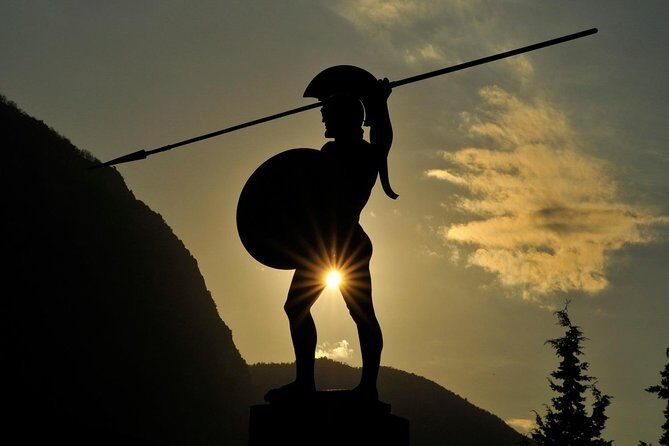
This is set up as a private experience—meaning it’s just your group in the vehicle, not a shared tour bus with strangers. You’ll start at 8:00am and get picked up from your hotel or apartment in Athens or Piraeus (or another location if you request it). The tour includes air-conditioned, clean vehicles, and the logistics are handled for you: parking, toll roads, fuels are part of the deal.
The biggest practical win is the “middle” time. You’ll drive between Marathon-area stops, then to Thermopylae, and then onward toward Delphi. Those stretches matter because they connect the dots. A good driver uses that time well—here, you also have an audio documentary with historical details while you ride.
One more reality check: the driver is a pro at getting you there, but they’re not described as a licensed museum or archaeology guide. You should expect to explore the archaeological sites and museums at your own pace once you step out.
You can also read our reviews of more tours and experiences in Athens

Marathon: the burial mound, the museum stops, and running-country perspective
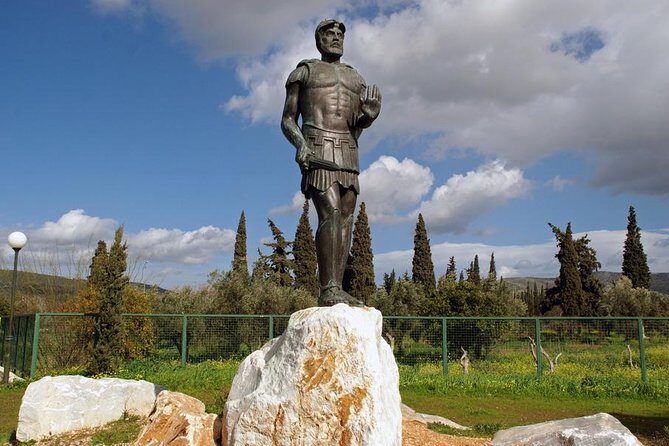
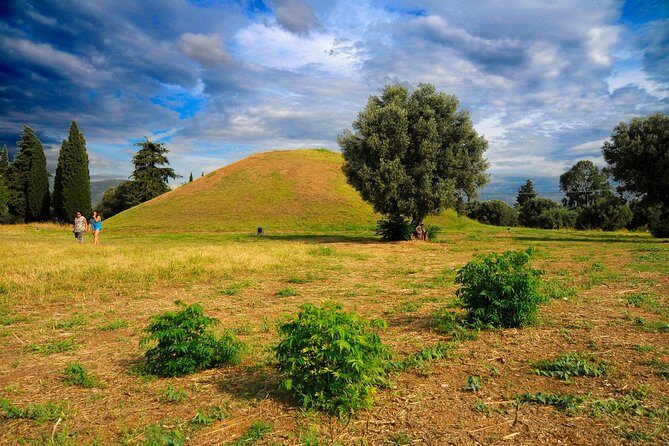
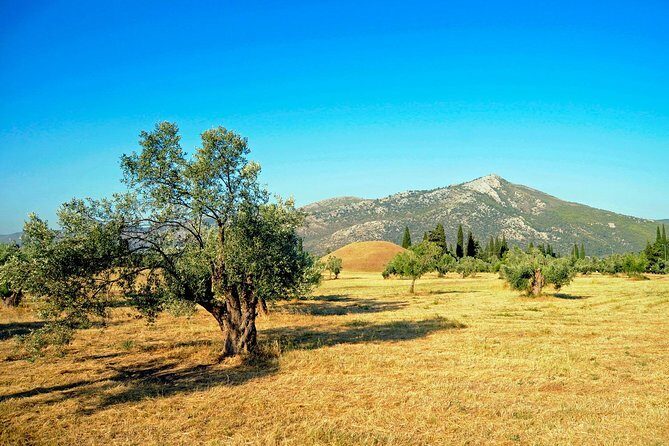
Day 1 starts in the Marathon area, where the ground itself carries meaning. You’ll visit the Marathon Tomb, a burial mound about 10 meters high, located roughly a kilometer west of Marathon beach. It’s a powerful start because it frames the story as something tied to people and loss—not just “a battle happened here.”
Ticket wise, the Marathon Tomb stop notes that admissions are not included. The tomb ticket is listed as 6€ reduced 3€, and it includes the Marathon Museum. If you’re planning budget, factor this in early: Marathon’s museum time is part of the logic of the first day.
Next you’ll get some breathing room with a short stop at Schinias, a coastal resort area about 40 km northeast of Athens. It’s brief (around 15 minutes) and admission is free. Think of it as a reset: legs out, quick photos, and a taste of the sea air before you go back to ancient-history mode.
Then comes the Archaeological Museum of Marathon, about five kilometers from Marathon Bay. Here, museum time is listed at 30 minutes, and admission is included. That matters if you want an efficient, high-payoff museum stop without spending the day guessing which finds matter most.
A quick extra stop follows at Leoforos Marathonos—the area linked to the modern marathon course, where the starting line is in Marathon town and the finish line is in Athens’ Olympic Stadium. It’s a clever way to show how the Marathon legacy keeps looping into modern life.
You also pass by Lake Marathon, a reservoir formed from Marathon Dam. The tour treats it as part of the broader Marathon region story, including when it served as Athens’ primary water supply (from 1931 until 1959, before water from Lake Yliki became available). Even if you’re not a water-utilities person, it’s the kind of detail that makes the area feel lived-in, not staged.
Thermopylae’s battlefield pass and the Hot Gates baths area
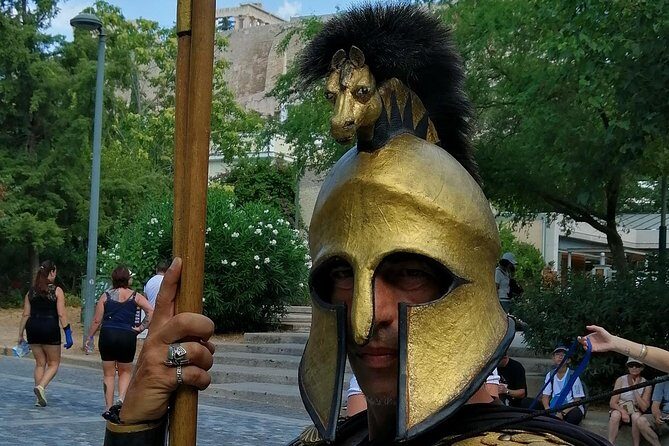
Thermopylae is where the story gets cinematic, mostly because the terrain does the talking. You’ll visit the Battlefield of Thermopylae, with about an hour of time and free admission. The tour highlights the famous conflict between Greek forces (especially Spartans) and the Persians, and it notes that Thermopylae is a narrow pass along the east coast—why it kept showing up in Greek history as a choke point for armies.
Right beside the monument area is the Thermopylae Museum. This is listed as about one hour, with admission not included and priced at 3€. If you like to match what you read in your head with what you see in front of you, the museum helps. The location is also practical: you don’t have to travel far for it.
Another short stop follows at Loutra Thermopilon, also free, about 30 minutes. The Hot Gates baths are tied to the myth of entrances to Hades in Greek mythology, and the area is known for hot springs. Even if you skip any deeper soak—this is not “spa day”—the setting gives you a sense of why ancient writers and locals kept returning to the same place.
Planning note: Thermopylae can feel like it’s all about monuments and views, so if you prefer guided walking and narration inside sites, be ready to do some self-sorting. The tour gives you time, but not a licensed on-site guide.
Mount Parnassus overnight: why the second day feels easier
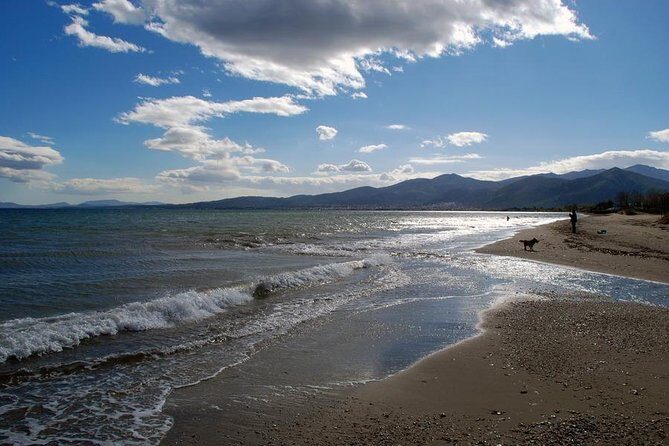
After Thermopylae, the route shifts toward central Greece and the Delphi region. You’ll be driven via Mount Parnassus, which towers above Delphi and is associated with multiple layers of Greek myth—sacred to Dionysus and Apollo, tied to the Muses, and known in the mythology of the region.
The tour includes an overnight stay “on the slopes” in a traditional village setting. That’s not just a romantic line—it’s strategic. If you’re already going to sleep near the Delphi side of the mountains, you cut down on extra early-morning travel stress.
The operator says it can arrange accommodation in selected boutique or 3/4-star hotels with breakfast, at an additional cost (listed as 90€ per double room and 110€ per double room on weekend holidays; exact pricing varies by situation). The driver’s room is complimentary, but if you do your own hotel reservation you need to reserve an extra room for the driver.
If you’re the type who likes to get the most out of daylight, this overnight step is a big reason the tour works as a two-day plan.
Delphi Archaeological Museum, the site, and the included Tholos of Athena Pronaia
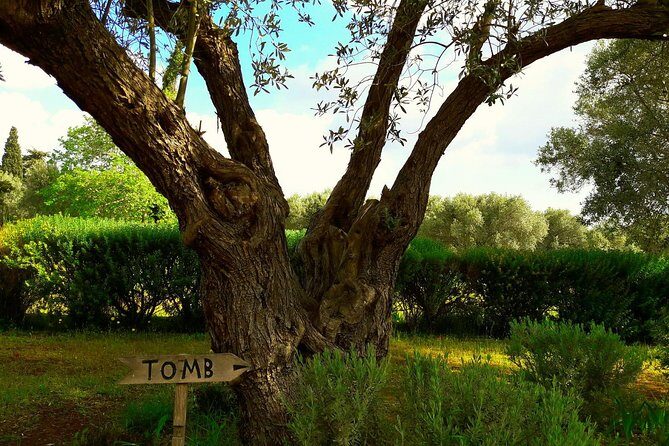
Delphi is the big name on this route, and it’s also the place where you can lose time if you don’t stay focused. The tour balances that by building in both a museum stop and a site exploration.
First up is the Delphi Archaeological Museum. Time is listed at about one hour, and admission is not included. The museum is described as one of the most important in Greece, with collections tied to the Delphic sanctuary and the oracle of Pythia. If you like sculpture, statues, and the smaller objects that explain how a sanctuary worked, this is where you get context fast.
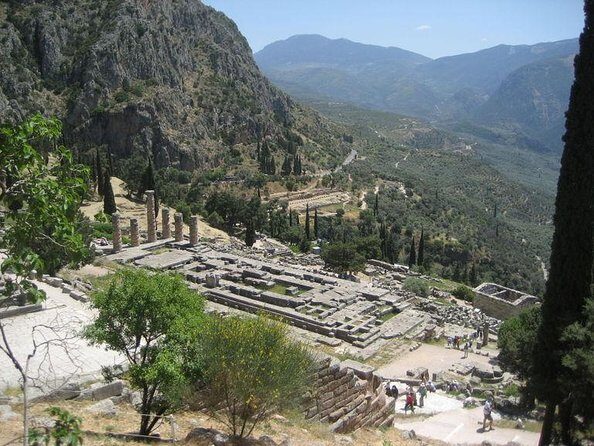
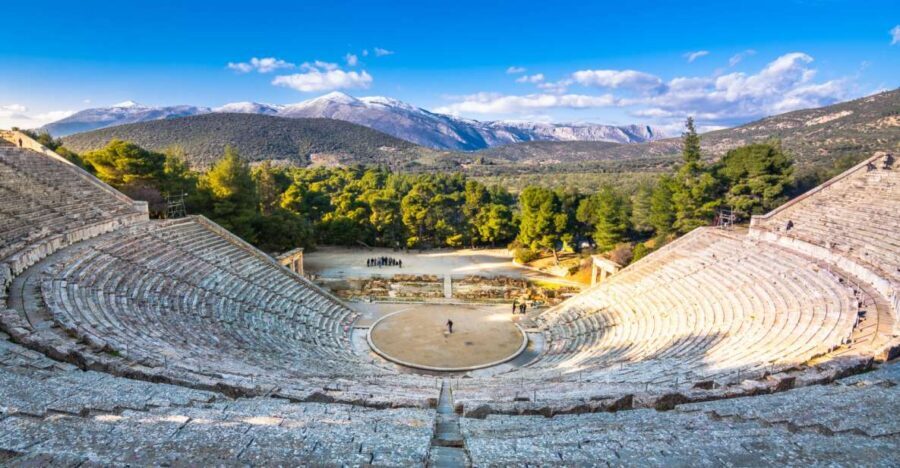
Then comes the Delphi Ancient Town / archaeological sanctuary area. You’ll have about 1.5 hours, and tickets are not included. The tour lists ticket prices: 20€ summer, reduced 10€ in winter (the wording indicates the site and museum ticket together). The site is UNESCO-listed and is framed as the seat of Pythia, with the stone monument known as the omphalos marking the idea of Delphi as the center of the world in ancient Greek thought.
One of the nicest aspects here is the location logic. Delphi sits on the southwestern slope of Mount Parnassus overlooking the coastal plain and valley of Phocis. Even without a guide in your ear, the geography helps your brain understand why this place mattered.
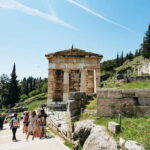
Next is the Tholos of Athena Pronaia, which is a short stop (about 30 minutes) and admission is included. The tour specifies some good details: it’s a circular building created between 380 and 360 BC, with 20 Doric columns around the exterior (interior columns described as Corinthian). It’s inside the sanctuary of Athena Pronaia, so it adds another layer beyond the main Delphi sanctuary.
Quick practical caution: your driver won’t be walking you through Delphi as a licensed guide. If you want deeper explanation of inscriptions, building history, or myth connections, you may prefer hiring an archaeologist guide in advance.
- All Day Cruise -3 Islands to Agistri,Moni, Aegina with lunch and drinks included
★ 5.0 · 4,958 reviews


Thebes museum time and Plataea’s 479 BC battlefield timeline
Day 2 moves from Delphi into Boeotia and then into the Plataea storyline. The first museum stop is the Archaeological Museum of Thebes, about one hour, with admission not included. The tour lists general pricing: 6€ and 3€ reduced/winter.
This museum is framed as a big keeper of rare or unique collections from excavations around Boeotia, spanning from Paleolithic through Post Byzantine periods. That wide time range can be a plus if you like seeing how a region keeps changing through the centuries, not just in the Greco-Persian era.
Then it’s on to Plataea. Here, the tour shifts into battle mode again, with you visiting the battlefields in Plataea and traveling back to 479 BC. You’ll also see Gargathia spring, identified as the place where the battle beginning is linked. Even though you’ll be outside and self-guided, the time is set for the kind of walking where you can stop, look at the ground, and connect it to what you’ve just read.
After the battlefield time, the route runs via Mount Kithaeron toward Elefsina (seaside), then follows the coastal road to Piraeus. This matters because it turns the day into a “story exit,” not just a transfer between distant points.
There’s also a passage included about Eleutherai on the old Athens–Thebes National Road, and the old fortress area known as Gyftokastro is mentioned. Eleutherai is connected to Dionysus Eleuthereus and to Athens taking control in the sixth century BC. It’s not a long deep-history stop, but it’s the kind of named geography that makes a route feel more real and less like a checklist.
Perama and the Salamis ferry line: your final views before wrapping up
The last listed stop is Perama—a port city that’s part of Athens’ urban area and the Piraeus regional unit. The tour gives it a 30-minute slot and notes the name comes from the Greek word for passage.
Perama also sits on the Saronic Gulf coast near the Aegaleo mountains. The tour frames this as a finish point close to the Salamis ferry line. What this means in practice: you end your day with access to the harbor area and a gateway toward Salamis, but the plan you’re given doesn’t describe a full guided visit to Salamis itself.
So if Salamis is your top priority, you’ll want to double-check whether you’re looking for just the ferry-access finish or an actual island sightseeing day.
Price and value: is $694.56 per person a fair deal for two days?
At $694.56 per person for a two-day private route, the real value question is: what do you get that you’d otherwise pay for separately?
What’s included:
- Private AC vehicle with high cleanliness
- Professional English-speaking experienced tour driver
- Pickup and drop-off from your Athens or Piraeus address
- Audio documentary while you travel
- Parking, toll roads, and fuels
- Accommodation for the driver (not for you)
What costs extra:
- Admission fees at multiple stops (Marathon Tomb, Thermopylae Museum, Delphi Museum and Delphi site ticket, Thebes Museum)
- Gratuities
- Your overnight hotel on the Parnassus side (if you use the arranged option)
Here’s the practical way to think about it. You’re paying for private routing across multiple high-value ancient-history sites in a short time window. If you try to do Marathon, Thermopylae, Delphi, and Plataea by yourself with public transport and taxis, the travel time and coordination grind tends to erase the “cheap” part of doing it on your own.
The key cost variable is how you handle admission tickets. In this plan, some entrances are included (notably the Tholos of Athena Pronaia and the Marathon museum stop), while others are not. So your final out-of-pocket admission cost depends on which ticket options you choose at Delphi (summer vs winter pricing is stated) and what you decide to pay for reduced rates.
If you’re traveling as a small group and you want the freedom to pause for photos and actually stand on battle-ground viewpoints instead of racing through, this price can feel reasonable for what it replaces: a lot of individual transport planning.
Who should pick this tour, and who should skip it
I’d point you toward this experience if you:
- Want a private route that moves fast enough to fit two days, but not so fast you can’t breathe
- Love the Greco-Persian Wars story thread and want key sites spaced in a logical order
- Prefer flexible stop time, where you can spend more time on the parts that click for you
I’d hesitate if you:
- Want a true guided lecture inside every museum and archaeological area. Since the driver is not described as a licensed site guide, you’ll do a lot of self-guided reading and observing.
- Are very price-sensitive on admissions and lodging add-ons, since several major stops require separate tickets and the overnight is extra.
One encouraging human detail: in feedback about this operator, Nikolaos comes up as a driver who’s described as both informative and accommodating—exactly what you want when you’re spending two days focusing on history and geography.
Should you book the Herodotus route from Marathon to Plataea?
Yes, if you want a high-value private story route through some of Greece’s most famous Greco-Persian War settings, with smart pacing and the comfort of not managing transport yourself. The included audio guidance helps you feel oriented while you ride, and the stop mix (battlefields plus museums plus key Delphi structures) keeps it from turning into only rocks and views.
But book with eyes open. Bring a plan for admissions at Marathon, Thermopylae, Delphi, and Thebes, and expect to explore inside many sites on your own unless you hire an archaeologist guide separately.
FAQ
What time does the tour start?
It starts at 8:00am.
Is pickup and drop-off included?
Yes. Pickup and drop-off from/to your hotel or apartment in Athens or Piraeus is included, and you can request another location.
Is this a private tour?
Yes. Only your group participates.
What vehicle options are available?
You can choose among Sedan/SUV (up to 3 adults or family of 4), Minivan (1 to 7 persons), and Minibus (up to 14 persons). Price varies by group size or vehicle type, and children up to 11 are listed as free in the group setups.
Are museum and site entrance fees included?
Not generally. Admission fees for Marathon, Thermopylae, Delphi, and Thebes are listed as not included. The Tholos of Athena Pronaia is listed as included, and some specific stops (like certain battlefield areas and baths) are free.
Is there an overnight stay, and can the tour arrange lodging?
Yes. The plan includes overnight on the slopes of Mount Parnassus in a traditional village, and the operator can arrange boutique or 3/4-star hotels with breakfast for an additional cost. The driver’s room is complimentary.
Can I cancel for a full refund?
You can cancel up to 6 days in advance for a full refund, with the exact cutoff based on local time.
Does the driver act as a licensed guide inside sites?
No. The driver is not described as a licensed tourist guide to accompany you inside archaeological sites or museums. If you want a licensed archaeologist guide for the sites, you need to hire one separately.


More 2-Day Experiences in Athens


More Tours in Athens


More Tour Reviews in Athens
- All Day Cruise -3 Islands to Agistri,Moni, Aegina with lunch and drinks included
★ 5.0 · 4,958 reviews