REVIEW · ATHENS
From Athens: Delphi and Meteora 2-Day Guided Tour
Book on GetYourGuide →Operated by Key Tours · Bookable on GetYourGuide
Two UNESCO sights in 48 hours.
What makes this tour fun is the combo: Delphi’s sacred ruins in the morning light, then Meteora’s cliff monasteries with sky-high views. I especially like how the guides turn the sites into stories you can picture fast, and how the bus routing helps you spend more time on the actual places. One possible drawback: the day at Delphi can feel rushed, and weather can lower visibility at Meteora.
The best part is that you’re not doing logistics math in your head. You get pickup from central Athens, a comfortable, air-conditioned ride, a real guide, hotel in Kalambaka, and entry fees for Delphi plus two Meteora monasteries.
A quick note on the vibe: it’s very organized. Guides I saw highlighted in feedback include Haroula, Marianna, and Angelike, and they tend to keep the pace moving so you can see a lot without totally burning out.
In This Review
- Key highlights before you go
- Delphi’s sacred ground: Temple of Apollo and the ancient theater
- What the drive through central Greece does for your trip
- Kalambaka night: the base that makes Meteora easier
- Meteora monastery day: climbing into the views (and dealing with weather)
- Dress rules at the monasteries (this is where people get caught)
- Leonidas at Thermopylae: a short stop with real weight
- Hotel, meals, and the included-value math
- Food reality check
- Guides and group rhythm: what your day feels like
- Bus comfort and driving style
- Timing and pace: what to expect from the schedule
- Price and logistics: is $271 a fair deal?
- Should you book the Delphi and Meteora 2-day tour?
- FAQ
- What sites are included on this 2-day tour?
- Where do I stay overnight?
- What meals are included, and what is not?
- Do I need to pay an extra hotel tax?
- What should I wear to enter the Meteora monasteries?
- Is wheelchair access available?
Key highlights before you go
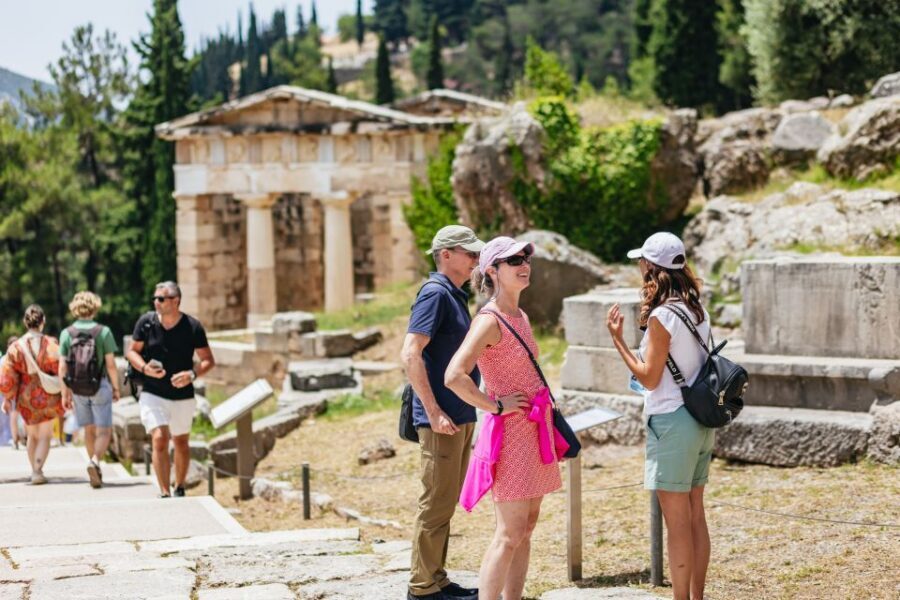
- Temple of Apollo and Delphi’s theater: the big-picture context makes the ruins easier to understand fast.
- Guides who tell the mythology and the history in plain language, like Haroula’s humor and Marianna’s storytelling.
- Meteora monastery visits with valley views: you’re up on the rock towers, not just looking from a distance.
- Leonidas at Thermopylae: a short, meaningful stop on the way back to Athens.
- Included hotel in Kalambaka plus one dinner and one breakfast: fewer decisions after a long travel day.
- Green travel add-on: the tour includes a carbon offset program to reduce your footprint.
Delphi’s sacred ground: Temple of Apollo and the ancient theater
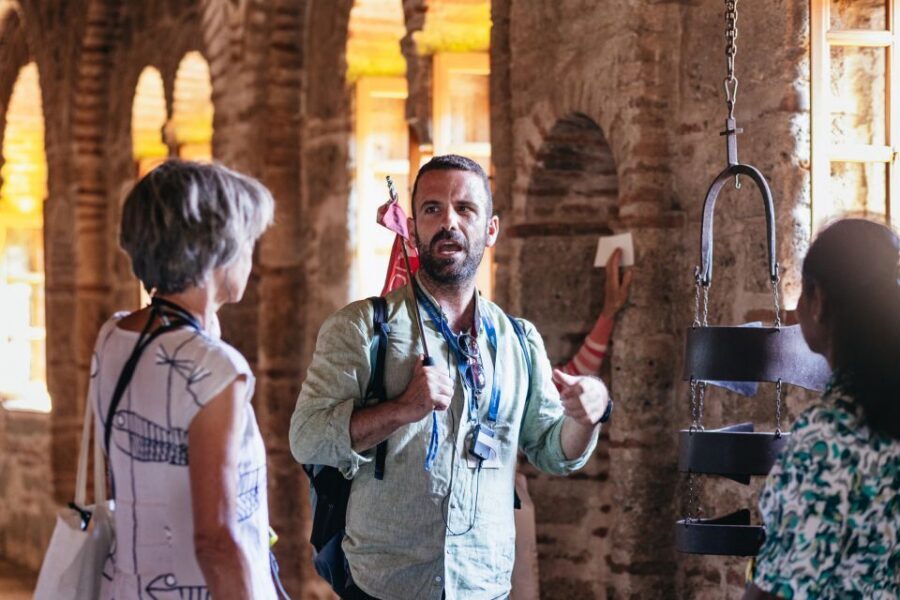
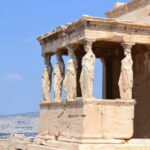
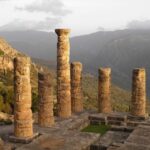
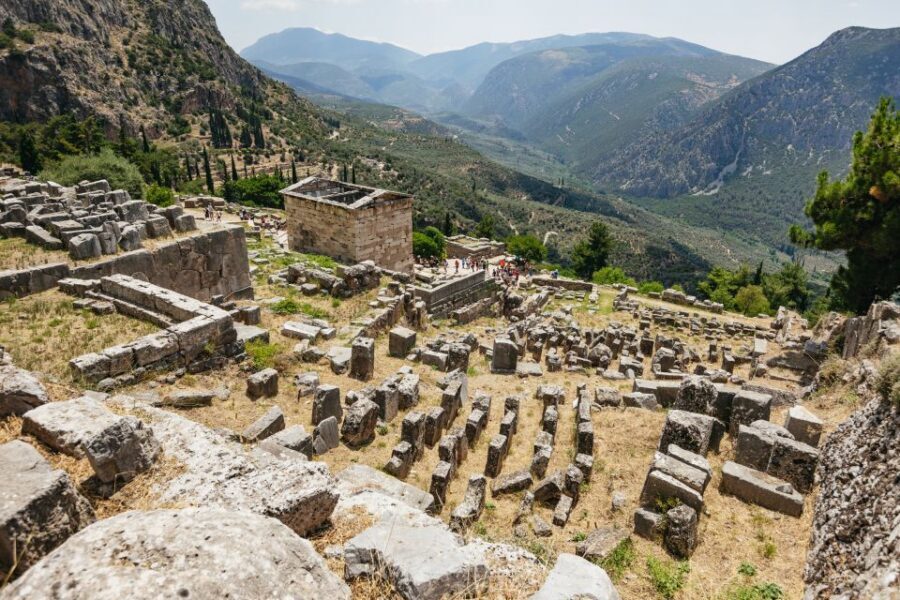
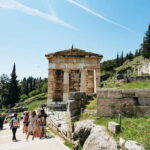
Delphi is one of those places where the stones feel like they have a voice. The tour focuses on the Delphi Archaeological Site, including the Temple of Apollo—linked to the Oracle of Delphi and the Pythia foretelling the future.
You also get the ancient theater area and the open space around it. This theater could hold about 5,000 spectators, and it hosted plays, poetry readings, and festivals. That detail matters because it helps you stop seeing it as just “ruins” and start imagining people gathering, speaking, and performing here.
Don’t miss the athletic side of Delphi either. The tour includes a look at the stadium, where the Pythian Games—a predecessor to the modern Olympics—were held every four years. It’s a great pairing with the theater: you see that Delphi wasn’t only spiritual. It was also a stage for competition and community.
Practical tip: wear comfortable shoes and plan for sun and heat. Even when you’re moving quickly, you’ll cover enough ground to want proper footwear.
You can also read our reviews of more guided tours in Athens
What the drive through central Greece does for your trip
This is not a quick hop with minimal scenery. You leave Athens and roll through the region with stops along the way, passing cities such as Thebes, Levadia, and Arachova.
I like this part because it sets you up for the right mood. You’re not just arriving “cold” at Delphi. You’re getting familiar with the geography—valleys, olive trees, and mountain roads—so when the ruins appear, they feel like part of a larger story.
Time planning is also part of the value. Even though it’s a long day, the structure keeps you from losing hours to basic stuff like travel transfers. Feedback also points out that rest breaks are scheduled, though some people felt the toilet stops could be a bit long. If you’re sensitive to pacing, use those breaks, then settle in for the guided time.
Kalambaka night: the base that makes Meteora easier
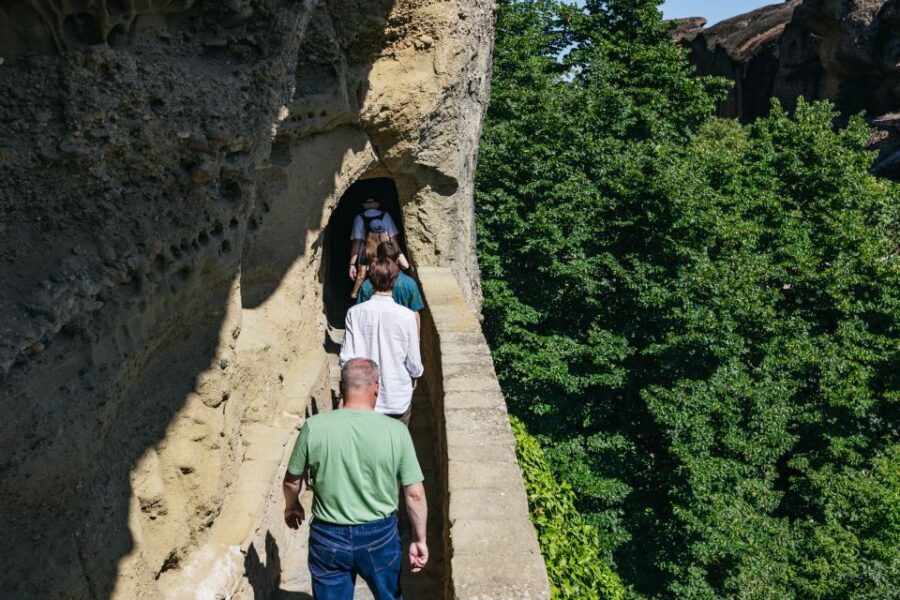
After Delphi, you head to Kalambaka, a town known for gardens and big views of the Meteora rock formations. You stay overnight here—so you wake up close to the monasteries rather than doing an exhausting same-day round trip from Athens.
That overnight is one of the smartest choices in the whole plan. Meteora works best when you can get there in good light and avoid the worst crowd crush. Having the hotel base in Kalambaka also reduces how much you’re stuck on the bus.
Your hotel is 3-star or 4-star, based on the option you choose. Dinner and breakfast are included, and you’ll be able to start the next morning without hunting for food right away. Some rooms are simple rather than fancy, which is normal for a one-night stop.
Money note: hotel accommodation tax is not included. It’s paid directly at the hotel: €10 per room per night for 4-star, €5 per room per night for 3-star.
Meteora monastery day: climbing into the views (and dealing with weather)
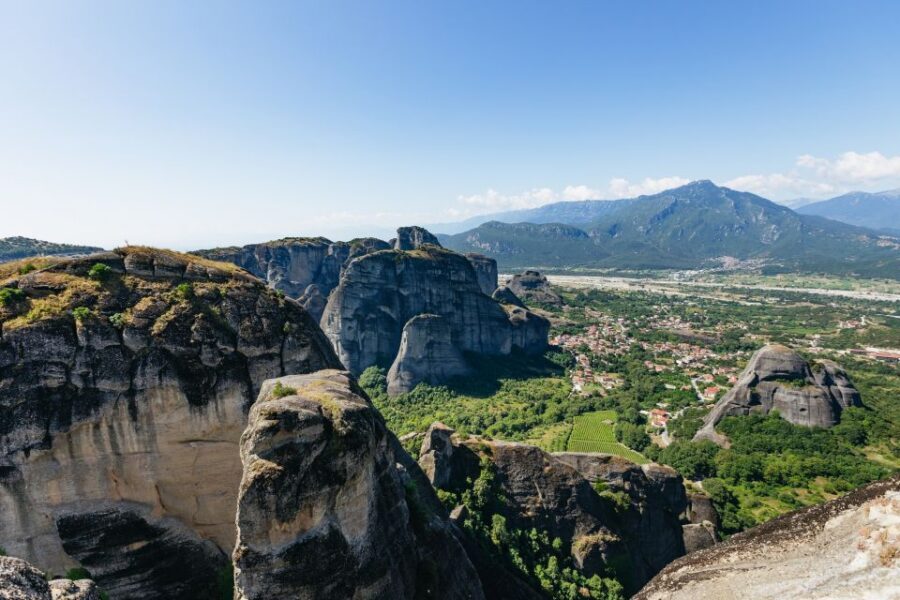
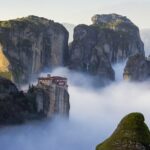
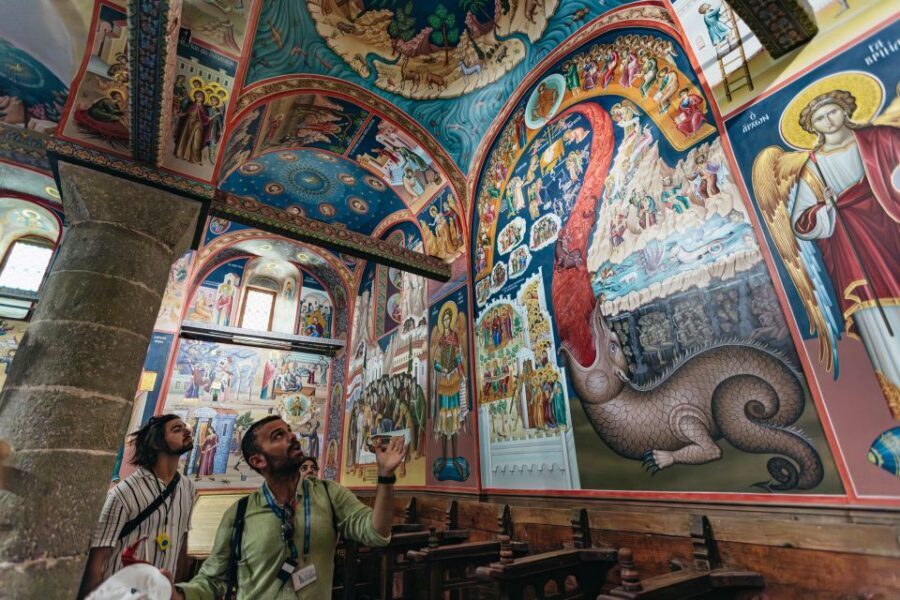
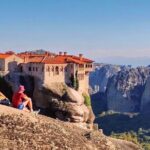
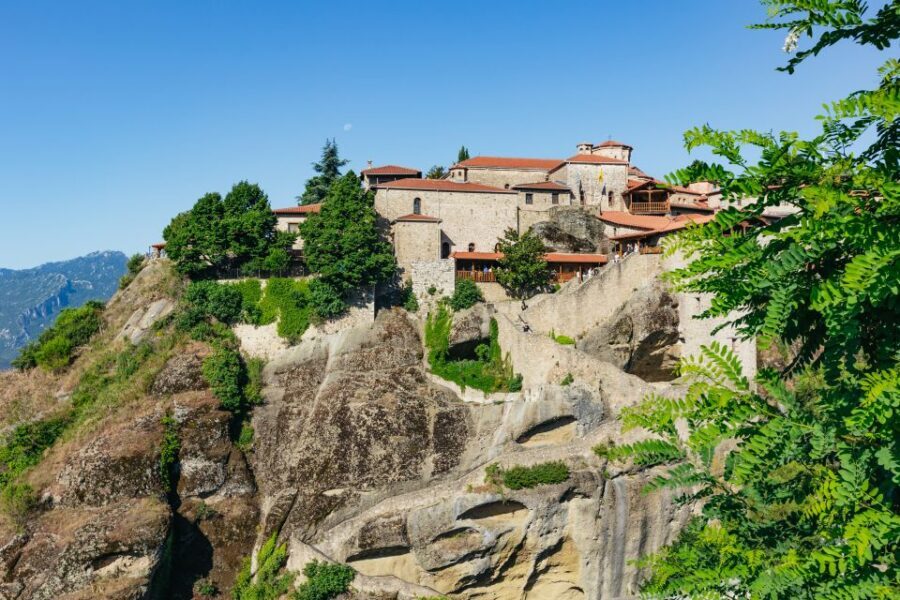
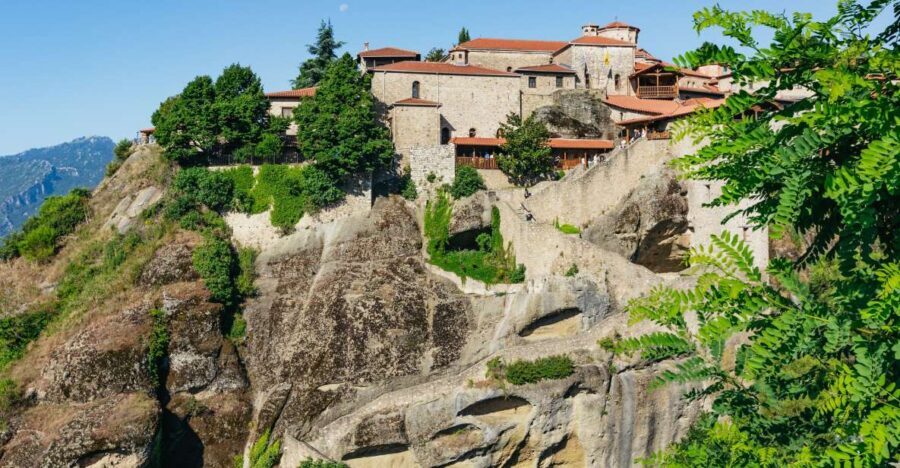
Meteora is the reason many people book this tour, and for good reason. The monasteries sit on cliff-tops, perched above the valley, with stone paths and historic buildings that look like they were built for a movie set.
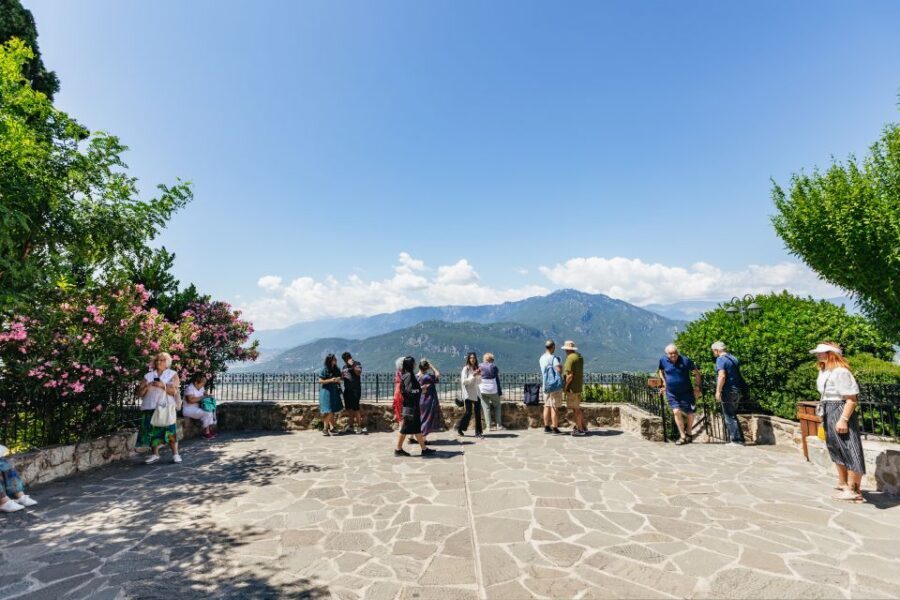
On this tour you visit two monasteries. You’ll also spend time looking out over the whole area from the rock towers. Even when the day isn’t crystal clear, the setting still hits. Low cloud and drizzle have limited visibility for some departures, but the monasteries remain impressive and the overall experience still feels special.
The best approach here is mental, not physical. You’ll get multiple stairways and viewpoints, and it’s easy to rush your photos. Slow down for a moment at each viewpoint. Look from the monastery edges down into the valley, then turn back and notice the architecture and artwork.
Dress rules at the monasteries (this is where people get caught)
This part is not optional. To enter the monasteries, you need appropriate clothing:
- Ladies: no short skirts, and long sleeves required
- Men: no shorts
One practical detail from experience: if your skirt length isn’t knee-length or longer, staff may offer a scarf for wrapping.
If you’re visiting in warmer months, plan ahead. Pack a light layer that covers your arms and brings a skirt or pants that you can comfortably wear all day.
You can also read our reviews of more tours and experiences in Athens
Leonidas at Thermopylae: a short stop with real weight
On the way back to Athens, you make a stop at the monument to Leonidas, the King of Sparta who died in 480 B.C. at the Battle of Thermopylae.
This is a quick moment in the schedule, and some people wish they had a brief walk up toward the battle front area. Still, even a short stop works because it ties Greek mythology and historic identity into one line—Delphi and Sparta are different worlds, but the country’s story connects them.
Practical tip: if you want photos here, bring your camera ready. This stop is short, so you’ll want to work efficiently.
Hotel, meals, and the included-value math
Let’s talk about what you actually get for the price—because at $271 per person for two days, you should expect more than just transportation.
Included basics that matter:
- pickup and drop-off from selected Athens hotels
- air-conditioned non-smoking bus
- hotel in Kalambaka (3-star or 4-star depending on your option)
- breakfast + dinner
- professional guide
- admission to Delphi plus two Meteora monasteries
Not included:
- lunches and other drinks unless specified
- hotel accommodation tax (paid at the hotel)
So where does the value come from? Mainly from bundling three expensive-looking pieces together: the long round-trip overland transfer, the guide’s time, and the overnight hotel base. If you were doing this on your own, you’d still pay for transit, admissions, and lodging—and you’d have more chances to lose time due to finding tickets, finding food, and navigating transport.
Food reality check
Dinner and breakfast tend to be described as good, with buffet-style meals at the hotel. Lunch is not included, and that’s where experiences can vary. Some lunch stops sound organized and enjoyable; others sound chaotic or overpriced.
If you have dietary needs, don’t assume you’re on your own. One highlighted story involved celiac disease, and the guide helped ensure suitable food was available at lunch and other stops. If your diet has limits, contact the tour operator ahead of time so you’re not trying to solve it while hungry.
Guides and group rhythm: what your day feels like
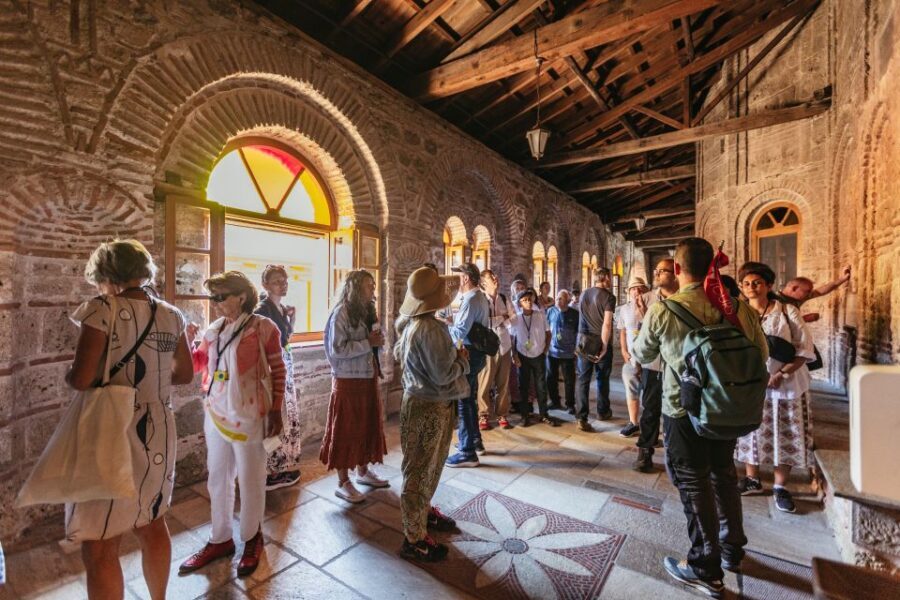
A lot of the success of this tour comes down to the guide. People named guides like Haroula and Marianna, and feedback repeatedly mentions strong storytelling plus humor, not just facts.
You can also expect structured time on site and sometimes the use of listening devices, with radio tools mentioned in feedback. That helps you keep up when the group is moving through stone paths where sound can get messy.
Group size may vary. In some departures, groups are smaller (under 10 people). Other departures can reach around 40 people, which can mean longer lines at popular spots if you’re not there early enough. The good news: the itinerary is built so you’re at Delphi and Meteora relatively early, which helps you avoid the worst crowd moments.
Bus comfort and driving style
The bus is described as smooth and comfortable, and drivers are repeatedly praised for careful handling of the roads—especially on the way up toward Meteora. That matters because the roads are narrow and the turns are real.
If you’re prone to motion sickness, bring the usual meds and keep water handy. You’ll have multiple rest stops, but you’ll also be on the road for a while.
Timing and pace: what to expect from the schedule
This is a “two great days” itinerary. It doesn’t aim for slow wandering at every corner. Delphi can feel rushed compared with how much there is to see, and people wishing for more time often point to the museum area.
Meteora often feels like the bigger win for many people because the views, monasteries, and the cliff setting reward even a tight schedule. The key is to be mentally ready to move.
A helpful strategy: take photos early, then spend later time noticing details—carvings, painted interiors, and the way the cliff edge frames the valley. If you focus only on the views, you’ll miss the parts that make Meteora feel historic, not just scenic.
Price and logistics: is $271 a fair deal?
At $271 per person, the tour feels fair when you look at what’s included. You’re paying for:
- guided visits to Delphi and Meteora
- admission fees
- round-trip coach transfer from Athens
- hotel in Kalambaka for one night
- breakfast and dinner
- pickup and drop-off from central Athens hotels
What you pay extra for is mostly predictable: lunch and the hotel accommodation tax.
So the decision comes down to this: do you want to manage the hard parts yourself? If you’re okay planning long-distance transport and building a route with admissions and timing, you could do it independently. But if you’d rather spend your energy on the ruins and monasteries instead of schedules, this package is strong value.
Should you book the Delphi and Meteora 2-day tour?
Book it if:
- you want two UNESCO sites without planning transport and lodging
- you like guided context so the ruins make sense quickly
- Meteora is on your must-see list and you’re happy with two monastery visits in one morning
- you appreciate early timing to reduce crowd pressure
Skip it (or at least adjust expectations) if:
- you want a slow, museum-first Delphi day, because Delphi time can feel tight
- you dislike group schedules and multiple stops
- you need wheelchair-friendly access, since the tour is not suitable for wheelchair users
- you have very strict dietary needs and haven’t contacted the operator in advance
If you do book, bring layers for changing monastery weather, wear shoes you can walk in for long stretches, and plan your clothing so you’re not scrambling at the monastery entrance. With the right mindset, this tour gives you a big dose of Greek wonder fast—without making you do the math.
FAQ
What sites are included on this 2-day tour?
You visit the Delphi Archaeological Site, including the Temple of Apollo, the ancient theater and stadium. On the second day, you tour two of the cliff-top monasteries in Meteora.
Where do I stay overnight?
You stay overnight in Kalambaka. The hotel is 3-star or 4-star depending on the option you select.
What meals are included, and what is not?
Breakfast is included, and dinner is included on the first day (as part of the hotel stay). Lunch and drinks are not included unless specified.
Do I need to pay an extra hotel tax?
Yes. Hotel accommodation tax is paid directly to the hotel. The cost depends on the hotel level: €10 per room/per night for 4-star, and €5 per room/per night for 3-star.
What should I wear to enter the Meteora monasteries?
You’ll need appropriate clothing: women should not wear short skirts and must wear long sleeves, and men are not allowed to wear shorts.
Is wheelchair access available?
No. This tour is not suitable for wheelchair users.
More Guided Tours in Athens
More Tours in Athens


More Tour Reviews in Athens
- All Day Cruise -3 Islands to Agistri,Moni, Aegina with lunch and drinks included
★ 5.0 · 4,958 reviews