REVIEW · ATHENS
Acropolis ‘GOLDEN-HOUR’ Private Tour with Licensed Expert Guide
Book on Viator →Operated by WARMPENGUIN · Bookable on Viator
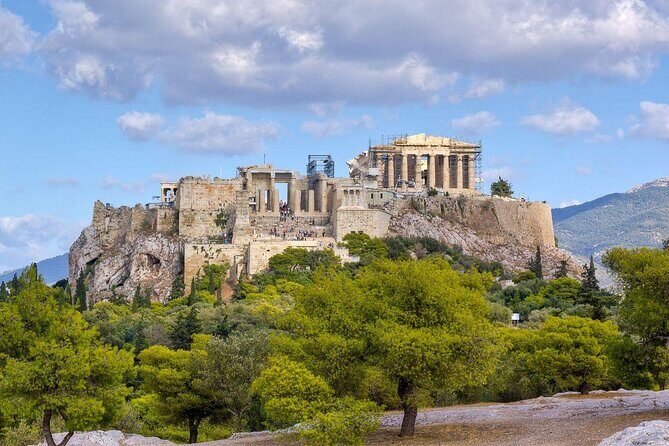
Sunset on the Acropolis is magic in real time. This private golden-hour tour is built for better light, fewer coach-tour crush moments, and a guide who ties the Parthenon and the smaller temples to the myths people actually told. What I like most is the focused pacing with a licensed expert guide plus extra time to take photos when you’re already done with the walking. The one thing to watch: Acropolis admission isn’t included unless you pick the add-on option, so factor that into your budget.
You’ll meet at Makrygianni Street near the Acropolis Metro, then work your way through key landmarks—Theater of Dionysus, Propylaea, Athena Nike, Erechtheion, Parthenon, and Herod Atticus Odeon—finishing inside the Acropolis so you can breathe and look back at the city lights.
In This Review
- Key things to know before you go
- Golden-hour on the Acropolis: why the light matters
- Where to meet and how the tour moves
- Stop-by-stop: Teatro di Dioniso and the human scale of drama
- Propylaea and Athena Nike: the gateway and the view
- Erechtheion: where myths meet the details (and the statues)
- Parthenon time: construction logic, myths, and why it feels so important
- Herod Atticus Odeon: a working theater, not just ruins
- Wrapping up inside the Acropolis for photos and calm
- Price and value: what $172.31 buys you (and what it doesn’t)
- Practical tips to make the most of your golden-hour visit
- Should you book this Acropolis golden-hour private tour?
- FAQ
- What time does this Acropolis tour run?
- Where do I meet the guide?
- How long is the tour?
- Is Acropolis admission included in the price?
- Will the guide include the key Acropolis landmarks?
- Is this tour private?
- Can families or kids join?
Key things to know before you go
- Golden-hour timing: you’re aiming for the “ahead of the crowds + cooler temps” window, not midday heat.
- Private group only: you’re not sharing commentary with strangers.
- Licensed guide access: the guide is officially authorized to enter the Acropolis.
- Icon stops, not a blur: the route hits the big names and the “why it matters” behind them.
- Photo payoff at the end: you’re released in the Acropolis with time to linger.
- Tickets depend on your option: admission is only included in the add-on booking type.
Golden-hour on the Acropolis: why the light matters
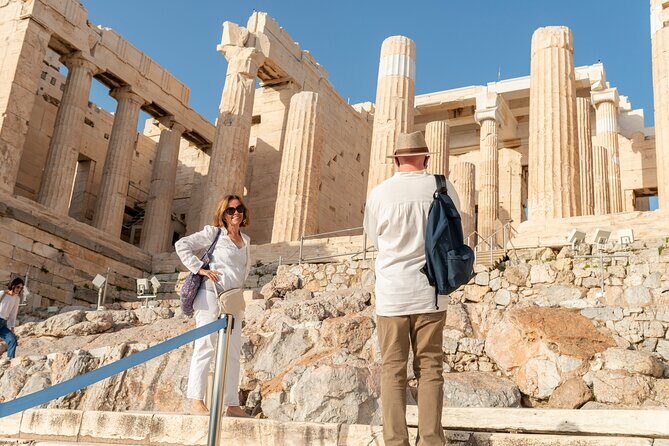
The Acropolis is stunning any time. Still, the golden-hour approach changes how it feels. As the sun drops, the marble takes on honey-colored warmth, and details that can look flat in harsh midday light suddenly pop—carving edges, columns, and the shape of the skyline behind it.
This tour is specifically set to hit that sweet spot. The schedule notes that it can run during the morning or afternoon “golden-light” periods, with the same idea: get ahead of larger groups and avoid the hottest part of the day. If you care about photos, this matters because you’re not just catching monuments—you’re catching them with sky and shadows that add drama.
The other practical win is temperature. You’re walking on stone, with stairs and slopes. Even if the duration is about 1 hour 30 minutes, it’s not a “sit-down” experience. Cooler air makes the whole thing easier to enjoy without rushing.
You can also read our reviews of more guided tours in Athens


Where to meet and how the tour moves
You’ll meet your guide at Makrigianni 7, Athens, near the Acropolis Metro stop—just around the corner from the main entrance. That location is handy because it keeps you close to where you’ll be for the first part of your visit, without forcing you to hunt across a maze of roads.
From there, the tour is organized as a steady climb and “look-then-walk” rhythm. The stops are timed at around 10 minutes each, which keeps the momentum up while still giving you enough minutes to take in what you’re seeing and to hear the explanation before moving on.
This format is ideal if you want depth but not a long, exhausting tour. If you’re the type who likes to read every sign, you’ll likely still want a bit more time on your own. The good news: the tour ends inside the Acropolis, so you can extend your visit at your own pace after the commentary part is over.
Stop-by-stop: Teatro di Dioniso and the human scale of drama
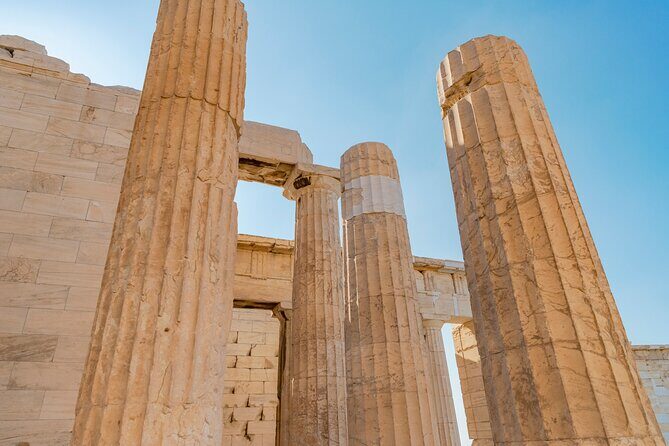
One of the first stops is the Ancient Theater of Dionysus. It’s in surprisingly good shape for something that old, built into a natural amphitheater on the Acropolis slopes. The notes mention it could have held about 25,000 people, and that it’s considered the world’s oldest known theater.
What makes this stop worth it is the perspective shift. It’s easy to think the Acropolis is only about temples and “statue tourism.” Dionysus reminds you the Greeks also built spaces for performances—plays that would’ve been premieres for famous stories.
You’ll get a quick orientation here: where the theater sits relative to the rest of the complex, and how it connects to the broader culture that produced the myths you’ll hear later. This is a good place to pause and imagine sound carrying across the stone seats. Even if you don’t do any “theater reenactment” (please don’t), you’ll start seeing the Acropolis as lived-in space, not just archaeology.
Propylaea and Athena Nike: the gateway and the view
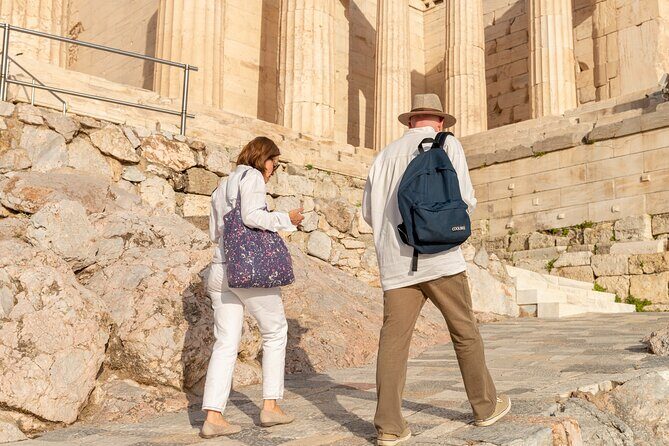
Next up is Propylaea, the monumental gateway into the Acropolis. The tour description highlights a legendary detail: a decorated bronze statue of Athena would have greeted incoming visitors, and the tip of her spear was said to be visible to ships in sunlight.
That kind of story does more than add color. It helps you understand the site’s “arrival experience.” This isn’t just a place you walk into. It’s a place designed to make you feel you’re entering a sacred world.
Then you reach the Temple of Athena Nike, built around 420 BC and dedicated to Athena. The temple is described as largely restored, with a prominent position overlooking the city. This stop is great for two reasons:
- You get the “temple in context” effect—because the view from here shows how high and exposed the Acropolis is.
- You’re close enough to see how architecture and geography work together.
If you like skyline photos, keep your phone/camera ready here. The lighting is often shifting fast at this hour, and the angle of the city plus the temple silhouette can look especially good.
Erechtheion: where myths meet the details (and the statues)
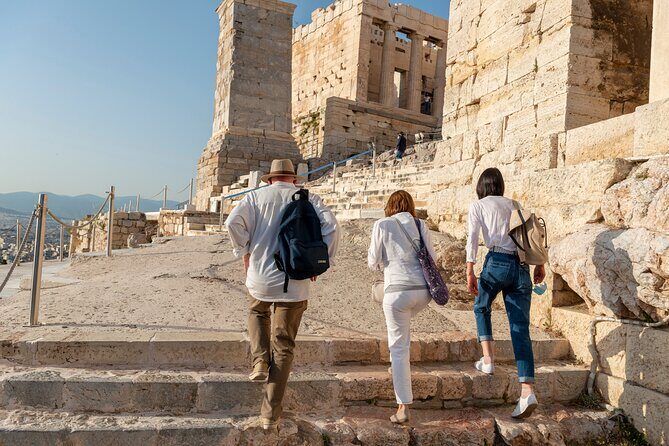
The tour then heads to the Erechtheion, described as the second largest temple of the Acropolis. It’s dedicated to both Zeus and Athena, and the guide is expected to explain the mythology and key features you’ll see—especially when it comes to the famous statues.
One of the most practical bits noted here: the guide will also point you toward where those statues are now housed in the museum. Even if you don’t go inside a museum during the tour, this helps you understand why the Acropolis looks the way it does today—what’s original, what’s restored, and what has been moved for preservation.
Drawback to consider: this is a “list of ideas” kind of stop. If your guide turns the myth explanations into a mini lecture, you might feel like you want more quiet time to look at the carvings. The good side is that you can always take a step back and just watch the light on the stone between explanations. You’re not forced to follow every second word.
You can also read our reviews of more private tours in Athens




Parthenon time: construction logic, myths, and why it feels so important
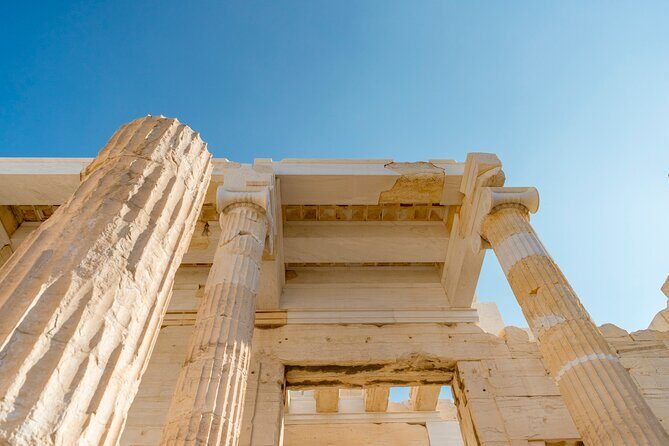
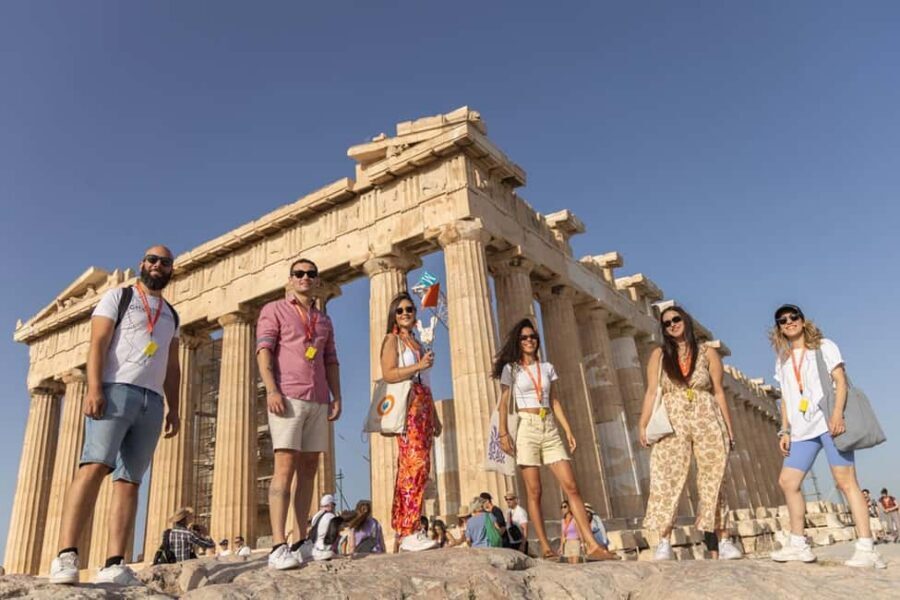
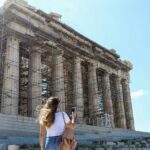
The Parthenon is the centerpiece, and the tour takes time for it. This is where your guide typically slows down because the big questions are the most interesting ones: what it was for, how it was built, and why its symbolism mattered.
The tour plan flags a few themes you’ll hear:
- its role in the “golden age” of Classical Greece
- its mix of art, architecture, and engineering
- the mythology and historical importance tied to it
You’ll also get a structured overview rather than a rush-by. The stop is designed to give you time to look up and around—columns, lines, and the way the building sits against the sky. If you’ve seen the Parthenon in photos a hundred times, this is the moment where you start to recognize why those images work: the geometry is doing a lot of the talking.
Photo tip: because you’re in golden light, you’ll get better contrast in stone details and fewer blown-out highlights than you might in late morning sun. Still, watch your exposure—screens can lie. If you’re trying to get both the Parthenon and the sky, it’s worth taking a couple of shots at different brightness.
Herod Atticus Odeon: a working theater, not just ruins
To end, the tour includes Herod Atticus Odeon, a stunning marble amphitheater built in AD 161 in memory of his wife. The notes also say it continues as a working theater up to the present day.
This stop is a nice emotional finish. After temples and sacred spaces, you land back on performance. It also makes the scale feel real: the Acropolis wasn’t only for worship—it was also for public cultural life.
If you’re hoping to understand Greek history as something people lived through (not just something in books), this kind of “still in use” detail really helps.
Wrapping up inside the Acropolis for photos and calm
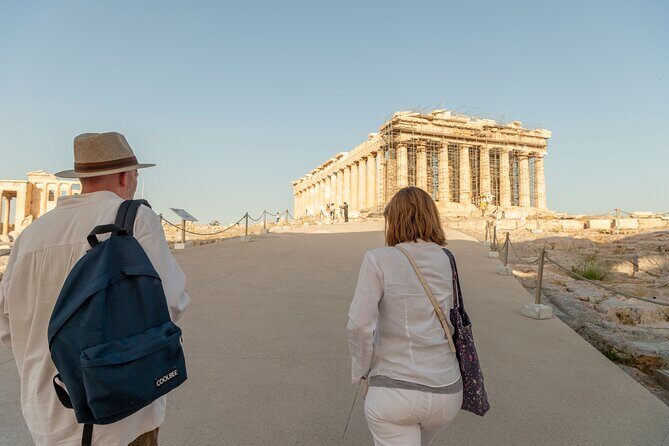
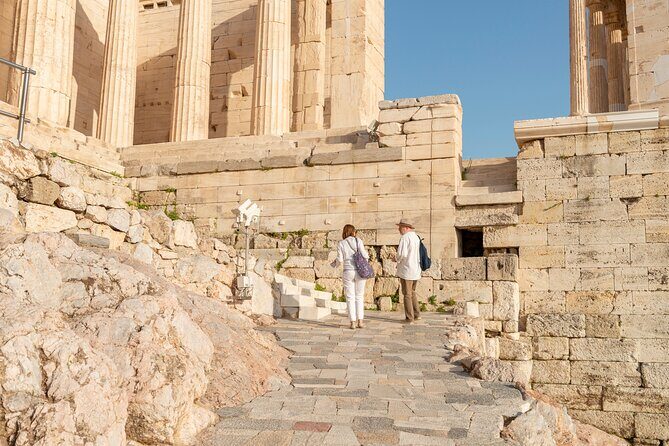
Your tour finishes back at the Acropolis with your guide leaving you inside so you can stay for views and photos. This is a smart move for a golden-hour plan. Once the official stops are done, you can choose your own angles and don’t have to match the group’s pace.
Your guide will also point out the exit, which helps a lot if you’re planning to explore afterward. The Acropolis area can feel simple in daylight, then a little more confusing once shadows deepen. Getting oriented before you go wandering is a small thing that prevents big frustration.
Price and value: what $172.31 buys you (and what it doesn’t)
At $172.31 per person, this is priced as a private, guided experience focused on the Acropolis complex. The big value drivers are:
- private access to a licensed expert guide
- a tight route that hits key monuments in a short time
- timing that improves both comfort and photos
- ending with extra time for your own viewing
The main budget concern is straightforward: Acropolis admission isn’t included unless you choose the option that includes tickets. The tour notes say Acropolis tickets are only included for the 90-minute option including tickets, available for times from 1:30pm. If you book a different time slot, you’ll be responsible for your own admission tickets for the correct entry time.
So the real question isn’t just Is it expensive? It’s: are you paying for time savings and expert interpretation? If you’d otherwise wander for hours, trying to piece history together from signs, a licensed guide can be worth it. If you prefer self-guided walking with minimal explanation, you might feel the cost more.
One more thing: the listing notes group discounts. If you’re traveling with family or friends, check whether your group size makes the price feel more comfortable.
Practical tips to make the most of your golden-hour visit
A few smart things to do before you show up:
- Arrive a bit early for Makrigianni 7 so you’re not sprinting up the last stretch. Golden hour is short.
- Wear grippy shoes. The Acropolis surfaces can be uneven, and you’ll likely do more step-ups than you expect.
- Bring water. You’re out in the open; even “cooler” golden-hour weather can add up when you’re climbing.
- Charge your phone/camera and consider an extra battery if you’re shooting a lot of details on the Parthenon.
- If you’re traveling with kids, this kind of guided storytelling can work well because you’re not making them read long explanations. The format is short, focused, and changes scenes often.
Also, if anyone in your group has reduced mobility, the tour notes ask you to let the company know after booking so measures can be arranged to reduce time spent on your feet. Since the tour is about two hours including more time, it’s worth planning realistically.
Should you book this Acropolis golden-hour private tour?
I’d book this if you want the Acropolis highlights with strong guidance and you care about timing—better light, cooler temperatures, and a route that doesn’t feel like a rushed checklist. The private format is especially good if your group includes kids, multiple age ranges, or anyone who likes questions answered in real time.
I’d think twice if you’re trying to keep costs as low as possible, because admission can add an extra layer unless you choose the tickets-included option. Also consider whether you prefer silence. If you’d rather roam and absorb at your own pace, the guided commentary may feel like it uses up some of your quiet time.
If you’re deciding, here’s the simple rule: pay for this tour when you want expert storytelling plus prime photo light, not when you want a DIY walk with no structure.
FAQ
What time does this Acropolis tour run?
It’s offered during golden-light periods, and the tickets-included option is available for times from 1:30pm. Specific tour times beyond that are not listed here.
Where do I meet the guide?
Meet at Makrigianni 7, Athina 117 42, Greece, near the Acropolis Metro stop (around the corner from the main entrance).
How long is the tour?
The duration is listed as about 1 hour 30 minutes.
Is Acropolis admission included in the price?
Admission is not included unless you select the 90-minute tour including tickets option. Otherwise, you’ll need to show up with your own tickets for the correct time slot.
Will the guide include the key Acropolis landmarks?
Yes. The tour covers major stops including the Theater of Dionysus, Propylaea, Temple of Athena Nike, Erechtheion, the Parthenon, and Herod Atticus Odeon.
Is this tour private?
Yes. It’s a private tour with only your group participating.
Can families or kids join?
Yes. It’s described as family friendly, and guides can adapt for different ages and multigenerational groups.


More Guided Tours in Athens
More Tours in Athens


More Tour Reviews in Athens
- All Day Cruise -3 Islands to Agistri,Moni, Aegina with lunch and drinks included
★ 5.0 · 4,958 reviews