REVIEW · ATHENS
Acropolis of Athens and Acropolis Museum Tour
Book on Viator →Operated by Athens Walking Tours · Bookable on Viator
One hill, two icons.
This Acropolis and Acropolis Museum tour helps you make sense of Athens fast, without getting stuck reading signs while your legs ache. I like the small-group size (max 24) and earsets/headsets, because you stay oriented even when the site is crowded.
I also like how the visit links the ruins to what you’ll see inside the museum, so details click instead of floating by. One drawback: timing is strict. If you miss the set Acropolis entry window, the tour can’t wait, and there are no refunds for latecomers.
In the right hands, the Acropolis becomes a story you can walk through, not just a postcard. Guides such as Dimitris, Rina, Yolanda, Maria, and Margarita are repeatedly praised for turning myths, architecture, and sculpture into something you can actually follow—especially on hot days or rainy ones.
In This Review
- Key highlights before you go
- Entering the Acropolis on a clock: security and skip-the-line reality
- Meeting Dionysiou Areopagitou: small group pace and how headsets change everything
- Sacred hill stops you’ll actually understand: Dionysus to the Parthenon viewpoints
- Theatre of Dionysus: where drama started
- Propylaea and the main gates: the ceremonial entry feeling
- Herodes Atticus Odeon: a Roman theatre still doing its thing
- Temple of Athena Nike: tight details and big views
- Erechtheion: Caryatid myths you can see with your own eyes
- Parthenon: your main picture, plus the meaning behind it
- Asclepeion: a quick guided bonus
- Acropolis Museum in 90 minutes: linking what you saw to what you’ll remember
- What you’re paying for: $56.84 plus the €50 entrance math
- Comfort and safety: water, shoes, and the no-backpack rule
- Who this tour suits best (and who should choose another plan)
- Should you book this Acropolis + Museum tour?
- FAQ
- Is the Acropolis entry ticket included in the tour price?
- Does this tour include skip-the-line access?
- How long is the tour, and is it a lot of walking?
- Where do I meet the guide?
- What should I bring (and what shouldn’t I bring)?
- What happens if it rains?
Key highlights before you go

- Ticket upgrade that helps with wait time: You prepay tickets for easier entry, though security lines can still take time.
- Headsets for clarity: You’ll hear your guide without craning your neck over other visitors.
- Stop-by-stop structure: Theatre of Dionysus, Gate/Propylaea, Temple of Athena Nike, Erechtheion, Parthenon, plus the Museum.
- Museum connections: Artifacts from the Acropolis are explained in a way that matches what you just saw outside.
- Weather-ready operation: Rain or shine, and gear may be provided for wet conditions.
Entering the Acropolis on a clock: security and skip-the-line reality
The tour starts with a controlled entry flow. You meet at Dionysiou Areopagitou 3, then head to the Acropolis area after you clear airport-style security. Plan for waits in peak season; up to 30+ minutes isn’t unusual when lines are long.
The “skip-the-line” piece is tied to the ticket choice you make. If you book an option with tickets included, the tour includes a service that lets you prepay your entries, which usually reduces (but doesn’t always eliminate) time spent waiting. Either way, you still have to go through security, because the Acropolis is run like a high-volume, controlled site.
The other big thing is the Acropolis time rules. The entry times are strict, and the tour can’t hold the group for late arrivals. If that kind of pressure makes you anxious, it’s worth building in extra buffer time for your walk up from the metro or bus stop.
You can also read our reviews of more museum experiences in Athens


Meeting Dionysiou Areopagitou: small group pace and how headsets change everything
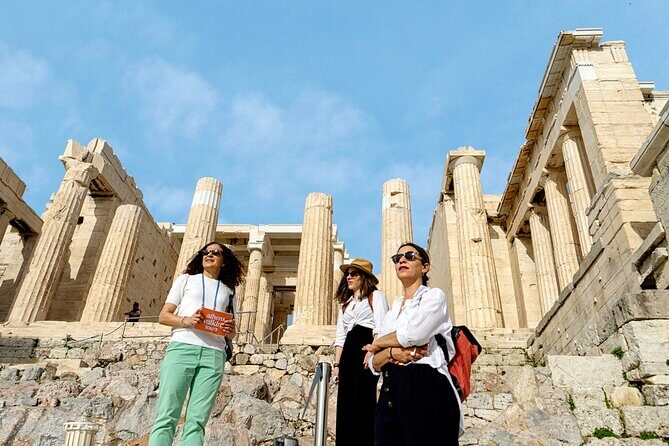
This is a small-group tour with a maximum of 24 people. That matters on the Acropolis because the space is narrow in spots and people move at different speeds. In a smaller group, your guide can keep everyone together without turning the experience into a cattle-herding exercise.
You’ll also get earsets/headsets to hear the guide clearly. When you’re surrounded by stone steps, wind, and other tour groups, hearing the story matters as much as seeing the view. If you’re the type who hates missing context, this is one of the smartest inclusions on the tour.
The tour is offered in English, and you’ll receive an Athens Guide Magazine and an Athens map. Those are handy for smoothing the rest of your day in Athens after the tour ends at the Acropolis Museum (Dionysiou Areopagitou 15).
Sacred hill stops you’ll actually understand: Dionysus to the Parthenon viewpoints
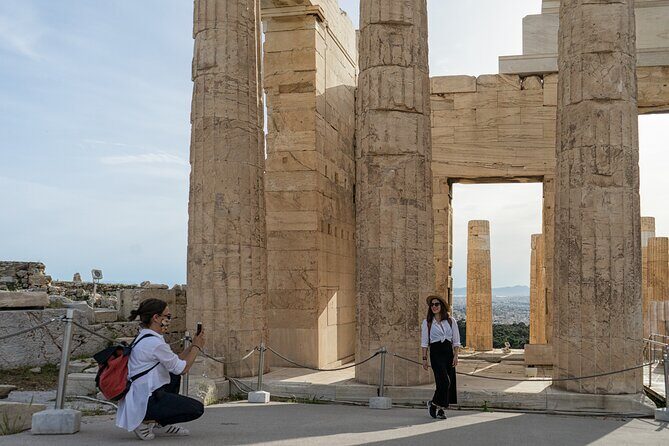
The walk up is part sightseeing, part exercise. Expect steep, uneven, and sometimes slippery marble, especially in wet weather. You’ll want comfortable shoes with grip, because the terrain is gorgeous and unforgiving at the same time.
Your first stop is the Acropolis core area, with time set for the big overview. This is where you’ll see the Parthenon and get oriented to the layout so later stops make sense.
Theatre of Dionysus: where drama started
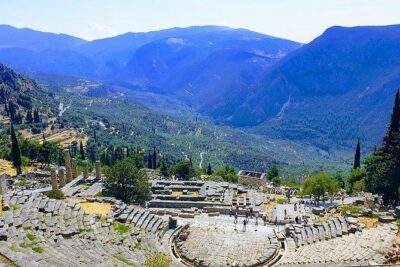
Next comes the Theatre of Dionysus, tied to the origins of Greek theatre. You’ll learn why the seating is carved into the hillside, and what that means for how ancient audiences watched performances. The setting is simple, but the explanation makes it feel like a living tradition rather than leftover stone.
This stop is short, around 15 minutes. In that time, your guide’s job is to help you notice the slope, the shape of the space, and why it worked for crowds.
Propylaea and the main gates: the ceremonial entry feeling
You’ll also pause for key architecture on the main approach. The focus is on the Propylaea main gate, and you’ll get a sense of how the approach to the sacred complex was meant to feel intentional. It’s the kind of detail that’s easy to overlook if you’re rushing for photos.
- All Day Cruise -3 Islands to Agistri,Moni, Aegina with lunch and drinks included
★ 5.0 · 4,958 reviews






Herodes Atticus Odeon: a Roman theatre still doing its thing
Then you’ll see the Odeon of Herodes Atticus. It’s Roman in design and yet still used for music and performances. That connection helps you understand the Acropolis as more than an ancient museum—people kept using parts of it across centuries.
Temple of Athena Nike: tight details and big views
The Temple of Athena Nike is a great “small building, big payoff” moment. You’ll hear how it honors Athena as the goddess of victory, and you’ll likely look out over Athens from a high, photo-friendly angle. Even in crowds, this area gives you that sense of height.
Erechtheion: Caryatid myths you can see with your own eyes
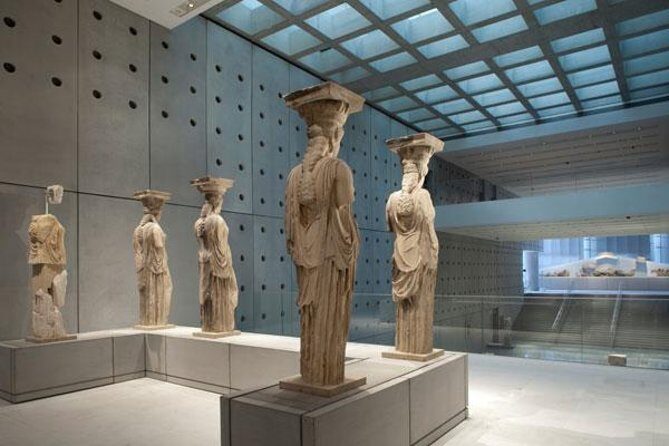
The Erechtheion is next, famous for its Caryatid maidens. This is where myth and architecture blend well, because the guide’s storytelling helps you connect the temple’s form with the legends attached to the site. It’s also one of the most recognizable stops, so it’s good to slow down here and take in the faces and proportions.
This stop is around 15 minutes, enough time to focus on the key elements without feeling like you’re trapped in a line.
Parthenon: your main picture, plus the meaning behind it
Finally, you’ll spend time at the Parthenon. You’ll get a guided look at its Doric columns and key features, plus the view down over Athens. Many guides time a pause for photos; it’s not a full free-for-all, but you’re given a moment to capture the iconic angle.
Just remember: the Parthenon area is popular. Even with headsets and a guide, you’ll feel the crowd energy. Good shoes, steady footing, and listening for when your guide calls out the next viewpoint help you get the most out of the time you’re there.
Asclepeion: a quick guided bonus
The included guided visit also covers the Asclepeion area as part of the overall route. It’s an added layer that helps explain how different functions and beliefs overlapped on and around the hill. If you like tours that connect dots instead of ticking boxes, this kind of stop is a plus.
Acropolis Museum in 90 minutes: linking what you saw to what you’ll remember
After the hill, the tour moves to the Acropolis Museum for about 1 hour 30 minutes. Here, the pacing changes from “climb and look” to “study and connect.” The museum takes you through a chronological story of Athens, using artifacts tied directly to the Acropolis.
The best value of the museum portion is that it doesn’t just list objects. Your guide explains the highlights and helps you see how sculptures and architectural pieces relate to specific parts of the ruins you just walked. That matters because some original elements are preserved indoors, while site areas may show replicas for protection.
You leave as a group at the end, but you can linger if you want to keep exploring on your own. This is a good setup for travelers who want a guided overview first, then choose their own pace afterward.
If you’re someone who loves sculpture and layout, this museum time can feel like the payoff you were hoping for. If you’re someone who only wants a quick scan, 90 minutes may still feel like the right amount—enough to get context without stealing your whole afternoon.
What you’re paying for: $56.84 plus the €50 entrance math
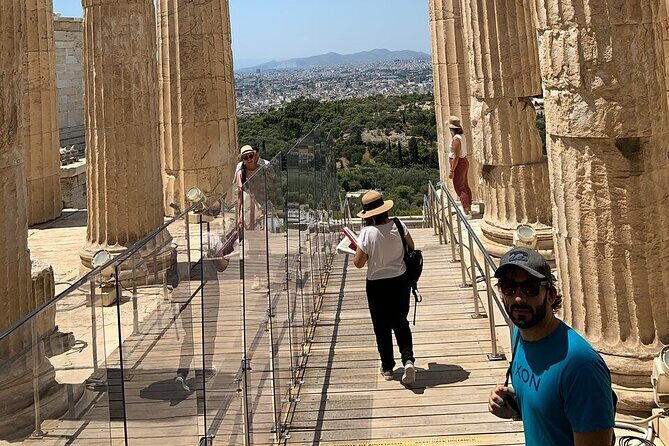
The tour price is listed at $56.84 per person, and entrance fees depend on which ticket option you choose. The Acropolis entry fee is €30 per person, and the Acropolis Museum entry fee is €20 per person. If you choose an option without included tickets, you’ll need to arrange those entries yourself.
So what’s the value of paying for the upgrade? In plain terms: you’re paying for a smoother entry experience and a guide who can shepherd you through the timed flow. You’re not paying to avoid security; you’re paying to reduce friction around ticket handling and to line up the group for entry.
Even at the higher end, this can still be good value compared to piecing together everything on your own—especially if it’s your first time in Athens. You also get headsets, an English-speaking professional guide, and a small-group format. Those are the things that prevent the most common Acropolis problem: standing at stone monuments with no idea what you’re looking at.
Comfort and safety: water, shoes, and the no-backpack rule
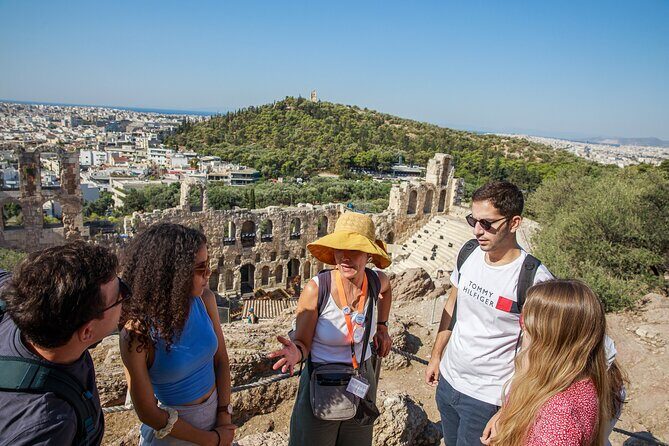
The Acropolis can be hot, bright, and slick. The tour guidance is clear: bring a hat, use sunscreen, and carry water. If you’re going in summer, it’s smart to pack chilled water ahead of time, because you can’t count on having drink options during the climbing portion.
Rain is also part of the package. Tours run rain or shine, and you may be provided with rain gear. The catch is that wet marble gets extra slick, so sneakers with grip are not optional.
There are also rules that affect what you carry. Backpacks are not allowed, and there’s no cloakroom at the side entrance the group uses. That means you’ll want to travel light with a bag you can manage through entry and storage rules.
Baby strollers are not allowed at the Acropolis archaeological site. There’s also no cloakroom at that side entrance, and the recommendation is to use a baby pouch instead of a stroller. If you’re traveling with an infant, plan that part carefully.
Mobility matters. The tour calls for moderate physical fitness, and the walking includes stairs and uneven ground. A past guest also noted wheelchair access isn’t supported on the route used, so if that’s your situation, ask directly before you book.
Who this tour suits best (and who should choose another plan)
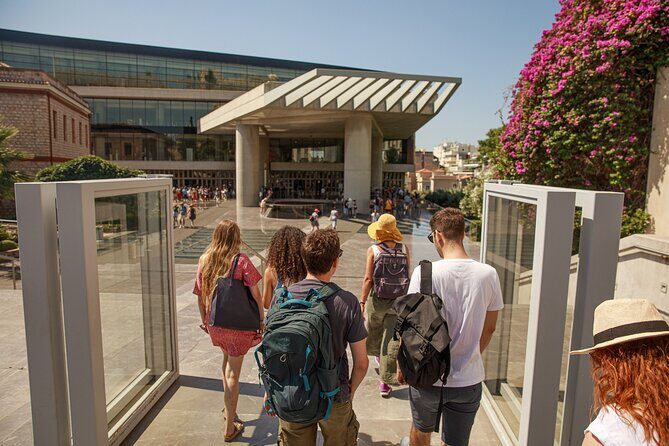
This tour fits you if you want your Acropolis day to feel organized and understandable. It’s especially good for first-time visitors who don’t want to guess at what you’re seeing on the hill.
It’s also a good fit if you hate waiting in long ticket lines. The prepay ticket option helps cut down waiting time, and the guides are used to handling crowds and timed entry patterns.
Choose a different approach if you:
- Need a slow, low-stair pace (the terrain is steep and uneven)
- Must carry a backpack (it’s not allowed)
- Don’t do well with strict entry times and security queues
- Have mobility limitations where stairs and slippery stone are a concern
If your top priority is just standing at the Parthenon for photos with minimal guidance, you might find the structure a bit busy. But if you want the story and the meaning, the guided stops make the whole day work.
Should you book this Acropolis + Museum tour?
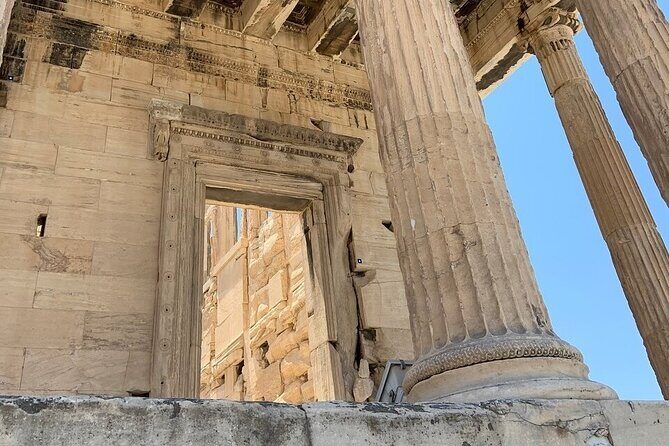
Yes—book it if you want a guided, time-efficient first day on the Acropolis, plus the museum payoff that connects ruins to artifacts. The small-group size, headsets, and expert storytelling reduce the risk of doing this day “wrong,” where you see amazing stone but miss the why.
If you’re budget-tight, you can still consider booking without included tickets, but then you’ll need to handle Acropolis and museum entry yourself. Either way, don’t underestimate the physical side: wear grippy shoes, bring water, and plan extra time for security.
If you’re deciding between going early versus late in the day, I’d lean early. Hot weather at open-air sites turns a short climb into a long test, and the tour’s structure is built to keep you moving while still making stops where shade and explanations are possible.
FAQ
Is the Acropolis entry ticket included in the tour price?
It depends on the option you select. Entrance fees for the Acropolis (€30 per person) and the Acropolis Museum (€20 per person) are not included unless you book an option that includes tickets.
Does this tour include skip-the-line access?
You get skip-the-ticket line service if you book the option that includes tickets. Even with that, you still go through airport-style security, so you may still wait, especially in peak season.
How long is the tour, and is it a lot of walking?
The duration is about 3 hours 30 minutes. It includes a climb up to the Acropolis plus a museum visit, so you should have a moderate physical fitness level and wear comfortable shoes.
Where do I meet the guide?
You meet at Dionysiou Areopagitou 3, Athina 117 42, Greece. The tour ends at the Acropolis Museum, Dionysiou Areopagitou 15, Athina 117 42, Greece.
What should I bring (and what shouldn’t I bring)?
Bring a hat, sunscreen, and a bottle of water. Backpacks are not allowed. Baby strollers are also not allowed on the Acropolis, and there is no cloakroom at the side entrance used.
What happens if it rains?
The tour runs rain or shine. You should expect the weather to be part of the experience, and the Acropolis can be slippery in wet conditions.



More Museum Experiences in Athens



More Tours in Athens

More Tour Reviews in Athens
- All Day Cruise -3 Islands to Agistri,Moni, Aegina with lunch and drinks included
★ 5.0 · 4,958 reviews