
REVIEW · ATHENS
Acropolis, Plaka & Ancient Agora Guided Tour
Book on GetYourGuide →Operated by ATHENS WALKING TOURS · Bookable on GetYourGuide
The Athens Acropolis is easier when someone reads it for you. This Acropolis, Plaka & Ancient Agora guided tour ties together the hilltop monuments and the city’s civic center, with a licensed guide and time for photos. I especially like the south-slope entry that helps you avoid the worst crowd crush, and I also like the Ancient Agora add-on because it makes the Acropolis feel less like a postcard. One caution: expect real walking and steps, so it’s not a good fit for wheelchair users or anyone with mobility limits.
If you’re the type who wants meaning, not just names, you’ll enjoy how the guide points out what you’re looking at while you’re actually standing there. Guides I’ve heard praised include Vasaliki, Tina, and Sissy, and the common thread is clear explanations and a pace that doesn’t feel rushed. The one possible drawback is logistics timing: you start near 11:00 for the Acropolis, then access the Agora around 13:00, and late entry can mean you’re turned away.
In This Review
- Key takeaways before you go
- A 3.5-hour combo that makes Athens feel connected
- Meeting point on Dionyssiou Areopagitou: get there early
- Entering the Acropolis from the south slope (and why that matters)
- The hilltop route: Parthenon, Erechtheion, Propylaia, and more
- Time for photos: use it wisely at the top
- Snacks and the pacing reset between sites
- Ancient Agora: where daily life turned political
- Hephaestus Temple and the best-preserved ancient cue
- Religious layers: the Church of the 12 Apostles and Apollo Patroos
- Attalos Museum: the small facts that make the stones make sense
- Skip-the-ticket line access: helpful, but not magic
- Price and value: is $66 worth it?
- Who this tour suits (and who should skip it)
- Should you book the Acropolis, Plaka & Ancient Agora tour?
- FAQ
- Is the tour 3.5 hours long?
- Where is the meeting point for the tour?
- What time does the Acropolis part start?
- What time does the Ancient Agora part start?
- Does the tour include entrance tickets?
- How does skip-the-ticket line work if I still need security checks?
- What do I need to bring, and what isn’t allowed?
Key takeaways before you go
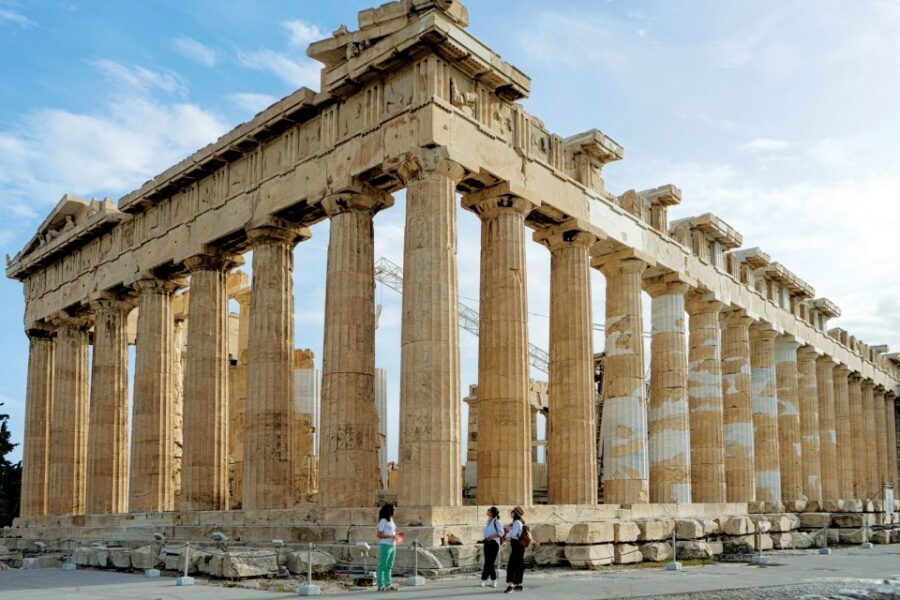
- South slope entry helps you get moving early and reduces crowd pressure at the main start.
- Dionysus Sanctuary and Theater are built-in stops, so you see more than the usual Parthenon-only route.
- You get free time for photos on the Acropolis after the guided portion.
- Ancient Agora is the focus after the hill, including Hephaestus Temple and the Attalos Museum.
- Guides are praised for staying in the shade and answering questions without rushing.
- Skip-the-ticket-line can still involve a security queue, sometimes up to 30+ minutes in peak periods.
A 3.5-hour combo that makes Athens feel connected
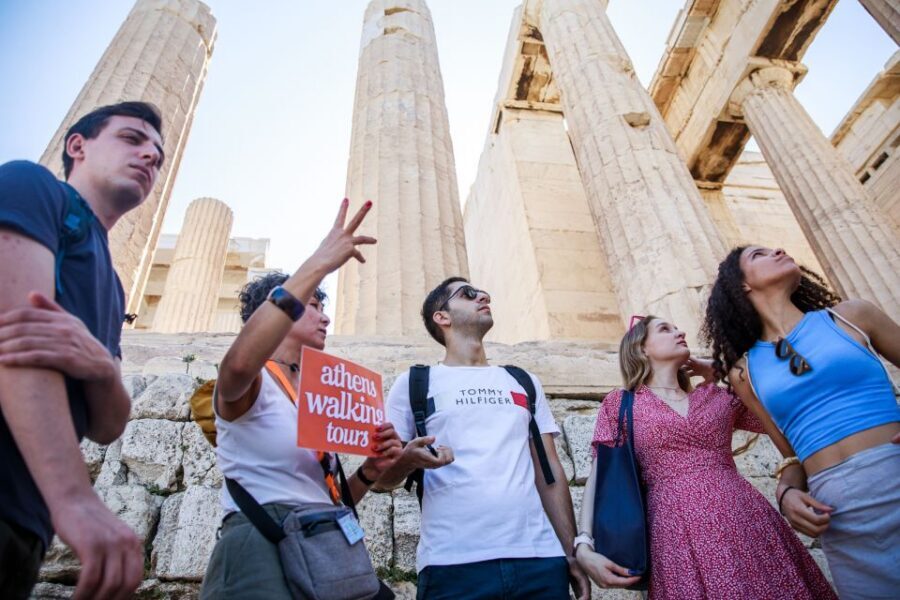
This is a short, focused Athens history day. In about 3.5 hours, you’ll go from the sacred hill of the Acropolis down into the Ancient Agora, the commercial, political, and financial heart of ancient Athens.
What makes this format work is that it prevents the common problem: seeing the Acropolis first and then having no idea what life looked like underneath it. Instead, you leave the hill with context, then walk through the civic zone and get a sense of where people argued, traded, and taught.
You can also read our reviews of more guided tours in Athens



Meeting point on Dionyssiou Areopagitou: get there early
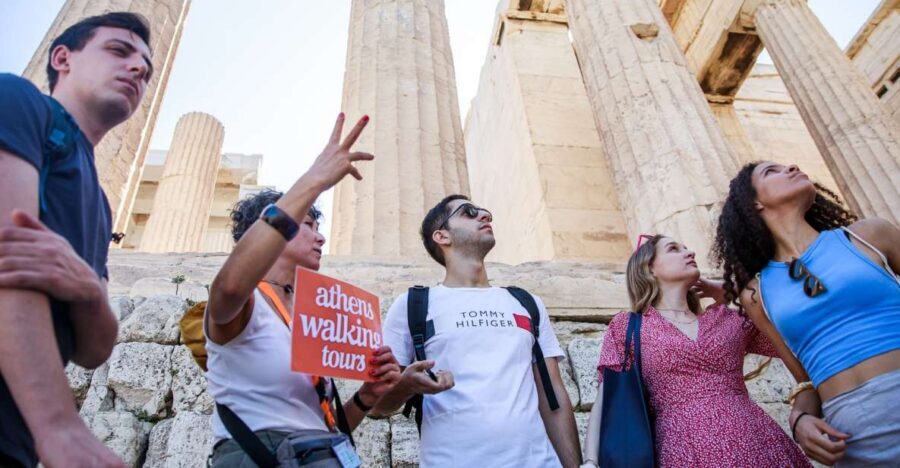
You meet at 3, Dionyssiou Areopagitou Street. Look for the orange sign that says Athens Walking Tours, right at the start of the pedestrian walkway that leads toward the Acropolis from Hadrian’s Arch.
Do yourself a favor and arrive about 20 minutes early. Even if you have skip-the-ticket line access, you’ll still go through airport-style security, and Athens timing can be unforgiving if you show up late.
Entering the Acropolis from the south slope (and why that matters)
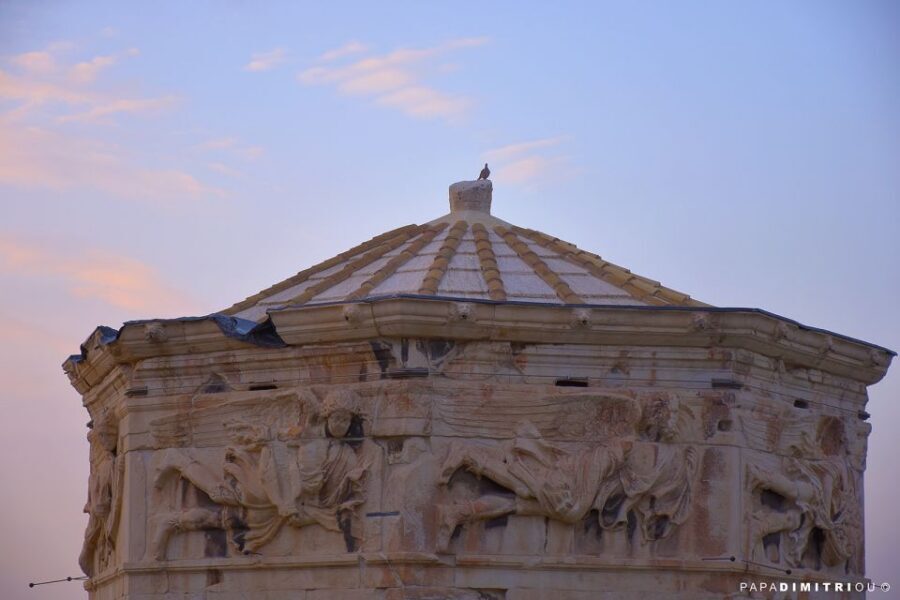
The tour starts at the Acropolis with access from the south slope. That detail matters because it can mean less time packed with everyone trying to fight for the same photo angles.
Along the way, you’ll also hit Dionysus Sanctuary and the Dionysus Theater (dating to the 5th century BC). Seeing Dionysus early gives you a fuller picture of the Acropolis as a religious and cultural space, not just a cluster of famous marble buildings.
The hilltop route: Parthenon, Erechtheion, Propylaia, and more
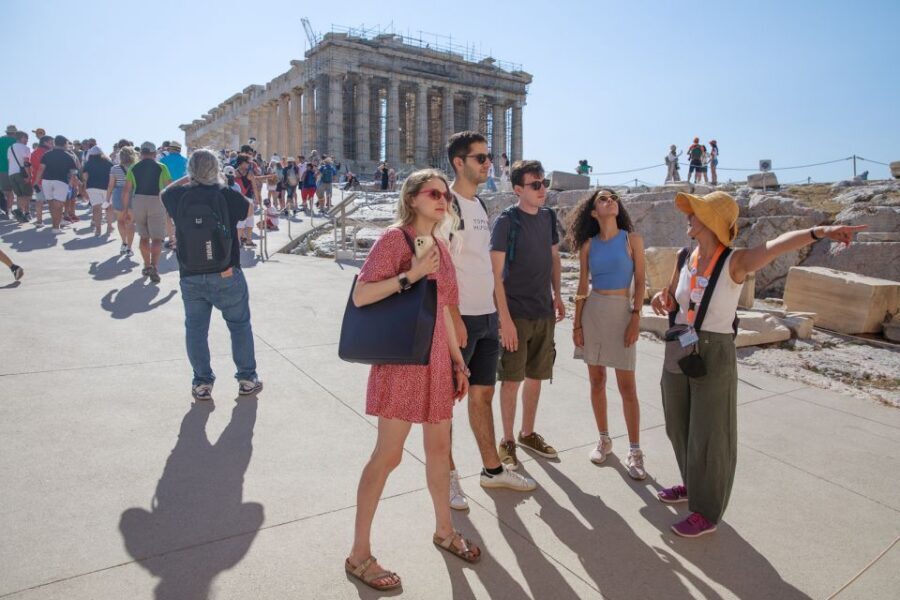
As you ascend, your licensed guide explains the major structures you’ll recognize immediately, plus some that many visitors miss. The key monuments on your route include the Parthenon, the Erechtheion, and the Propylaia (the monumental entrance gateway).
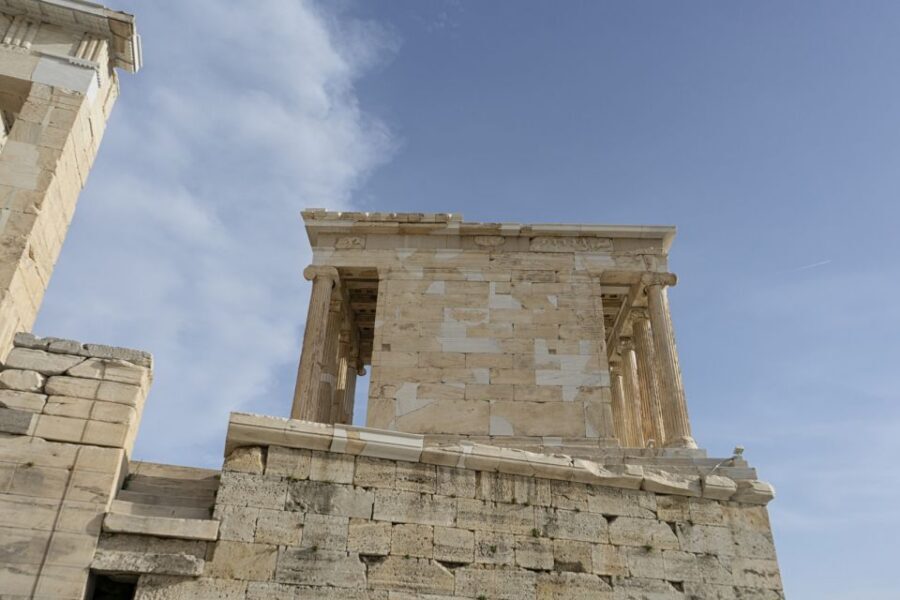
You’ll also learn about the Temple of Nike, the Agrippa Monument, and surrounding landmarks like the Odeon of Herodes Atticus, the Observatory, and viewpoints tied to Philopappos, Mars Hill, and Pnyx Hill. Even if you don’t memorize every name, the guide’s job is to connect each building to what it meant in ancient Athens.
One practical tip: use the guide’s pointing and explanations to help you “read” the ruins. From ground level, it’s easy to see stone. From a guided route, you start seeing function—processions, entrances, ceremonies, and how the Athenians organized space on the hill.
Time for photos: use it wisely at the top
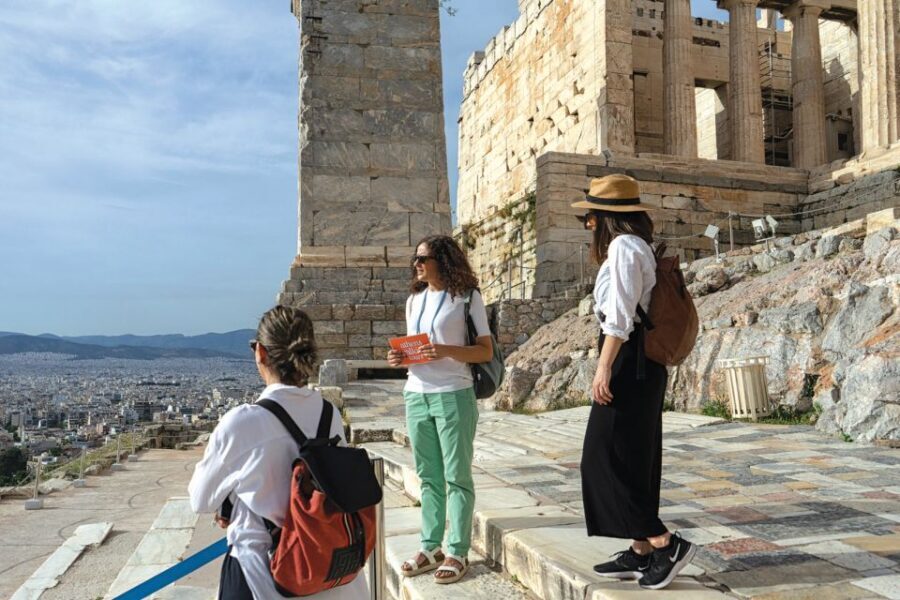
After the guided Acropolis segment, you’ll have free time to explore and take photos. This is a good window to linger near the views and get the shots you care about most, without the pressure of the group moving on every minute.
Bring your phone battery plan and expect bright light. The Acropolis is an open, sun-forward site, so take a few minutes to pause, frame your pictures, then move on while the pace is still comfortable.
- All Day Cruise -3 Islands to Agistri,Moni, Aegina with lunch and drinks included
★ 5.0 · 4,958 reviews




Snacks and the pacing reset between sites
The tour schedule doesn’t include time for a leisurely lunch, so plan to use the stops for quick refueling. Before the Agora portion, you can grab a snack or drink from the canteen, and there’s also a short break after the Acropolis segment.
This matters because both sites are high-walk, high-imagination stops. A small snack keeps you from turning sightseeing into pure survival, especially with the afternoon heat that can hit Athens.
Ancient Agora: where daily life turned political
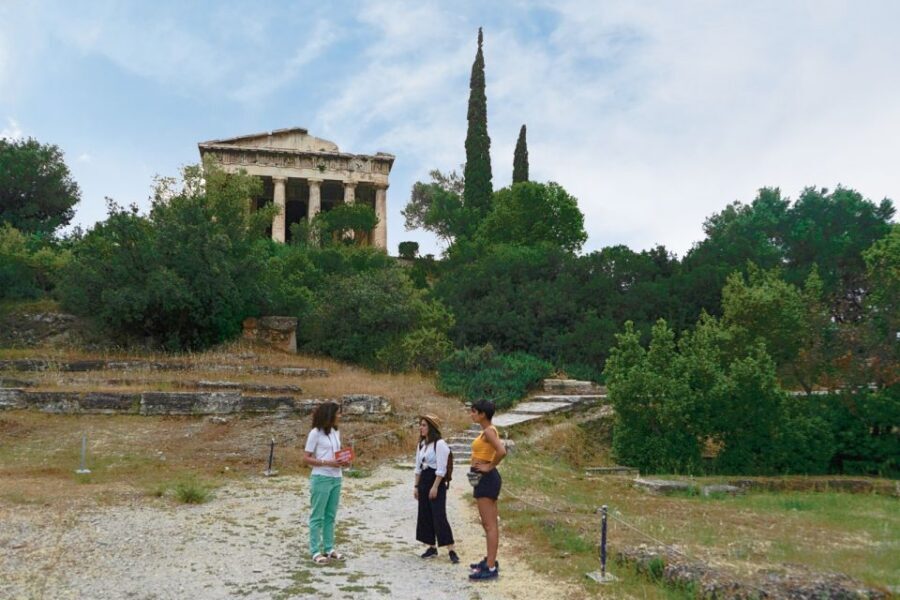
After the Acropolis, you head to the Ancient Agora, typically accessed around 13:00. This area is the setting for the day-to-day mechanics of ancient Athens—commercial, political, and financial life all in one place.
Walking the Agora after the hill makes a big difference. The Acropolis feels ceremonial. The Agora feels practical—like the place where decisions were made, money changed hands, and ideas got argued out in public.
Hephaestus Temple and the best-preserved ancient cue
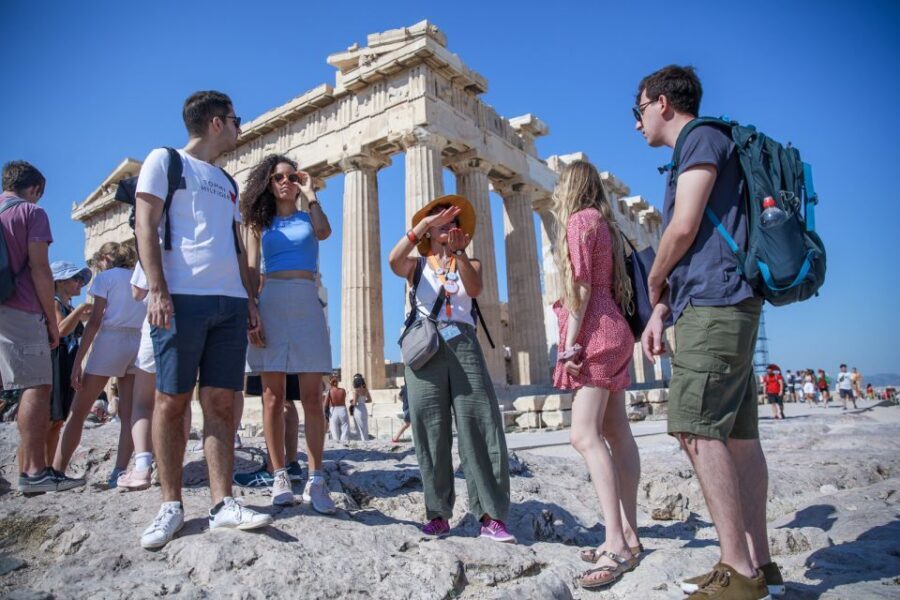
One of your major Agora stops is the Hephaestus Temple. It’s often described as the best preserved Greek temple from the 5th century BC, and you’ll feel why once you’re standing in front of it.
The advantage of visiting this particular temple with a guide is that it gives you something stable to anchor your understanding. When other ruins look fragmentary, a well-preserved structure helps you visualize what the space once looked like—and how people moved through it.
Religious layers: the Church of the 12 Apostles and Apollo Patroos
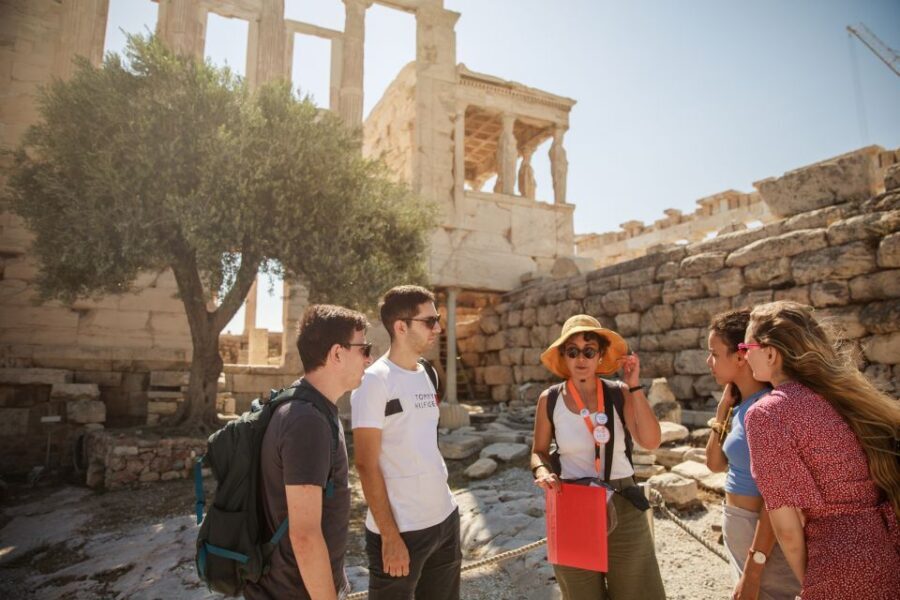
The Agora isn’t just ancient Greece in a single time period. You’ll also see the church of the 12 Apostles, which adds a later layer of religious history on top of classical stone.
Along the way, you’ll learn about additional landmarks including the Temple of Apollo Patroos, the Stoa of Zeus, and the Altar of Zeus. This blend of ancient and later structures is part of why the Agora is so interesting: Athens kept building, repurposing, and reinterpreting space over time.
Attalos Museum: the small facts that make the stones make sense
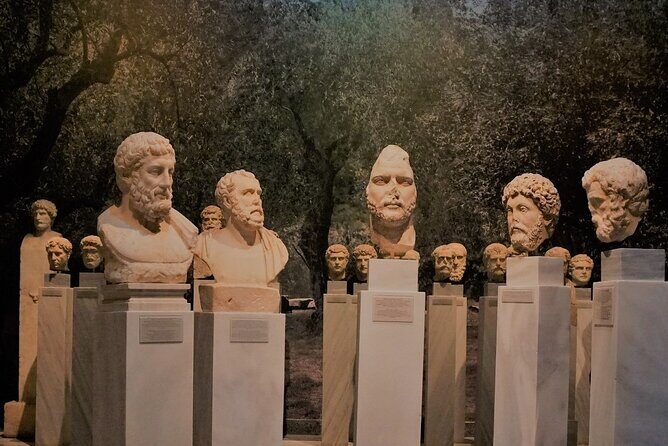
Your guide brings you to the Attalos Museum, which you’ll want to treat as a time-saver, not a detour. It houses artifacts of historical value, including items described as ID’s of ancient Greeks and the original measures and weights for market inspectors.
Those details are more meaningful than they sound. Measuring and weighing were not minor chores—they were the backbone of trade and trust in a public marketplace. When you see the evidence of how the system worked, the Agora becomes less “cool ruins” and more “how society actually ran.”
Skip-the-ticket line access: helpful, but not magic
This tour includes skip-the-ticket line service if you select the option that comes with tickets. Even then, you should be ready for security checks, and waits can vary day to day.
The typical security wait is described as 0 to 10 (or sometimes 30) minutes, with occasional longer delays. In peak season, plan for the longer end and treat it as normal Athens logistics.
Also note a key rule: you’ll need valid entrance tickets for the specific time slot matching the tour schedule. Without a valid entry ticket, you may not be allowed to join because the Acropolis has strict entry timing and the tour can’t wait for latecomers.
Price and value: is $66 worth it?
At $66 per person for a 3.5-hour guided experience, you’re paying for two main things: guided interpretation and time efficiency across two major sites. Entrance fees are not included unless you choose the ticket-included option, so your final cost depends on which option you select.
If you’re deciding between self-guided exploring and hiring a guide, I think this price works best when you care about meaning. A great Acropolis guide helps you understand why each building is where it is and what it was doing. The Agora portion adds value because it explains the human layer—politics, trade, civic life—so you’re not just collecting views.
On the other hand, if you only want to “check boxes” and you’re comfortable reading on your own with minimal explanation, you might not feel this is the best financial deal. But if you want your time to feel organized and your stops to feel purposeful, this is strong value for what you cover.
Who this tour suits (and who should skip it)
This tour is best for history lovers who want an expert guide to connect the monuments to real ancient life. It’s also a good fit if you like a manageable group experience: the pace can include shade stops and time for questions, which helps the day feel less frantic.
It’s not suitable for wheelchair users or people with mobility impairments. There are steps and inclines at the Acropolis, and even when the walking is handled well, the terrain itself is the limiting factor.
If you’re traveling with knee issues, aim for comfortable shoes and take your time on the incline sections. One reason this tour gets praised is that guides tend to keep the walking route considerate, including stopping in shade when possible.
Should you book the Acropolis, Plaka & Ancient Agora tour?
Book it if you want Athens to feel connected: sacred hill up top, civic marketplace below, and an explanation that makes the stones easier to understand. I’d especially recommend it if you’re the kind of traveler who gets more excited by why something mattered than by how quickly you can take a photo.
Consider skipping if your priority is a fully self-paced day with no structured timing. This experience has a set flow and depends on entry times, so it’s best when you can show up early, stay with the group, and enjoy the walking.
FAQ
Is the tour 3.5 hours long?
Yes. The duration is listed as 3.5 hours, with specific time windows for the Acropolis and Ancient Agora portions.
Where is the meeting point for the tour?
You meet at 3, Dionyssiou Areopagitou Street. Look for the orange sign displaying Athens Walking Tours near the start of the pedestrian walkway leading toward the Acropolis.
What time does the Acropolis part start?
The Acropolis portion starts at approximately 11:00.
What time does the Ancient Agora part start?
The tour accesses the Ancient Agora at approximately 13:00 (1pm).
Does the tour include entrance tickets?
It depends on the option you select. If you choose the WITH Ticket option, everything is included. If you choose WITHOUT Ticket, you must buy entrance tickets yourself for the correct date and time slot.
How does skip-the-ticket line work if I still need security checks?
Skip-the-ticket line service may still involve some waiting for security checks. Waiting times vary, with a typical range of 0 to 10 or 30 minutes, and it can be longer in rare cases.
What do I need to bring, and what isn’t allowed?
Bring passport or ID card, a student card (if applicable), and cash. Baby strollers are not allowed, and luggage or large bags are also not allowed.



More Guided Tours in Athens


More Tours in Athens

More Tour Reviews in Athens
- All Day Cruise -3 Islands to Agistri,Moni, Aegina with lunch and drinks included
★ 5.0 · 4,958 reviews