REVIEW · ATHENS
Athens Half-Day Private Tour Acropolis, Parthenon City Highlights
Book on Viator →Operated by Athens Day Trip Tours · Bookable on Viator
Athens works best when you have a plan. This half-day private tour does the planning for you, pairing the big-name sites with quick context so you spend less time guessing and more time looking up at the real stuff.
I especially like that it’s built around time-saving stops: Acropolis first, then the Acropolis Museum, and then a smart scatter of other icons around central Athens. You’ll also get a guided driving/onsite storytelling style that can make the stones feel like a place with people, politics, and myth behind it.
The main thing to consider is cost on top of the listed price: Acropolis and Acropolis Museum tickets are not included, and if you want a licensed guide for inside sites, that can add extra expense.
In This Review
- Key highlights to know before you go
- A 5-hour private Athens loop that keeps you moving (without rushing)
- Starting with the Acropolis: what you should look for
- Acropolis Museum: why it works right after the ruins
- Monument to the Unknown Soldier: a short stop with real weight
- Olympian Zeus and the layers of Athens: ancient to Roman
- Quick culture breaks: Hadrian’s arch, the National Library, and the university
- Syntagma Square, Lycabettus Hill views, and photo time that’s worth the stop
- Panathenaic Stadium (Kallimarmaro): ancient athletics, rebuilt in marble
- Price, entrances, and whether this is good value for you
- What you’ll enjoy most (and who should choose this tour)
- Should you book this Athens half-day private tour?
- FAQ
- How long is the Athens half-day private tour?
- Is hotel pickup and drop-off included?
- What’s included in the price?
- Are entrance fees to the Acropolis included?
- Are entrance fees to the Acropolis Museum included?
- Which stops are free to enter on this route?
- Is this tour private or group?
- Is the tour available in English?
- Can I request a licensed tour guide?
- What is the cancellation policy?
Key highlights to know before you go

- Private and focused: only your group, with hotel pickup/drop-off and an air-conditioned car for a low-stress route.
- Acropolis + Museum sequencing: see the monuments first, then make sense of them at the Acropolis Museum.
- Hourly Monument to the Unknown Soldier ceremony: a short stop with a polished, serious moment.
- Roman Athens stops: quick hits like the Hadrian arch help you spot layers beyond ancient Greece.
- Big views without a full day: Lycabettus Hill gives panorama time even on a tight schedule.
- Efficient highlights loop: Panathenaic Stadium, Syntagma Square, and the major sights fit into ~5 hours.
A 5-hour private Athens loop that keeps you moving (without rushing)
This is a half-day tour designed for people who want Athens highlights but hate wasting time. You’re in a private vehicle with pickup and drop-off, so you’re not juggling buses, taxis, and ticket lines with a tired brain.
Expect about 5 hours on the clock, with a structure that keeps the day logical: the Acropolis area early (when your energy is still good), then the museum, then central Athens highlights, then a view stop, and finally Panathenaic Stadium.
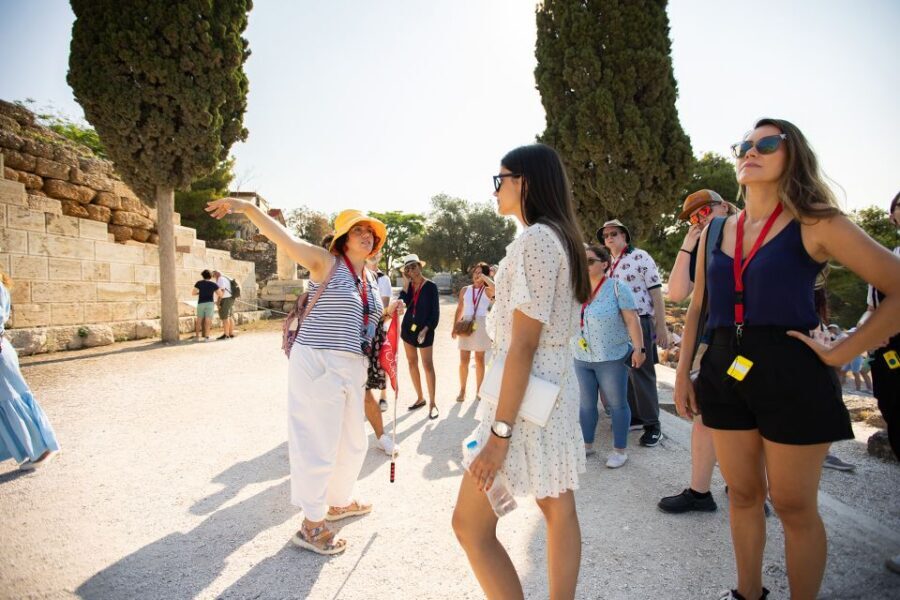
You’ll hear stories along the route from your driver. Reviews specifically mention guides like Dimitris and Maria for making details click, and one big perk repeated in feedback is how comfortable and efficient the pacing feels when you only have a short visit. Also, you get bottled water, which sounds basic until the Athens sun starts working on you.
You can also read our reviews of more city tours in Athens



Starting with the Acropolis: what you should look for

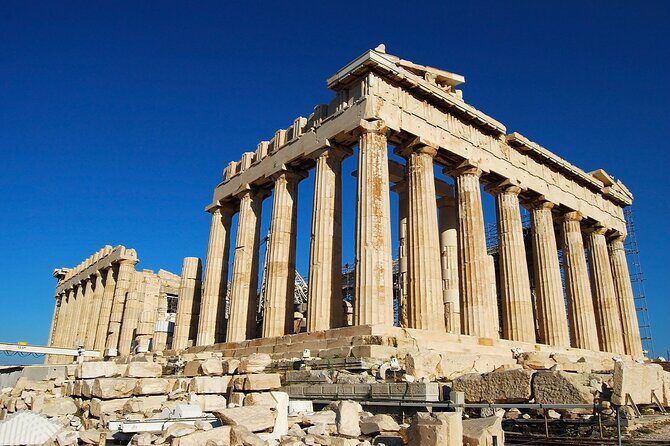
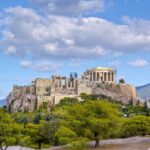
The Acropolis is the whole reason most people come to Athens. On this tour, it’s stop one, and you’ll spend about 1 hour on-site (Acropolis ticket not included).
What I like about this stop is the way you’re not just walking between famous buildings—you’re tracing a spiritual and political map. You’ll be pointed toward the Parthenon, dedicated to Athena (Athena Parthenos), plus key structures at the Acropolis complex:
- Propylaea: the monumental entrance to the sacred area
- Temple of Athena Nike: the smaller, sharper temple that signals the Athenians’ sense of power and ceremony
- Erechtheion and its Caryatides: those iconic female figures tied to worship of both Athena and Poseidon
- Odeum of Herodes Atticus: a Roman-era music theatre often used as a visual marker when you’re trying to understand the site’s layers
- The Theatre of Dionysus: the cultural stage that helps explain why Athens mattered beyond war and politics
Practical note: you’ll want comfortable shoes and a slow, steady pace. Even with a plan, you’ll still be moving on uneven ground and looking up a lot. If you’re hoping to reduce hassle, ask your provider about entry timing and whether your ticket/setup helps with shorter lines. One of the best comments you’ll see about this style of tour is that it can help you skip the worst waiting at major spots like the Parthenon.
Acropolis Museum: why it works right after the ruins
After the heights, the Acropolis Museum is a smart follow-up. You’ll have about 1 hour there, and museum tickets are not included.
Here’s why I think this stop earns its place: you’ve just seen the structures outside. Now you can connect fragments and figures to what they probably looked like in context. The museum is described as modern and exciting, and the big value is that you stop treating the Acropolis like a set of isolated monuments and start seeing it as a system—art, worship, and public identity built over time.
This is also where your photos tend to improve. Outside, you’re fighting distance and crowds. Inside, you get clearer context on sculptural details and how specific pieces relate to the buildings you walked through earlier.
Monument to the Unknown Soldier: a short stop with real weight

Next up: the Monument to the Unknown Soldier, with about 15 minutes on-site. Admission is free here.
The thing to know is that this stop isn’t just a photo op. The monument was inaugurated on March 25, 1932, originally honoring Greek soldiers who died in wars and conflicts. It’s meant to be a symbol of remembrance and national unity.
The highlight for many people is the changing of the guard ceremony every hour. The pace is methodical and choreographed. If you go close to the monument area, keep a respectful, quiet tone. That doesn’t mean silence-obsessed tourism. It just means don’t turn it into a comedy set.
Olympian Zeus and the layers of Athens: ancient to Roman

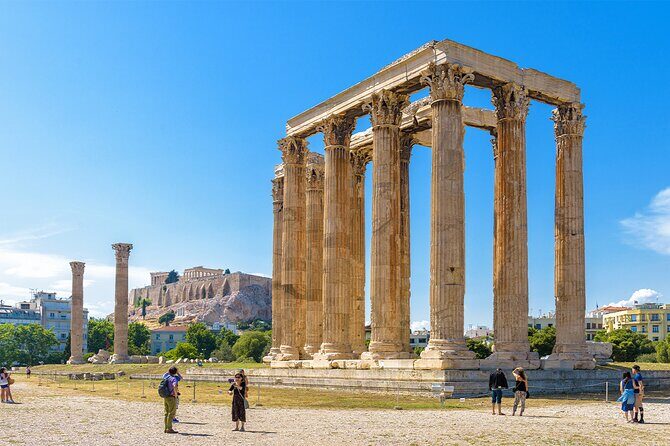
You’ll then reach the Temple of Olympian Zeus for about 10 minutes. Admission is free.
This is a quick stop, but it’s an educational one because the site tells a story of slow power. Construction began in the 6th century BC, but it wasn’t finished until the 2nd century AD under Roman Emperor Hadrian. That long timeline comes from shifting politics in Athens.
You’ll also hear what the temple was built to honor: Zeus, the chief deity in the Greek pantheon. The temple once housed a massive statue of Zeus made of gold and ivory, attributed to sculptor Phidias.
Even if you don’t linger, this stop helps you understand something most visitors miss: Athens didn’t become important, then stop. It kept getting reinterpreted by new rulers, new tastes, and new eras.
You can also read our reviews of more private tours in Athens



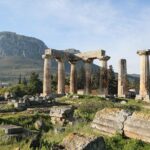

Quick culture breaks: Hadrian’s arch, the National Library, and the university
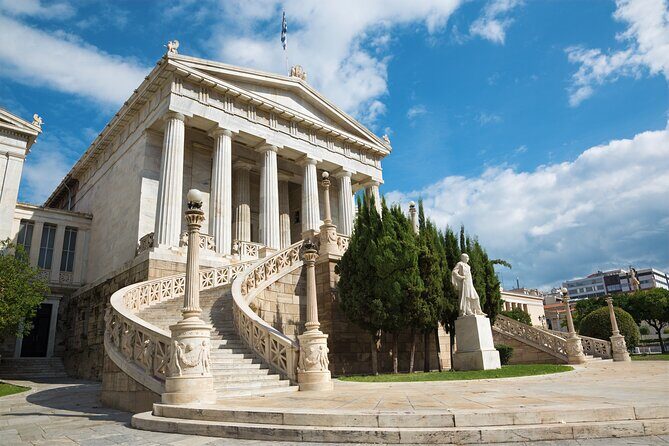
In the middle of the route, the tour includes stops such as the National Library of Greece and the National and Kapodistrian University of Athens, plus Hadrian’s Arch (built in 132 AD).
These aren’t always the headline reasons people buy a tour. But I like them because they point you to the Athens you don’t automatically seek out on your own:
- Hadrian’s Arch marks a divide between what’s called the older city tied to mythological and historical past, and the newer Roman city established by Hadrian.
- The National Library, founded in 1832, reflects the rebuilding and renewal after Greece’s independence from Ottoman rule.
- The University of Athens, founded in 1837, is tied to the early modern era and is one of the oldest higher education institutions in the modern Greek state.
Think of these stops as wayfinding. They help you see Athens as a living city layered with eras, not only a museum with sidewalks.
Syntagma Square, Lycabettus Hill views, and photo time that’s worth the stop

After the historical bites, you’ll reach Syntagma Square, with about 20 minutes. Admission is free.
“Syntagma” means Constitution, and the square is named after the Constitution of 1844 granted by King Otto. It also becomes a stage for protests, celebrations, and political events. If you want a quick sense of modern Athens’ heartbeat, this is one of the easiest places to get it.
Then comes a view stop: Lycabettus Hill (about 20 minutes, free). This is the highest point in Athens, and it’s famous for panoramic views over the city, the Acropolis, and the Aegean Sea.
One of the coolest parts here is the mythology behind it: legend says the goddess Athena dropped a limestone rock she was carrying, creating the hill. You can reach the summit by foot or funicular, and there’s also a white chapel of St. George at the top—small, bright, and very easy to photograph.
If you’re going for the best pictures, aim for softer late light when possible. Not magic, just better camera conditions.
Panathenaic Stadium (Kallimarmaro): ancient athletics, rebuilt in marble

Your final major stop is Panathenaic Stadium—about 25 minutes. Admission is free.
This arena matters for a reason that’s easy to miss if you only treat it like a sports site: it sits on the spot of an ancient stadium dating to 330–329 BC, originally built for the Panathenaic Games—athletic competitions tied to the Panathenaic Festival honoring Athena.
The stadium is also famous for being one of the most iconic sports venues in the world, and it gives you a physical sense of how Greeks imagined public life: sport, ceremony, and identity in the same space.
By the time you arrive here, you’ve already seen temples and museums. So this stop adds another angle: Athens wasn’t only worship and empire. It was also competition and community.
Price, entrances, and whether this is good value for you
The tour price is listed at $118.94 per person for about 5 hours. That base price includes real practical stuff: hotel pickup and drop-off, an air-conditioned vehicle, bottled water, and a driver who brings historical context during the day.
But you do need to budget for entrance fees on top:
- Acropolis ticket: €30 per person
- Acropolis Museum (or Ancient Agora, as listed): €20 per person
So the value isn’t only about the tour cost—it’s about what you avoid. You’re paying for organization and time. For a short stay, buying this structure usually makes sense because Athens highlights are scattered and tickets add friction. If you were doing this yourself, you’d still pay entrance fees, and you’d spend more energy coordinating.
One more cost consideration: the driver provides history, but isn’t described as a licensed guide inside the sights. A licensed tour guide can be requested depending on availability, and that’s listed as an additional €60 per hour. If you’re the type who wants guided commentary inside every ticketed building, ask about licensing options before you go.
What you’ll enjoy most (and who should choose this tour)
I think this fits best if:
- You’re on a first visit to Athens and want the essentials without stretching a full day.
- You only have a morning or half-day, or you’re timing things around flights and connections.
- You like a route with stops that make sense in order: ruins first, then museum context.
It’s also a good match for people who want a private experience, since the tour is described as private, with only your group.
From the feedback I see emphasized in guide names and comments—especially about efficient pacing and feeling well taken care of—it’s a strong pick for travelers who want their Athens day to feel structured, not stressful. If you’re the type who likes wandering without a plan, you might prefer a more open schedule instead.
Should you book this Athens half-day private tour?
Yes, if you want Athens highlights packed into a smooth half-day with pickup and a route that keeps the logic tight. Plan to add the Acropolis and Acropolis Museum tickets to your budget, and consider whether you want a licensed guide inside for the in-depth mode.
If your goal is simply to see the Acropolis, get orientation, and then move on to other parts of Athens (or your next transport), this tour is one of the most practical ways to do it without burning hours on logistics.
FAQ
How long is the Athens half-day private tour?
The tour duration is about 5 hours.
Is hotel pickup and drop-off included?
Yes, hotel pickup and drop-off are included.
What’s included in the price?
Included items are an air-conditioned vehicle, bottled water, a driver with deep knowledge of history, and fluent English speaker service.
Are entrance fees to the Acropolis included?
No. The Acropolis entrance fee is not included and is listed as €30 per person.
Are entrance fees to the Acropolis Museum included?
No. The Acropolis Museum ticket is not included and is listed as €20 per person (with Ancient Agora also mentioned in the same ticket line).
Which stops are free to enter on this route?
Stops listed as free include the Monument to the Unknown Soldier, Temple of Olympian Zeus, Syntagma Square Fountain, Lycabettus Hill, and Panathenaic Stadium.
Is this tour private or group?
It’s private. Only your group participates.
Is the tour available in English?
Yes, the tour is offered in English.
Can I request a licensed tour guide?
Yes, a licensed tour guide can be requested depending on availability, and it’s listed as an additional €60 per hour.
What is the cancellation policy?
Free cancellation is allowed up to 24 hours in advance for a full refund.

More City Tours in Athens


More Tours in Athens


More Tour Reviews in Athens
- All Day Cruise -3 Islands to Agistri,Moni, Aegina with lunch and drinks included
★ 5.0 · 4,958 reviews