REVIEW · ATHENS
4-Day Most Popular Greek Sites: Nafplio, Olympia, Delphi, Meteora
Book on Viator →Operated by EUDAIMONIA Private Tours · Bookable on Viator
Ancient Greece deserves a calmer pace than a crowded bus. This 4-day route strings together the biggest hits from the Peloponnese and Central Greece, with private touring and real time at the sites instead of quick photo sprints. Two things I especially like are the included top-class lodging with breakfast and lunch and the fact that the days are structured for comfort, not rushing.
The trade-off is simple: you’ll cover a lot of ground by car. And since entrance fees are not included for most major stops, your final budget will depend on the tickets you choose to add.
In This Review
- Key points to know before you go
- Why this Athens-to-Meteora plan feels different than a bus tour
- Day 1: Corinth Canal, Epidaurus theatre, the Palamidi climb, and Mycenae’s myth-making
- Corinth Canal: a short stop with big geography payoff
- Epidaurus Ancient Theatre: the acoustics test
- Palamidi Castle and the 999 steps to Old Nafplio
- Nafplio: lunch, old town wandering, and a port-side evening option
- Mycenae: UNESCO ruins and the Agamemnon connection
- Optional Ancient Corinth (Archaia Korinthos)
- Day 2: Olympia ruins plus the museum, then across the Rio–Antirrio Bridge
- Olympia: stadium energy and temples of Zeus and Hera
- Olympia Museum: sculptures and the Hermes by Praxiteles
- Rio–Antirrio Bridge: a quick crossing with scale
- Day 3: Delphi’s oracle world, the Tholos photo stop, Arachova lunch break, and Meteora timing
- Delphi: where Apollo’s oracle spoke
- Delphi Archaeological Museum: connect the dots
- Tholos of Athena Pronaia: the stop most people miss
- Arachova: mountain village break for photos and lunch
- Meteora: optional timing, one monastery to start (and maybe more)
- Day 4: Great Meteoron, Varlaam, Holy Trinity, plus a Thermopylae history stop
- Great Meteoron: the biggest and oldest you can see
- Varlaam Monastery: a story of ascent and rebuilding
- Holy Trinity at Meteora: your favorite pick of the day
- Thermopylae: a short battlefield pause before going home
- Price and value: what you pay for, and where extra costs show up
- The guide factor: Panayiotis and Theodore show up in the right way
- Practical notes: driving time, walking effort, and tickets
- Who should book this 4-day route
- Should you book?
- FAQ
- What time does the tour start?
- Does the price include hotel pickup and drop-off?
- Are breakfast and lunch included?
- Are entrance fees included for the major sites?
- Is this tour private?
- How many Meteora monasteries will you visit?
- Do you cross the Rio–Antirrio Bridge on the way to Delphi?
- What fitness level do I need?
- Can I get a refund if I cancel?
Key points to know before you go
- Private, just-your-party touring means less time waiting and more time looking closely
- Included hotels plus breakfast and lunch make the long driving days feel manageable
- UNESCO-packed Day 1 and Day 2 focus on Mycenae, Epidaurus, and Olympia
- Meteora is flexible: you’ll visit 2–3 monasteries that are open, depending on timing
- You get a real food-and-drink day plan, not just a sightseeing checklist
- New, non-smoking vehicles plus pickup and drop-off simplify logistics
Why this Athens-to-Meteora plan feels different than a bus tour
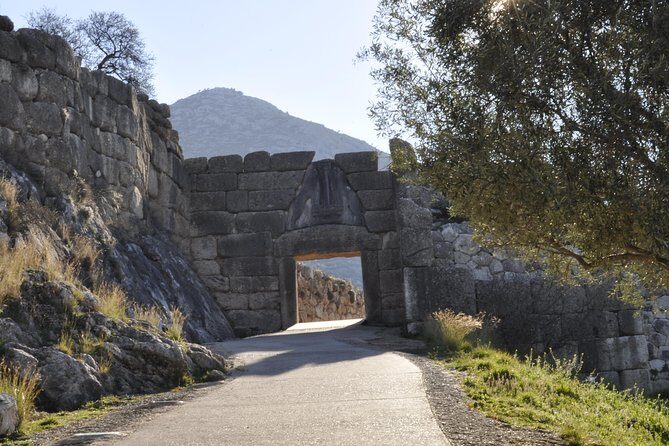
Starting at 8:00 am in Athens, you’ll ride in a brand new (2021–2023) non-smoking vehicle with a driver. This is a private tour, so you’re not negotiating with other groups about when to stop, where to park, or how long you can spend inside a ticketed site.
The big idea here is pacing. Yes, the geography is wide. But the promise is that you’ll spend more time where it matters and less time in transit friction. That’s especially important for big sites like Epidaurus and Mycenae, where a quick stop doesn’t do the place justice.
Another practical plus: you’ll have hotel pickup and drop-off, plus in-car bottled water and an information booklet for the sites. You can focus on the day, not on logistics.
You can also read our reviews of more tours and experiences in Athens
Day 1: Corinth Canal, Epidaurus theatre, the Palamidi climb, and Mycenae’s myth-making
This day is the “Peloponnese hits” starter pack. It moves fast on paper, but it’s built with real breaks: a major theatre, a fortress climb, lunch in Nafplio, and two major ancient stops.
Corinth Canal: a short stop with big geography payoff
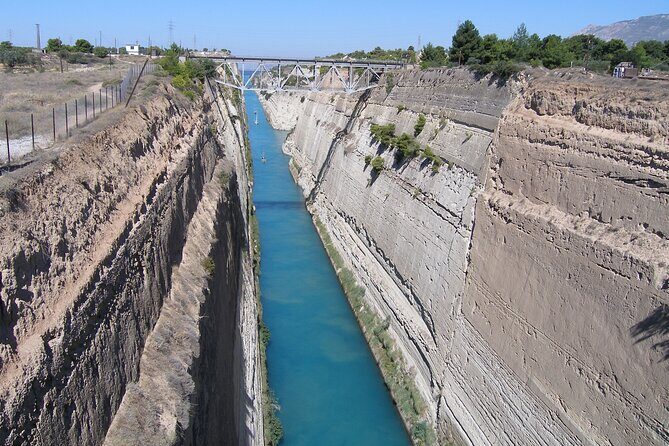
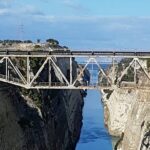
You’ll pause at the Corinth Canal for about 15 minutes. It connects two seas and cuts through the narrow strip of land that separates the Peloponnese from the Greek mainland. Even if you don’t do more than look and take a few photos, it sets the stage for the whole trip.
The good part: the admission is free, so it’s a low-cost, high-awareness stop.
Epidaurus Ancient Theatre: the acoustics test
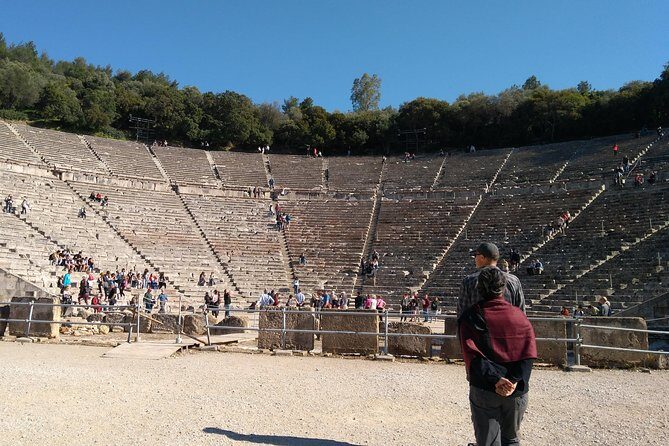
Next up is the Ancient Theatre of Epidaurus. Plan about 1 hour 30 minutes here. This theatre is known in the tour description for its amazing acoustics, which is exactly the kind of detail that makes you want more than a glance at the seats.
Tickets for this stop are not included, so budget for admission if you want to go inside and explore fully. Also, treat this as a “walk and look” site—comfortable shoes help.
Palamidi Castle and the 999 steps to Old Nafplio
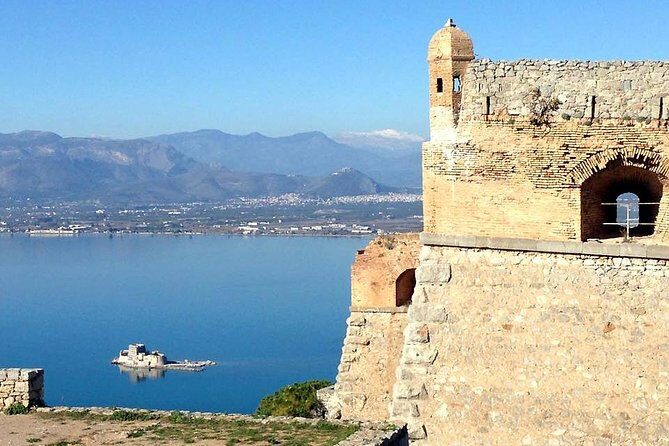
Then it’s Palamidi Castle, with a walk through the Venetian-style castle area and down 999 steps toward old Nafplio. You’ll have about 40 minutes.
This is one of the stops where your moderate physical fitness level matters. If steps aren’t your thing, you can still enjoy the area, but you may want to go slower and plan on extra time for breathing and pauses.
Admission isn’t included, so this is another place where tickets add up if you’re doing everything.
- All Day Cruise -3 Islands to Agistri,Moni, Aegina with lunch and drinks included
★ 5.0 · 4,958 reviews



Nafplio: lunch, old town wandering, and a port-side evening option
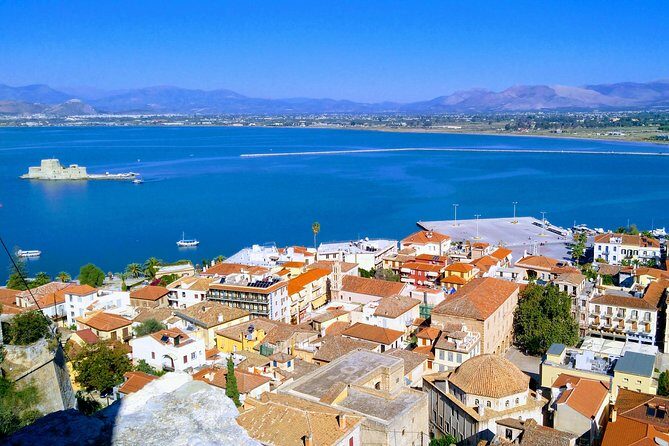
After the fortress, you land in Nafplio for lunch. The schedule allows about 2 hours, and you’ll have time to walk through the old town and the port—a big part of why Nafplio is often considered one of the prettiest bases in the region.
Lunch here is part of what makes this tour feel “civilized.” Since lunch and drinks are included on all days, you’re not constantly hunting for food between ticketed sites.
There’s also an optional evening add-on: a free ride to drop you at Nafplio Port and Old Town, plus pick-up later. It’s listed as about 2 hours, and it can be a nice decompression after long driving.
Mycenae: UNESCO ruins and the Agamemnon connection
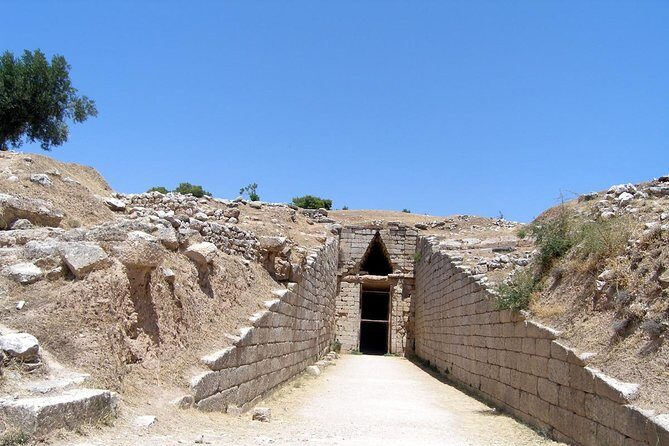
Later you’ll visit Archaeological Site Mycenae, a UNESCO World Heritage Site. The time slot is 2 hours, plus museum time. The site is linked in the tour notes to King Agamemnon and the Mycenean civilization, so it’s not just stones—it’s a story-setting day.
Admission isn’t included, but you get enough time here to make the ticket feel worth it.
Optional Ancient Corinth (Archaia Korinthos)
If your group wants extra ancient context, there’s an optional stop at Ancient Corinth (Archaia Korinthos). It’s described as having roots in the Neolithic period (6500–3250 BC), with a prosperity shift in the 8th century BC. You’ll have about 1 hour.
If you’re trying to keep the day from getting too packed, you can skip this and still get the core “big ancient Greece” feeling.
Day 2: Olympia ruins plus the museum, then across the Rio–Antirrio Bridge
Day 2 focuses on Olympia in a way that feels more complete than a drive-by. You’ll do both the archaeological site and the Olympia museum.
Olympia: stadium energy and temples of Zeus and Hera
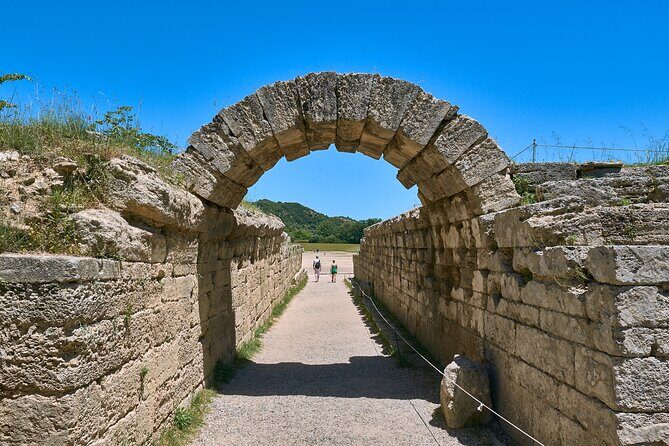
The Archaeological Site of Olympia is a 1-hour stop, with free admission noted. You’ll see training areas, a stadium, and temples dedicated to Hera and Zeus.
The key detail is what this place represents: the tour describes Olympia as hosting the original Olympic Games, founded in the 8th century B.C. That gives the ruins a sense of purpose. You’re not looking at random ruins; you’re standing in a place linked to a specific tradition.
Olympia Museum: sculptures and the Hermes by Praxiteles
After the ruins, you’ll visit the Archaeological Museum of Olympia for about 2 hours. Admission isn’t included here.
The tour highlights specific works you’ll get to see: sculpted decoration from the marble temple of Zeus and the famous Hermes carved by the ancient Greek sculptor Praxiteles. Even if you’re not a sculpture superfan, those named highlights help you aim your attention instead of getting lost in the rooms.
Rio–Antirrio Bridge: a quick crossing with scale
Then you cross the Rio–Antirrio Bridge. Expect about 10 minutes. The tour notes it as one of the world’s longest multi-span cable-stayed bridges, and the longest of its fully suspended type.
It’s not a long stop, but it’s a satisfying “we’re traveling between worlds” moment. Admission is free.
Day 3: Delphi’s oracle world, the Tholos photo stop, Arachova lunch break, and Meteora timing
Day 3 is split between myth-world Delphi and the dramatic monastic scenery at Meteora (time allowing).
Delphi: where Apollo’s oracle spoke
You’ll spend about 2 hours in Delphi with admission marked as free. The tour describes Delphi as the sanctuary where the oracle of Apollo spoke, and it mentions the omphalos, the navel of the world.
That is the kind of framing that makes ruins feel like a lived location. You’re not just moving through structures; you’re trying to understand what people believed here.
Delphi Archaeological Museum: connect the dots
Next is the Delphi Archaeological Museum for about 30 minutes. Admission isn’t included.
This is a short slot, so you’ll get the essentials: the museum is described as showing the history of the Delphic sanctuary and the oracle story. Use this time to connect what you saw outside with artifacts inside.
Tholos of Athena Pronaia: the stop most people miss
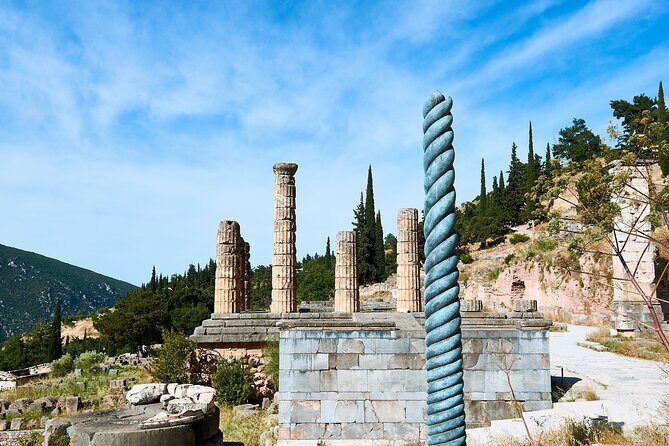
Then comes the Tholos of Athena Pronaia for about 25 minutes. This is one of those stops the tour explicitly calls out as commonly skipped by many visitors and tour agencies, yet it’s described as an important first-photo spot people see when they search Delphi.
Tickets aren’t included, but if you like getting the “less obvious” angle on a famous site, this is the kind of inclusion that justifies a private route.
Arachova: mountain village break for photos and lunch
After Delphi, you stop at Arachova. It’s described as a favorite for ski lovers, celebrities, and first-time visitors who want a mountainous setting. You’ll have about 30 minutes, including time for pictures and lunch.
If you’re tired of staring at the same kind of ruins all day, this is a useful reset. And since lunch and drinks are included as part of the tour plan, you can treat it like an actual break.
Meteora: optional timing, one monastery to start (and maybe more)
Finally, Meteora is marked as optional depending on arrival time. If timing works, you may get evening photos and see one monastery. The plan allows about 1 hour with admission marked as free for this part.
Because Meteora needs planning around opening times, your exact experience on Day 3 depends on what you can fit before Day 4. Still, even the partial start can make Day 4 feel more focused.
Day 4: Great Meteoron, Varlaam, Holy Trinity, plus a Thermopylae history stop
Day 4 is the monastery day, with a bonus stop at Thermopylae before returning to Athens.
Great Meteoron: the biggest and oldest you can see
You’ll visit the Holy Monastery of the Great Meteoron – Transfiguration of the Saviour. The schedule says you’ll visit two or three monasteries that are open on the day. Great Meteoron is described as the oldest, biggest, and most important among the monasteries preserved today, built on an imposing rock.
Admission isn’t included here, and you’ll have about 1 hour. If you only manage one Meteora interior, this is the one you want.
Varlaam Monastery: a story of ascent and rebuilding
Next is Varlaam Monastery, about 45 minutes. The tour notes a daring ascetic named Varlaam climbed to the rock in 1350, and the monastery was named after him. After he died, the rock was abandoned for about 200 years until 1517, when construction restarted with two priest-monks: Theophanes and Nektarios Apsarades.
Admission isn’t included. For me, the value here is that you’re not just looking at architecture—you’re getting names and dates that give the place momentum.
Holy Trinity at Meteora: your favorite pick of the day
Then comes the Monastery of the Holy Trinity at Meteora for about 1 hour. It’s described as being built between 1458 and 1476, and it’s labeled as the favorite stop.
Again, admission isn’t included. This is a good time to slow down. Meteora can feel visually intense; that’s exactly when you want time to look and read and not just glance.
Thermopylae: a short battlefield pause before going home
Before returning to Athens, you’ll stop at the Battlefield of Thermopylae for about 30 minutes. The tour frames it as the fight between a Greek alliance led by King Leonidas of Sparta and the Persian Empire of Xerxes I, over three days in 480 BC.
It’s brief, but it’s a good “anchor” moment. You’ll end the trip knowing where the famous story-line in Greece gets its physical setting.
Price and value: what you pay for, and where extra costs show up
The price is $2,805.83 per person for about 4 days. That number looks large until you break down what’s included.
You’re paying for:
- Hotel pickup and drop-off
- A private in-vehicle plan (not shared with strangers)
- Top-class accommodation plus 3 breakfasts and 4 lunches
- In-car bottled water and an information booklet
- Daily food-and-drink time built into the schedule
- A modern, comfortable vehicle (2021–2023)
In other words, you’re mostly buying convenience and time. You’re not spending your vacation figuring out connections or waiting for a bus schedule.
What’s not included:
- Entrance fees to most of the named sites (Epidaurus, Olympia museum, Delphi museum, the monasteries, and more)
- Any optional ticketed elements
- A professional licensed guide is listed as optional, not included
So the realistic budget strategy is: plan for entrance fees on top of the tour price, and use the included meals as part of your value math.
The guide factor: Panayiotis and Theodore show up in the right way
This tour runs with a driver/leader. From names that have been connected with past departures, you may meet Panayiotis or Theodore (Theo). The consistent theme is strong service: helpful explanations about sites and practical attention to your group’s needs.
One name also comes with a specific detail worth noting: Theodore is described as choosing excellent Greek cuisine for lunch. That matters on a route like this, where food stops aren’t just breaks, they help keep the long days from turning into a grind.
Practical notes: driving time, walking effort, and tickets
A few things you should plan for so the trip feels smooth.
- Expect lots of driving across both the Peloponnese and Central Greece. This isn’t a quiet, local-by-local crawl.
- You should have moderate physical fitness. The big cue is Palamidi Castle’s 999 steps.
- Several sites list admissions as not included. That can turn into a meaningful add-on if you plan to enter everything the schedule allows.
- A few stops are explicitly optional depending on timing and group interest: Ancient Corinth, the Nafplio port evening option, and Meteora on Day 3.
Who should book this 4-day route
This tour makes sense if you:
- Want the famous Greek core—Nafplio, Olympia, Delphi, Meteora—without wrestling a crowded bus
- Like a plan where lunch and drinks are handled
- Can handle long days in a car and you don’t mind a step or two when a stop calls for it
- Prefer a flexible, private rhythm so you can spend more time in the places that grab you
It might be less ideal if you hate driving, or if you’d rather travel slower with a self-guided pace and fewer scheduled stops.
Should you book?
I’d book this if your priority is smart pacing across four of Greece’s headline destinations, with the comfort of pickup, new vehicles, included lodging, and meals done for you. The private format is the real difference-maker here: you gain time at the sites and you lose the awkwardness of sharing minutes with strangers.
I’d skip—or at least compare—if you’re traveling on a tight ticket budget, or if the idea of Palamidi steps and long driving stretches feels like too much.
If you want a structured, food-friendly way to hit Nafplio, Olympia, Delphi, and Meteora in a single trip, this one is built for exactly that.
FAQ
What time does the tour start?
The tour start time is 8:00 am.
Does the price include hotel pickup and drop-off?
Yes. Hotel pickup and drop-off are included.
Are breakfast and lunch included?
Yes. Breakfast is included 3 times, and lunch is included 4 times.
Are entrance fees included for the major sites?
No. Entrance fees are listed as not included for sites such as Epidaurus, Olympia museum, Delphi, Delphi museum, and Meteora monasteries.
Is this tour private?
Yes. It’s a private tour/activity, and only your group participates.
How many Meteora monasteries will you visit?
The plan is to visit two or three monasteries that are open on the day.
Do you cross the Rio–Antirrio Bridge on the way to Delphi?
Yes. You cross the Rio–Antirrio Bridge on the route heading toward Delphi.
What fitness level do I need?
The tour notes that you should have moderate physical fitness.
Can I get a refund if I cancel?
You can cancel up to 6 days in advance for a full refund, and you may receive a 50% refund if you cancel 2–6 days before the experience starts.

More 4-Day Experiences in Athens

More Tour Reviews in Athens
- All Day Cruise -3 Islands to Agistri,Moni, Aegina with lunch and drinks included
★ 5.0 · 4,958 reviews