REVIEW · ATHENS
Anc. Corinth, Mycenae, Epidaurus & Nafplio Full Day Private Tour
Book on Viator →Operated by Athens Taxi Travel · Bookable on Viator
Ruins, tombs, and sea views in one smooth day. This private route strings together some of Greece’s biggest names—from Corinth’s canal engineering to Epidaurus’ theater—without making you race between buses. You get the comfort of an air-conditioned vehicle and private control over your pace.
I especially like two things: flexible timing when you want extra photos or slower wandering, and AC Wi‑Fi comfort for the long stretches of road. It’s the kind of day where the driver can explain what you’re seeing and keep the flow easy, and you’ll even notice how praise often calls out drivers like Costa and Andreas for early, upbeat service.
One possible drawback: several key museums and sites charge entrance fees that are not included in the tour price, so you’ll want a plan for budgeting those add-ons and time for ticketing.
In This Review
- Key Highlights You’ll Care About
- Private Day Trip Perks: How This Route Stays Easy
- Corinth Canal Photo Stop: A Engineering Moment You Can Actually Stop For
- Ancient Corinth and the Agora Feeling: Where Paul Fits Into the Story
- Museum Stop: Corinth Artifacts Without the Crowds of a Big City
- Temple of Apollo: Quick, Iconic, and Worth the Pause
- Mycenae: Two-Stage Thinking About Power and Craft
- UNESCO Site of Mycenae: Walls, Gates, and Royal Imagination
- Lion Gate Photo Moment: Short Stop, Big Symbol
- Museum of Ancient Mycenae: Gold, Jewelry, and What Elite Life Looked Like
- Treasury of Atreus (Tomb of Agamemnon): The Tholos Wow Factor
- Epidaurus: When Ancient Performance and Medicine Meet
- Epidaurus Museum: What the Sanctuary Was About
- Ancient Theatre of Epidaurus: Still Used, Still Impressive
- Sanctuary of Asklepios: Dream, Ritual, and the Logic of Healing
- Nafplio: Easy-Walk Old Town and Fort Views That Pay Off
- Town Stroll and the Big Three Areas
- Bourtzi: A Quick Harbor Photo Stop
- Akronafplia Fortress and Palamidi Castle: The View Stops
- Price and Value: What $548 Gets You Here
- Who This Tour Fits Best (And Who Should Skip It)
- Should You Book This Private Corinth-Mycenae-Epidaurus-Nafplio Day Trip?
- FAQ
- Is pickup included for this Athens day trip?
- Does the tour include Wi-Fi and bottled water?
- Are entrance fees included in the price?
- How many people is the private tour for?
- Will the driver guide you inside the sites?
- How long is the tour?
Key Highlights You’ll Care About
- Private pacing over bus-hopping so you can linger without guilt
- Driver-led context in the car (they won’t enter sites, but they help you make sense of it all)
- UNESCO hits in one day at Mycenae, then world-famous Epidaurus next
- Nafplio viewpoints at Palamidi and the short harbor stop for Bourtzi photos
- Entrance fees are separate for most of the museums and some sites
Private Day Trip Perks: How This Route Stays Easy
This is one of those Athens day trips that works best when you don’t want the usual scramble. The biggest win is that you’re not tied to public-transport timetables. Instead, you’re in an air-conditioned vehicle with Wi‑Fi and bottled water, and you start and stop based on what fits your group.
I also like the practical setup: this tour is private for up to four people. That matters because when you’re chasing major ancient landmarks across the Peloponnese, the real pain isn’t just the driving. It’s the time lost to transfers, crowds, and figuring out where you’re supposed to be next. Here, the driving is handled for you.
The driver is part of the experience, too. They’re not licensed guides who walk through the sites with you, but they can answer questions and share context during the ride. In the feedback I see repeated, drivers like Costa and Andreas come up for being friendly, punctual, and genuinely helpful with information beyond just directions. Some praises even mention small details like ice-cold waters at pickup, plus the sense that the driver paid attention to what the group needed that day.
The other thing to remember: because most site stops are short, the tour is best for people who like a strong highlights loop. If you want a slow, museum-with-a-notebook kind of day, you’ll feel the “see it, then move on” rhythm.
You can also read our reviews of more private tours in Athens


Corinth Canal Photo Stop: A Engineering Moment You Can Actually Stop For
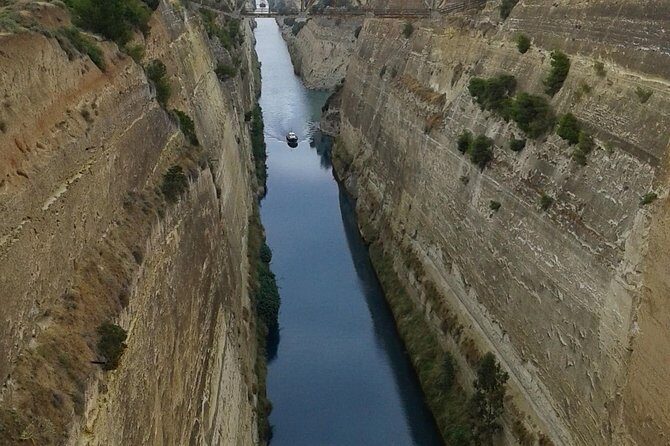
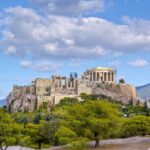
You begin with a quick win: the Corinth Canal. This is the narrow strip of land (the Isthmus of Corinth) where sea routes meet, and the canal is a jaw-dropping reminder that humans can reshape geography. It’s 6.4 kilometers of canal cutting between the Aegean and the Ionian, and your stop is timed for photos and quick appreciation rather than a long tour.
What I like here is that it resets the day. Before you get into ruins and tombs, you see something that’s about Greece as a crossroads. It also gives you a low-stress start. You’re not immediately climbing ancient steps or hunting for shade. You can simply orient yourself, grab pictures, and then head into the older world.
The stop is listed at about 30 minutes, and the admission ticket is free for this part. That makes it a smart opening—an efficient “wow” early on.
Ancient Corinth and the Agora Feeling: Where Paul Fits Into the Story
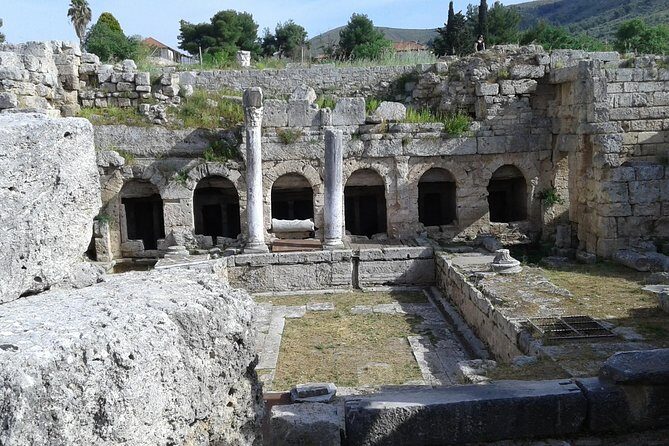
Next comes Ancient Corinth (Archaia Korinthos). This is the kind of site where you can look at stones and still feel the city’s activity. Corinth wasn’t just one temple and a few columns. It was one of the key city-states of ancient Greece, known for commerce, daily life, and a mix of religions and cultures.
Your time here is about 1 hour. That’s enough to walk the main areas and understand what mattered—especially when your driver talks you through what you’re looking at before you scatter. The ruins include the Temple of Apollo and areas connected to the Agora, the social and trading heart of the city.
One detail worth noting: Corinth also connects to early Christianity through the Apostle Paul. You may hear that connection explained along the way, which helps the site feel more specific than generic “ancient Greek ruins.”
A quick heads-up: admission for Ancient Corinth is not included, and you’ll need to purchase it on-site (listed at €15 per person for this and the museum combo). If you’re the type who hates standing in lines without knowing what to do, arrive prepared with cash/card as the site requires.
Museum Stop: Corinth Artifacts Without the Crowds of a Big City
After the ruins, you go to the Archaeological Museum of Ancient Corinth (about 30 minutes). This stop matters because ruins can look like fragments unless someone gives them a timeline. The museum fills in that gap with artifacts like pottery, sculptures, and everyday objects spanning the Geometric period through Roman times.
What I like about placing the museum right after the site is that it turns your walking into a clearer story. You’ll see objects that help you visualize what people used to carry, wear, and use. The museum admission is also not included, listed together with other fees later in the day.
If you’re short on energy, you can still get value here by focusing on a few key galleries rather than trying to see everything. With a private day, you can aim for the pieces that match your interests.
Temple of Apollo: Quick, Iconic, and Worth the Pause
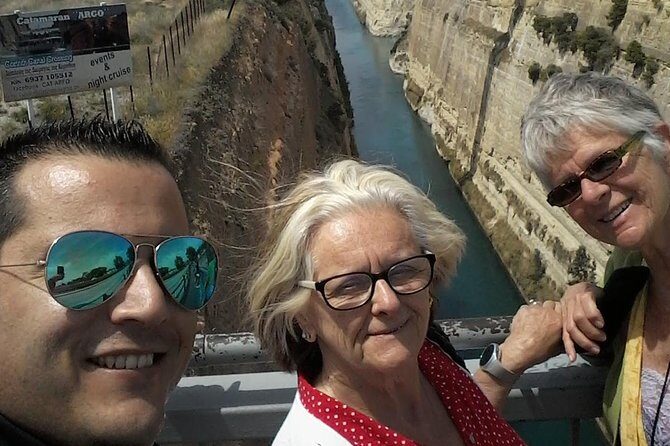
You also stop at the Temple of Apollo (about 15 minutes) with free entry. This is a Doric temple dating back to the 6th century BC, and it’s one of the oldest stone temple remains in Greece.
Fifteen minutes sounds short—until you realize how this works for a day trip. You’re not being asked to stay for an hour-long guided lecture. You’re given enough time to stand at the columns, read the basic context from your guide’s explanations, and get a sense of why this spot became an icon.
If you’re traveling with kids or someone who gets temple fatigue, this is a good compromise: you get the landmark without the long stay.
You can also read our reviews of more tours and experiences in Athens
- All Day Cruise -3 Islands to Agistri,Moni, Aegina with lunch and drinks included
★ 5.0 · 4,958 reviews
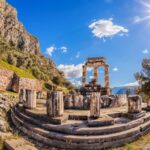



Mycenae: Two-Stage Thinking About Power and Craft
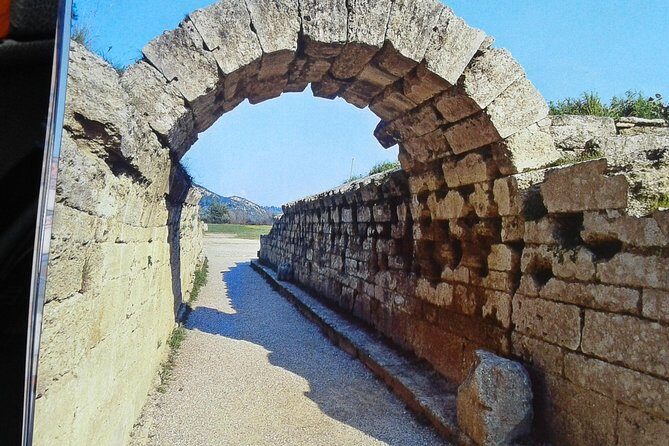
Now the day shifts to Mycenae, a UNESCO World Heritage site tied to the Late Bronze Age. The Mycenae stops are structured like a ladder: you first take in the big-picture architecture, then you zoom into the entrances and tombs, and finally you finish by seeing the objects that bring it to life in a museum.
UNESCO Site of Mycenae: Walls, Gates, and Royal Imagination
You spend about 30 minutes at the Archaeological Site of Mycenae. You’ll see the imposing Lion Gate, the tholos tombs, and remnants of walls built to protect a powerful city. This is where the “city as fortress” idea becomes real.
What I like for visitors: it’s easier to understand Mycenae when you treat it like a layout. Follow the lines of where walls once stood, notice how entrances worked, and connect it to the idea of elite power. Your driver’s commentary can help you keep the big ideas in mind even if you only have a half hour.
Mycenae admission is not included, and the entrance price listed for this plus the museums and treasury is €20 per person.
Lion Gate Photo Moment: Short Stop, Big Symbol
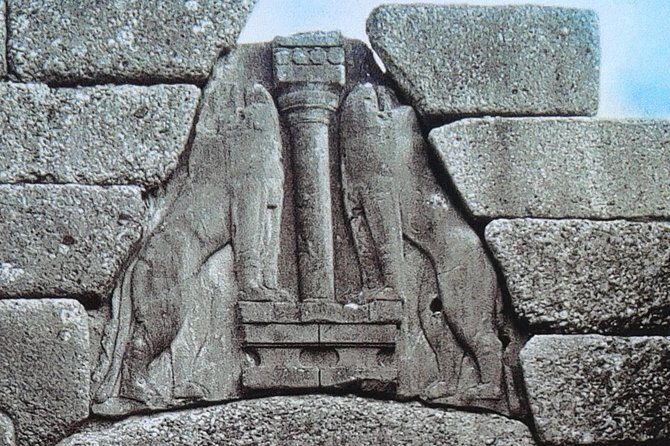
The Lion Gate itself is a free stop (about 15 minutes). It’s one of the most recognizable symbols of Mycenaean civilization, built around 1250 BC, with lion sculptures flanking a large lintel.
This stop works because it’s a clean photo target. You don’t need to decode a museum display; you can simply look at the gate and understand that something impressive and intentional was built here. It’s quick, memorable, and helpful for people who like to anchor a day with iconic images.
Museum of Ancient Mycenae: Gold, Jewelry, and What Elite Life Looked Like
Next is the Archaeological Museum of Ancient Mycenae (about 30 minutes, paid entrance). This museum is a key counterweight to the ruins. Instead of only seeing structures, you’ll also see the craftsmanship—pottery, jewelry, and monumental sculptures—and burial treasures such as gold funerary masks recovered from royal tombs.
If you care about how people dressed and buried their dead, this museum stop is where the Mycenae story gets personal. Even if you don’t go deep into every display label, just seeing the scale of the objects helps you understand why Mycenae mattered.
Treasury of Atreus (Tomb of Agamemnon): The Tholos Wow Factor
Finally, there’s a short stop at the Citadel and Treasury of Atreus, also known as the Tomb of Agamemnon (about 15 minutes, free). The structure is a grand tholos tomb with a massive circular chamber and a corbeled dome, built around 1250 BC.
This is one of those places where the architecture does the storytelling. Stand in front of the entrance conceptually and you’ll understand the cultural priority: this wasn’t casual burial. It was a statement—about wealth, power, and belief.
Short stop tip: if you’re pressed for time, don’t treat this as a checklist stop. Take 2 minutes to look at the dome shape and entrance, then walk away with one clear idea: the Mycenae elite invested in engineered permanence.
Epidaurus: When Ancient Performance and Medicine Meet
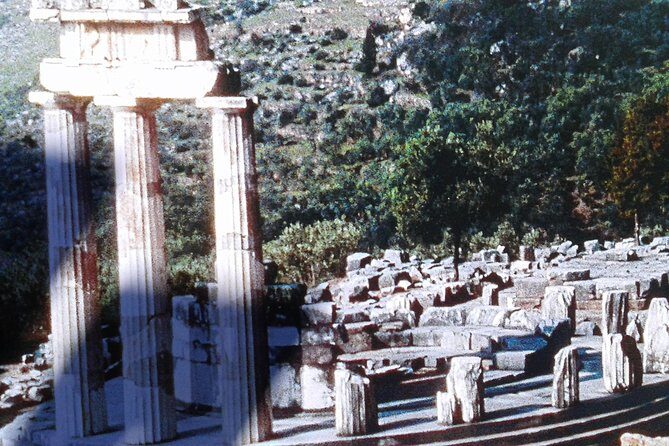
After Mycenae, the route lands at Epidaurus, and this is the part of the day where the names feel almost legendary. Epidaurus blends healing mythology with real-world theater design, and the stops here build on each other.
Epidaurus Museum: What the Sanctuary Was About
You start with the Epidaurus Archaeological Museum (about 30 minutes, paid entrance). The museum focuses on the healing sanctuary dedicated to Asclepius. Expect sculptures, inscriptions, and everyday objects, plus items that connect to Asclepius and to the nearby theater and sacred sites.
What I like: museums at ancient sites can sometimes feel like extras. Here, it acts like a decoder. If you learn what the sanctuary dealt with, the theater and rituals make more sense when you see them later.
Ancient Theatre of Epidaurus: Still Used, Still Impressive
Next is the Ancient Theatre of Epidaurus (about 30 minutes, listed admission not included). This theater is one of the best-preserved ancient theaters in Greece, famous for exceptional acoustics and elegant design.
It once held up to 14,000 spectators, and it’s still used for performances. That last detail matters. Even if you never catch a show, the fact that people still use it today gives the site energy. The theater isn’t frozen in time; it’s part of modern cultural life too.
Your guide explanation will usually point out its role in dramatic festivals honoring Asclepius. Then you’ll have time to walk the seating areas and take in the stage view.
If you care about acoustics, this is the stop to slow down mentally—even with a limited half-hour. Notice the shape, the slope, and the way the theater is designed for voices.
Sanctuary of Asklepios: Dream, Ritual, and the Logic of Healing
You finish Epidaurus at the Sanctuary of Asklepios (about 15 minutes, free). This healing center was one of the most important religious sites in the ancient world. You’ll see structures tied to the sanctuary’s function—temples, baths, altars—and you’ll learn about the healing practices and rituals, including dream interpretation and herbal remedies.
This is a quick visit, but it’s a strong capstone because it connects myth, religion, and health in one place. If you ever wondered how ancient people made sense of sickness, this is where you get the basic idea without needing to read an academic book.
Nafplio: Easy-Walk Old Town and Fort Views That Pay Off
The last phase is Nafplio, and it’s a good change of pace after tombs and temples. You get about 1 hour 30 minutes for the town, plus short stops around the fortifications.
Town Stroll and the Big Three Areas
Nafplio is a coastal town shaped by Venetian, Neoclassical, and Ottoman influences. Your guide explanation will likely orient you to the story, including that Nafplio was the first capital of modern Greece.
You’ll have time to stroll through areas like Syntagma Square (lined with cafes and shops) and get a feel for why this town is such a popular end-point. It’s where the day becomes more human-scale: less ruins, more streets.
The tour also includes several fort stops, so you’ll likely get both the walk-through charm and the big-picture views.
Bourtzi: A Quick Harbor Photo Stop
There’s a short stop for Bourtzi, a sea fortress on a small island in the harbor. It was built by the Venetians in the 15th century and is designed to protect the harbor. The tour gives you a brief window to appreciate it from across the water, and you’ll get a quick chance for photos.
This part is small in time but big in payoff. Fortress + sea views is a winning combo, and it’s an easy moment to remember when your brain is full of ancient architecture.
Akronafplia Fortress and Palamidi Castle: The View Stops
You also have a stop at the Akronafplia Fortress (time not specified in the details you provided). It overlooks Nafplio and the Argolic Gulf and has layers of history from Byzantines to Venetians to Ottomans.
Then comes Palamidi Castle (about 30 minutes, free). Built by the Venetians in the 18th century, it’s perched high above Nafplio and is known for well-preserved ramparts and bastions.
This is the moment when the day ends with a payoff view. If you’re the type who enjoys climbing when it leads to a view, plan to use your time here for photos from the best angles and a slow look back over the town. If you want a gentler ending, keep your expectations realistic: fort stops involve more movement than the town stroll.
Price and Value: What $548 Gets You Here
The headline price is $548.05 per group for up to four people. That can feel high at first—until you break down what’s included.
You’re paying for:
- Private transportation with a/c, Wi‑Fi, and bottled water
- A driver who provides commentary and keeps the day running without public-transport chaos
- The flexibility to adjust pace rather than marching with a pack
What’s not included is the part that often surprises people on Greece days: entrance fees. Your details list roughly:
- €15 per person for Ancient Corinth and its archaeological museum
- €20 per person for Mycenae, Mycenae museum, and the Treasury of Atreus
- €20 per person for Epidaurus and the Epidaurus archaeological museum
So the value math becomes personal. If you’re two people, this is often cheaper than two separate private cars, and usually it’s less stressful than booking a patchwork of taxis plus group tours plus tickets. If you’re four people, the per-person cost is the most reasonable.
Also, think about what you’re avoiding. This day spans a lot of distance. The comfort of the private car isn’t a luxury gimmick here—it’s fatigue control.
Who This Tour Fits Best (And Who Should Skip It)
This private day trip is a strong fit if you:
- Want a low-stress route out of Athens without public-transport hassles
- Like seeing a lot of highlights in one day but still want control over pace
- Enjoy architecture and storytelling, from engineering at Corinth Canal to tholos tombs and theater acoustics
- Appreciate having context in the car, not just standing quietly at sites
It might not be the best fit if you:
- Want long museum time at each stop
- Prefer fully licensed, on-site guided narration inside every building
- Are traveling with a group that needs frequent breaks, since several stops are timed fairly tightly
Should You Book This Private Corinth-Mycenae-Epidaurus-Nafplio Day Trip?
I’d book it if you’re aiming for a smooth, well-structured highlights day with private pacing, and you’re okay treating museums and sites as focused stops rather than full-day explorations. It’s also a smart choice if you care about the connections—Corinth’s commerce and Paul, Mycenae’s fortress mindset and burial power, Epidaurus’ healing sanctuary and theater design, then Nafplio’s fort views to close.
If your plan is more about slow wandering and deep museum hours, consider breaking the day into smaller chunks. But if you want to see the big classics without the transport headache, this private format is exactly why it works.
FAQ
Is pickup included for this Athens day trip?
Yes. Pickup is offered, and the tour is designed around starting in Athens with a private driver in an air-conditioned vehicle.
Does the tour include Wi-Fi and bottled water?
Yes. The vehicle includes Wi‑Fi on board and bottled water.
Are entrance fees included in the price?
No. Entrance fees are not included for Ancient Corinth and its archaeological museum (€15 per person), for Mycenae plus its archaeological museum and the Treasury of Atreus (€20 per person), and for Epidaurus plus the Epidaurus archaeological museum (€20 per person). Some stops like the Corinth Canal and certain temple/fort points are listed as free.
How many people is the private tour for?
It’s private for your group, up to 4 people.
Will the driver guide you inside the sites?
No. The drivers are not official tour guides who enter the sites, but they can provide commentary and answer questions in fluent English. A licensed guide is listed as available upon request depending on availability.
How long is the tour?
The duration is about 9 to 10 hours.


More Private Tours in Athens


More Tours in Athens



More Tour Reviews in Athens
- All Day Cruise -3 Islands to Agistri,Moni, Aegina with lunch and drinks included
★ 5.0 · 4,958 reviews