
REVIEW · ATHENS
Ancient Agora: Audiovisual self-guided tour with 3D models
Book on GetYourGuide →Operated by Culture App · Bookable on GetYourGuide
Athens Agora feels like a living classroom. This self-guided audiovisual tour uses text, audio, images, videos, 3D models, and 360° views to explain the spaces where ancient Athenians met, voted, traded, worshiped, and argued. You’re not stuck reading stone inscriptions; you get guided context for what you’re standing in front of.
I especially like how the app gives you an integrated map plus written and audio info for 16 monuments, so you can move at your pace and still know what each stop is. Another plus is the depth of media for 14 monuments, including 3D models and immersive videos, which helps when ruins look like ruins. One thing to think about first: the entry ticket is not included, and you’ll need your own smartphone/earphones plus internet for downloading (about 200MB storage).
In This Review
- Key highlights at a glance
- What this Ancient Agora tour actually does for you
- The location: Athens’ Agora as the city’s daily engine
- Step-by-step: how the app experience unfolds on-site
- Start with orientation: integrated map + monument IDs
- Political and administrative spaces: where civic life took shape
- Courts and the civic “stage” for debate
- Sacred areas: temples, sanctuaries, and public belief
- Socrates and philosophers: learning in a public place
- Commerce and daily life: stoas, workshops, and meeting points
- The Temple of Hephaistos: the easiest win on the site
- Price and value: what $7.89 buys you (and what it doesn’t)
- Languages and learning style: built for self-guiding
- Logistics you should plan for (so the app works when you arrive)
- Who this works best for
- Should you book this Ancient Agora tour?
- FAQ
- FAQ
- What is included in the Ancient Agora self-guided tour?
- Is the entrance fee to the Ancient Agora included?
- How long is the tour valid after purchase?
- Do I need my own smartphone and headphones?
- How much space does the app content need on my phone?
- Which languages are available for the audio guide?
- Do I need internet during the visit?
- Can I use the tour content before or after I visit?
- Is the purchase refundable?
Key highlights at a glance
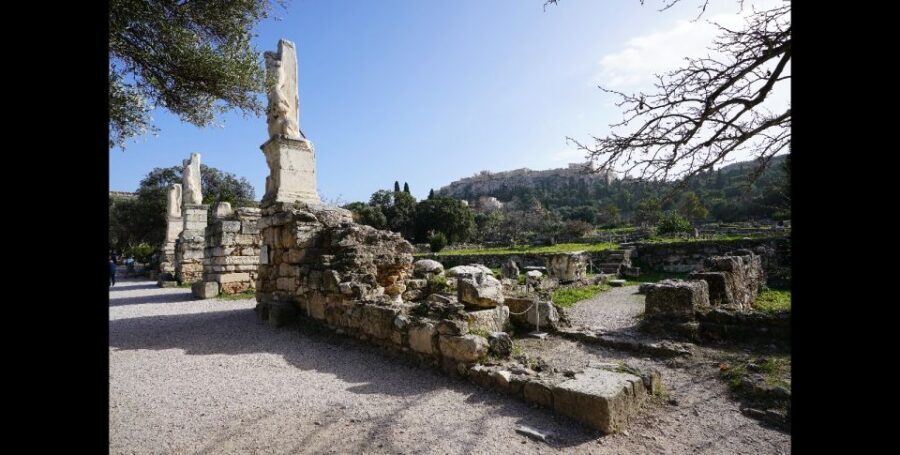
- 6th-century BC Agora focus: the political, administrative, and commercial heart of Athens
- Democracy origins: learn about where democratic ideas were first established
- Philosophy connections: see how the area links to Socrates and other teachers
- Temple of Hephaistos: a standout structure explained with rich media
- Heavy media load: 3D models, 360° panoramas, and videos for many monuments
- Long validity window: content stays usable for 5 days from first activation
What this Ancient Agora tour actually does for you
This isn’t a traditional guided walk with a person talking over the ruins. It’s a self-guided experience built around your phone: you open the Culture App content, follow the integrated map, and tap through monuments as you go. The payoff is that you can slow down or speed up based on your interests and energy level, and you still get explanations that match what you’re seeing.
The Ancient Agora itself is a tough place to interpret quickly. Ruins are often spread out, and without context you can end up thinking, I’m just looking at leftover walls. This tour combats that problem by pairing what’s in front of you with multiple formats: written info, an audio track, plus 3D reconstructions and 360° viewpoints from key spots. That mix matters because it gives you both the story (why it mattered) and the spatial sense (how it likely looked and how spaces related).
You can also read our reviews of more guided tours in Athens



The location: Athens’ Agora as the city’s daily engine

The Agora was the center of ancient Athens life: a place for social meetings, trade, religious activity, and civic events. That’s exactly why this tour can feel so satisfying. You’re not just visiting temples. You’re learning about how people ran a city together.
The experience calls out several big themes as you move through the monuments:
- Civil administration and courts, where decisions were made
- Temples and sanctuaries, where belief and public life blended
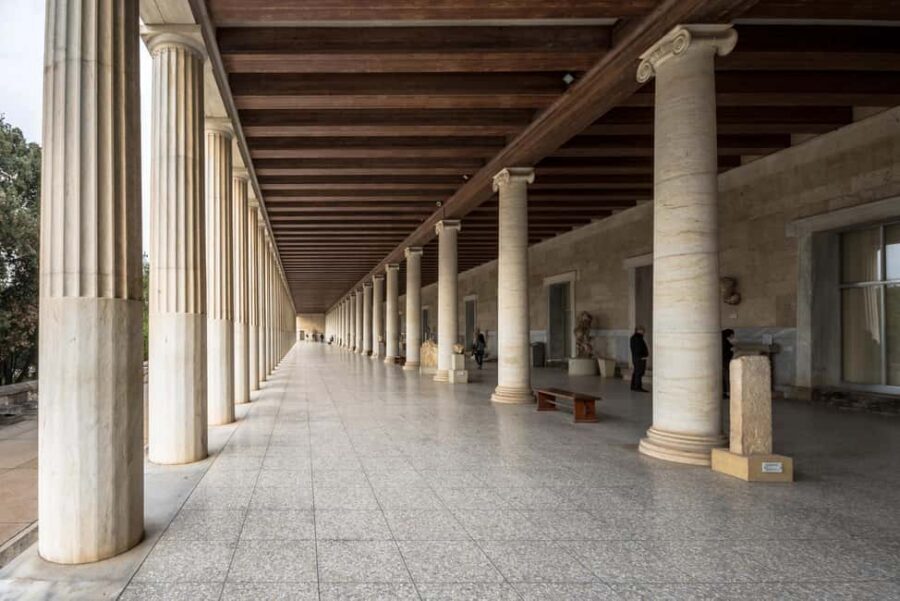
- Stoas, which were practical spaces for commerce and shade
- Fountains and workshops, showing the everyday functions behind politics
If you like understanding how a society worked day to day, this tour’s angle fits well.
Step-by-step: how the app experience unfolds on-site
Because the tour content is structured by monuments (16 with written and audio info), the “itinerary” is really a guided sequence through the Agora’s major categories. You’ll use the integrated map to navigate, then rely on the media package attached to each monument to build the picture.
Here’s how that plays out in practical terms.
Start with orientation: integrated map + monument IDs
When you begin, the app’s integrated map is your friend. Instead of wandering randomly, you get a clear sense of where each explained stop sits. This matters in the Agora because the site can feel open and spread out, and it’s easy to lose your bearings.
Look for the monument identifiers on your phone. Then match them to what you see nearby before you trigger the content. Doing that quick alignment step saves time and makes the audio and 3D models feel more “locked onto” reality.
Political and administrative spaces: where civic life took shape
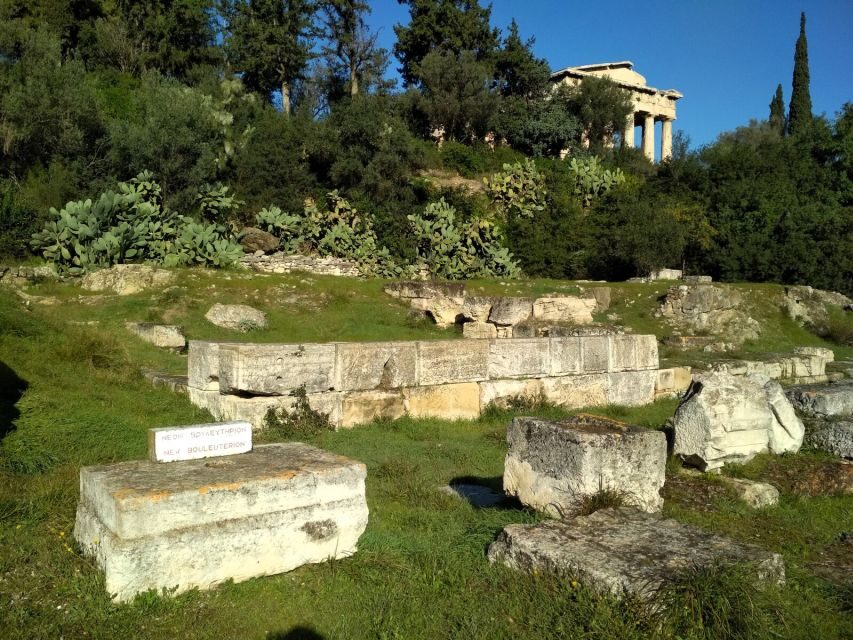
The tour emphasizes the Agora as Athens’ political and administrative hub. In these stops, the app’s written and audio tracks help you connect functions to physical structures—where officials worked, how public life organized around shared spaces, and why this area mattered to democracy.
What I like here is that the tour doesn’t treat politics like abstract theory. It ties it to places you can point at in the ruins. The 3D models (available for 14 monuments overall) are especially helpful if you’re having trouble imagining how structures once connected.
You can also read our reviews of more tours and experiences in Athens





Courts and the civic “stage” for debate
Athens’ civic culture wasn’t just ceremonies; it included legal processes and public discussion. The app’s content covers courts, and that theme makes your walk more than a sightseeing loop. You start seeing the Agora as a place designed for people to show up, participate, and be heard.
If you enjoy learning through context, you’ll probably find these segments keep your attention. Ruins become readable when you know what kind of public behavior they supported.
Sacred areas: temples, sanctuaries, and public belief
Even though the Agora is famous for politics, it also held cults and festivals. The tour includes temples and sanctuaries as distinct monument stops, which is a smart way to balance what the site does for civic life with what it did for religious life.
These stops tend to make the site feel more complete. A democracy depends on shared values, and festivals and worship are part of that social glue. The audio tracks plus text help you notice how sacred space fits inside a major public district.
Socrates and philosophers: learning in a public place
The tour highlights places where Socrates and other philosophers taught. Even if you can’t see classroom walls in the ruins, the app’s interpretation gives you a framework for understanding how public spaces could function as thinking spaces—where ideas circulated in ordinary city life.
This is one of those parts where audio helps most. You’re not trying to spot one exact “Socrates podium.” You’re learning why the Agora’s public character made it a natural setting for teaching and debate.
Commerce and daily life: stoas, workshops, and meeting points
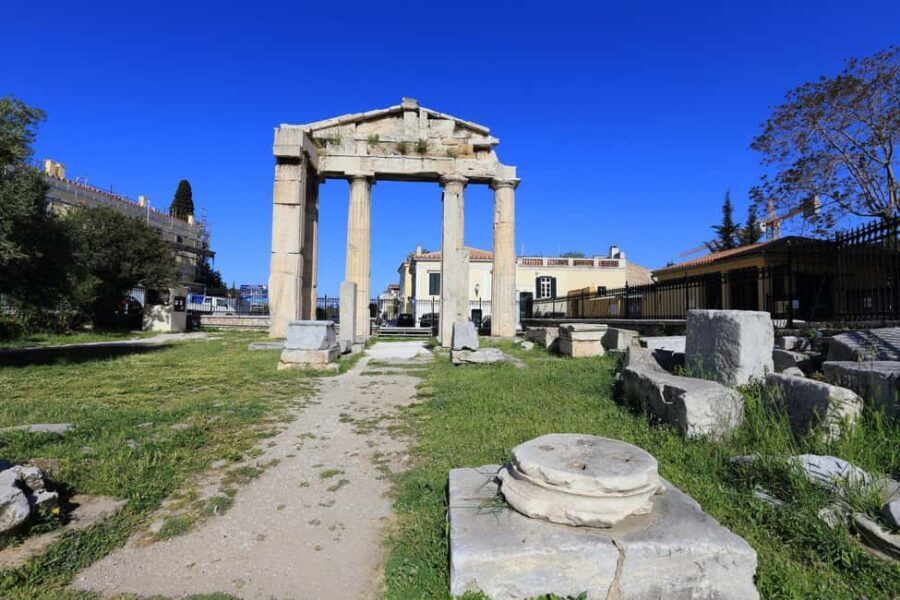
The Agora wasn’t just for votes and speeches. It was also a marketplace and a business zone. The tour explicitly covers stoas, fountains, and workshops, and that shift in focus is what gives the experience staying power.
If your brain wants practical links—where people sheltered from sun, where business happened, where basic needs were served—these stops deliver. The videos and 360° panoramas (for 14 monuments) can add a lot here, because visualizing foot traffic and open space makes everyday life easier to picture.
The Temple of Hephaistos: the easiest win on the site
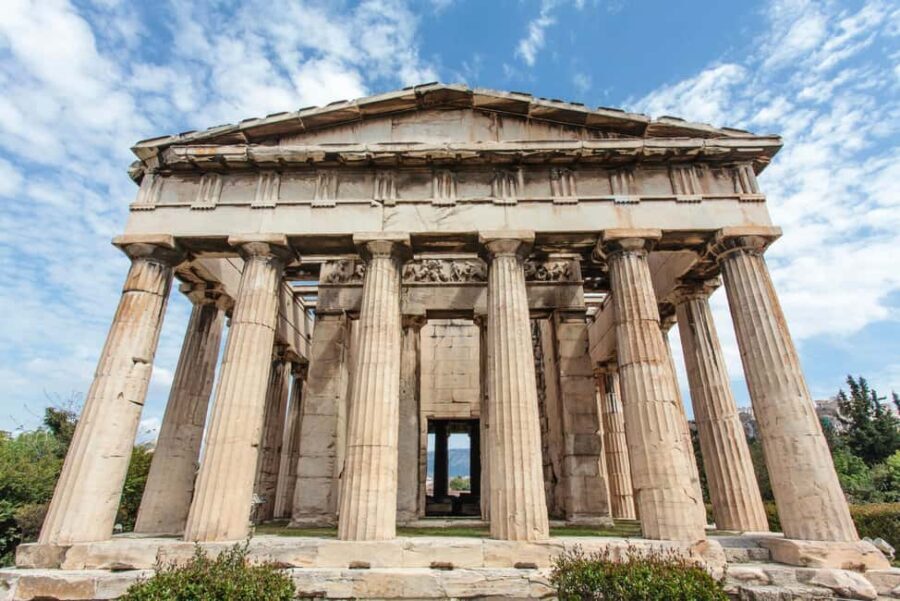
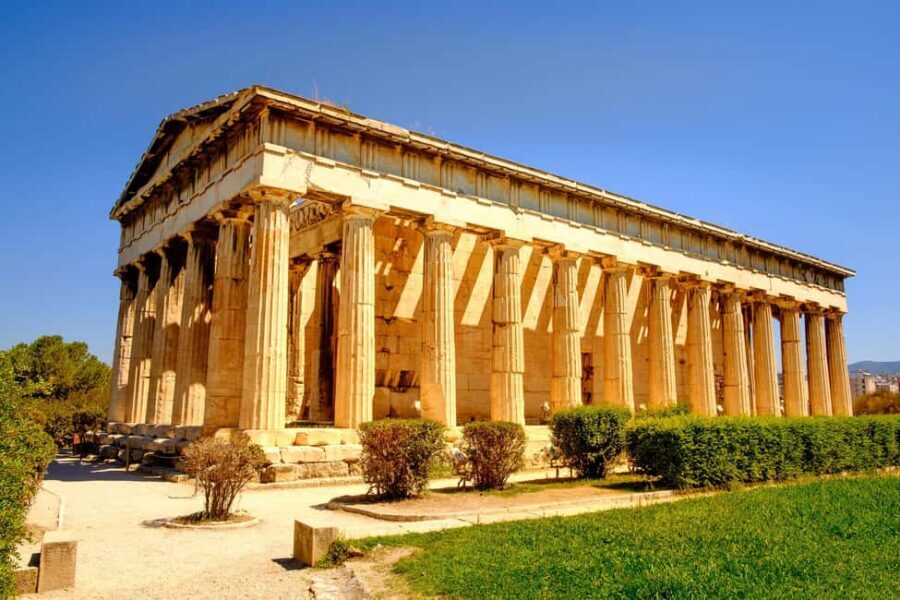
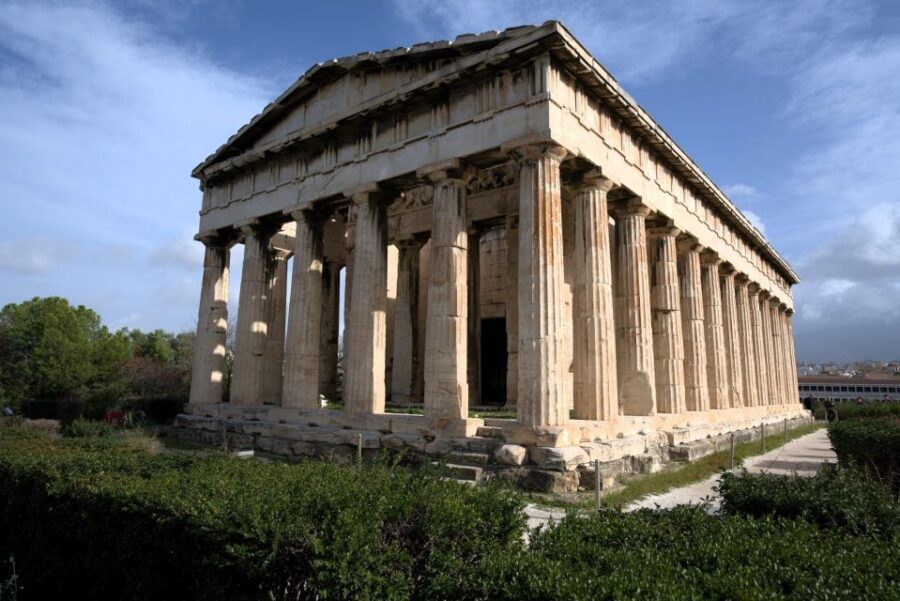
The Temple of Hephaistos is singled out as one of the best-preserved monuments in Greece, and the app treats it as a key feature rather than a quick photo stop. Since the tour includes media-heavy support like 3D models, 360° views, and immersive videos for many monuments, this is where you can get the most out of the “media on ruins” concept.
Practical tip: when you reach Hephaistos, spend a few minutes stepping around to find your best angles before launching the biggest videos. A little positioning makes the reconstructions feel like they belong to the actual stone.
Price and value: what $7.89 buys you (and what it doesn’t)

At $7.89 per person, the big value isn’t that it’s cheap. The value is that it packages a lot of content: written and audio for 16 monuments, and then higher-tech media (3D, 360°, videos) for 14 monuments.
That matters because this kind of app-based interpretation can turn a confusing ruin site into something you can actually follow. You also get extra built-in material: a gift of 68 written and audio items about culture and facts in ancient Greece. That’s useful if you want to keep learning even after the main stops.
What’s not included is the site entrance fee (listed as €10 full and €5 reduced). So budget for that separately if you’re planning to enter during visiting hours. Also remember you bring the basics: smartphone and earphones/headphones are on you.
Languages and learning style: built for self-guiding
The audio guide is available in English, Greek, German, Spanish, Italian, French, Dutch, and Chinese. That’s a strong range, and it means you can match the explanation to your comfort level instead of forcing yourself to follow along in a language you don’t fully own.
Because it’s self-guided, you decide how to use it:
- If you like story first, start audio early and read more as you go.
- If you like images first, use 360° views to “get the space.”
- If you’re a visual thinker, spend extra time on the 3D models.
The app can be used anywhere anytime—before, during, or after your visit. That flexibility helps if you want to do light prep at your hotel before you step into the site.
Logistics you should plan for (so the app works when you arrive)
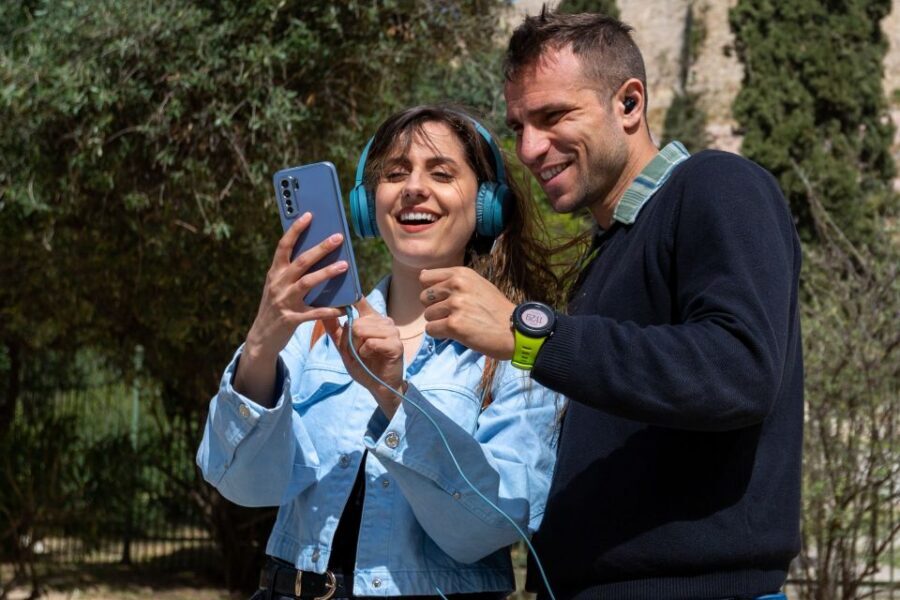
This tour depends on your phone. That sounds obvious, but it’s the difference between smooth learning and frustration.
From the tour info:
- You’ll need internet access to use the tours effectively.
- Download the content while on Wi‑Fi before you go, unless you have enough data.
- Plan for about 200MB of storage.
- The app requires iOS 11.0+ or Android 5.1+.
- Bring a charged smartphone and your earphones.
If your phone battery tends to run low during long sightseeing days, treat this as a “must charge overnight” situation. You’ll also want a simple system for navigation: keep brightness reasonable, and consider battery saving so you’re not hunting for power halfway through Hephaistos.
Who this works best for
This Ancient Agora audio tour is a good match if you:
- Prefer self-paced touring over waiting for a group
- Like explanations that connect ruins to civic life, philosophy, and daily routines
- Want 3D models and 360° viewpoints to make sense of the space
- Enjoy multiple media formats (audio plus text plus visuals)
If you prefer a spoken guide who can answer questions in real time, you may feel like the self-guided format limits you. But if you like structure you can follow without pressure, the monument-by-monument approach should suit you.
Should you book this Ancient Agora tour?
I’d book it if your top goal is understanding what you’re looking at. The mix of audio + written info and the heavy media support (3D models, 360° views, videos) makes the Agora far easier to interpret than a standard “walk and guess” visit.
I’d hesitate if you know you’re likely to struggle with phone use on the day—low battery, limited data, or no earphones. Also factor in the separate entrance fee, since the $7.89 only covers the app content.
If you’re comfortable using your phone responsibly at a major archaeological site, this is a solid way to experience the Agora’s key ideas: democracy, philosophy, worship, law, and everyday city life—one monument at a time.
FAQ
FAQ
What is included in the Ancient Agora self-guided tour?
The tour includes an integrated map for monument identification, written and audio historical information for 16 monuments, plus 3D models, 360° panoramic views, immersive videos, and related stories for many of the monuments. It also includes a gift of 68 written and audio information pieces about ancient Greece.
Is the entrance fee to the Ancient Agora included?
No. Entrance fees are not included in the tour price. The listed entrance fee is €10 full and €5 reduced.
How long is the tour valid after purchase?
The content is valid for 5 days from the first activation.
Do I need my own smartphone and headphones?
Yes. A smartphone and headphones/earphones are not included, and the self-guided tour relies on your device.
How much space does the app content need on my phone?
You’ll need approximately 200MB of storage space.
Which languages are available for the audio guide?
English, Greek, German, Spanish, Italian, French, Dutch, and Chinese.
Do I need internet during the visit?
Internet access is required to use the tours effectively. The instructions recommend downloading the content on Wi‑Fi before your visit unless you have sufficient data.
Can I use the tour content before or after I visit?
Yes. The self-guided tour can be used anywhere anytime, before, during, or after your visit. You can also delete or retrieve the purchased content from your device.
Is the purchase refundable?
Free cancellation is offered up to 24 hours in advance for a full refund. After downloading the content, the paid price is not refundable.


More Guided Tours in Athens

More Tours in Athens



More Tour Reviews in Athens
- All Day Cruise -3 Islands to Agistri,Moni, Aegina with lunch and drinks included
★ 5.0 · 4,958 reviews