REVIEW · ATHENS
Ancient Corinth, Mycenae, Epidaurus, Nafplio Full Day Private Tour From Athens
Book on Viator →Operated by CRISPY LOCAL MONOPROSOΡΙ Ι.Κ.Ε. · Bookable on Viator
Three UNESCO sites in one long day.
This private Peloponnese route is interesting because it strings together big, spread-out highlights without the stress of buses or connections. I love the private car setup, where you stay with just your group, and I love getting history facts while you ride, not only after you park.
The one thing to plan for is extra costs and effort: archaeology entrance fees are separate, and Palamidi means a lot of stairs.
In This Review
- Key things to know before you go
- A Peloponnese day that actually feels efficient
- Corinth Canal: the quick stop that sets the stage
- Ancient Corinth: Paul’s footsteps and a city’s big scale
- Corinth’s museum: a shorter stop that helps the ruins click
- Mycenae: Lion Gate to the Towering Mycenaean power
- The Mycenae museum and the Tomb of Agamemnon area
- Epidaurus Theatre: acoustics, design, and the feeling of perfection
- Sanctuary of Asclepius: the healing center behind the spectacle
- Nafplio: lunch time, harbor photos, and the medieval vibe
- Palamidi Castle and Acronauplia: the stair challenge finish
- Drivers, pacing, and how this tour feels in real life
- Price and value: what $259 buys you
- Who this private tour suits best
- Should you book this Athens to Corinth–Mycenae–Epidaurus private day?
- FAQ
- What time does the tour start, and how long is it?
- Do you pick up from anywhere in Athens?
- Is this tour private?
- Are UNESCO site admission tickets included?
- Is the tour offered in English?
- What’s included besides transportation?
- Can I cancel for a full refund?
Key things to know before you go
- Private group comfort: transport in a luxury car or minivan means no waiting with strangers.
- A driver who talks history: you get background as you travel, plus clear pacing through stops.
- Three UNESCO classical sites: Ancient Corinth, Mycenae, and Epidaurus are all on the day plan.
- Ticket costs are extra: major archaeological admissions are not included in the tour price.
- Nafplio adds the view factor: Venetian Bourtzi photos and a fortress climb finish off the day.
A Peloponnese day that actually feels efficient
Athens is a great base, but the Peloponnese highlights are scattered. This tour is designed for that reality: you roll out early, hit the classics in a logical order, then end with time to enjoy Nafplio instead of rushing straight back to your hotel.
I like that the day is built around major sites you cannot easily stitch together on your own in one go, especially if you want a smooth pace. And the fact that you have a driver who provides historical context matters. It turns driving time into useful time, so you arrive already knowing what you’re looking at.
The private format also changes your experience. If your group moves slower at a museum or spends more time taking photos, you do not feel locked into a rigid group tempo.
You can also read our reviews of more private tours in Athens



Corinth Canal: the quick stop that sets the stage
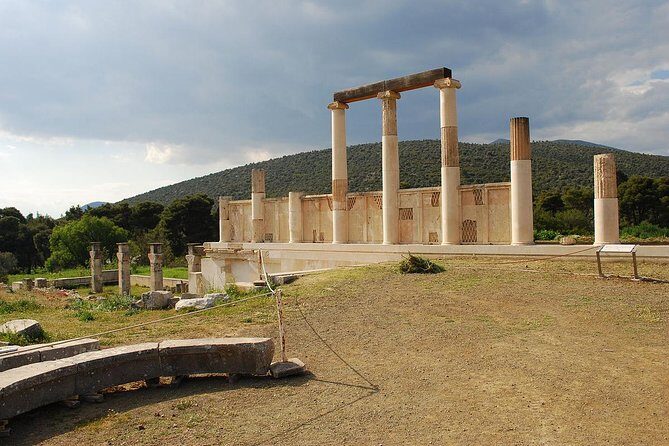
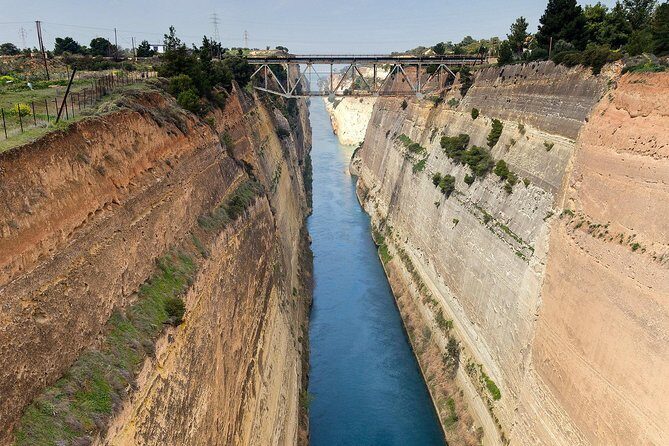
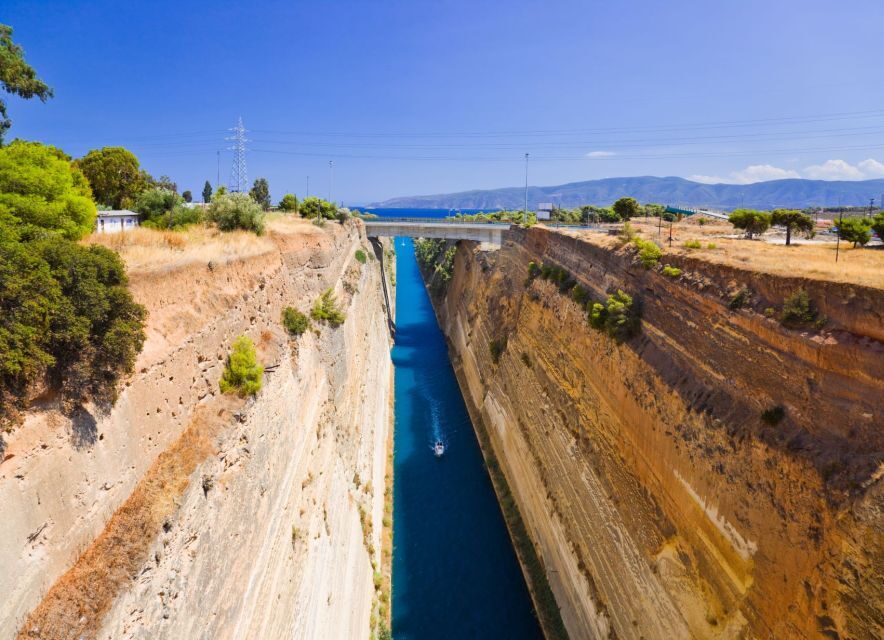
The day begins with a stop at Corinth Canal, a narrow cut through the Isthmus of Corinth. Even if you only have a short window, it’s a good reset. You can see how the canal connects the Gulf of Corinth and the Saronic Gulf, basically making the Peloponnese feel like it’s separated from the mainland.
A couple practical points make this stop worth it. First, the canal is only about 6.4 km long and has no locks, so you’re watching ships pass through a very specific bottleneck. Second, the walls rise steeply, and the views from above help you “place” the geography before you move on to ancient sites that all sit in this same region.
If you like photography, try to grab your angles early. The stop is brief, and the view is the point.
Ancient Corinth: Paul’s footsteps and a city’s big scale
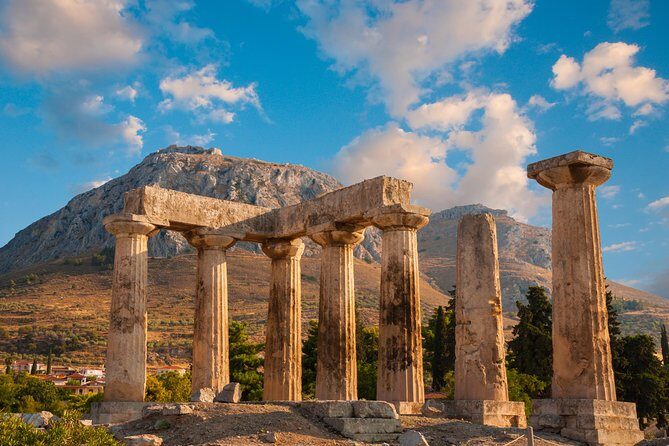
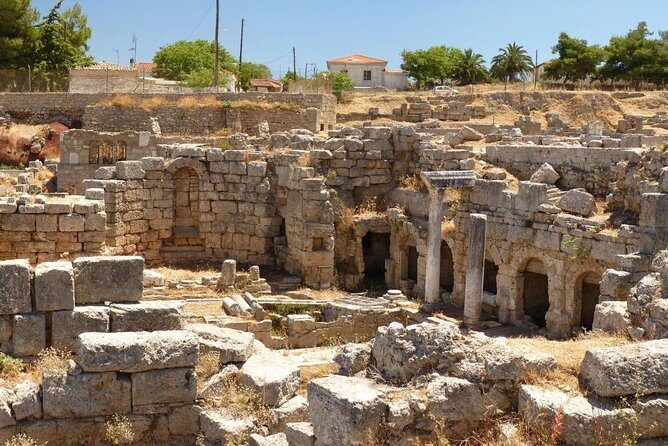
Next comes Ancient Corinth (Archaia Korinthos), one of the big names in Greek history on the Isthmus. What makes it more than just a collection of stones is the way it ties together different eras. Corinth was a major city-state between Athens and Sparta, and later it became central to Roman-era administration.
For Christians, Corinth lands extra hard because of Saint Paul’s letters and his missionary work mentioned in the Acts of the Apostles. You can stand in the ancient setting and understand why Corinth keeps showing up in those texts.
Here’s how I’d approach it if you want value from your time: don’t just hunt for the biggest ruins. Walk with the idea of Corinth as a commercial and religious hub. It helps you connect the dots faster, especially since you’ll be learning as you go from your driver.
Two realistic notes. The entrance fee is not included, so expect to pay on arrival. And the time here is around an hour, which is enough to see the highlights, but not enough to read every stone label.
Corinth’s museum: a shorter stop that helps the ruins click
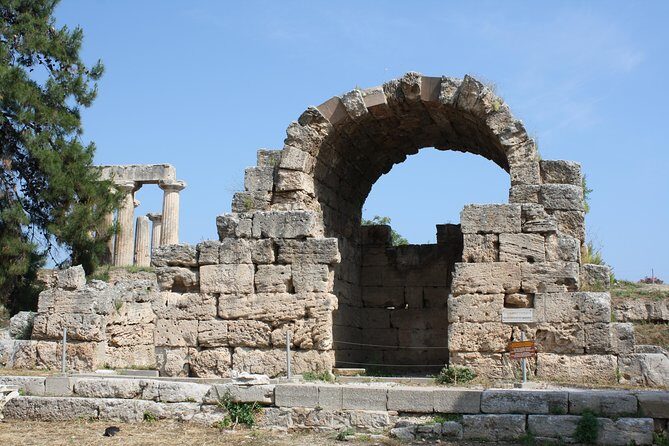
Right after the main site, you visit the Archaeological Museum of Ancient Corinth (about 30 minutes). This museum is useful because it translates the walking into context. Excavations around ancient Corinth can feel overwhelming if you only see fragments outdoors.
In a short visit, you’re not trying to become an expert. You’re trying to recognize the story behind what you’re seeing.
If you’re the type who likes to go back later on your own and read more, this museum time is a strong investment. It tends to make the outdoor ruins feel less random.
Mycenae: Lion Gate to the Towering Mycenaean power
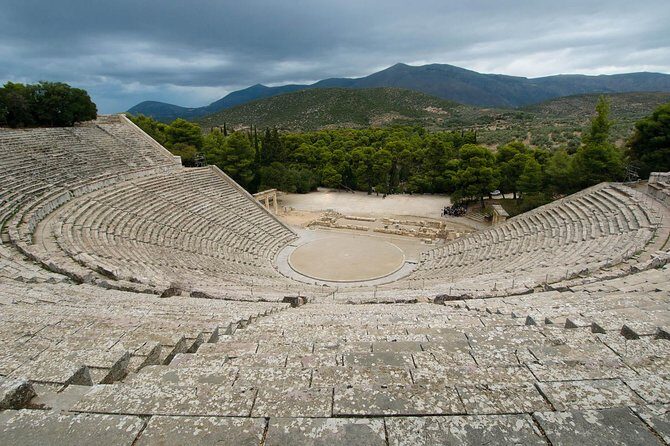
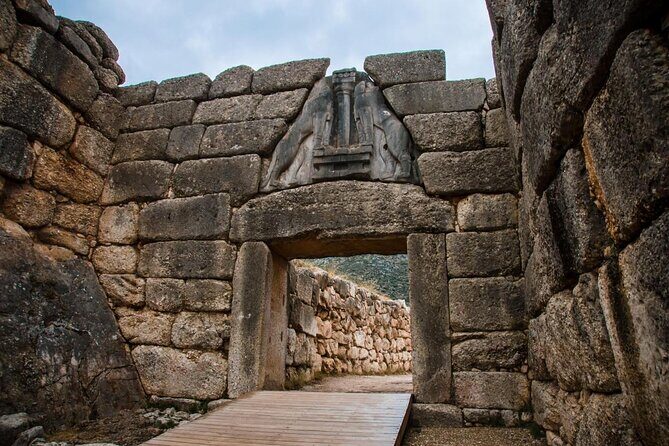
Mycenae is where the day starts feeling dramatic. You arrive at the fortified citadel and immediately get the sense of military power. It’s linked to the mythical King Agamemnon, but it’s also tied to the real Mycenaean civilization that dominated much of southern Greece in the late Bronze Age.
You’ll notice features that make Mycenae stand out even among other ancient sites: the fortified walls (including famous Cyclopean-style stonework), the layout of the citadel, and the symbolism of the Lion’s Gate area. When people say “walk the past,” Mycenae is one of the best places in Greece to do it because the defensive structure is still tangible.
My best practical advice here is to pace yourself. You’ll get about an hour. Use that to look around for the big landmarks first, then decide if you want to return for closer inspection.
Also plan for the extra Mycenae admission fee, which is not included. If you’re on a tight budget, this is one of the key places where costs stack up.
You can also read our reviews of more tours and experiences in Athens
- All Day Cruise -3 Islands to Agistri,Moni, Aegina with lunch and drinks included
★ 5.0 · 4,958 reviews




The Mycenae museum and the Tomb of Agamemnon area
Before you move deeper into the most famous tomb area, you have time at the Archaeological Museum of Ancient Mycenae (around 30 minutes). It sits right by the entrance and near the Lion Gate, which makes it convenient. Think of it as your quick “decoder ring” for what you’ll see next.
Then you reach the Citadel and Treasury of Atreus, also known as the Tomb of Agamemnon area. This is the stop that often turns casual visitors into people who start staring in silence. It’s a large tholos, often described as beehive-shaped, and the scale is hard to ignore. Even details like the massive stone lintel over the doorway help you grasp the effort it took to build.
The tomb’s timeline is also part of the fascination: constructed around 1250 BC, referenced by Pausanias in the 2nd century AD, and still visible when Schliemann investigated in the 19th century.
This is a shorter visit, but it’s the kind of short stop that stays with you.
Epidaurus Theatre: acoustics, design, and the feeling of perfection
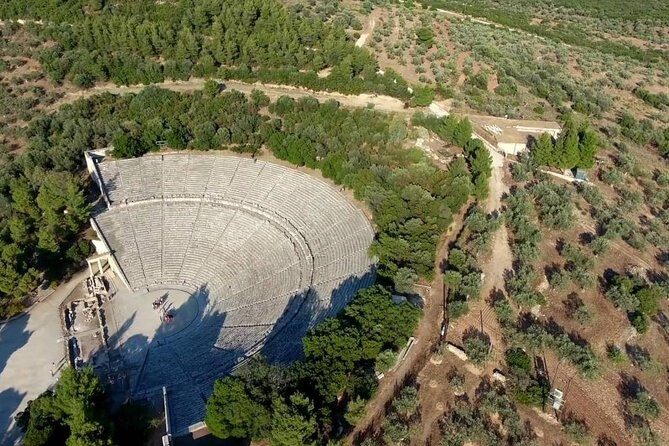
Then you get to Epidaurus, famous for the ancient theatre tied to the sanctuary of Asclepius, the god of healing. The theatre is often credited as one of the best-preserved ancient Greek theatres and, crucially, it’s known for its acoustics and overall design.
You’ll spend time at the Ancient Theatre of Epidaurus (about an hour). Even if you don’t catch a performance, it’s still worth it. The seating shape, the orchestra layout, and the sense of intentional design make it feel surprisingly modern in concept.
When you’re there, try this mental trick. Imagine sound traveling the way it was meant to. You start to see why Romans kept the theatre intact, unlike many other Greek theatres that were heavily modified later.
Entrance fees are extra here too, so budget for that if you’re comparing DIY options.
Sanctuary of Asclepius: the healing center behind the spectacle
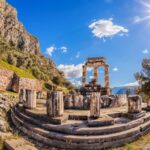
After the theatre, you visit the Sanctuary of Asklepios and the Temple of Asclepius (around 20 minutes). This stop is shorter, so the goal is not to exhaust the site. It’s to understand what you’re looking at.
The sanctuary was a major rival to other huge cult centers like Olympia and Delphi. The temple dates to the early 4th century BC, and the story continues into the late Roman era when non-Christian worship was restricted.
If you like spiritual history, you’ll probably find this portion especially interesting because it reframes Epidaurus. It’s not only a theatre. It’s a place where healing, worship, and community life were connected.
Nafplio: lunch time, harbor photos, and the medieval vibe
By the time you reach Nafplio, the day shifts from ancient ruins to a place you can actually linger. Nafplio feels like a coastal reward: cobbled lanes, Venetian architecture, and views over the Argolic Gulf.
You get about two hours, with time for lunch, coffee, or shopping. Food isn’t included, so use this window strategically. If your group has different tastes, this is one of the best moments to split and regroup without stress.
There’s also time to enjoy the harbor and get photos of Bourtzi, the Venetian water castle sitting in the middle of the harbor. It’s a simple photo stop, but it’s memorable because it looks like it belongs in a postcard.
Palamidi Castle and Acronauplia: the stair challenge finish
The day ends with the hilltop fortifications of Nafplio, starting with Palamidi Castle. Palamidi sits on a hill around 216 meters high, and yes, the stair count is legendary: there are 913 steps from town to the fortress, and locals often jokingly say it’s closer to 999 or even more. Either way, plan your legs accordingly.
You’ll get around 30 minutes, so this is not the time to treat it like a slow hike. Go up, enjoy the views over the gulf and the city, and come back down with your energy intact.
You also have the Acronauplia, the oldest part of Nafplio. It was transformed by Venetians and Franks into part of the fortifications, and it was used as a prison at one point. Later, a hotel complex was built so people could benefit from the view.
This final stretch is where the tour becomes truly enjoyable, not just informative. It’s the reward for spending the morning with ancient stones.
Drivers, pacing, and how this tour feels in real life
This is where the quality shows. In the feedback, drivers like Dimitris and George come up as standouts for being friendly, keeping the group on schedule, and explaining what you’re seeing.
One practical upside of having your driver as the main storyteller is timing control. You can spend a bit more time where your group cares most, and you’re not stuck waiting for a guide to catch up. That flexibility is especially valuable in sites where you might want extra minutes at a museum or a photo angle.
There’s also a balancing note to keep things comfortable. One negative experience described an uncomfortable conversation topic. If you prefer neutral, purely historical talk, you can set that expectation early. A simple request like no personal or religious conversation can help keep the day relaxed.
Price and value: what $259 buys you
At $259.03 per person, the price is not cheap. The value comes from what you avoid: time lost to transfers, the stress of coordinating separate tickets and transport, and the effort of figuring out the best order for a single long day.
You are paying for:
- Private transportation with an air-conditioned vehicle
- A driver who gives history facts during the drive
- Access to the big classical stops, including three UNESCO sites
But you should also read the cost realistically. Major archaeological admissions are extra: Mycenae (€20), Corinth (€15), and Epidaurus (€20) are listed, and you may also pay for other entries depending on what you choose to see at each site. That means your final out-of-pocket will be higher than just the tour price.
Still, even with ticket add-ons, this can beat DIY when you value an easy, door-to-door day. If you have mobility limits or you dislike stairs, you’ll want to think hard before choosing Palamidi.
Who this private tour suits best
This trip makes the most sense if you want:
- A one-day Peloponnese classic route from Athens
- Private comfort without a crowd
- A history-forward drive so the sites connect in your head
It’s less ideal if you hate walking around uneven archaeological ground, or if you want strictly guided-inside-your-site commentary from a licensed archaeologist guide. The driver isn’t described as licensed to accompany you inside the sites, so you’ll get context mainly from the ride and the general flow, not a full-on “live guide in every room.”
If your group loves photos, the canal views, Nafplio harbor shots, and the hilltop fortresses are strong reasons to pick this format.
Should you book this Athens to Corinth–Mycenae–Epidaurus private day?
Yes, I’d lean toward booking it if you want a smooth, efficient day with the key Peloponnese landmarks and a driver who keeps things moving. The private vehicle, the three UNESCO stops, and the way the day is paced are the big strengths.
I’d hesitate only if your budget is tight after adding admissions, or if a stair climb like Palamidi sounds like a deal-breaker. If that’s you, compare alternatives that focus on less steep sites or skip the fortress portion.
Overall, this is the kind of day trip where the payoff is both educational and scenic, and the logistics do not eat your time.
FAQ
What time does the tour start, and how long is it?
Pickup starts at 8:00 am. The total day runs about 9 to 10 hours.
Do you pick up from anywhere in Athens?
You get pickup from any accommodation in Athens. Airport or airport-area pickup/drop-off is available with an extra charge.
Is this tour private?
Yes. It is a private tour, so only your group participates.
Are UNESCO site admission tickets included?
No. Admission fees for archaeological sites are not included, including Mycenae (€20), Corinth (€15), and Epidaurus (€20).
Is the tour offered in English?
Yes, the tour is offered in English.
What’s included besides transportation?
Bottled water, air-conditioning, and a culinary gift are included, along with discovering three UNESCO-listed classical sites.
Can I cancel for a full refund?
Yes. Free cancellation is available up to 24 hours in advance for a full refund. If you cancel less than 24 hours before the start time, you do not get a refund.


More Private Tours in Athens


More Tours in Athens



More Tour Reviews in Athens
- All Day Cruise -3 Islands to Agistri,Moni, Aegina with lunch and drinks included
★ 5.0 · 4,958 reviews