REVIEW · ATHENS
Athens: Acropolis, Parthenon & Acropolis Museum Guided Tour
Book on GetYourGuide →Operated by Athens Walks Tour Company · Bookable on GetYourGuide
You can’t fake the Acropolis feeling. This guided walk is built to turn famous ruins into real stories you can picture, from the Parthenon lineup to the Acropolis Museum galleries that explain how these pieces were meant to work. You’ll also cover big names like the Theatre of Dionysus and the Odeon of Herodes Atticus, so the hill stops being a random photo spot.
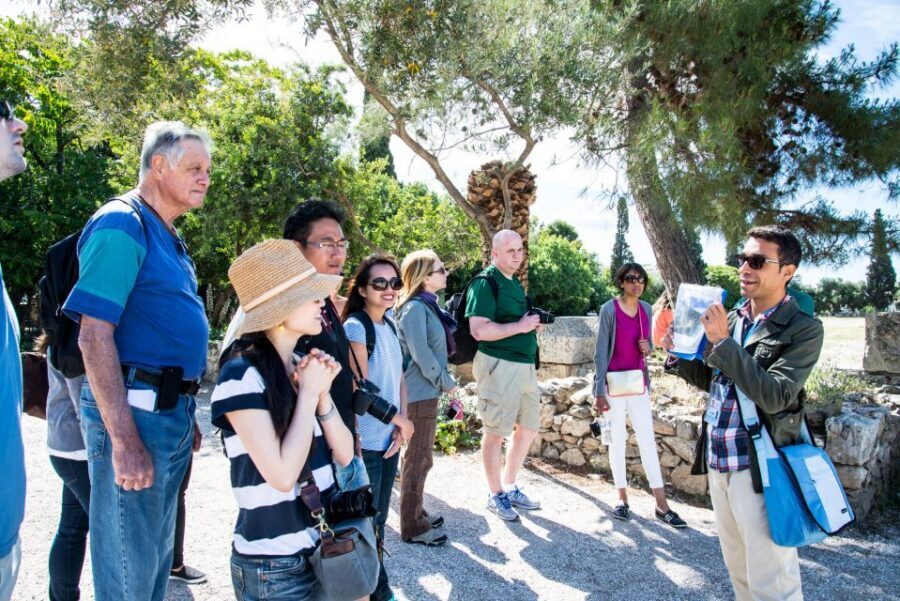
I love how the tour uses a licensed guide to connect the myths and the civic purpose behind each monument. Guides with names like Elizabeth, Alina, and Hermes are praised for pacing, humor, and explaining what you’re seeing (and why it mattered), not just pointing. One thing to consider: you pay a separate entry fee for the Acropolis and possibly the museum, and the walk is steep enough that wheelchair access is not a match.
In This Review
- Key things that make this tour worth your time
- Why the Acropolis makes more sense with a real guide
- The walking route: the hill-top hits you don’t want to miss
- Temple of Athena Nike and the Propylaea gateway
- Erechtheion and the Porch of the Caryatids
- Theatre of Dionysus and the idea of civic life
- Parthenon: the “crowning glory” that rewards attention
- Other stops that round out the story
- Getting the steep climb under control (and keeping your photos sharp)
- The Acropolis Museum: where the sculpture finally makes sense
- Important Monday change
- Timing and pacing: what 2–4 hours really feels like
- Price and ticket math: is $70 good value?
- Meeting point and practical logistics in Athens (so you don’t waste time)
- What to bring (and what to skip) for a smoother day
- Who this tour fits best—and who should look elsewhere
- Final call: should you book the Acropolis and Museum tour?
- FAQ
- What is included in the $70 per person price?
- Do I need to buy tickets separately for the Acropolis and the Acropolis Museum?
- Does this tour skip the ticket line?
- Do I get to visit the Acropolis Museum on this tour?
- What happens on Mondays when the Acropolis Museum closes early?
- Where is the meeting point, and when should I arrive?
- What languages are the live tours offered in?
- How long is the tour, and what should I wear?
- Is this tour suitable for wheelchair users?
Key things that make this tour worth your time
- Parthenon and Propylaea, explained in plain language so the architecture clicks fast
- Erechtheion’s Caryatids and the Theatre of Dionysus give you the human side of the site
- Acropolis Museum connects sculpture to setting so you understand what you’re looking at
- Hearing devices and small-group handling help you catch the guide even in busy areas
- A guide-led pace for heat and stamina helps the climb feel manageable
- Tickets are extra so plan the total cost (guide fee plus site entrances)
Why the Acropolis makes more sense with a real guide
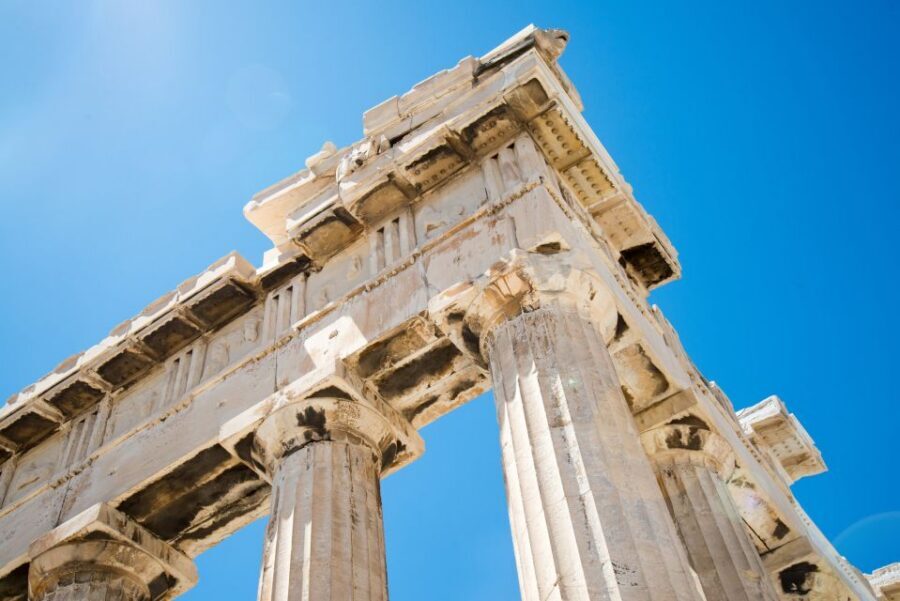
The Acropolis is famous for a reason. But fame also creates a problem: you can end up staring at the Parthenon like it’s just a giant postcard. A guided format fixes that. You move through the same key stops, yet the guide’s job is to explain the purpose—religion, politics, art, and public life—all layered onto stone.
The best part is how the tour guides your attention. Instead of treating the monuments like separate landmarks, it links them. You start at the top of the story and learn how the buildings and statues were part of the same big worldview. That’s why so many guides get credited for turning myth into something you can actually understand, whether it’s a storyteller like Alina or the scholar-style commentary people associate with guides such as Hermes and Thanasis.
You can also read our reviews of more guided tours in Athens



The walking route: the hill-top hits you don’t want to miss
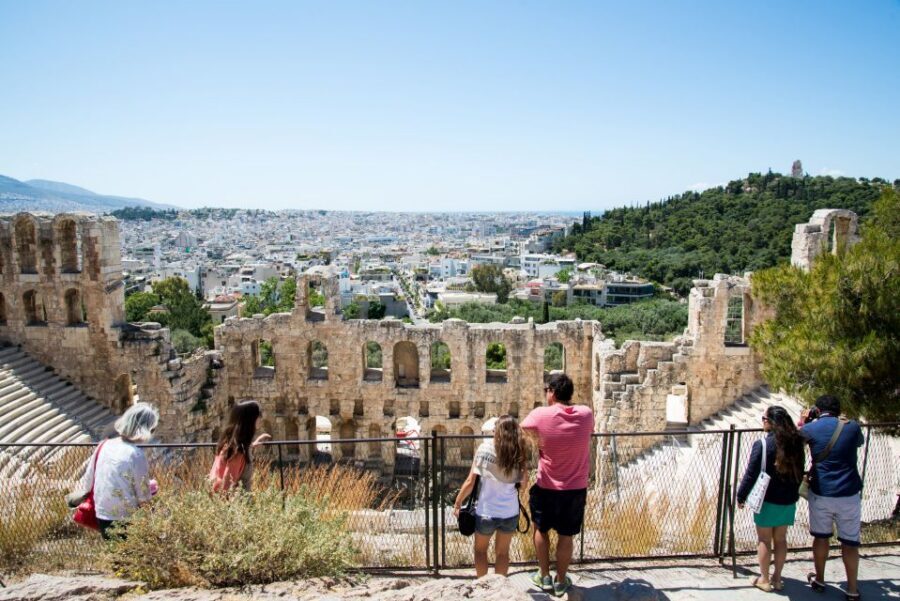
This tour is a walking experience focused on the Acropolis and, for the museum option, a follow-up at the Acropolis Museum. Even if you’ve seen photos, you’ll want a guide for the “what am I looking at?” moments—especially with details like the Erechtheion porch and the angles of buildings.
Here are the big monument stops you should expect, and what makes each one special:
Temple of Athena Nike and the Propylaea gateway
You’ll see the Temple of Athena Nike (often called the Temple of Wingless Victory) and then move around the gateway area known as the Propylaea. This is one of those sections where architecture does the talking. The guide helps you understand why the entrance space wasn’t just a doorway—it was a stage set. It’s the kind of setup that makes walking into the main complex feel intentional rather than random.
Erechtheion and the Porch of the Caryatids
Next comes one of the most photo-friendly (and meaning-rich) sights: the Erechtheion and its Porch of the Caryatids. The Caryatids are instantly recognizable, but the guide adds the context that makes them more than statues holding up a roof. You learn what roles the monument played and how the symbolism fits into Athens’ bigger story of identity and divine connection.
If you’re traveling with kids, this is often a sweet spot because it’s visual and memorable. Several guides in past tours have been praised for staying patient and keeping younger visitors engaged while still covering serious content.
Theatre of Dionysus and the idea of civic life
You’ll also walk by the Theatre of Dionysus, tied to the first theater traditions credited with shaping Western drama and public imagination. This is where the tour can feel less like a sightseeing checklist and more like a history of how people gathered and debated. It’s not just “here’s an old theater.” With a good guide, it becomes a lesson in how culture worked as a public force.
You can also read our reviews of more museum experiences in Athens




Parthenon: the “crowning glory” that rewards attention
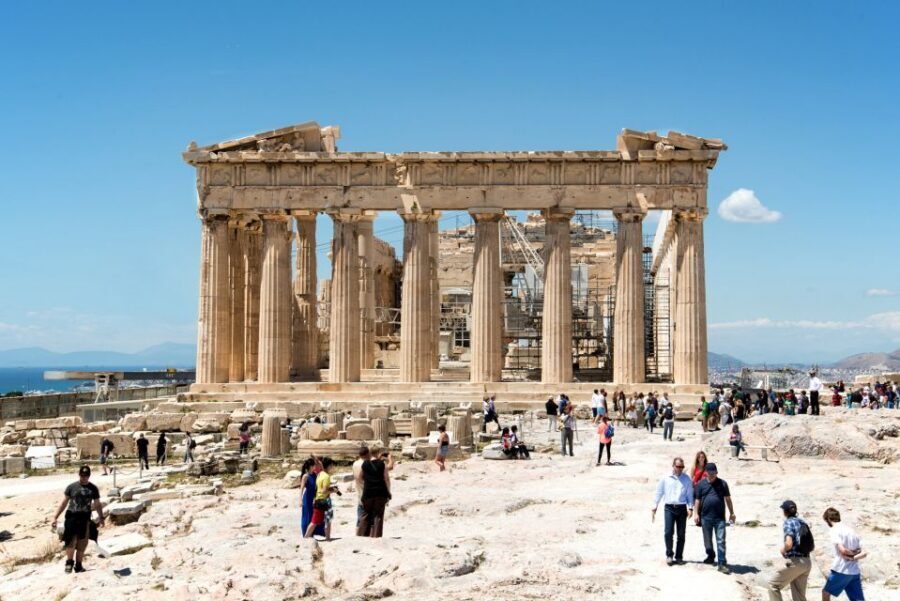
And yes, the Parthenon is the centerpiece. The difference is what you learn as you approach it. Instead of only admiring the scale, you’ll get help noticing how the building fits the message Athens wanted to project. The guide ties the details to the purpose of the monuments and how they represent the city’s classical civilization.
Other stops that round out the story
The tour also points you toward more parts of the complex, including references to the Odeon of Herodes Atticus and the Temple of Asclepius (healing) as part of the broader sweep. These add variety because the Acropolis wasn’t only about one temple or one theme. It was a dense, meaningful zone.
Getting the steep climb under control (and keeping your photos sharp)

The Acropolis is steep. That’s not a mystery, but it can catch people off guard—especially if you think you’ll just sprint from one stop to the next. The structure of this tour helps because it builds in stops for explanations and breaks, rather than rushing you up like you’re in a queue contest.
You’ll get chances to take pictures with city views below, but the guide’s pacing matters. In past tours, guides like Maria and Rosa have been praised for managing time and heat, even when families showed up with tired kids or lots of questions. That’s the real value: you get the facts and you still get to breathe.
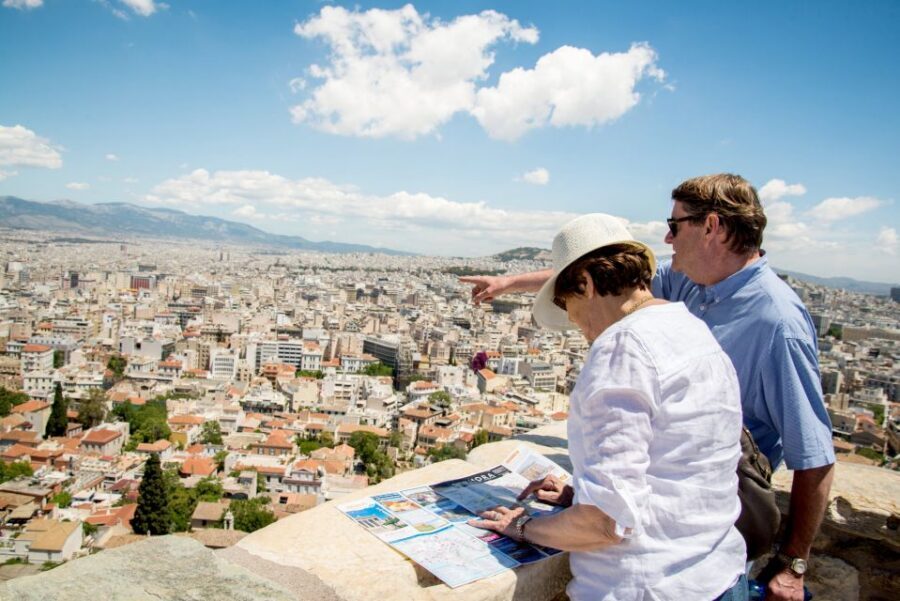
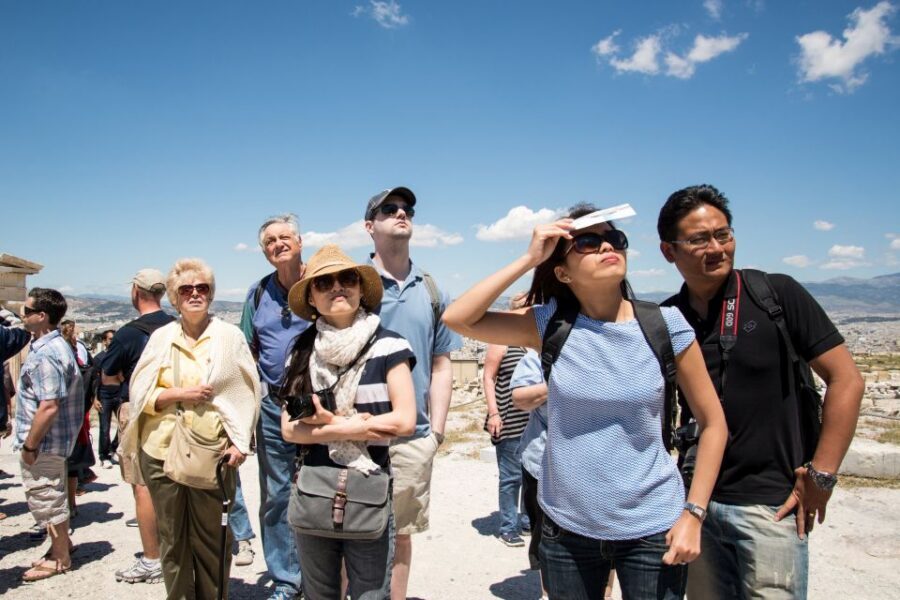
Practical tip: wear shoes you’d trust on uneven stone. Bring sunscreen and water even if you think you’re only doing a short climb. The tour includes guidance on what to bring—comfortable shoes, sunglasses, hat, sunscreen, and your ID.
The Acropolis Museum: where the sculpture finally makes sense
If you choose the option with the Acropolis Museum, the day gets smarter. The museum is where you start seeing the sculptures as artifacts with context, not just carvings on a hillside.
Here’s the key advantage: the museum’s galleries help you understand what you saw outside. You can connect the dots between the monuments and the artworks created for them. People often say the museum visit is the part where everything clicks, especially if you’ve been trying to decode what’s missing from the ruins.
Expect a modern, well-organized museum visit with state-of-the-art displays and galleries. You’ll also see major sculpture highlights tied to the Acropolis story, including the kinds of pieces connected to places like the Erechtheion.
Important Monday change
On Mondays, the Acropolis Museum closes at 16:00. On those days, the tour shifts to focus on Acropolis monuments and the Ancient Agora instead. So if museum time matters most to you, check the day of travel.
Timing and pacing: what 2–4 hours really feels like
The tour range is listed as 2 to 4 hours, depending on the starting time and whether you include the museum. In practice, that time window is usually enough to feel like you covered the major beats without turning it into a full-day endurance event—but it still demands energy.
Plan for:
- the uphill walking
- waiting moments that happen at popular viewpoints
- time for the guide to explain what you’re seeing
If you’re sensitive to heat, start early when you can. Greece in summer has a way of turning even a short walk into a sweat test, so you’ll feel the benefits of the guide’s stops and pacing.
Price and ticket math: is $70 good value?
The tour price is $70 per person, and it includes a licensed tour guide. But the big money detail is that entrance tickets are not included:
- Acropolis tickets: 30€ per person
- Acropolis Museum: 10–20€ per person
- Pickup/drop-off: not included
So your real total is the guide fee plus site entrances.
Is it still worth it? For many people, yes—because you’re paying for time and attention, not just access. The guide’s explanations can save you hours of guessing. And the tour includes skip-the-ticket-line benefits, plus the guide helps you make the most of the limited time on the hill.
Where the criticism shows up is when someone expected the guide price to cover everything. If your group is small and you’re already planning to buy tickets anyway, the added guide fee can feel steep. My advice: treat it like paying for a translator for stone. If you want the Acropolis to make sense fast, the guide fee is the part you’re really buying.
Also, there’s a tip worth repeating: book your entrance tickets online in advance at the official Acropolis eTickets site (listed as tap.gr) before the tour. That reduces stress on arrival.
Meeting point and practical logistics in Athens (so you don’t waste time)
You meet your guide at the Athens Walks office, Porinou 5, 11742, on the ground floor. Look for Athens Walks at number 5. The guidance is clear: arrive at least 15 minutes early.
A couple of practical notes that help:
- Only one person in your group needs to check in indoors.
- You’ll be assigned to a group, and the tour provides hearing devices so you can stay connected to the guide.
- Languages available include English, Italian, German, French, and Spanish.
- The activity does not include pickup/drop-off.
If you have trouble finding the office, don’t panic. Guides have been known to wait for late arrivals, and the meeting instructions are specific enough that with a quick reroute you can usually fix it fast.
What to bring (and what to skip) for a smoother day
Bring:
- your passport or ID card
- comfortable shoes
- sunglasses
- sunscreen
- a sun hat
- water (the tour guidance specifically encourages it)
Not allowed:
- pets
- smoking
- luggage or large bags
If you’re traveling with kids or students, pay attention to ID rules. The guidance says:
- people under 18 get free access
- students may qualify for reduced ticket fees, and you may need your passport (including notes for certain EU passport holders under 25)
Even if you don’t fall into those categories, having ID handy avoids last-minute problems.
Who this tour fits best—and who should look elsewhere
This is a strong choice if you:
- want to see the key monuments without turning the day into guesswork
- care about understanding the stories behind Parthenon-era art and civic life
- travel with a mix of ages and appreciate a guide who can adjust pacing
- prefer hearing a live explanation (with hearing devices) over reading a few plaques
It’s less ideal if you:
- need wheelchair access, since the tour is listed as not suitable for wheelchair users
If mobility is limited but not exactly wheelchair-based, some guides have previously adjusted tours for people on crutches. Still, because the activity is officially marked not suitable for wheelchair users, I’d plan carefully and ask the provider ahead of time if your situation doesn’t fit standard mobility.
Final call: should you book the Acropolis and Museum tour?
I’d book this tour if you want the Acropolis to feel like a living story instead of just a set of famous photos. The best value is when you pair the hill-top monuments with the Acropolis Museum, because the museum helps you understand the sculpture and context that the outdoor ruins can’t fully show.
Do a quick reality check on totals: you’re paying $70 for the guide, and you’ll still need to budget 30€ for the Acropolis plus 10–20€ for the museum if you go inside. If that math fits your trip, the guide time is usually the part that makes the day click.
If you’re the type who can enjoy monuments even without explanations, you might get by with self-guided tickets. But if you want your questions answered as you stand in front of the Parthenon, this guided format is one of the most practical ways to get it done.
FAQ
What is included in the $70 per person price?
The price includes a licensed tour guide. Entrance tickets for the Acropolis and Acropolis Museum are not included.
Do I need to buy tickets separately for the Acropolis and the Acropolis Museum?
Yes. The Acropolis entrance ticket is 30€ per person, and the Acropolis Museum ticket is 10–20€ per person (depending on the ticket type). You’re also advised to book Acropolis entrance tickets online in advance.
Does this tour skip the ticket line?
Yes, the experience includes skip-the-ticket-line access.
Do I get to visit the Acropolis Museum on this tour?
There is an option to include the Acropolis Museum visit. If you book the museum option, you’ll wander the museum galleries after the Acropolis monuments.
What happens on Mondays when the Acropolis Museum closes early?
On Mondays, the Acropolis Museum closes at 16:00. Instead, the tour will visit the Acropolis monuments and the Ancient Agora.
Where is the meeting point, and when should I arrive?
Meet your guide at Athens Walks office at Porinou 5, 11742. Arrive at least 15 minutes early. Look for the ground floor office of Athens Walks.
What languages are the live tours offered in?
The live tour guide is available in English, Italian, German, French, and Spanish.
How long is the tour, and what should I wear?
The duration is listed as 2–4 hours. Wear comfortable shoes, and bring sunscreen, sunglasses, and a sun hat. Water is strongly recommended.
Is this tour suitable for wheelchair users?
No. The tour is listed as not suitable for wheelchair users.


More Guided Tours in Athens

More Tours in Athens



More Tour Reviews in Athens
- All Day Cruise -3 Islands to Agistri,Moni, Aegina with lunch and drinks included
★ 5.0 · 4,958 reviews