REVIEW · ATHENS
Athens and Ancient Corinth Private from Athens
Book on Viator →Operated by allways greece · Bookable on Viator
A day like this is all about smart sequencing. You hit the big Athens sights first, then swap in Ancient Corinth so the myth and the marble start to make practical sense. The private format also means you’re not waiting around for other pickups or stuck in a slow-moving crowd, and the day moves with your group.
I especially like the mix of major landmarks and quick, easy stops (the Acropolis up front, then viewpoints and monuments you can actually enjoy). The bottled water and on-board Wi‑Fi keep the pace comfortable for a 7 to 9 hour run. One consideration: entrance tickets aren’t included, so budget for the Acropolis and Ancient Corinth before you go.
In This Review
- Key highlights that make this private trip work
- Why private Athens to Ancient Corinth feels faster (and calmer)
- Acropolis: the Sacred Rock in 90 minutes
- Parliament guard ceremony: a 15-minute stop with real atmosphere
- Temple of Olympian Zeus and the marathon timeline of Zeus
- Panathenaic Stadium: where the modern Olympics began
- Mount Lycabettus: the best Athens view, fast
- A glance at old Athens: seeing the city between the monuments
- Corinth Canal: diolkos, centuries of engineering, and a quick look
- Ancient Corinth: more than ruins, it’s how a city-state worked
- Guide quality and pacing: what “private” really buys you
- What’s included (and what you’ll plan for) on this 7 to 9 hour day
- Best for your travel style, not a one-size-fits-all plan
- Should you book Athens and Ancient Corinth Private from Athens?
- FAQ
- What time does this tour start?
- Do you pick up from hotels in Athens?
- How many people are in the group?
- Is this tour private?
- Is the Acropolis admission included?
- Is Ancient Corinth admission included?
- Which stops are free?
- What’s included in the price besides transportation?
- What is not included?
- Can I cancel and get a full refund?
Key highlights that make this private trip work
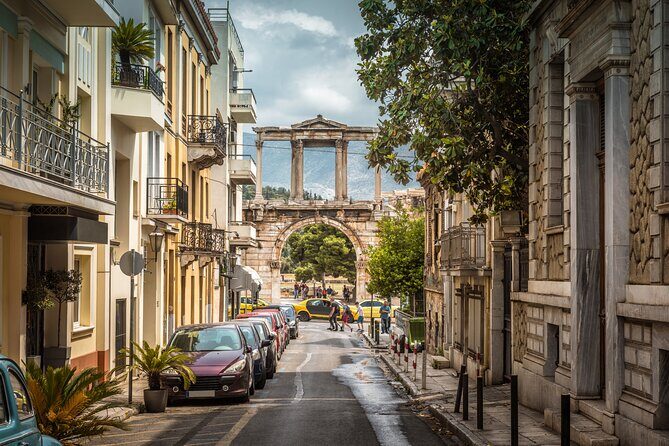
- Pickup from all Athens hotels saves time and hassle compared with meeting points
- Acropolis as your first big stop helps you see the Sacred Rock before the day gets fully busy
- Free classic stops like the Parliament changing of the guards and the Panathenaic Stadium
- Mount Lycabettus views give you a quick, high vantage point over Athens
- Ancient Corinth in one focused visit so you’re not just driving through the Peloponnese vibe
Why private Athens to Ancient Corinth feels faster (and calmer)
This is a classic “two-worlds” day: modern Athens first, then the ancient city-state of Corinth. The private setup matters because Athens traffic and site crowds can turn a sightseeing plan into a waiting game. With private transportation, you don’t waste half your morning waiting for other people to arrive late from different hotels.
The schedule also makes sense for first-timers. You start with the Acropolis, then move to a handful of major “big Athens” stops, then head out to Corinth. That order keeps the day from feeling random. It also helps you build a mental map: you see where power lived in Athens, then you go to a place where commerce and strategic location drove a whole city-state.
You can also read our reviews of more private tours in Athens


Acropolis: the Sacred Rock in 90 minutes
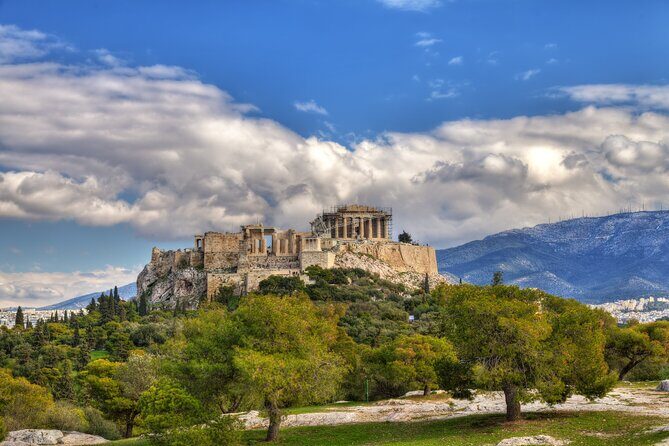
The Acropolis is the headline for a reason. It sits above the city like a stone crown, and in the 5th century B.C. Perikles oversaw the construction of some of the most famous works from the Greek world: the Parthenon, the Propylaea, the Erechtheion, and the temple of Athena Nike. Even if you’ve only seen photos, being there in person hits different because you can actually see the scale and layout.
You get about 1 hour 30 minutes, and that’s the right amount for the Acropolis without turning the visit into a marathon. The key advantage of this tour format is that it’s built around a guided flow. You’re not wandering for an hour trying to figure out what matters most.
A possible drawback to plan for: the Acropolis admission ticket is not included. You’ll want to mentally budget for it and avoid arriving without enough time to handle ticketing.
Parliament guard ceremony: a 15-minute stop with real atmosphere
Next up is the Hellenic Parliament and the changing of the guards ceremony. It’s short (about 15 minutes), and it’s one of those moments that feels simple on paper but grabs you in person. Uniforms, routine, and the steady rhythm of the guard display create a very Athens-specific snapshot.
The best part here is the timing. You get a quick, structured break after the Acropolis so your brain can reset before the more spread-out sights come next. Admission for this stop is listed as free, so it’s a great place to spend time without worrying about ticket costs.
Temple of Olympian Zeus and the marathon timeline of Zeus
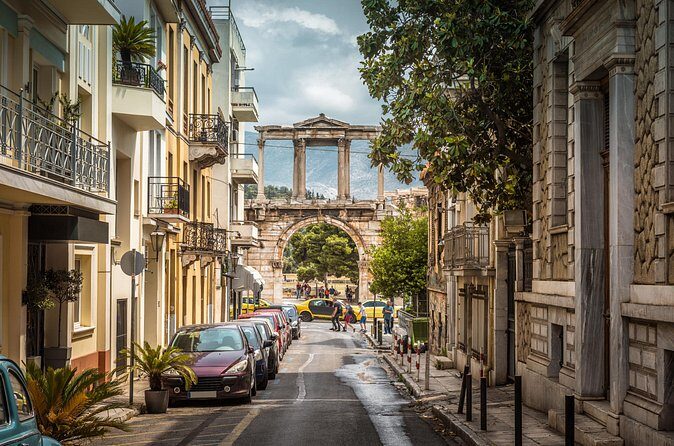
After Parliament, you’ll stop near the Temple of Olympian Zeus, also called the Olympieion. This is one of those “how did they ever build this?” sites. Construction stretched from 510 B.C. to 131 A.D.—so yes, centuries.
The temple’s original plan was huge: there were 104 Corinthian columns, and only 16 remain standing today (with one lying on the ground). Even without entering deep into details, this stop gives you a sense of how power and ambition were expressed through stone.
Just note the practical part: entrance fees are not included in the overall tour price, and the information provided doesn’t clearly confirm whether this specific stop requires a ticket. If you want zero surprises, treat it like a site where you might pay on the day.
Panathenaic Stadium: where the modern Olympics began
Then comes the Panathenaic Stadium. It’s famous for being the only marble stadium in the world (that’s not a small claim), and it hosted the first modern Olympic games in 1896.
You don’t need a long visit here—about 10 minutes—because the stadium’s identity is the point. You’ll see the historic setting quickly, and you can move on before the day drags.
This stop is free, so it’s an efficient use of time. It’s also a nice bridge between what you saw at the Acropolis (ancient ceremonial power) and what you’ll see at Corinth later (ancient civic life).
- All Day Cruise -3 Islands to Agistri,Moni, Aegina with lunch and drinks included
★ 5.0 · 4,958 reviews





Mount Lycabettus: the best Athens view, fast
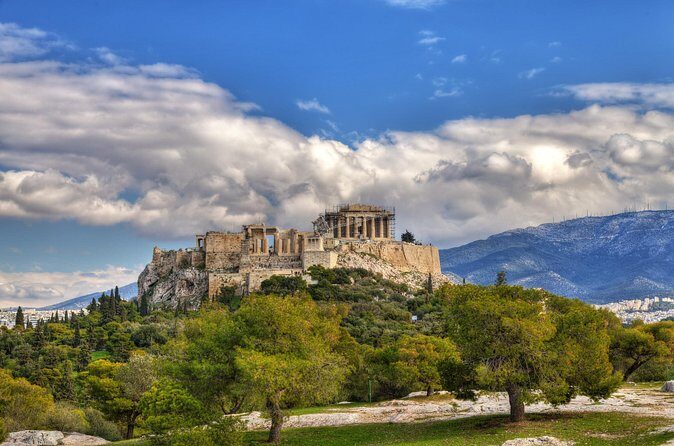
If you want a payoff that feels like a reward, this is it. Mount Lycabettus gives the best panoramic view of Athens in a short window. You get about 10 minutes, and that’s enough for photos and a quick orientation moment.
This is where the tour earns its keep. When you come down, you’ll understand the city better. Streets, neighborhoods, and the spread of buildings start to make sense because you’ve seen the bigger picture from above.
Since admission is free here, it’s also a low-cost way to turn the day from “drive and look” into “drive and comprehend.” Wear comfortable shoes and keep water handy—your timing matters more at viewpoints than it does at flat monuments.
A glance at old Athens: seeing the city between the monuments
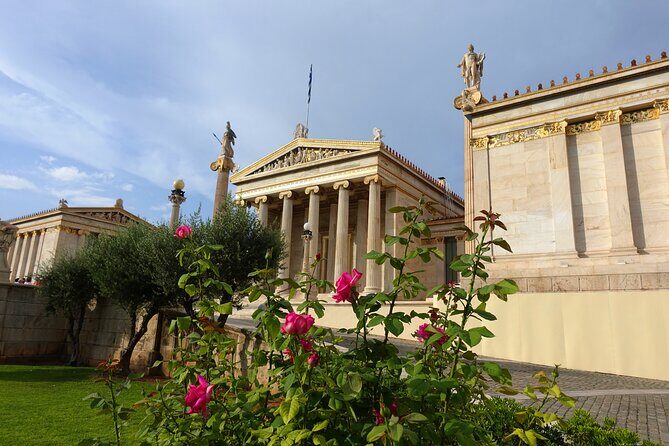
The itinerary also includes time for an older neighborhood of Athens. The details aren’t spelled out for a specific named block, but the intent is clear: you should get beyond the checklist monuments and see that Athens is a living city with layers.
This kind of stop is valuable because it breaks up the day. After the big historic icons, seeing older streets and everyday urban texture helps you feel how people actually experience the city now.
If you’re hoping for a guided narrative at every single step, consider that this part may be more “see the area” than “deep architectural lecture.” Still, it’s a helpful pacing tool.
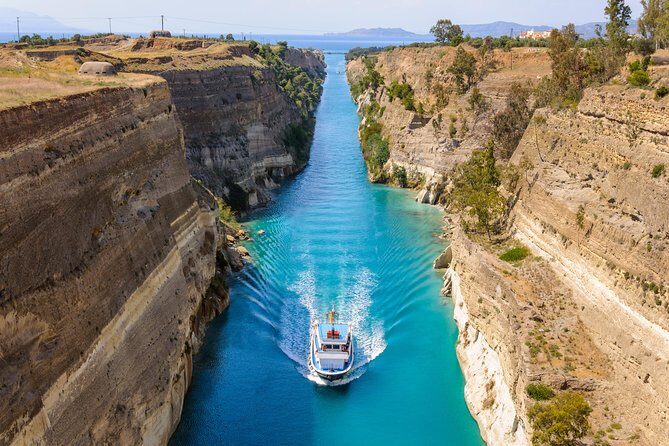
Corinth Canal: diolkos, centuries of engineering, and a quick look
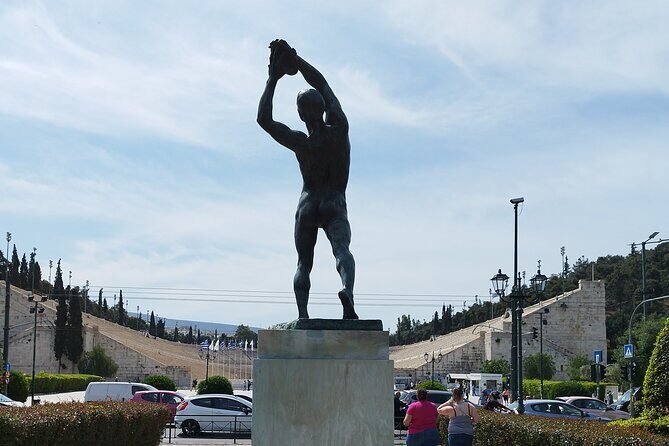
Next comes the Corinth Canal. It’s the kind of site that makes you stop, even if you don’t know the details yet. The canal was an idea for almost 2,500 years. The early inspiration is linked to Periandros the tyrant from Corinth, who looked for ways to avoid sailing around the Peloponnese peninsula.
One piece of the story mentions diolkos, a system for moving ships over difficult stretches. After centuries of attempts, the canal as we know it was finally constructed in 1893.
This stop is about 15 minutes and is listed as free. That’s enough time to take a few photos and connect the idea of location and commerce—because that’s exactly what Ancient Corinth will be about later.
The one drawback here is also the simplest: since time is short, you’ll want to decide quickly what you want to shoot or focus on. This is a look-and-move moment.
Ancient Corinth: more than ruins, it’s how a city-state worked
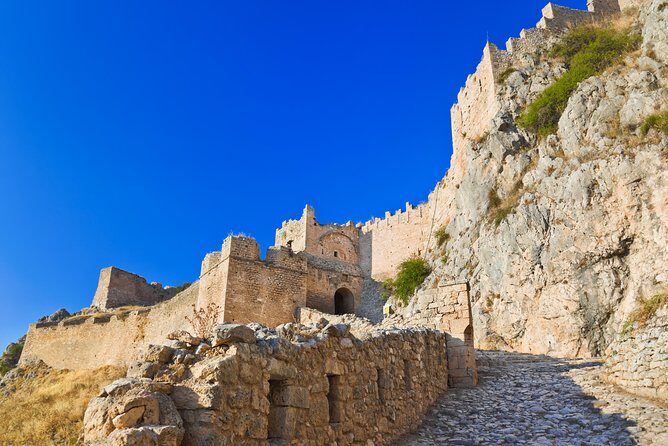
Ancient Corinth (Archaia Korinthos) is the end of the day, and it’s the one that ties everything together. Corinth was an important city-state in the Peloponnese. Its position mattered for commerce, and the area’s fertile soil supported wealth. The result: it’s often described as one of the richest ancient cities.
Your visit lasts about 1 hour, which is a smart length. It keeps you from burning the whole day on archaeology while still giving you time to see the major pieces.
Here are the highlights you’re positioned to appreciate:
- a Doric temple of Apollo dating to around 560 B.C.
- the Isthmian Games, similar to those held at Olympia
- the agora, where civic and economic life would have happened
- the fountain of Peirene
- Roman-era features like a concert hall and baths
Even if you only catch fragments, the value is that the tour concept helps you interpret what you’re looking at. Corinth wasn’t just temples and columns—it was a machine for trade, public life, and culture.
Admission for Ancient Corinth is not included, so again, budget for tickets ahead of time.
Guide quality and pacing: what “private” really buys you
A big reason people love this tour format is the way it stays flexible. One guide highlighted in real use is Theodore, praised for excellent English, being friendly, and having a lot of history to share. The other practical point: the tour can allow more time at certain locations if your group needs it.
That flexibility matters at places like the Acropolis and Ancient Corinth, where timing and energy levels are real variables. You might want a few extra minutes to look, take photos, or slow down for context. A private guide is easier to adjust than a big group itinerary.
Also, the air-conditioned vehicle helps on hotter days, and a van running at a comfortable temperature can feel like a hidden feature. You’re in the car enough that comfort turns into energy you can spend at the sites.
What’s included (and what you’ll plan for) on this 7 to 9 hour day
Here’s the practical included list: air-conditioned vehicle, private transportation, Wi‑Fi on board, and bottled water per person. You also get a mobile ticket and the tour runs in English.
What that means for you:
- Wi‑Fi is useful for checking opening times or mapping your next stop while you’re already in motion (if you can get signal).
- Bottled water keeps you hydrated so you’re not constantly hunting for drinks during site visits.
- The air-conditioned ride can be a genuine comfort buffer when you’re doing major walking in the middle of the day.
What’s not included: entrance fees and food and beverages. So plan for a lunch situation and carry some extra snacks if you tend to get hungry. Even if you don’t eat fancy, having options prevents the classic end-of-day energy crash.
Best for your travel style, not a one-size-fits-all plan
This tour makes the most sense if you want:
- a structured “greatest hits” day across Athens and Corinth
- comfort and fewer delays from hotel pickup
- a guided way to understand what you’re seeing, without needing to research every site yourself
It’s also a good choice if you dislike big bus groups and want your time respected.
On the flip side, if you dream of a slow, long stay—like roaming Corinth for hours or stretching Athens sightseeing into multiple days—you might find this too compressed. The stops are designed for efficiency, not for lingering.
Should you book Athens and Ancient Corinth Private from Athens?
I think it’s a strong booking for most first-time visitors who want maximum payoff with minimum friction. Private pickup from Athens hotels, bottled water, and on-board Wi‑Fi make the logistics painless. The day also covers the big anchors: the Acropolis, classic Athens landmarks, Mount Lycabettus views, and then the big connection point at Ancient Corinth.
Before you book, do two things:
1) check that you’re ready to pay entrance tickets for the Acropolis and Ancient Corinth (those are the non-included anchors)
2) plan for food, since meals and drinks aren’t included
If those are fine with your budget and pace, this is the kind of day that helps you walk away with a clearer Athens and a more meaningful Corinth.
FAQ
What time does this tour start?
It starts at 7:30 am.
Do you pick up from hotels in Athens?
Yes. Pickup is offered from all hotels of Athens.
How many people are in the group?
It’s up to 7 people per group.
Is this tour private?
Yes. It’s listed as a private tour/activity, meaning only your group participates.
Is the Acropolis admission included?
No. The Acropolis admission ticket is not included.
Is Ancient Corinth admission included?
No. The Ancient Corinth admission ticket is not included.
Which stops are free?
The Hellenic Parliament changing of the guards ceremony is free, the Panathenaic Stadium is free, Mount Lycabettus is free, and the Corinth Canal stop is also listed as free.
What’s included in the price besides transportation?
You get an air-conditioned vehicle, private transportation, Wi‑Fi on board, bottled water per person, and a mobile ticket. The tour is in English.
What is not included?
Entrance fees and food and beverages are not included.
Can I cancel and get a full refund?
Yes. You can cancel up to 24 hours in advance for a full refund.

More Private Tours in Athens


More Tour Reviews in Athens
- All Day Cruise -3 Islands to Agistri,Moni, Aegina with lunch and drinks included
★ 5.0 · 4,958 reviews