REVIEW · ATHENS
Athens: Tasting workshop and Food Market tour
Book on GetYourGuide →Operated by Truevoyagers · Bookable on GetYourGuide
Food in Athens tastes different up close. This tasting workshop + Central Market walk is built for real flavors, not just photos—starting with historic food shops and spice stores, then ending where Athenians buy ingredients. You’ll sample five carefully chosen tastings that map out the basics of Greek eating: olive, cheese, barley rusks, honey, and spirits.
I especially like how the stops are practical and easy to use later. The cheese, cured meats, and ntakos pairing makes it clear why Greek snacks work so well with bread, crunch, and strong drinks. And I also like the range: you go from olive oil and olives to honey products and then on to liqueurs that include Mastiha.
One thing to consider: this is rain or shine, and there are no transfers included. If you hate walking in wet weather or you’re far from the meeting area, you’ll want to plan your arrival accordingly.
In This Review
- Key things that make this tour worth your time
- The Athens food workshop that actually teaches you what to taste
- Meet at Ethniki Trapeza: your quick, central starting point
- Historic food shops and spice stores: the flavor warm-up
- Cheese, charcuterie, and ntakos: the savory base of Greek eating
- Olive oil and olives: why Greek food tastes so grounded
- Wine and tsipouro pairings: the drinks aren’t an afterthought
- Honey experience: sweet stops that still feel Greek, not generic
- Liqueurs and Mastiha at one of Greece’s oldest distilleries
- Central Food Market ending: turn tastings into real shopping instincts
- Price and value: $49 for a 2-hour ingredient lesson
- Who this Athens tasting works best for
- Should you book this Athens tasting workshop?
- FAQ
- What does the tour include?
- How long is the Athens tasting workshop?
- Where is the meeting point?
- Is the tour outdoors?
- Is there a guide and what language do they speak?
- Are transfers included?
- Can I cancel if my plans change?
Key things that make this tour worth your time
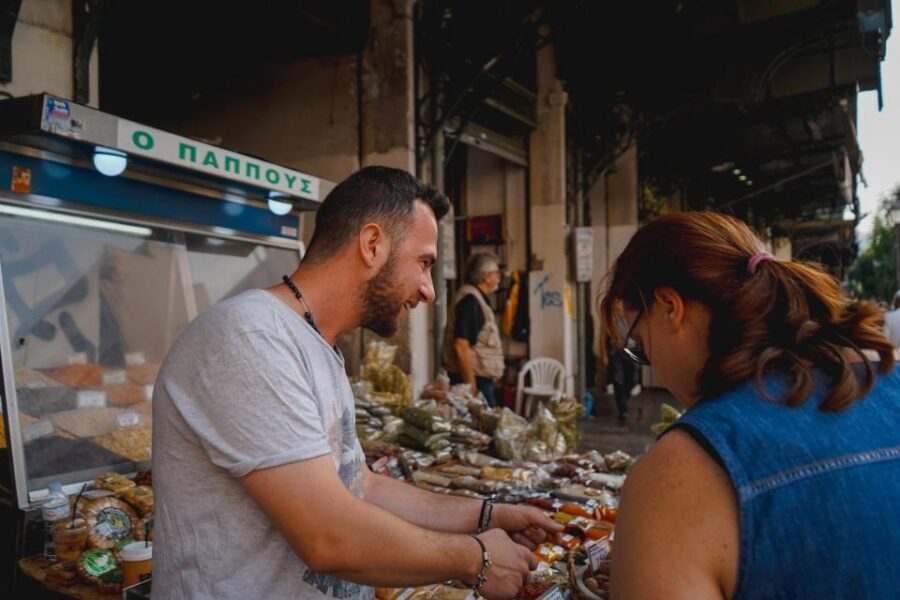
- Central Athens Food Market finish: you end where you can actually keep exploring on your own.
- Five tastings, not random bites: the food choices follow a logical Greek flavor path.
- Olive oil and olives get real attention: you taste quality extra virgin olive oil and olives, not just talk.
- Honey tasting with regional character: it’s not only plain honey, but honey-based products too.
- Spirits and liqueurs include Mastiha: plus wine and tsipouro for a proper Greek lineup.
- Small-group energy is possible: on quieter dates, it can feel more personal than a big bus tour.
The Athens food workshop that actually teaches you what to taste
If you’ve ever eaten Greek food and thought, I like it but I don’t know why, this type of tour is made for you. The format is short—just 2 hours—but it’s structured around classic Greek ingredients you’ll recognize in restaurants and grocery stores afterward.
You’re not handed a menu and told to guess. Instead, you taste key items in an order that helps your palate build connections: first the savory base (cheese, cured meats, barley rusks), then the heart of the Greek pantry (olive oil and olives), then the sweetness (Greek honey), and finally the spirits world (wine, tsipouro, and liqueurs including Mastiha).
A big part of the value is that your guide shares tips and insights along the way—so the experience turns into useful knowledge, not just tasting samples. It’s also English-guided, so you’re not relying on guessing or translation apps in crowded market lanes.
You can also read our reviews of more food & drink experiences in Athens


Meet at Ethniki Trapeza: your quick, central starting point
You’ll meet in front of Ethniki Trapeza bank at Athinas 38 & Evripidou. That’s a solid location because it puts you close enough to the action that you can get to the food market zone without complicated transfers.
Practical advice: arrive a few minutes early and wear shoes you can walk in for wet sidewalks and tight market streets. This is rain or shine, so bring a light layer or umbrella you can manage while walking.
One more small but real benefit of a centralized start: once the tour ends at the Central Food Market, you’re already in the area where you can continue browsing, grabbing a snack, or picking up ingredients. No long commute to reach anything “interesting.”
Historic food shops and spice stores: the flavor warm-up
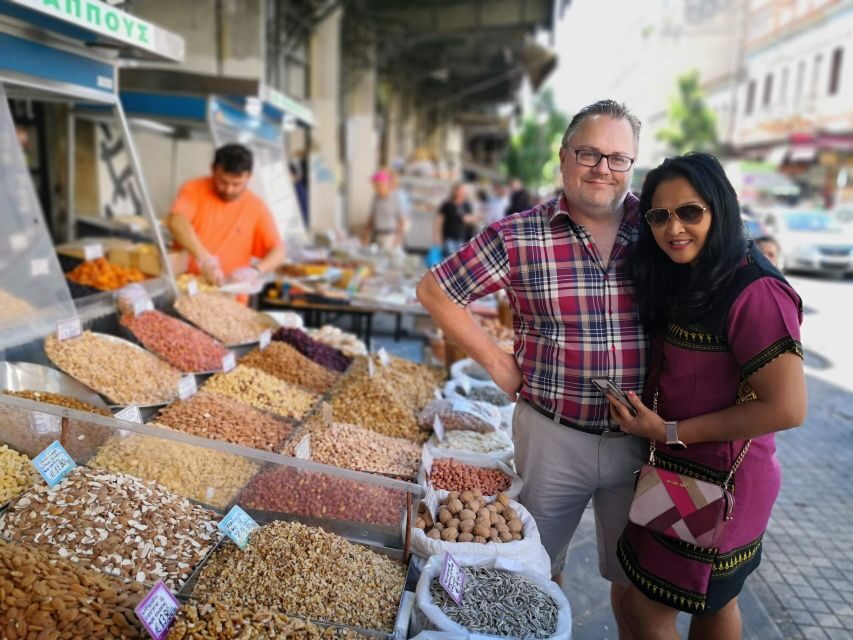
The tour begins with visits to beloved local food spots—especially places known for decades of tradition—including shops that sell spices. This matters because Greek cooking isn’t just about one ingredient. It’s a system: strong tastes balanced by fat (olive oil), salt (cured meats), crunch (barley rusks), and sweetness (honey).
Expect to see the kind of shelves and counters that make it obvious how Greeks shop: practical, ingredient-focused, and often brand- or producer-driven. You’ll also get context on what you’re tasting and how to recognize it later.
If you’re a person who likes to understand what you’re eating, this part sets you up. It’s where you start noticing differences—texture in the foods, intensity in spices, and how certain flavors show up again later in the tour.
Cheese, charcuterie, and ntakos: the savory base of Greek eating
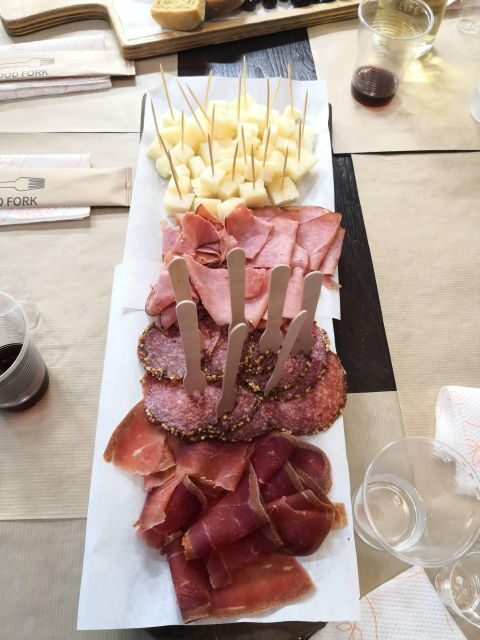
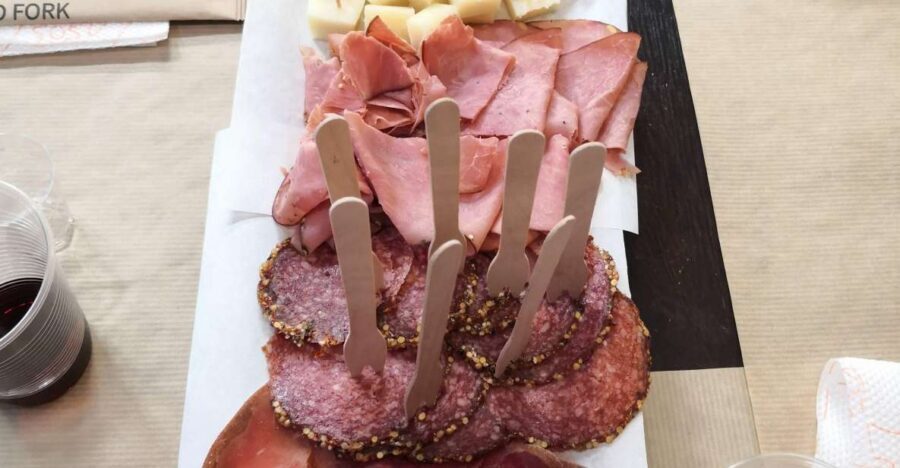
One of the best parts of this workshop is how clearly it starts with savory comfort foods. You’ll taste a selection of Greek cheeses and artisanal cold cuts, plus rustic barley rusks (ntakos). This combination is a classic reason Greek food feels both hearty and light at the same time.
Here’s what this stop teaches you in real terms:
- Cheese gives you fat and tang or mild saltiness, depending on the type.
- Cured meats bring salty depth and a firmer bite.
- Ntakos adds crunch that can stand up to bold flavors.
A guide-led tasting works better than a random restaurant order because you can actually compare tastes side by side. You also learn how Greeks build snacking: not one ingredient alone, but a small assembly that makes each bite more satisfying.
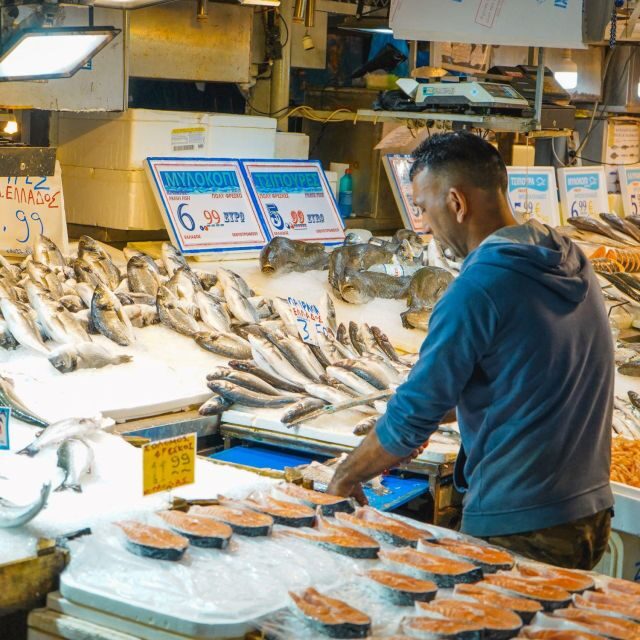
And from the experience reports you can rely on the fact that you’ll also get to see parts of the central market that include meat and fish activity. Even if you don’t buy anything, seeing that rhythm helps you understand why the food culture is so ingredient-led.
Olive oil and olives: why Greek food tastes so grounded
After the first savory set, you shift toward the ingredient Greeks treat like a foundation. You’ll enjoy an olive and olive oil tasting, including premium olives and extra virgin olive oil.
This is where I think many visitors benefit the most. Olive oil in Greece isn’t just a condiment. It’s part of the flavor architecture. Tasting it properly—right there, with guidance—makes it easier to recognize good oil back home.
What to pay attention to:
- The oil’s intensity (it shouldn’t taste flat).
- How it interacts with salty foods like cheese and charcuterie.
- How olives bring their own salty, vegetal character.
This stop also makes the later pairings make more sense. When you know what the oil tastes like on its own, wine, tsipouro, and liqueurs feel less random. They start to look like planned matches, not just drinks offered with food.
You can also read our reviews of more tours and experiences in Athens




Wine and tsipouro pairings: the drinks aren’t an afterthought
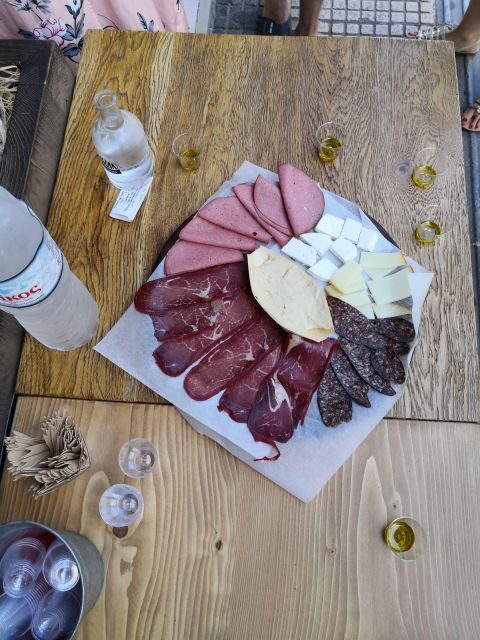
Next comes a guided pairing with local wine—handpicked red and white—plus tsipouro, a bold Greek spirit. This is one of those choices that can make or break a food tour: if the alcohol is just decoration, you feel it. Here it’s part of the tasting logic.
Tsipouro stands out because it’s punchy and traditional. It can handle savory flavors without getting drowned out, which is exactly why it works alongside cheeses, cured meats, and olive-forward bites.
The wine pairings add variety and help you reset between tastings. You get red for depth and structure, and white to keep things from feeling too heavy.
Practical tip: pace yourself. Even in 2 hours, you’ll go through multiple tastings. If you’re sensitive to alcohol or you’re planning to walk more afterward, take your time and sip slowly.
Honey experience: sweet stops that still feel Greek, not generic
Then the tour turns to sweetness with a Greek honey experience. You’ll taste a variety of honeys and honey-based products, each with natural character tied to region.
This matters because honey is easy to misunderstand. In many places, honey is treated like one product. In Greece, it can taste noticeably different depending on what it’s from, how it’s produced, and how it’s used.
What I’d watch for during this stop:
- Differences in aroma and thickness.
- How sweetness balances earlier salty or oily bites.
- Whether honey-based products feel like they’re built for pairing, not just tasting.
This is also one of the easiest parts to take home. After you taste a few types, you’ll know what to look for at markets—what sounds similar might taste very different once you’re actually comparing.
Liqueurs and Mastiha at one of Greece’s oldest distilleries
The workshop finishes the “spirits path” with a tasting of Greek liqueurs, including the iconic Mastiha. You’ll also stop at one of the country’s oldest distilleries, which adds a sense of continuity—this isn’t a modern gimmick.
Liqueurs are where many people either lean in or check out. If you like learning how flavors are built—herbs, resins, aromatics—you’ll probably enjoy this segment. Mastiha is a good signal ingredient because it’s distinctive enough that you’ll remember it later, even if you don’t drink liqueurs often.
This part also rounds out the tour’s structure. You start with savory Greek staples, move through oil and sweetness, and end with spirits that reflect the same culture of ingredient personality.
Central Food Market ending: turn tastings into real shopping instincts
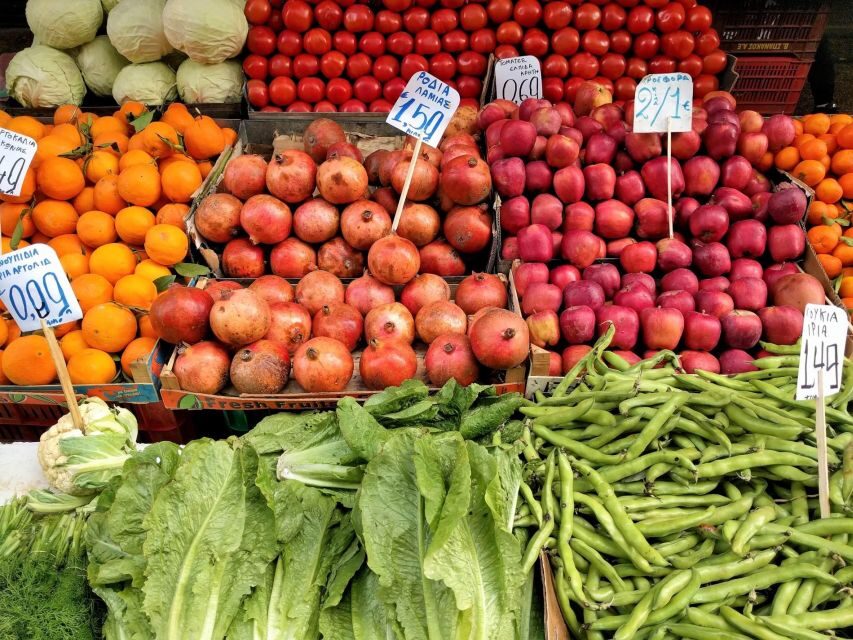
The tour concludes back in the Central Athens Market, where you can blend in while people shop for fresh ingredients and regional specialties. This end point is a smart design choice: you taste first, then you see the marketplace where those flavors come from.
What you can do after your tour ends:
- Look for ingredients you specifically tasted (olive oil, honey products, cured meats, spices).
- Ask yourself what you’d like to eat tonight and use market sights to guide your decision.
- Keep following the stalls without feeling lost, because you now understand what to notice.
Even if you don’t plan to buy much, ending at the market gives the experience a second life. It’s not just “two hours and done.” It helps you read Athens like a food city, not a sightseeing checklist.
Price and value: $49 for a 2-hour ingredient lesson
At $49 per person for 2 hours, the price makes sense because you’re not paying for a walk alone. You’re getting multiple tastings that cover key categories: cheese and charcuterie, ntakos, olive oil and olives, honey and honey-based products, and then wine, tsipouro, and liqueurs (including Mastiha).
Also, the tastings are paired in a way that teaches you how flavors work together. That’s where value lives. A casual food sampling could be entertaining, but it wouldn’t necessarily help you understand the “why.”
Two small considerations to keep it balanced:
- Transfers aren’t included, so you’re responsible for getting yourself to the meeting point.
- Rain or shine means you’ll likely spend real time outside and on foot. If the weather is brutal, you’ll want a plan for comfort.
If you like food and want a short, guided way to get it right, this is the kind of activity that pays off quickly.
Who this Athens tasting works best for
This workshop is a strong fit if you:
- Want hands-on food learning in a short time window.
- Like markets and want to see how locals shop, not just tourist stalls.
- Drink wine or tsipouro and enjoy tasting spirits in a guided setting.
- Prefer structured tastings over ordering a random “Greek platter” and hoping it all matches.
It may be less ideal if you:
- Hate any walking during rain.
- Want a purely sightseeing tour with minimal food focus.
- Don’t want alcohol tastings at all, since wine and tsipouro are part of the experience.
Should you book this Athens tasting workshop?
Yes, I think it’s worth booking if you want your Athens food experience to be specific. The tour is short, ingredient-focused, and it ends in the right place—the Central Food Market—so your night doesn’t end when the guide does.
I’d book it over a generic “Greek dinner tour” because you get structured tastings that map out the core flavors: olive oil, cheese and cured meats, ntakos, honey, and liqueurs with Mastiha. And if you hit a quieter date, you might get a more personal feel, which makes the guide’s tips easier to absorb.
If you’re nearby and you’re comfortable walking in any weather, this is a high-value way to understand Greek cuisine fast—and then use that knowledge all the way through your trip.
FAQ
What does the tour include?
You’ll get tastings of Greek spirits and liqueurs, a honey experience, cheese and charcuterie with ntakos, an olive and olive oil tasting, plus wine and tsipouro. You also visit the Central Athens Market.
How long is the Athens tasting workshop?
It lasts 2 hours.
Where is the meeting point?
Meet in front of Ethniki Trapeza bank at Athinas 38 & Evripidou str.
Is the tour outdoors?
The activity runs rain or shine.
Is there a guide and what language do they speak?
Yes, there’s a live tour guide who speaks English.
Are transfers included?
No, transfers are not included.
Can I cancel if my plans change?
Yes. It offers free cancellation up to 24 hours in advance for a full refund.

More Food & Drink Experiences in Athens

More Tours in Athens




More Tour Reviews in Athens
- All Day Cruise -3 Islands to Agistri,Moni, Aegina with lunch and drinks included
★ 5.0 · 4,958 reviews