REVIEW · ATHENS
Athens Tour with Electric Bike
Book on Viator →Operated by Athens on bike · Bookable on Viator
Athens moves fast; this ride keeps up. In a few hours on an e-bike, you zip between big-picture Athens sights and everyday neighborhoods, from Hadrian’s Gate to Plaka. I love the way the stops give you breathing room for photos and questions, not just a quick glance. I also love the Monastiraki stop with Greek souvlaki tasting, because it’s a real-feeling local break. One consideration: some parts of the route can get crowded, so you’ll want a comfort level with slow, careful bike riding.
You’ll go with a small group (up to 15), in English, with a guide who keeps the day running smoothly and at human speed. The tour lasts about 3 to 4 hours, and it ends right back at the meeting point, so it’s easy to plug into your Athens plans. And if you’re here for a short stay, this is one of the simplest ways to build a clear mental map of the city.
Timing matters for one big highlight: the Changing of the Guards happens every Sunday at 11 am in Syntagma Square. Also, you’ll get Acropolis views, but this is more about vantage points than tackling long ticket lines and crowds.
In This Review
- Key Things I’d Remember Before Booking
- Getting Started at Ag. Theklas 6: What This E-Bike Day Feels Like
- Hadrian’s Gate to Monastiraki: Gate, Market, and a Real Food Pause
- Panathenaic Stadium and the Temple of Olympian Zeus: Marble Meets Scale
- Syntagma Square’s Sunday Ritual: The Changing of the Guards
- Thiseio, Acropolis Views, and the National Garden: Athens Old City Without the Fuss
- Plaka, the National Observatory, and Psyri: Where the Ride Becomes the City
- What You’re Actually Doing on the Bike (and How to Make It Smooth)
- Price and Value: Why $54.42 Can Make Sense for Athens
- Who Should Book This Tour (and Who Might Rethink It)
- Final Call: Should You Book Athens on Bike?
- FAQ
- How long is the Athens electric bike tour?
- Where does the tour start and where does it end?
- Is the tour offered in English, and how big is the group?
- Which major sights are included on the route?
- Is there any food included?
- Does the tour run in any weather?
Key Things I’d Remember Before Booking

- An efficient route that mixes monuments and neighborhoods across a wide chunk of Athens
- Monastiraki souvlaki tasting that keeps the tour from feeling like only photo stops
- Marble Panathenaic Stadium with a quick, focused look at a truly rare venue
- Syntagma’s Changing of the Guards (Sundays at 11 am) for a memorable ceremonial moment
- Acropolis viewpoints without the full-entry scramble so you can keep the pace
- Small-group e-bike comfort check since crowding can make handling trickier than it sounds
Getting Started at Ag. Theklas 6: What This E-Bike Day Feels Like
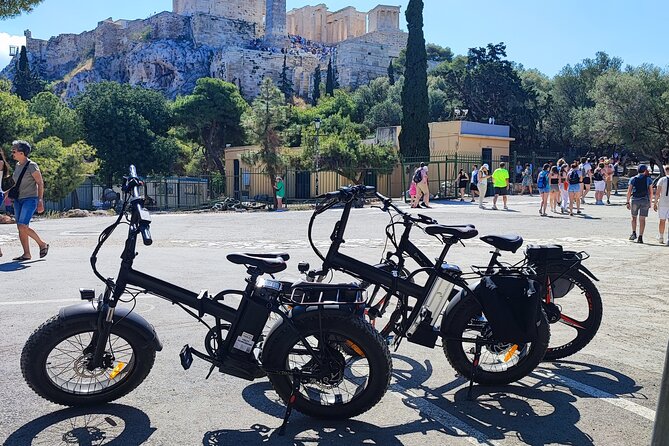
This tour is built for momentum. You’re not doing Athens in a straight line with one long walk. Instead, you’re riding an electric bike between key areas so your time stays focused on sights you’d struggle to reach quickly on foot.
The meeting point is at Ag. Theklas 6, Athina 105 54, and the tour ends back there. That matters because Athens neighborhoods are spread out, and it saves you from figuring out your “how do I get back?” problem when the ride is done.
One more practical point: this is designed for “most travelers,” and the group cap is 15. In real terms, that usually means you’ll have a little space to get oriented before the ride gets busy. If you’re new to bikes, plan to go slow at the start and listen closely during the safety check.
You can also read our reviews of more tours and experiences in Athens.


Hadrian’s Gate to Monastiraki: Gate, Market, and a Real Food Pause
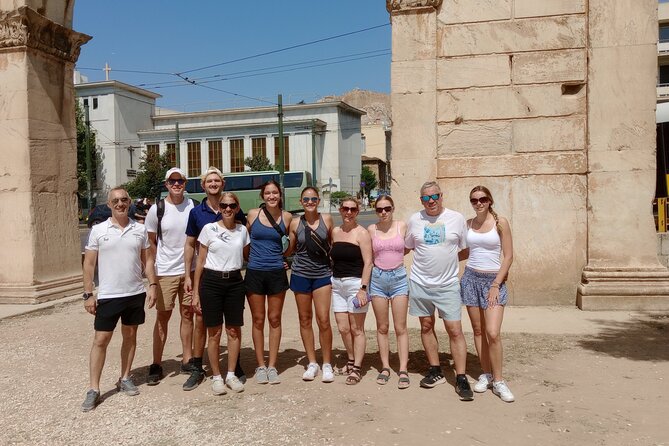
Your first stop is Hadrian’s Gate (Arch of Hadrian). This monumental gateway sits like a Roman-style landmark in the middle of a modern city web. It’s the kind of site that makes Athens feel layered—ancient roads, big architecture, and then regular streets around it. The stop is short (about 15 minutes), which is ideal here: you get the main idea and a few photos without it turning into “standing around.”
Then you move to Monastiraki, one of Athens’ most scene-heavy areas. You’ll be in the zone around Hadrian’s Library ruins, the Ancient Agora, and the rebuilt Stoa of Attalos, with the flea-market chaos not far away. The best part is that you get a sense of how this area works day-to-day: small shops, tight streets, and tavernas that spill into your path.
The Monastiraki stop includes a 15-minute Greek souvlaki tasting. This is smart. It keeps the tour from feeling like only monuments, and it gives you a quick energy reset before you ride into the next set of big historic hits. Also, the timing is good—Monastiraki is the kind of place where you’ll naturally want to wander, but the guide keeps the group moving so you don’t lose the rest of your itinerary.
Possible drawback: this area can be crowded. E-bikes are great, but tight sidewalks and busy crossing points can make turning and maneuvering feel more stressful than you expect. If you’re the type who gets flustered in crowds, take it slow when the group tightens up.
Panathenaic Stadium and the Temple of Olympian Zeus: Marble Meets Scale
Next up is Panathenaic (Panathenaic) Stadium, famous for being the only stadium in the world built entirely of marble. It’s a short stop (about 15 minutes), but it’s worth it because the “marble built for sport” idea is the kind of thing you can’t fully appreciate from a textbook or a photo. Up close, it’s easier to understand why this stadium is still such a recognizable symbol of Athens.
From there, you head to the Temple of Olympian Zeus—the Olympieion. This is all about scale and ambition. Even in ruins, the idea is huge: a former colossal temple dedicated to Zeus at the center of the capital. If you’ve been feeling the “where exactly are all the monuments?” stress in Athens, this stop gives your brain a payoff. It’s one of those places where the city’s ancient grandeur becomes visible, not just historical.
A good way to use your time here: don’t just take photos from one angle. If you can, spend a minute or two shifting your position so you catch different lines of sight—columns and spacing change the way the space feels.
Syntagma Square’s Sunday Ritual: The Changing of the Guards
If your dates match the schedule, the Changing of the Guards at Syntagma Square is one of the most fun “instant Athens” moments on the itinerary. The key detail is that it happens every Sunday at 11 am, and that’s why the day of the week matters. The scene is simple: people gather, the guards stand in place, and the whole thing becomes a show people watch with real curiosity.
This stop is about 15 minutes. That’s enough to catch the ceremony without turning it into your entire day. It also gives you a nice rhythm break between major historic sites—an official, modern-national moment right in the middle of the city’s daily energy.
Tip: if you’re arriving early, don’t assume you’ll be able to bike right up to your best viewing spot. Plan to park your bike safely and be ready for the usual crowd flow of a landmark ceremony.
Thiseio, Acropolis Views, and the National Garden: Athens Old City Without the Fuss
After the ceremony, you move into the older Athens texture with Thiseio (Thissio). This neighborhood is known for its pedestrian streets, its archaeological surroundings (Agora, Keramikos, Pnyx), and its mix of churches, synagogues, and cafés. The name Thiseio comes from the Temple of Hephaestus being mistakenly called Theseion, linked to the mythical king of Athens. It’s a small story, but it’s exactly the kind of confusion that makes travel feel human—history wasn’t just tidy, even when people had names for it.
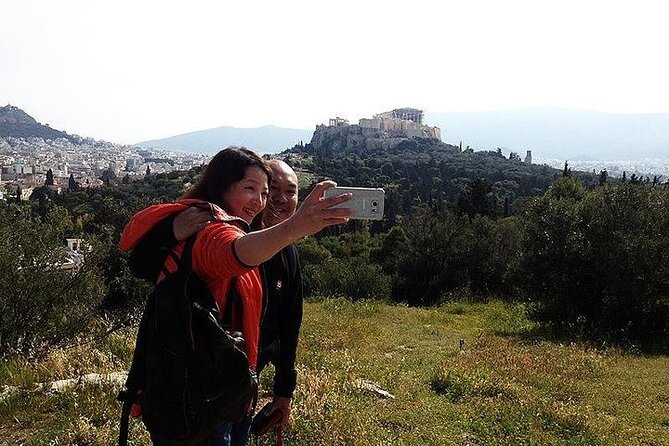
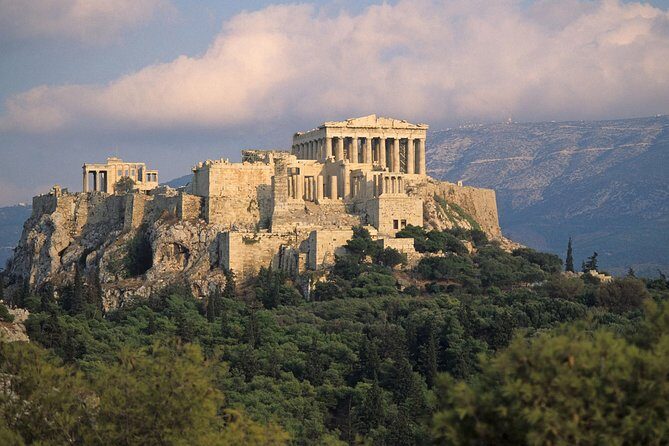
Then you get to the Acropolis of Athens with about a 15-minute stop. Here’s the thing: this e-bike tour format is built for views and photo moments more than a full Acropolis circuit. That means you can admire the fact of the Acropolis without burning your time in the big-ticket-entry maze and the heaviest crush of visitors.
Next is the National Garden, behind the Greek Parliament building (the Old Palace area). It’s a nice change of pace because it’s literally a breathing space in the city. The garden is also tied to ancient Athens through ruins and scattered architectural fragments like column drums and capitals, plus mosaics and other features. You’ll also pass busts of notable figures, which adds a layer beyond “trees and shade.”
If you’re going in warmer months, the garden stop is often a mental reset. You don’t need a long hike—just a shaded pause, cool water moments, and time to regroup before the last neighborhood push.
- All Day Cruise -3 Islands to Agistri,Moni, Aegina with lunch and drinks included
★ 5.0 · 4,958 reviews





Plaka, the National Observatory, and Psyri: Where the Ride Becomes the City
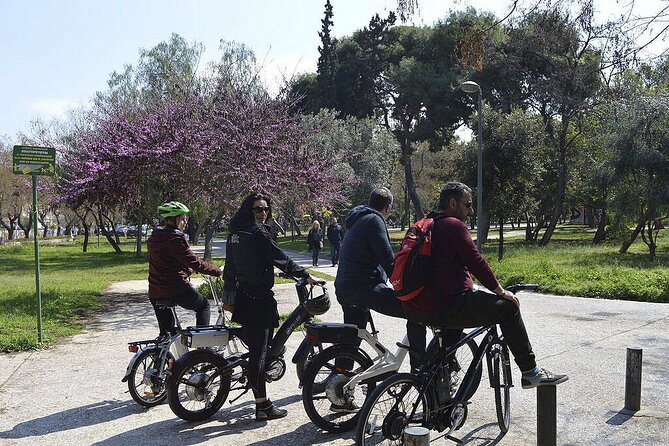
Plaka is next, and it’s exactly the kind of Athens neighborhood that feels like a storybook—without needing to pretend it’s something it’s not. Plaka sits around the northern and eastern slopes of the Acropolis, with labyrinthine lanes and neoclassical streets. People call it the Neighborhood of the Gods because it’s close to the archaeological core, but it also has the everyday reality: cafés, terraces, and layers of architecture.
The itinerary includes a stop at the National Observatory of Athens. This is more niche than the Plaka postcard scenery, and that’s a good thing. The observatory was founded in 1842 and is the oldest research foundation in Greece—an interesting reminder that Athens isn’t only about ancient stuff. It also has a scientific identity that starts after Greece became independent in 1829.
Finally, you ride into Psyri, a district that used to have a tougher reputation and then shifted into one of the more fashionable central areas for food and entertainment. The central square is Heroes Square (Plateia Iroon), named for hero street names tied to the Greek War of Independence. This part of the tour helps you connect the dots: Athens isn’t only ruins and ceremonies; it’s also nightlife energy and street-level culture.
What You’re Actually Doing on the Bike (and How to Make It Smooth)
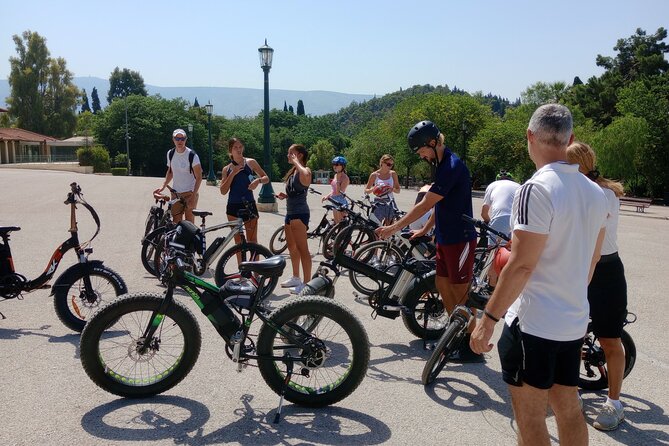
An e-bike tour can sound easy—until you realize Athens is full of pedestrians, tight turns, and “one street that’s not really a bike street.” This is where the details matter.
From real-world experience with this kind of tour, I’d treat your ride as a careful city-navigation lesson, not a casual cruise:
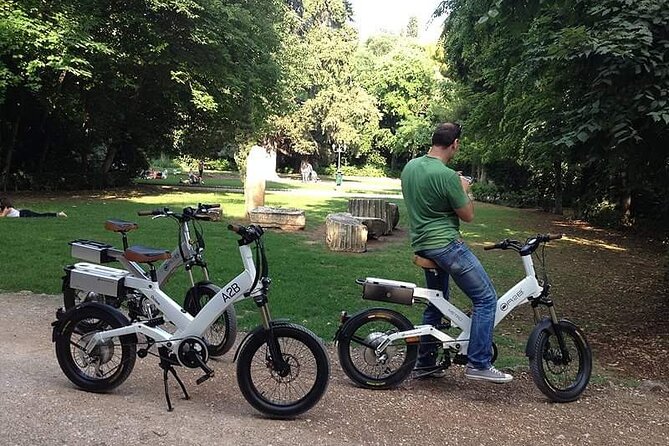
- Expect mixed bike setups. E-bike power can vary (for example, some bikes use throttle-only, others use pedal assist, and some have different tire sizes). Fat tires can help with uneven surfaces and slipperier road patches, but bigger tires can also feel less nimble in very tight turns.
- Do a comfort check early. Before you feel rushed, practice control in lighter traffic areas with the guide. One review noted riders were given time to practice before the main ride—this is the best moment to learn your braking and turning.
- Crowds are the main challenge. Sidewalk routes can get packed. If you feel uneasy, stay calm, keep your speed low, and let the guide manage the group’s flow.
Safety note that’s worth taking seriously: some riders have described falls or near-misses while navigating dense pedestrian areas. That doesn’t mean you shouldn’t do it. It just means you should treat crowd handling as part of the experience—especially if you’re riding for the first time or you’re with kids or partners who aren’t fully confident.
Also, since some tours can run later (including sunset-style rides), I’d make sure your bike has working lights before you roll. If anything seems off, tell the guide right away.
Price and Value: Why $54.42 Can Make Sense for Athens

At $54.42 per person, this isn’t a budget “walk-only” deal, but it can be good value if you look at what you’re buying: time, logistics, and coverage.
For your money, you get:
- A guided route that strings together major sights across multiple neighborhoods in about 3 to 4 hours
- An e-bike that reduces the “Athens is too spread out” frustration
- Stops that include both top monuments and city texture (Monastiraki, Plaka, Psyri)
- At least one food moment (the souvlaki tasting at Monastiraki)
If you tried to do this with only walking or a patchwork of taxis, you’d likely lose hours either to travel time or to the “where is the next stop?” problem. The e-bike structure makes it easier to see more in a shorter window—especially if you want a first-day orientation.
The key tradeoff is that the tour’s success depends on comfort and bike function. If your bike battery has issues or if a bike doesn’t feel right for you, the guide may need to swap bikes or adjust the ride. That’s rare, but it’s the real “value lever” here: the tour works best when equipment is solid and the group rides smoothly.
Who Should Book This Tour (and Who Might Rethink It)
This is a strong match if you:
- Want an intro loop of Athens highlights without spending your whole day zigzagging
- Enjoy photo stops and want a guide to point out what matters
- Feel heat fatigue from walking and want speed plus relief from the pedal effort
It may be less ideal if you:
- Are very anxious around bikes or crowded sidewalks
- Expect a lot of off-bike wandering at each stop (the time is designed to be efficient)
- Need totally predictable, uniform bikes and power modes (setups can vary)
That said, the tour experience often shines with groups that communicate. A guide typically checks who feels comfortable riding and then adapts. In past rides I’ve heard about guides like Labros and Constantinos being patient, safety-minded, and good at matching the pace to different skill levels.
Final Call: Should You Book Athens on Bike?
I’d book this if you want to get oriented fast, see major monuments plus real neighborhoods, and enjoy the freedom of stopping when something catches your eye—without turning your day into a scavenger hunt.
I’d think twice if you’re uncomfortable riding in crowds or you’re planning to ride after dark without verifying bike lights. The route can be busy, and safety is part of the deal.
If you’re the right kind of traveler—curious, time-limited, and open to a city ride—this is one of the easiest ways to cover Athens in a few hours while still feeling like you’re seeing the place, not just touring it.
FAQ
How long is the Athens electric bike tour?
It’s listed as about 3 to 4 hours.
Where does the tour start and where does it end?
It starts at Ag. Theklas 6, Athina 105 54, Greece, and ends back at the meeting point.
Is the tour offered in English, and how big is the group?
The tour is offered in English, and it has a maximum of 15 travelers.
Which major sights are included on the route?
The route includes Hadrian’s Gate, Monastiraki (with a souvlaki tasting), Panathenaic Stadium, the Temple of Olympian Zeus, the Changing of the Guards (every Sunday at 11 am), Thiseio, the Acropolis area for a stop, the National Garden, Plaka, the National Observatory of Athens, and Psyri.
Is there any food included?
Yes. At Monastiraki, there is a Greek souvlaki tasting stop.
Does the tour run in any weather?
No. The experience requires good weather. If it’s canceled due to poor weather, you’ll be offered a different date or a full refund.

More Tour Reviews in Athens
- All Day Cruise -3 Islands to Agistri,Moni, Aegina with lunch and drinks included
★ 5.0 · 4,958 reviews