REVIEW · ATHENS
PARADISIAL PELOPONNESE | Semi-Private 8-Day Guided Tour
Book on Viator →Operated by PICTOURS OF GREECE · Bookable on Viator
Eight days can change how you see Greece. I like that this tour runs as a max-six, no-under-16 group, so you get real conversation time instead of being shoved along. You’re guided by a certified archaeologist English-speaking guide, and it starts with a gourmet dinner and Acropolis views that set the tone: ancient places, explained in plain language. One thing to weigh: it’s not a stroll-and-snap photos trip. You’ll walk ruins and stairs, and the itinerary includes long travel days, so you’ll want moderate physical fitness and good shoes.
My second big reason I’d recommend it is the way it mixes history with food and hands-on moments. You’ll do wine and cooking (including an Agiorgitiko tasting in Nemea and a local-chef cooking lesson with what you make), plus experiences like trout fishing at Planitero. You might even have small “only-on-a-tour-like-this” surprises—one review mentioned live musicians during dinner—because the day isn’t just clocks and tickets.
In This Review
- Key things I’d zero in on before booking
- A small, child-free tour that makes the ruins feel personal
- Athens night one: Acropolis views and a gourmet kickoff
- Acropolis, Acropolis Museum, and the fast hits in Athens
- Guided Acropolis tour
- Acropolis Museum
- Short stops that add up
- Epidaurus and Nemea: theatre acoustics plus Agiorgitiko wine
- Epidaurus Ancient Theatre
- Nemea wine tasting: Agiorgitiko
- Ancient Nemea ruins
- Mycenae, Sparta, and Monemvasia: power, legends, and medieval walls
- Mycenae: Lion Gate to the Treasury of Atreus
- Sparta quick stop: Leonidas monument
- Monemvasia: medieval castle town time
- Messene and Pylos: big ruins with breathing room
- Ancient Messene
- Pylos
- Niokastro and the Palace of Nestor: Mycenaean life up close
- New Castle of Pylos (Niokastro)
- Palace of Nestor
- Olympia, trout fishing, and Kalavryta: sacred sport to mountain town
- Ancient Olympia stadium
- Planitero trout fishing
- Kalavryta
- Kalavryta Holocaust Museum, the rack railway, and Ancient Corinth
- Kalavryta Holocaust Museum
- Odontotos Rack Railway through Vouraikos Gorge
- Ancient Corinth
- Hotels, meals, and the real value of a $4,624.74 trip
- A quick balanced check: what could be annoying
- Should you book Paradisial Peloponnese?
- FAQ
- How big is the group, and is it kid-friendly?
- Who provides the guiding, and what language?
- Where does the tour start and end?
- What’s included for food and drink?
- Is there a vegetarian option?
- What are some of the activities beyond standard sightseeing?
Key things I’d zero in on before booking
- Small, child-free group (max six; minimum age 16) for calmer pacing
- Archaeologist-led storytelling for context at Mycenae, Epidaurus, Olympia, and more
- Food included beyond the basics, from wine tasting to cooking lessons
- A mix of famous sites and less-seen stops, like Monemvasia and Ancient Nemea
- Hands-on activities, including trout fishing and a historic rail ride
- 4-5 star hotel stay for seven nights, after a lot of time on the road
A small, child-free tour that makes the ruins feel personal
This is not one of those mass-tour bus programs where you hear the guide through 40 other heads. The cap of six travelers changes the feel. You can ask questions without feeling like you’re slowing the line. You can step aside when the sun hits the Acropolis stone, or linger when a detail catches your eye.
The “no one under 16” policy is also a real factor. If you’re traveling as a couple, with friends, or solo and you want adult-level attention, this setup helps. If you’re traveling with kids, this is not your tour.
You can also read our reviews of more guided tours in Athens

Athens night one: Acropolis views and a gourmet kickoff
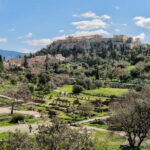
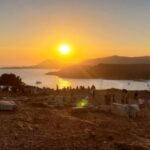
The meeting point is the Royal Olympic Hotel in Athens (Athanasiou Diakou 28), with a start time listed as 8:00 pm. That timing matters. It means your first taste of Athens isn’t just a rushed check-in. You’re getting the mood first: evening light, city energy, and that huge visual anchor—the Acropolis—before anyone starts talking dates and dynasties.
You’ll enjoy a gourmet dinner with breathtaking views of the Acropolis. Day 1 is short on “site running” and heavy on atmosphere. That’s smart. After a long day of travel, you want your brain set in the right key before you start climbing.
Practical tip: evening on the Acropolis means cooler air, but still expect steps and uneven ground. Bring shoes you’re happy to wear for a few days.
Acropolis, Acropolis Museum, and the fast hits in Athens
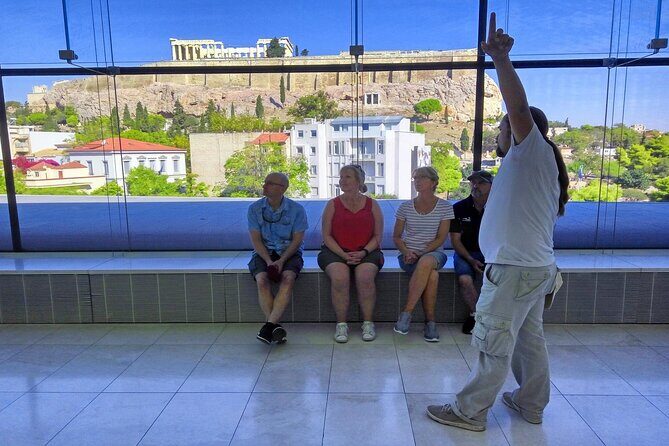
Day 2 is your Athens deep breath, and it’s built around two anchors: a guided Acropolis tour and the Acropolis Museum.
Guided Acropolis tour
You’ll get a guided look at the core architecture and what made this place work—politics, religion, and engineering all wrapped into one hill. Two hours is enough to see it properly without feeling like you got off the bus, snapped a few photos, and left.
Acropolis Museum
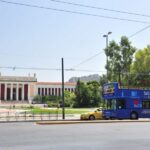
Then you switch gears to the Acropolis Museum. The museum is described as modernist, with layers of history reaching back to the 6th century BC. For me, this is where the ruins stop being just impressive shapes and start becoming artifacts with stories.
You can also read our reviews of more private tours in Athens




Short stops that add up
You also get quick viewing stops for major pieces:
- Herod Atticus Odeon (the Herodion on the slopes)
- Temple of Olympian Zeus
- Panathenaic Stadium
- Corinth Canal (as you transition toward the Peloponnese)
These are listed with short time windows, and that’s the point. You’re seeing the highlights while the bigger action happens in the long multi-hour sites later in the week.
Reality check: Athens can mean crowding. The small group size helps, but you still want to go in with patience and a water bottle.
Epidaurus and Nemea: theatre acoustics plus Agiorgitiko wine
If you want the moment when “ancient” stops sounding abstract, this day does it.
Epidaurus Ancient Theatre
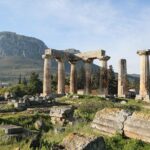
You’ll visit the Ancient Theatre of Epidaurus, famous for its perfect acoustics and architectural harmony. Even if you don’t know the tech details, you can feel why people build places like this. It’s one of those sites where the layout teaches you how performance mattered.
Two hours is a healthy chunk. You’re not just watching, you’re taking in the way the design shapes sound and movement.
Nemea wine tasting: Agiorgitiko
Next is Nemea, where you’ll taste Agiorgitiko wine, sometimes called Blood of Hercules. The myth connection is more than a marketing line here. It ties Hercules, the Nemean Lion story, and the wine’s deep red color into a single easy narrative you can carry home.
Two hours for this segment gives you time to slow down, taste, and ask questions.
Ancient Nemea ruins
Then you get the archaeological side: Ancient Nemea with the Doric-style Temple of Zeus (dating to the 6th century BC) and the Nemean Stadium. The most fun detail is that you’re welcome to run on the original track like ancient athletes.
That’s not something you do every day in Greece. If you like active site visits, this is a standout.
Mycenae, Sparta, and Monemvasia: power, legends, and medieval walls
This is one of the tour’s big “wow” sequences.
Mycenae: Lion Gate to the Treasury of Atreus
Mycenae is introduced as a powerful civilization (1600–1100 BC), and the itinerary doesn’t skim the headline parts. You’ll see the Lion Gate and descend into the Treasury of Atreus, believed to be Agamemnon’s tomb.
Two hours here is a good pace: you need time to understand why the site looks the way it does and what those structures meant.
Sparta quick stop: Leonidas monument
Then you get a short visit to Sparta and the Monument of Leonidas. It’s brief (30 minutes), but it anchors the day in the legend of the 300 Spartans and the Battle of Thermopylae.
This is a “context stop,” not a marathon. If you want more Sparta content, you’ll need another trip—but the way it’s used here keeps the schedule flowing.
Monemvasia: medieval castle town time
Finally, Monemvasia is your long 12-hour stretch. It’s described as a remarkably well-preserved medieval castle town, hidden from the mainland. That word hidden is doing real work. You feel like you’re entering another era, not just driving to another viewpoint.
When a day ends in a place like this, it’s easier to remember the tour as more than a list of ruins.
Messene and Pylos: big ruins with breathing room
Day 5 turns toward less-visited archaeological terrain and a calmer seaside town feel.
Ancient Messene
You’ll visit Ancient Messene, described as one of Greece’s most extensive and well-preserved sites. The highlight areas include a grand theatre, stadium, and imposing fortification walls in a peaceful valley framed by lush mountains and quiet roads. Two hours is listed, and it’s the right amount of time for a complex site without feeling frantic.
This kind of stop is a nice contrast after the more famous names.
Pylos
Then you head to Pylos, a serene seaside town with history. It’s your base for the night, and the goal is a slower evening after long site time.
Niokastro and the Palace of Nestor: Mycenaean life up close
Day 6 keeps the Bronze Age momentum without becoming repetitive.
New Castle of Pylos (Niokastro)
You’ll explore Niokastro, the imposing fortress that guarded the bay for centuries. Even when you’re not a “castle person,” fortress views help you understand how control of a coastline changed life.
Two hours gives you time to take photos and still absorb the story.
Palace of Nestor
Then comes one of the most impressive archaeology-style stops: the Palace of Nestor, one of the best-preserved Mycenaean palaces. You’ll see the megaron hall, storerooms, and tablets that reference early Greek writing (Linear B).
The itinerary also notes that the countryside views are inspiring. That’s useful here. When you stand where people lived and managed food stores, you get why location mattered.
Two hours is also enough to see it as a functioning home, not just a set of walls.
Olympia, trout fishing, and Kalavryta: sacred sport to mountain town
Day 7 is a mix of ancient athletics, a very different nature experience, and then a mountain town shift.
Ancient Olympia stadium
At Ancient Olympia, you’ll walk the sacred grounds where athletes competed for glory over 2,000 years ago. You’ll move through the historic stadium and imagine the splendor of the Statue of Zeus—once one of the Seven Wonders of the Ancient World.
Three hours is a bigger block than some days. That tells you how packed Olympia is with meaningful details.
Planitero trout fishing
Then you shift to Planitero, where you’ll enjoy trout fishing in calm rivers. This isn’t about a lecture. It’s about being present in a local setting where nature does the talking.
Two hours is listed, which suggests it’s structured but not a long ordeal.
Kalavryta
From there you go to Kalavryta, a picturesque mountain town. It’s described as changing with the seasons, from snow in winter to greenery in spring. The point for your planning: weather can shape how the town looks and how the day feels.
Kalavryta Holocaust Museum, the rack railway, and Ancient Corinth
Day 8 is emotionally heavy and physically satisfying, ending back in Athens.
Kalavryta Holocaust Museum
First up is the Municipal Museum of the Kalavryta Holocaust, honoring WWII stories and the region’s strength and resilience. One hour is listed—enough time to understand the core context without dragging the day into exhaustion.
Odontotos Rack Railway through Vouraikos Gorge
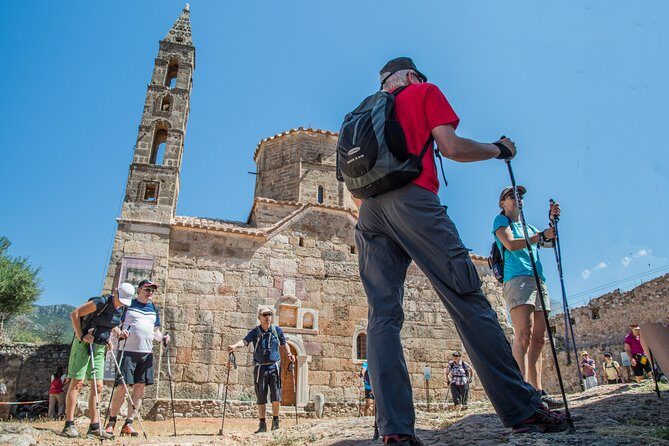
Next is the Odontotos Rack Railway, a 19th-century engineering ride through the dramatic Vouraikos Gorge. One hour on a railway like this is a break from stairs and stones, and it’s a “transport as attraction” moment.
Ancient Corinth
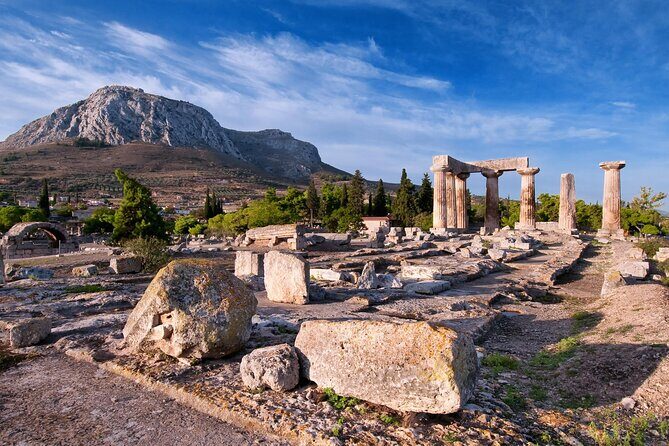
Finally, you end with Ancient Corinth (Archaia Korinthos): the Temple of Apollo, the Agora, and well-preserved ruins from classical Greece. Two hours is ideal here. It’s a send-off that ties back to earlier themes from your route—power, trade, and movement.
Hotels, meals, and the real value of a $4,624.74 trip
Let’s talk money in a way that helps you decide.
$4,624.74 per person is not small change. What makes it make sense is the blend of:
- Seven nights in 4–5 star hotels
- Private minivan
- Certified archaeologist English-speaking guide
- Private tours
- Wine tasting plus a cooking lesson
- Travel insurance
That’s a lot of planning and logistics packaged together. And because it’s a semi-private group capped at six, you’re not paying for empty seats on a huge bus.
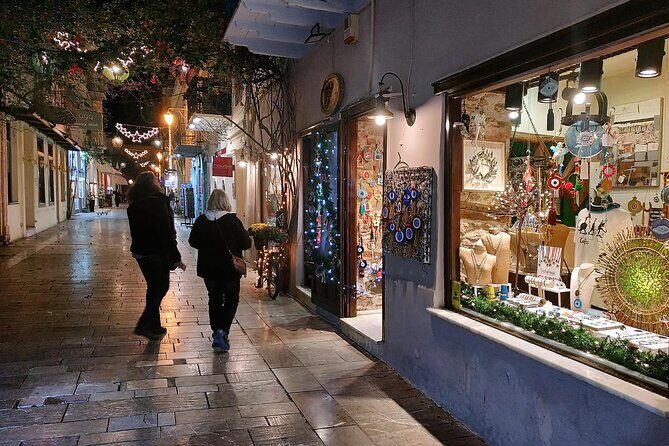
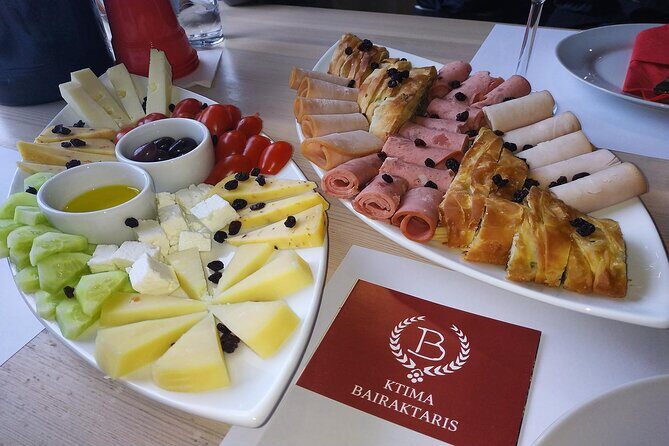
Meals are described as included, but your exact day-by-day count can vary since lunch and dinner are listed as optional while breakfast appears listed for seven days. Practically, you should assume you’ll have at least breakfast daily, plus more food moments built around experiences like the gourmet dinner at the start, the cooking and seafood presentation in Nafplion, and the structured wine tasting.
One more clear note: alcoholic beverages aren’t included. If you’re planning to drink with your meals, you’ll need to budget that separately.
Value also shows up in pacing. Several reviews emphasize good lodging choices and “nice pacing for quality time.” That’s exactly what you want when you’re bouncing between Athens and the Peloponnese.
A quick balanced check: what could be annoying
This tour is well paced for history lovers, but you should know the friction points:
- You’ll be in a vehicle a lot. Peloponnese distances add up.
- You’ll walk ruins and steps, especially at sites like the Acropolis and Olympia.
- The tour is child-free. That’s a plus for many, but it’s a deal-breaker for families.
- One reviewer raised concerns about payment issues and extra fees, so if you’re paying from abroad, I’d confirm what’s included and how extras are handled before you go.
Should you book Paradisial Peloponnese?
I’d book it if you want a Peloponnese trip that feels like a conversation with the past, not a race from ticket to ticket. The combination of archaeologist-led guidance, small group size, major sites like Mycenae, Epidaurus, Olympia, and Corinth, and foodie experiences like Agiorgitiko tasting and a local cooking lesson is a strong match for adults who care about both history and real-life moments.
I’d skip it if you’re chasing a super light itinerary, you want to travel with children, or you’re trying to keep costs low. This is a premium, structured week with real walking and real travel time.
If you like Athens by night, ruins in daylight, and food that turns a route into a memory, this one deserves a serious look.
FAQ
How big is the group, and is it kid-friendly?
The group maximum is six people, and there is a minimum age of 16, meaning no one under 16 is included. It’s designed as a child-free experience.
Who provides the guiding, and what language?
The tour includes a certified archaeologist who provides English-speaking guidance. Tours are also described as private.
Where does the tour start and end?
It starts at the Royal Olympic Hotel in Athens and ends back at the same meeting point.
What’s included for food and drink?
The tour includes meals (with breakfast listed as included for seven days), plus a wine tasting and a cooking lesson. Alcoholic beverages are not included.
Is there a vegetarian option?
Yes, a vegetarian option is available. You should advise your dietary needs at the time of booking.
What are some of the activities beyond standard sightseeing?
You’ll have experiences such as a cooking lesson, wine tasting, trout fishing at Planitero, and a ride on the Odontotos Rack Railway through the Vouraikos Gorge.

More Guided Tours in Athens
More Tours in Athens


More Tour Reviews in Athens
- All Day Cruise -3 Islands to Agistri,Moni, Aegina with lunch and drinks included
★ 5.0 · 4,958 reviews