REVIEW · ATHENS
2 Days Private Tour/ Delphi (Apollo Oracle) & Meteora (Orthodox Monasteries)
Book on Viator →Operated by GREECE TAXI · Bookable on Viator
Delphi and Meteora in two days is a bold combo. You get a private car, hotel pickup in Athens or Piraeus, and a route built for big ancient sights plus photo-friendly stops. What makes it especially interesting is the mix of Delphi’s oracle world with Meteora’s monastery-on-rock drama, including a sunset visit.
I also like that the day is built around moments that are easy to picture: you’ll stand in the Delphic sanctuary area tied to the Pythia oracle, then move through UNESCO-ranked Meteora rocks with monastery views changing by the hour. Another strong point is the way your driver supports the trip on the road with maps, books, and audio history so you’re not just transported—you’re guided.
One thing to plan for: key entrance fees are not included (Delphi site and museum, plus monastery tickets), and you’ll spend a lot of time in the car over two days. If weather turns bad, the experience depends on it too.
In This Review
- Key highlights worth your attention
- How the private Athens-to-Delphi-to-Meteora route really feels
- Day 1: Livadia and the river Karya oracle connection
- Delphi’s Apollo sanctuary: the omphalos “navel” and the oracle center
- Delphi Archaeological Museum: Charioteer, Sphinx of Naxians, and family devotion
- Trikala region break: bridges, Asclepius, and a short cultural pause
- Meteora’s Great Meteoron at sunset: monasteries on giant rock pillars
- Overnight in Kastraki: your Meteora base and how hotels affect the flow
- Day 2: the 8:00am Meteora photography circuit and monastery time
- Ano Trikala and the Justinian fortress walk
- Thermopylae battlefield: the pass that kept changing hands
- The interactive museum at Thermopylae (optional ticket)
- Kamena Vourla: a coastal reset for lunch or dinner
- Price and value: what $764.02 buys you (and what it doesn’t)
- Who this tour is best for (and who might want a different format)
- Should you book this Delphi and Meteora private tour?
- FAQ
- Are pick-up and drop-off included?
- What transportation do we use?
- Are Delphi entrance fees included?
- Are monastery tickets included for Meteora?
- Does the tour include a hotel in Kastraki?
- Is there an official guide for museums and archaeological sites?
- Are there any optional add-ons at Thermopylae?
- What’s the cancellation policy if weather is bad?
Key highlights worth your attention
- Delphi’s Apollo sanctuary + Archaeological Museum: The Charioteer, Sphinx of the Naxians, and Kleobis and Biton are the museum’s standouts.
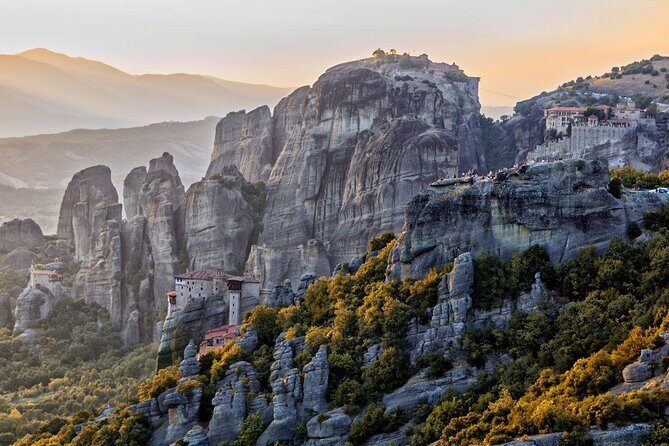
- Meteora at sunset: Great Meteoron is scheduled for late-day light, when the rocks look almost unreal.
- A flexible driver, not a licensed guide: You get history support in the car, but for a museum walk-through you’d need to hire an archaeologist guide.
- Ancient stops with real context: Livadia’s Karya springs story connects to Greek oracle mythology in a way most tour routes skip.
- Thermopylae + interactive museum option: You can keep it quick at the battlefield or add the ticketed interactive exhibit.
How the private Athens-to-Delphi-to-Meteora route really feels
This is a true private setup, so it’s just your group in an air-conditioned vehicle (sedan/SUV for up to 3 adults, minivan for up to 7, minibus up to 14). Pickup and drop-off are included from your Athens or Piraeus hotel or apartment, and you’ll have parking and road costs handled by the tour.
The pacing is designed for comfort, not breakneck sprinting. Still, it’s two long days: Delphi and Meteora each ask for attention, and the drives between them are part of the experience. You’ll get a driver who provides an informative travel kit—maps, books, and audio documentary-style historical detail—so the “in-between time” doesn’t feel empty.
There’s also an option for tailoring along the way. Your drivers can adapt pit stops to your interests, including chances for scenic photos and food breaks, plus the tour notes Greece’s local delicacies and wine stops.
You can also read our reviews of more private tours in Athens

Day 1: Livadia and the river Karya oracle connection
The first stop is Livadia (also spelled Levadia), a busy junction town and an industrial center tied to cotton processing from the Copais valley. The tour also gives you a quick contrast: a working town below, and an upper area with white houses and 18th-century wooden balconies.
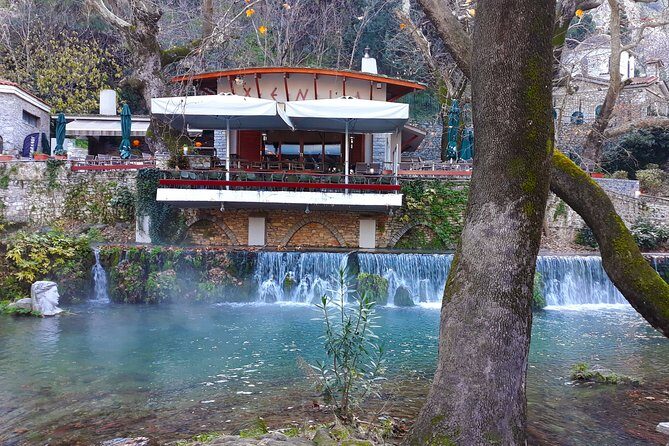
Then you move to the Karya river area, where the tour plans a drink or light lunch. It’s described as a favorite ice coffee and souvlaki moment by the river, and it also sits over mythology tied to the oracle of Trofonios and Zeus—complete with the springs of Mnemosyne (remembrance) and Lethe (oblivion). The cool angle here is that this oracle wasn’t just separate lore; it’s presented as a stage before visiting Delphi, which helps you understand why Delphi became so powerful.
Practical note: This is more of a scenic-and-story stop than a major museum visit. If you’re hoping for a heavy walking day right out of the gate, keep expectations flexible.
Delphi’s Apollo sanctuary: the omphalos “navel” and the oracle center
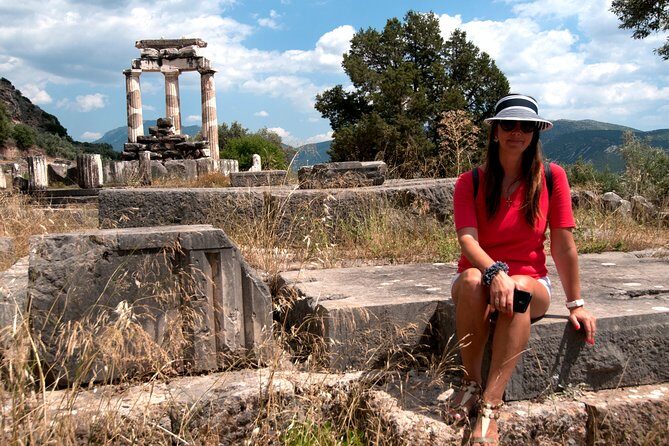
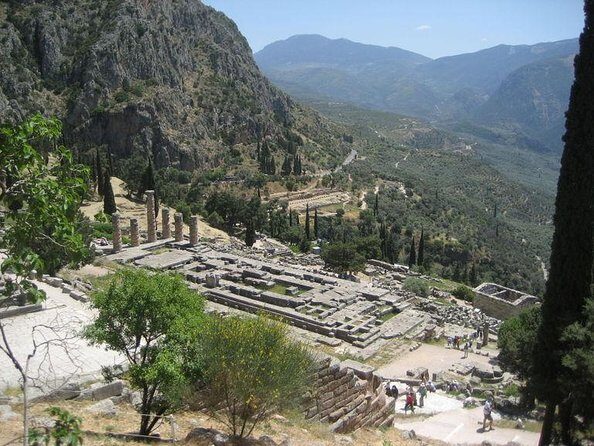
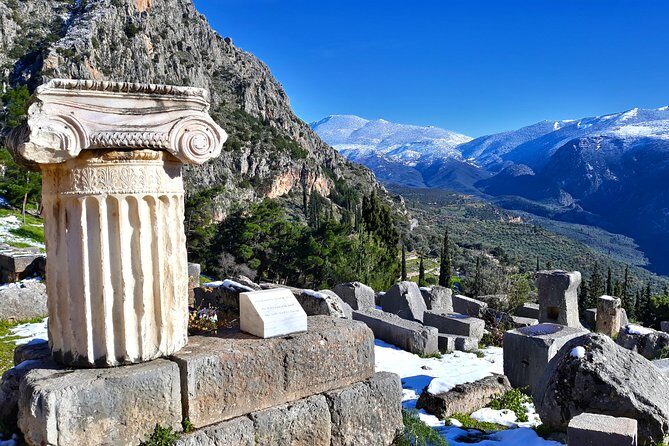
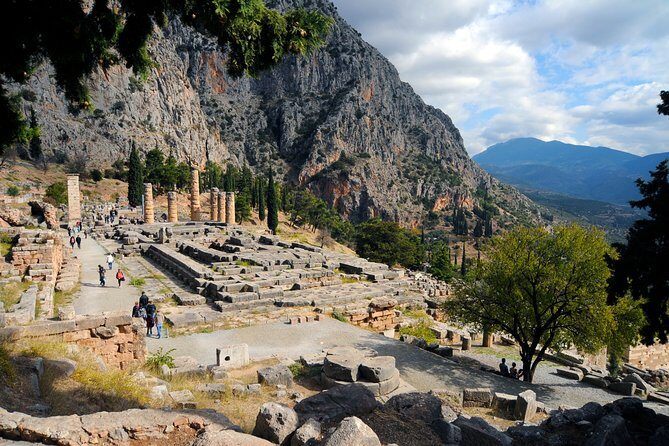
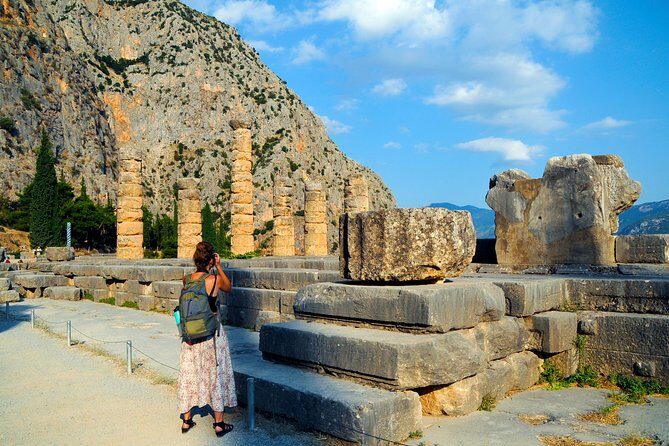
Next comes Delphi’s Temple of Apollo, the core ancient sanctuary tied to the seat of the Pythia oracle. Delphi is described as the place the ancient Greeks saw as the center of the world—symbolized by the omphalos, the famous stone monument often called the navel.
Even if you don’t get lost in dates, the site’s setting helps. Delphi sits on the south-western slope of Mount Parnassus with views over the coastal plain to the south and the valley of Phocis. That positioning matters because it explains why Delphi felt so “important” in both religious and political life across the classical world.
Time on site is scheduled at about 1 hour 30 minutes. It’s enough to see key points without feeling rushed, especially with a driver setting expectations and timing for you.
Trade-off: Entrance to the Delphi archaeological site is not included, so you’ll need to pay the site fee on your day. The tour notes that fees vary by season (winter vs summer).
Delphi Archaeological Museum: Charioteer, Sphinx of Naxians, and family devotion
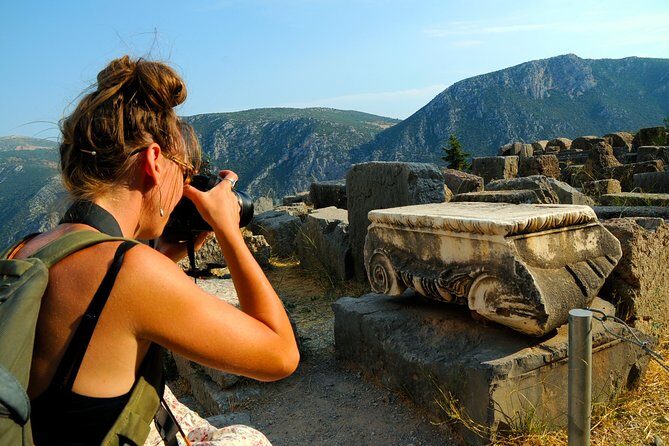
After the sanctuary, you go to the Delphi Archaeological Museum for about 1 hour. This is one of the most valuable stops in the whole itinerary because it turns “ruins” into actual objects with names and stories.
The museum highlights include:
- The famous Charioteer (linked to a statue complex of a chariot run by four horses, with an additional male figure).
- The Sphinx of the Naxians (dated to 560 BC, described as a complex creature with a lion’s body, bird’s wings, and a woman’s head).
- Kleobis and Biton, brothers from Argos, tied to a story of familial devotion.
If you’re the kind of traveler who likes to connect what you see outside to the objects inside, this museum time is a big payoff.
Practical note: Museum admission is also not included, and the tour warns about seasonal closures. Delphi-related museums can be closed on Tuesdays, and other specific dates too.
Trikala region break: bridges, Asclepius, and a short cultural pause
On day one, the route moves north and includes a stop in the Trikala region. This is scheduled at around 1 hour, with time framed by what’s said about ancient Trikka.
The tour paints Trikala as a long-storied site: founded around the 3rd millennium BC, named for a nymph (Trikke), and built in a defensive location between a local hill and the river Lithaios. It also calls out the city’s ten bridges, including a metal central bridge built by the French in 1886.
Then there’s the spiritual medicine angle. Trikala is described as important in antiquity and linked to Asclepius, the healing god, said to be the birthplace and main residence. It’s a relatively quick stop, but it gives you a sense that the drive is passing more than just highways—it’s passing places with identities.
Consideration: Since it’s a short stop, don’t expect a deep dive here. Treat it as a reset and a chance to stretch.
You can also read our reviews of more tours and experiences in Athens
Meteora’s Great Meteoron at sunset: monasteries on giant rock pillars
The itinerary aims for Meteora’s rocks and monasteries with a strong emphasis on views. You’ll drive around Meteora Rocks and then visit at least two Orthodox monasteries overall across both day one and day two (the plan specifically schedules Great Meteoron on day one).
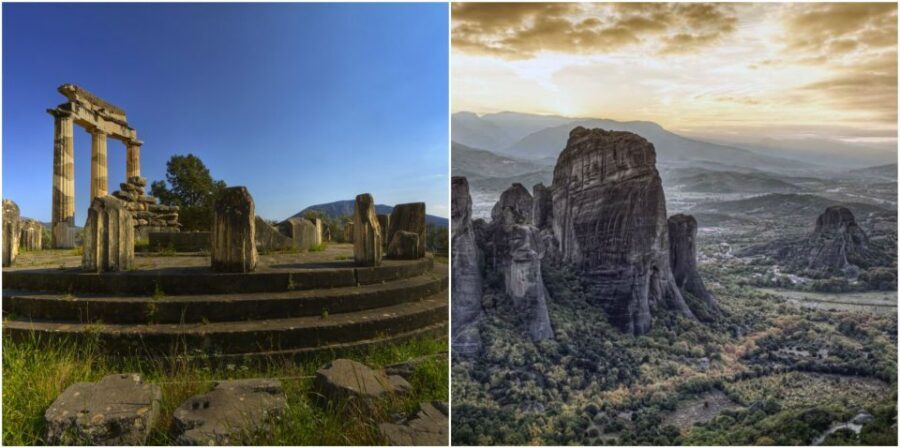
Great Meteoron is timed for a sunset-style visit, with about 2 hours allocated. That timing is the difference between “cool cliffs” and “I can’t believe this is real.” The rocks are described as immense natural pillars and rounded boulders, and Meteora is ranked as UNESCO World Heritage under criteria including cultural and historical impact.
The tour also states that the name means lofty or elevated, tied to meteor. Even if you don’t care about etymology, it’s a useful mental label when you’re looking at monasteries perched high above the valley.
Costs: Orthodox monastery tickets are not included. The tour materials list monastery fees in two ways (3€ per monastery as a general ticket, and 5€ per person per monastery as another fee note), so plan to pay on the day and confirm the current on-site rate.
Overnight in Kastraki: your Meteora base and how hotels affect the flow
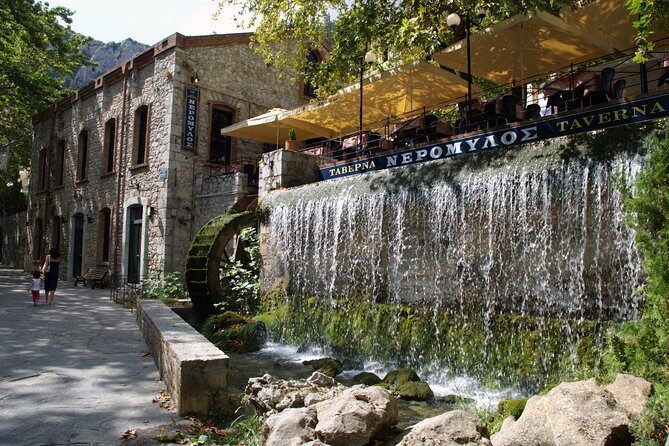
You overnight in Kastraki, described as a small peaceful village that looks, from a distance, like an eagle’s nest at the bottom of two massive rocks. This matters because it keeps you close to the rock cluster, so you’re not starting day two in the dark with a long drive.
Accommodation is available through the operator in selected boutique hotels (A-class) or 3/4-star hotels with breakfast, but it’s listed as an additional cost. The tour notes:
- 90€ per double room (with breakfast) on weekdays
- 120€ per double room for weekend holidays
- For 4-star/boutique-with-higher-tier options, it lists 160€ per double room and 180€ on weekend holidays
- Driver’s room is complimentary, but only if you use the tour’s lodging arrangement
If you book your own hotel, the tour says you’ll need to reserve an extra room for your driver. That’s a small logistical detail, but it can affect your plan if you want to save money by going fully DIY.
Day 2: the 8:00am Meteora photography circuit and monastery time
Day two starts with an early departure after breakfast, around 8:00am, for a photography tour around Meteora. The tour plans a loop that hits selected viewpoints in different light, and it’s timed so you see the rocks before the day gets too hot or crowded.
Expect more rock-and-view time plus the monastery visits. The format repeats the main Meteora theme: drive around the rocks, then visit at least two monasteries across the two-day schedule. Tickets for monasteries are still not included.
This is also where the “private” advantage shows. If your group wants more walking or less, you can often shift timing within the scheduled window—especially since the driver can tailor stops to your preferences, as noted in the tour overview.
Ano Trikala and the Justinian fortress walk
Next you head to Ano Trikala, where you walk up to a fortress above the city. The tour calls it a well-preserved Justinian fortress, now featuring a recreational area.
A specific landmark gets a mention: the Clock on the east side, described as a 17th-century emblem of the city. The clock has suffered destruction and restoration several times, which is the sort of detail that makes a simple viewpoint feel tied to local identity.
Time here is about 1 hour. It’s not a long hike by the schedule, but it’s still an active break from sitting in the car.
Good fit: If you like short “history plus views” stops, Ano Trikala is a nice mid-route reset.
Thermopylae battlefield: the pass that kept changing hands
Then it’s Thermopylae, famous for the battle between Greek forces (including Spartans) and the invading Persian forces. The tour also notes that Thermopylae is a pass on the east coast that required use of the pass—so battles kept happening there through history.
The site visit is short (about 30 minutes), but it’s guided by the way the tour frames the famous epitaph attributed to Simonides, calling on a stranger passing by to tell the Spartans that they lie obedient to their laws.
If you want something fast and meaningful, 30 minutes works. If you want more context, the tour gives you an optional next stop.
The interactive museum at Thermopylae (optional ticket)
Right next to the Leonidas monument in historic Thermopylae is an interactive museum dedicated to the 480 BC battle. You’re given about 30 minutes here.
Admission is not included, and the tour lists:
- 3€ full ticket
- 1€ reduced ticket
This is a good add-on if you learn better with hands-on or explained exhibits. If your group prefers outdoor time, you can treat it as optional.
Kamena Vourla: a coastal reset for lunch or dinner
On the return to Athens, the tour stops at Kamena Vourla. It’s described as a coastal town on the south coast of the Malian Gulf, 4 km west of Cape Knimis, separating the Malian Gulf from the North Euboean Gulf.
It’s pitched as a tourist resort with lots of service options and a beach-forward location. The stop includes about 1 hour for lunch or dinner (optional), giving you a chance to eat without searching after a day of sightseeing.
Practical note: One hour is tight. If you want a longer meal, you might need to plan for it outside this scheduled stop.
Price and value: what $764.02 buys you (and what it doesn’t)
At $764.02 per person for a two-day private tour, you’re paying for comfort, time, and a route that packs in major sites without shared-group logistics. Since it’s private, you’re not competing for a spot on the car or stuck to someone else’s pace.
What’s included:
- Pickup/drop-off from your Athens or Piraeus accommodation
- Air-conditioned vehicles with high cleanliness standards
- Private transportation costs (fuel, toll roads, parking)
- Driver accommodation (driver room is listed as complimentary)
- Driver-provided history support tools: maps, informative books, and audio documentary details
What’s not included:
- Your lodging in Kastraki (if you choose the tour’s hotel options)
- Delphi site and museum admission fees (vary by season)
- Orthodox monastery tickets
- Gratuities (the tour lists 1€ per person)
- Optional museum admission at Thermopylae (3€ / reduced 1€)
So the real “all-in” cost depends on where your lodging falls and how many paid sites you prioritize. The good news is that the main paid attractions are standard Greece entrance fees, and the tour keeps your time efficient so you don’t spend the day missing openings.
Who this tour is best for (and who might want a different format)
This is best for you if you want:
- A private car plus hotel pickup, so mornings start easy
- A two-day plan focused on UNESCO sights: Delphi and Meteora
- A route that includes both big monuments and smaller context stops like Livadia and Trikala
- A driver who can adjust small timing choices and help you plan photo moments
It may not be the best fit if:
- You want a guided museum experience led by a licensed archaeologist or expert guide. The tour notes the driver is not a licensed guide for walks in museums/sites, so you’d need to hire a separate archaeologist guide for that.
- You’re trying to keep costs as low as possible, since entrance fees and lodging add on top.
If you care about practical support, the feedback highlights the driver Christos specifically. The notes describe him as knowing where to go, setting scenic photo stops, and pointing out good places to eat. That kind of route fluency is exactly what makes private driving feel worth it.
Should you book this Delphi and Meteora private tour?
I’d book it if you’re excited by Delphi’s oracle aura and you want Meteora done in the right light, including a sunset-style monastery stop. The private format, hotel pickup, and driver history support make the long drives feel purposeful instead of tedious.
I would hesitate only if your group hates added entrance fees or needs a strictly scheduled, ticket-free experience. Also note the trip depends on good weather, and cancellation is non-refundable if you change plans.
If you want a well-paced ancient Greece loop with strong photo timing and real context stops, this one checks a lot of boxes.
FAQ
Are pick-up and drop-off included?
Yes. The tour includes pick-up and drop-off from your hotel or apartment in Athens or Piraeus (or you can request another location).
What transportation do we use?
The tour uses air-conditioned vehicles (sedan/SUV, minivan, or minibus depending on group size). Private transportation includes fuel, toll roads, and parking.
Are Delphi entrance fees included?
No. Delphi archaeological site and museum admission fees are not included, and the tour lists seasonal pricing for winter vs summer.
Are monastery tickets included for Meteora?
No. Orthodox monastery tickets are not included. The tour lists monastery fees both as 3€ per monastery and as 5€ per person per monastery, so plan to pay on site and confirm the current rate.
Does the tour include a hotel in Kastraki?
Accommodation in selected hotels (boutique or 3/4-star with breakfast) is offered for an additional cost and is not included by default. If you book your own hotel, you may need an extra room for the driver.
Is there an official guide for museums and archaeological sites?
The driver provides informative books and audio details, but the tour states the driver is not a licensed tour guide for walks inside archaeological sites or museums. You can hire an archaeologist guide separately in advance if you want that.
Are there any optional add-ons at Thermopylae?
Yes. There’s an interactive museum you can visit next to the Leonidas monument. The tour lists the ticket as 3€ (reduced 1€), and it is not included.
What’s the cancellation policy if weather is bad?
The experience is non-refundable and cannot be changed for any reason. If it’s canceled due to poor weather, you’ll be offered a different date or a full refund.
More Private Tours in Athens


More Tours in Athens


More Tour Reviews in Athens
- All Day Cruise -3 Islands to Agistri,Moni, Aegina with lunch and drinks included
★ 5.0 · 4,958 reviews