REVIEW · ATHENS
Athens: Acropolis, Parthenon Guided Walking Tour
Book on Viator →Operated by Athenian Tours · Bookable on Viator
Ancient stone, explained fast. This Acropolis and Parthenon guided tour turns a huge outdoor site into a clear route with expert storytelling and built-in pacing. I like that you get earphones on larger groups, so you can actually hear the narration instead of guessing what you’re looking at.
I also like the way the route mixes the big icons with the side stages—so you see more than just the Parthenon. One potential drawback: this is a real hill climb on uneven, sometimes slippery stone, and the tour isn’t a fit for mobility limits or strollers.
In This Review
- Key things that make this tour worth your time
- Why a guided Acropolis walk beats wandering
- Starting point on Mitseon 2: timing and how the route may shift
- Price and upgrades: what you’re actually paying for
- Ticket lines, skip lines, and what earphones really do
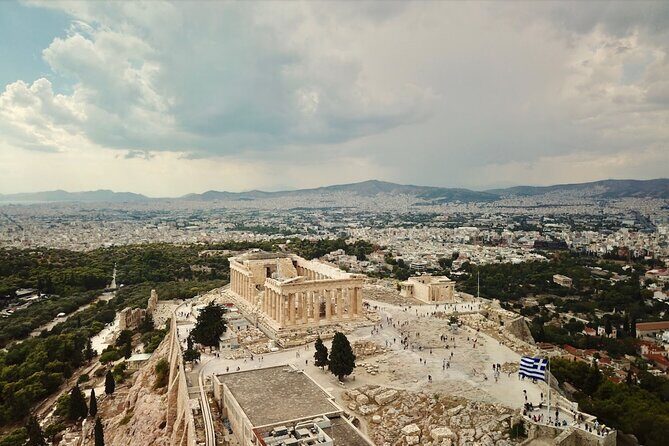
- The Acropolis of Athens: your starting viewpoint and the walking plan
- Theater of Dionysus: the stage behind Greek drama
- Herodion theater: Roman Athens and a memorial built in stone
- Propylaea and Temple of Athena Nike: a gateway with payoff views
- Parthenon: your main monument stop (and how to use your time)
- Erechtheion and its six female figures: why this temple feels different
- Pace, group size, and why some guides feel better than others
- What to bring: shoes, water, and weather you can’t control
- Should you add the Acropolis Museum?
- Who this tour is best for (and who should skip it)
- Final call: should you book this Acropolis and Parthenon guided walk?
- FAQ
- How long is the Athens Acropolis and Parthenon guided walking tour?
- Is the tour offered in English?
- Are Acropolis tickets included?
- Can I skip the lines into the Acropolis with this tour?
- Are there earphones for larger groups?
- What should I bring for the Acropolis climb?
- Is this tour suitable for people with mobility impairments or strollers?
- What if my plans change—can I cancel?
Key things that make this tour worth your time
- Skip the ticket-office line if you choose the option with admission tickets (but no separate-acropolis entrance line skipping)
- Earphones for groups over five so the guide’s commentary stays clear
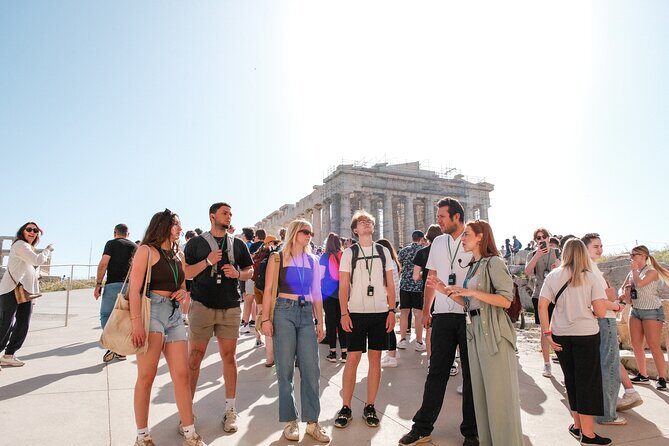
- A tight 2-hour route that hits the Parthenon plus the major theaters and gateways
- Roman and Greek theater stops that put famous performances in context
- Most stops are outdoors, so bring sun and rain protection
Why a guided Acropolis walk beats wandering
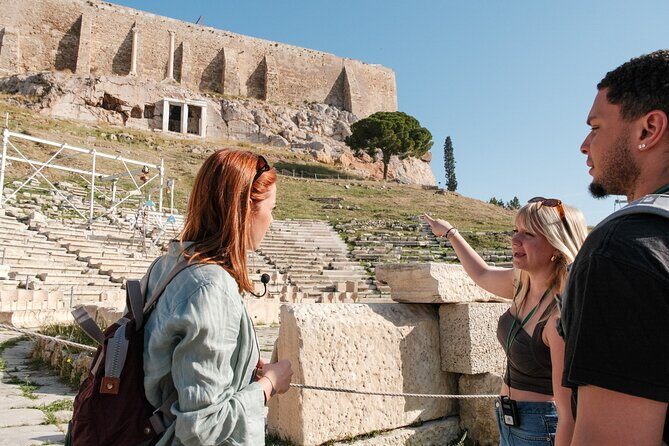
The Acropolis is famous for a reason, but it can also be frustrating. You’re on a steep, rocky hill with crowds flowing in every direction, and it’s easy to miss why each building matters. A good guide fixes that in two ways: they point out what’s important right when you’re there, and they keep you moving through the site without losing the group.
What I like most is that the tour doesn’t treat this as one single photo stop. You get a sequence—major monuments, theaters, gateways, then the big temples—so your brain builds a map as you go. And with group sizes capped at 24, you’re not stuck in the kind of crush where you only see shoulders and hats.
You’ll still do walking, climbing, and a bit of uneven footing. Plan for that, and it becomes a lot more enjoyable.
You can also read our reviews of more walking tours in Athens



Starting point on Mitseon 2: timing and how the route may shift
The meeting point is Mitseon 2, Athina 117 42, Greece, and the tour ends at the Acropolis of Athens. The tour runs about 2 hours, and guides may change the order of the sites to keep things comfortable and avoid discomfort—so don’t treat the stops like a rigid script.
Why this matters: the Acropolis can get slippery in rain and crowded at certain times of day. A flexible route helps your guide manage pace and footing. It also helps with photo stops and short breaks, which people repeatedly praise when the day is hot or busy.
If you’re sensitive to hills, pick a start time that gives you the best light and temperature you can. One review-style tip that keeps showing up: the late afternoon can feel better than the early morning rush.
Price and upgrades: what you’re actually paying for
The base price is $41.13 per person for an English-language guided walking tour (about 2 hours). The big choice is whether you add admission tickets.
- Without admission tickets: the tour price stays lower, but you’ll need to pay entrance fees on site.
- With admission tickets: you typically get the Acropolis ticket included, and the guide hands paper tickets to you at the meeting point.
Here are the entry costs listed for the Acropolis:
- Acropolis entry: €30.00 per person (unless you select the option with entry included)
- Acropolis Museum entry: €20.00 per person (unless you select an option that includes it)
Also note the real-world skip-the-line situation:
- This tour can help you breeze past the ticket office line to the Acropolis if that option is selected.
- But there is no separate entrance that lets anyone skip lines into the Acropolis itself. In other words, you may save time at ticket offices, then still face the site entry flow.
Is the upgrade worth it? Often, yes—especially on crowded days—because it reduces friction. But if you already have tickets or you’re traveling with tight control over your schedule, you can still go without the included admission and buy yourself. Either way, show up on time so the route doesn’t start without you.
Ticket lines, skip lines, and what earphones really do
Let’s translate the logistics into something useful.
At the Acropolis, delays come in two phases: the ticket office and the entry flow. The tour’s “skip-the-line” benefit is aimed at the ticket office, not a magical bypass into the complex. That means you should still expect some waiting depending on the day and time.
Earphones matter because sound gets messy fast. When the site is crowded, other groups’ equipment can interfere, and the tour itself calls out that audio quality may drop in peak crowding. Still, the earphones for groups over five people are a smart inclusion—they let you hear the narration clearly while you look at what the guide is pointing out.
The Acropolis of Athens: your starting viewpoint and the walking plan
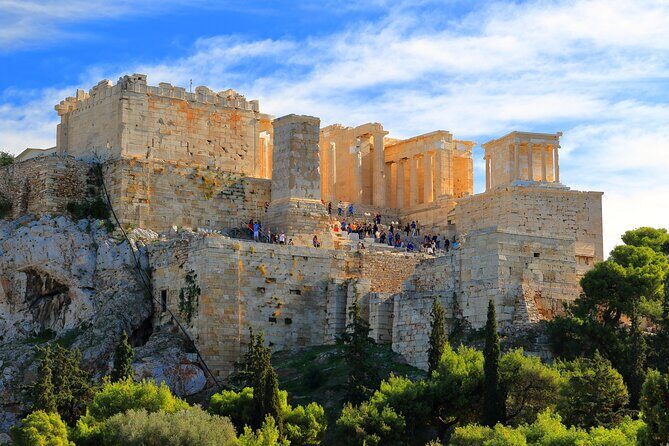
The tour begins at the Acropolis of Athens, the ancient hilltop citadel that frames Athens’ classical legacy. Even if you’ve seen pictures, the scale hits you in person. The guide’s job here is to help you orient quickly and avoid aimless circling.
A key comfort detail: you should expect climbing on steep, uneven stone. The tour also warns that the hill can be slippery at certain spots when it rains, so wear shoes with grip.
You’ll likely feel more confident if you move with your guide’s pace rather than trying to “power walk” ahead for photos. The whole point of the guided structure is that you get the right viewpoints at the right moment.
You can also read our reviews of more guided tours in Athens




Theater of Dionysus: the stage behind Greek drama
One of the most interesting parts of the route is the stop at the Theater of Dionysus. This isn’t just decorative ruins. It’s where many famous ancient comedies and tragedies were first performed.
Why it works on a guided tour: the guide can connect the physical layout to what was happening culturally. Standing near the theater ruins, it’s easier to understand how Athens wasn’t only building temples—it was also building a system for public storytelling.
If you like theater, this is the “oh wow” stop. Even if you don’t, it makes the Acropolis feel less like a museum and more like a living hub of civic life.
Herodion theater: Roman Athens and a memorial built in stone
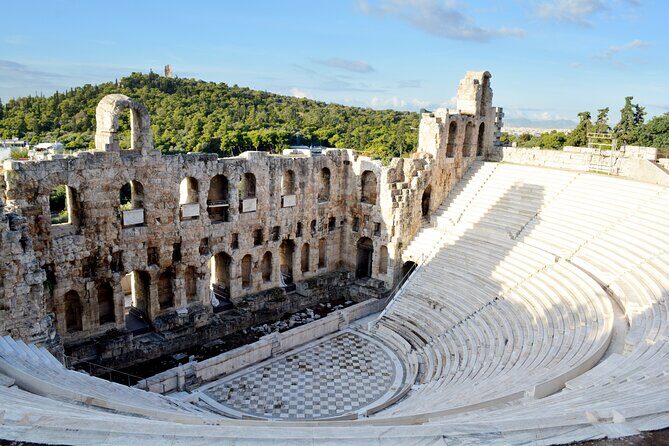
Next comes the Roman Herodion theater, built in memory of the wife of Herodes Atticus. This is where the Acropolis story widens. The site isn’t frozen in one era. Different rulers, different audiences, and different purposes reshaped the hill over time.
The guide’s narration helps you notice what’s Greek and what’s later influence. Without that framing, it’s easy to see “another theater” and move on. With it, you understand that the Acropolis kept evolving.
Propylaea and Temple of Athena Nike: a gateway with payoff views
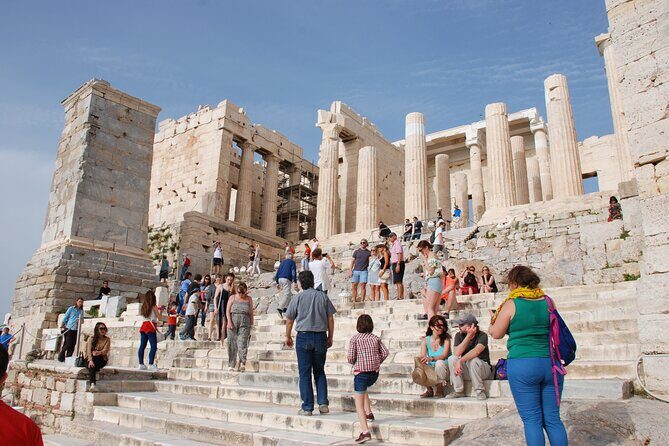
Then you climb to the Propylaea, the gateway to the Acropolis. It’s about more than walking through a landmark. It’s a transition point: you go from approach and bustle into a more open, temple-centered world.
From there, you take in the Temple of Athena Nike. Even if you don’t know the finer architectural details, the guide helps you connect the temple’s purpose to the city’s identity—Athena as protector and patron. This is also a great spot for photos, because the views help you see how the monuments “sit” together on the hill.
Parthenon: your main monument stop (and how to use your time)
The tour includes a walk to the Parthenon, dedicated to Athena, patroness of Athens. It’s described as a 5th-century zenith of Doric order architecture, and that’s the point: you’re not just seeing a building, you’re seeing a peak of design.
The stop is about 30 minutes. Don’t waste it only staring at the front. Look for angles the guide points out, and spend a minute scanning details that explain why the Parthenon is so iconic. If it’s crowded, your best strategy is to keep moving with the group and take photos when your guide calls out a clear line of sight.
One of the strongest themes in the praise: guides slow down the important moments so you can actually process what you’re seeing. People often mention clear explanations and pacing that keeps you from feeling lost.
Erechtheion and its six female figures: why this temple feels different
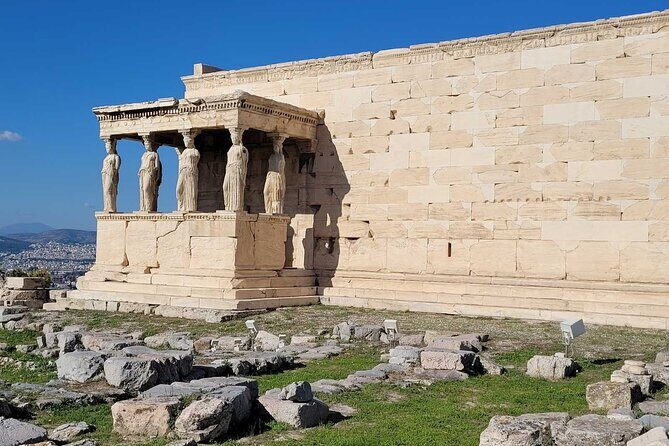
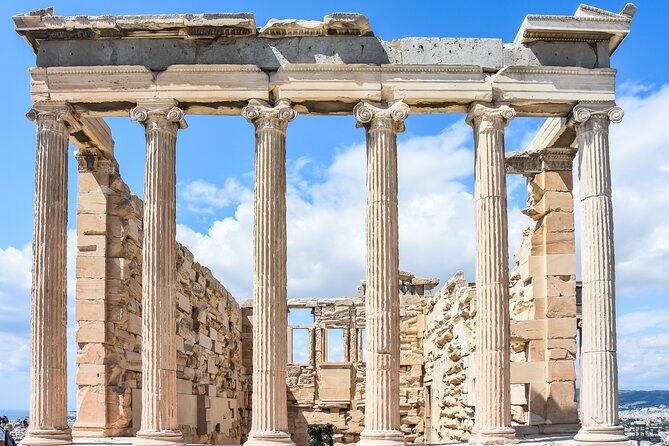
The final major architectural stop is the Erechtheion, known for its asymmetrical composition and its supports: six sculpted female figures (the famous Caryatids).
This is a great end point because it changes the emotional tone. The Parthenon is the grand, iconic centerpiece. The Erechtheion feels more human—less symmetrical perfection, more complex design—and the sculpted figures make it memorable fast.
The stop is about 20 minutes. Use that time to look at the figures closely. Even if you can’t translate every detail, the guide’s explanation makes the design choices feel logical rather than random.
Pace, group size, and why some guides feel better than others
The tour caps at 24 travelers, which is part of why it tends to work. Smaller groups make it easier to keep together on stairs and around crowds.
And yes, narration quality shows up again and again in the praise. Names you may hear in past reviews include Dimitri, Burnie, Iris, Ani, Orestes, John, Greg, Simon, Kat, Angel, Natasha, and Sissey. Different personalities, same core goal: keep you oriented and moving, with humor and clear explanations that match what you’re looking at.
Practical point: crowded times can affect audio quality even with earphones. If you care about hearing every sentence, aim for a time that isn’t peak chaos and keep your attention on the guide rather than trying to read your phone map.
What to bring: shoes, water, and weather you can’t control
The tour is clear about what makes it easier. Bring:
- Water (there’s no cafe-bar at the site, only a water fountain)
- Hat and sunglasses
- Umbrella if rain is possible
And wear good walking shoes. People repeatedly warn that this is a climb with uneven terrain and slippery spots. Strollers are not allowed at the Acropolis, and the tour isn’t suitable for children under 6. It also says it’s not suitable for people with mobility impairments, and that the elevator at the Acropolis Hill can’t be used on group tours.
If any of that affects you, it’s worth reconsidering whether you want a guided climb tour or a more accessible format.
Should you add the Acropolis Museum?
This tour focuses on the hill monuments, but there’s a strong argument for adding the Acropolis Museum on the same day if you can. The reason is simple: museum galleries let you connect sculpture and artifacts to the exact places you just stood.
One review-style takeaway you can trust: people who add the museum love the extra factual context, and timing can work out well because the Acropolis tour is only about 2 hours. If you’re hungry afterward, that’s another plus—your day flows into lunch rather than ending in a dead stop.
If you do add it, plan your time so you’re not rushing through both. The museum is where details stick.
Who this tour is best for (and who should skip it)
You’ll likely love this tour if:
- You want an easy-to-follow route up and around the Acropolis without getting turned around
- You enjoy explanations that connect buildings to stories, including the theater stops
- You want photos with pacing that doesn’t leave you behind
- You can handle steep, uneven walking
You might want to skip it if:
- You have mobility limits or can’t do climbs on uneven stone
- You’re traveling with a stroller (not allowed)
- You’re going with very young kids (not suitable under age 6)
- You’re looking for a flat, minimal-walking experience
Final call: should you book this Acropolis and Parthenon guided walk?
If your goal is the classic Athens experience—the Acropolis plus the Parthenon, with smart context—this tour is a strong choice. The best reason to book is the combination of guided navigation and clear narration, plus the practical add-ons like earphones for larger groups and the option that helps with ticket-office lines.
My advice: if you can, consider selecting the admission-included option to reduce delays. Then show up with solid shoes and water and be ready for the climb. Do that, and this becomes one of those rare tours where you leave with a mental map, not just a pile of photos.
FAQ
How long is the Athens Acropolis and Parthenon guided walking tour?
It runs for about 2 hours (approx.).
Is the tour offered in English?
Yes. The tour is offered in English.
Are Acropolis tickets included?
Tickets are not included by default. If you select the option with entry tickets included, the guide will hand you paper tickets at the meeting point.
Can I skip the lines into the Acropolis with this tour?
You can skip the ticket office line if you choose the admission option, but the tour states that nobody can skip the lines to Acropolis through a separate entrance.
Are there earphones for larger groups?
Yes. Disposable earphones are provided for groups of over five people.
What should I bring for the Acropolis climb?
Bring a bottle of water (there is only a water fountain on site), plus a hat and sunglasses. If rain is possible, bring an umbrella. The site can have slippery spots.
Is this tour suitable for people with mobility impairments or strollers?
No. The tour is not suitable for people with mobility impairments, and strollers are not allowed at the Acropolis. It’s also not suitable for children under 6.
What if my plans change—can I cancel?
Yes, there is free cancellation. You can cancel up to 24 hours in advance for a full refund.


More Walking Tours in Athens


More Tours in Athens


More Tour Reviews in Athens
- All Day Cruise -3 Islands to Agistri,Moni, Aegina with lunch and drinks included
★ 5.0 · 4,958 reviews