REVIEW · ATHENS
Athens: Guided Walking Tour of Ancient Athens
Book on GetYourGuide →Operated by Secrets of Greece IKE · Bookable on GetYourGuide
Ancient Athens feels closer on foot. This 2-hour walk is a smart way to connect classical stories with what you can still see today, especially around the Roman Agora and Hadrian’s Library, all explained in Spanish. I especially like how the guide keeps the focus on what the city meant to people, not just what it looks like on a postcard.
Two things I’d prioritize if you’re choosing a first Athens tour: clear, attentive guiding (think Juan and Lorena-level explanations) and a route that helps you appreciate more than the usual headline sites. The walk also includes time around Plaka, so you leave with better city bearings and a sense of how that ancient setting sits inside modern streets.
One consideration: this tour does not include entering archaeological sites. That’s great for skipping ticket hassles, but if your dream day is full-on time inside specific ruins, you’ll need a separate, ticketed plan.
In This Review
- Key highlights to look for
- Why this 2-hour Ancient Athens walk is good value
- Gate of Athena start: setting the story right away
- Roman Agora on a walking route you can actually follow
- Hadrian’s Library: learning context without the ticket pressure
- Plaka walking: using the neighborhood to make sense of the ruins
- What you learn from the Spanish official guide
- Comfort tips that make the 2 hours feel effortless
- Price check: what $30 buys you and how to judge it
- Who should book this tour (and who should choose something else)
- Should you book this Ancient Athens guided walking tour?
- FAQ
- Do I need tickets to enter the archaeological sites on this tour?
- What language is the guide?
- Where do we meet for the tour?
- How long is the tour?
- Is the entrance to archaeological sites included?
- What’s the price per person?
- What should I bring?
- Is the tour cancellable?
- Can I reserve without paying right away?
- What is the cancellation policy if my plans change last minute?
Key highlights to look for
- Meet at the Gate of Athena at the Roman Agora entrance area, outside the site
- Spanish official guide who explains history, mythology, and philosophy in plain language
- Roman Agora and Hadrian’s Library covered as part of a focused, 2-hour walking route
- Plaka wandering time to see the neighborhood’s main tourist sights and get oriented
- No site entry required so you can enjoy the walk without adding ticket stops
Why this 2-hour Ancient Athens walk is good value
At $30 per person for a guided walking tour, you’re paying for time with an official guide and for the “how to understand it” part of sightseeing. Two hours is short enough that you won’t feel wrecked after, but long enough that the guide can stitch together themes like classical Athens, mythology, and even scientific advances into something you can actually remember.
I like this format for first-timers because it balances attention with momentum. You get a sequence of recognizable stops (Roman Agora, Hadrian’s Library, then Plaka) without needing to be a history buff or having a thick guidebook in your hand. And because it’s a guided walk, you’re not left guessing what matters at each turn.
You should know what you’re buying. You’re not buying long interior access to sites. You’re buying a guided route that gives meaning to what you’re seeing, plus a quick neighborhood loop afterward in Plaka.
You can also read our reviews of more walking tours in Athens


Gate of Athena start: setting the story right away
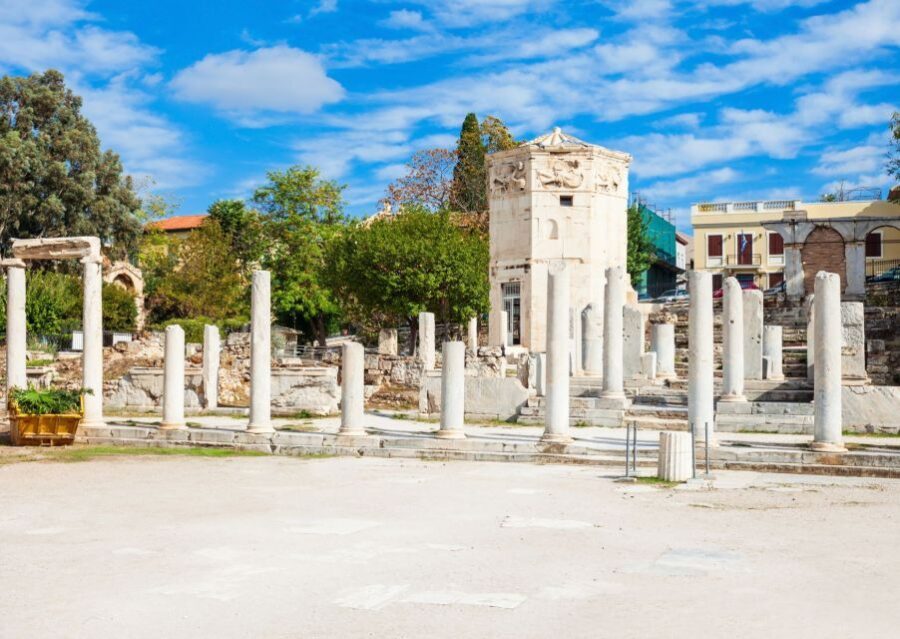
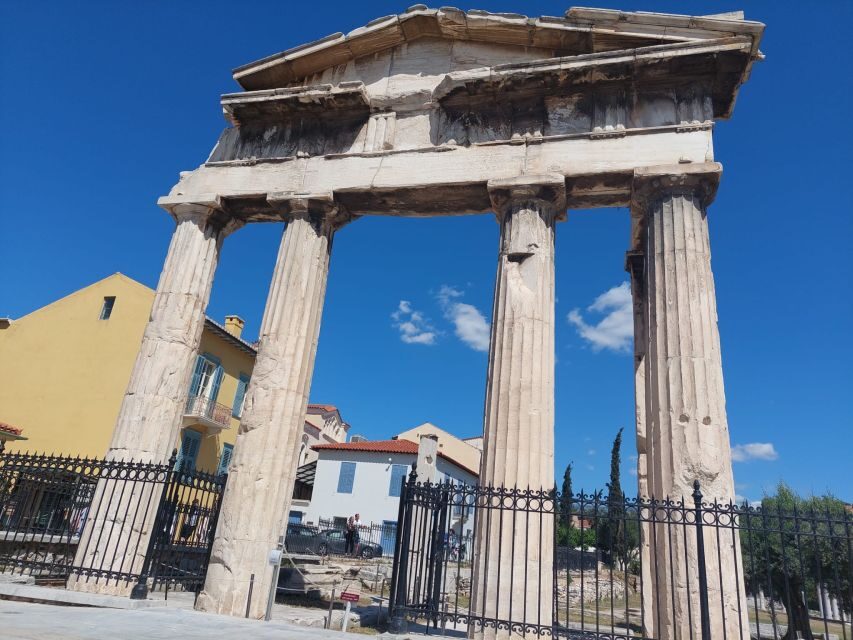
The tour meeting point is outside the archaeological area, in front of the Gate of Athena, which is the entrance to the Roman Agora. That choice matters. Starting at a clearly marked gateway helps you avoid the common first-day problem: getting lost before you even begin.
From there, the guide takes you through the Roman Agora area with an explanation-led approach. I like this kind of start because it gives you a framework fast. Instead of treating each monument like a separate photo opportunity, you learn how this part of Athens fits into the broader narrative the guide is building.
Also, meeting outside the site keeps the experience efficient. You can enjoy the walking and listening without turning your whole plan into a ticket-and-line routine. If you prefer to keep things simple, this start is a big plus.
Roman Agora on a walking route you can actually follow
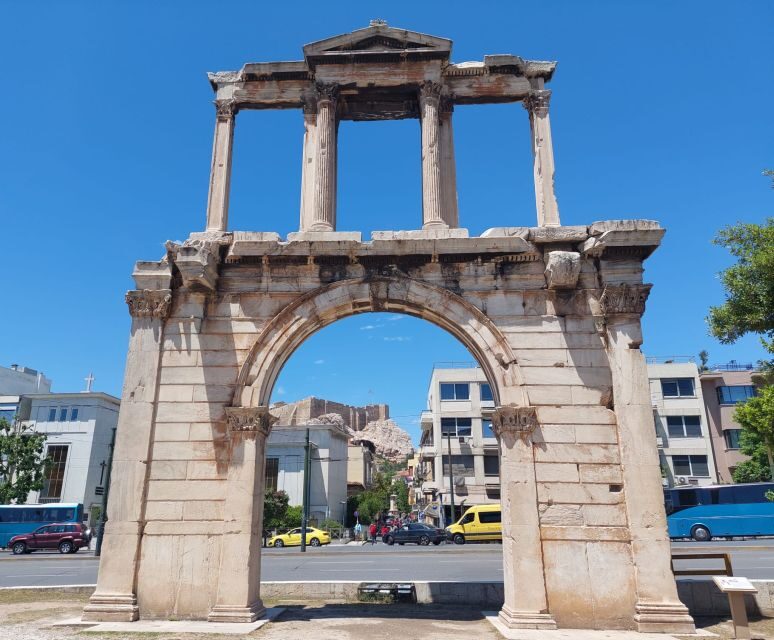
The Roman Agora is one of those places where, if you’re on your own, you may see impressive stones but miss the connections. With a guide, you’re not just looking. You’re being taught how to read the area.
The guide focuses on the history behind the city’s key features, and the tour includes discussions that move beyond dates. You’ll hear about mythology and philosophy, plus a few nods to the period’s scientific advances and cultural curiosity. Even if you only catch part of it in the moment, the themes help you organize what you’re seeing in your head.
This is where I’d give the tour a strong recommendation for pacing and clarity. Multiple guide experiences in Spanish-speaking contexts have been praised for being attentive and straightforward, so you can expect explanations that aim to be understandable rather than academic.
One small practical point: because you’re outdoors and walking between points, your comfort matters. Wear shoes that won’t punish you after 2 hours of city sidewalks and uneven footpaths.
Hadrian’s Library: learning context without the ticket pressure
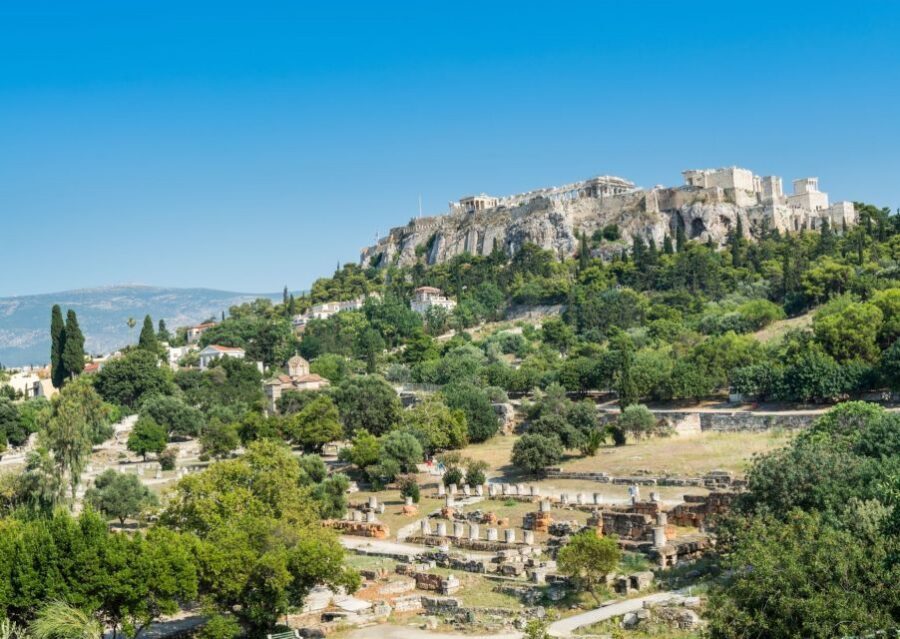
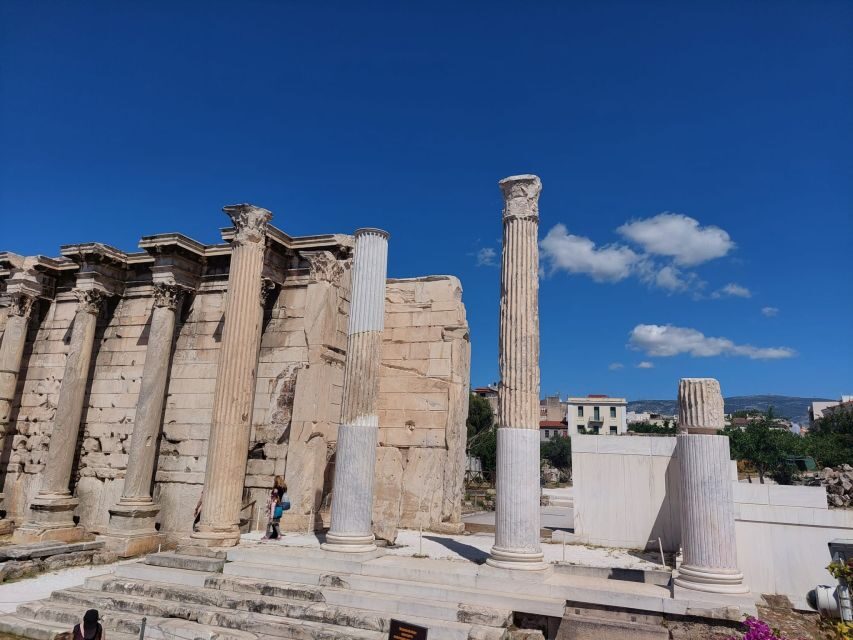
You’ll also visit Hadrian’s Library as part of the route. The key thing here is how the tour is structured: you get the guided interpretation of the site without entering it. So you can treat this like a “see it, understand it, move on” stop rather than a long internal visit.
I like this approach for two reasons. First, it keeps the tour on schedule. Second, it reduces decision fatigue. You don’t need to juggle entrance planning mid-walk, and you don’t lose momentum hunting for where to buy or scan tickets.
The guide’s style is a big part of why this works. The aim is for you to leave with more than photos. You’ll connect the place to the broader story of Athens as a city with multiple layers—classical roots, later influences, and a culture that people shaped through belief, thought, and practical advances.
If your expectation is to spend hours inside ruins with lots of time to wander, this might feel shorter than you hoped. But if your goal is to understand what you see in a compact window, this stop does exactly what it’s supposed to do.
Plaka walking: using the neighborhood to make sense of the ruins
After the archaeological-area portion, the tour moves into Plaka. This is one of the smartest parts of the plan because it gives you a real feeling for where these ancient remains live inside modern Athens.
Plaka is where you can slow down just a bit without stopping sightseeing altogether. The guide takes you around the area’s most relevant tourist attractions, which helps you spot what’s worth checking later on your own if you want more time.
I also like Plaka as a finishing zone because it naturally turns the day from “ancient stones” to “how people experience the city now.” When you finish a tour with better bearings, the rest of your Athens trip gets easier: you know where you are, what streets to follow, and how to route yourself for later visits.
If you want a tour that feels like orientation plus interpretation, Plaka is doing real work here.
You can also read our reviews of more guided tours in Athens


What you learn from the Spanish official guide
This is an official Spanish-speaking guide-led tour. The guide covers history with a storyline approach, including mythology and philosophy, and even mentions scientific advances and cultural curiosity.
What matters most for you is not the textbook topics. It’s how they’re explained in real time as you walk. In the strongest guide examples, guests praised explanations that were clear and easy to follow, along with a friendly, attentive presence.
If you’re choosing between tours, look for this kind of explanation quality. A good guide helps you translate the experience from random sights into a mental map. You stop asking yourself, “What am I looking at?” and start thinking, “Oh, this fits because…”
Language is the one likely deal-breaker. If you don’t read or speak Spanish well, you may find this tour frustrating. On the other hand, if Spanish is comfortable for you, the experience is a great way to keep your sightseeing rhythm without relying on apps or headphones.
Comfort tips that make the 2 hours feel effortless
This is a walking tour, and Athens weather can be sneaky. The essentials are simple and worth following:
- Comfortable shoes: plan for city sidewalks and uneven surfaces.
- Sunscreen: even in cooler months, you’ll be outside.
- Weather-appropriate clothing: bring layers if conditions shift during the day.
Because the tour doesn’t involve entering archaeological sites, your main focus is not ticket lines. Your main focus is how you move. If you show up comfortable, the tour feels smoother, and you can concentrate on listening.
Also, since you meet outside the Roman Agora area, arrive a little early. It’s easier to locate the Gate of Athena meeting point without rushing.
Price check: what $30 buys you and how to judge it
$30 for a 2-hour guided walking tour is a fair price when the value is in the guide’s explanations and the route planning. You’re paying for:
- an official Spanish-speaking guide
- guided interpretation at the included archaeological stops
- a structured walk that ends in Plaka, which helps you continue exploring afterward
If you were to do this completely on your own, you’d still be able to see the sights, but you’d likely spend more time figuring out what matters and why. That mental sorting is exactly what a good guide provides.
Where this price doesn’t automatically make sense is when your goal is heavy, inside-the-site sightseeing. Since the tour doesn’t include site entry, don’t treat it like a replacement for ticketed museum or ruin visits. Think of it as the contextual layer that makes later visits easier.
Who should book this tour (and who should choose something else)
Book this if:
- you want a first-time-friendly Ancient Athens orientation
- you like guided storytelling and clearer context rather than DIY guesswork
- you’re comfortable with Spanish as your tour language
- you want a compact plan that ends in Plaka so your day continues naturally
Skip it or pair it with another plan if:
- you’re specifically chasing time inside archaeological interiors and long free-walk periods
- you expect a detailed, deep-dive into one major monument only (this is about connecting themes and multiple stops)
The biggest strength is balance: you get interpretation across Roman-era and classical context themes, then you finish in a neighborhood that keeps your feet on real Athens streets.
Should you book this Ancient Athens guided walking tour?
I think you should book it if you want an easy, guided way to understand the Athens you’re looking at—Roman Agora, Hadrian’s Library, then Plaka—without the hassle of entering archaeological sites. The Spanish official guide format is a major selling point, and the praised style of clear explanations means you’re likely to get more out of the stones than you would alone.
Don’t book it expecting long interior visits or a tour built around headline monuments like you’d find on a full-day, ticketed route. If you’re open to a listening-and-walking experience that gives you a useful mental map, this is a strong pick for a first or second day in Athens.
FAQ
Do I need tickets to enter the archaeological sites on this tour?
No. The tour does not include entering archaeological sites, so you won’t need tickets.
What language is the guide?
The tour is guided in Spanish by an official tour guide.
Where do we meet for the tour?
Meet in front of the Gate of Athena, which is the entrance to the Roman Agora, outside the archaeological site.
How long is the tour?
The duration is 2 hours.
Is the entrance to archaeological sites included?
Guided tour is included at the archaeological sites, but entrance tickets are not included. Since you don’t enter, you don’t need site tickets for this specific tour.
What’s the price per person?
The price is $30 per person.
What should I bring?
Bring comfortable shoes, sunscreen, and weather-appropriate clothing.
Is the tour cancellable?
Yes, you can cancel up to 24 hours in advance for a full refund.
Can I reserve without paying right away?
Yes, you can reserve now and pay later.
What is the cancellation policy if my plans change last minute?
The full refund is available if you cancel up to 24 hours in advance.

More Walking Tours in Athens


More Tours in Athens


More Tour Reviews in Athens
- All Day Cruise -3 Islands to Agistri,Moni, Aegina with lunch and drinks included
★ 5.0 · 4,958 reviews