
REVIEW · ATHENS
Athens: Kotsanas Ancient Greek Technology Museum Guided Tour
Book on GetYourGuide →Operated by Kotsanas Museum · Bookable on GetYourGuide
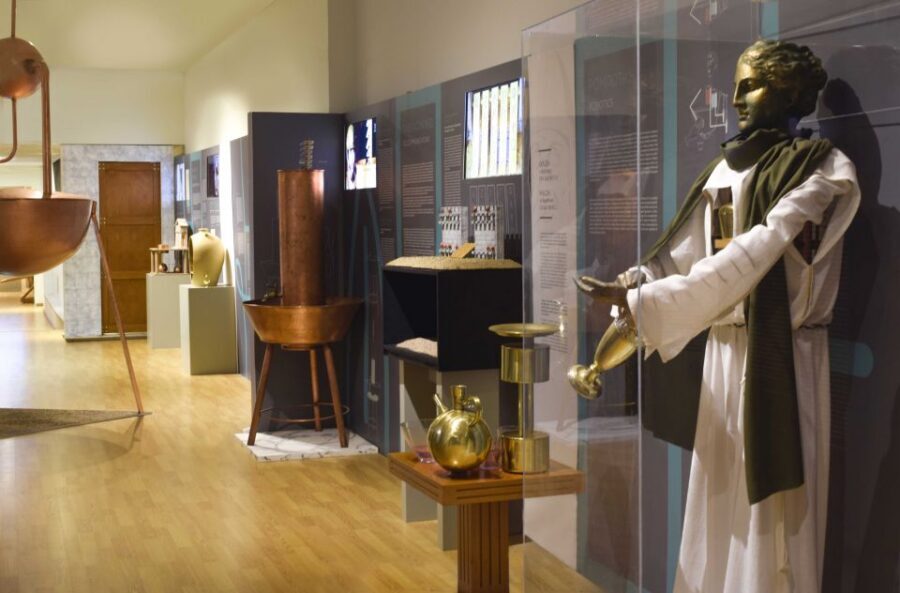
Ancient tech still feels modern. At the Kotsanas Museum of Ancient Greek Technology in Athens, you’ll face working models of inventions that can look strangely familiar, all inside a distinctive historic Art Nouveau building. You get about 300 artifacts presented in an interactive, hands-on way, with plenty of diagrams and explanations to connect the dots fast.
I love how the tour combines show-and-tell with true guidance: you’re led by an engineer or historian who can explain the mechanism clearly in English, not just point at it. Guides such as Vasilis have earned standout praise for making the exhibits click.
One drawback to plan around: the visit is not suitable for people with mobility impairments, so if that’s a concern for you, double-check before booking.
In This Review
- Key things you’ll notice on this guided museum tour
- The museum setting: Art Nouveau in the middle of Athens
- Meet at Pindarou 6 and get oriented quickly
- What the 1-hour private guided tour really gives you
- The exhibits: 300 artifacts, with mechanisms you can learn by watching
- Standout moment: the analog-computer feeling of the Antikythera mechanism
- “Hi-Tech Inventions of Ancient Greeks”: robots, cinema, puppets, and timekeeping
- Audio-visual stations: video, animation, and documentary-style explanations
- Free time after the tour: how to use it without rushing
- Who this is best for (and who should reconsider)
- Price and value: $54 per group up to 4 makes the guide matter
- Practical tips before you go
- Should you book this Athens Kotsanas Technology Museum tour?
- FAQ
- How long is the Kotsanas Ancient Greek Technology Museum guided tour?
- What is the meeting point for the tour?
- Where is the museum located relative to Syntagma Metro?
- Is the tour private?
- What language is the live tour guide?
- What’s included in the price?
- Is food and drinks allowed during the visit?
Key things you’ll notice on this guided museum tour
- Private 1-hour tour with a live English-speaking guide for a small group
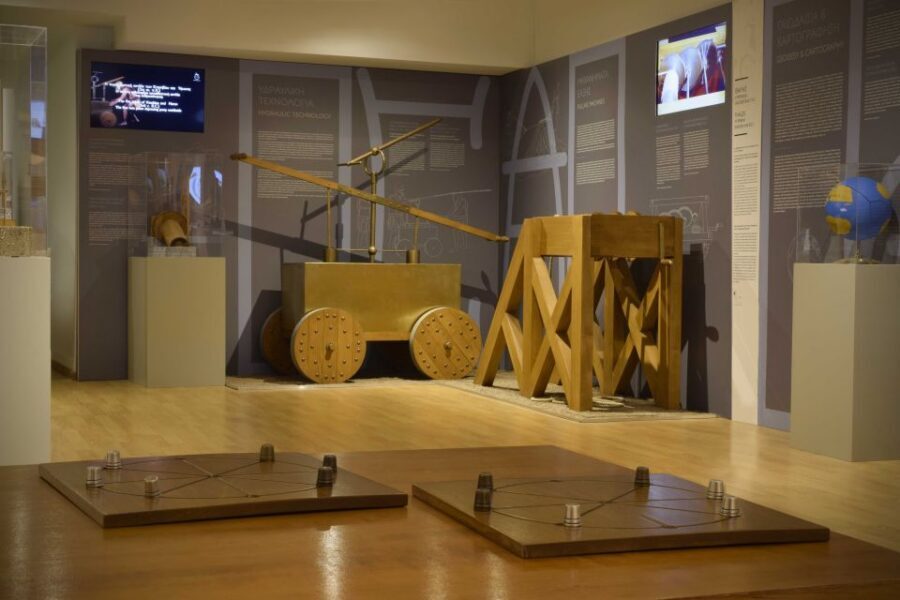
- Around 300 artifacts of ancient technology presented with lots of interactive elements
- A focus on standout “wow” pieces like the Antikythera calculating mechanism and analog-computer style design
- Audio-visual stations with video and animation, plus documentary-style explanations
- A themed route through “hi-tech” inventions, from automata concepts to hydraulic timing systems
- The museum sits in a historic Art Nouveau building, so the setting adds atmosphere
The museum setting: Art Nouveau in the middle of Athens
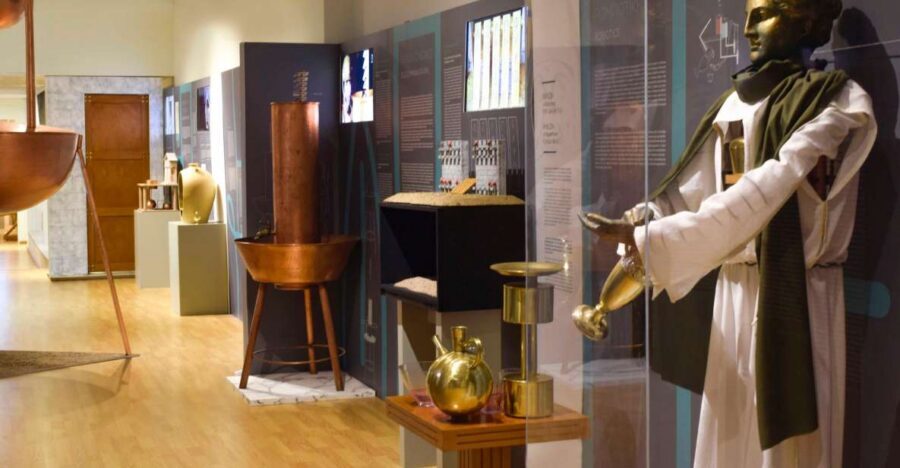
This isn’t your typical white-box museum. The Kotsanas Museum of Ancient Greek Technology is housed in a historic Art Nouveau building, and that matters because it changes how the visit feels. Even before you get into the exhibits, you’re moving through a space that looks designed to showcase ideas—curves, character, and a bit of old-world drama that fits the topic.
Location-wise, the meetup is at Pindarou 6 in central Athens, and the museum is about a 5-minute walk from Syntagma Metro Station. That makes this a smart add-on to an Athens day that already includes central sights. You don’t need a complicated transit plan, and you can treat the museum like a focused “brain break” between outdoor walking.
You can also read our reviews of more guided tours in Athens



Meet at Pindarou 6 and get oriented quickly
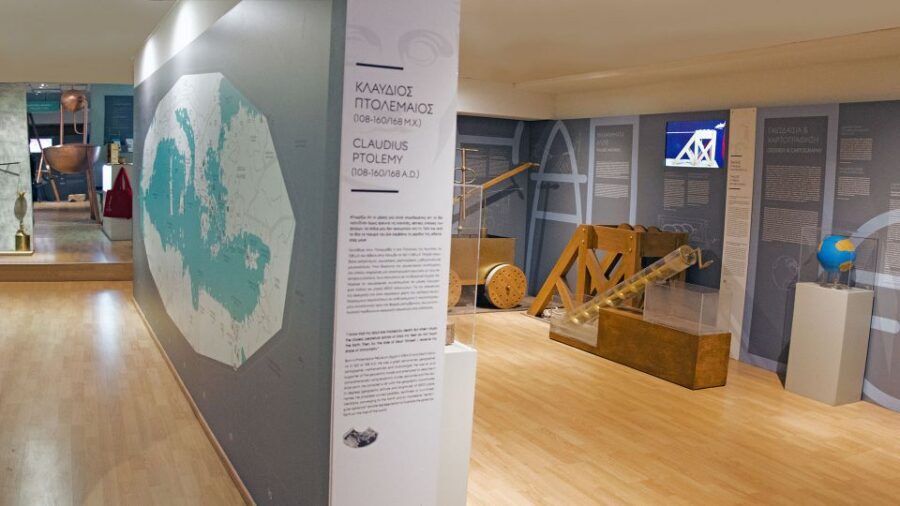
The tour meets at Pindarou 6, Athina 106 71, Greece. You’ll head from there to the museum, which is close enough that you can easily arrive a little early, take a breath, and settle in. This is especially helpful because the museum experience works best when you’re ready to look closely. With an hour, you want your attention switched on from the start.
Because it’s private, you also don’t have to worry about getting separated from the group or trying to compete with audio from a larger crowd. The guide sets the pace, and that’s key in a museum where many exhibits are interactive and technical.
What the 1-hour private guided tour really gives you
The official time on the activity is 1 hour. That sounds short until you realize what you’re trying to do: absorb ancient engineering concepts without turning it into a lecture. A good guide keeps you moving through the main ideas, points out what’s interactive, and helps you interpret what you’re seeing.
This is a private group experience, and the price is listed as $54 per group up to 4. For a family, a small group of friends, or two couples who don’t want to split up, that group pricing can be good value. You’re not paying per person as if you were joining a large bus tour. Instead, you’re paying for an expert to meet you where you are—whether you’re an engineering fan or you’re just curious how Greeks could build high-tech-looking devices.
If you’re the type who reads every label, you might feel the clock. But the “best move” here is to use your guided hour for understanding, then use the free time after to linger on what grabs you most.
The exhibits: 300 artifacts, with mechanisms you can learn by watching
The heart of the experience is the museum’s interactive exhibition of about 300 artifacts of ancient technology. You’re not just staring at objects. Many displays are designed so you can understand how a mechanism works by seeing its parts and following the diagram logic. The audio-visual content helps too, with explanations presented in Greek and English, including explanatory labels, large posters full of information, and detailed diagrams, photos, and bibliographical references.
You’ll also notice the museum’s real strength: it doesn’t treat Greek technology as a weird museum curiosity. It frames these inventions as rational engineering. When the guide explains the mechanism, you start seeing patterns—how gears, timing systems, hydraulic components, and automation concepts can produce practical results.
Standout moment: the analog-computer feeling of the Antikythera mechanism
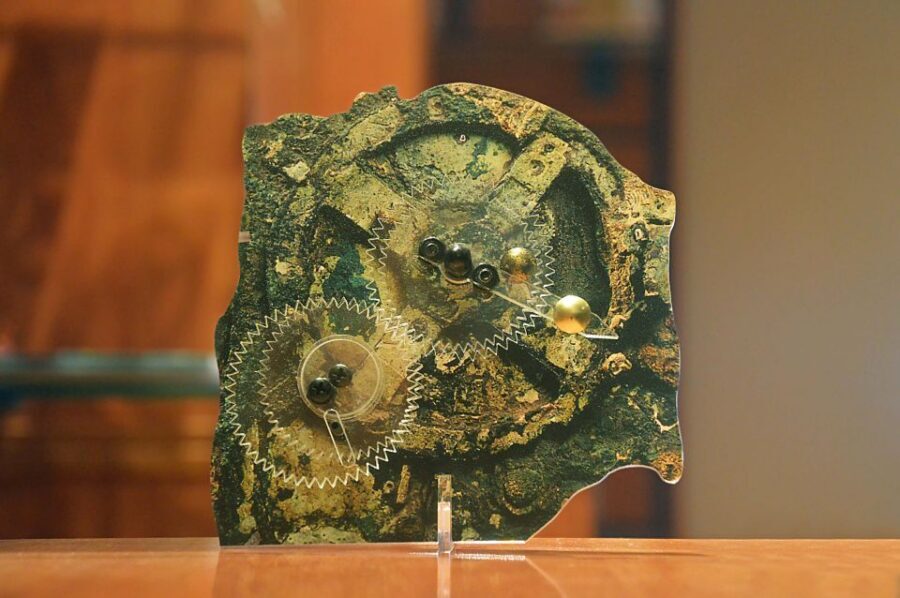
One exhibit category the tour highlights is the museum’s operating models of Greek inventions, including the oldest analog computer in the world. That’s the Antikythera calculating mechanism area, and it’s one of those museum pieces where your brain goes, wait, this is doing math.
Even if you don’t go deep into the technical details, you’ll leave with a clearer sense of what made it impressive: it wasn’t a “cool artifact.” It was a mechanism that could represent cycles and relationships in a physical way. In other words, it turns knowledge into moving parts.
On a guided tour, the difference is that you’re not left alone with an explanatory panel. The guide helps you connect the visuals to the function—so you don’t just see gears and dials, you understand what the device is trying to compute.
You can also read our reviews of more museum experiences in Athens




“Hi-Tech Inventions of Ancient Greeks”: robots, cinema, puppets, and timekeeping
A big part of the museum’s appeal is the themed section often described as The Hi-Tech Inventions of Ancient Greeks. It includes about 100 selected exhibits. The names alone already sound like a sci-fi playlist, but the real value is seeing how the ideas were built using real components.
Here are some of the invention types you’ll encounter on this route:
- Robot-servant concepts
- The cinema of Philon
- The automotive-puppet show of Heron
- The hydraulic clock of Ktesibios
- The Antikythera mechanism again, as the anchor example of “calculation” through mechanism
As you move through these, the tour’s main point becomes hard to ignore: ancient technology can look familiar because the underlying logic is familiar. We often assume modern devices invented the concept of automation and system control. These exhibits show that Greek engineers were already thinking in that direction.
Audio-visual stations: video, animation, and documentary-style explanations
A museum can fail on “technical clarity,” especially when you’re looking at mechanisms that are complex. This one adds clarity through projected stations: you get video and animation, plus documentaries where the exhibitor explains how the mechanisms function and how they were meant to be used.
The best use of this during your visit is simple: watch, then look back at the physical model. If you only do one, you miss something. The animations help your brain build a mental model; the actual artifacts confirm what you just understood.
This is also where the English-speaking guide helps most. The museum provides labels and explanations, but a guide can point out what’s most important and what’s just extra detail. With only an hour, that guidance turns “information overload” into “takeaways you remember.”
Free time after the tour: how to use it without rushing
After the guided portion, you’ll get free time to explore further. That’s not just filler. It’s your chance to slow down and interact with exhibits at your own pace.
My advice: in your guided hour, don’t try to absorb everything. Instead, pick 2–3 exhibit themes that genuinely grab you—timing devices, automation/automata concepts, or the calculating mechanism—and then use your free time to revisit those areas. You’ll get more out of a second look than you will from trying to collect everything the museum contains.
Who this is best for (and who should reconsider)
This tour is a strong fit if you like science, machines, history with real-world engineering, or you want something different from the usual Athens checklist. The format also works well for families; guides have been praised for making it enjoyable for kids, especially because the displays are interactive and the concepts are explained directly.
You should reconsider if:
- you need mobility-friendly access (the tour is not suitable for people with mobility impairments)
- you want a long, unscheduled museum wander (the guided portion is only 1 hour)
- you’re hoping for a hands-on workshop experience where you build things yourself (this is guided viewing and interactive exhibits, not a do-it-yourself lab)
Price and value: $54 per group up to 4 makes the guide matter
At $54 per group up to 4 for a 1-hour private guided tour, the value comes from two parts: (1) you’re paying for an expert guide’s time, and (2) the museum itself is already packed with dense content—diagrams, references, audio-visual explainers—so you benefit from a person who can help you pick what’s essential.
If you’re solo, it can still be reasonable, but it’s the kind of booking that feels most cost-effective when you share it with a small group. Think of it as buying time with an expert in a museum where the details are the point.
Also remember: entry is included, and you get free time after the tour. You’re not just “doing a walkthrough,” you’re getting a guided interpretation plus personal time to follow your curiosity.
Practical tips before you go
- Bring comfortable shoes. You’ll spend time standing and moving between displays.
- Plan your Athens day so you’re not rushed. This tour rewards calm attention.
- Since food and drinks are not allowed, plan to eat before or after. Water might be limited by museum rules, but the key point is no food/drink during the visit.
- If you’re a history fan who doesn’t have a technical background, you’ll still be okay. The guide format is built to make the mechanisms understandable in everyday language.
Should you book this Athens Kotsanas Technology Museum tour?
I’d book it if you want a smart, different side of Athens—one where ancient Greek engineering isn’t treated like a trivia game. The museum’s interactive exhibits, audio-visual stations, and the focused 1-hour guide make it realistic to understand complicated devices without drowning in details.
I wouldn’t book it if mobility access is a concern for you, or if you prefer a purely self-guided experience where you never have to follow a route. And if you’re the type who needs hours and hours to fully read every diagram, plan to use the free time well and accept that the guided part is intentionally short.
If you like the idea of seeing how ancient technology can feel eerily modern—gears, timing, automation, calculation—this tour is a very good use of an hour in central Athens.
FAQ
How long is the Kotsanas Ancient Greek Technology Museum guided tour?
The guided tour lasts 1 hour.
What is the meeting point for the tour?
You meet at Pindarou 6, Athina 106 71, Greece.
Where is the museum located relative to Syntagma Metro?
The museum is about a 5-minute walk from Syntagma Metro Station.
Is the tour private?
Yes. It’s a private group experience.
What language is the live tour guide?
The live tour guide is provided in English.
What’s included in the price?
Entry to the museum, a 1-hour private guided tour, and free time to explore further are included.
Is food and drinks allowed during the visit?
No. Food and drinks are not allowed.


More Guided Tours in Athens

More Tours in Athens



More Tour Reviews in Athens
- All Day Cruise -3 Islands to Agistri,Moni, Aegina with lunch and drinks included
★ 5.0 · 4,958 reviews