REVIEW · ATHENS
Athens: National Archaeological Museum Private Guided Tour
Book on GetYourGuide →Operated by Christos Theodoropoulos · Bookable on GetYourGuide
Two hours, and suddenly Athens makes sense. This private guided tour turns Greece’s huge story—prehistory to late antiquity—into an easy, human-paced route through the National Archaeological Museum, including the famous Antikythera mechanism and other standouts pulled from across Greece.
I especially like two things. First, Christos Theodoropoulos runs a tight orientation that helps you understand what you’re seeing fast, then where to look next. Second, the guide treats questions as part of the plan—when my group leaned into ancient jewelry, he was able to arrange extra access to a jewelry area that isn’t usually available during parts of the year.
One consideration: you only get 2 hours in a museum with thousands of objects, so the pace stays brisk. If you want to linger, plan on doing a quick self-guided loop after the tour ends.
In This Review
- Key things you’ll notice on this tour
- Why this private museum tour works in Athens
- Meeting the guide at the museum steps (and what to bring)
- The museum’s neoclassical building: your orientation starts the moment you enter
- The two-hour itinerary: how the guide keeps the highlights from feeling rushed
- Antikythera mechanism: the stop everyone talks about, and why it matters
- What you’ll learn in the five big collection areas
- 1) Prehistoric antiquities: early Aegean cultures
- 2) Sculptures collection: how Greek style develops
- 3) Vase and minor objects: everyday life plus prestige
- 4) Bronze collection: people, figurines, and material craft
- 5) Egyptian and Near Eastern antiquities in Greece
- How to get the most from the brisk 2-hour route
- Price and value: when $400 per group makes sense
- Who this tour fits best (and who might not need it)
- Should you book this Athens National Archaeological Museum private tour?
- FAQ
- How long is the private guided tour?
- What is the price and group size?
- Is the museum entrance ticket included?
- Where do we meet the guide?
- Is there a hotel transfer included?
- What languages is the live guide available in?
- Do we see the Antikythera mechanism on this tour?
- Is this a private group or shared tour?
- Can I cancel or change plans?
Key things you’ll notice on this tour
- Licensed archaeologist guide in a private setting for real questions (and quick clarifications)
- The Antikythera mechanism explained in plain terms, with context for what makes it special
- A smart highlight route across five major permanent collections, not a random wander
- Flexible attention to your interests, including extra time around areas that may be off-limits otherwise
- A pace that respects the clock, then leaves you space to explore afterward
Why this private museum tour works in Athens
The National Archaeological Museum is big. Not big like, I’ll just take it in slowly. Big like, you could spend days here and still feel like you missed things. That’s exactly why a guided format makes sense—especially if it’s your first time in Athens or you want the “greatest hits” without turning your feet into dust.
With this tour, you’re not buying time for nothing. You’re buying interpretation: what period you’re looking at, why the object matters, and how the pieces connect across centuries. The museum’s collection is vast—more than 11,000 exhibits—and it’s housed in a striking neoclassical building built at the end of the 19th century and remodeled later. A guide helps you translate that scale into something manageable.
And the payoff is real. The highlight isn’t just “cool artifacts.” The museum spans a sweep of Greek civilization, from early Aegean cultures through major artistic phases and into later periods. If you’ve ever wondered how Greek art and ideas evolved (instead of just memorizing dates), you’ll get a clear path through the noise.
You can also read our reviews of more guided tours in Athens



Meeting the guide at the museum steps (and what to bring)
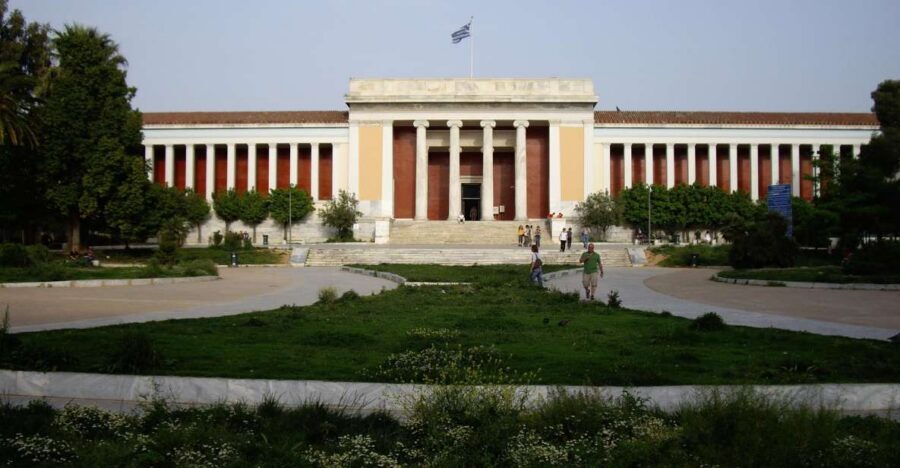
You meet at the steps in front of the main entrance, 44 Patission Street, 10682. Plan to arrive a few minutes early because the whole idea here is to start efficiently. If you’re navigating Athens on foot or by metro, this is the kind of landmark location where a “wrong turn” can cost you time.
Two practical things to keep in mind:
1) Museum entry is not included. Your tour price covers the guide, not the €10 ticket.
2) No hotel transfer is included. You’ll need to get yourself to the museum area.
What to bring: comfortable shoes. This isn’t a sit-and-watch museum tour. It’s more like a curated walking route through galleries and levels. Also bring your curiosity. The best parts of the tour happen when you ask questions—about materials, styles, or what an object might have meant in its original setting.
One small tip: if you have a specific interest—like ancient jewelry, sculpture techniques, or what Greek art looked like in different eras—tell the guide at the start. In at least one case, Christos arranged extra access based on the topic a visitor cared about.
The museum’s neoclassical building: your orientation starts the moment you enter
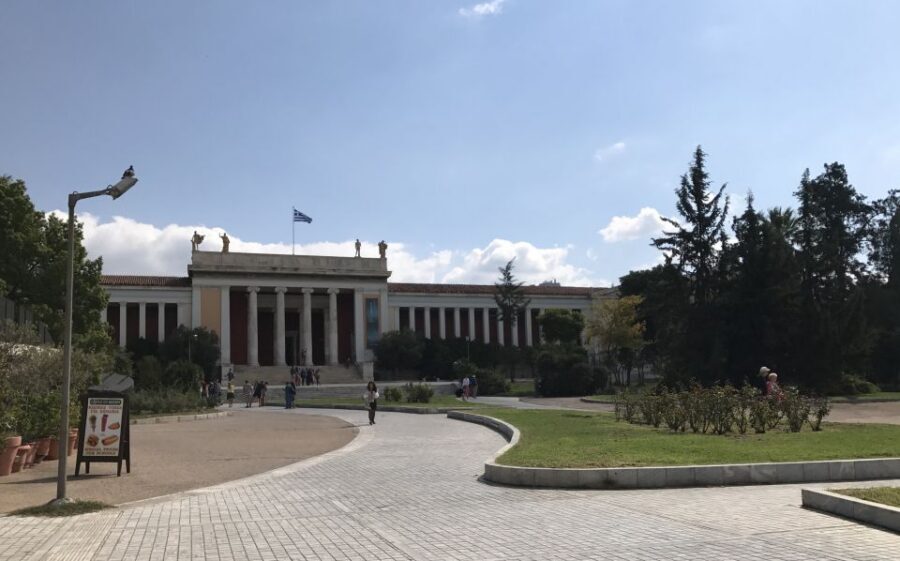
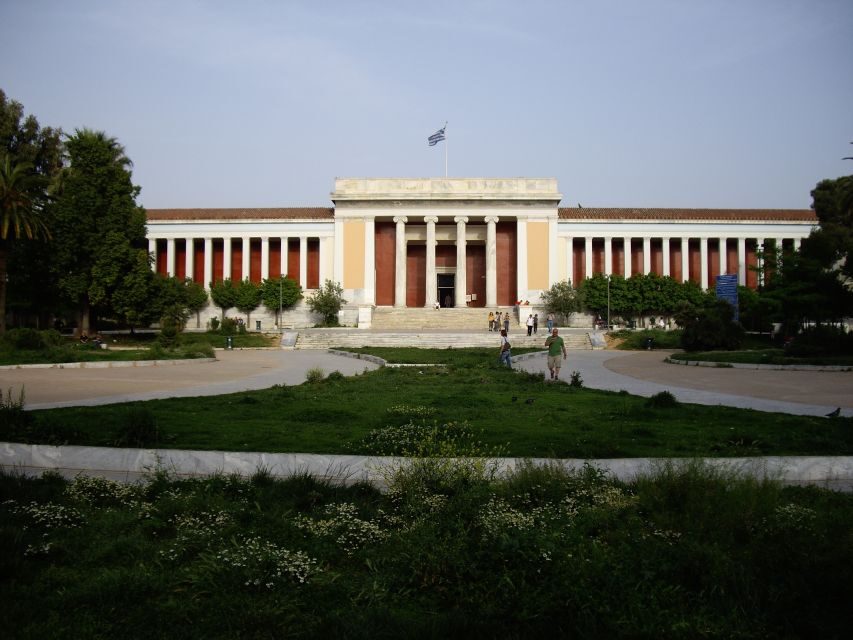
Even before the galleries, the museum “teaches” you something. The building itself is impressive: neoclassical, designed by L. Lange and remodeled by Ernst Ziller. That matters because it signals what the museum is trying to do—give Greece a formal, national home for archaeological finds.
Inside, the collections are spread across a lot of space: around 8,000 square meters and multiple floors. The museum has five large permanent collections, and the guide’s job is to make sure you don’t waste your limited time by hopping randomly.
Here’s what makes the guided approach valuable: you learn the museum’s logic fast. You don’t need to know every exhibit number. You just need a framework—prehistory first, then major phases of sculpture and decorative arts, and finally the cross-cultural pieces that show Greece in a wider ancient world.
The two-hour itinerary: how the guide keeps the highlights from feeling rushed
This tour is structured around a simple idea: cover the museum’s most meaningful areas in a way that still feels coherent. With a private group, your guide can adjust movement based on where you stop to read details or ask questions.
In practice, that means:
- You get a sequence instead of a shuffle. Christos is known for moving a group between highlights while keeping context attached to each stop.
- You don’t just see objects—you learn what you’re looking at. People often assume museums are about beauty alone. Here you learn how styles develop, what materials suggest, and how artifacts reflect everyday life as well as elite culture.
The pace is intentionally quick. One tour experience description even noted that in less than 2 hours, there is simply too much to see if you want a guided “best-of” route. That’s not a flaw—it’s the trade you’re making for an orientation that works.
If you finish still hungry for more, you can do it. A lot of the fun of this museum is that after you’ve been given a framework, your second pass feels smarter. You’re not starting from scratch anymore.
Antikythera mechanism: the stop everyone talks about, and why it matters
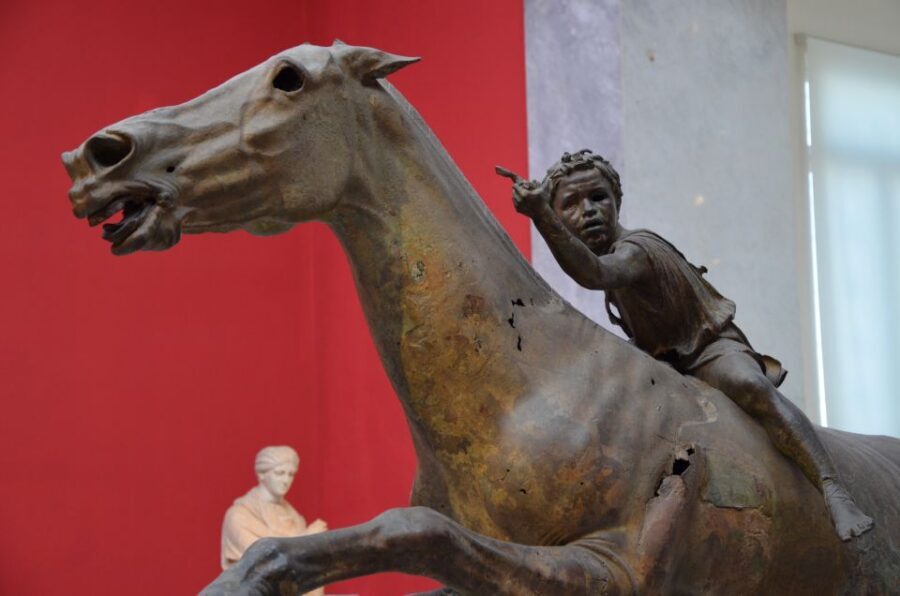
If you want one museum artifact to justify the entire trip, the Antikythera mechanism is the one. This tour includes it, and the guide focuses on why it’s more than a historical curiosity.
The Antikythera mechanism is often called the world’s oldest analogue computer. That phrase can sound like marketing until someone explains what that “computer” idea means in the context of ancient technology and scientific thinking. The value here is that you get the context tied to the artifact itself, not just a fact about its age.
And because it appears inside a larger museum narrative, it lands differently. You’re not watching one isolated “wow object.” You’re seeing how Greek (and Aegean) culture included precision, measurement, and technical ambition alongside art and myth.
If you’re the type who likes turning museum facts into mental links—between science, craftsmanship, and cultural priorities—this is a great payoff point.
You can also read our reviews of more private tours in Athens






What you’ll learn in the five big collection areas
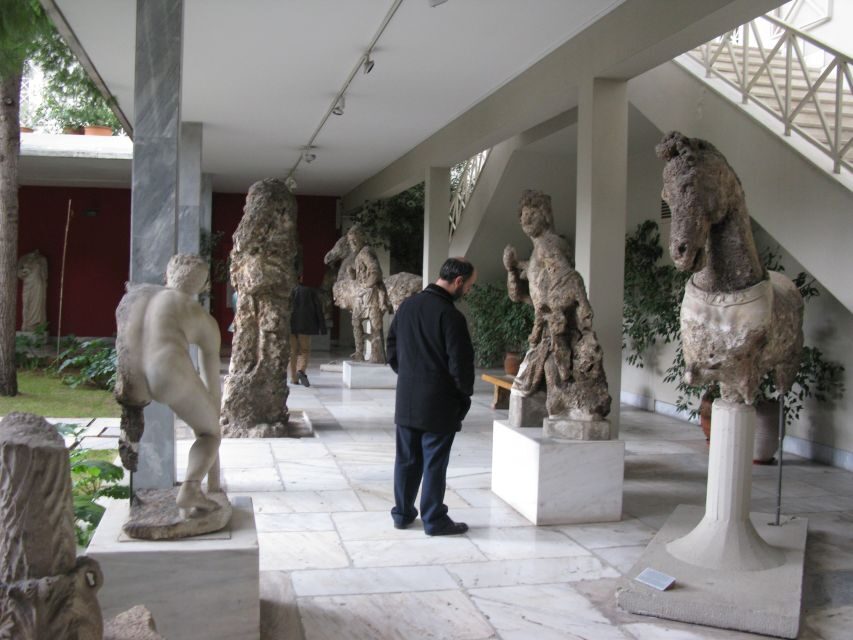
The museum’s permanent collections give you an easy way to understand Greek material culture as it evolves. The guide doesn’t treat them like separate worlds. Instead, you’ll see how each collection answers a slightly different question: What did people build? What did they worship? How did art change? What did Greece trade and borrow?
1) Prehistoric antiquities: early Aegean cultures
The collection of prehistoric antiquities spans from the 6th millennium B.C. through 1050 B.C. It includes Neolithic, Cycladic, and Mycenaean works, plus finds from prehistoric Thera.
This part of the museum is especially useful if you’ve only heard Greek history starting with the classical era. You’ll get a stronger sense that Greece didn’t begin “fully formed.” It grew from earlier communities and traditions in the Aegean.
2) Sculptures collection: how Greek style develops
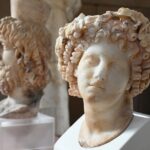
The sculpture collection shows development from the 7th to the 5th centuries B.C. This is where you can start seeing the evolution in form—how proportions, poses, and details change over time.
Even if you’re not a sculpture expert, a guide helps you look correctly. You learn what to notice: style shifts, how figures are presented, and what artistic choices might signal about changing beliefs and aesthetics.
3) Vase and minor objects: everyday life plus prestige
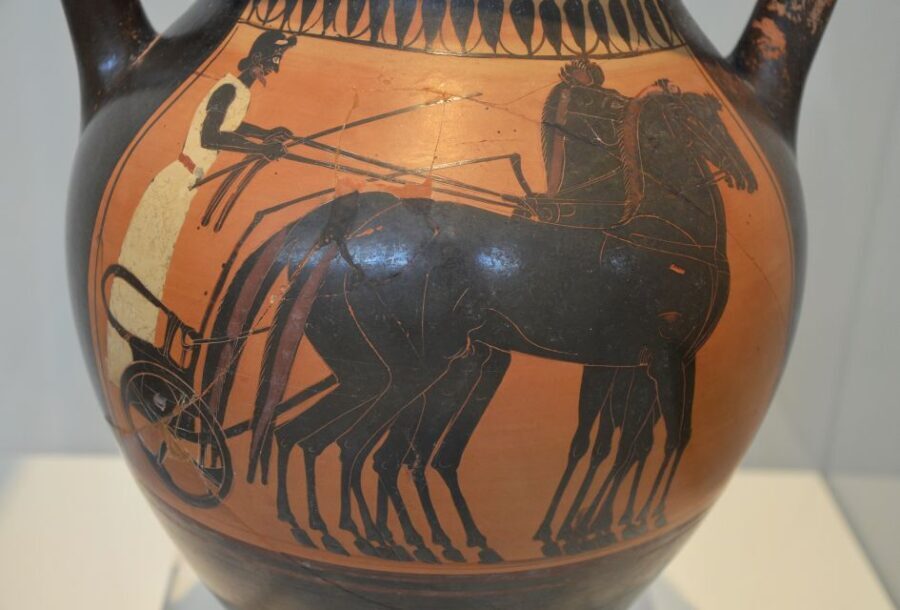
The vase and minor objects collection covers Greek pottery from the 11th century B.C. through the Roman period. It also includes the Stathatos Collection, described as a corpus of minor objects across all periods.
This is where you often get the best “how people lived” feeling—because pottery and small objects are closer to daily use than big monuments. A guide can also connect decorative styles to broader historical phases, so the displays don’t feel like random samples.
4) Bronze collection: people, figurines, and material craft
The bronze collection includes statues, figurines, and minor objects. Bronze is a material with its own logic: it invites you to think about skill, casting, and durability.
If you like objects that show hands-on craft, this section tends to deliver. You might find yourself lingering, because small changes in technique can be the difference between a flat figure and a piece that feels almost alive.
5) Egyptian and Near Eastern antiquities in Greece
One unique angle: the museum has the only Egyptian and Near Eastern antiquities collection in Greece, with works from the pre-dynastic period (5000 B.C.) to the Roman conquest.
This is important even if your focus is “Greek only.” Greek civilization didn’t develop in isolation. Cross-cultural influences shaped art, collecting habits, and how later Greeks understood older civilizations. This collection makes that bigger ancient-world context visible.
How to get the most from the brisk 2-hour route
The biggest “success factor” for this tour isn’t the guide’s route—it’s how you respond to the structure.
Here’s how I’d do it so the time actually pays off:
- Take the first tour as your roadmap. Don’t try to memorize every name. Your goal is to learn what each gallery is for.
- Use questions like tools. If something confuses you—why a style changed, what a symbol might mean, how a technology fits into ancient life—ask. That’s where the private setting shines.
- Plan a follow-up walk. The guide’s pacing keeps you efficient. After the tour, you can slow down in places you cared about most.
Also, keep expectations realistic. Two hours in this museum means you’ll see major highlights, not every masterpiece. The guide’s job is to prevent “I saw a lot but learned nothing” syndrome. When it works, you leave with a clear mental map.
In some cases, Christos has even continued attention to areas beyond the official time window, which shows the tour isn’t just a checklist. It’s designed around your experience level and interests.
Price and value: when $400 per group makes sense
The price is $400 per group up to 6. That’s not “cheap,” but it can be very fair depending on how you travel.
Think about the math like this: if you’re a small family or a couple of friends, you’re splitting the cost across people who would otherwise each pay for separate ways to get orientation. Even if you’re not a big-group traveler, the private format helps because the guide can steer your route based on what you want to see.
Also remember what you’re paying for: an experienced licensed archaeologist guide who can connect objects to the bigger story. In a museum this large, that context is the difference between a tiring afternoon and a meaningful one.
Two more value notes:
- The museum ticket (€10) is extra, so budget that on top.
- You’re not paying for hotel transfer, so it’s best if you’re already comfortable making your own way to the museum.
If you’re going to be in Athens only briefly, or this is your “one big museum day,” the guide’s efficiency pays off.
Who this tour fits best (and who might not need it)
This is a strong fit if you:
- Want an efficient Athens museum orientation
- Like understanding what you’re seeing instead of just looking
- Travel with teens or mixed-age groups and need pacing that keeps everyone engaged
- Care about major highlights like the Antikythera mechanism
- Prefer private attention and direct answers
It may be less perfect if you:
- Want a full-day museum marathon with minimal guidance
- Prefer to read everything yourself without a planned route
- Are traveling with very limited patience for walking between galleries
That said, even people who think they don’t “need” a guide often end up grateful once they realize how much easier it is to look intelligently after someone hands you the framework.
Should you book this Athens National Archaeological Museum private tour?
Yes, I’d book it if you want the museum’s biggest ideas delivered in a smart, time-saving way. A private guide who knows how to connect the dots—especially around the Antikythera mechanism and the museum’s major collections—turns a large building full of objects into a story you can actually follow.
Before you decide, do this quick checklist:
- Are you doing a museum in Athens with limited time? This tour helps.
- Do you want someone to guide your questions and highlight priorities? This tour helps.
- Are you okay paying the €10 ticket separately? If yes, you’re set.
- Do you like a brisk pace and then a slower self-guided return afterward? Then you’ll love how this plays out.
If you want to walk out with a real sense of ancient Greece rather than just photos of statues, this is a solid use of money—and a genuinely practical way to see one of Greece’s most important museums.
FAQ
How long is the private guided tour?
The tour lasts 2 hours.
What is the price and group size?
It costs $400 per group for up to 6 people.
Is the museum entrance ticket included?
No. The museum entry ticket costs €10 and is not included.
Where do we meet the guide?
Meet at the steps in front of the main entrance of the Athens National Archaeological Museum, 44 Patission Street, 10682.
Is there a hotel transfer included?
No, hotel transfer is not included.
What languages is the live guide available in?
The guide offers live tours in Turkish, English, German, and Greek.
Do we see the Antikythera mechanism on this tour?
Yes. The tour includes time to see and learn about the Antikythera mechanism.
Is this a private group or shared tour?
This is a private group.
Can I cancel or change plans?
The experience offers free cancellation up to 24 hours in advance for a full refund, and you can reserve and pay later.


More Guided Tours in Athens


More Tours in Athens


More Tour Reviews in Athens
- All Day Cruise -3 Islands to Agistri,Moni, Aegina with lunch and drinks included
★ 5.0 · 4,958 reviews