REVIEW · ATHENS
Athens: The Acropolis Museum Guided Tour
Book on GetYourGuide →Operated by ATHENS WALKING TOURS · Bookable on GetYourGuide
That Acropolis Museum room layout matters.
This guided tour makes it click fast: you start inside the modern museum building designed by Bernard Tschumi and Michael Photiadis, then work your way through the most telling artifacts and architectural features. I like how the guide connects objects to the world that produced them, especially votive offerings to Athena and the story behind the Caryatids. I also love the “see-through-time” effect—glass floors and a plexiglass view of an ancient neighborhood—because it helps you understand Athens wasn’t just temples; it was daily life. One consideration: 75 minutes can feel a touch short if you want to linger at every detail.
You’re also not left on your own. A licensed local guide keeps the tour moving and helps you avoid museum-bog. The panoramic viewpoints over the Acropolis ruins are great, and the tour is designed so you don’t need to be an archaeology genius to follow along. The one possible downside is timing: if your slot is paired with other parts of a bigger outing, you might not start exactly on the minute and a little waiting can happen.
In This Review
- Key highlights worth your 75 minutes
- Why the Acropolis Museum is the smartest warm-up
- Meeting at Dionysiou Areopagitou: easy to find, but arrive with a plan
- A modern building with serious ancient-minded design
- The Archaic Gallery: natural light and a fast way to focus
- Glass floors and excavations: seeing the neighborhood under your feet
- Athena votives and Caryatids: why the artifacts feel personal
- Panoramic Acropolis views without the guesswork
- Who you might meet: guides who bring the museum to life
- How long 75 minutes really works (and when it won’t)
- Price and value: $41 plus about €20 for entry
- What to do before and after for the best Athens day
- Should you book the Acropolis Museum guided tour?
- FAQ
- How long is the Acropolis Museum guided tour?
- What is included in the tour price?
- Are the Acropolis Museum entrance fees included?
- Where do I meet the guide?
- What should I bring, and what’s not allowed?
- What language is the tour, and does it run in bad weather?
Key highlights worth your 75 minutes
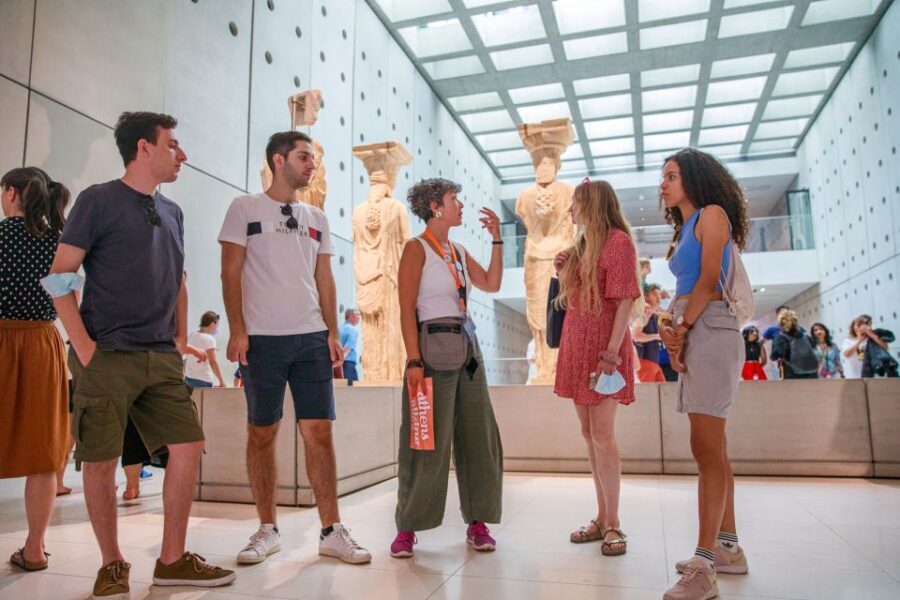
- Modern museum, ancient purpose: Tschumi and Photiadis made a building that frames the ruins, not competes with them.
- Archaic Gallery in natural light: the 1st-floor space is staged so you can actually see what you’re looking at.
- Glass floors + excavations: you can literally look down and watch the buried neighborhood reappear.
- Athena offerings and Caryatids context: the guide ties objects to beliefs, not just names.
- Parthenon-aligned design: a glass atrium is built in alignment with the Parthenon for a reason.
- Acropolis panoramas from inside the museum: you get views without trekking and guessing angles.
Why the Acropolis Museum is the smartest warm-up

The Acropolis is dramatic. The museum is explanatory. That’s the real value here: you walk in with questions—What am I seeing? Why those forms? What did people actually believe?—and you leave with a map for your eyes.
This tour is set up to give you quick orientation in a place that can otherwise feel like a lot of rooms. The guided flow matters because the museum is designed to move you through time—mainly focusing on the 5th century BC peak—and it’s the guide’s job to connect the dots between artifacts, architecture, and the city itself.
You’ll get the feeling of Athens at the moment it reached its most influential creative power. And you’ll also understand something people often miss: the Acropolis wasn’t just a single monument. It was the center of a living cultural and religious system.
You can also read our reviews of more guided tours in Athens



Meeting at Dionysiou Areopagitou: easy to find, but arrive with a plan

You meet at 3, Dionysiou Areopagitou St., at the Lukumades & Pilino stores. It’s at the start of the pedestrian walkway that runs from Hadrian’s Arch area toward the Acropolis.
This matters more than it sounds. If you’re already sweaty, juggling your phone map, and scanning street corners, you can lose time before the tour even begins. I’d treat meeting point arrival like a mini check-in: get there early, take 30 seconds to locate the orange Athens Walking Tours sign, then wait with comfortable shoes on.
Also note what you can’t bring: no luggage or large bags. If you’ve got a big daypack, keep it small and easy to manage. That reduces friction right away and keeps the group moving smoothly.
A modern building with serious ancient-minded design

One reason I’d do a guided visit in this museum is the architecture. This isn’t a neutral box of artifacts. The building by Bernard Tschumi and Michael Photiadis is part of the story.
During your walk-through, you should be able to notice the museum’s “designed sightlines” concept—where your position in the space influences what you see and how you understand it. The big example mentioned for this tour experience is the glass atrium built in alignment with the Parthenon. That’s not a decoration choice. It’s a way to keep the Parthenon in your mental frame while you’re inside, so you’re not treating artifacts like distant, disconnected objects.
Even if you don’t care about architecture for its own sake, you’ll feel the difference when the space helps you connect past to present. It’s the kind of design that makes the museum less like a storage vault and more like a guided conversation.
The Archaic Gallery: natural light and a fast way to focus
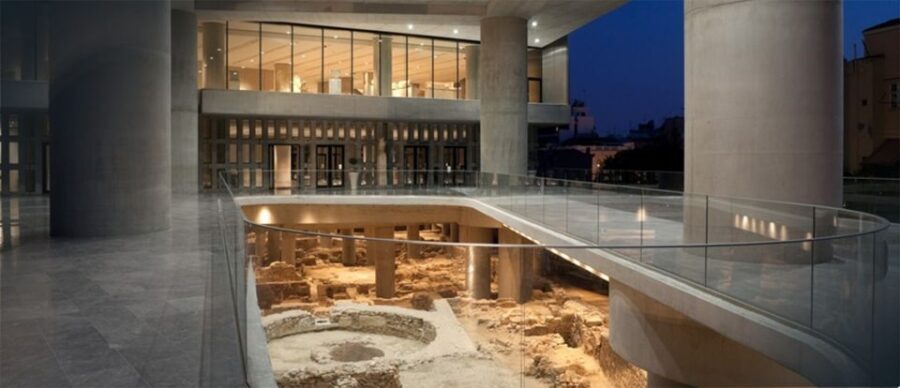
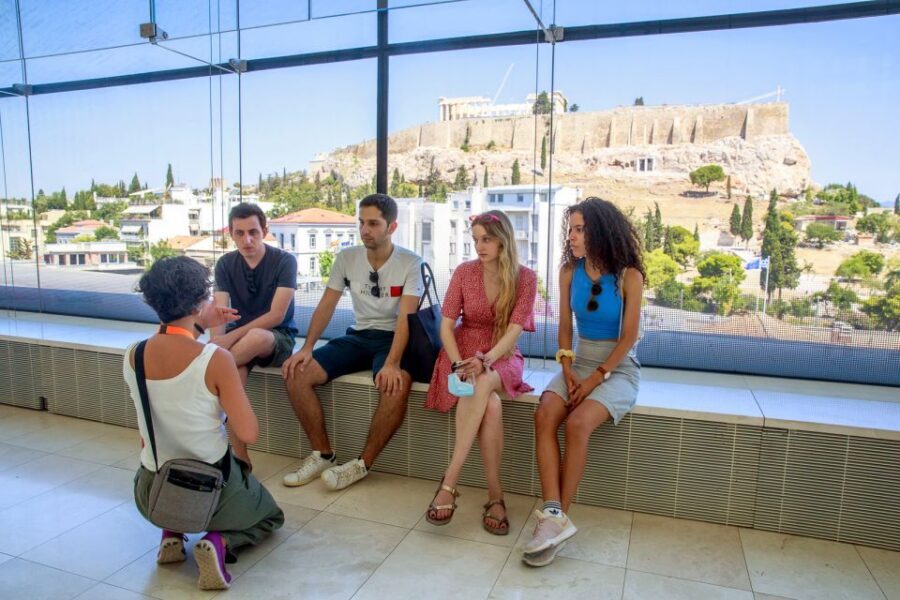
Your tour highlights the 1st floor Archaic Gallery. The standout detail here is that it’s bathed in natural light, which changes the entire viewing experience.
In museums, lighting can either help you see form and surface or make everything look flat. Natural light means you can better read the visual language of sculpture and carved offerings—silhouettes, proportions, and the logic of design. A good guide uses that. They’ll point you toward what to look for, then explain what it meant.
This is also where a guide really earns their fee. Instead of listing dates nonstop, they’ll help you translate what you’re seeing. You should come away with more than recognition—you’ll understand why those types of artifacts belonged where they did and what role they played in worship and public life.
Glass floors and excavations: seeing the neighborhood under your feet
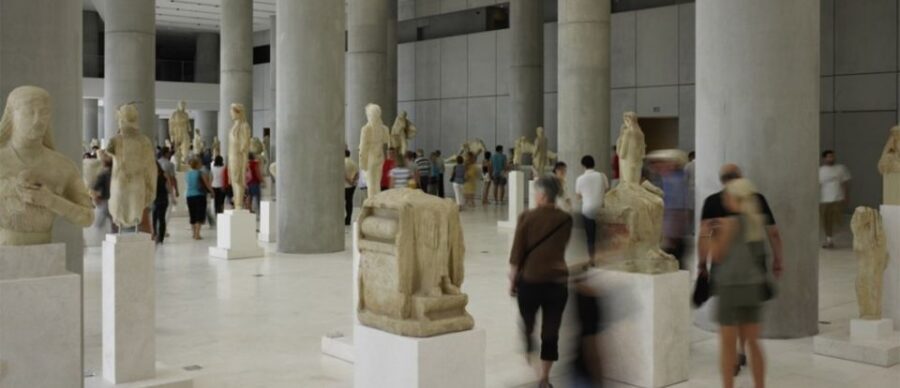
One of the most memorable parts of the Acropolis Museum experience is the “city beneath the museum” concept. This tour includes time to see excavations made visible through glass floors.
That’s a big deal for understanding Athens. You’re not only looking at objects made for the Acropolis. You’re also getting a glimpse of the surrounding area—an ancient Athenian neighborhood, revealed with a plexiglass floor and supported by 3D exhibits.
When the ruins appear literally underfoot, something clicks: you stop thinking of the Acropolis as a lone rock and start seeing it as part of a larger urban ecosystem. People lived, worked, worshiped, traveled, and left traces. The glass-floor design makes that idea physical.
Practical tip: slow down here. If you rush, you’ll miss the point. You don’t need to spend an hour, but take a couple of minutes to look around as well as down. The spatial layout is part of the explanation.
You can also read our reviews of more museum experiences in Athens




Athena votives and Caryatids: why the artifacts feel personal
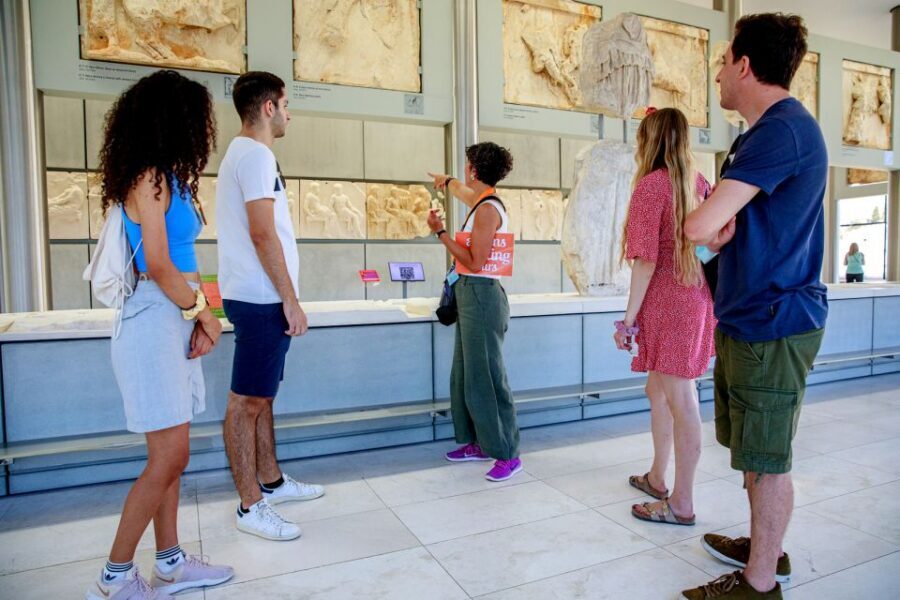
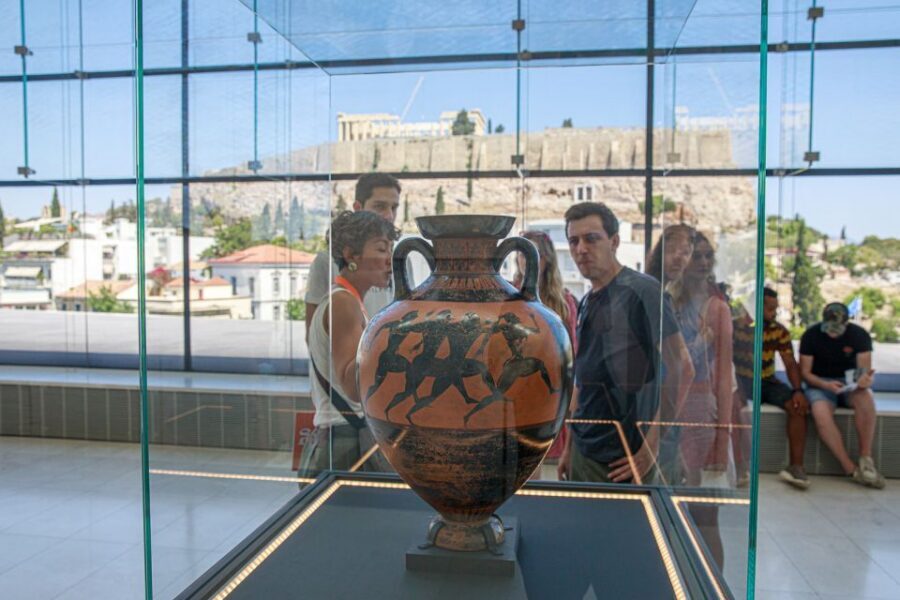
Your guided tour includes the museum’s most emotionally compelling categories: votive offerings to Athena and the Caryatid statues.
Votives can feel abstract if you only look at the item in isolation. The guide’s job is to make the offerings human—what someone might have wanted to ask for, celebrate, or thank. With Athena, you’re dealing with a goddess tied to civic identity and protective power, so the context tends to make the objects feel less like random relics and more like messages from real people.
The Caryatids add a different kind of power. These figures aren’t just decorative. They’re part of the visual language of the Acropolis. When you’re shown how they fit into the broader artistic system, they stop being intimidating and start being understandable.
Here’s where you’ll benefit most if you like explanations that balance art and belief. If you’re the type who reads the small labels but wants the “why,” this is the section you’ll probably appreciate the most.
Panoramic Acropolis views without the guesswork
This tour also calls out panoramic views of the ruins of the Acropolis. You’ll get those views from the museum context, not from a chaotic scramble across the hill.
That’s a practical win. When you can see the ruins from a stable vantage point, it helps you match architecture on the hill to architectural elements you saw inside. It’s also easier for photos, since you’re not fighting uphill terrain or crowd flow at every angle.
If you’re a photo person, don’t treat views as a separate event. Use the guide to connect what you’re seeing outside to what you just learned inside. That’s how you end up with a stronger memory than just a camera roll.
Who you might meet: guides who bring the museum to life
The tour runs with a live English-language licensed guide, and the overall vibe from guide names you may encounter is consistent: people respond well to guides who explain clearly and keep things moving.
You might meet guides such as Dimitris, Annie, Natasha, Margherita, Jordan, Niobe, Apollo, Costos, or Chris. Different personalities, same goal: make you understand what you’re looking at without turning it into a lecture.
A few guides are known for humor and upbeat delivery, and that’s useful here. The museum is serious in subject matter, but it doesn’t need to feel heavy. When a guide uses light storytelling (my kind of teaching style), you retain more and get through the crowded rooms with less stress.
How long 75 minutes really works (and when it won’t)
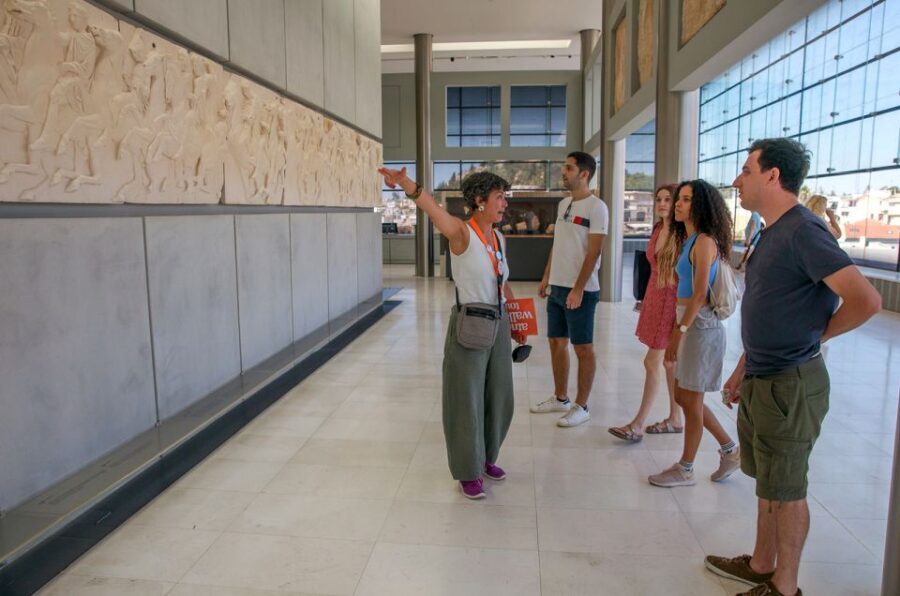
75 minutes is a smart length for a museum tour—if you want the essentials and a guided way to see them. The best part is momentum. You’re not trapped in a slow shuffle through every corner.
That said, one recurring consideration is simple: the tour can feel a bit short if you’re hoping for deep time at every stop. If you’re the type who reads every label, sketches, or wants to linger, plan for a second visit later (or pair this with self-guided time if your day allows it).
Also consider start-time variability. If the museum tour is operating as part of a larger schedule, you might wait a little before you begin. The good news is you’re still only committing to about an hour plus, so it doesn’t usually derail the whole day.
Price and value: $41 plus about €20 for entry
The tour price is listed at $41 per person, and entrance fees are not included (about €20 per adult).
So what are you really paying for? In practical terms, you’re paying for:
- A licensed local guide who turns artifacts into understanding
- Skip-the-ticket line service, which can save a chunk of wasted standing
- A curated path through the museum’s most important experiences, including glass-floor excavations and big visual alignments
If you’re visiting Athens in limited time—maybe you only have half a day—this is good value because you’re not spending that half day guessing. You’re spending it learning what matters most and seeing the museum’s standout features efficiently.
If you’re traveling slowly, enjoy reading on your own, and don’t mind a longer museum day, you could DIY this. But if you want your first time at the museum to actually feel like a first-time breakthrough, the guided format usually earns its keep.
What to do before and after for the best Athens day
Do this museum tour before you tackle the Acropolis itself. That’s the easiest way to get the order right. The museum gives the meaning; the hill gives the drama.
After the tour, if you still have energy, take a careful loop back outside for views. Use what you learned to locate features and understand why they’re positioned the way they are. Even a short follow-up walk can sharpen your sense of place.
And if you’re visiting in hot months, do yourself a favor: choose an earlier time when you can. Heat can make museum time feel longer than it is and can turn a viewing session into a sprint.
Should you book the Acropolis Museum guided tour?
Book it if you want your museum visit to feel guided, structured, and easy to understand. You’ll likely get the most value if:
- You’re visiting the Acropolis complex and want the right order
- You don’t want to figure out the meaning of the artifacts on your own
- You appreciate explanations that connect religion, art, and daily life
- You like seeing the museum’s standout design choices, like glass floors and the Parthenon-aligned atrium
Skip it (or consider a different format) if you want to spend hours slowly studying every label and you enjoy museum wandering without any schedule pressure. In that case, a self-guided approach might suit your pace.
FAQ
How long is the Acropolis Museum guided tour?
The duration is 75 minutes.
What is included in the tour price?
You get a local licensed guide and skip-the-ticket line service.
Are the Acropolis Museum entrance fees included?
No. Entrance fees are approximately €20 per adult.
Where do I meet the guide?
Meet at 3, Dionysiou Areopagitou St., at the Lukumades & Pilino stores. Your staff will be holding the orange Athens Walking Tours sign.
What should I bring, and what’s not allowed?
Bring a passport or ID card and wear comfortable shoes. Luggage or large bags are not allowed.
What language is the tour, and does it run in bad weather?
The tour is in English and takes place in all weather conditions, rain or shine. It is wheelchair accessible.



More Guided Tours in Athens

More Tours in Athens



More Tour Reviews in Athens
- All Day Cruise -3 Islands to Agistri,Moni, Aegina with lunch and drinks included
★ 5.0 · 4,958 reviews