Fast, useful Athens in two hours.
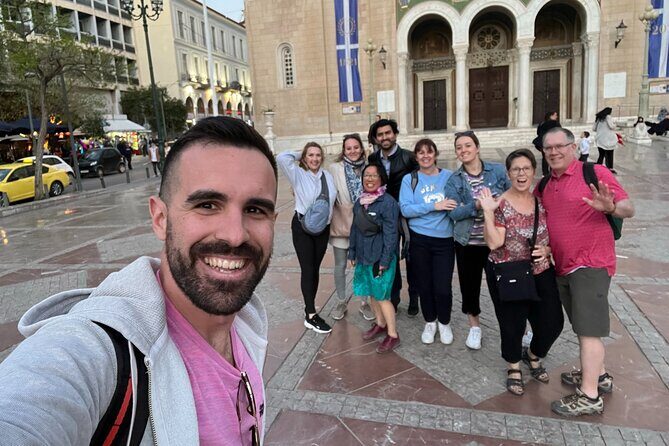
This walking tour helps you get your bearings fast and returns the favor with strong photo viewpoints—especially from the Acropolis angles around the city center—plus the kind of explanations that make the sights easier to understand later. I also like that it’s built for real people: a small group (max 10) so questions don’t get lost in the crowd.
You’ll also appreciate the practical wrap-up: included tips for sightseeing, food, and shopping, plus a guide who shares context you can use right away while you’re still jet-lagged or deciding what neighborhood to explore next. The only catch is that it’s a packed walk—standing, walking, and moving between several stops—so if you want a slow, sit-down pace, you may find the rhythm a bit brisk, and the tour depends on good weather.
If you’re arriving in Athens and want a smart first step (not a giant bus tour), this is a great fit. It also works well for couples, friends, and solo travelers who want a confident plan for the rest of the day.
In This Review
- Key takeaways before you go
- Why a 2-hour Athens orientation is a smart move
- Meeting at Adrianou 1 and how the walk usually feels
- Acropolis photo angles with real context, not just sightseeing
- Thiseio: start inside an older Athens neighborhood
- Monastiraki Square and flea-market energy you can actually use
- Watching the Changing of the Guard, with the meaning behind it
- Ancient Agora and Roman Agora: two layers of the city
- Hellenic Parliament: politics, life, and a modern landmark
- Plaka’s old-town feel and photo-friendly secret spots
- Syntagma Square fountain area: the big square in the middle
- Holy Metropolitan Church of the Annunciation: architecture you notice up close
- Athens Flea Market pass and Plaka stairs: where locals and visitors meet
- What you’re paying for: value in a tight, efficient route
- Practical tips to make this walk feel easy
- Who should book this tour?
- Should you book this Athens 2-hour walking tour?
- FAQ
- What’s the duration of the Discover Local Hidden Gems in 2 Hours Walking Tour in Athens?
- How much does the tour cost?
- What language is the tour offered in?
- Is it a small group tour?
- Where does the tour start and end?
- Do I need to buy tickets for the stops?
- Is the tour canceled if the weather is bad?
- What’s the cancellation policy?
Key takeaways before you go
- Small group size keeps the experience personal and question-friendly
- Acropolis viewpoints from multiple angles give you photo options and context
- Changing of the Guard stop includes the daily life, training, and symbolism behind the ceremony
- Monastiraki + market passes help you understand where locals actually shop and linger
- Plaka + the famous stairs put you in the old-town vibe quickly, with great photo pauses
- Ends at Monastiraki Square, a convenient jump-off point for more walking and dinner
Why a 2-hour Athens orientation is a smart move
Athens can feel like a choose-your-own-adventure city. You’ve got ruins, neighborhoods, squares, churches, and modern political buildings all close together—and it helps when someone points out what matters and what to look for.
This tour is designed as a quick mental map. In two hours, you’ll see a lot of Athens’ famous touchpoints, but you’ll also get guidance on how to read them—so you’re not just snapping photos with zero context. That matters because Athens rewards curiosity: once you understand what you’re looking at, you notice details faster everywhere else you go.
You can also read our reviews of more walking tours in Athens


Meeting at Adrianou 1 and how the walk usually feels
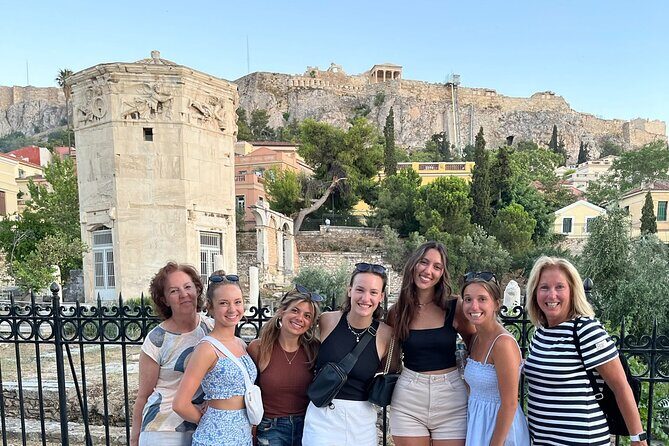
The tour starts at Adrianou 1 (Athina 105 55) and ends at Monastiraki Square by Apollonos 21, in front of the train station. That ending point is handy: you’ll finish in a lively area with plenty of options for food, strolling, and transit links.
Timing-wise, the tour runs about 2 hours and uses short stops—often a few minutes at a time—so the experience stays energetic. This is not the kind of walk where you spend long chunks staring at one monument. Instead, you’ll make quick connections between places, which is exactly what helps on arrival day.
Acropolis photo angles with real context, not just sightseeing
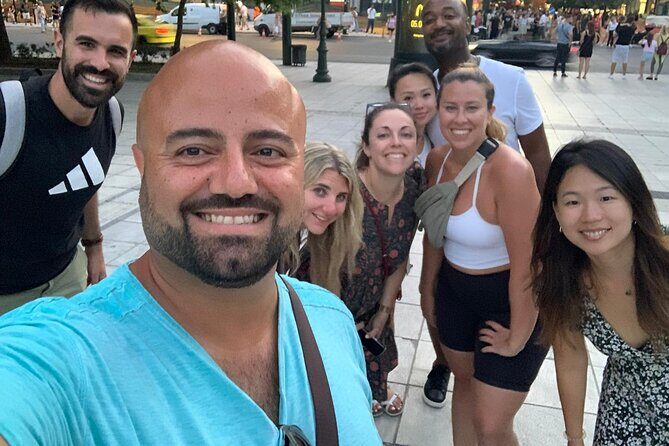
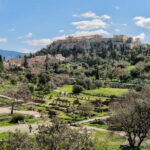
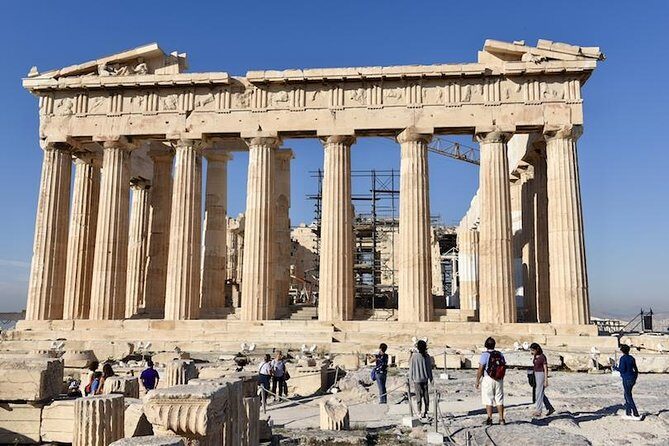
One of the best parts is the way the tour uses the city’s viewpoints to explain the Acropolis. You’ll admire it from different angles in the center, then get a second look connected to the Parthenon view—again with photo opportunities and the history that helps the architecture click.
Why this works: Athens’ biggest sites aren’t always the easiest to understand at ground level. When you see the Acropolis from multiple directions, you start noticing how the spaces relate—where sightlines land, how the hill dominates the skyline, and why certain views became iconic in the first place.
Photo-wise, come prepared. If you care about pictures, this is the segment where you’ll want your camera ready, because the tour is built around those close-distance “I get it now” moments.
Thiseio: start inside an older Athens neighborhood
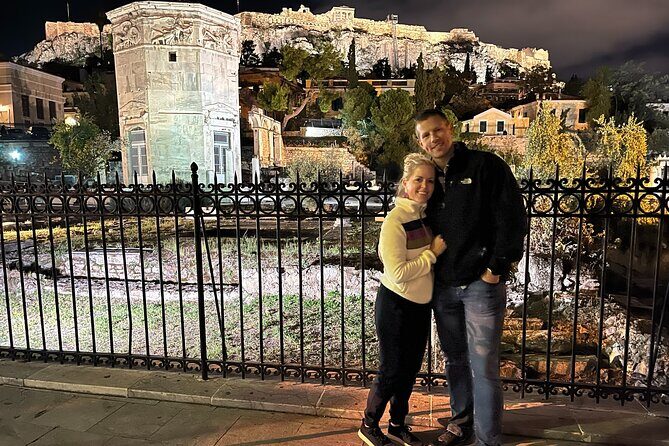
You’ll step into Thiseio, described as one of the oldest neighborhoods in the historic city center. Even if you only spend about five minutes here, it’s a useful contrast: the tour isn’t just jumping from one landmark to another. It also shows you the feel of where people lived around the historic core.
Practical takeaway: Thiseio is a strong area to revisit later if you want quieter streets than the busiest squares. Use this quick stop as a preview—then later, if it grabs you, you’ll know what direction to head for more wandering.
Monastiraki Square and flea-market energy you can actually use
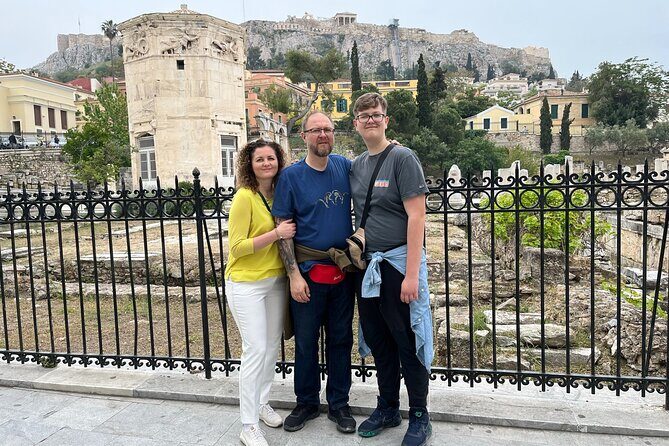
Next up is Monastiraki Square, the famous center-point of many Athens itineraries. You’ll pass through an area packed with all-day bars, restaurants, cafes, and open flea-market activity—so it’s a great place to get your senses calibrated for the city’s rhythm.
This stop isn’t about buying anything right now. It’s about learning the geography: Monastiraki is where you’ll likely end up again for food, browsing, and evening plans. Once you understand where it sits, shopping and dining become easier decisions rather than last-minute guesses.
You can also read our reviews of more tours and experiences in Athens



Watching the Changing of the Guard, with the meaning behind it
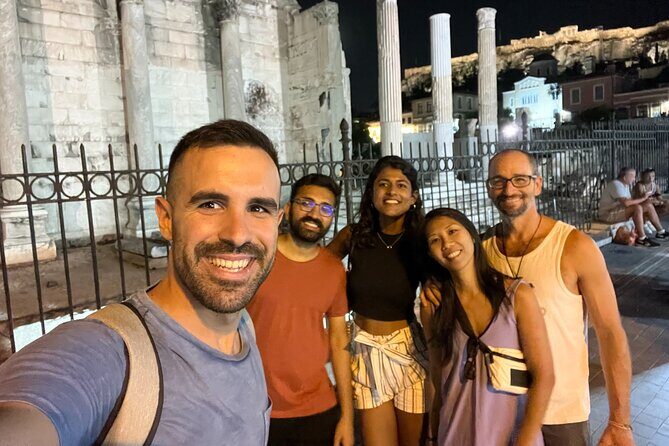
One of the tour’s standout segments is the Changing of the Guard ceremony at the Presidential guards. You’ll see the live ceremony and get inside info about the guards’ daily life, training, and what the symbolism means in terms of their duties.
This is more than entertainment. Athens has a lot of visual traditions, and ceremonies are one of the easiest ways to connect modern national identity to public space. When you know what to pay attention to, you watch differently—and you’ll remember it longer.
Ancient Agora and Roman Agora: two layers of the city
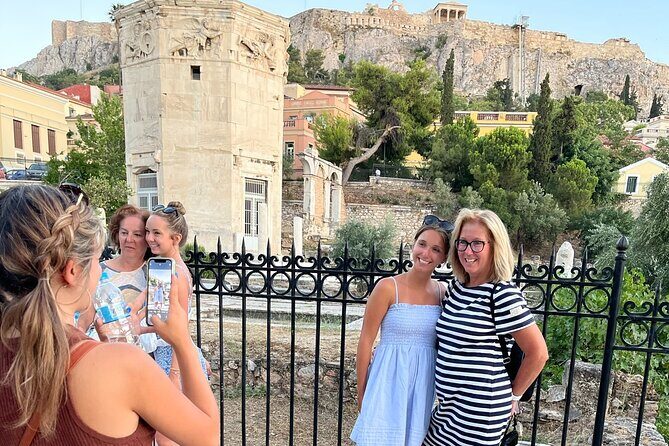
The walk continues past the Ancient Agora of Athens, described as the oldest open flea market of the ancient city. You’ll talk about ancient Athens and learn what the old city was like, while you pass through a space that still carries market energy today.
Then you move to the Roman Agora, where the conversation shifts toward the Roman empire’s era in Greece. Having these two stops back-to-back is smart, because it highlights how Athens didn’t switch identities overnight. Different periods left different footprints, and the city absorbs that complexity over time.
A small caution: these segments are short pass-through moments. If you want to linger for deeper exploration, treat this as your orientation—then plan a longer, separate visit to the sites that pull you in.
Hellenic Parliament: politics, life, and a modern landmark
The tour brings you in front of the Hellenic Parliament, where you learn about the history of the 18th-century building and hear discussion about politics and daily life in Athens. Even if you’re not a policy person, it helps to understand how modern Athens uses historical-looking spaces.
This stop also works as a “breather in context.” You go from ancient markets and ceremonies to a modern seat of government—so the city feels like one connected system rather than random points on a map.
Plaka’s old-town feel and photo-friendly secret spots
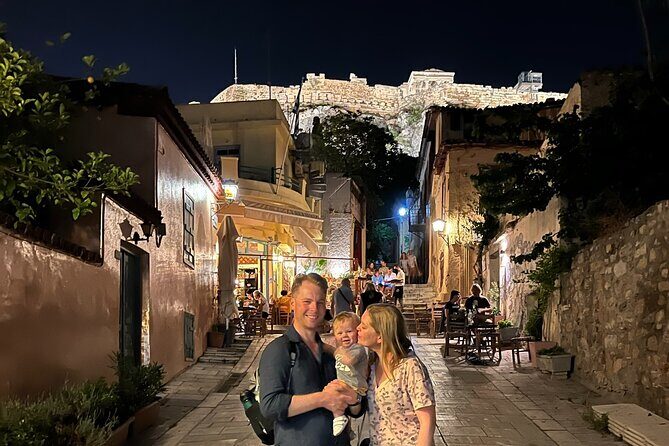
One of the most enjoyable parts is Plaka, described as the oldest and most beautiful neighborhood, like a small island in the heart of Athens. You’ll explore secret spots for photos and get a feel for why Plaka stays on everyone’s list even when the city is busy.
Plaka is also where you’ll start noticing Athens’ charm is in the details—street angles, little viewpoints, and the way buildings hold light differently. In a short tour, this is the segment that turns “sightseeing” into “I want to come back here.”
Syntagma Square fountain area: the big square in the middle
The tour passes Syntagma Square and its fountain area, right in front of the Greek Parliament. This is a quick stop—about five minutes—but it’s useful because it gives you the scale of central Athens.
Syntagma is one of those places you’ll hear about constantly. When you walk through it once with context, you can navigate it better later—especially if you’re mixing museums, neighborhoods, and dinner plans that day.
Holy Metropolitan Church of the Annunciation: architecture you notice up close
You’ll pass by the Holy Metropolitan Church of the Annunciation to the Virgin Mary, described as Athens’ biggest church, with unique interior and exterior architecture. Even if you’re not going deep inside on this walk-by moment, it’s still a strong architectural marker in the city center.
Tip for your mindset: rather than trying to “see everything,” choose one angle you’ll remember. Churches like this can feel busy from a distance, but up close you start spotting patterns and design choices faster.
Athens Flea Market pass and Plaka stairs: where locals and visitors meet
The tour includes a pass by the Athens Flea Market, positioned as an ideal place for shopping, souvenirs, and local vibes. Since this is a walking tour with short stops, you’ll likely use this as a starting point for later browsing—rather than planning a big shopping spree mid-tour.
Then comes Plaka Stairs, described as a famous meeting point full of restaurants, bars, and rooftop terraces. This stop is extremely practical. After a day of walking, you’ll want a nearby place to eat that feels like Athens—not just a chain restaurant with a menu you already know.
What you’re paying for: value in a tight, efficient route
The price is $36.04 per person for about 2 hours, and the format is designed to reduce decision fatigue. You’re not paying for heavy ticket entries at each stop, since the walk-by portions listed are free to see (no admission ticket required on the stops described). You’re paying for interpretation, pacing, and the “what should I do next” finish.
That’s the key value here: a guide gives you a working mental model quickly, plus recommendations for sightseeing, food, and other activities. When you’re only in Athens for a short time, that kind of direction can save you hours of guessing.
Also, the tour caps at 10 travelers, which matters more than it sounds. Small groups mean you’re not listening to a script while everyone else shuffles along; it’s easier to ask a question when something catches your eye.
Practical tips to make this walk feel easy
This is a walking tour, and it stays efficient. Plan for short stops, steady movement, and lots of “look up, look around” moments.
- Wear shoes you trust. Even a couple hours in the center adds up on uneven pavement.
- Bring a charged phone or camera—some viewpoints are clearly meant for photos.
- If you’re sensitive to crowds, treat the tour start and early parts as your best chance to get close views before the city thickens.
- Keep an eye on weather. The tour requires good weather, and poor conditions can lead to cancellation, with alternative dates or refunds.
One more thing I like: the tour is set up so most people can join. It’s not a technical experience; it’s built around walking and short pauses with explanations.
Who should book this tour?
Book it if you:
- want an arrival-day intro so you understand Athens’ layout faster
- prefer a small group over big tours
- like history that’s tied to where you are standing (not just a lecture)
- want practical help with food and what to do next, not just photos
Skip it if you:
- want long time inside major sites or guided entry tickets
- dislike pace and prefer a slower, sit-down style
- travel during a period where you can’t be flexible if weather cancels the walk
Should you book this Athens 2-hour walking tour?
Yes—if you’re aiming for confidence and momentum. For $36.04, you get a tightly organized route with a small-group feel, multiple high-impact views around the Acropolis, and context that makes the city easier to navigate afterward. The only real downside is the pace and the weather dependency, so bring flexibility and good walking shoes.
FAQ
What’s the duration of the Discover Local Hidden Gems in 2 Hours Walking Tour in Athens?
The tour lasts about 2 hours (approx.).
How much does the tour cost?
The price is $36.04 per person.
What language is the tour offered in?
The tour is offered in English.
Is it a small group tour?
Yes. The maximum group size is 10 travelers.
Where does the tour start and end?
It starts at Adrianou 1, Athina 105 55, Greece, and ends at Monastiraki Square at Apollonos 21, Athina 105 57, Greece, in front of the train station.
Do I need to buy tickets for the stops?
The itinerary shows admission ticket free for the listed stops, so you generally won’t need paid entry for each stop on the route.
Is the tour canceled if the weather is bad?
The experience requires good weather. If it’s canceled due to poor weather, you’ll be offered a different date or a full refund.
What’s the cancellation policy?
You can cancel for a full refund up to 24 hours in advance. If you cancel less than 24 hours before the start time, the amount paid is not refunded.

More Walking Tours in Athens

More Tours in Athens



More Tour Reviews in Athens
- All Day Cruise -3 Islands to Agistri,Moni, Aegina with lunch and drinks included
★ 5.0 · 4,958 reviews