REVIEW · ATHENS
Greek Mythology Storytelling Walk
Book on GetYourGuide →Operated by Alternative Athens · Bookable on GetYourGuide
Greek myths, told where you can see them. This 2-hour Greek Mythology Storytelling Walk turns the Athens you already recognize into a stage for professional storytellers and three major god stories that line up with real landmarks. I love how the narration is built around Plaka’s side streets instead of only big-ticket sites, and I also like that you get a clear myth arc—Zeus, then Dionysus, then Athena—mapped onto where you’re standing. One consideration: it’s still an outdoor walking tour, and it isn’t suitable for people with mobility impairments or for hearing-impaired visitors.
You’ll meet in Plaka at the corner of Nikis & Kidathineon, and the route is designed to keep you close to the Acropolis approach without feeling like you’re speed-running archaeology. By the end, you’re at Pnyx, a great spot for a close-up view toward the Acropolis gateway area, while the story shifts to Athena’s birth and her contest with Poseidon.
This is an all-ages experience, and it runs in English. If you’re traveling with kids over 3, it can be a fun way to make the myths make sense fast—without turning it into a lecture.
In This Review
- Key highlights you’ll feel right away
- Storytelling that makes Athens feel like a living script
- The route is short enough to stay lively
- Meeting at Nikis & Kidathineon: starting in the oldest Athens you’ll touch
- What you’re hearing about Zeus in Plaka
- Odeon area and the Acropolis edge: Dionysus gets the spotlight
- Why Dionysus is more than a party god
- A practical note on this section
- Pnyx: where Athena’s contest feels tied to the city
- What you’ll learn about Athena and Poseidon
- Why ending here is smart
- Price and what $53 buys you in real value
- Food not included, so plan a snack strategy
- Who this tour fits best (and who should choose a different option)
- The best fit
- The “think twice” fit
- Practical tips so you enjoy every minute
- Group size can vary, and that can be a plus
- Should you book the Greek Mythology Storytelling Walk?
- FAQ
- How long is the Greek Mythology Storytelling Walk?
- Where does the tour start?
- Where does the tour end?
- What myths and gods are covered?
- Is food or drinks included?
- What language is the tour in?
- Is the tour suitable for kids?
- What should I bring?
- Is the tour accessible for people with mobility impairments or hearing needs?
Key highlights you’ll feel right away
- Zeus-to-Athena story flow tied to Athens landmarks, so it sticks
- Plaka’s older streets used as the setting for big myths, not just souvenir browsing
- Dionysiou Areopagitou walk along the pedestrian street around the Acropolis area
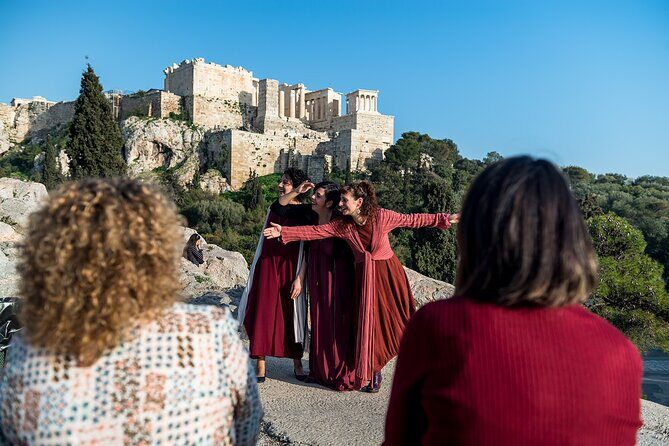
- Pnyx viewing point that frames the Propylae gateway close up
- Theatrical angle on Dionysus, including how the Romans viewed his rites
Storytelling that makes Athens feel like a living script
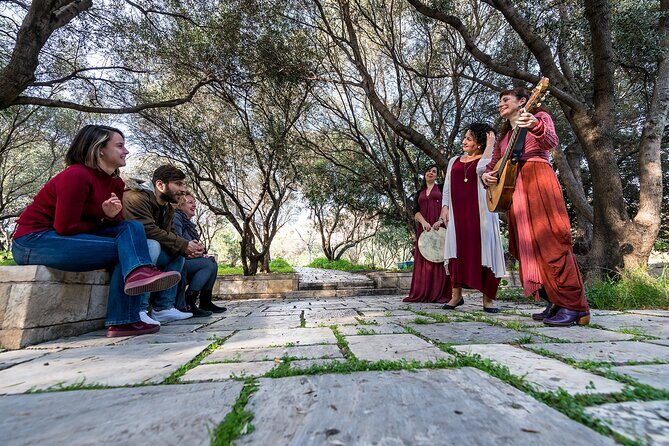
There are two ways to experience Athens: looking at ruins, or letting the setting explain itself. This walk leans hard toward the second option. It’s not trying to outcompete the Acropolis Museum or a full-on classical lecture. Instead, it uses short, vivid myth episodes to help you understand why the Greeks told these stories again and again in the places you’re now visiting.
I like that the focus stays human-scale. The gods here aren’t abstract names from a textbook. Zeus is framed as a ruler dealing with love and power. Dionysus is a connection point between wine, performance, and shifting cultural attitudes. Athena is presented as the patron of a city—so her myth isn’t just origin-story trivia.
And because the whole tour is only 2 hours, you can keep your day flexible afterward for a meal, a second walk, or a museum stop. It’s a good option when you want myth context without losing an entire afternoon.
You can also read our reviews of more walking tours in Athens
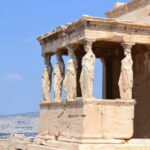


The route is short enough to stay lively
You’re moving most of the time, but the pace is manageable: about 40 minutes each for Plaka and the Odeon area, then another 40 minutes at Pnyx. That structure matters. It helps you stay attentive through the stories, then actually look around when you’re given a reason to.
Meeting at Nikis & Kidathineon: starting in the oldest Athens you’ll touch
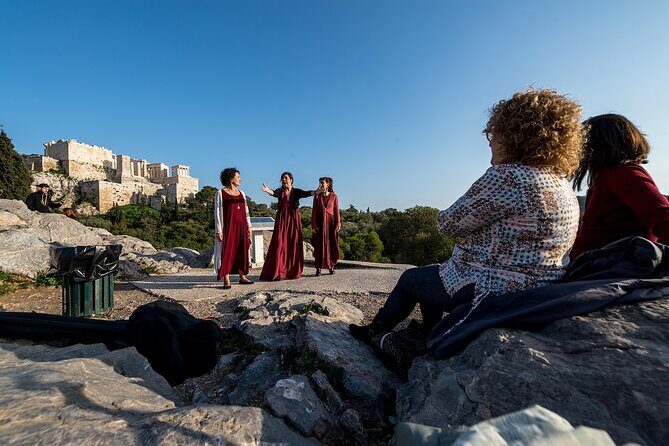
Your meeting point is at the corner of Nikis & Kidathineon in Plaka, where your guide meets you holding an Alternative Athens sign. This matters because Plaka isn’t just a pretty frame. It’s one of the most direct ways to get your bearings in Athens: narrow streets, lots of local layers, and plenty to see just by turning your head.
The tour starts in Plaka with Zeus first. You’re in that mix of tourist energy and lived-in neighborhood reality. Yes, Plaka can feel like a magnet for souvenir shops. But the experience is designed to nudge you slightly off the main streets, toward the quieter corners where people live and where the myth stories feel more grounded.
What you’re hearing about Zeus in Plaka
The Zeus portion covers the essentials: his birth, his rise to power over his gruesome father, and his love affair with Europa—the story that’s tied to the name of an entire continent. Hearing those events while walking through a real neighborhood area helps the myth become a mental map.
This is also where you’ll likely get your biggest payoff if you’ve ever felt Greek mythology is just a list of names. You start with the big boss-god first, then you watch the story’s tone change as you move.
Odeon area and the Acropolis edge: Dionysus gets the spotlight
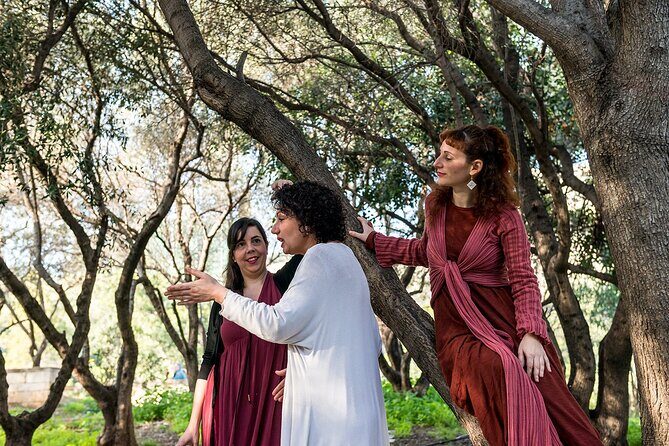
After Plaka, the walk moves toward the Odeon of Herodes Atticus area. This is one of the smarter pivots of the route: you’re not only hearing about theater—you’re walking in a space shaped for performance. Even if you don’t go inside anything, you can feel why Dionysus mattered.
From there, you’ll connect with Dionysiou Areopagitou, the pedestrian street that circles the Acropolis area. The tour frames it as a spot with two ancient theaters, which gives the Dionysus story a perfect physical partner: wine plus stage plus crowd.
- All Day Cruise -3 Islands to Agistri,Moni, Aegina with lunch and drinks included
★ 5.0 · 4,958 reviews



Why Dionysus is more than a party god
You’ll hear Dionysus described as the god of wine and the theatrical arts. That mix is important because it reminds you that in ancient Greece, celebration often wasn’t just fun—it was ritual and culture. The narration also covers his popularity beyond Greece, including early Rome.
Then comes a contrast that you won’t get from a simple “he’s the wine god” summary: Dionysus eventually fell out of favor with the Romans. The Romans are described as disapproving of the excesses linked to celebrating his rites. That detail gives you something useful for understanding how myths can survive in one society and get reinterpreted—or rejected—in another.
A practical note on this section
This part of the tour is longer than the “quick stop and go” style. That’s good for story clarity, but it means you should wear comfortable shoes and be ready for steady strolling. If you come expecting a casual stroll with almost no walking, you might feel the time once you’re in the Acropolis-side neighborhoods.
Pnyx: where Athena’s contest feels tied to the city
The final stop is Pnyx, where the tour ends. Pnyx is special for two reasons. First, it’s a story stage: it’s described as an ideal place to hear about Athena. Second, it gives you an outstanding close-up view toward the Propylae of the Acropolis, the gateway to the Sacred Rock.
That “gateway” framing matters. You’re not just looking at a wall or a distant shape. The story is timed so you’re thinking about how the city presented itself—who it chose as patron, and why that mattered.
What you’ll learn about Athena and Poseidon
The Athena portion starts with her birth. Then you’ll hear about the contest between Athena and her uncle, Poseidon, for patronage of the city. The key idea is that Athena’s victory is what leads the city to take her name: Athens.
This isn’t a random mythology wrap-up. It’s a city origin story. The myth helps explain why Athena isn’t only a goddess of wisdom in the abstract. In the telling, she’s a civic decision—power, identity, and culture all braided together.
Why ending here is smart
If you’re trying to get the most from a short tour, ending at Pnyx gives you something more valuable than simply “another viewpoint.” You’re finishing at a place where the last story clicks with what you can see: the Acropolis gateway and the feeling of arrival to the sacred core.
Price and what $53 buys you in real value
At $53 per person for a 2-hour live storytelling walk, this isn’t an ultra-cheap add-on. But it also isn’t trying to sell you a museum ticket experience.
Here’s how I think about the value:
- You’re paying for live professional storytelling, not just a self-guided audio route.
- You’re getting a professional tour leader who keeps the flow and timing together.
- You’re paying to turn multiple myth topics—Zeus, Dionysus, Athena—into a single coherent narrative you can remember later.
If you already know the myths and you mainly want views, you may prefer a simple walking route. But if you want your first real myth “framework” for Athens, the structure helps. Also, since the walk is only two hours, you avoid the cost of losing half a day to a longer tour.
Food not included, so plan a snack strategy
Food and drinks aren’t included. That’s normal for a short walking tour, but it does change your planning. If you’re sensitive to hunger, grab a light snack before you go. You’ll be happier during the storytelling when you aren’t counting minutes until you can eat.
Who this tour fits best (and who should choose a different option)
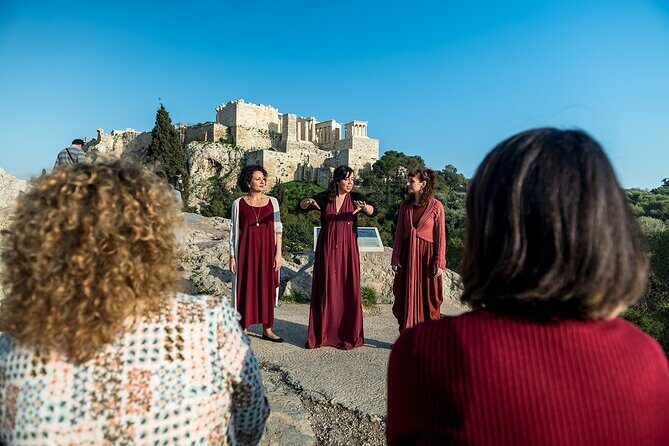
This tour is designed for all ages, but it’s not suitable for children under 3, people with mobility impairments, or hearing-impaired visitors. That’s a big deal because it affects comfort and access to the experience.
If you fit these categories, it’s likely a strong match because the format—storytelling on the move—doesn’t require advanced reading skills or deep prior knowledge. You’re there to listen and look, and the myths do the heavy lifting for context.
The best fit
- Families with kids old enough to sit through stories and walk comfortably
- Travelers who want a myth-first way to orient themselves around the Acropolis area
- People who like guided storytelling more than museum-style lectures
The “think twice” fit
- Anyone who needs step-free access or mobility accommodations
- Anyone who relies on hearing assistance, since it’s specifically not suitable for hearing-impaired people
Practical tips so you enjoy every minute
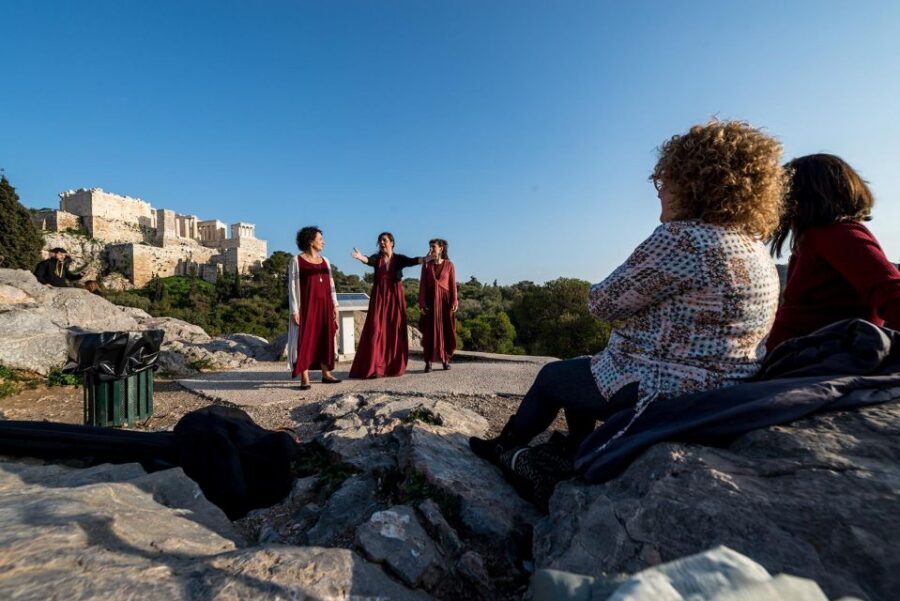
You don’t need special gear, just sensible planning:
- Bring comfortable shoes and comfortable clothes. You’ll be walking and standing to hear the stories.
- Come with a rough curiosity about Greek gods and heroes. You don’t need to know the family tree. The tour starts you with Zeus and builds from there.
- Since there’s no food or drinks included, plan a water and snack routine around the tour time.
Group size can vary, and that can be a plus
One small but real factor: the tour can run as a smaller group depending on sign-ups. When that happens, the storytelling often feels more personal and the walk can move at a comfortable pace. That’s not guaranteed, but it’s a nice upside when schedules line up.
Should you book the Greek Mythology Storytelling Walk?
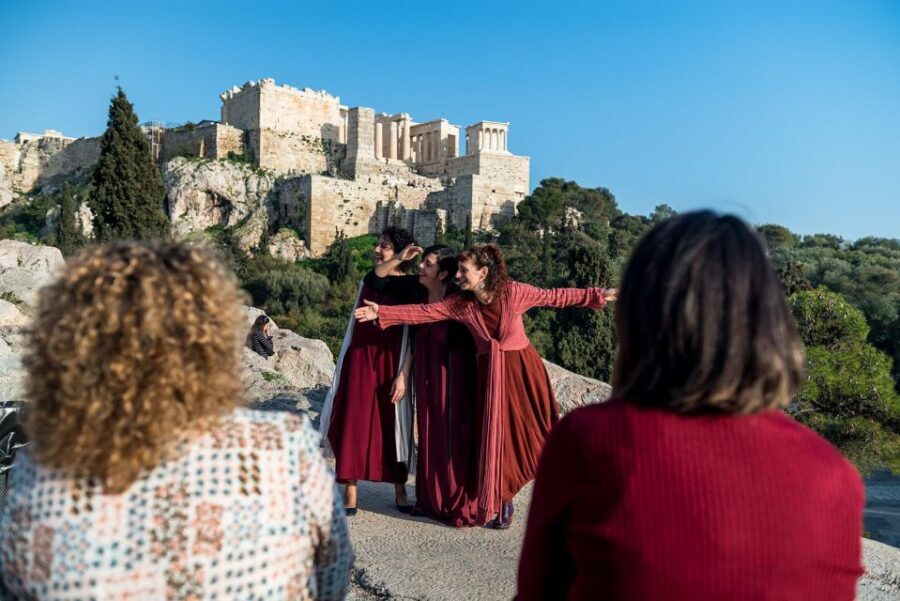
If you’re visiting Athens and you want the Acropolis area to feel more than just stones and viewpoints, I think this is a smart booking. It’s short, it’s story-driven, and it anchors three famous gods to exact places you’ll recognize. The Zeus in Plaka start, the Dionysus theater/performance vibe near Dionysiou Areopagitou, and the Athena + Poseidon contest ending at Pnyx give you a clean myth journey.
I’d skip it if you’re only after architectural sightseeing with minimal narration, or if mobility/hearing needs make a walking storytelling format uncomfortable. For everyone else, this is one of those experiences that can turn your “I’ve heard of these gods” into “I get why these stories mattered.”
FAQ
How long is the Greek Mythology Storytelling Walk?
The tour lasts 2 hours.
Where does the tour start?
You meet at the corner of Nikis & Kidathineon in Plaka.
Where does the tour end?
The tour ends at Pnyx.
What myths and gods are covered?
The stories focus on Zeus, Dionysus, and Athena, including Zeus’s Europa story, Dionysus’s connection to wine and theater, and Athena’s contest with Poseidon.
Is food or drinks included?
No. Food and drinks are not included.
What language is the tour in?
The tour is in English.
Is the tour suitable for kids?
It’s described as an all-ages tour, but it is not suitable for children under 3.
What should I bring?
Wear comfortable shoes and comfortable clothes.
Is the tour accessible for people with mobility impairments or hearing needs?
No. It is not suitable for people with mobility impairments or hearing-impaired people.


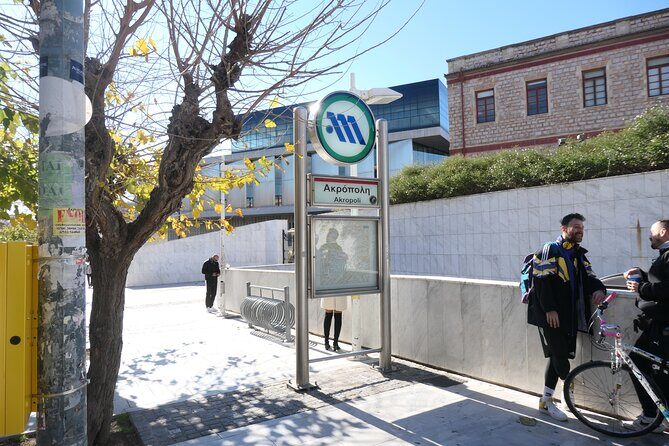

More Walking Tours in Athens

More Tour Reviews in Athens
- All Day Cruise -3 Islands to Agistri,Moni, Aegina with lunch and drinks included
★ 5.0 · 4,958 reviews