Athens history feels clearer when you walk it. This tour connects famous sights with the smaller, story-rich moments you’d miss at speed.
I like the way it stays archaeology-first, with myths and facts tied directly to the monuments you’re seeing. I also love the practical side: you’ll get ideas for museums, food, bars, and what to check out next.
One thing to consider: it’s only 2 hours, and one past booking felt the guide’s delivery was light on detail, so if you want lots of deep, stop-by-stop explanation, ask what the pace will be for your group.
In This Review
- Key highlights and what you’ll actually notice
- Dionyssiou Areopagitou: the Athens “museum street” feeling
- Areopagus Hill: ancient lawcourt views with a story attached
- Ancient Agora and the Roman Forum: one area, layered identities
- Monastiraki, Plaka, and the neighborhood mood near the Acropolis
- The guide and the difference between a good walk and a forgettable one
- Stops count, time reality, and how to get value from $43
- Where this tour fits best in your Athens plan
- FAQ
- How long is the Athens walking tour?
- Where is the meeting point?
- What does the tour include?
- What key areas and sites will we visit?
- How much does it cost?
- Is the tour wheelchair accessible?
- Is free cancellation available?
- Final call: should you book this Athens walking tour?
Key highlights and what you’ll actually notice
- Dionyssiou Areopagitou Street: a walk where major sites line up along one corridor
- Areopagus Hill photo stop: the view is the payoff, with context attached
- Ancient Agora + Roman Forum: you see how the same space kept changing hands
- Monastiraki and Plaka lead-in: you end in areas where you can keep the day going on foot
- City tips built into the walk: where to eat, drink, and what to prioritize next
Dionyssiou Areopagitou: the Athens “museum street” feeling
You start outside the Acropolis metro station in Makrigianni Street, on a pedestrian-friendly road packed with cafés and restaurants. It’s a smart start point because you’re already in the part of Athens where you can reset quickly—coffee first, photos later, and the walk keeps moving.
Then you head into Dionyssiou Areopagitou Street, often described as one of the most impressive approaches in the city. This is the stretch where you get the classic Athens combo: big monuments nearby and plenty of visual cues for where things fit together. I like this approach because it reduces the usual “I saw a thing, now what?” problem. As you walk, the guide ties what you’re seeing to the bigger story of the city.
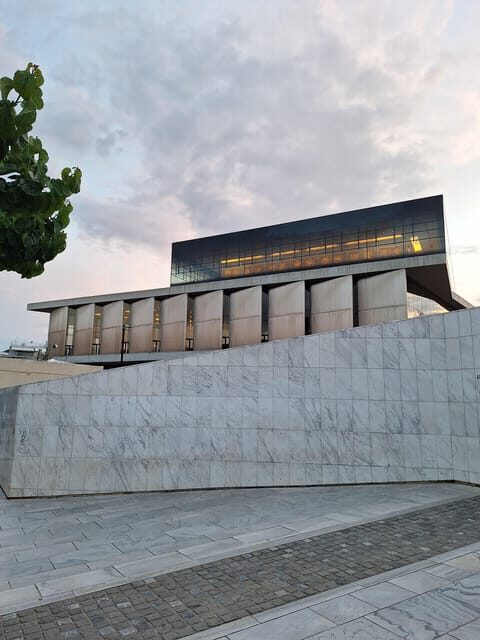
The tour also points out that the area is associated with key institutions and sites, including the Acropolis Museum and the Odeion of Herodes Atticus. Even if you’re not going inside during the walk, it matters to hear how those places relate to the monuments around them. It helps you decide later if you want to return for a deeper museum stop.
This is also a good moment to get your orientation. If you’ve been staring at maps all morning, this kind of guided route can get your bearings fast—especially because you’re moving along a line where major landmarks cluster.
You can also read our reviews of more walking tours in Athens
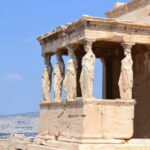


Areopagus Hill: ancient lawcourt views with a story attached
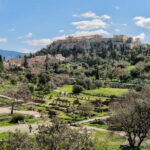
Next comes Areopagus Hill, described as the most ancient law court in the world—at least in the way the site is traditionally framed for visitors. You’re not just climbing for a photo. The guide’s job here is to connect the place to myth, history, and the kind of civic Athens that existed long before modern street signs.
The view is the practical reward. You’ll get a broad sense of how the Acropolis sits over the city, and how the surrounding neighborhoods flow outward. I find this view useful even if you’ve already seen pictures online, because your brain finally maps the distances. A view like this can also help later when you’re deciding where to go for sunset.
Areopagus Hill is also where the tour’s “archaeology plus myth” style shows up most clearly. You’ll hear interesting myths behind what you’re looking at, and that turns stone and elevation into narrative. Instead of memorizing dates, you start remembering stories—and stories are what stick.
One practical consideration: any hill stop means you should wear comfortable shoes. The tour is listed as wheelchair accessible, but since this is a climb, you’ll still want to gauge the pace. If you’re sensitive to slopes, it’s reasonable to mention it at the start so the guide can manage the group’s rhythm.
Ancient Agora and the Roman Forum: one area, layered identities
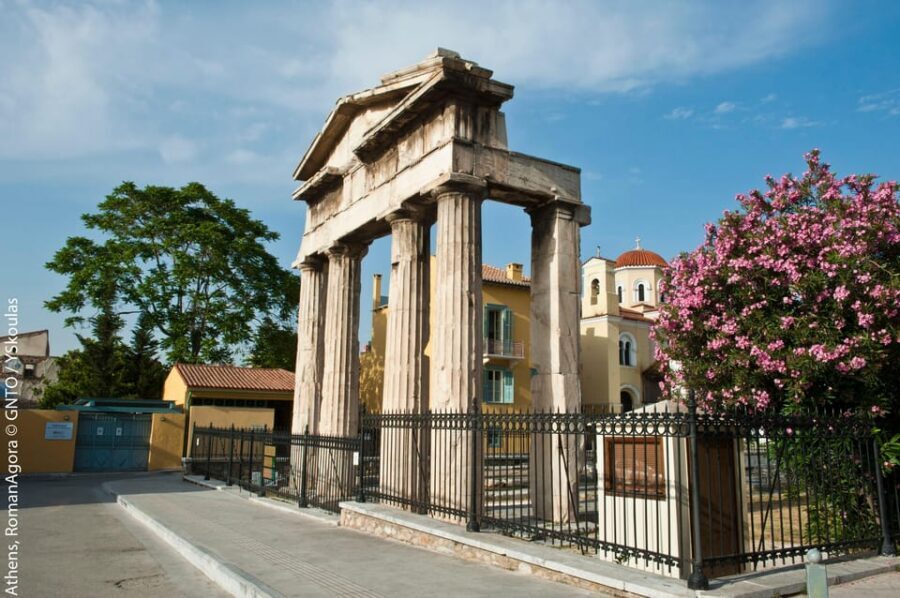
After the hill, you shift from “viewpoint Athens” into “everyday Athens.” The tour moves into the ancient Agora, then into the Roman-era layer often referred to as the Roman forum. This pairing matters because it’s not just sightseeing—it’s time travel in place.
Here’s what I’d pay attention to on your walk: the guide’s explanation of how the Agora functioned as a civic center, and how later Roman presence reworked parts of the area’s role and appearance. Even if you’ve read a basic outline of Athens history, hearing it tied to the physical space is what makes it feel real. You start noticing transitions—where one era’s priorities would have shaped what people did there.
I also like how this section supports your future choices. If you later visit the museum or read more about the Agora, you’ll already understand what to look for: public life, civic institutions, and the architectural signals of changing rulers.
If you’re the type who gets bored when tours repeat the same generic facts, this part is the reason I’d still consider it. The focus here is on context—why those buildings and areas mattered, not just that they exist.
Monastiraki, Plaka, and the neighborhood mood near the Acropolis
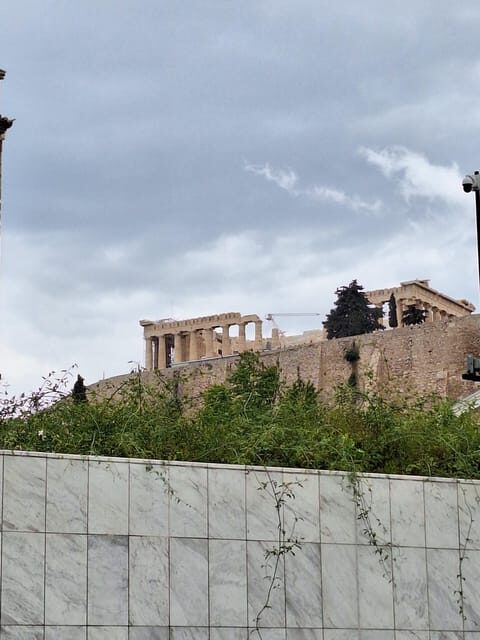
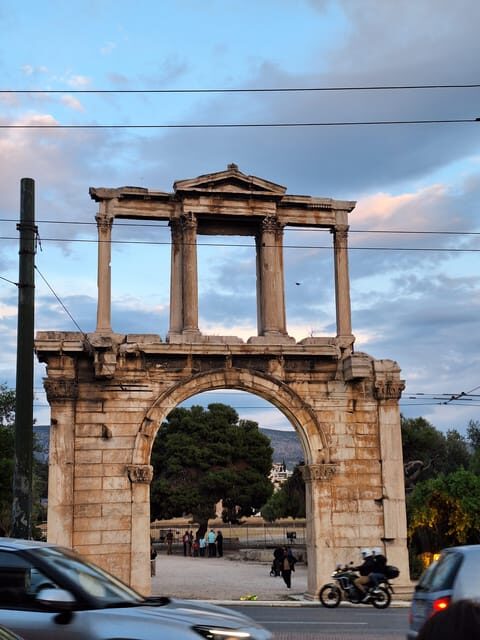
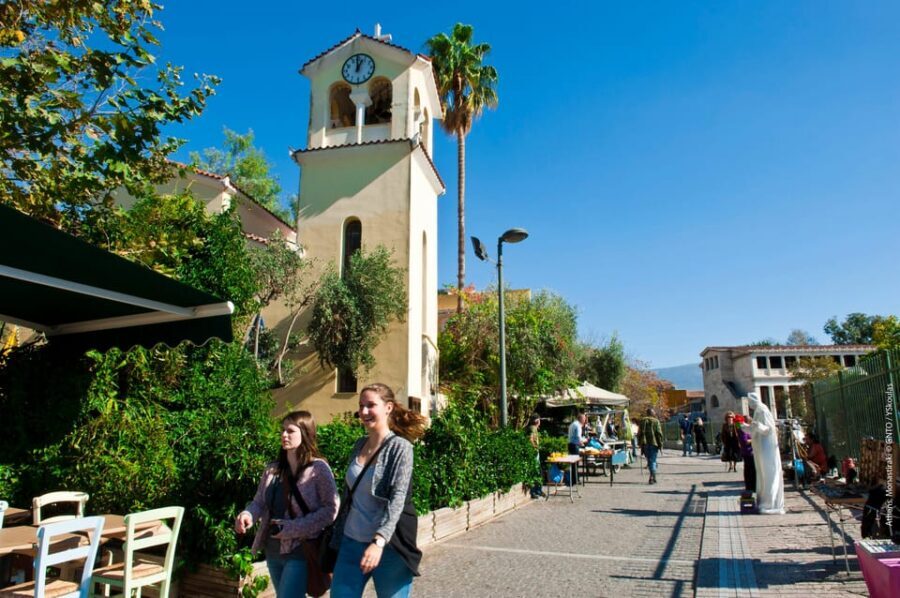
Once the big monuments and ancient sites are covered, the tour naturally softens into the neighborhoods: Monastiraki Square, then Plaka, and the area often described as the neighborhood of Gods.
This is where the tour becomes less “site lecture” and more “how to live in Athens for a day.” You’ll get talk about city trends and where to eat and drink like a local. I appreciate this because the end of a sightseeing trip is where many people feel stuck: they’ve seen the sights, but they don’t know where to go that won’t feel touristy or overpriced.
This section also helps you connect the dots between archaeology and modern streets. Plaka’s charm isn’t random. It’s built on a landscape that has always drawn people toward views, crossroads, and cultural gravity points.
The tour concludes on Makrygiani Street close to the Acropolis metro station, in a zone full of familiar restaurants and cafés. That ending location is practical: you can keep wandering without needing a plan, or you can stop for a meal while the walking is still fresh in your mind.
The guide and the difference between a good walk and a forgettable one

The tour promises expertise in archaeology, and that’s exactly what you want on a walk that covers so many landmarks in such a short window. You’re going to hear facts and myths behind monuments, plus plenty of recommendations for what to do next—museums, food, bars, and sightseeing ideas.
That said, the guide can make or break this style of tour, and the feedback reflects it. One booking highlighted that the guide was friendly and professional and shared strong knowledge. Another booking from Poland reported less engagement and fewer details, with the walk feeling like it went around the Acropolis area without enough wow-factor. A third booking praised a guide named Matina as relaxed, educated, and especially enjoyable even with a child along.
So here’s the balanced takeaway for you: if you like archaeology explanations and want a guide who talks in a story-driven way, this tour has the potential to be excellent. If you need very heavy stop-by-stop commentary, it may be worth messaging or asking about the level of detail you can expect.
Either way, you can help yourself by showing up ready to ask questions. Bring a few things you’re curious about: how a specific monument fits the timeline, or what to prioritize if you do return for the Acropolis Museum.
- All Day Cruise -3 Islands to Agistri,Moni, Aegina with lunch and drinks included
★ 5.0 · 4,958 reviews




Stops count, time reality, and how to get value from $43

At $43 per person for a 2-hour walking tour, the value is really about concentration. In two hours, you’re getting:
- A guided route along Dionyssiou Areopagitou Street
- The Areopagus Hill photo viewpoint with context
- Time in the ancient Agora and the Roman forum area
- Monastiraki and Plaka atmosphere to close the loop
- Practical recommendations for what to do after
If you were to do this on your own, you’d still pay nothing for the guide, but you’d also spend more time figuring out what each place means. In Athens, the “meaning” is usually the hard part—signage varies, and many ruins are more legible when someone explains what they’re looking at.
The time limit is the only real tradeoff. You won’t be lingering everywhere. You’re taking in an overview of the city and leaving with ideas, not completing a full archaeological program. That’s not a flaw if you use the walk as a foundation for your next decisions.
My practical suggestion: treat this as your first-or-second day orientation. Get the stories now, then choose where to go deeper based on what grabbed you during the walk.
Where this tour fits best in your Athens plan
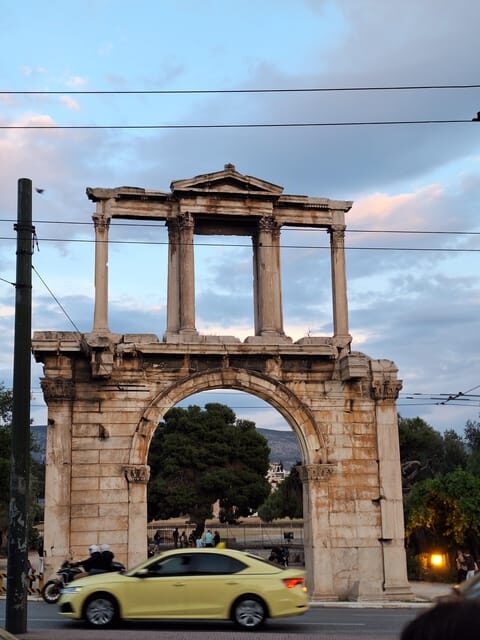
This is a strong choice if:
- You want a guided overview of major areas around the Acropolis
- You like myths and archaeology explained in plain language
- You’d rather have local food and drinks ideas built into your day
- You want a short walking plan that ends near public transport
It may be less ideal if:
- You’re looking for a long, exhaustive, inside-and-out visit program
- You require very deep detail at every single stop
- You prefer totally self-paced wandering with no structure
It also helps if your group has mixed interests. The tour blends monument context with modern neighborhood vibe, so people can connect the past to where they’ll actually eat.
FAQ
How long is the Athens walking tour?
The tour lasts 2 hours.
Where is the meeting point?
You meet outside the Acropolis metro station in Makrigianni Street.
What does the tour include?
It includes a live English-speaking guide and the walking tour.
What key areas and sites will we visit?
You’ll cover Dionyssiou Areopagitou Street, Areopagus Hill, the ancient Agora, the Roman forum, Monastiraki Square, Plaka, and you’ll finish on Makrygiani Street near the Acropolis metro station.
How much does it cost?
The price is $43 per person.
Is the tour wheelchair accessible?
Yes, it’s listed as wheelchair accessible.
Is free cancellation available?
Yes. You can cancel up to 24 hours in advance for a full refund, and the tour also offers a reserve now & pay later option.
Final call: should you book this Athens walking tour?
If you want an Athens walk that teaches you what you’re looking at—using myths, archaeology, and practical local recommendations—this is a good match. The route covers a lot of ground in a tight time window, and the ending near the Acropolis metro is handy for turning the walk into a real meal plan.
Just go in with the right expectation: it’s an overview, not an all-day deep dig. And if you’re hoping for very detailed commentary at every stop, consider reaching out before you book to confirm how talkative and detailed your guide will be—so you get the experience you came for.



More Walking Tours in Athens


More Tours in Athens


More Tour Reviews in Athens
- All Day Cruise -3 Islands to Agistri,Moni, Aegina with lunch and drinks included
★ 5.0 · 4,958 reviews