REVIEW · ATHENS
2 or 3-Day Private Tour: Ancient Olympia, Corinth, Mycenae, Epidaurus, Nafplion
Book on Viator →Operated by WARMPENGUIN · Bookable on Viator
Three days, five big names of ancient Greece. This private Athens-based route lets you hit major Peloponnese sites with easy transfers and real time to look around, before rolling on to the next stop. I especially like how the day plans connect archaeology, myth, and Roman-era traces in a way that feels readable, not rushed.
I also like the freedom built in: you can spend your time at each site at your own pace, then add extra help by booking a licensed guide if you want deeper explanations. It’s a nice balance of self-guided wandering plus optional expertise when you feel like it.
One thing to consider: the tour price is premium, and entrance tickets are not included for archaeological sites and museums. If you’re trying to keep costs tight, you’ll want to budget for those ticket lines (and any guide upgrades).
In This Review
- Key takeaways before you go
- A fast, smart way to see Corinth to Delphi without the chaos
- How the hotel-and-transfer style tour makes the price feel more justified
- Day 1: Corinth, Mycenae, Epidaurus, then Nafplion’s sea air at the end
- Ancient Corinth (Archaia Korinthos): the crossroads of powers
- Mycenae: Lion’s Gate and the power wall you can still feel
- Epidaurus: the theatre that makes people test acoustics
- Nafplion: lunch by the sea, then an easy old-town wander
- Day 2: Olympia first, then engineering and coastal lunch stops before nighttime lodging
- Ancient Olympia: the Olympic Flame area and the tunnel into the stadium
- The Rion-Antirion Bridge: an engineering break that still feels like a milestone
- Nafpaktos Old Port and Galaxidi: lunch and an evening with less crowd pressure
- Day 3: Delphi’s terraced ruins, then Arachova’s lunch views before the long return
- Delphi Ancient Town: Apollo, the oracle, and the museum’s standout pieces
- Arachova lunch: craft shops and Pleistos river valley views
- Licensed guides vs. your driver: how to choose the right kind of help
- What’s extra: entrance tickets, and how to budget without stressing
- Who this tour suits best, and who might prefer something different
- Should you book this 2 or 3-Day Private Tour?
- FAQ
- How many days is this tour?
- What does the tour price include?
- Are entrance fees to archaeological sites included?
- Can I add a licensed guide at the sites?
- Is lunch included?
- What time does the pickup start?
- Do you offer pickup only in Athens?
- Is the tour truly private?
- Is free cancellation available?
Key takeaways before you go
- Door-to-door Athens (or cruise) pickup and return means you start and end each day with less logistics stress
- Self-paced site time with optional licensed guides lets you choose how much detail you want
- Mycenae and Epidaurus are the kind of stops that reward slow walking and a pause for photos
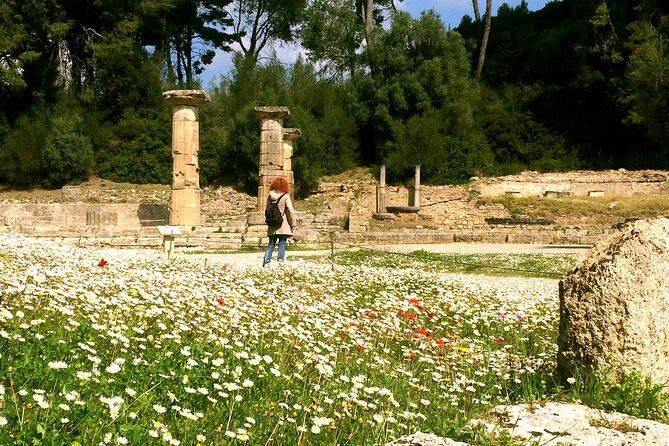
- Olympia is more than ruins: training spaces, the tunnel, and the Olympic Flame area make it feel alive
- Delphi on terraces plus a seaside evening stretch your ancient day into something memorable
- 4-star or boutique hotel stays with breakfast help you recharge for long road days
A fast, smart way to see Corinth to Delphi without the chaos
This is the kind of trip that works because it groups the right places together. You’re covering the Peloponnese heavy hitters first, then moving toward Delphi for the third day, with planned breaks where it makes sense. The drive time matters here, and the route is arranged so you’re not constantly bouncing between towns with zero transition time.
What I like most is the tone of the experience. You’re not forced to rush. You go stop to stop, but you also get time to read the stones at your own speed. That matters with sites like Mycenae and Epidaurus, where the details are the point.
Also, the setup is practical: you’ll have a professional English-speaking driver throughout the day, plus Wi‑Fi, A/C, and bottled water in the vehicle during travel. That sounds basic, but on long days it keeps things comfortable enough that you can actually enjoy the places you paid to see.
You can also read our reviews of more private tours in Athens


How the hotel-and-transfer style tour makes the price feel more justified
The listed price is $1,196.89 per person, for an approximately 3-day private tour. On paper, that can look steep. In practice, you’re paying for a lot of the hard parts: door-to-door pickup and return from your Athens hotel or cruise ship, professional driver service, and hotel stays that are minimum 4-star or boutique style with breakfast.
A simple way to think about it: you’re effectively buying “time and transport solved.” You’re not planning routes, arranging guides on your own, or figuring out how to get from one site to the next across the Peloponnese. For many travelers, that alone turns the math in your favor.
And those hotel nights are not an afterthought. You’ll be in selected boutique or 4-star properties with breakfast, which is a big deal on a schedule full of early starts and long drives. In at least one group experience, people were particularly happy with Amalia Hotels in Nafplion and Delphi, calling out the breakfast buffets as a strong start to each day.
One small note: this tour includes the vehicle and driver, but it does not include site entrance fees. So you’ll want to treat entrance tickets and any licensed guide upgrade as an add-on, not a surprise.
Day 1: Corinth, Mycenae, Epidaurus, then Nafplion’s sea air at the end

Day 1 is where the trip earns its name. You start in Ancient Corinth, then move to Mycenae, and finish with Epidaurus before landing in Nafplion for a calmer evening.
Ancient Corinth (Archaia Korinthos): the crossroads of powers
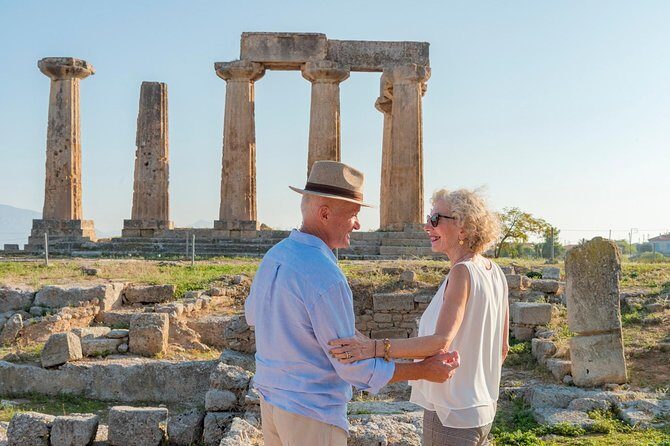
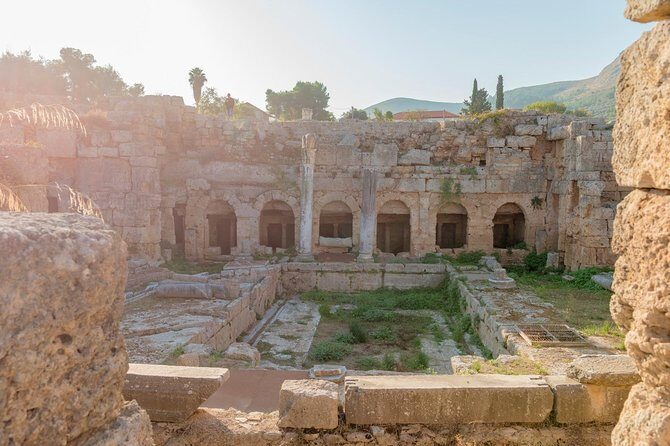
Ancient Corinth was a major city-state, and the remains reflect that scale. You’ll walk through preserved sections tied to Classical Greeks and also the later Roman era, with St. Paul’s era mentioned in the context of what you see around the site. Even if you’re not a “facts notebook” person, this stop works because you can move at your own pace along streets, temples, markets, and fountains.
What to watch for: look at the way the site layout shows a working city, not just one temple. The atmosphere is helped by the fact that refreshments and rest stops are available near the entrance.
Possible drawback: you’re starting day one with a lot to take in. If you don’t like information overload, take breaks inside the site rather than trying to power through everything in one go.
Mycenae: Lion’s Gate and the power wall you can still feel
Next comes Mycenae, and this is a stop that tends to hit hard visually. You’ll pass the thick city walls, including the famous scale described as about 20 feet (6 meters) wide. Then you go through Lion’s Gate and into areas associated with the legendary Agamemnon, including the throne room connection and the palace structures.
The site is also tied to the “Mycenaean period” (around 1600 to 1100 BC), which helps you place it in Greek development rather than treating it like a random ruin. You’ll also have time for the on-site museum, where many artifacts uncovered from the site are displayed.
Tip for pacing: if you like big-photo moments, spend time near the gateways and main palace areas first. Then go to the museum with fresh energy. It’s often the easiest way to keep the day from feeling like one long wall of “see more.”
You can also read our reviews of more tours and experiences in Athens




Epidaurus: the theatre that makes people test acoustics
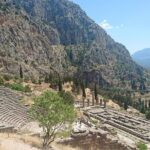
After a drive through olive fields and smaller countryside roads, you’ll reach Epidaurus at the UNESCO-listed Sanctuary of Asklepios, described as the first healing center of the ancient world. This is not just “another theatre stop.” The setting includes both the healing context and the architectural achievement.
You’ll see the theatre itself, dated to the 4th century, and you’ll be among visitors testing the well-known acoustics by reciting a poem or singing. That simple activity is one reason this site stays memorable even when other ruins blur together.
Possible drawback: the theatre can be physically tiring if you rush. If stairs and stone steps are not your thing, plan a slower pace and bring water.
Nafplion: lunch by the sea, then an easy old-town wander
Nafplion is a smart finish to day one. You’ll enjoy lunch in the medieval and historical port city, with views toward the Venetian castle of Bourtzi in the bay. The old town has an artistic feel, and there’s time to stroll through craft shops and boutiques before you head onward to your hotel in Olympia.
This stop also acts like a reset. After three archaeology-heavy segments, Nafplion gives you human-scale time: walking, window-shopping, and enjoying the harbor rhythm.
Day 2: Olympia first, then engineering and coastal lunch stops before nighttime lodging
Day 2 is built around Ancient Olympia, and it’s one of the most rewarding days on the whole route.
Ancient Olympia: the Olympic Flame area and the tunnel into the stadium
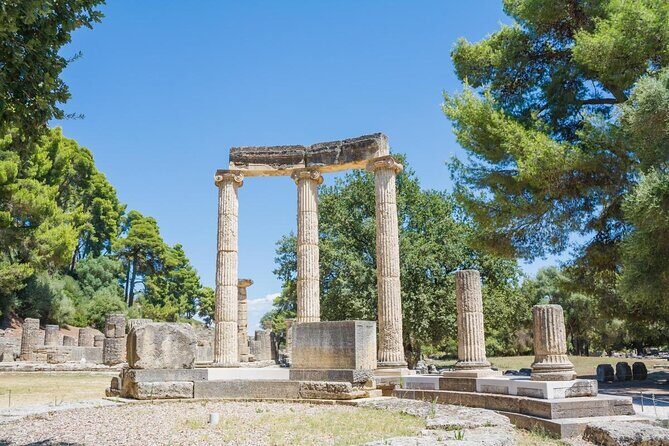
Olympia is magical in the sense that it feels conceptually clear. You’re not just staring at columns. You’re in the place where ancient athletes trained, learned, and then entered the stadium.
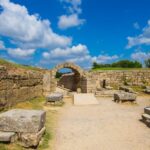
You’ll see areas connected to competition, including the spaces where athletes went through a tunnel to emerge in the stadium. On top of that, the site includes major structures tied to the Temple of Zeus and Hera, plus the area where the Olympic Flame is lit.
There’s also mention of the workshop of Phidias and an extensive museum with significant masterpieces from the site. In other words, Olympia covers both what people built and what it meant.
My practical advice: arrive ready to walk. Olympia isn’t a quick photo drive-by. Give yourself enough time to look at the stadium approach and the museum without feeling pressured.
The Rion-Antirion Bridge: an engineering break that still feels like a milestone
For the 3-day option, you continue west to cross the Rion-Antirion Bridge, described as one of the longest suspension bridges in the world. It’s a short stop, about 20 minutes, but it works because it breaks the day into two phases: ancient sites, then travel toward Delphi.
It also links the Peloponnese back to the mainland, so the crossing feels like a real geographic transition instead of just “getting in the car again.”
Nafpaktos Old Port and Galaxidi: lunch and an evening with less crowd pressure
If you’re doing the full 3 days, you’ll also stop in Nafpaktos for the old port and a lunch break. It’s described as Venetian and picture-postcard beautiful, which makes it a good place to stretch your legs and refill before the final day.
Then Galaxidi comes in as an evening option. It’s a village by the sea near the ancient port area associated with Delphi, and it’s framed as away from the more mass-tourism feel. The idea is simple: you get a slower-feeling coastal evening with cafes and restaurants and local food.
One consideration: if you’re hoping to see Delphi-related sites at night, you won’t. This is more about settling in and enjoying a calmer atmosphere before the final ancient-day push.
Day 3: Delphi’s terraced ruins, then Arachova’s lunch views before the long return
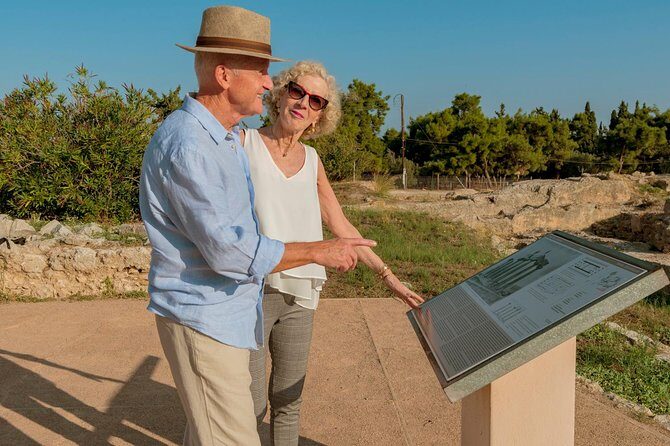
Day 3 is for Delphi, a place built on wide terraces along a hillside. Landslides from past centuries helped preserve much of what you’ll see, which means you’re walking through a site that still holds together in your mind.
Delphi Ancient Town: Apollo, the oracle, and the museum’s standout pieces
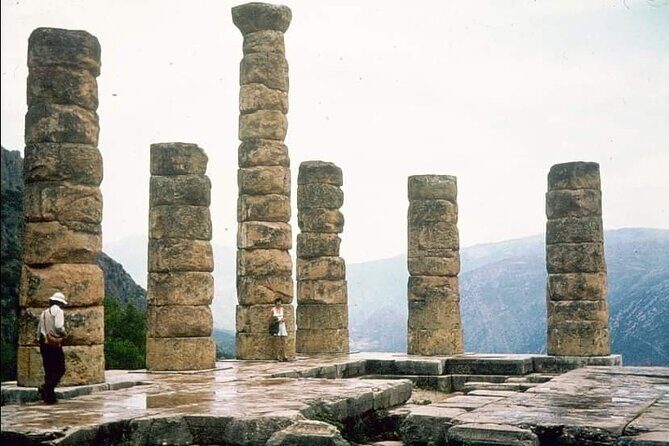
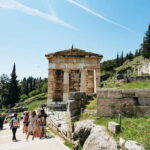
Delphi’s centerpiece is the Temple of Apollo, dated to the 4th century BC, tied to where the Oracle spoke prophecies. You’ll also hear about the Castalian spring connected to mythology, plus the theatre and treasury buildings.
Don’t skip the associated structures mentioned here: temples of Athena and the gymnasium, linked with athletes who gathered before the Pythian games. Delphi becomes a fuller picture when you see it as a religious and athletic hub, not only a place for legends.
You’ll also have time at the modern museum, where finds stretch back at least to 1500 BC. The museum is specifically noted for outstanding pieces such as the Naxos Sphinx, the twin Kouroi, and the famous Bronze Charioteer.
Practical tip: if you care about details, consider adding a licensed guide for Delphi. The site is layered, and a good guide helps you keep the story straight.
Drive reality check: the road from Olympia toward Delphi can be long and windy, and one recorded group experience placed it around 4 hours. If you’re sensitive to motion sickness or just like comfort, plan for it.
Arachova lunch: craft shops and Pleistos river valley views
After Delphi, you stop in Arachova for lunch. It’s described as a chance to shop local crafts and enjoy views over the olive-filled Pleistos river valley. Then you head back to Athens by way of the coast road.
This last stop is a nice way to end the trip on something everyday and visual, not another stair-stepping ruin. Even if you’re tired, the views give you a last payoff.
Licensed guides vs. your driver: how to choose the right kind of help
Your driver will give explanations en route and during travel, which is helpful for orientation. But there’s a key rule: the driver can’t enter archaeological sites. For that, you need licensed guides booked as an extra.
So how do you choose? Here’s the approach I’d use based on what these places demand:
- If you’re happy with a self-guided visit, you can stick with the driver narration and use your time to walk slowly, read what’s on site, and focus on layout and atmosphere.
- If you want deeper mythology connections, architecture notes, and story threads that make the ruins click, add licensed guides. This is especially worth it for places like Mycenae, Epidaurus, and Delphi, where the context changes how you interpret what you’re seeing.
One group experience also noted that private guides were coordinated and that the handoff worked smoothly, with pickups directly after the visits. That matters because it removes the awkwardness of figuring out meeting points when you’re deep in a complex site.
Also, a practical note from the comfort side: one recorded recommendation was to bring a travel pillow for the long, windy ride. It’s not required, but it’s a smart little upgrade if you get stiff or uncomfortable on buses and cars.
What’s extra: entrance tickets, and how to budget without stressing

The tour includes the vehicle, driver, hotel stays with breakfast, Wi‑Fi, A/C, and bottled water. It also includes scheduled stops like Nafplion and the bridge area, where admission is listed as free.
But for the archaeological sites and museums, entrance tickets are not included. That’s the main cost you should plan for. You’ll also want to budget for any licensed guide upgrades you add.
If you like clear budgets, here’s the mindset: treat this as a “transport plus hotels” premium package, then expect your day-of costs to come from admission fees and optional guide service. With ancient sites, the ticket lines can’t be avoided, so budgeting for them in advance reduces stress.
And if you choose the lunch option (traditional menu each day), you’ll need to handle allergies ahead of time. That’s a good thing to do anyway, but this tour explicitly asks you to inform them if you have dietary needs.
Who this tour suits best, and who might prefer something different
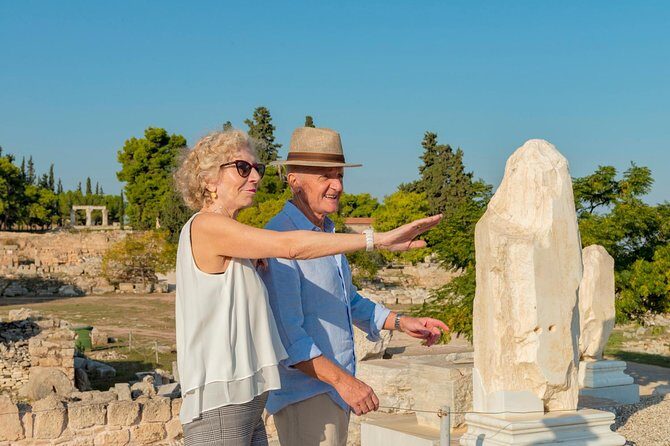
This tour fits travelers who want to see a lot of top sites without turning the trip into a logistics project. If you’re the type who likes your mornings planned and your afternoons free to wander, this works well.
It’s also a strong fit for families who want structure. One experience praised how a driver handled a group with three children while staying flexible with the realities of changing conditions. If you’re traveling with teens or kids, consider adding licensed guide time to keep everyone engaged during the most story-heavy stops.
Who might not love it: if you want zero driving and only one or two sites per day, this schedule could feel like too much. It’s designed for momentum. Also, if entrance fees and optional guide costs feel like deal-breakers, you’ll want a different style tour where tickets are bundled.
Should you book this 2 or 3-Day Private Tour?
I’d book it if your goal is to cover major Peloponnese archaeology plus the Delphi finale with the stress removed. The combination of door-to-door transfers, 4-star or boutique hotels with breakfast, and the choice between self-guided time and licensed guides is a smart match for many travelers.
I’d think twice if you’re allergic to extra costs, since entrance tickets are not included and the licensed-guide add-ons are optional but can be worth it. Also, be honest about comfort: the road segments can be long, including the Olympia-to-Delphi drive that can run around 4 hours and feel windy.
If you want a trip that balances ancient monuments with human-scale breaks in places like Nafplion, Nafpaktos, and Galaxidi, this is a solid way to do it. Just plan your budget for site admissions, and consider a guide upgrade for Delphi if you want the myths to land cleanly.
FAQ
How many days is this tour?
It runs about 3 days for the full version. There’s also a 2-day option that ends at Ancient Olympia with an afternoon return to Athens.
What does the tour price include?
The price includes Athens hotel or cruise ship pickup and return, a professional English-speaking driver, Wi‑Fi/A-C/bottled water in the vehicle, and hotel stays (minimum 4-star or boutique) with breakfast.
Are entrance fees to archaeological sites included?
No. Entrance tickets are not included for the archaeological sites and museums. Some stops are listed as free, but the main site admissions are separate.
Can I add a licensed guide at the sites?
Yes. The driver can explain en route, but cannot enter archaeological sites. Licensed guides can be arranged for an extra cost on request.
Is lunch included?
A lunch option is available. It’s described as a traditional menu each day, and you should inform the provider of allergies or related needs if you choose it.
What time does the pickup start?
Pickup time is flexible on request. A suggested start is about 07:30, but the schedule can be adjusted to your needs.
Do you offer pickup only in Athens?
Pickup is offered from Athens accommodations and cruise ships. Airport pickup or locations outside Athens may require a supplement, which is advised during booking.
Is the tour truly private?
Yes. It’s a private tour/activity, meaning only your group participates.
Is free cancellation available?
Yes. Free cancellation is allowed up to 24 hours in advance for a full refund, based on the experience’s local start time.
More Private Tours in Athens


More Tours in Athens



More Tour Reviews in Athens
- All Day Cruise -3 Islands to Agistri,Moni, Aegina with lunch and drinks included
★ 5.0 · 4,958 reviews