REVIEW · ATHENS
3 Days private tour- Meteora Rocks & Monasteries, Delphi/ Apollo Oracle, Thebes
Book on Viator →Operated by GREECE TAXI · Bookable on Viator
Some places feel bigger than the photos.
This private 3-day route is built for slow looking and easy pacing, with seasoned drivers who stop where you want for breaks and photos. You’ll connect the big Greek names in history and myth—Thermopylae, Meteora monasteries, Delphi and the Apollo sanctuary, plus Thebes—without the chaos of group tours.
Two things I like a lot are the flexible roadside stopping (so you’re not locked into a rushed timetable) and the travel-first approach by a professional English-speaking driver/leader—seen in past trips with Nikolaos, often called Niko, who focuses on care and clear explanations while you’re on the move. The route also mixes famous sites with lesser-visited stops like the Theopetra Cave and the Museum stops around Meteora.
One drawback to think about: most site admission fees are not included, and several museums and archaeological sites have specific opening days and winter/summer hours. If you hate paying ticket after ticket, you’ll want to budget for entrances up front and double-check closures before you go.
In This Review
- Key highlights you can plan around
- Why this private Meteora–Delphi–Thebes trip feels different
- Day 1: Thermopylae, then Meteora monasteries and a Kastraki sunset
- Day 2: Meteora in the morning, Theopetra Cave, and Mount Parnassus myth options
- Day 3: Delphi museum ticket included, then Arachova and Thebes
- Price and value: what $1,163.56 gets you, and what it doesn’t
- Practical tips so the route stays enjoyable
- Who should book this private Athens add-on to Meteora and Delphi
- Should you book this 3-day private tour?
- FAQ
- FAQ
- What’s included in the tour price?
- Are entrance fees and museum tickets included?
- What time does the tour start?
- Does the tour include pickup from my hotel?
- Can I choose between visiting mines at Mount Parnassus or a cave?
- Is the tour guide allowed to guide inside sites?
- Can the trip be flexible with stops for photos and breaks?
Key highlights you can plan around
- Meteora monasteries by vehicle-first touring: drive viewpoints, then visit at least two Orthodox monasteries with practical timing.
- Delphi goes beyond the main ruins: you get the Delphi Archaeological Museum with its included ticket on Day 3.
- Myth + geology in the same sweep: Corycian Cave, Theopetra Cave, and even Vagonetto’s mining-heritage trip at Mount Parnassus.
- Photography time is real: a morning Meteora photo loop after breakfast, plus sunset time in Kastraki.
- Private comfort from Athens: hotel or apartment pickup and drop-off in the Athens area (or a request for another location).
- Room options for your trip style: boutique or 3/4-star hotel suggestions can be arranged as an add-on, with the driver’s room complimentary.
Why this private Meteora–Delphi–Thebes trip feels different
This is not a “stamp collector” itinerary. The rhythm is built around the drive itself. You’re in an air-conditioned vehicle (sedan, minivan, or minibus depending on your group size), and the driver can pause for photos and breaks whenever you ask.
That matters because Meteora and Delphi reward calm looking. If you hit these places on a tight bus schedule, you spend half your time moving. Here, the schedule is described as flexible, and the tour’s whole promise is that you’re traveling like you actually live in Greece: you pull over, you breathe, you take the shot, then you go again.
You also get an English-speaking driver/leader for the three days. The note that drivers provide documentary and historical details while you travel helps set expectations: you’ll learn on the road, even if you’re not walking with a formal guide inside every museum.
You can also read our reviews of more private tours in Athens

Day 1: Thermopylae, then Meteora monasteries and a Kastraki sunset
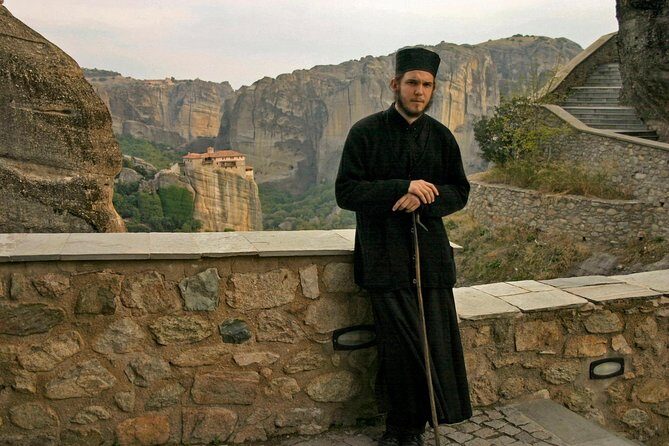
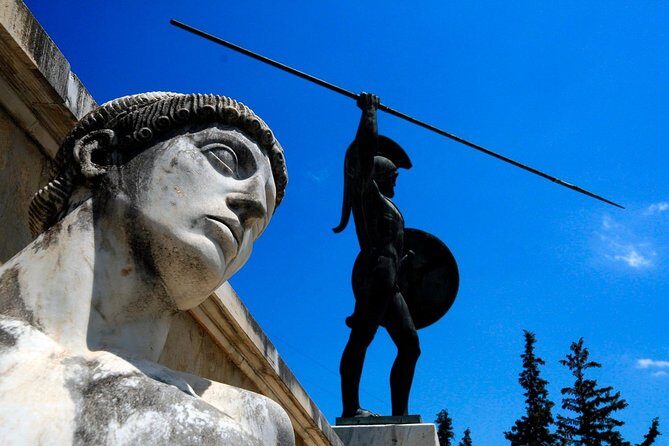
You start early, with pickup from your Athens-area lodging, and a first stop at the Battlefield of Thermopylae. It’s the famous pass where Greek forces (including the Spartans) fought the Persian invasion. Even if you’ve seen pictures before, the setting makes the story easier to understand because this is literal geography—an actual chokepoint on the peninsula.
Right next to Leonidas’s monument sits an interactive museum (Kainotomiko Kentro Istorikis Enimerosis Thermopylon). The ticket cost is small, and it’s focused on the 480 BC battle that changed Greek history. If you enjoy hands-on explanations, it’s worth the extra 30 minutes. If you’d rather conserve energy, you can skip and move on.
After that you head toward Trikala. The itinerary includes the old city area of Trikala (Trikka), with a deep-time layer: evidence of settlement reaches back to the cave of Theopetra with dates given around 49,000 BC. You’re not spending all day there, but it’s a nice change of pace after battle history.
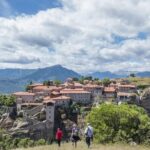
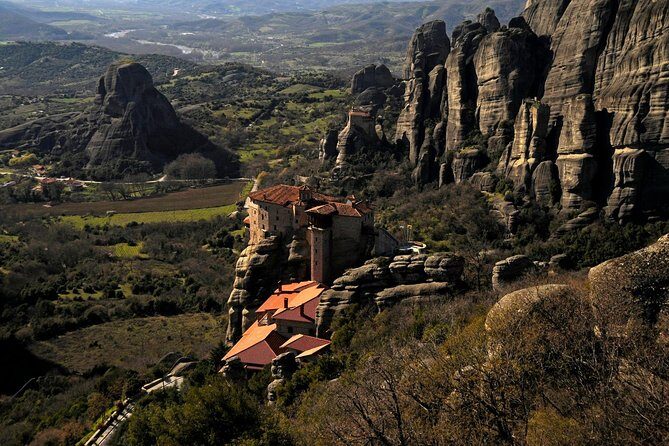
Then comes the headline: Meteora, with the Great Meteoron Monastery visit. Meteora is UNESCO-listed, and the “lofty” rock towers are the reason so many monasteries were built on sheer pillars. The tour describes visiting at least two Orthodox monasteries, with a standard general ticket noted as 3€ per monastery.
A practical thing here: monastery visits can mean uneven steps, time spent looking up, and lots of photo angles. Since you’re in private mode, you can decide how long to linger at each view instead of being herded.
Later you have optional time around Meteora’s Natural History and Mushroom Museum (not included). This can be a good “reset” after the intensity of the rocks and religious architecture—especially if your group wants something calmer and more low-pressure.
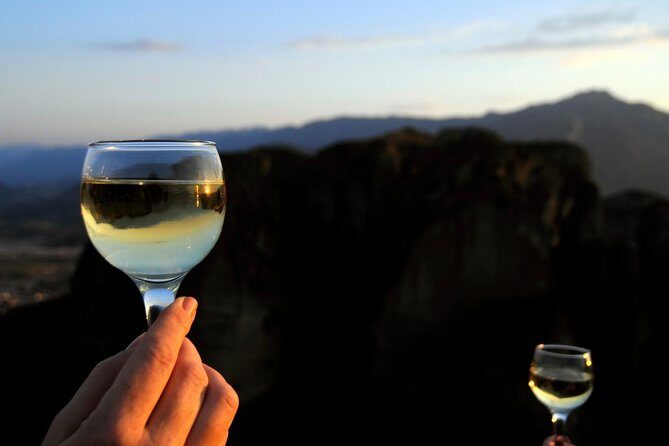
Day 1 ends with Kastraki, the village tucked under Meteora rocks. The schedule is built for photos and sunset time, and then it points you to a traditional tavern for dinner. One realistic note: Kastraki is popular, and the information suggests rooms may need advance reservation. For this tour, though, you’re mostly using it as a scenic base and evening atmosphere.
Day 2: Meteora in the morning, Theopetra Cave, and Mount Parnassus myth options
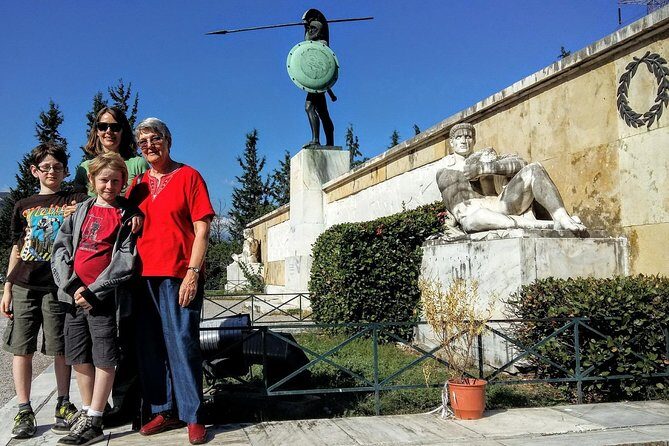
Day 2 starts after breakfast, with departure around 8:00 am for a photography loop around Meteora. The point of this timing is simple: morning light changes how the rocks and monastery silhouettes look. If you care about photos at all, this is one of the best uses of time on the whole trip.
You also get the tour’s first big archaeology off-ramp: the Theopetra Cave. The site is described as occupied extremely early, with human presence dated as far back as 130,000 years ago. That scale is hard to imagine until you’re standing near the entrance and seeing how naturally lit the interior is said to be. The tour notes the cave is roughly quadrilateral with niches, and that it was opened to the public in 2009.
Next is Trikala Fort. This is a walk up to a well-preserved Justinian fortress with a recreational area. There’s also mention of a clock on the east side tied to the city emblem, which suffered destruction and restoration through history. This stop helps balance the day: you go from deep-time prehistory into medieval layers, then to mountain-myth areas.
Then you reach Mount Parnassus for one of two options. The itinerary offers the Vagonetto mining park and trip down to Mine Gallery 850. The description is very specific: it’s a themed park built around an old inactive mine gallery, and you ride a small train down about 200 meters underground. The tour gives a ticket price of 8€ (children from 6 years old at 4€).
If mining caves aren’t your thing, the alternative is Corycian Cave, described as the birthplace of Greek mythology in the area. This cave is sacred to the Corycian nymphs and the Muses, and it’s also tied to worship connected with Pan. You’re told it served as refuge during invasions, including from the Persians in the 5th century BC. Choose based on your group’s interests: the Vagonetto option is more about industrial heritage and being underground, while Corycian Cave is about myth and sacred landscape.
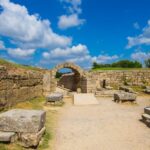
From there, you move to Delphi and the Temple of Apollo. You’re given the big picture of Delphi as the ancient sanctuary where the Pythia was consulted about decisions across the classical world. The tour points out the omphalos (navel) as a stone marker symbolizing the center of the world, and it situates Delphi on the slopes of Mount Parnassus overlooking the coastal plain and Phocis valley.
Important expectation-setting: on Day 2, this Apollo sanctuary visit is listed with admission not included. So you’ll want to budget for entrances for Delphi’s archaeological site on that day, too.
Day 3: Delphi museum ticket included, then Arachova and Thebes
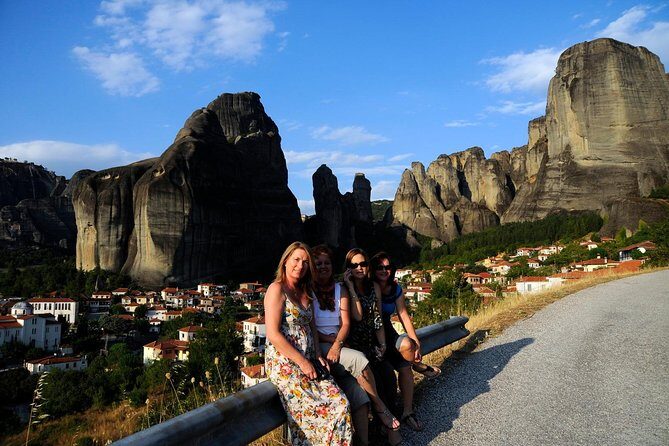
Day 3 is designed to start with Delphi in a more structured way. The Delphi Archaeological Museum is included, and that’s a big quality-of-life win. Museums let you slow down. Ruins are great, but they’re also hard to interpret fast. The museum collections are described as spanning from the Mycenaean era through Greek-Roman times, with an emphasis on architectural sculpture, statues, and smaller objects.
One named highlight is the Charioteer—part of a chariot group dedicated after a victory in the Pythian Games. It’s exactly the kind of object that makes the larger story click: you see how art and ritual worked together at Delphi, not just buildings on stone.
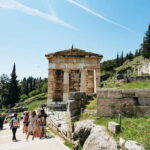
After the museum, you visit the Tholos of Athena Pronaia. The itinerary describes the tholos as a circular building built between 380 and 360 BC with 20 Doric columns on the exterior, and it notes the interior columns are Corinthian order. There’s also a quick reality check built in: the tholos image is more common online, so it can help you avoid mixing it up with other Delphi views.
Then comes a break town stop: Arachova. The tour frames it as a mountainous village at the foot of Mt. Parnassos, popular as a ski destination and known for celebrities and modern tourism. In a three-day schedule that includes caves, fortresses, and monasteries, this is a chance to drink something hot or cool down and reset.
From there you go to Kryas Livadeia Springs in Levadia. The plan includes a drink or light lunch by the river Karya near where the springs emerge. You’re also told these springs were tied to an oracle called Trofonios Zeus, with Mnemosyne (Remembrance) and Lethe (oblivion). The idea is that this oracle was used as a stage before visiting Delphi, and over time it gained power and riches. Even if you don’t buy every myth detail, the stop helps you understand how the Greeks connected multiple sacred places.
The final act is Thebes’ Archaeological Museum. It’s described as one of Greece’s important museums, with collections drawn from excavations across Boeotia and spanning from the Palaeolithic to the Post Byzantine periods. The tour lists it as not included, with winter and summer ticket prices (winter 3€, summer 6€) and reduced terms for certain age groups.
There’s also a closure warning you should take seriously: the museum is closed every Tuesday (and also on several major holidays). If your Day 3 lands on a Tuesday in your travel dates, that could change how smoothly the plan fits your week. Ask for guidance when you book.
Price and value: what $1,163.56 gets you, and what it doesn’t

The price shown is $1,163.56 per person for a three-day private tour. The key value driver is private transportation plus a professional English-speaking driver/leader for multiple days, with fuel, toll roads, and parking fees included. You’re also getting pickup and drop-off from your Athens lodging (or you can request another location).
But the major costs you still need to plan for are the admission fees. The tour clearly states that all site entrances and museums are not included, priced per site per person and varying by season. That’s normal for Greece, but it’s still the part where your total budget can shift.
Accommodation is another variable. The tour offers hotel arrangement as an add-on in selected boutique A’ class or 3/4* hotels with breakfast. The information gives two different starting rates depending on category and holiday timing, including weekend-holiday pricing and a reduction if you book multiple rooms. The driver’s room is complimentary, and if you pick your own hotel you need an extra room for the driver. So the “per person” tour price is only part of your overall trip math.
One smart planning option is the payment flexibility: you have a choice between full payment at booking or a deposit only (50%) with a stated lower rate compared to full pay. For budgeting, that matters, especially if you’re trying to lock in dates while also booking flights.
Also note gratuities are suggested from 1€ per person. If you’re the kind of traveler who likes to keep a trip budget clean, just decide early how much you’ll set aside so it doesn’t surprise you at the end.
Vehicle choice can change the practical feel too. The tour lists sedan/SUV options for up to 3 adults (or a family of 4 with kids up to 11 free), plus minivan and minibus for larger groups. If you travel with kids, the free kid policy up to age 11 could help your total cost.
You can also read our reviews of more tours and experiences in Athens



Practical tips so the route stays enjoyable
Start time is listed as 8:00 am, and that’s on purpose. Long drives in Greece go best when you beat the busiest hours.
Your driver is not a licensed tour guide for walks at archaeological sites and museums. That means you’ll receive informative details during transit, but if you want a licensed archaeologist guide to walk you through a site, you need to hire one additionally in advance. This is the difference between learning “in the car” versus learning “at the marble.”
Expect a lot of walking at Meteora and Delphi, and some uneven terrain at cave and monastery areas. The itinerary does not specify mobility limitations, so if anyone in your group has mobility needs, it’s worth asking what the on-site walking looks like for each stop.
Admission closures and hours should also be on your radar. The tour notes museums and certain sites close on Tuesdays (museums only), plus specific dates like December 25–26, January 1, March 25, Easter Day, and May 1. Winter season hours are 8:30 am to 15:30 pm, and summer season hours are 8:00 am to 20:00 pm. With a tight three days, closures can force last-minute reshuffling, so confirm your exact travel dates during booking.
Who should book this private Athens add-on to Meteora and Delphi
I’d point you toward this tour if you like a mix of big-name landmarks and myth or archaeology detail, and you want comfort and flexibility more than you want group energy.
It’s especially good for:
- Couples who want a private pace and photo stops without friction
- Families that prefer a controlled car schedule across multiple regions
- Travelers who care about the story links between places: Thermopylae → Meteora → Delphi → Thebes
If you hate paying separate museum tickets and prefer a single all-in price, you may feel the budget creep. But if you’re okay budgeting for entrances, this style of private touring usually gives you more usable time at the places that matter most.
Should you book this 3-day private tour?
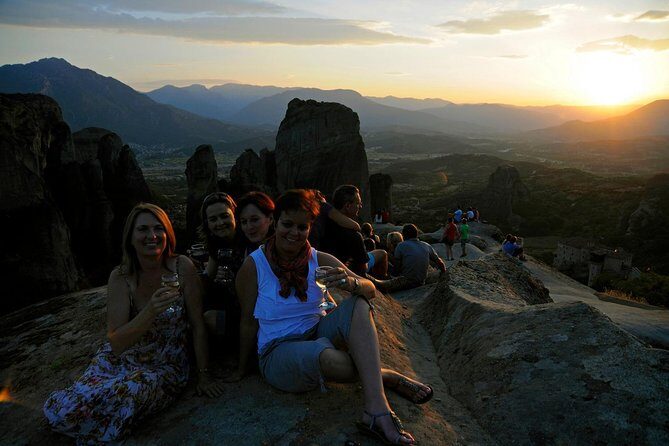
Book it if you want a real road-trip feel with a careful, English-speaking driver, and you’re excited to see Meteora and Delphi without being rushed. The included museum on Day 3 (Delphi Archaeological Museum) helps justify the structure, and the morning Meteora photo loop is the kind of small scheduling choice that makes the trip feel thoughtful.
Think twice if you’re date-sensitive and worried about closures, since multiple museums and sites have specific closing days. Also, the tour is listed as non-refundable and non-changeable, so only book once your travel dates are truly locked.
If you do book, I’d plan your admissions budget early, ask which specific monastery choices you’ll make, and confirm how your Day 3 lines up with museum opening days.
FAQ
FAQ
What’s included in the tour price?
The tour includes air-conditioned private transportation, pickup and drop-off from your Athens-area hotel/apartment (or another requested location), fuels/tolls/parking, and a professional English-speaking experienced tour driver/leader for the three days. The driver’s accommodation is complimentary, and a Delphi Archaeological Museum ticket is included on Day 3.
Are entrance fees and museum tickets included?
No. Admission fees are not included for all sites and museums listed on the itinerary. Prices are per site per person, and they vary by winter vs summer season.
What time does the tour start?
The start time is listed as 8:00 am.
Does the tour include pickup from my hotel?
Yes. Pickup and drop-off are offered from/to your hotel or apartment in Athens and Piraeus. You can also request another location.
Can I choose between visiting mines at Mount Parnassus or a cave?
Yes. At Mount Parnassus, the itinerary offers an option to visit Vagonetto mining park (Mine Gallery 850) or, if you prefer mythology, to visit the Corycian Cave.
Is the tour guide allowed to guide inside sites?
The driver is not a licensed tour guide to accompany you on your walk to archaeological sites or museums. If you want a licensed archaeologist guide for on-site walking tours, you must hire one additionally in advance.
Can the trip be flexible with stops for photos and breaks?
Yes. The tour description emphasizes schedule flexibility, with drivers dedicated to helping you enjoy the scenic drive, stopping wherever you desire for photos and breaks.

More Private Tours in Athens


More Tours in Athens



More Tour Reviews in Athens
- All Day Cruise -3 Islands to Agistri,Moni, Aegina with lunch and drinks included
★ 5.0 · 4,958 reviews