REVIEW · ATHENS
4-Day Private Peloponnese, Delphi and Meteora Tour from Athens
Book on Viator →Operated by 4 Seasons Greece Tours · Bookable on Viator
Peloponnese, Delphi and Meteora in one smooth circuit. I like the way this private route strings together major UNESCO sites with real overnight hotel time, not frantic backtracking. Two things I especially like are the flexible itinerary (you can add stops) and the live English commentary from the driver during the ride, which helps you understand what you’re looking at as you go.
One key consideration: site admissions and museum tickets are not included, so you’ll want to budget a separate amount for entry fees and any optional paid experiences.
In This Review
- Key highlights to look for on this route
- Starting from Athens: how the pickup-and-drive setup really helps
- Corinth Canal and Ancient Corinth: the first taste of Greece’s big contrasts
- Epidaurus Theatre: acoustics you don’t need special gear to notice
- Mycenae and Tiryns ruins: cyclopean stone with a royal-size story
- Nafplio overnight: where you actually slow down
- Olympia and the Rio-Antirion Bridge: ancient temples plus a modern shortcut
- Where you sleep day two and day three: Galaxidi or Delphi-area hotels
- Delphi Archaeological Museum and site: the oracle landscape in real space
- Thermopylae: short stop, big-name context
- Meteora monasteries: photo time, cliff scale, and two to three stops
- Kalambaka and Kamena Vourla: the soft landing before Athens
- Price and value: what you’re paying for (and what you aren’t)
- Who this tour fits best (and who might want a different style)
- Should you book this 4-day private Athens circuit?
- FAQ
- What’s included in the tour price?
- Are airport transfers included?
- Is this a private tour?
- Are admission fees included for archaeological sites and museums?
- Do you get a licensed guide at the sites?
- What kind of hotels are included?
- What languages are offered?
- How many Meteora monasteries will you visit?
Key highlights to look for on this route
- Private, customizable planning so your pace and stop choices can bend a bit
- Luxury A/C vehicle with Wi-Fi and bottled water for long drives that don’t feel like punishment
- 4-star or boutique hotels with breakfast across three nights for actual recovery time
- Driver-led storytelling in English (and a named chauffeur, Petros, is specifically praised for this)
- A UNESCO-packed day in Delphi plus a practical Thermopylae visit nearby
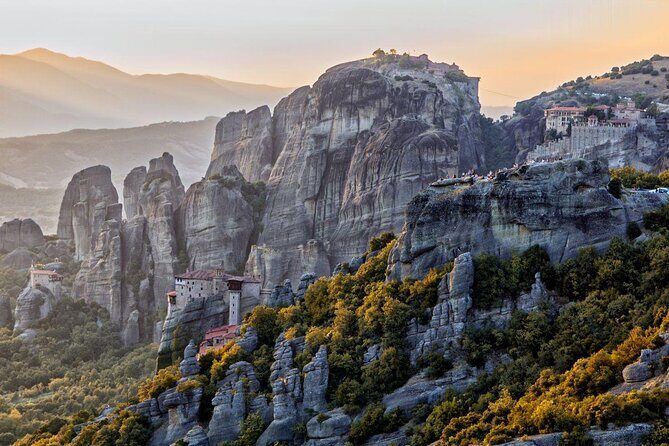
- Meteora monasteries with no-stress photo time and a choice of 2–3 sites depending on the day
Starting from Athens: how the pickup-and-drive setup really helps
This tour is built around convenience from the first minute. You get airport or residence pickup with a sign in the lobby/port/airport, and the same goes for drop-off at the end. That matters on a multi-day trip because you’re not juggling taxis, schedules, or confusing transfers after a long flight.
You also travel in a brand new luxury vehicle with A/C, Wi-Fi, and bottled mineral water. On day-to-day logistics, that’s the difference between arriving cranky and arriving ready to enjoy what’s ahead. You can also take advantage of the mobile ticket, which keeps things simple on the road.
If you’re the type who likes to ask small questions and get straight answers, the driver-led approach is a big plus. This is not a bus where everyone listens to someone else talk in a whisper. You get live English commentary while you move, which means you get oriented before you step into the next site.
The only downside is the one I mentioned upfront: admissions and museum tickets are not included. That’s normal for private touring, but it can surprise people who assume those fees are bundled.
You can also read our reviews of more private tours in Athens


Corinth Canal and Ancient Corinth: the first taste of Greece’s big contrasts
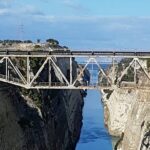
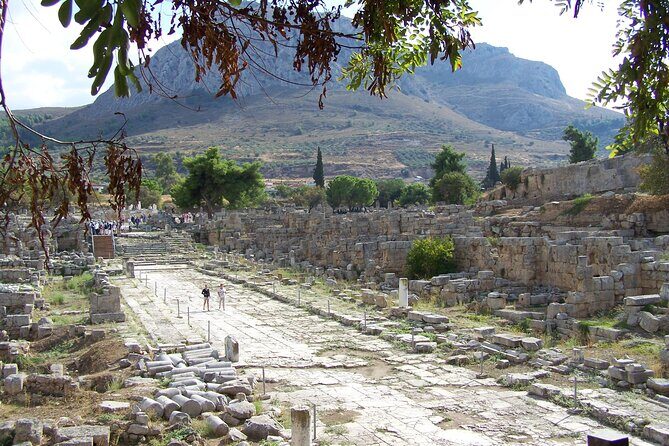
Your day starts with a morning pickup from Athens and a drive toward the Peloponnese. The first stop is the Corinth Canal, a short stop that still hits hard. The canal is about 6.5 km long, splitting the Aegean from the Ionian. Because of its width, only smaller ships still pass through regularly. Even if you’re not a ship-spotter, it’s a powerful example of engineering that shaped shipping routes and the sense of separation between two seas.
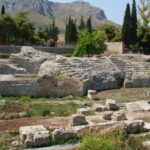
Next comes Ancient Corinth (Archaia Korinthos), close enough that you’re basically shifting from modern geography to ancient urban life without losing momentum. This site has a strong anchor: the Doric peripteral Temple of Apollo, dated around 550–530 BCE. You’ll also see the Roman-era layer of Corinth, including a forum and key points tied to early Christianity. A highlight here is the Bema area where St. Paul addressed the Corinthians, plus the Asklepeion temple dedicated to Asclepius.
Practical tip: allow time to wander slowly and don’t feel you have to hit every corner. Ancient Corinth is the kind of place where context matters. If you’re paying attention during the drive commentary, the site connections click faster.
What to know: the museum at Ancient Corinth is separate, and site admission is not included.
Epidaurus Theatre: acoustics you don’t need special gear to notice
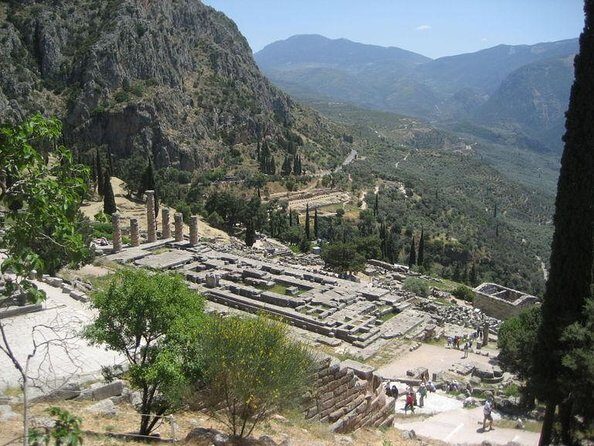
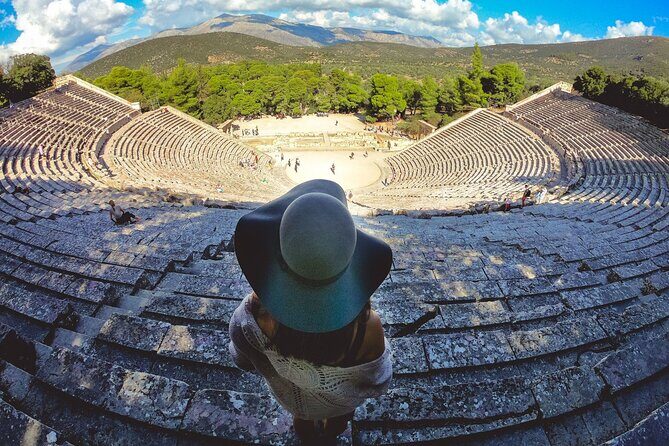
From Corinth you head deeper into the Peloponnese to the Sanctuary of Asclepios at Epidaurus, a UNESCO listed site. The main star is the ancient theatre—described as the finest and best-preserved classical Greek theatre. Even if you’ve never cared about theatre design before, Epidaurus is the kind of place that makes you understand why this culture obsessed over performance and space.
You’ll visit the vast ancient theatre, the Tholos, the Stoa of Abaton, the stadium, and the on-site museum. The theatre is where the notorious acoustics are—you get to stand in a space built so sound travels in a very particular way. You don’t need to know the technical reasons to enjoy the effect. You just need to be there, looking up at the arrangement and realizing how intentional it is.
Time-wise, plan on about 1.5 hours on site. That’s enough to see the main elements without rushing and without turning your legs into noodles.
Admissions aren’t included here either, so budget for entry.
Mycenae and Tiryns ruins: cyclopean stone with a royal-size story
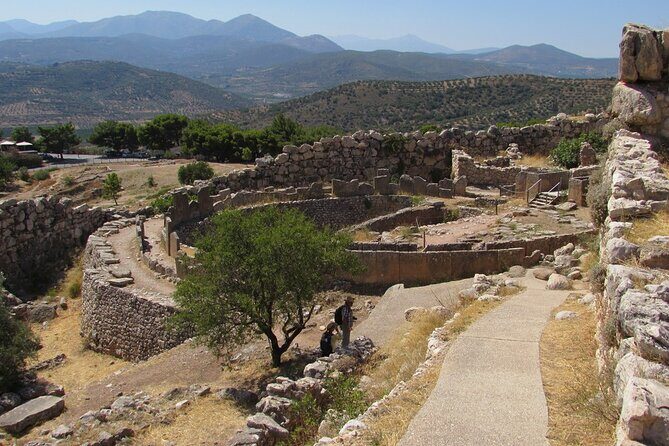
After Epidaurus, you head toward a seaside lunch stop in Tolo and then move on to another UNESCO stop: the archaeological sites of Mycenae and Tiryns. This is where the tour leans into the dramatic scale of Greece’s Bronze Age.
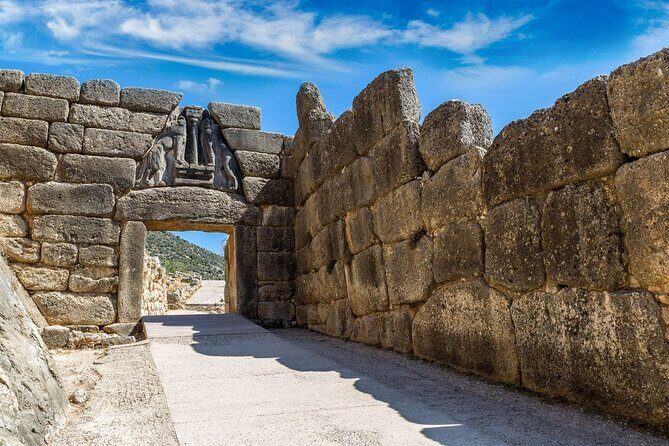
Mycenae entrance is through the imposing Lion Gates. From there, you walk by royal tomb areas and see the cyclopean architecture associated with the Treasury of Atreus. It’s powerful because it’s big, heavy, and deliberate. It doesn’t feel like a few scattered walls. It feels like a fortified statement made of stone.
Tiryns adds a second layer of context, reinforcing that this was not one isolated city but a network of major strongholds.
One practical note: your lunch may be arranged as part of the day’s plan, but meals aren’t automatically included in the base price. The tour’s language suggests a lunch option is available, so check what you’re selecting before you assume lunch is covered.
Admissions again are not included for these sites.
Nafplio overnight: where you actually slow down
After the long day of sites, you get to switch gears in Nafplio, one of Greece’s most photogenic towns. It’s the former first capital, and the setting is part of the appeal: neoclassical architecture, narrow cobblestone alleys, and a promenade with views toward Bourtzi castle.
This is a night that feels like decompression. You’ll walk around Syntagma Square, pass by old Turkish mosques, and then wander toward the waterfront. If you’ve been thinking about Greece as mostly ruins and museums, Nafplio helps you remember there’s also street life, cafés, and simple seaside pleasure.
You stay at a 4-star or boutique hotel such as Ippoliti in Nafplio (availability determines the exact property). Breakfast is included.
This is also a spot where you can choose how active you want to be. If you’re tired, go light. If you want to wander, it’s an easy town to do that in.
You can also read our reviews of more tours and experiences in Athens

Olympia and the Rio-Antirion Bridge: ancient temples plus a modern shortcut
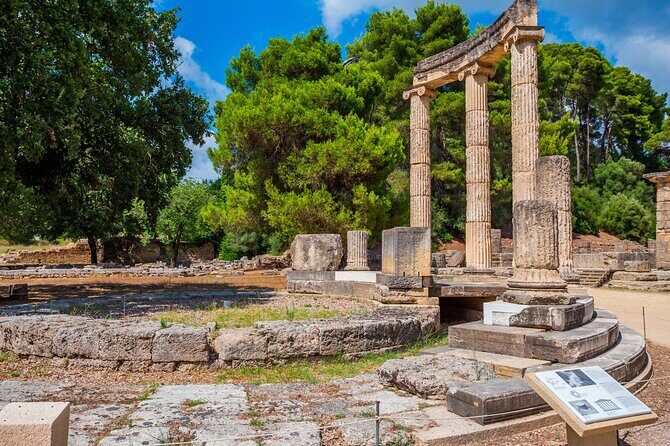
Day two begins with a drive to Ancient Olympia. Olympia is another UNESCO site and was the most celebrated location for the ancient Olympic Games. You’ll visit both the museum and the archaeological site, with about two hours set aside.
Olympia’s layout helps you understand how this place worked as a system: you move through ancient paths and see the Doric Temples of Zeus and Hera, the Bouleuterion, Prytaneion, stadium, gymnasium, palestra, and other structures including the Workshop of Pheidias.
The museum matters too. It’s where you can linger with major works such as the Nike of Paionios and the Hermes and the Infant Dionysus statue. These pieces make the site feel more human and less like just stone.
Then comes a quick engineering detour: the Rio-Antirion Bridge, completed in 2004. It’s a named “engineering miracle” stop and it’s tied to the Olympic Games era. Even though it’s brief, it breaks up the day and gives your eyes a different kind of scale.
Your route then continues toward Nafpaktos, a scenic Venetian port and castle area. You get time for a stroll and coffee or tea by the water. If you like having one lighter “breather” stop between big ruins days, this is that moment.
Where you sleep day two and day three: Galaxidi or Delphi-area hotels
After Nafpaktos, the tour focuses on getting you into the Delphi area for the next day. Depending on availability, you stay overnight either in Galaxidi or in Delphi itself, at a 4-star or boutique hotel such as Ganimede in Galaxidi or Nidimos in Delphi.
Galaxidi is described as a seaside resort atmosphere, close to the Delphi area. If you enjoy a less formal, more island-like feel without actually island-hopping, this could be a great fit. Staying in Delphi can mean less driving the next morning, but the trade-off is usually a more tourism-centric location.
Either way, breakfast is included, and the driver keeps things timed so you’re not constantly racing between locations.
Delphi Archaeological Museum and site: the oracle landscape in real space
Day three centers on Delphi, and you get both the archaeological site and the Delphi Archaeological Museum. Delphi is a UNESCO World Heritage Site and is considered a center of the Ancient World, tied to decisions by leaders who consulted the Pythia.
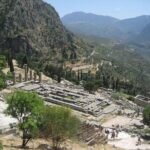
On the site, you’ll see major features like the Temple of Apollo, the Amphictyonic Council, the Siphnian Treasury, theatre, Tholos, gymnasium, and stadium. What’s useful here is the way Delphi’s buildings reflect power and wealth. The sanctuary wasn’t just religious. It functioned like a prestige hub.
In the museum, you get the storytelling you can’t always get from stones alone. The exhibits cover the sanctuary and oracle from prehistory through late antiquity. The permanent collection includes famous pieces such as the Charioteer, the Sphinx of the Naxians, and statues of Kleobis and Biton.
Even if you don’t consider yourself a “ruins person,” the combination of site plus museum makes this day easier to process. You’ll understand what you’re seeing as you move through it.
Then there’s lunch. The plan highlights a specific traditional tavern called To Patriko mas, chosen for quality and service. Meals are not guaranteed in the base price, so treat lunch as something you either budget for or choose as an option. Still, having a recommended stop helps you avoid the usual guessing game with food near tourist sites.
Thermopylae: short stop, big-name context
After Delphi, the tour makes time for the Battlefield of Thermopylae. This is the famous clash tied to the 300 Spartans and 700 Thespians during the second Persian invasion of Greece.
The stop is short—about 30 minutes—and that’s probably the right way to handle it here. You’re not trying to turn the day into a history lecture. You’re getting the landmark and the context, then moving on with a clear sense of why the name matters.
Since admissions are not included, you’ll again want to budget entry fees if applicable.
Meteora monasteries: photo time, cliff scale, and two to three stops
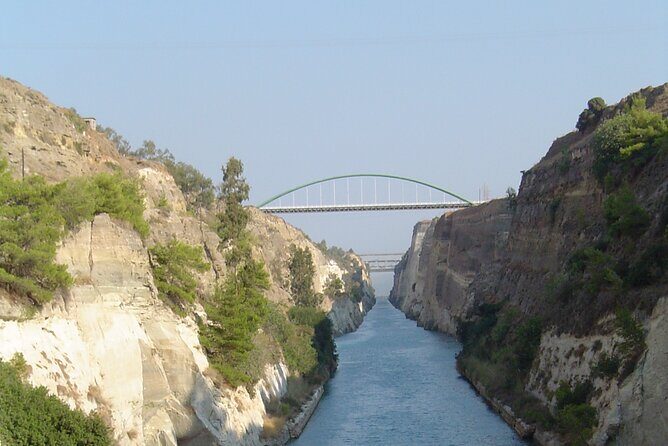
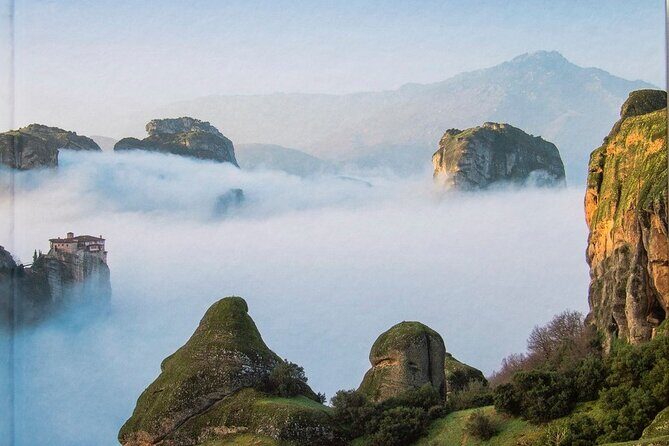
Day four is Meteora, and the approach here is very much about pace. You ascend to the rock formations, visit monasteries at a relaxed speed, and get plenty of time for photos and walking around at your own pace. The driver handles the logistics and provides live commentary during the ride, which is especially helpful here because Meteora is best understood with context, not just from an overlook.
There are six monasteries on Meteora: Great Meteoron, Varlaam, Roussanou, Agios Stefanos, Holy Trinity, and St. Nicholas. You’ll visit 2 or 3 of them depending on the day and time.
What I like about Meteora within a private format is that you can shift your attention. If you want to focus on views, you can. If you want to focus on the Byzantine and Christian items—like paintings, etched glass, and the monks’ classic attire—then you can linger. The monasteries date from the 14th century and the site is known for the way Christian art and daily life were preserved in this dramatic terrain.
Pop-culture notes help too. The monastery of Holy Trinity is mentioned as appearing in the James Bond film For Your Eyes Only, and you’ll hear the connection to Game of Thrones through the Tyrion-at-the-cliff moment tied to Meteora’s rock backdrop.
Admissions are not included for monasteries, so budget accordingly.
Kalambaka and Kamena Vourla: the soft landing before Athens
After the monasteries, you head to Kalambaka for a stroll and lunch in a local tavern or restaurant. Kalambaka is the main base town for Meteora visits, so it’s a good place to reset, use the restrooms you’ve been thinking about, and grab something simple.
Then the tour finishes with Kamena Vourla, a seaside village. You get a courtesy afternoon coffee or tea by the sea view. It’s a nice emotional landing after several intense archaeology days. The tour ends with your driver taking you back to your residence or dropping you at the airport.
This is not just “getting to Athens.” It’s a way to close the loop with a calmer final atmosphere before travel stress returns.
Price and value: what you’re paying for (and what you aren’t)
At $1,942.01 per person for approximately 4 days, this tour isn’t cheap. But it’s not trying to be. The value is in the combination of:
- Private transfers from Athens, plus end-to-end driving
- Luxury vehicle comforts like A/C, Wi-Fi, and bottled water
- Three nights in 4-star or boutique hotels with breakfast
- Driver-led live commentary in English
- A customizable route with the option to add stops
When admissions and meals are excluded, it’s not a deal-breaker, but it does mean you should plan your total spend. If you add up site tickets across multiple UNESCO sites, plus any lunch choices, you’re still likely to land well above a budget coach tour. The difference is you get a calmer pace, hotel stays included, and less time lost to coordinating transport.
What might feel less valuable to some people: if you already have deep history knowledge and prefer to explore on your own with a guidebook, the driver commentary may feel less essential. But if you want context while you ride and prefer not to research every site, this format is strong.
Who this tour fits best (and who might want a different style)
This private setup is a good match for:
- Couples or small groups who want private pacing and less crowd pressure
- People who like seeing big sights without having to manage every ticket and transfer
- Travelers who value driver commentary and want the story while moving between locations
- Anyone who wants to combine Peloponnese, Delphi, and Meteora without hopping between rental cars
It may be less ideal for:
- Folks who want everything included, down to admissions and all meals
- People who want a strictly guided, licensed expert at every stop (a licensed guide is available on request at extra cost, so you’d need to arrange that)
Also, it says most people can participate, which suggests a general fitness level works. You’ll still be walking around ancient sites, so comfortable shoes matter.
Should you book this 4-day private Athens circuit?
I’d book this if you want a smart, efficient route that connects the Peloponnese, Delphi, and Meteora with hotel comfort and a driver who talks through what you’re seeing. The biggest win for me is the mix of on-the-road explanation plus real time in places like Nafplio and Delphi, instead of only snapping photos and rushing onward.
But I wouldn’t book it if you need a fully bundled price with every entry fee included, or if you prefer independent exploring with no driver commentary. Here, the trade is clear: you pay for comfort, private structure, and smoother logistics—then you handle admissions and meals separately.
FAQ
What’s included in the tour price?
The tour includes free pickup and return (airport, residence, or hotel/port), three nights in 4-star or boutique hotels with breakfast, and transfers in brand new luxury vehicles with A/C, Wi-Fi, and bottled mineral water. It also includes a professional English-speaking tour driver with live commentary.
Are airport transfers included?
Yes. Pickup and drop-off from the Athens airport are included, with the driver meeting you at the lobby/port/airport holding a sign with your name.
Is this a private tour?
Yes. It’s a private tour/activity, and only your group participates.
Are admission fees included for archaeological sites and museums?
No. Admission fees into archaeological sites and museums are not included.
Do you get a licensed guide at the sites?
A licensed guide is not included, but it is available on request for an extra cost.
What kind of hotels are included?
You get three nights in 4-star or boutique hotels with breakfast. The specific hotels depend on availability, such as Ippoliti in Nafplio, Ganimede in Galaxidi, or Nidimos in Delphi.
What languages are offered?
The tour is offered in English.
How many Meteora monasteries will you visit?
You’ll visit 2 or 3 Meteora monasteries, depending on the day and time. The monasteries mentioned are Great Meteoron, Varlaam, Roussanou, Agios Stefanos, Holy Trinity, and St. Nicholas.


More Private Tours in Athens


More Tours in Athens



More Tour Reviews in Athens
- All Day Cruise -3 Islands to Agistri,Moni, Aegina with lunch and drinks included
★ 5.0 · 4,958 reviews