REVIEW · ATHENS
4 Days Private Tour: Corinth – Mycenae – Nafplio – Olympia- Delphi & Meteora
Book on Viator →Operated by Olive Sea Travel · Bookable on Viator
Four days, zero rental-car stress. This private route strings together Corinth Canal, ancient healing and theater at Epidaurus, Mycenae’s legendary power, and then moves on to Olympia, Delphi, and Meteora. I like that it’s built like a real road trip: you get the big archaeological names, plus viewpoints and breaks that keep it from feeling like a mad dash.
Two things I especially like are the private transportation throughout (you don’t spend your energy figuring out roads and parking) and the way the schedule lets you linger at key stops. The pace can flex, which matters a lot when some sites have limited hours or when heat hits hard.
One consideration: this is a lot of history in a few days, and the driver is there for logistics and interpretation in transit—but the driver is not licensed to lead inside museums and sites. Entrance fees also aren’t included, so your total will depend on what you choose to pay for.
In This Review
- Key Highlights You’ll Actually Feel on the Trip
- A Private Route That Turns Big Names into a Real Journey
- Day 1: Corinth Canal, Epidaurus Theater, Mycenae, and Scenic Nafplio Nights
- Corinth Canal stop: the quick walk with big views
- Asklepios sanctuary + Epidaurus theater: healing and acoustics
- Mycenae: Homer-grade names, plus architecture up close
- Nafplio: where the tour slows down for beauty and views
- Day 2: Ancient Olympia’s Games Story, Museum Time, and the Delphi Arrival
- Olympia archaeological site: stadium, Zeus, and key workshop areas
- Olympia museums: Phidias’ tools and the Hermes statue
- Nafpaktos Old Port: a calm stop before Delphi
- Day 3: Delphi’s Temple of Apollo + Museum Highlights, Then Kalabaka at Meteora’s Doorstep
- Delphi Archaeological Museum + Temple of Apollo
- Scenic mountain drive to Kalabaka (and local dinner)
- Day 4: Meteora Monasteries on Holy Rocks, Thermopylae, and a Sea Lunch on the Way Back
- Meteora monasteries: Great Meteoron first
- Agios Stefanos and Roussanou area views
- Thermopylae stop: Leonidas in a very real place
- Kamena Vourla lunch: a finish by the sea
- Price and What You’re Really Paying For
- Driver Skills, Not Licensed Site Guiding: Plan for That Trade-Off
- Practical Tips So This Route Feels Enjoyable, Not Exhausting
- Should You Book This Corinth–Olympia–Delphi–Meteora Private Tour?
- FAQ
- What’s included in this 4-day private tour?
- Are entrance fees included?
- Do I need a licensed guide inside the sites?
- Is the tour only for my group?
- Is pickup available from Athens, and can the time be adjusted?
- How long is the tour?
- Which areas does the tour cover?
- What language is the tour offered in?
- Do I get confirmation after booking?
- What’s the cancellation window for a full refund?
- Is the route suitable for most people?
Key Highlights You’ll Actually Feel on the Trip
- Door-to-door private pickup and drop-off in Athens (adjustable pickup time) keeps the trip calm from day one.
- Argolis day packs in Mycenae and the Epidaurus healing complex, with time at both archaeological areas.
- Olympia isn’t just ruins: you’ll also see the stadium area and museums tied to the ancient games.
- Delphi gets more than one stop—you’ll see major sanctuary areas and then get a full museum/sight day as well.
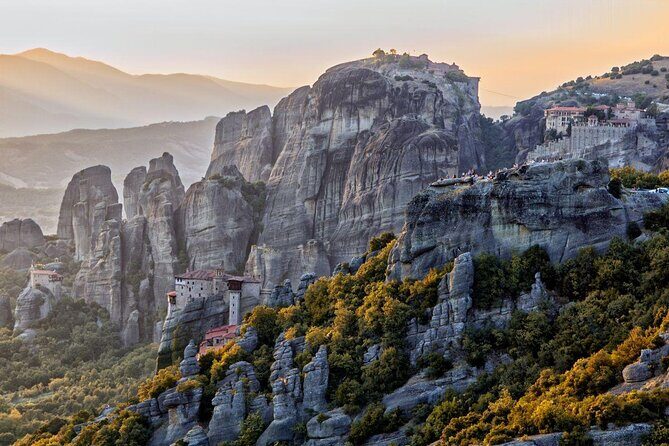
- Meteora monasteries are the big “wow” moment, with time planned on the holy-rock viewpoints and multiple monastery visits.
- Thermopylae is a smart add-on on the return drive, so the final day has more than just driving.
A Private Route That Turns Big Names into a Real Journey
This tour works because it connects places that are often done as separate day trips. Instead of hopping between tours, you ride in one private vehicle with a driver who’s built to explain what you’re seeing as you move. That makes the ancient sites feel less like a checklist and more like a story you can follow.
You’ll start out of Athens and gradually work your way across mainland Greece: Peloponnese first (Corinth Canal, Mycenae, Nafplio), then the route of Olympic Greece (Olympia), then the Delphi oracle world, and finally the dramatic Orthodox monastery region of Meteora. It’s also designed around comfort. You’ll have bottled water, and you’ll sleep with accommodation and breakfast included based on your booking.
The private format matters in practical ways. You can plan your day around opening hours, request timing adjustments at pickups, and spend extra minutes where you care most—like lingering longer at Mycenae’s Lion Gate area or taking your time in the museums instead of feeling rushed to catch a bus.
You can also read our reviews of more private tours in Athens
Day 1: Corinth Canal, Epidaurus Theater, Mycenae, and Scenic Nafplio Nights
Day 1 is where you get “ancient Greece” in full concentration, but in a way that still gives you breaks.
Corinth Canal stop: the quick walk with big views
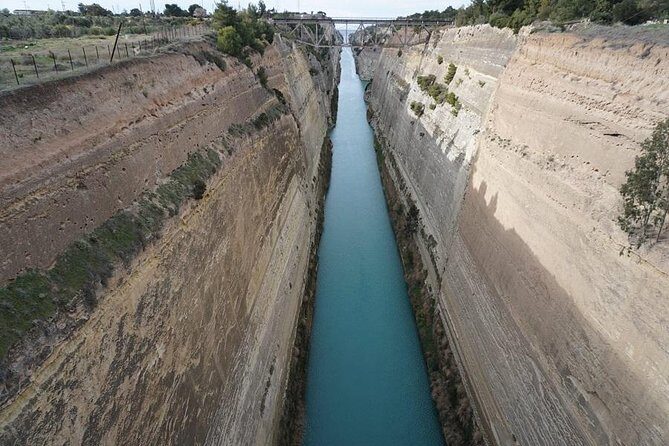
You’ll drive along the western suburbs of Athens and pause at the Corinth Canal. The canal opened in 1892 and separates the Peloponnese from the rest of Greece, linking the Saronic Gulf to the Corinthian Sea. This is a short stop (about 20 minutes), but it’s worth it for the scale and the coast-side village views. If you want a thrill, bungee jumping is an option on some days.
Asklepios sanctuary + Epidaurus theater: healing and acoustics
Next you head to Epidaurus—first the Sanctuary of Asklepios, dedicated to the god of healing and medicine. The setting is described as peaceful and hilly, and you’ll be in the kind of area that feels made for slow walking rather than quick photo stops.
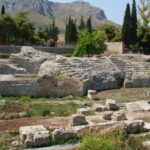
Then comes the Ancient Theatre of Epidaurus. This is one of the best-preserved ancient Greek theaters (4th century BCE). What you’ll remember isn’t just the stones—it’s the acoustics. The idea is that you can test the sound even today, and walking up toward the upper seats is a nice mental reset before you move to Mycenae.
Note: admissions for these stops are not included.
Mycenae: Homer-grade names, plus architecture up close
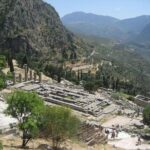
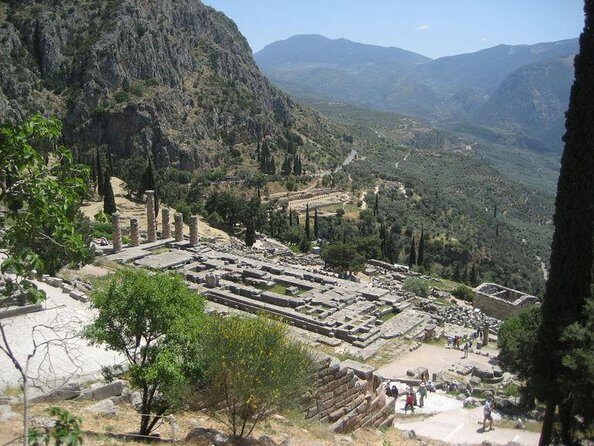
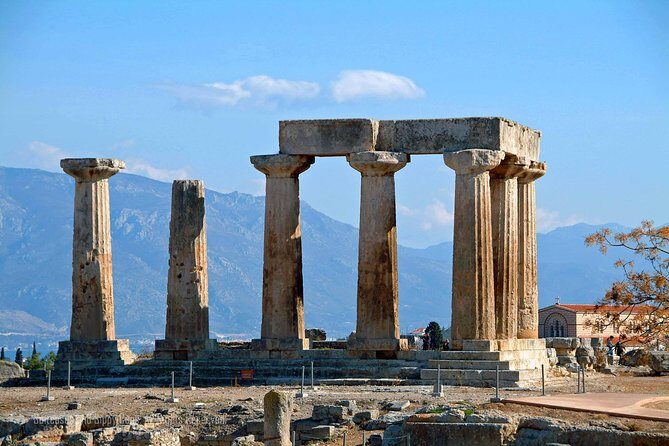
You’ll then visit Archaeological Site of Mycenae, a 2nd-millennium BCE city strongly tied to the legends of Achilles, Agamemnon, and Helen of Troy. You’ll see the Lion Gate, cyclopean walls, burial circle A, and remains of Agamemnon’s palace area. There’s also a modern museum on-site with finds from what’s sometimes called the City of Gold.
If you want one “structure” moment, don’t skip the short stop at the Treasury of Atreus, a tholos tomb and one of the finest examples of Mycenaean architecture.
Admissions are not included, so it helps to decide in advance if you want the extra museum time at Mycenae.
You can also read our reviews of more tours and experiences in Athens
Nafplio: where the tour slows down for beauty and views
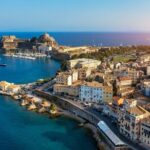
After the archaeological punch of the morning, Nafplio gives you breathing room and a different Greece. The city was capital until 1834 and mixes fortresses, Venetian influence, neoclassical elements, and more. You’ll have about 2 hours here, with a lunch break at a traditional tavern by the sea.
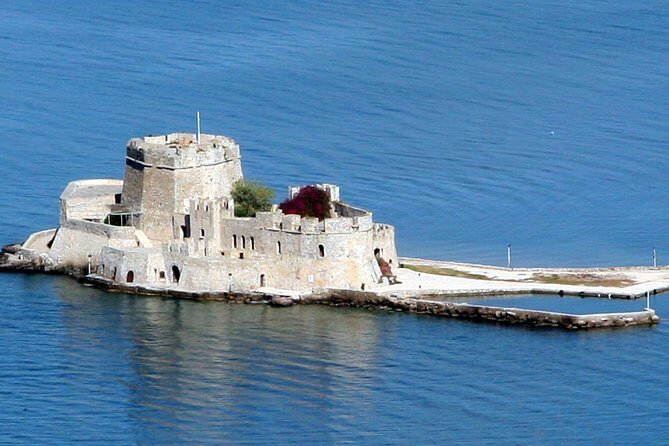
After that, you drive up to Acronafplia for panoramic views. You’ll also get the harbor viewpoint associated with Bourtzi, the small islet fortress in the bay.
Your first day ends with an overnight at the birthplace of the Olympic Games area (Olympia).
Day 2: Ancient Olympia’s Games Story, Museum Time, and the Delphi Arrival
Day 2 is the bridge between Peloponnese legends and Delphi’s oracle world.
Olympia archaeological site: stadium, Zeus, and key workshop areas
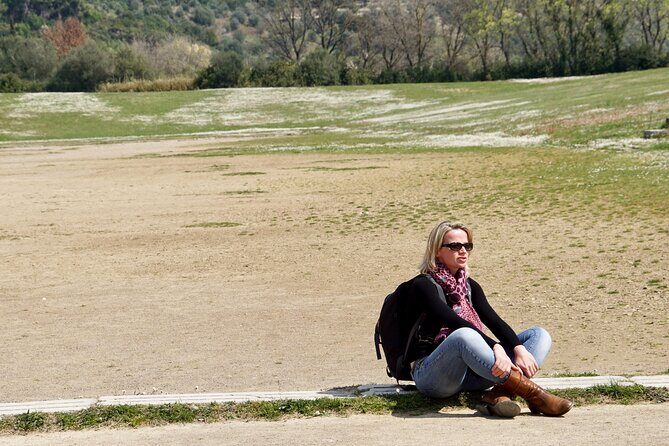
You’ll spend around 3 hours at Olympia, a major site in Greece and the birthplace of the Olympic Games and the Sanctuary of Olympian Zeus. As you walk through the site, you’ll pass places like the Gymnasium, Palaistra, and the workshop of Phidias. You’ll also reach major structures like the temple area of Zeus and the stadium.
If you like the human side of history, focus your attention on the stadium. The Olympic games happened every four years, and the setting helps you understand why people once traveled for glory and spiritual elevation.
Admissions aren’t included.
Olympia museums: Phidias’ tools and the Hermes statue
You’ll also have museum time at the Archaeological Museum of Olympia, including the famed Hermes of Praxiteles. The museum is described as special because it connects artworks to tools linked to Phidias and his workshop world.
There’s also a Museum of the Olympic Games (about 30 minutes) that covers a wide chronological range from the 2nd millennium BCE through the 5th century CE. It’s a compact way to place the games in time without turning it into a full school lecture.
Nafpaktos Old Port: a calm stop before Delphi
After Olympia, you drive toward the Corinthian Gulf and pause at Nafpaktos Old Port, a seaside town with a long beach and a Venetian castle and fortified harbor. It’s described as serenity time—exactly the kind of pause you want after a heavy morning of ruins.
Then you head to Delphi, where you’ll arrive with views of the Greek mountains and get a glance at related sanctuary areas like the Gymnasium and the secondary sanctuary of Athena Pronea.
Day 3: Delphi’s Temple of Apollo + Museum Highlights, Then Kalabaka at Meteora’s Doorstep
Day 3 is your “Delphi gets real” day, followed by an end-of-day shift into Meteora territory.
Delphi Archaeological Museum + Temple of Apollo
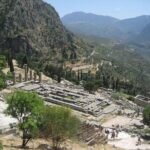
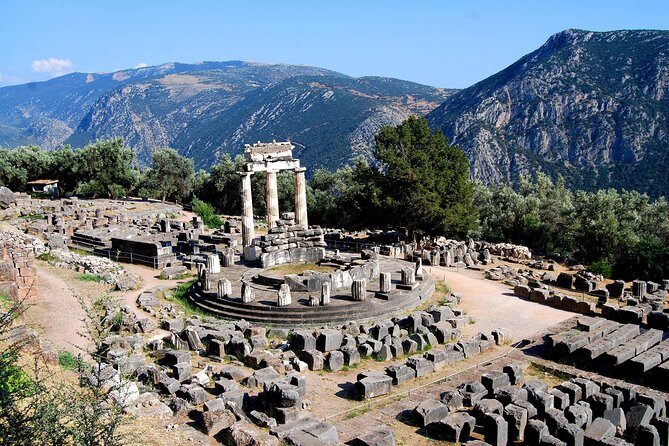
You start with Delphi Archaeological Museum and then the Temple of Apollo area. Delphi is tied to the oracle of Apollo, and the sanctuary served a pan-Hellenic role in Greek cultural unity. The setting also matters: you’ll get mountain views and a sense of the site’s drama.
In the museum, you’ll have a chance to see famous statues like the charioteer and gold-ivory-style pieces, then you’ll visit the Temple of Apollo where the oracle spoke. You’ll also see the theater and stadium.
After that, you’ll have lunch in the modern village of Delphi. The plan includes time to eat with mountain views, which is a nice break from walking lines of stone.
Scenic mountain drive to Kalabaka (and local dinner)
Instead of taking the national highway, you’ll go through the mountains and pass towns like Lamia, Trikala, and Karditsa. This part matters more than it sounds. It’s your chance to see how Greeks live away from the main tourist corridors before you reach Kalabaka.
You’ll arrive in Kalabaka, a small city dominated by Meteora. You’ll have time for an evening walk and a local dinner after you settle at the hotel.
Day 4: Meteora Monasteries on Holy Rocks, Thermopylae, and a Sea Lunch on the Way Back
This is the day that often turns a history-focused trip into a memory with emotion.
Meteora monasteries: Great Meteoron first
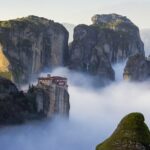
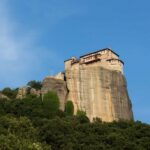
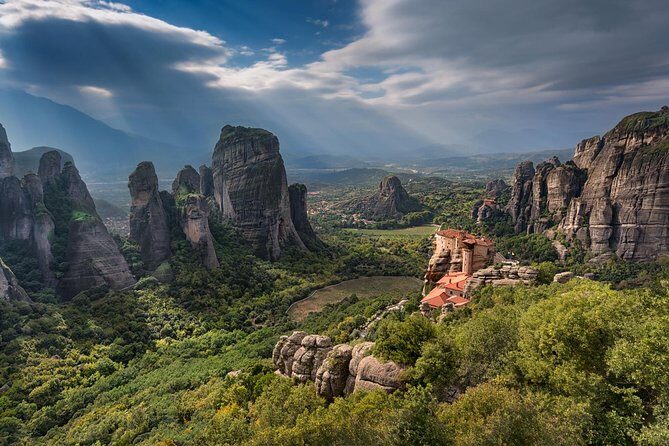
In the morning, you visit Meteora monasteries perched on rock pillars suspended in the air. The complex is one of the largest and most important Eastern Orthodox monastery groups still in use. Great Meteoron is listed as the biggest and most impressive, with about 30 minutes planned.
Even if you’re not an architecture buff, this place works because of the geometry: the rocks, the cliff edges, and the way buildings feel placed rather than simply built.
Agios Stefanos and Roussanou area views
Next is Agios Stefanos (also known as Roussanou in the itinerary notes). This is one of the few female monasteries of Meteora, with construction timing not pinned down in the details you’re given but with wall paintings mentioned from 1560. You’ll also get a different view of the surrounding cliffs and monastery area.
The route includes a pathway toward the upper main road and an off-the-road panoramic viewpoint. This is where you can slow down and take in why Meteora earned its name.
Thermopylae stop: Leonidas in a very real place
Before heading back to Athens, you’ll stop at Thermopylae. You’ll see the place where Leonidas and the 300 Spartans faced the Persian army. It’s followed by the Kainotomiko Kentro Istorikis Enimerosis Thermopylon, with a 3D movie designed to connect the sacrifices with what the site represents.
Then you’ll visit the Leonidas Monument opposite Kolonos Hill.
Short stops can still land hard here. It’s one of those moments where you read history, then suddenly you’re standing in it.
Kamena Vourla lunch: a finish by the sea
To close out the trip, you stop at Kamena Vourla, a coastal town, for a relaxing traditional Greek lunch by the sea. Then it’s a drive back to Athens.
Price and What You’re Really Paying For
At $1,483.31 per person, this isn’t a budget spur-of-the-moment tour. But it’s also not “just a car with a route.” You’re paying for four big value drivers:
- Private transportation across long distances. This route covers many sites, and the car time is a major part of the experience.
- Door-to-door pickup and drop-off including port pickup/drop-off, which can be a huge deal if you’re doing a cruise or arriving from elsewhere.
- Accommodation and breakfast included, based on your booking. Lodging is usually where multi-day inland Greek trips quietly eat your budget.
- A driver who can explain things en route. The driver isn’t a licensed site guide, but the narration while you ride helps you connect dots faster.
What can push your total upward is that entrance fees aren’t included, and you may want a licensed tour guide on request at additional cost if you want site-by-site guided commentary inside museums and archaeological areas.
In other words: the headline price covers the bones of the trip. Your final cost depends on how deep you go on paid entries and whether you add licensed guiding.
Driver Skills, Not Licensed Site Guiding: Plan for That Trade-Off
The tour notes make the difference clear: drivers are not licensed to accompany you inside any site or museum. That means you get context and help during the drive, plus drop-offs close to where you need to be—but if you want deeper interpretation inside each major stop, you’ll need to book a licensed guide.
This can be a good trade if you like flexibility. You can do a self-paced museum walkthrough when you want quiet time, then add a licensed guide for the places that matter most to you (Olympia museum sections, Delphi’s core sanctuary, Meteora monastery history, and so on).
Also, private drivers can make logistics feel lighter. Some groups have highlighted drivers like George, Terry, Andreas, and Alexandros for smooth scheduling, quick drop-off and pick-up near entrances, and flexibility when plans meet real-life issues like heat or limited site hours.
Practical Tips So This Route Feels Enjoyable, Not Exhausting
This itinerary is packed, so a little planning goes a long way.
- Wear shoes you can climb in. You’ll be walking in archaeological areas and up through theater seating zones, plus Meteora monastery viewpoints can involve uneven pathways.
- Start earlier when possible. Many key sights can have limited hours, so early movement helps you avoid stress.
- Decide your museum depth in advance. Admissions aren’t included, so if you want every museum ticket, plan for it. If you want one museum more than another, prioritize Olympia and Delphi.
- Bring water discipline. Bottled water is included, but you’ll still want to sip during long drive-and-walk segments.
- Don’t underestimate the driving day after ruins. The mountain drive to Kalabaka and the return with Thermopylae are long segments. If you get car-sore, bring a small kit (eye mask, light snack, motion-sickness basics if you need them).
Should You Book This Corinth–Olympia–Delphi–Meteora Private Tour?
I’d book this tour if you want a stress-free inland Greece road trip with the big classics lined up logically, and you care about pacing more than checking boxes as fast as possible. The private setup is especially valuable if you hate rental-car hassles or you’re arriving from a port.
I’d think twice if you want a guided lecture inside every single site. Because the driver isn’t licensed inside museums and archaeological areas, your experience level inside the stones will depend on whether you add licensed guides and how much you pay for admissions.
If your ideal trip is: door-to-door pickup, real time at Olympia and Delphi, unforgettable Meteora monasteries, and a calm finish with Thermopylae and sea lunch—this fits the bill.
FAQ
What’s included in this 4-day private tour?
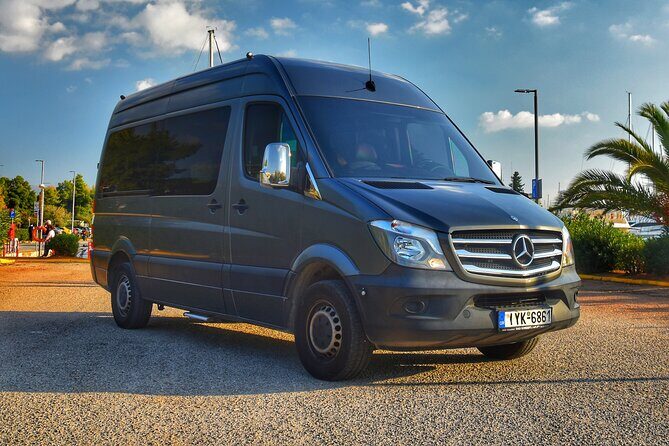
You get private transportation, hotel/Airbnb/port pickup and drop-off, bottled water, and accommodation with breakfast based on your booking. The tour language offered is English.
Are entrance fees included?
No. Entrance fees aren’t included, so you’ll pay for museum and archaeological site admissions separately.
Do I need a licensed guide inside the sites?
The driver is not licensed to accompany you inside sites or museums. If you want a licensed guide for on-site explanations, you can request one for an additional cost.
Is the tour only for my group?
Yes. This is listed as a private tour/activity, so only your group participates.
Is pickup available from Athens, and can the time be adjusted?
Yes. Pickup is offered in Athens, and the pickup time is adjustable upon request.
How long is the tour?
The duration is approximately 4 days, and exact timing can vary based on time of day and traffic.
Which areas does the tour cover?
It covers Corinth Canal, Mycenae, Nafplio, Olympia, Delphi, and Meteora, plus additional stops like Epidaurus and Thermopylae.
What language is the tour offered in?
The experience is offered in English.
Do I get confirmation after booking?
Yes. You should receive confirmation at the time of booking.
What’s the cancellation window for a full refund?
You can cancel up to 3 days in advance for a full refund, based on the experience’s local time.
Is the route suitable for most people?
The listing states that most travelers can participate. However, you should be ready for walking in archaeological sites and monastery areas.
More Private Tours in Athens


More Tours in Athens

More Tour Reviews in Athens
- All Day Cruise -3 Islands to Agistri,Moni, Aegina with lunch and drinks included
★ 5.0 · 4,958 reviews