REVIEW · ATHENS
Athens: Acropolis and Ancient Agora Guided Walking Tour
Book on GetYourGuide →Operated by Athens Walks Tour Company · Bookable on GetYourGuide
Parthenon views start fast. I love the wireless hearing devices, because I don’t miss the guide’s explanations even when I’m walking uphill or turning away for photos. I also like the skip-the-line access at both the Acropolis and the Agora, since it buys you time for the monuments themselves instead of waiting in the sun. One heads-up: this is a moderate walking tour with several climbs, so plan for your legs to work a bit.
You’ll meet at the Office of Athens Walks on Porinou 5, a short walk from the Acropolis metro area, and you’ll head straight into a less crowded route up the South Slopes. The best part is how the guide ties the buildings to real human life—religion, politics, and daily conversation—rather than treating everything like a museum display. Guides such as Anastasia and Yanis/John have been singled out for organization and clear, friendly guiding, which matters a lot when you’re trying to keep track of what you’re seeing.
In This Review
- Key highlights you’ll actually feel during the tour
- Meeting at Porinou 5 and why the start matters in Athens
- Theatre of Dionysus and Odeon of Herodes Atticus: the Athens warm-up
- Temple of Athena Nike and the climb logic through Propylaea
- South Slopes of the Acropolis: your quieter route up
- Inside the Acropolis circuit: Parthenon, Erechtheion, and Caryatids
- Erechtheion and the Caryatids
- Parthenon: the big guided block
- Temple of Athena Nike: detail-friendly stop
- The 15-minute Acropolis break: use it smart, not random
- Ancient Agora of Athens: public life in stone and logic
- Stoa of Attalos: a better stop than you might expect
- Temple of Hephaestus: craftsmanship made visible
- What’s included that actually improves the experience
- Pace and logistics: what to expect on your feet
- Who this tour is for (and who should choose something else)
- Price check: why $102 can be a smart deal here
- Should you book the Athens Acropolis and Ancient Agora tour?
- FAQ
- Where do I meet for the Athens Acropolis and Ancient Agora tour?
- How long is the tour?
- Is the tour in English?
- Are entry tickets included?
- Does the tour include skip-the-line access?
- Are wireless hearing devices provided?
- What should I bring?
- Is flash photography allowed?
- Is this tour suitable for wheelchair users or people with mobility impairments?
Key highlights you’ll actually feel during the tour
- Wireless hearing devices so the guide stays clear, even on windy viewpoints and busy paths
- Skip-the-line entry at the Acropolis and the Ancient Agora to protect your time
- South Slopes route that feels calmer as you work your way upward
- Full Acropolis circuit including Parthenon, Erechtheion (Caryatids), and Temple of Athena Nike
- Agora visit with Stoa of Attalos where artifacts are displayed inside a well-preserved building
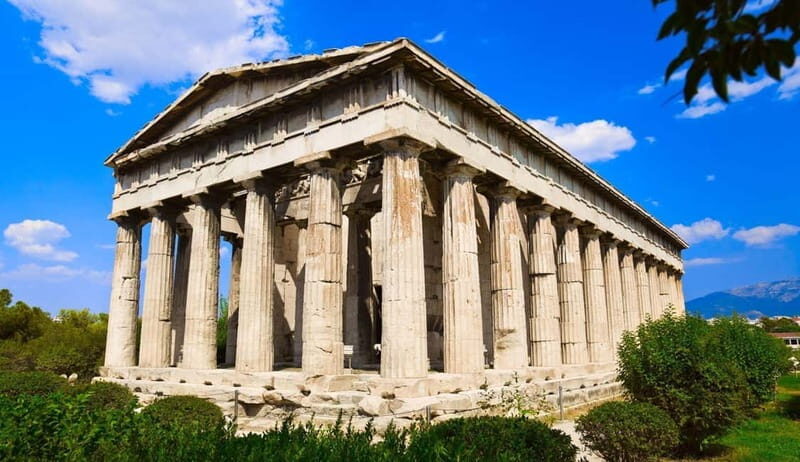
- Temple of Hephaestus near the end, one of the best-preserved temples you’ll see on the Athens loop
Meeting at Porinou 5 and why the start matters in Athens
Your day begins at the Office of Athens Walks on Porinou 5. It’s a practical location: you’re close to the Acropolis metro connection, so you’re not wasting time crossing the city just to start the tour.
If you arrive 15 minutes early, you’ll get a clean start without rushing. That buffer is worth it here because the first part of the day includes a guided walk and short introductions before the climb. Once you’re with the group and the guide has set expectations, the rest feels smoother.
You can also read our reviews of more walking tours in Athens


Theatre of Dionysus and Odeon of Herodes Atticus: the Athens warm-up
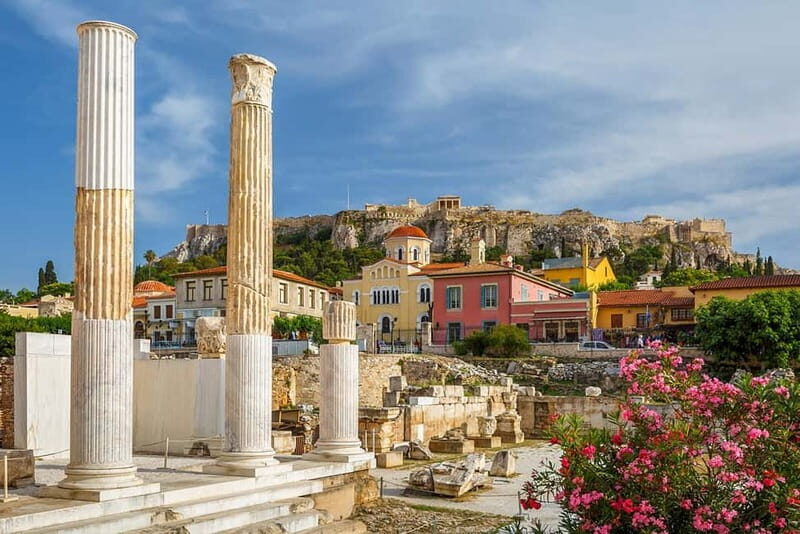
The itinerary kicks off with a short guided stop at the Theatre of Dionysus (about 15 minutes). This is a smart opening because it sets the scene for Athens as a place where public speech and performance were part of civic life. You’re not just walking between monuments—you’re building a mental map of what the city used to do.
Then you move on to the Odeon of Herodes Atticus for a walk (about 15 minutes). Even if you don’t get lost in architectural details, it helps to see how performance spaces sat within the broader sacred and civic zone. It also slows you down at the right moment: before the Acropolis gets busy and steep.
Temple of Athena Nike and the climb logic through Propylaea
Next comes the Temple of Athena Nike (a short walk, around 5 minutes). This one is smaller than the Parthenon, but it’s easy to appreciate once the guide puts it into context: it celebrates Athena in her victory aspect. It’s the kind of stop where you’ll likely notice more of the details once you’re not rushing.
After that you head to the Propylaea (guided stop around 10 minutes). Think of the Propylaea as the ceremonial gateway into the Acropolis experience. The guide’s job here is to help you understand that you’re entering a sacred space with its own rules, symbolism, and purpose—not just walking into a viewpoint.
South Slopes of the Acropolis: your quieter route up
Before you reach the big-ticket monuments, you go up via the South Slopes, using a scenic and less crowded route. This part is one of the tour’s practical strengths because it affects how you experience the Acropolis.
As you ascend, the guide points out archaeological features and even talks about plants growing in or around the ancient setting. You also get explanations about ancient rituals and activities that took place on the slopes, which makes the path feel less like a stairway and more like part of a living system. Plus, those city views appear in stages, so photo stops feel natural rather than forced.
Inside the Acropolis circuit: Parthenon, Erechtheion, and Caryatids
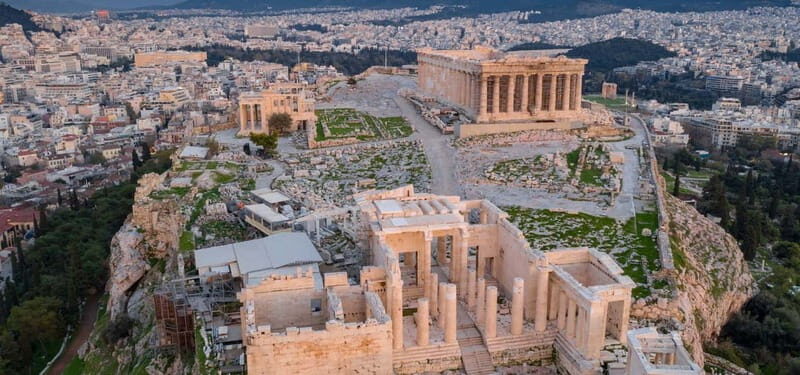
At the Acropolis, you’ll get a structured look at the icons: Erechtheion, Parthenon, and the Temple of Athena Nike you saw earlier.
You can also read our reviews of more guided tours in Athens



Erechtheion and the Caryatids
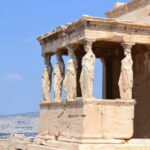
The Erechtheion gets about 15 minutes of guided time. The star here is the famous set of Caryatids—figures that stand in for architectural support. The guide’s value is in explaining why the design matters and what these forms meant in the context of worship and identity at the time.
If you’ve ever felt overwhelmed at the Acropolis—like every stone is screaming for attention—this stop helps you slow down. You come away with fewer scattered impressions and more connected ones.
Parthenon: the big guided block
The Parthenon is where the tour spends the most time (around 30 minutes). You’ll get stories about its construction and its role as a symbol of Greek democracy and culture.
Here’s what I think makes the guided format worth it: the Parthenon is famous, but the meaning can stay fuzzy if you just wander. With a licensed guide, you get a clear framework for what you’re looking at, why certain elements exist, and how the building functioned in the civic mindset of ancient Athens.
Temple of Athena Nike: detail-friendly stop
Even though you’ve already visited this earlier, the guide keeps pointing you back toward the key idea: Athena as victory. You’ll likely find that knowing the theme makes small architectural details feel purposeful instead of random.
The 15-minute Acropolis break: use it smart, not random
There’s a break on the Acropolis (about 15 minutes). This is your chance to reset, drink water, and take photos without feeling like you’re holding everyone up.
Use the time for something specific. For example:
- If you want a final look at the Parthenon framing, stand where the guide suggested and take a slow photo sequence.
- If you’re feeling warm, focus on shade when possible, and drink water first.
Don’t treat the break like a snack-and-scroll moment only. The Agora is next, and you’ll want your energy.
Ancient Agora of Athens: public life in stone and logic
After the Acropolis, you move to the Ancient Agora for a guided walk (about 30 minutes). This is where Athens changes tone. Instead of sacred architecture on a hill, you’re looking at the place where public life happened—politics, social gatherings, and commerce.
The guide explains the Agora as a key part of civic culture, including how citizens, philosophers, and politicians interacted in this space. That framing is what turns ruins into something you can imagine. Without it, the Agora can feel like “more rocks.” With it, you start seeing the city’s social wiring.
Stoa of Attalos: a better stop than you might expect
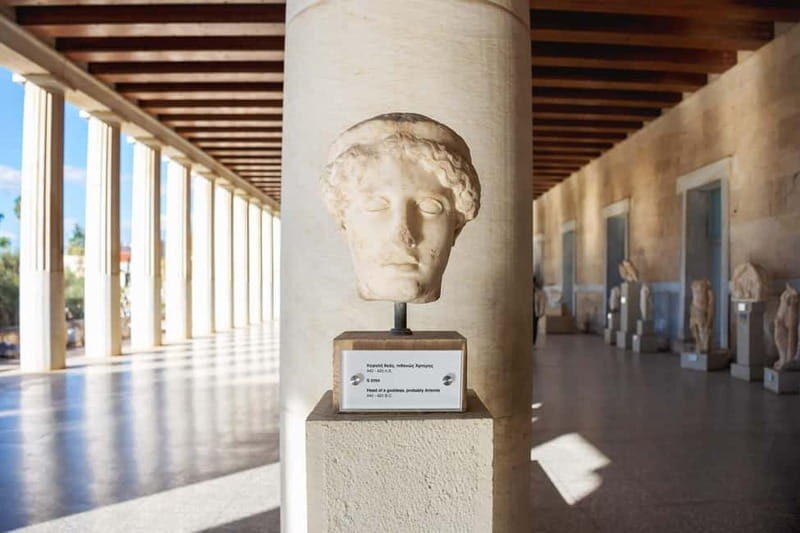
One highlight is the Stoa of Attalos, a well-preserved structure that now houses a museum with artifacts from the site. Even if you’re not a museum person, this stop helps because it connects the outdoor ruins to objects that can show scale and everyday use.
It’s a useful pause from pure outdoor wandering. You get a clearer sense of what survived and what historians reconstructed through artifacts and study.
Temple of Hephaestus: craftsmanship made visible
Later in the tour, you’ll also see the Temple of Hephaestus (you walk there for about 10 minutes after the main Agora segment). The guide notes its dedication to the god of craftsmanship.
I like how this end point gives the day a theme that ties back to Athens’ cultural identity: not only democracy and politics, but also skilled work and design values. It’s one of the most visually satisfying temple moments in Athens, and it’s a strong closer to your walking loop.
What’s included that actually improves the experience
This tour isn’t just “someone points and talks.” The included extras matter.
- Licensed English guide: you’re getting structured storytelling rather than vague directions.
- Wireless hearing devices: on windy hill sections and crowded paths, you’ll still catch the guide’s key points.
- Entry tickets for the Acropolis and Ancient Agora: you’re not juggling lines for admissions.
- Skip-the-line access via a separate entrance at both sites: that time savings is real in Athens sun.
For $102 per person, the value is mainly the combination. You’re paying for time protection (skip-the-line), expert context (licensed guide), and convenience (tickets handled). If you tried to do both sites on your own, you’d likely spend extra time figuring out where to go and what to notice.
Pace and logistics: what to expect on your feet
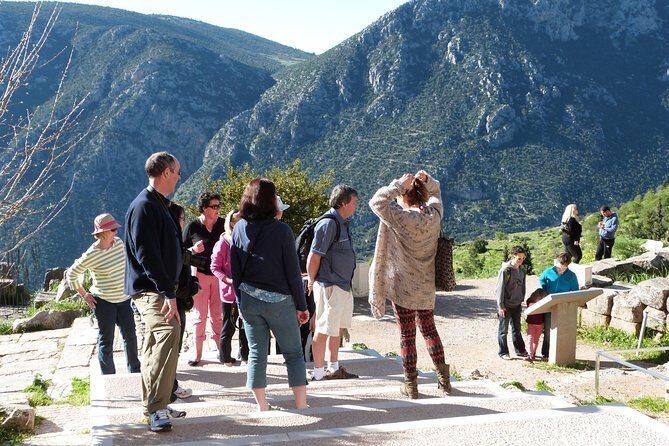
This is a walking tour with moderate effort. You’ll climb to reach the Acropolis monuments via the South Slopes route, then continue through the Agora ruins.
So bring:
- Comfortable shoes (non-negotiable)
- Hat, sunscreen, and water
- Camera if you like photos, but remember flash photography isn’t allowed
If you’re prone to overheating, plan ahead. Athens can be very bright and warm, and the itinerary doesn’t include long indoor shelter. A small water bottle habit goes a long way.
Who this tour is for (and who should choose something else)
This works best if you want an organized Athens day with a guide who connects major monuments to how Athens functioned—religion on the hill, civic life in the Agora.
It may not be the right fit if:
- You need wheelchair-friendly access or have mobility impairments. This tour isn’t suitable for wheelchair users.
- You’re traveling with very young kids. It’s not suitable for children under 6.
If you’re otherwise able-bodied and comfortable walking for a few hours, you’ll get a lot out of the guided structure.
Price check: why $102 can be a smart deal here
At $102 per person for about 4 hours, you’re paying for more than just access. You’re also paying for:
- Two major site entry tickets handled for you
- Skip-the-line help at both the Acropolis and the Agora
- Wireless devices to keep the guide’s narration clear
- A licensed guide who can connect what you see to why it mattered
Could you do this independently? Yes, but you’d trade the expert explanations and the time saved at entrances for the freedom of self-pacing. For many people, the math works out in favor of booking, especially if you’re trying to fit both sites into a single half day without wasting time.
Should you book the Athens Acropolis and Ancient Agora tour?
Book it if you want your Athens monuments with context. This tour is built around the exact places you should prioritize—Acropolis highlights like Parthenon and Erechtheion, then the Agora where civic life played out. Add the skip-the-line entries and wireless hearing devices, and it becomes a smooth “get it right” day.
Skip it or consider another option if you can’t handle steady walking, hills, and uneven ancient surfaces. Also, if you’re the type who wants to stare quietly at ruins with zero narration, a guided format may feel too structured.
If you’re comfortable on your feet and you like learning while you look, this is a strong way to see Athens in a few focused hours—without turning your day into an endurance test.
FAQ
Where do I meet for the Athens Acropolis and Ancient Agora tour?
You meet at the Office of Athens Walks on Porinou 5.
How long is the tour?
The tour lasts about 4 hours.
Is the tour in English?
Yes, the live guide gives the tour in English.
Are entry tickets included?
Yes. Entry tickets to the Acropolis and the Ancient Agora are included.
Does the tour include skip-the-line access?
Yes. You get skip-the-line entry at both the Acropolis and the Ancient Agora through a separate entrance.
Are wireless hearing devices provided?
Yes. Wireless hearing devices are included so you can hear the guide clearly.
What should I bring?
Bring comfortable shoes, a hat, sunscreen, a camera, and water.
Is flash photography allowed?
No. Flash photography is not allowed.
Is this tour suitable for wheelchair users or people with mobility impairments?
No. It isn’t suitable for wheelchair users or people with mobility impairments.


More Walking Tours in Athens


More Tours in Athens


More Tour Reviews in Athens
- All Day Cruise -3 Islands to Agistri,Moni, Aegina with lunch and drinks included
★ 5.0 · 4,958 reviews